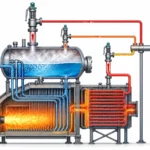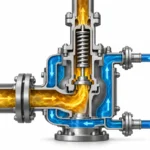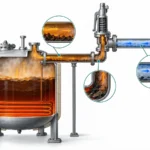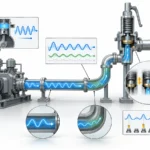
Matching model, size and set pressure does not prove a replacement safety valve is equivalent. Check capacity, service, back pressure, interfaces and evidence.

A replacement safety valve is not proven equivalent just because the model reference, nominal size and set pressure appear to match the installed valve. Those three items are useful starting data, but they do not establish the required relieving duty, certified or otherwise applicable capacity evidence, service medium and phase, pressure-temperature suitability, back-pressure behavior, materials, connection geometry, accessories, certification scope, nameplate identity or project approval basis.
That distinction is consistent with the way pressure-relief devices are actually specified. Within its scope, API 526 treats orifice designation and area, inlet and outlet size and pressure rating, materials, pressure-temperature limits and center-to-face dimensions as separate specification items. ASME BPVC Section XIII addresses a broader overpressure-protection framework that includes design, materials, inspection, assembly, testing, marking, capacity and flow-resistance certification, installation and system-design protection.
The National Board’s NB-18 pressure-relief-device certification database makes the same separation visible in practice: device records identify inlet/outlet size, flow area, set-pressure range, certified medium, designator and certified capacity information as distinct fields. A match in one field is therefore not evidence that the others also match.
For maintenance and replacement work, the more useful question is not simply:
“Does the new valve look like the old one?”
It is:
“Does the evidence show that this candidate satisfies the relevant requirements for the current protection duty and installed application?”
This matters when an original valve is obsolete, a supplier offers a cross-reference, a shutdown creates pressure to source a replacement quickly, the discharge system has been modified, the process medium or relieving case has changed, or the original engineering records are incomplete.
In this article, equivalent replacement is a working engineering term for a candidate whose relevant requirements have been sufficiently demonstrated for the defined duty. It is not presented as an ASME, API, National Board or regulatory classification.
Why Model, Nominal Size and Set Pressure Are Only Starting Points
A model number identifies a product within a manufacturer’s own designation system. Nominal size describes part of the connection interface. Set pressure defines a specific operating characteristic of the pressure-relief device.
Those fields matter, but they answer only part of the replacement question. A model cross-reference can be useful for finding a candidate family; it cannot by itself establish functional equivalence.
A proposed safety valve can match all three and still leave unresolved whether:
- the current required relieving capacity has been established for the governing relief case;
- the candidate has applicable rated or certified capacity evidence for the relevant medium and conditions;
- the fluid, phase or two-phase behavior assumed in the sizing/application basis matches the candidate’s documented basis;
- its valve architecture is suitable for the installed back pressure and discharge arrangement;
- its materials, trim, seat and other service-exposed components are suitable for the process and temperature;
- the inlet/outlet connection, pressure rating, facing, dimensions and orientation fit the installation;
- bellows, lifting device, soft seat, restricted-lift feature, rupture-disk combination or other accessories match the protection basis where relevant;
- required ASME/National Board/API or project-specific conformity evidence has actually been demonstrated;
- the candidate’s nameplate, datasheet and certification records refer to the actual offered configuration rather than only to a product family.
The reverse is also important. A replacement does not automatically fail because every detail is not identical to the old valve. A difference has to be evaluated according to the requirement that the feature serves.
Illustrative replacement-review case — same size and set pressure, unresolved capacity: An obsolete valve and a proposed replacement share the same nominal inlet/outlet size and set pressure. The supplier’s cross-reference looks convincing, but the candidate documentation does not show applicable capacity evidence for the required relief case. The correct disposition is HOLD, not “equivalent”: first establish the required relieving capacity and the candidate’s applicable rated/certified capacity basis. A same-size connection cannot close that gap.
A supplier’s cross-reference can help identify a candidate. It should not be allowed to collapse all of the remaining engineering questions into the word “equivalent.”
Separate Connection Size from Relieving Capacity
A common shortcut is to treat connection size as though it also describes relieving capability. It does not.
API 526 separates valve inlet/outlet size and pressure rating from orifice designation and area. National Board certification records likewise list device size separately from flow area, set-pressure range, certified medium and certified-capacity information. That separation is exactly why a flange-size match cannot serve as a capacity comparison.
What Nominal Connection Size Tells You
Nominal size helps answer a mechanical-interface question:
Can the candidate connect to the required piping arrangement?
That check can include inlet and outlet size, connection type, pressure rating, facing, center-to-face dimensions and any installation geometry that matters to the project.
It does not answer:
Can the candidate relieve the required load under the applicable conditions?
| Information | Primary question it answers | What it does not prove by itself |
|---|---|---|
| Nominal inlet/outlet size | Does the connection interface correspond to the piping requirement? | Relieving-capacity adequacy |
| Orifice / flow-area information | What flow-path characteristic is documented for the candidate? | Suitability for an undefined relief duty |
| Required relieving capacity | What mass or volumetric flow must the protection function handle for the governing case? | That this candidate can handle it |
| Rated / certified capacity evidence | What performance is supported under the stated medium and certification/test basis? | Applicability when medium, back pressure, temperature or other comparison conditions differ |
What Capacity Evidence Must Answer
Capacity has to be compared against the required relief duty, not against the nominal valve size.
The National Board’s NB-18 program exists specifically because relieving performance has to be demonstrated, not inferred from appearance or nominal dimensions. Its certification material explains that listed capacity values are tied to the conditions under which they were obtained, and that installation, operating conditions and manufacturer recommendations still have to be considered when selecting a device for service. NB-18’s Foreword also cautions that atmospheric-discharge capacity values may not remain valid when discharge back pressure exists.
That creates a two-step capacity check:
- Required capacity: What must the protected system relieve for the governing overpressure case?
- Candidate evidence: What capacity is supported for this valve under a basis that is applicable to the service and installed conditions?
A catalogue capacity value should therefore not be treated as a standalone “bigger is better” number. The relevant medium, phase, set-pressure basis, temperature corrections where applicable, back-pressure assumptions and certification/application scope still have to line up with the duty being reviewed.
The same caution applies to orifice letters or designations. They can be useful within a defined standard or manufacturer system, but an orifice identifier should not be treated as a universal cross-brand equivalence code without supporting flow-area and capacity documentation.
For the deeper distinction between connection size, flow area and certified relieving capacity, see Safety Valve Capacity vs Connection Size: What Actually Determines Flow?
Verify the Protection Duty Behind the Set Pressure
Set pressure matters because it identifies a defined opening-performance reference for the pressure-relief device. But it does not define the complete protection duty.
ASME Section XIII covers overpressure protection as a system that includes device design, testing, marking, capacity certification and installation; NB-18 likewise records set-pressure range separately from certified medium, flow area and capacity information. Those sources support a simple replacement principle: same set pressure is not the same thing as same protection duty.
Set Pressure Is One Part of the Protection Basis
A replacement review needs to keep three questions separate:
- What pressure basis protects the equipment? Confirm the current MAWP or other authorized pressure limit and the governing code/project requirement.
- At what set pressure is the device intended to respond?
- What relieving load and conditions must the device handle when protection is demanded?
Copying an old set-pressure value answers only the second question. It does not reconstruct the cause of overpressure, required relieving rate, fluid state, relieving temperature, back pressure or other conditions used in the original sizing/selection basis.
Temperature illustrates the point. Valve design limits, materials, soft goods, set-pressure behavior and capacity/application data can all be temperature-dependent. National Board guidance on temperature considerations distinguishes set pressure, design/material limits and capacity effects. A candidate that accepts the same set pressure but has a different pressure-temperature envelope is not proven equivalent until that service boundary is checked.
Recheck the Duty if the Process or Protected System Has Changed
The existing valve nameplate and original datasheet are valuable starting evidence. They should not be discarded merely because the valve is old.
But if the process, protected equipment, relief load, fluid/phase, operating pressure, relieving temperature, connected equipment or discharge system has materially changed, reproducing the old set pressure does not prove that the original required relieving duty is still valid.
API 521 is an overpressure-cause and pressure-relieving/depressuring-system framework within its stated industry scope, while API 520 Part I addresses pressure-relief-device sizing and selection. The replacement implication is straightforward: if the basis that determines relieving rate has changed, the candidate should be checked against the current basis rather than inferred from the legacy tag.
Illustrative replacement-review case — legacy set pressure after a process change: The old valve nameplate remains legible and the proposed valve matches the set pressure, but the protected system has since been modified and a new connected source can contribute to an overpressure case. The replacement review should not treat the legacy set pressure as proof that the original capacity basis still governs. The relief-case review and required relieving rate need to be confirmed under the current configuration before equivalence is closed.
This does not mean every routine valve replacement requires a complete new relief-system study. It means a reviewer should trigger the appropriate engineering or management-of-change check when there is credible evidence that the protection basis has changed.
Match the Valve Design to the Actual Service
Pressure, size and capacity do not describe every characteristic that can matter to service suitability.
Two candidates may differ in operating architecture, certified medium, phase behavior, temperature limits, materials, seat construction, bellows/piston arrangements or accessories. Those differences need interpretation rather than a simple same/different test.
Valve Architecture and Operating Configuration
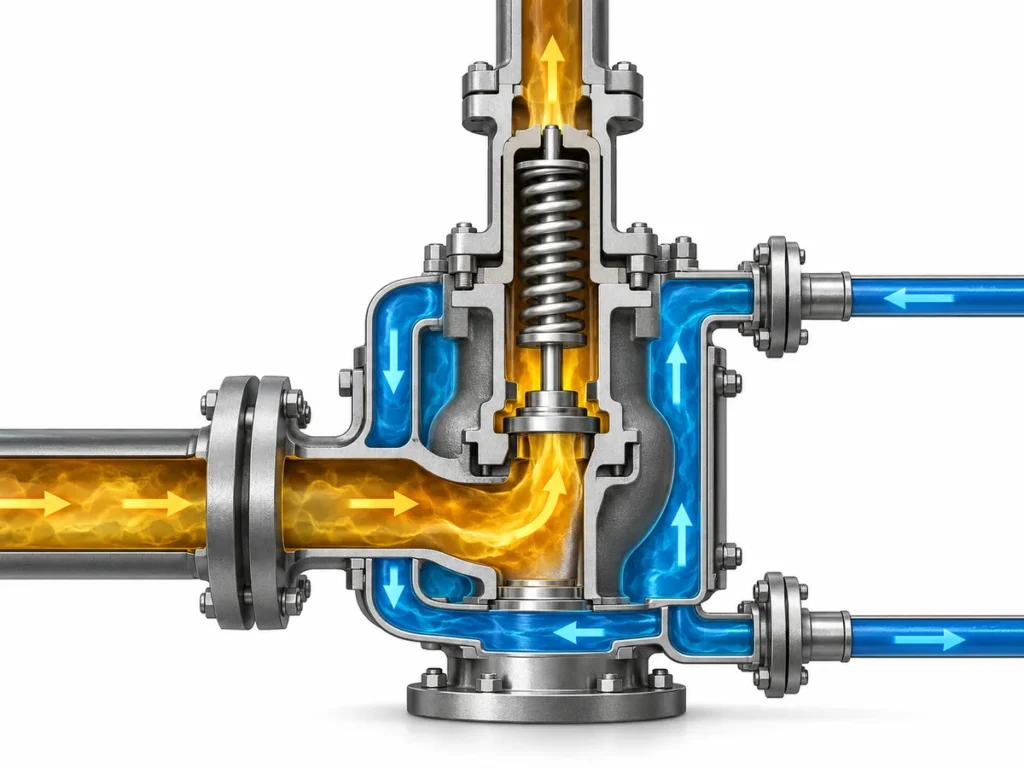
Within their respective scopes, API and manufacturer documentation distinguish conventional, balanced and pilot-operated pressure-relief valves rather than treating them as one interchangeable design category. API 527 separately includes conventional, bellows and pilot-operated designs within its seat-tightness testing scope, while current manufacturer technical data show that back-pressure capability, trim and service media can vary by architecture.
For example, Crosby J-Series technical data distinguish conventional and balanced designs and identify different application behavior under back pressure. That manufacturer-specific evidence should not be universalized into a single numerical limit for all brands; it demonstrates why architecture is a real replacement variable.
A change in architecture can matter when the application or installed system interacts differently with the candidate design. A conventional spring-loaded valve, a balanced bellows/diaphragm valve and a pilot-operated valve may respond differently to superimposed or built-up back pressure, process contamination, venting arrangements and maintenance conditions.
The replacement question is not whether a different architecture is always unacceptable or automatically better. It is whether the candidate configuration remains suitable for the defined duty, back pressure, medium and installed conditions.
Fluid, Phase, Temperature and Materials
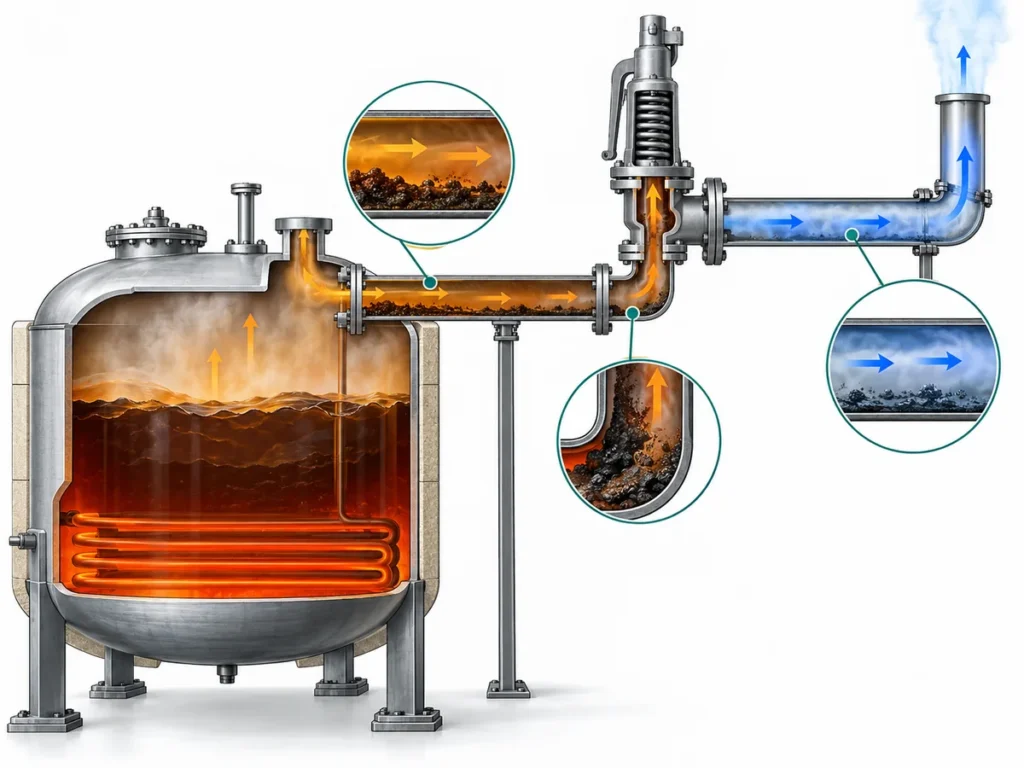
Service compatibility needs its own evidence. A valve certified or documented for one medium or phase should not be assumed equivalent for another merely because the body size and set pressure match.
Depending on the application, relevant information can include:
- fluid identity and corrosivity;
- gas/vapor, steam, liquid or two-phase behavior used in the sizing/application basis;
- relieving and normal service temperature;
- body, nozzle, disc, guide, spring and other trim materials where service exposure matters;
- metal seat versus soft seat and the actual elastomer/polymer specification where used;
- bellows, diaphragm, piston or pilot materials and compatibility where applicable;
- sour-service or other project-specific material requirements where relevant.
The National Board NB-18 database itself records certified media as part of device certification information rather than assuming one certification basis applies to every fluid. Manufacturer documentation shows the same reality: some product families have dedicated liquid trim, gas service, steam service or dual-media configurations.
Illustrative replacement-review case — same model family, different service basis: A supplier proposes a valve from the same broad product family with the same nominal size and set pressure, but the offered trim/material package was documented for a different medium or temperature range than the installed duty. The correct review is not “same family = equivalent.” Confirm the applicable certified/application medium, relieving temperature, wetted materials, seat/soft goods and any phase-specific trim before proceeding.
Material comparison deserves similar care. Requiring every replacement component to be literally identical to the old valve is not a universal definition of equivalence. What has to be demonstrated is that the candidate’s materials and configuration satisfy the applicable service, corrosion, temperature and project requirements.
Different does not automatically mean unacceptable. Unresolved suitability is not the same as demonstrated equivalence.
For the detailed material-selection task, see the Safety Valve Material Selection Guide.
Check the Installed-System Interface and Back Pressure
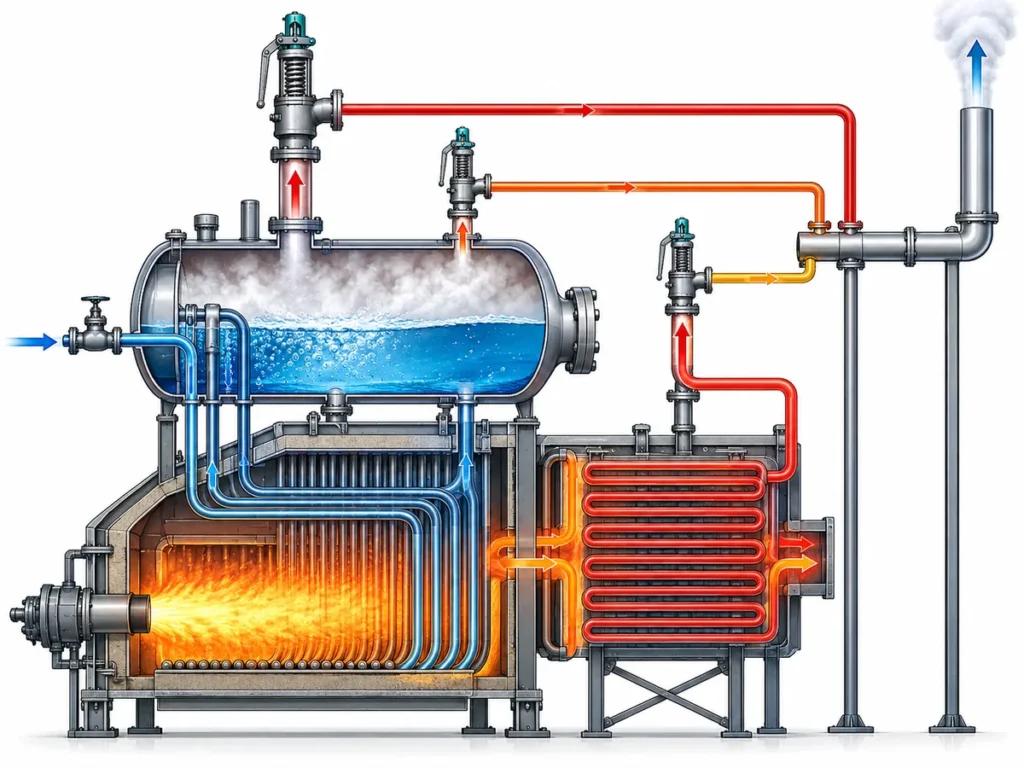
A pressure-relief valve works as part of a system. A catalogue match cannot fully represent what happens between the protected equipment, the valve inlet and the discharge path.
API 520 Part II treats pressure-relief-device installation as a separate engineering subject and includes an engineering-analysis route for installation questions within its scope. API 521 covers the wider pressure-relieving and depressuring system, including the disposal path, within its stated petroleum/petrochemical scope. These references support reviewing the installed system rather than judging the valve in isolation.
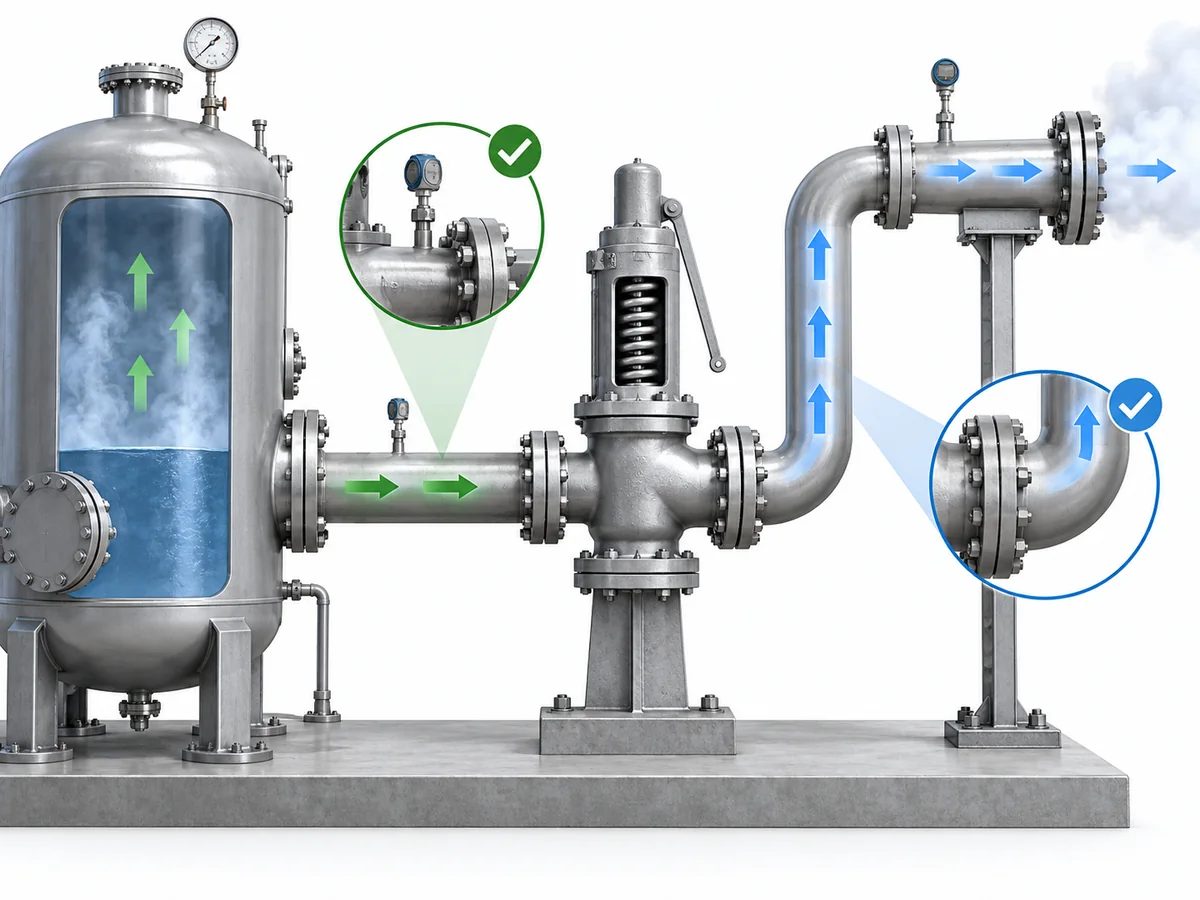
Mechanical Interface
First ask whether the candidate can physically connect.
Relevant project checks may include:
- inlet and outlet nominal size;
- pressure rating or class;
- flange or connection standard and facing;
- center-to-face dimensions and orientation where installation geometry matters;
- lifting-device, cap, bonnet vent, drain or other accessory clearances where relevant.
But physical fit is only the first layer.
A valve can fit the piping and still require further functional review.
This is why “drop-in replacement” should be used carefully. Mechanical interchangeability and complete functional equivalence are not the same claim.
Outlet Conditions and Back Pressure
The outlet side can affect the replacement decision as well.
National Board NB-18 cautions that listed capacities established under atmospheric-discharge test conditions may not be valid when discharge back pressure exists. Manufacturer technical data likewise distinguish conventional and balanced designs where variable or built-up back pressure is relevant.
The practical review path is therefore:
protected equipment → inlet path → relief valve → outlet/discharge path
For each part of that path, ask a separate question:
- Does the candidate physically connect?
- Are the inlet conditions compatible with the candidate’s application basis and stable operation?
- Are the outlet and discharge conditions compatible?
- What superimposed and built-up back pressure can occur during the governing relief case?
- Does the candidate architecture require a back-pressure correction, balanced construction or another documented arrangement?
- Is the available capacity/performance evidence applicable to those conditions?
Those questions are more useful than applying a universal rule such as “any back pressure requires a balanced valve.” The acceptable back-pressure behavior depends on the actual valve design, relieving conditions, discharge system and manufacturer/code basis.
Illustrative replacement-review case — discharge header changed after original installation: A conventional spring-loaded valve is being replaced with a nominally matching candidate. Since the original installation, several relief devices have been tied into a common discharge header. The candidate’s size and set pressure match, but the current superimposed/built-up back-pressure basis has not been rechecked. The replacement remains HOLD until the discharge-system condition and candidate back-pressure suitability are confirmed.
For a deeper treatment of outlet pressure and balanced configurations, see Back Pressure and Bellows in Safety Valves.
Compare Original Requirements with Candidate Evidence
A practical way to organize a replacement review is to stop thinking in terms of a “matching model” and start thinking in terms of an evidence comparison.
Start with the Original or Required Basis
Gather the best available definition of what the existing protection function actually requires. The original nameplate and datasheet are useful evidence, but they should be checked against the current equipment and relief-system basis rather than treated as the entire design record.
Depending on the project, useful source records can include:
- original valve nameplate and datasheet;
- relief-valve sizing sheet or calculation reference;
- equipment MAWP / design pressure and current operating basis;
- governing overpressure case and required relieving capacity;
- fluid, phase, relieving temperature and back-pressure basis;
- piping / discharge-system information;
- materials and accessory requirements;
- ASME/National Board or other project-required certification and marking records;
- management-of-change or engineering records for later process/discharge-system modifications.
Then compare each relevant requirement with evidence for the proposed replacement.
| Original or required basis | Candidate evidence to review | If unresolved |
|---|---|---|
| Device/application classification | Manufacturer’s documented valve type and configuration | Clarify device function before claiming equivalence |
| Set-pressure / protected-equipment pressure basis | Candidate set-pressure range, marking and project setting | Resolve against the governing protection requirement |
| Required relieving duty | Applicable rated/certified capacity evidence | Do not infer adequacy from nominal size |
| Fluid / medium / phase | Certified/application medium and manufacturer data | Confirm suitability before equivalence |
| Relieving / service temperature | Published pressure-temperature limits and material/soft-good information | Resolve compatibility |
| Valve architecture | Conventional, balanced, pilot-operated or other documented configuration | Determine whether the difference affects capacity, stability or back-pressure behavior |
| Inlet/outlet mechanical interface | Drawing, sizes, ratings, facing and dimensions | Resolve mechanical mismatch |
| Installed back pressure | Candidate back-pressure limits/corrections and applicable capacity evidence | Verify installed-system suitability |
| Materials / seat / sealing configuration | Candidate bill of materials or configuration documentation | Resolve service or project requirements |
| Accessories / special features | Bellows/diaphragm, lifting device, soft seat, restricted lift, rupture-disk combination or other documented options | Confirm whether the feature affects the original protection basis |
| Certification / conformity scope | ASME/National Board and other project-required evidence for the actual offered configuration | Keep acceptance unresolved until scope is confirmed |
| Nameplate / traceability | Manufacturer, model/type, designator, set pressure, capacity/marking and serial/traceability information as applicable | Resolve identity before installation |
| Known deviation from original or current basis | Engineering disposition / MOC / project approval | Do not silently treat the deviation as equivalent |
This matrix is a replacement-review framework, not a universal regulatory checklist. The exact required evidence still depends on the equipment, service, jurisdiction, construction code and project.
Ask for Candidate Evidence, Not Just a Cross-Reference
“Equivalent to Model XYZ” is a useful commercial statement only if the evidence behind it can be reviewed.
Depending on the issue being checked, meaningful candidate evidence may include:
- a current datasheet for the exact offered model/configuration;
- a general-arrangement or dimensional drawing;
- documented valve architecture, trim and accessory configuration;
- applicable rated or certified capacity evidence and certified medium;
- materials and seat/sealing information;
- back-pressure limits or correction basis where relevant;
- nameplate / marking data;
- ASME/National Board or other conformity documentation within its actual scope;
- repair/conversion documentation if the candidate is not a new, as-manufactured valve.
The National Board NB-18 system illustrates why scope matters: manufacturer/assembler authorization, device design, certified medium, flow area, set-pressure range and capacity data are maintained as distinct records rather than collapsed into a generic one-line approval.
Where a candidate has been repaired or converted, the replacement review should also distinguish original manufacture from repair/conversion status. The current NBIC is organized with a dedicated Part 4 for pressure-relief devices, and National Board authorization/repair-directory information should be checked where the project requires it. Do not assume that a historical valve nameplate or commercial description automatically proves the current repaired configuration.
A supplier cross-reference is therefore a candidate identification tool, not a substitute for every engineering and project comparison that follows.
If the original data are incomplete, keep the unknown visible. Do not fill an original-duty gap merely because the proposed replacement has a detailed catalogue.
For broader purchasing inputs outside this replacement-specific comparison, see the Safety Valve Procurement Checklist.
When an “Equivalent Replacement” Claim Should Proceed, Hold or Be Rejected
After the technical comparison, the reviewer still needs a practical way to deal with three different situations: adequate evidence, missing evidence and a confirmed mismatch.
| Screening status | What it means | Next action |
|---|---|---|
| PROCEED | Relevant evidence is available and no critical mismatch has been identified at this screening stage. | Continue through the project’s engineering, procurement and approval process. |
| HOLD | A critical comparison cannot be completed because required information is missing, conflicting or outside the evidence provided. | Obtain or verify the missing information before making an equivalence claim. |
| REJECT | Available evidence shows that a confirmed requirement is not satisfied by the candidate. | Do not treat that candidate as equivalent for the defined basis. |
The distinction between HOLD and REJECT prevents uncertainty from being converted into a false technical conclusion.
A missing capacity document does not prove inadequate capacity. Unknown back-pressure conditions do not prove the valve is unsuitable. An unresolved material requirement is not yet the same as a confirmed incompatible material. A supplier’s unverified statement that a device is “ASME equivalent” is also not enough to establish the exact certification/designator or candidate configuration.
Those are HOLD situations until the relevant evidence is established.
REJECT is different. It applies when the review already shows that a requirement the candidate must satisfy is not met—for example, a confirmed capacity shortfall, incompatible connection/pressure rating that the project will not modify, an unsupported required medium/service, or a material/configuration requirement that the candidate cannot meet.
PROCEED also needs a strict boundary. It does not mean:
- approved for installation;
- code accepted;
- project approved;
- guaranteed safe;
- universally interchangeable.
It means only that the candidate has passed this preliminary evidence screen far enough to continue to the actual project review.
A parameter difference should therefore neither be ignored nor rejected automatically. Ask what requirement the difference affects. If the requirement remains satisfied and the difference is acceptable under the project basis, literal identity may not be necessary. If the requirement is not met, the candidate is not equivalent for that duty.
Replacement Equivalence Decision Checklist
- Protection basis: Are the protected equipment, governing pressure limit, set pressure and relief case current?
- Required capacity: Is the governing required relieving capacity defined?
- Candidate capacity: Is applicable rated/certified capacity evidence available for the relevant medium and conditions?
- Fluid and phase: Does the candidate documentation cover the actual gas/vapor, steam, liquid or two-phase basis?
- Back pressure: Are current superimposed/built-up back pressure and discharge-system conditions known and compatible with the candidate?
- Materials: Are body, trim, seat/soft goods and special service materials suitable?
- Mechanical interface: Do size, rating, facing, dimensions and orientation fit?
- Accessories/configuration: Are bellows, lifting device, restricted lift, pilot system, soft seat or other required features accounted for?
- Certification and marking: Do the ASME/National Board or other project-required records apply to the actual offered configuration?
- Nameplate/traceability: Can the offered valve be traced to the datasheet, drawing and certification evidence being reviewed?
- Change management: Have process, equipment or relief/discharge-system changes been screened before relying on the old valve basis?
- Deviations: Is every meaningful difference dispositioned rather than silently treated as equivalent?
A more useful replacement RFQ is not simply a legacy model number followed by “please quote equivalent.” It includes the best available original-valve information, current protection-duty basis, service medium/phase, relieving temperature, inlet/outlet and discharge conditions, materials/accessories requirements, required conformity/marking evidence, plus the documentation for the proposed candidate.
Reviewing a replacement safety valve?
Prepare the original nameplate or datasheet, current service and relief-duty information, inlet/outlet and discharge conditions, and the proposed candidate documentation. ZOBAI can then review the candidate information as part of an engineering/RFQ discussion; final suitability remains subject to the applicable project and approval basis.
Frequently Asked Questions About Replacement Safety Valve Equivalence
Is matching the model number, valve size and set pressure enough for a replacement safety valve?
No. Those items help identify a candidate, but equivalence also depends on the current required relieving capacity, applicable capacity evidence, service medium/phase, temperature, back pressure, valve architecture, materials, mechanical interface, accessories, certification/marking scope and the installed relief-system basis.
Why is certified relieving capacity more important than matching the connection size?
Connection size describes the piping interface. The protection function depends on whether the candidate can relieve at least the required load under an applicable capacity basis. A same-size valve can therefore be inadequate, and a different internal flow area or architecture may require a separate capacity comparison.
Can a replacement safety valve use the same set pressure if the process has changed?
The old set pressure is useful evidence, but it does not prove that the original relief case and required capacity are still valid. If the protected equipment, process, connected sources, operating conditions or discharge system changed, the current protection basis should be reviewed before equivalence is accepted.
How does back pressure affect a replacement safety valve review?
Back pressure can affect capacity and operating behavior depending on the valve design. Review the current superimposed and built-up back pressure, discharge-system configuration and the candidate manufacturer’s applicable performance basis rather than applying a universal rule based only on valve type.
Do the replacement valve materials have to be identical to the original valve?
Not necessarily. Literal material identity is not a universal definition of equivalence. The candidate materials, trim, seat and soft goods must satisfy the actual fluid, temperature, corrosion and project requirements, and any change that affects the protection basis should be dispositioned.
What documents should be requested before accepting an “equivalent” replacement?
Typical evidence includes the exact candidate datasheet, drawing, configuration and materials, applicable rated/certified capacity information, back-pressure/application limits where relevant, nameplate/marking data, required ASME/National Board or project conformity records, and any repair/conversion documentation if the valve is not new as manufactured.
What does HOLD mean in this article’s replacement-screening framework?
HOLD means the evidence is incomplete or conflicting, so equivalence cannot yet be demonstrated. It is not a code classification and it is not the same as REJECT. The missing capacity, service, material, back-pressure, certification or other evidence should be resolved before the candidate proceeds.