
Back Pressure Balanced • Bellows Safety Relief Valves
Bellows Balanced Safety Valves Manufacturer for Back Pressure and Corrosive Service
Bellows balanced safety valves are spring loaded safety relief valves with a bellows assembly designed to reduce the effect of outlet back pressure and protect the spring chamber from corrosive or dirty discharge media.
ZOBAI supplies bellows balanced safety relief valves for chemical plants, petrochemical units, pressure vessels, flare headers, common discharge systems and corrosive outlet service. Selection support includes set pressure, certified relieving capacity, back pressure review, bellows material, discharge piping, seat tightness and documentation requirements.
Valve Type: Balanced Bellows Safety Relief Valve
Service: Gas / Vapor / Steam / Chemical Media
Key Checks: Back Pressure / Capacity / Bellows Material / Bonnet Vent
Applications: Flare Header / Common Discharge / Corrosive Outlet
Docs: Datasheet / Test Report / Material Certificate / Calibration Record
Bellows balanced safety valve selection should be confirmed against the actual medium, set pressure, operating pressure, relieving capacity, back pressure, discharge system, bellows material, vent arrangement and applicable code requirements.
Safety Valve Categories
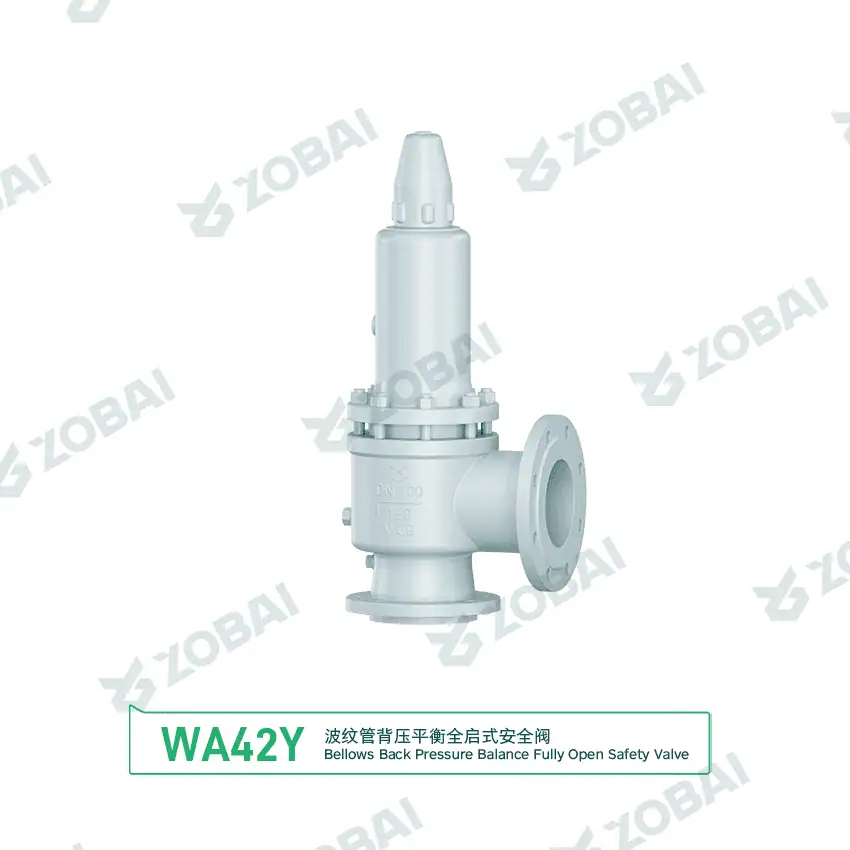
Bellows Balanced Safety Valves for Back Pressure and Corrosive Discharge Service
A bellows balanced safety valve is a spring loaded safety relief valve with a metal bellows assembly designed to reduce the effect of back pressure on valve performance and isolate key moving parts from the discharge side. It is commonly selected for pressure vessels, chemical systems, flare headers, common discharge manifolds and corrosive outlet conditions where a conventional spring loaded valve may become unstable or lose effective capacity.
Why bellows balancing matters
In a conventional spring loaded safety valve, back pressure at the outlet can affect disc forces, opening behavior, rated capacity and reseating stability. A bellows balanced safety valve uses a bellows element to help balance the effect of variable back pressure and protect the spring chamber from corrosive or dirty discharge media.
The valve should not be selected only because the system has an outlet pipe. It becomes important when the outlet connects to a long discharge line, silencer, scrubber, flare system or common relief header where built-up or superimposed back pressure may affect valve performance.
Selection boundary
Bellows balanced safety relief valves are useful where back pressure is significant or variable, or where the outlet side may expose the spring chamber to corrosive gases, vapors or condensate. They are not a shortcut for poor discharge piping design, oversized valves or missing capacity calculation.
A bellows design can reduce the influence of back pressure, but the allowable back pressure limit, bellows material, discharge system and certified relieving capacity must still be confirmed for the actual application.
How a Bellows Balanced Safety Valve Works
A bellows balanced safety valve works like a spring loaded safety valve at the inlet, but adds a bellows assembly around the spindle or disc holder area. The bellows helps isolate the spring chamber from outlet pressure and discharge media. This reduces the effect of variable back pressure on the disc force balance and improves valve stability in systems connected to common discharge headers.
Closed Position
The spring keeps the disc against the seat. The bellows separates the spring chamber from the outlet side.
Pressure Reaches Set Point
When inlet pressure reaches set pressure, the disc begins to lift as process pressure overcomes spring force.
Back Pressure Balanced
The bellows reduces the effect of outlet back pressure on the moving parts, helping maintain more stable lift behavior.
Reseating
As inlet pressure falls, the spring closes the valve. Bellows condition and back pressure behavior affect reseating reliability.
Key Components of a Bellows Balanced Safety Relief Valve
The bellows is the key component, but it cannot be reviewed alone. The valve body, nozzle, disc, guide, spring, bonnet, vent arrangement, bellows material and outlet piping all affect performance in back pressure or corrosive discharge service.
Bellows Assembly
The bellows assembly is designed to balance the effect of back pressure and isolate internal moving parts from the discharge side. Its material must be compatible with the outlet medium, temperature, pressure cycling and corrosion risk.
Bellows failure may expose the spring chamber to process media and change valve behavior. For critical service, inspection access, bonnet venting and maintenance intervals should be defined before installation.
Spring Chamber Protection
In corrosive or dirty discharge service, the bellows can help protect the spring and guide area from outlet media. This is important when discharge contains acid vapor, chlorides, sour components, wet gas or condensate that may cause corrosion or sticking.
Protection does not mean the spring chamber can be ignored. Bonnet vent condition, corrosion marks, leakage evidence and bellows integrity should be checked during maintenance.
Nozzle, Disc and Seat Tightness
The nozzle and disc remain the main sealing interface. Back pressure problems are often visible as chatter, poor reseating or leakage, but the root cause may also include damaged seating surfaces, dirt, wrong operating margin or improper installation.
Metal seats are often used for high-temperature or severe service. Soft seats may improve tightness in suitable clean service but must be checked against temperature and chemical compatibility.
Bonnet Vent and Bellows Monitoring
Many bellows balanced safety valves require a bonnet vent. The vent helps prevent pressure build-up in the bonnet and may provide an indication of bellows leakage. The vent should not be plugged unless the valve design and manufacturer instructions specifically allow it.
A plugged or incorrectly piped bonnet vent can defeat part of the bellows function and may hide bellows failure. Vent routing should be reviewed during installation and maintenance.
Quick Back Pressure Fit Check
Use this screening tool to identify what should be reviewed before selecting a bellows balanced safety valve. It does not replace sizing calculation or code review.
Select your main service concern
Click one condition below to see the engineering checks that matter most.
Parameters That Decide Whether a Bellows Balanced Valve Is Suitable
Bellows Balanced vs Conventional Spring Loaded Safety Valve
Bellows balanced safety valves are usually selected when outlet back pressure or corrosive discharge conditions make a conventional valve less reliable. The comparison below can be used for initial engineering screening.
| Item | Bellows Balanced Safety Valve | Conventional Spring Loaded Safety Valve |
|---|---|---|
| Back pressure behavior | Designed to reduce the effect of variable or built-up back pressure. | More affected by outlet pressure changes. |
| Spring chamber protection | Bellows helps isolate the spring chamber from discharge media. | Spring chamber may be exposed depending on design and service. |
| Best for | Common discharge headers, flare systems, corrosive outlet service and variable back pressure. | Clean service with low and stable back pressure. |
| Maintenance focus | Bellows integrity, bonnet vent, corrosion and leakage signs. | Spring, seat, guide, set pressure and normal wear. |
| Selection risk | Assuming bellows solves all piping or capacity problems. | Ignoring back pressure and outlet system resistance. |
| Typical applications | Chemical plants, petrochemical units, flare headers, acidic vapor, wet gas and corrosive discharge lines. | Boilers, vessels, pipelines and general clean pressure protection points. |
Where Bellows Balanced Safety Valves Are Used
Common relief headers and flare systems
When multiple safety valves discharge into a common header, outlet pressure can vary during simultaneous or sequential relief events. Bellows balanced designs are often reviewed for these systems because variable built-up back pressure may affect conventional valve stability.
Chemical and corrosive discharge service
Acid vapor, chlorides, wet gas, sour components and corrosive condensate can damage the spring chamber, guide or internal parts. A bellows design can help isolate critical components from the discharge side, but material compatibility must still be verified.
Petrochemical and process skids
Process units often have relief valves connected to downstream collection systems, scrubbers or flare networks. Selection should include credible overpressure cases, outlet system resistance, back pressure limits, certified capacity and maintenance access.
Wet gas and vapor service
Wet gas, condensable vapor and systems with intermittent liquid carryover may create corrosion or deposit risks at the outlet side. Bellows material, vent routing and inspection interval should be reviewed before final valve selection.
Bellows Balanced Safety Valve Selection Table
| Service Condition | Common Requirement | Recommended Review | Key Engineering Check | Main Risk |
|---|---|---|---|---|
| Variable back pressure | Stable opening and reseating | Bellows balanced safety valve | Superimposed and built-up back pressure | Chatter or poor reseating if back pressure is ignored |
| Common discharge header | Multiple valves discharging into one system | Balanced design with header calculation | Header pressure, simultaneous relief, outlet resistance | Capacity reduction or unstable lift |
| Corrosive discharge | Spring chamber protection | Bellows with compatible material | Bellows, trim, body and vent material | Bellows corrosion or spring chamber contamination |
| Wet gas or condensate | Reduced internal corrosion risk | Bellows design with drainage review | Condensate, vent routing, low points and corrosion allowance | Liquid accumulation or hidden bellows damage |
| High temperature | Reliable bellows and spring performance | High-temperature material review | Bellows fatigue, spring relaxation and seat design | Reduced life or leakage after thermal cycling |
| Replacement project | Match existing protection requirement | Nameplate and datasheet verification | Set pressure, capacity, orifice, bellows type and material | Replacing by size but missing capacity or back pressure limits |
This table is for preliminary engineering screening. Final selection must be confirmed against the medium, set pressure, operating pressure, required relieving capacity, relieving temperature, back pressure, discharge system, bellows material and applicable code requirements.
Common Engineering Mistakes to Avoid
Using a conventional valve on a common header
A conventional spring loaded valve may perform well when vented to atmosphere, but become unstable after being connected to a common relief header. The cause is often increased built-up back pressure. The preventive action is to calculate outlet system resistance and review whether a bellows balanced valve is required.
Assuming bellows means no maintenance
Bellows can improve performance under back pressure, but they are also fatigue- and corrosion-sensitive components. If bonnet vent leakage, corrosion marks or bellows damage are ignored, the valve may lose its balancing function and expose the spring chamber to process media.
Replacing by inlet size only
Two valves with the same connection size can have different orifice areas and certified relieving capacities. A bellows balanced safety valve should be selected by the actual relieving case, certified capacity, back pressure condition and material requirements, not only by nominal pipe size.
Bellows Balanced Safety Valve Troubleshooting Table
| Symptom | Possible Cause | Engineering Check | Corrective Action |
|---|---|---|---|
| Valve chatters during relief | Excessive built-up back pressure, inlet pressure loss or oversized valve | Review inlet piping, outlet header and actual relieving flow | Recalculate piping losses, review valve size and confirm bellows suitability |
| Leakage from bonnet vent | Possible bellows failure or leakage path into bonnet | Inspect bellows, bonnet vent and internal parts | Remove from service if required, repair or replace bellows assembly |
| Valve does not reseat cleanly | Back pressure, damaged guide, seat damage or bellows restriction | Check outlet pressure, seat condition, guide movement and bellows integrity | Repair internals, clean deposits and review discharge system |
| Spring chamber corrosion | Bellows leakage, plugged vent or corrosive discharge exposure | Inspect bonnet, vent, spring and guide area | Replace damaged parts and review material or vent arrangement |
| Capacity lower than required | Wrong orifice, incorrect sizing basis or high outlet resistance | Review certified capacity, relieving case and outlet pressure calculation | Select correct orifice and verify back pressure limit |
Continue the Bellows Balanced Safety Valve Review
Use these internal resources to connect bellows balanced valve selection with product type comparison, back pressure calculation, corrosive discharge service, installation review and RFQ preparation.
Standards and Documents to Confirm Before Purchase
Standards to review
Bellows balanced safety valve selection may involve ASME, API, ISO, National Board, NBIC and project-specific pressure equipment requirements. The correct standard depends on the protected equipment, industry, region and buyer specification.
- API 520 for sizing, selection and installation guidance in process applications.
- API 521 for pressure-relieving and depressuring system design context.
- API 526 where flanged steel pressure relief valve dimensions and orifice designation are relevant.
- API 527 when seat tightness test requirements are specified.
- ASME BPVC where pressure vessel or boiler protection requirements apply.
- ASME BPVC Section XIII for current overpressure-protection rules covering pressure relief devices, testing and marking.
- ISO 4126 where international safety valve product requirements are part of the project specification.
- National Board VR Accreditation requirements where pressure relief valve repair or VR-authorized work applies.
Documents buyers often request
Documentation should be confirmed before quotation, especially for chemical plants, petrochemical units, flare systems, pressure vessels and regulated equipment. Bellows-related requirements should be stated clearly before manufacturing.
- Datasheet and model specification.
- Set pressure calibration record.
- Certified relieving capacity information.
- Seat tightness test report when required.
- Material certificate and heat number traceability where specified.
- Bellows material confirmation and construction details.
- Nameplate, tagging and inspection documentation.
Official Standards Sources for Engineering Verification
Use ZOBAI internal pages for application guidance, sizing inputs and RFQ preparation. Use the issuing-organization sources below when a project requires verification of pressure-relief sizing, back-pressure systems, flanged PRV dimensions, seat tightness, ASME overpressure protection, certified capacity or valve repair requirements.
RFQ Checklist for Bellows Balanced Safety Valves
| Required Data | Why It Matters | Example Input |
|---|---|---|
| Medium | Determines sizing method, corrosion risk and material selection. | Steam, acid vapor, wet gas, natural gas, ammonia |
| Set pressure | Defines the opening point of the valve. | 16 bar g |
| Operating pressure | Confirms operating margin and leakage risk. | 12 bar g |
| Required relieving capacity | Confirms whether the valve can protect the equipment. | kg/h, Nm³/h, lb/h, SCFM, GPM |
| Relieving temperature | Affects material, bellows fatigue and capacity calculation. | 180°C |
| Back pressure condition | Determines whether bellows balancing is required and suitable. | Constant, variable, built-up, superimposed |
| Discharge system | Confirms outlet resistance and header behavior. | Atmosphere, silencer, scrubber, flare header |
| Bellows material | Prevents corrosion, fatigue failure and compatibility problems. | Stainless steel, alloy option, project specified |
| Connection standard | Ensures piping and installation compatibility. | ASME, EN, GB, JIS |
| Applicable code | Defines documentation, testing and acceptance requirements. | ASME, API, ISO, GB, project specification |
| Existing drawing or nameplate | Reduces replacement selection risk. | Photo, datasheet, model number, orifice, capacity |
Need Help Selecting a Bellows Balanced Safety Valve?
Send us your medium, set pressure, operating pressure, relieving capacity, back pressure, discharge system, bellows material requirement and existing datasheet. Our engineering team can review whether a bellows balanced safety relief valve is suitable before quotation.
Prepare these data before RFQ
TECHNICAL INSIGHTS
Related Bellows Balanced Safety Valves Articles
FAQ
Bellows Balanced Safety Valve FAQs for Back Pressure and Corrosive Service
What is a bellows balanced safety valve?
A bellows balanced safety valve is a spring loaded safety relief valve with a metal bellows assembly. The bellows helps reduce the effect of outlet back pressure on valve performance and helps isolate the spring chamber from discharge media.
When should you use a bellows balanced safety valve?
A bellows balanced safety valve is often used when outlet back pressure is significant, variable or created by a common discharge header. It is also used when corrosive or dirty discharge media may damage the spring chamber or guide area.
What is the difference between a bellows balanced safety valve and a conventional safety valve?
A conventional spring loaded safety valve is more affected by outlet back pressure. A bellows balanced safety valve uses a bellows assembly to reduce this influence and help protect the spring chamber from corrosive or dirty discharge media.
Does a bellows balanced safety valve eliminate back pressure problems?
No. A bellows balanced design can reduce the influence of back pressure, but the actual back pressure, allowable limit, discharge piping, common header behavior and certified relieving capacity still need to be reviewed.
Why is the bonnet vent important on a bellows balanced safety valve?
The bonnet vent may prevent pressure build-up in the bonnet and can help indicate bellows leakage. It should not be plugged unless the valve design and manufacturer instructions specifically allow it.
Can bellows balanced safety valves be used for corrosive media?
They can be used in many corrosive discharge applications, but the bellows material, trim material, body material, seat design and vent routing must be compatible with the actual medium, temperature and pressure cycling.
What causes bellows failure in safety valves?
Bellows failure may be caused by corrosion, fatigue, pressure cycling, vibration, improper material selection, excessive back pressure or poor maintenance. Bonnet vent leakage or spring chamber contamination may indicate a bellows problem.
What information is needed before requesting a bellows balanced safety valve quotation?
Provide the medium, set pressure, operating pressure, required relieving capacity, relieving temperature, back pressure condition, discharge system, bellows material requirement, connection standard, body and trim material, applicable code, quantity and existing drawing or nameplate.
What information should I provide before requesting a quotation?
Provide the medium, set pressure, operating pressure, relieving capacity, relieving temperature, inlet and outlet size, connection standard, material requirement, back pressure condition, applicable code, quantity and any existing drawing or datasheet.

Raymon Yu
“When a safety valve fails to pop on site, it’s rarely because someone can’t read a standard. It’s usually because critical operating parameters (like backpressure or relief temperature) were assumed instead of specified. I reviewed the key technical content on this page to keep it practical, API/ASME spec-aligned, and RFQ-ready. (We prefer assumptions for lunch choices.)”
What I work on daily: reviewing drawings and project specs, supporting engineer-to-engineer questions, resolving capacity calculations, material selection, and backpressure impacts so production and quoting stay consistent. (Yes—set pressure and seat tightness test records get plenty of attention.)