
Heated Pressure Relief for Viscous and Solidifying Media
Jacketed Safety Valves Manufacturer
Jacketed safety valves are pressure relief valves designed with a heated body jacket to help keep viscous, crystallizing, waxy or solidifying media in a flowable condition near the valve inlet, seat and discharge path. They are commonly considered for sulfur, asphalt, bitumen, resin, polymer, heavy oil, waxy hydrocarbons and heated chemical processes where ordinary valve bodies may cool down and become vulnerable to plugging. Selection must confirm set pressure, required relieving capacity, heating medium, back pressure, material compatibility, drainage and maintenance access.
Heating Media: Steam / Hot Water / Thermal Oil Options
Service: Sulfur / Bitumen / Resin / Polymer / Heavy Oil
Key Checks: Temperature / Viscosity / Capacity / Back Pressure
Design Focus: Jacket Drainage / Venting / Thermal Expansion
Materials: WCB / CF8 / CF8M / CF3M / Alloy Options
Docs: Datasheet / Test Report / Material Certificate / Calibration Record
Selection should be confirmed against the actual medium behavior, solidification tendency, viscosity, set pressure, relieving capacity, heating medium condition, back pressure, installation layout and applicable code requirements.
Safety Valve Categories
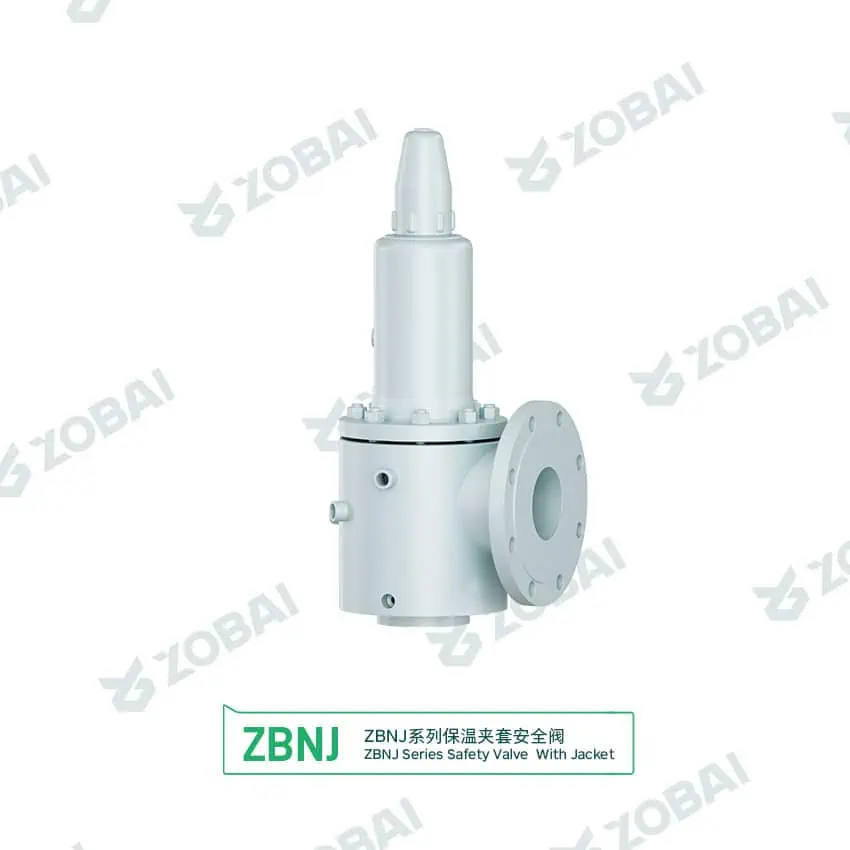
Jacketed Safety Valves for Viscous, Crystallizing and Solidifying Media
A jacketed safety valve is a pressure relief valve with a heated jacket around selected valve body areas to help maintain process medium temperature near the inlet, seat and flow path. It is used when the relieved medium may become too viscous, crystallize, freeze, solidify or deposit if the valve body loses heat during standby or operation.
What the jacket does — and what it does not do
The heating jacket is intended to keep the valve body warm enough to reduce the risk of plugging and poor lift caused by cold, solidified or highly viscous medium. Typical heating media may include steam, hot water, thermal oil or another project-approved heating fluid, depending on process requirements.
A jacketed safety valve is not a substitute for correct pressure relief sizing. The set pressure, required relieving capacity, certified capacity, orifice area, inlet pressure loss, outlet back pressure and discharge piping still need to be checked in the same way as other pressure relief valves.
Engineering selection boundary
Jacketed construction should be considered when ordinary insulation or external tracing cannot keep the valve flow path in a safe fluid condition. The jacket should be reviewed together with process temperature, fluid viscosity, solidification point, heat tracing of nearby piping and maintenance cleaning method.
The heating jacket helps preserve flowability, but the valve must still be selected by pressure relief capacity, medium properties, back pressure, material compatibility and applicable code requirements.
How a Jacketed Safety Valve Works
The process pressure boundary and the heating-jacket pressure boundary are separate and each must be suitable for its own pressure, temperature, medium and test requirement. The process medium remains inside the pressure relief flow path, while the heating medium circulates through the jacket cavity. Before startup and during normal operation, the jacket helps maintain the valve body temperature so the medium near the seat and nozzle does not solidify or become too viscous to relieve properly.
Preheating
The jacket is supplied with heating medium before operation where required, so the valve body and nearby piping are not colder than the process condition.
Standby Protection
During normal operation, the valve remains closed while the jacket reduces cooling, crystallization and deposit formation around the pressure relief path.
Relieving Event
When inlet pressure reaches set pressure, the valve opens and must discharge the required flow through a clear, heated or suitably protected path.
Reseating & Drainage
After pressure drops, the valve closes. Drainage, venting and cleaning provisions help reduce residual medium solidification after the event.
Design Details That Matter in Jacketed Service
Jacketed safety valve selection is a combined review of pressure relief performance and thermal management. The valve may pass a pressure test, but still fail in service if the jacket does not heat the critical zones, condensate is trapped, the outlet freezes, or the process medium deposits near the seat.
Heating Jacket Arrangement
The jacket should heat the areas where medium cooling is most likely to cause sticking or blockage without overheating the spring chamber, soft goods or heat-sensitive process medium. Jacket inlet, outlet, vent and drain locations should be reviewed to avoid stagnant heating zones, trapped condensate or uneven temperature distribution.
The heating-medium pressure and temperature must remain within the jacket design rating and be compatible with the gasket material, body material, process-side temperature limit and site utility system. If steam is used, condensate drainage is an important part of reliable operation.
Seat, Nozzle and Flow Path Cleanliness
Viscous or crystallizing media can leave deposits around the nozzle, disc and guide area. Deposits may cause leakage, delayed opening, poor lift or failure to reseat. Seat design and trim material should be selected based on medium behavior, temperature and cleaning method.
A jacketed body reduces cooling risk, but it does not remove the need for compatible material, correct seat finish and regular inspection.
Thermal Expansion and Stress
Jacketed valves operate with a temperature difference between the process side, heating side and surrounding environment. Differential expansion can affect gasket loading, bolting, seat alignment and flange stress.
For high-temperature or cyclic service, material selection, bolting, gasket type and installation procedure should be reviewed together. A valve that is mechanically tight at ambient temperature may behave differently after repeated heating cycles.
Inlet, Outlet, Tracing and Insulation
Heating only the valve body is not enough if the inlet pipe, vessel nozzle or discharge pipe becomes cold, restricted or blocked. The complete relief path should be reviewed for tracing, insulation, slope, drainage and safe discharge.
The discharge side is often neglected. If relieved material cools and solidifies after discharge, built-up back pressure, outlet blockage or unsafe accumulation may occur.
Jacketed Safety Valve Fit Check
Use this screening tool to decide whether jacketed construction should be considered. It is not a sizing calculation. Final selection depends on medium, pressure, temperature, viscosity, solidification behavior, required capacity, back pressure and project standards.
Initial result: jacketed construction may not be necessary
If the medium remains fluid at all relevant conditions and the discharge path is clear, a standard safety valve may be sufficient. Confirm the actual medium behavior, operating temperature and relief scenario before final selection.
Selection Parameters for Jacketed Safety Valves
Jacketed Safety Valve vs Non-jacketed Safety Valve
Jacketed construction should be chosen because the process condition requires thermal control, not because the valve looks more robust. The right choice depends on medium behavior, heat tracing design, relief capacity and maintenance practice.
| Item | Jacketed Safety Valve | Non-jacketed Safety Valve |
|---|---|---|
| Main purpose | Maintains valve body temperature to reduce solidification, crystallization or viscosity-related plugging. | Provides pressure relief where the medium remains suitable for normal valve operation without body heating. |
| Typical medium | Sulfur, asphalt, bitumen, waxy hydrocarbons, heavy oil, resin, polymer, crystallizing chemicals or heated process fluids. | Steam, clean gas, vapor, water, compatible liquid or process fluids that do not solidify near operating conditions. |
| Additional design review | Heating medium, jacket pressure, thermal expansion, drainage, insulation and nearby tracing. | Standard pressure relief sizing, connection, material, back pressure and installation review. |
| Main risk if misapplied | Blocked inlet, plugged outlet, jacket condensate accumulation, thermal stress or poor cleaning access. | Leakage, chatter, wrong capacity, wrong material or poor piping layout. |
| Maintenance focus | Seat deposits, jacket leakage, drain blockage, insulation damage and recalibration after cleaning. | Seat condition, spring condition, set pressure, leakage and general internal wear. |
| Best selection logic | Use when thermal control is necessary for safe relief flow. | Use when the medium remains fluid and clean enough without heating the valve body. |
Where Jacketed Safety Valves Are Used
Molten sulfur and sulfur processing
Sulfur service requires careful review of temperature control, corrosion, plugging risk, discharge routing and cleaning method. The valve, inlet line and discharge path should be kept within the required process condition to reduce solidification risk.
Asphalt, bitumen and heavy oil systems
These media can become highly viscous when cooled. Jacketed safety valves help keep the valve body warm, but the inlet and outlet piping also need tracing and insulation to avoid restricted flow during relief.
Resin, polymer and waxy hydrocarbon service
Sticky or polymerizing media may deposit on the seat and guide. Selection should include body heating, trim material, seat design, flushing or cleaning strategy and inspection interval.
Crystallizing chemical and heated liquid processes
For chemicals that crystallize below a certain temperature, the relief path should be thermally protected. The jacket design should be reviewed with process temperature, heating medium and material compatibility.
Jacketed Safety Valve Selection Table
| Service Condition | Why Jacketed Construction May Be Needed | Recommended Engineering Check | Main Failure Risk | RFQ Data Needed |
|---|---|---|---|---|
| Molten sulfur | Medium may solidify if the valve body or piping cools below process requirement. | Temperature control, corrosion allowance, discharge routing, cleaning method and jacket drainage. | Plugged nozzle, stuck disc, outlet blockage or corrosion-related leakage. | Medium composition, operating temperature, heating medium, set pressure, required capacity. |
| Asphalt or bitumen | Viscosity increases significantly when cooled, reducing relief flow stability. | Viscosity at relieving condition, inlet tracing, outlet tracing, orifice sizing and seat design. | Chatter, incomplete lift, slow reseat or blocked discharge line. | Viscosity data, temperature range, line layout, capacity basis, connection standard. |
| Resin or polymer | Medium may stick, deposit or polymerize near the seat and guide area. | Cleaning access, material compatibility, residence time, heat sensitivity and maintenance interval. | Seat leakage, guide sticking or failure to reseat tightly. | Resin type, temperature limit, cleaning procedure, seal material requirement. |
| Waxy hydrocarbon or heavy oil | Wax formation or viscosity rise may restrict inlet and outlet passages. | Wax appearance behavior, trace heating, insulation, back pressure and discharge slope. | Blocked inlet, reduced capacity or excessive built-up back pressure. | Fluid properties, operating pressure, set pressure, outlet routing, heating utility. |
| Crystallizing chemicals | Solids may form when temperature drops in standby or after relief. | Crystallization temperature, drainability, flushing, trim material and test procedure. | Deposit buildup, leakage after opening or blocked outlet. | Chemical name, concentration, temperature, material restrictions, cleaning method. |
| High-temperature heated liquid | Thermal control may be needed to avoid local cooling in the valve body. | Thermal expansion, gasket selection, bolting, insulation and jacket medium compatibility. | Thermal stress, gasket leakage or poor seat alignment after cycling. | Temperature profile, cycle frequency, material requirement, heating medium pressure. |
This table is for engineering screening only. Final selection depends on medium properties, pressure, temperature, viscosity, required relieving capacity, valve type, back pressure, heating method, installation layout and project requirements.
Mistakes That Cause Jacketed Safety Valve Failure
Heating the valve but not the inlet pipe
A jacketed body cannot relieve pressure if the inlet line or vessel nozzle is cold and blocked. The complete pressure relief path should be reviewed for tracing, insulation, slope and drainability.
Ignoring jacket condensate or heating flow
Steam jackets need proper condensate removal. Poor drainage can cause uneven heating, water hammer, corrosion or loss of thermal performance. Heating medium conditions should be defined in the RFQ.
No cleaning plan for sticky media
Jacketed construction reduces cooling, but deposits can still occur. For sticky, crystallizing or polymerizing media, the valve must be removable and cleanable, with inspection intervals matched to the service severity.
Jacketed Safety Valve Troubleshooting Table
| Symptom | Possible Cause | Engineering Check | Corrective Action |
|---|---|---|---|
| Valve does not open smoothly | Medium deposits around seat, nozzle or guide; inlet passage partially blocked | Check process temperature, inlet tracing, seat condition and fluid solidification behavior | Clean the valve, improve heating coverage, review inlet design and maintenance interval |
| Valve chatters during relief | Excessive inlet loss, outlet back pressure, viscous flow instability or oversized valve | Review inlet line, discharge path, viscosity at relieving condition and capacity basis | Recalculate sizing, reduce pressure loss, improve outlet design or select suitable valve type |
| Seat leakage after relief | Deposits, thermal distortion, damaged seat or medium solidified on seating surface | Inspect nozzle, disc, guide, heating condition and operating pressure margin | Clean, lap, repair, recalibrate and review temperature control near the seat |
| Jacket temperature is unstable | Blocked jacket passage, trapped condensate, poor venting or insufficient heating flow | Check jacket inlet, outlet, drain, vent, heating medium condition and condensate return | Clear jacket path, improve drainage, adjust heating supply or revise jacket piping |
| Outlet plugs after discharge | Relieved medium cools in outlet pipe, silencer or header | Check outlet tracing, insulation, slope, dead legs and back pressure | Add or improve tracing, shorten discharge path, provide drain or revise header design |
| External leakage at gasket or jacket connection | Thermal cycling, wrong gasket material, bolting relaxation or jacket pressure mismatch | Review temperature cycle, gasket specification, bolting procedure and heating medium pressure | Replace compatible gasket, retighten per procedure and confirm jacket design limits |
Standards and Documents to Confirm
Standards commonly reviewed
Jacketed safety valves are usually selected under the same pressure relief engineering framework as other safety valves, with additional review for heating jacket design, thermal service and material compatibility. The applicable standard depends on protected equipment, medium, location and project specification.
- ASME BPVC / ASME safety valve standards for pressure vessel and boiler-related pressure protection requirements where applicable.
- API 520 safety valve sizing for sizing and selection of pressure-relieving devices in process systems.
- Safety valve installation guidance for inlet loss, outlet routing, discharge piping and installation review.
- API 521 pressure relief systems for overpressure scenario and relief/depressuring system review.
- API 526 flanged safety valves where standardized flanged steel PRV dimensions and orifice designations are applicable.
- API 527 seat tightness where the selected valve design and project specification use API 527; otherwise confirm the applicable leakage criterion.
- ISO 4126 safety valve standards where ISO-based safety valve requirements are specified.
- ISO 15156-1 / NACE MR0175 where the project falls within its H₂S-containing oil and gas production scope; confirm downstream, refining or other chemical-service requirements separately.
- ASTM steel and alloy standards when the project requires specific casting, forging, bolting or pressure-boundary material specifications.
Documents buyers often request
For jacketed service, the documentation package should cover both pressure relief performance and thermal utility connection. This avoids a valve that is mechanically correct but difficult to heat, drain, inspect or maintain in the actual plant layout.
- Valve datasheet with model, set pressure, size, material and connection standard.
- Heating jacket connection drawing with inlet, outlet, vent and drain orientation.
- Required relieving capacity and sizing basis when specified.
- Set pressure calibration record.
- Seat tightness test report when leakage control is required.
- Material certificates for body, trim, bolting or jacketed components where required.
- Hydrostatic or pressure test report according to project requirement.
- Installation, heating, drainage and maintenance instructions.
Related Pages for Jacketed Safety Valve Selection
Use these ZOBAI pages to connect jacketed safety valve selection with valve type, material, back pressure, sizing, installation and application guidance.
Related safety valve types
- Safety valves overview for the full product family.
- High temperature applications for heated liquid, thermal oil, hot vapor and thermally managed relief systems.
- Spring loaded safety valves for conventional direct-acting relief applications.
- Bellows balanced safety valves where back pressure or spring chamber isolation matters.
- Pilot operated safety valves for clean service and special capacity or back-pressure cases.
- Corrosion resistant safety valves for aggressive chemicals, sour service and compatible materials.
- High temperature safety valves for elevated-temperature service review.
- Flanged safety valves for process piping and pressure vessel installations.
Engineering guides and applications
- Safety valve selection guide for medium, pressure, capacity and material review.
- Safety valve sizing guide for certified capacity and RFQ inputs.
- Back pressure guide for outlet piping, headers and built-up pressure review.
- Safety valve installation guide for inlet loss and outlet layout checks.
- Chemical processing safety valves for corrosive, crystallizing and fouling media.
- Petrochemical safety valves for reactors, columns, polymer units and heated processes.
- Corrosive service safety valves for acids, alkalis, chlorides and sour fluids.
- Safety valve catalog PDF downloads for datasheets and RFQ support.
External Standards for Jacketed Safety Valve Review
Jacketed safety valves are normally evaluated using standard pressure relief references plus added material, thermal and maintenance checks for viscous, crystallizing or solidifying service.
Pressure relief and capacity references
- API 520 Part I for pressure-relieving device sizing and selection reference.
- API 520 Part II, 7th Edition for pressure-relieving-device installation, inlet pressure loss, outlet piping and engineering-analysis guidance.
- API 521 for relief and depressuring system design guidance.
- ISO 4126-1 for general safety valve requirements.
- ASME BPVC Section XIII for overpressure-protection rules covering pressure relief devices, testing, marking, capacity certification and installation.
Material, inspection and documentation references
- National Board NB-18 for pressure relief device certification information.
- National Board Pressure Relief Laboratory for pressure-relief-device flow testing and certification resources.
- ISO 15156-1:2020 for cracking-resistant metallic material selection in H₂S-containing oil and gas production environments; note that a replacement edition is under development.
- ASTM steel and alloy standards for project-specific casting, forging, bolting and material documentation.
- 46 CFR §52.01-120 as a scope-limited U.S. marine boiler reference; do not apply it outside its jurisdiction without project review.
Jacketed Safety Valve FAQs
These answers clarify when body heating is needed, what the jacket cannot replace, the RFQ data required and common failure causes.
Need Help Selecting a Jacketed Safety Valve?
Send the process data, heating medium condition and installation layout before quotation. For replacement projects, include existing valve photos, nameplate, jacket connection orientation and any plugging or leakage history. This allows the valve type, material, heating jacket and capacity requirement to be reviewed together.
Prepare these data before RFQ
TECHNICAL INSIGHTS
Related Jacketed Safety Valves Articles
FAQ
Jacketed Safety Valve FAQ
What is a jacketed safety valve?
A jacketed safety valve is a pressure relief valve with a heated jacket around selected body areas. The jacket allows steam, hot water, thermal oil or another heating medium to help maintain the valve body temperature. It is used when the process medium may become viscous, crystallize, freeze, solidify or deposit if the valve cools down.
When should a jacketed safety valve be used?
A jacketed safety valve should be considered when the relieved medium may plug or restrict the valve flow path after cooling. Typical applications include sulfur, asphalt, bitumen, waxy hydrocarbons, resin, polymer, heavy oil and crystallizing chemicals. Final selection depends on medium behavior, pressure, temperature, capacity, back pressure and installation layout.
Does the heating jacket increase the relieving capacity?
No. The heating jacket helps keep the medium flowable, but it does not increase the certified relieving capacity of the valve. Capacity still depends on the valve type, orifice area, set pressure, medium properties, back pressure and sizing basis.
Is external heat tracing still needed if the valve body is jacketed?
Often yes. A jacketed valve body cannot prevent plugging in a cold inlet pipe, vessel nozzle, outlet pipe or discharge header. The full relief path should be reviewed for heat tracing, insulation, drainage and slope.
What heating medium can be used for a jacketed safety valve?
Common heating media include steam, hot water and thermal oil, depending on plant utility availability and process temperature requirements. The heating medium pressure, temperature, inlet and outlet orientation, venting and drainage requirements should be confirmed before quotation.
What causes a jacketed safety valve to leak?
Common causes include deposits on the seat, thermal distortion, damaged seating surfaces, poor material compatibility, operating pressure too close to set pressure or incomplete cleaning after a relieving event. The valve should be inspected, cleaned, repaired and recalibrated according to the site procedure.
Can jacketed safety valves be used for corrosive media?
Yes, but the material selection must cover both process side and jacket side conditions. Body, nozzle, disc, guide, spring, seals, gasket, bolting and jacket connections should be checked against process medium, heating medium, temperature and corrosion risk.
What information is needed to quote a jacketed safety valve?
The RFQ should include medium name, viscosity, solidification or crystallization behavior, set pressure, operating pressure, temperature range, required relieving capacity, back pressure, heating medium condition, connection standard, material requirement, installation drawing and applicable standards.
Raymon Yu
“When a safety valve fails to pop on site, it’s rarely because someone can’t read a standard. It’s usually because critical operating parameters (like backpressure or relief temperature) were assumed instead of specified. I reviewed the key technical content on this page to keep it practical, API/ASME spec-aligned, and RFQ-ready. (We prefer assumptions for lunch choices.)”
What I work on daily: reviewing drawings and project specs, supporting engineer-to-engineer questions, resolving capacity calculations, material selection, and backpressure impacts so production and quoting stay consistent. (Yes—set pressure and seat tightness test records get plenty of attention.)