
- Engineering Guide
Safety Valve Installation Guide for Inlet Piping, Outlet Discharge and Commissioning
This guide connects valve selection with the installed relief system so engineering, construction and commissioning teams can verify the valve, piping, supports, drainage and records before the equipment enters service.
- Installation must be reviewed as part of the complete pressure-relief system, not as a simple valve-to-pipe connection.
- API 520 Part II is commonly referenced for installation considerations in refinery and process-industry relief systems.
- Manufacturer instructions, the equipment code, project specification and local regulations remain controlling requirements.
- Do not adjust, isolate, gag, plug or modify a safety valve without authorized engineering and operating controls.
Installation can change how a pressure-relief valve opens, flows and reseats
Important engineering limitation
Verify the valve and the installation basis before it is mounted
Confirm nameplate and datasheet
Inspect transport condition
Protect internal cleanliness
Review required records
Engineer’s handling note
Four control points from valve receipt to commissioning
Confirm the approved data
Prepare piping and supports
Mount without piping load
Commission and record
Install the valve in the approved orientation and close to the protected equipment
Mounting review checklist
- Vertical spindle unless another orientation is specifically approved
- Correct inlet, outlet and flow-direction identification
- Short connection to the protected equipment
- No forced piping alignment through the valve body
- Adequate clearance for inspection, lifting and removal
- Isolation arrangements controlled by code and approved procedure
- Valve body not used to carry unsupported piping weight
The inlet line must preserve stable opening and available relieving pressure
Keep the route short and direct
Avoid an undersized nozzle or line
Calculate pressure loss
Remove construction debris
Prevent liquid pockets
Control vibration and piping stress
The discharge system must be safe, supported and included in the back-pressure review
Outlet and discharge checks
- Route discharge to an approved location away from personnel and ignition risks
- Calculate superimposed and built-up back pressure
- Support outlet piping independently from the valve
- Check reaction force, thermal expansion and nozzle loads
- Provide drainage where condensate or liquid may accumulate
- Do not cap, plug or unintentionally restrict the outlet
- Confirm hazardous, toxic, flammable or oxygen-service discharge controls
- Review simultaneous relief cases for common headers
Piping support and liquid management protect the valve and connected equipment
Independent pipe support
Reaction-force review
Thermal movement
Drain low points
Steam-service protection
Outdoor and freezing service
Installation details change with the medium and valve design
Steam Service
Gas Service
Liquid Service
Corrosive or Toxic Media
Balanced Bellows Valves
Pilot-Operated Valves
Treat flanges, gaskets, threads and bolting as pressure-boundary components
Connection verification
- Flange faces clean and free of damage
- Correct gasket type, material and dimensions
- Correct bolting grade, lubrication and tightening procedure
- No reused or visibly damaged gasket
- No forced alignment through the valve
- Thread sealant controlled so it cannot enter the flow path
- Pressure-temperature rating checked at actual service temperature
Record the installed condition before the system enters service
Valve and inlet side
- Tag, model, set pressure, size and materials match the approved datasheet
- Flow direction and mounting orientation are correct
- Shipping plugs, covers, gags and temporary restraints are removed as required
- Inlet piping is clean, short, supported and correctly sized
- No unauthorized isolation or blockage exists
- Seals, cap, lever, pilot and accessories are in approved condition
Outlet side and records
- Outlet piping is supported and routed to the approved destination
- Back pressure and common-header conditions match the selection basis
- Drainage is provided where liquid can collect
- Reaction force and thermal movement have been reviewed
- Inspection, calibration and test reports are filed
- Final walkdown and operating authorization are recorded
Installation errors that can invalidate an otherwise correct valve selection
Long or restricted inlet piping
Unsupported outlet piping
Unsafe discharge direction
Condensate trapped downstream
Construction debris in the inlet
Unauthorized post-calibration adjustment
Blocked bellows bonnet vent
No access for testing or removal
Information needed to review an installation condition
Recommended review package
- Protected equipment and governing relief scenario
- Medium, phase, set pressure and relieving temperature
- Required and certified relieving capacity
- Valve datasheet, drawing and nameplate
- Inlet piping size, length, fittings and calculated loss
- Outlet piping, discharge destination and back pressure
- Support, drainage and layout drawing
- Applicable code, project specification and commissioning procedure
Continue the safety valve engineering review
Safety Valve Selection Guide
Sizing & Certified Capacity
Back Pressure and Bellows
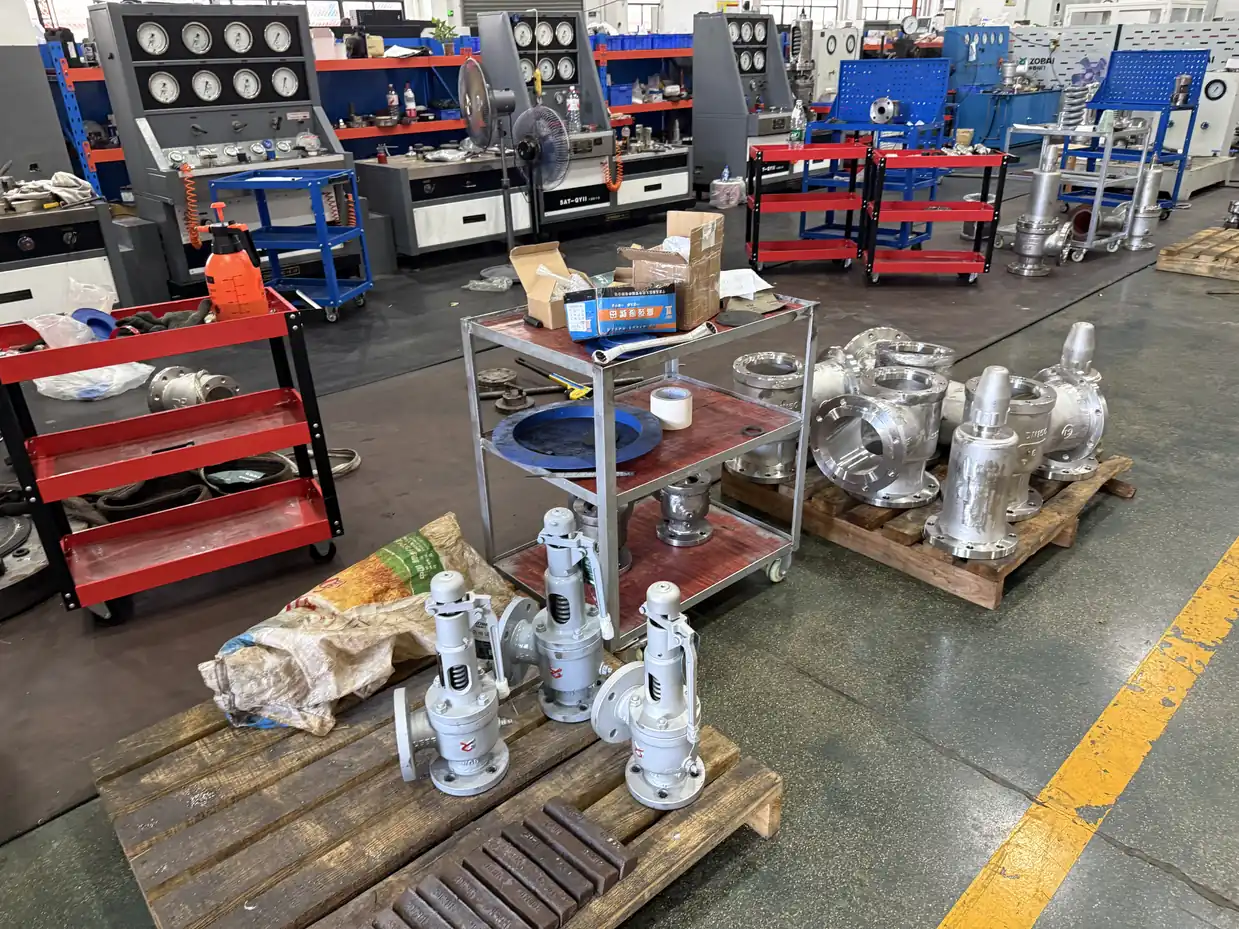
Engineering Review Connected to the Build
Engineering advice should translate into drawings, materials, machining, assembly and test records. This actual ZOBAI photograph documents safety valves staged beside pressure-test equipment. Confirm service data, acceptance criteria and the required document package before release.
API 520 Safety Valve Sizing
API 521 Relief Systems
Maintenance & Inspection
Common questions about safety valve installation
Most direct spring-loaded safety valves are installed vertically with the spindle upright unless the specific valve design and manufacturer documentation permit another orientation. The approved orientation should be confirmed before installation.
An isolation valve should not be placed between the protected equipment and the pressure-relief valve unless the applicable code allows the arrangement and an approved control procedure prevents accidental isolation of the required protection.
A short, direct inlet reduces pressure loss between the protected equipment and the valve. Excessive inlet loss can cause unstable opening, chatter, damage and reduced installed relieving performance.
Discharge flow can create pipe weight, vibration, thermal movement and reaction force. Independent support prevents these loads from being transferred into the valve body, flange joint or protected equipment nozzle.
Confirm the valve identity, set pressure, orientation, cleanliness, isolation status, inlet and outlet piping, supports, back pressure, discharge route, drainage, accessories and required inspection and test records.
Yes. Send the valve datasheet, protected equipment data, relief basis, inlet and outlet piping information, back pressure and the installation drawing. The review can identify missing data and the next engineering or quotation step.