
Safety Valve Applications by Industry, Equipment, Service Condition and Medium
A safety valve application is defined by the protected equipment, credible overpressure scenario and installed relief system—not by industry name alone. Use this hub to move from the process context to the data required for sizing, valve-type selection, materials, back-pressure review, installation and project documents.
The linked pages use the current ZOBAI application URL structure, helping engineers and buyers reach the correct technical page without obsolete or duplicated slugs.
The linked pages use the current ZOBAI application URL structure, helping engineers and buyers reach the correct technical page without obsolete or duplicated slugs.
Browse by Engineering Context
- Start with the protected equipment and credible relief scenario.
- Confirm the medium phase, required relieving rate, pressure and temperature.
- Include inlet pressure loss, outlet back pressure and discharge destination.
- Match the final valve to certified capacity, materials, connection and project documentation.
››› Application Overview
Application pages should lead to an engineering decision, not only an industry description
Two valves installed in the same plant may require completely different designs because they protect different equipment or relief cases. A compressor discharge valve, reactor emergency PSV, blocked-in liquid thermal relief valve and storage-tank vacuum device should not be selected from one generic industry rule.
Each application page should identify the protected boundary, credible overpressure or vacuum cause, required capacity, medium behavior, temperature, back pressure, materials, installation constraints and documents needed before RFQ.
Engineering limitation
These pages support application screening and RFQ preparation. Final sizing and selection must follow the applicable code, project specification, relief-system calculation and manufacturer-certified valve data.
››› By Industry
Safety valve applications by industry
Industry pages connect common process equipment and risk patterns with the engineering data required for pressure-relief selection.
01
Oil & Gas
Pressure relief for upstream, gas processing, pipelines, refinery units, LNG and LPG systems.
02
Petrochemical
PSV and PRV review for reactors, columns, compressors, exchangers, storage and polymer units.
03
Chemical Processing
Selection for corrosive, toxic, reactive and fouling chemical duties across vessels and process lines.
04
Industrial Gas
Protection for compressed, cryogenic and technical gas production, storage and distribution systems.
05
LNG and LPG
Cryogenic and liquefied-gas pressure relief for tanks, skids, transfer lines and vapor systems.
06
Food & Beverage
Sanitary pressure protection for process vessels, CIP/SIP utilities, steam and gas systems.
07
Pharmaceutical
GMP-oriented relief for clean utilities, sanitary vessels, clean steam and controlled production systems.
08
Marine & Shipbuilding
Safety valves for shipboard steam, gas, fuel, refrigeration and auxiliary pressure systems.
››› By Equipment & System
Safety valve applications by protected equipment and system
Equipment-based pages begin with the pressure boundary, credible failure case and the inlet and outlet system surrounding the valve.
PV
Pressure Vessels
Relief protection for receivers, separators, autoclaves, coded vessels and process containers.
BS
Boilers & Steam
Boiler, steam drum, header, superheater and utility steam pressure protection.
CP
Compressors
Relief for compressor discharge, receivers, interstage vessels, gas skids and refrigeration packages.
RC
Reactors
Relief review for runaway reaction, blocked vent, fire, gas generation and two-phase flow.
ST
Storage Tanks
Pressure and vacuum protection for atmospheric, low-pressure and pressurized storage systems.
PL
Pipelines
Relief for blocked outlet, pump deadhead, regulator failure, thermal expansion and gas-line overpressure.
HE
Heat Exchangers
Tube rupture, blocked-in liquid, thermal expansion and hot-side or cold-side relief review.
SK
Skid Systems
Integrated relief selection for modular process, compressor, LNG/LPG and gas-treatment packages.
››› By Operating Condition
Safety valve applications by operating condition
Special conditions can change valve design, certified capacity, materials, seat construction, back-pressure capability and maintenance requirements.
BP
High Back Pressure
Valve-type and capacity review for flare headers, closed vents, scrubbers and return systems.
HP
High Pressure
Pressure class, tightness, materials and certified capacity for high-pressure gas and liquid systems.
HT
High Temperature
Steam, hot gas, thermal oil and elevated-temperature process relief.
VC
Vacuum Service
Vacuum breakers and pressure/vacuum relief for tanks, vessels, condensers and process systems.
CR
Corrosive Service
Material, lining, bellows and discharge review for acids, alkalis, sour gas, chlorides and solvents.
FC
Frequent Cycling
Selection for repeated relief, unstable pressure, compressor pulsation and cyclic equipment operation.
LC
Large Capacity
High-flow relief, large orifice, certified capacity and discharge-system review.
››› By Medium
Safety valve applications by process medium
The medium and phase influence sizing equations, materials, seat tightness, cleanliness, discharge safety and test documentation.
W
Water
Liquid relief for pumps, pipelines, hot-water systems, accumulators and thermal expansion cases.
S
Steam
Safety valves for boilers, steam headers, process steam, superheated steam and thermal systems.
LN
LNG
Cryogenic relief for LNG tanks, skids, vaporizers, transfer lines and blocked-in sections.
LP
LPG
Relief for propane and butane storage, transfer, vaporization and process systems.
NG
Natural Gas
Pressure relief for gas pipelines, stations, separators, compressors and storage systems.
NH3
Ammonia
Material and discharge review for refrigeration and process ammonia service.
H2
Hydrogen
High-pressure, leakage, material and safe-venting review for hydrogen systems.
O2
Oxygen
Oxygen compatibility, cleaning, ignition-risk and material review for O2 and LOX service.
››› Selection Data
Information required to move from an application page to a valve RFQ
The category identifies the context, but the valve cannot be selected until the actual relief and installation data are known. Send available calculations, datasheets, P&IDs, drawings or the existing valve nameplate.
Recommended engineering input
- Protected equipment and credible relief or vacuum scenario
- Medium composition, phase and relieving condition
- MAWP or design pressure, set pressure and allowable overpressure
- Operating, design and relieving temperature
- Required relieving or inbreathing capacity
- Minimum, normal and maximum back pressure
- Inlet piping and outlet discharge arrangement
- Valve size, connection standard and pressure class
- Body, trim, seat, spring, bellows and gasket requirements
- Applicable code, client specification and document list
››› Application Review Matrix
How the application context changes the safety valve specification
Use the application category to identify the questions that must be resolved before sizing, selection and quotation.
01
Industry & Regulatory Context
Defines common client specifications, inspection expectations, hazardous-service requirements and documentation practices.
02
Protected Equipment
Defines MAWP, nozzle arrangement, credible overpressure causes and installation limits.
03
Operating Condition
Can require balanced bellows, pilot operation, special seats, alloys or capacity correction.
04
Medium & Phase
Controls sizing basis, material compatibility, tightness, cleaning and discharge hazards.
››› Related Engineering Resources
Continue from the application context to sizing and specification
These links use current ZOBAI paths for the core engineering and documentation pages.
01
Safety Valve Selection Guide
Step-by-step review of relief scenario, capacity, valve type, materials and installation.
02
Sizing & Certified Capacity
Connect required relieving load, calculated area, selected orifice and certified capacity.
03
Back Pressure and Bellows
Review superimposed and built-up back pressure and valve-type selection.
04
Installation Guide
Review inlet loss, outlet piping, reaction force, drainage and commissioning.
PROJECT REVIEW EVIDENCE
Real Production Evidence for Application Review
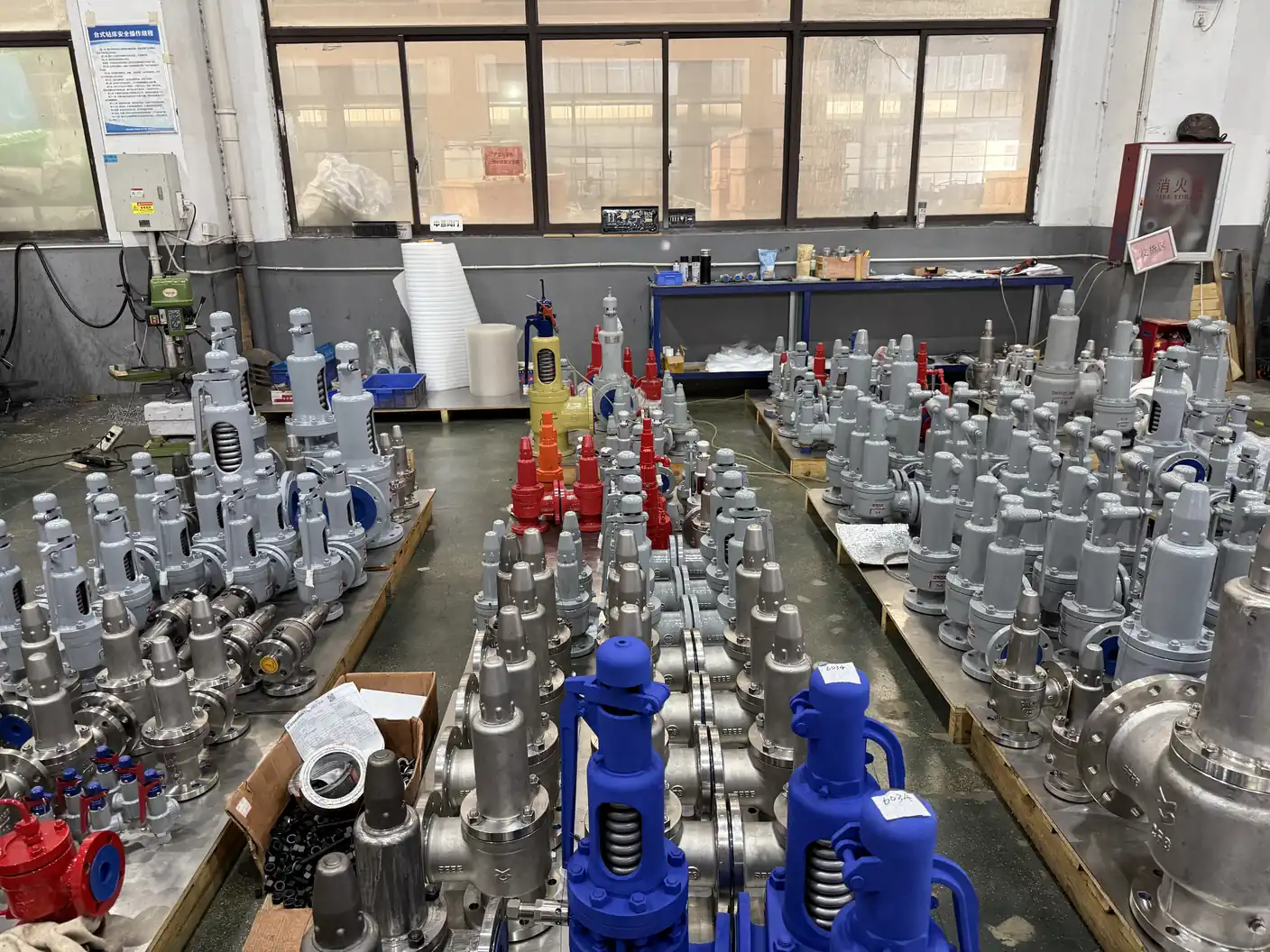
For Safety Valve Applications by Industry & Service | ZOBAI service, supplier review should connect valve construction to set pressure, medium, temperature, capacity, back pressure and the governing code. This actual ZOBAI photograph documents mixed safety valve production batch in the assembly area. Review it with drawings, material records and pressure-test documents.
05
Safety Valve Standards
Review API, ASME, ISO, DIN/EN and pressure-temperature reference pages.
06
PDF Downloads
Access current catalogs, datasheets and technical reference documents.
07
Ask an Engineer
Submit working conditions, datasheets or drawings for technical review.
08
Contact ZOBAI
Send RFQ data, quantities, delivery destination and document requirements.
››› FAQ
Common questions about safety valve applications
Start with the protected equipment and the main engineering problem. Use an industry page for sector context, an equipment page for the relief case, an operating-condition page for special design constraints and a medium page for fluid-specific requirements.
Not automatically. Different fluid phases can require different sizing methods, capacity certification, valve action, materials, testing and installation arrangements.
Review a balanced bellows design when superimposed or built-up back pressure may affect a conventional spring-loaded valve, or when isolating the bonnet from outlet fluid provides a service advantage.
No. Provide the relief scenario, required capacity, set pressure, fluid, temperature, back pressure, connections, materials, standards and required documents.
Yes. Send the existing nameplate, datasheet, installation drawing and current operating conditions. The replacement should be checked against the present relief and discharge system.
Useful documents include the relief calculation, datasheet, P&ID, equipment drawing, piping layout, existing valve records, project specification and required inspection-document list.
Need help matching a pressure-relief valve to the actual application?
Send the protected equipment, relief scenario, medium, pressures, temperature, capacity, back pressure and project standard. ZOBAI can identify missing inputs and define the next sizing, selection or quotation step.