
DIN / EN Safety Valve Standards for European Pressure Equipment, CE/PED Projects and PN-Flanged Valves
Use this guide to translate DIN / EN, CE/PED and PN flange requirements into practical safety valve RFQ data. It explains how EN ISO 4126, PED 2014/68/EU, EN 764-7, EN 1092-1, EN 12516 and EN 12266 typically affect valve sizing, connection checks, documentation and inspection expectations for European pressure equipment projects.
- Built for European RFQs that mention DIN, EN, CE, PED, PN flanges or EN ISO 4126
- Connects standards to real procurement data: set pressure, capacity, materials, documents and flange rating
- Designed for engineers, EPC buyers, maintenance teams and distributors comparing European and international requirements
››› DIN / EN Standards Overview
DIN / EN safety valve procurement is usually a system of references, not one single standard
European safety valve projects commonly combine product standard references, pressure equipment legislation, flange standards, shell design rules, testing standards and project-specific documentation. DIN often appears as the German adopted version of an EN or EN ISO standard, while EN references are used widely across European RFQs.
For a buyer, the practical question is not only “which standard is named?” but also “what does this standard change in the valve quotation?” The answer may involve certified capacity, overpressure and blowdown assumptions, PN flange dimensions, material certificates, pressure test reports, seat tightness testing, CE/PED documentation or notified-body involvement.
What this page helps you confirm
- Whether the RFQ is mainly about EN ISO 4126 safety valve requirements, PED conformity, PN flange dimensions or pressure-temperature rating.
- Which documents should be requested before production: datasheet, sizing basis, MTC, pressure test, seat test, declaration and inspection records.
- How DIN / EN references connect to applications such as pressure vessels, boilers, skid systems, storage tanks and process piping.
- Which datasheets, certificates, inspection records and test reports should be prepared before quotation.
››› Core DIN / EN References
Which DIN / EN reference matters for your safety valve project?
The table below is written for practical RFQ use. It does not replace official standards, but it helps buyers identify which engineering data and documents are usually required when a European project mentions DIN, EN, CE, PED or PN-rated safety valves.
EN ISO 4126
Safety Valves & Relief Devices
The key product reference for many European safety valve RFQs. ISO 4126-1 covers general safety valve requirements; project datasheets still need set pressure, relieving capacity, medium, temperature and installation data.
PED 2014/68/EU
Pressure Equipment Directive Context
Relevant when pressure equipment or assemblies are placed on the EU market. Confirm whether the valve is treated as a safety accessory, which conformity route applies, and which declarations or technical files are required.
EN 764-7
Safety Systems for Pressure Equipment
A European reference for safety systems protecting unfired pressure equipment. It is useful when the project needs to connect the relief device with the protected vessel, piping system, alarms and overall pressure protection philosophy.
EN 1092-1
PN Flange Connections
Important when safety valves are supplied with EN PN flanges. Confirm DN, PN, facing type, flange drilling, material group, pressure-temperature rating, gasket surface and mating flange requirements.
EN 12516
Valve Shell Design Strength
Relevant to the pressure-retaining parts of industrial valves. For RFQs, it supports review of body material, shell strength, PN/Class rating, operating temperature and pressure-temperature suitability.
EN 12266
Valve Testing Reference
Often appears in valve inspection and testing discussions. Use it to clarify shell test, seat test, pressure test method, acceptance criteria and the difference between production testing and safety valve set-pressure testing.
››› Application Map
How DIN / EN references connect to real safety valve applications
The same safety valve may appear in different European code contexts depending on the protected equipment. Use this map before deciding whether your RFQ should focus on product standard, pressure equipment conformity, PN flange details, boiler rules or piping requirements.
Pressure Vessels
For receivers, separators, reactors, accumulators and process vessels. Confirm protected volume, MAWP/design pressure, set pressure, relief scenario, EN/PED documentation and discharge route.
Boilers & Steam Systems
For steam boilers, steam generators and utility steam headers. Confirm steam capacity, set pressure, accumulation allowance, lifting lever requirement, discharge pipe and test certificates.
Process Piping & Skid Systems
For packaged process, gas, hydrogen, oxygen, ammonia and utility skids. Confirm project standard, valve inlet/outlet connection, back pressure, layout limits and handover documentation.
Storage Tanks & Pressure Storage
For storage vessels, bullets and pressure storage packages. Confirm fire case, thermal expansion, vapor relief, multiple safety valves, spare capacity and local acceptance requirements.
Heat Exchangers
For tube rupture, blocked-in liquid and thermal relief cases. Confirm protected side, MAWP, credible scenario, two-phase risk, back pressure and discharge destination.
Compressors
For air and gas compressor packages. Confirm blocked discharge, pulsation/vibration risk, discharge temperature, flow capacity, back pressure and maintenance access.
››› CE / PED Documentation
DIN / EN RFQs often require more than model, size and set pressure
For European projects, safety valves may be treated as part of a pressure equipment compliance package. The required deliverables depend on the protected equipment, pressure, volume, medium, category, module, purchaser specification and whether a notified body is involved.
Do not assume every DIN / EN project requires the same documents. Confirm whether the buyer needs CE/PED declaration, notified-body documentation, EN flange certificate, material certificates, oxygen-clean records, cryogenic material records or special inspection witness before production.
Common European RFQ document language
- Technical datasheet with tag number, model, size, set pressure, connection, material and service.
- Sizing calculation or certified relieving capacity confirmation where required by project specification.
- Material certificates for pressure-retaining parts, trim, spring and wetted parts.
- Pressure test report, seat tightness test report and set pressure calibration record.
- CE/PED declaration or conformity documentation when required by the project scope.
- General arrangement drawing with DN/PN flange, facing, dimensions, weight and outlet orientation.
- Special cleaning, degreasing, cryogenic, sour service or oxygen-clean documentation where specified.
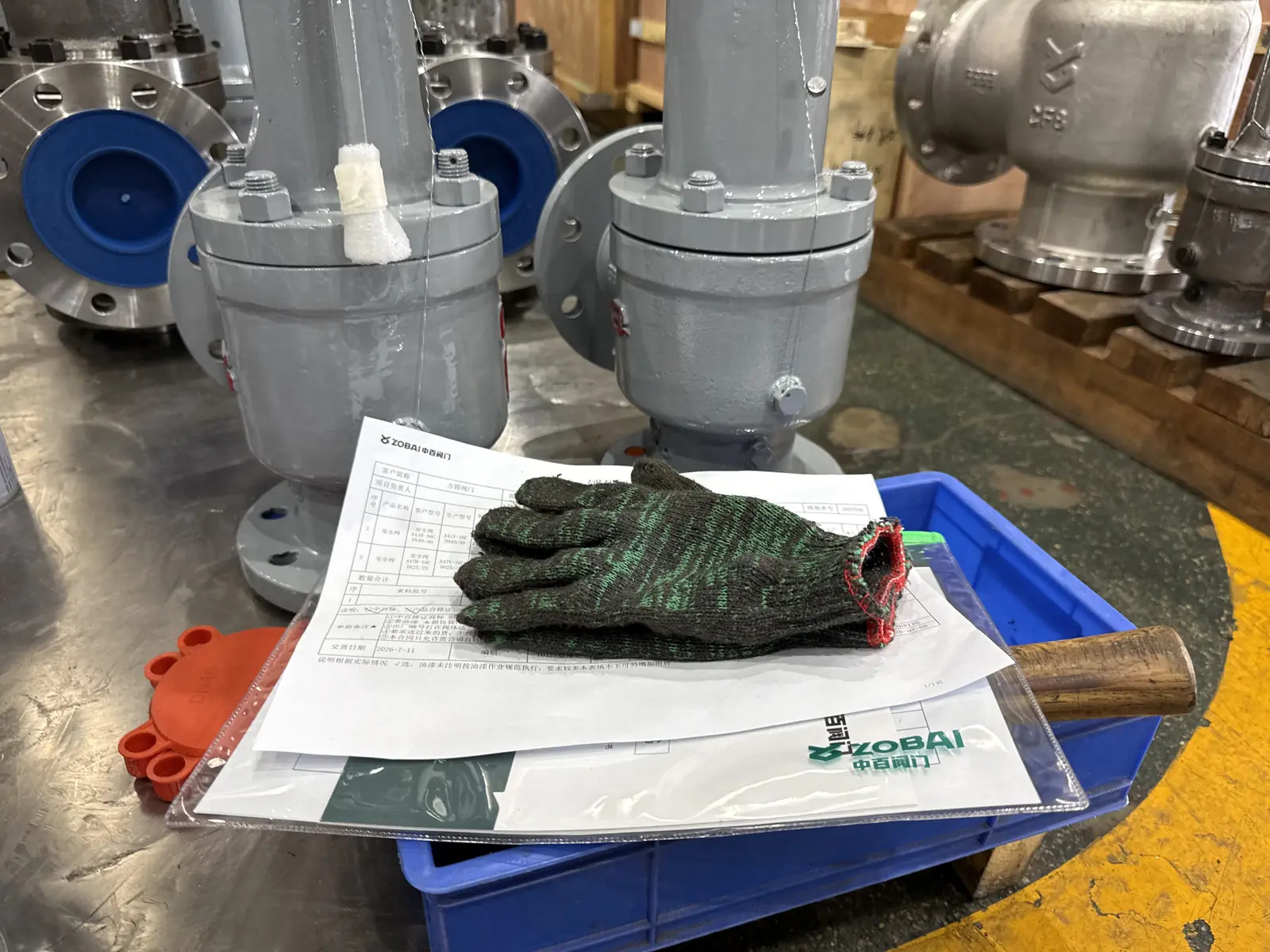
SHOP-FLOOR VERIFICATION
From Code Requirement to Shop-Floor Verification
Standards define technical requirements, but purchase-order compliance depends on design, materials, inspection scope and recorded test results. This actual ZOBAI photograph documents shop-floor inspection documents beside finished valves. It is facility evidence, not a substitute for project-specific certificates or an agreed inspection and test plan.
››› RFQ Checklist
Information to send when your project specifies DIN / EN
Complete RFQ data helps avoid repeated clarification and prevents mismatches between European standard language and actual operating conditions.
- Protected equipment: pressure vessel, boiler, pipeline, skid, tank, compressor, heat exchanger or receiver.
- Applicable reference: EN ISO 4126, PED, EN 1092-1, EN 12516, EN 12266, project standard or purchaser specification.
- Design pressure / MAWP, set pressure, operating pressure, relieving temperature and operating temperature.
- Fluid name, phase, molecular weight or density, special risk such as steam, gas, liquid, two-phase, oxygen, hydrogen, ammonia or cryogenic service.
- Required relieving capacity, sizing basis and governing relief scenario.
- Connection details: DN, PN, facing, flange material, gasket standard, inlet/outlet orientation and mating flange requirement.
- Back pressure, discharge route, vent stack, flare, drain, recovery header or safe disposal philosophy.
- Required documents: MTC, test report, seat test, declaration, drawing, inspection witness, cleaning records and spare parts list.
››› Practical Cases
DIN / EN safety valve cases buyers commonly ask about
These examples show how European standards normally appear in real procurement language. Final selection still requires verified sizing, project datasheet and applicable standard review.
Case 1: EN Pressure Vessel PSV for a Receiver
Protected equipment: air receiver, nitrogen receiver, separator or process vessel. Common references: EN ISO 4126, PED documentation, vessel datasheet and PN flange requirements. Key RFQ data: vessel MAWP, set pressure, relieving capacity, medium, temperature, DN/PN connection, discharge route, MTC, pressure test and calibration report.
Case 2: DIN / EN Boiler or Steam Safety Valve
Protected equipment: steam boiler, steam generator, steam drum or main steam header. Common checks: certified steam capacity, set pressure, accumulation basis, blowdown, lifting lever, material rating, outlet reaction force, drainability and safe steam discharge.
Case 3: European Chemical Skid Safety Valve
Protected equipment: reactor skid, dosing skid, process package or utility module. Common references: EN / DIN valve documentation, EN 1092-1 PN flanges, PED scope and project material specification. Key checks: corrosive service, back pressure, seat tightness and document package.
Case 4: PN-Flanged Replacement Safety Valve
Protected equipment: existing European vessel, pump skid or pipeline. Common issue: the buyer sends DN/PN, face-to-face and set pressure but no relieving capacity. Correct replacement review should still confirm medium, set pressure, capacity, temperature, flange facing, bolt pattern and discharge route.
Case 5: Cryogenic DIN / EN Safety Valve Package
Protected equipment: LNG, LOX, LIN, LAr or cold gas system. Key RFQ data: cryogenic temperature, blocked-in liquid case, required capacity, low-temperature materials, extended bonnet, insulation clearance, oxygen-clean requirement where applicable and cold discharge routing.
Case 6: CE/PED Export Project Documentation
Protected equipment: European project pressure vessel or skid. Required documents may include datasheet, drawing, sizing report, MTC, calibration certificate, pressure test, seat tightness test, declaration or other project-specific compliance records.
››› Related Verified ZOBAI Pages
Continue from DIN / EN research into selection, sizing and application review
These links point to verified ZOBAI pages that support valve type selection, sizing review, pressure-temperature checks and real equipment applications.
Safety Valve Selection Guide
Turn project standard language into valve type, material, connection and document requirements.
Safety Valve Sizing
Review capacity, set pressure, back pressure, gas, steam, liquid and two-phase inputs before RFQ.
ISO 4126 Safety Valve Standard
A deeper page for EN ISO 4126 safety valve and relief device terminology.
Pressure-Temperature Ratings
Check body material, PN / Class rating, temperature and pressure boundary limits.
API 520 Safety Valve Sizing
Useful for buyers comparing API sizing language with EN / DIN project requirements.
ASME Safety Valve Standards
Useful for global projects comparing ASME and European code references.
Pressure Vessel Safety Valves
For receivers, separators, reactors, accumulators and vessel protection.
Skid System Safety Valves
For modular process, gas, hydrogen, oxygen, ammonia and utility packages.
High Back Pressure Service
For safety valves discharging to closed headers, flare systems and recovery systems.
››› FAQ
Common questions about DIN / EN safety valve standards
Is DIN / EN one single safety valve standard?
No. DIN / EN safety valve procurement usually refers to a group of standards and regulatory requirements. EN ISO 4126 may address safety valve requirements, while PED, EN 1092-1, EN 12516, EN 12266 and project specifications may address conformity, flange dimensions, shell strength, testing and documentation.
What is the most important DIN / EN reference for safety valves?
For many safety valve RFQs, EN ISO 4126 is the key product and performance reference. However, the protected equipment, pressure equipment scope, flange standard, valve testing requirement and documentation requirement must also be confirmed.
Does PED 2014/68/EU replace safety valve sizing?
No. PED is a European pressure equipment regulatory framework. Safety valve sizing still requires a verified relief scenario, set pressure, capacity, medium data, back pressure and selected standard calculation basis.
What should I provide for a DIN / EN safety valve quotation?
Provide protected equipment, applicable standard, MAWP or design pressure, set pressure, medium, phase, capacity, temperature, DN/PN connection, discharge route, back pressure, materials and required documents.
Can a DIN / EN safety valve replace an ASME safety valve directly?
Not automatically. DN/PN dimensions, pressure-temperature rating, certified capacity, set pressure, flange facing, documentation, applicable code and end-user acceptance should be checked before replacement.
››› Engineering Support
Need help matching a DIN / EN requirement to a safety valve quotation?
Send the protected equipment datasheet, applicable DIN / EN or PED reference, set pressure, capacity, medium, temperature, DN/PN connection, back pressure, discharge route and document requirements. ZOBAI can help prepare a clearer RFQ before model selection.
Minimum DIN / EN RFQ data
- Applicable standard
- Protected equipment
- MAWP / design pressure
- Set pressure
- Medium and phase
- Required capacity
- DN / PN connection
- Back pressure
- Discharge route
- Material and documents