Steam Safety Valves for Boilers, Steam Headers, Superheated Steam and Process Systems
Steam safety valves protect boilers, steam drums, superheaters, main steam headers, pressure reducing stations, heat exchangers, autoclaves, steam generators, deaerators, jacketed vessels, sterilizers, process steam skids and utility systems from overpressure. Correct selection starts with protected equipment MAWP, set pressure, steam condition, saturated or superheated temperature, required relieving capacity, allowable accumulation, blowdown, lifting lever requirement, material strength, seat design, inlet pressure loss, outlet reaction force, noise, drainability, safe discharge and required inspection documents.
Where Steam Safety Valves Are Used
Steam service is one of the most critical safety valve applications because pressure, temperature, stored energy, noise and discharge reaction force can all be high. A steam valve should be selected from actual steam condition and relief case, not only from connection size.
Boilers and Steam Drums
Used on fire-tube boilers, water-tube boilers, package boilers, steam drums and boiler outlet lines. Selection should review boiler output, set pressure, accumulation, full-lift capacity, blowdown, lifting lever and certified steam capacity.
Superheated Steam Headers
Used on superheater outlets, main steam headers, turbine supply lines and high-temperature process steam networks. Key checks include superheat temperature, body material, trim material, spring exposure, outlet expansion and safe venting.
Pressure Reducing Stations
Used downstream of steam pressure reducing valves, desuperheaters and utility steam letdown stations. Relief sizing should include regulator failed-open flow, upstream pressure, downstream design pressure and silencer back pressure.
Steam-to-Water Heat Exchangers
Used on hot water generators, steam heaters, condensers and shell-and-tube exchangers. Relief cases include steam control failure, tube rupture, trapped water expansion, blocked outlet and flashing hot water discharge.
Autoclaves, Sterilizers and Process Vessels
Used on steam sterilizers, autoclaves, jacketed vessels, reactors and batch process equipment. Valve selection should consider steam admission failure, blocked vent, condensate drainage, clean service and operator safety.
Steam Skids and Utility Packages
Used on compact steam distribution skids, boiler house packages, CIP/SIP skids, humidification systems and process utility modules. Compact layouts require review of discharge direction, insulation clearance, maintenance access and nearby instruments.
Steam Safety Valve Selection Starts With the Steam Source and Relief Scenario
Steam relief capacity should be based on the credible pressure source. In many projects, the controlling case is not normal steam consumption but boiler output, pressure control failure, PRV failed-open flow, tube rupture or sudden load rejection.
Boiler Firing Control Failure
If firing or steam generation continues while demand is reduced or the outlet is restricted, boiler pressure can rise quickly. Valve capacity should be matched to boiler steam generation rate and allowable accumulation.
Blocked Steam Outlet
A closed downstream valve, blocked header or isolated steam user can overpressure the protected section. The safety valve should protect the weakest steam header, vessel, exchanger or skid pressure boundary.
Pressure Reducing Valve Failed Open
When a steam PRV fails open, high-pressure upstream steam can flow into lower-pressure downstream equipment. Relief sizing should use failed-open flow and downstream design pressure, not normal steam demand only.
Steam Control Valve Failure on Heat Exchangers
Steam-to-water or steam-to-process heat exchangers can overpressure the secondary side if the steam valve fails open or a tube ruptures. Hot water flashing and scalding discharge should be reviewed.
Load Rejection and Fast Pressure Rise
Sudden loss of steam demand can cause rapid pressure rise in steam headers and boilers. Safety valve capacity, blowdown, set pressure spacing and outlet system response should be reviewed.
Condensate, Wet Steam and Drainage Issues
Wet steam, trapped condensate and poor drainage can damage seats, cause water hammer and affect valve stability. Steam safety valve discharge lines should be drained and routed safely.
Steam Safety Valve Application Cases with Typical RFQ Data
These cases show how steam safety valve requirements are commonly described before model selection. Final sizing must be confirmed by boiler data, steam properties, protected equipment rating, relief calculation, discharge arrangement and project standard.
Case 1: Package Boiler Steam Safety Valve
Boiler ProtectionBoiler steam valves should be selected from rated steam generation capacity and certified steam capacity. Discharge piping and drains must be designed for the full relieving flow.
Case 2: Superheated Steam Header Safety Valve
High Temperature SteamSuperheated steam service requires material and temperature review. A valve suitable for saturated steam may not be suitable for high-temperature superheated duty.
Case 3: Downstream Safety Valve for Steam PRV Station
PRV Failed OpenPRV station relief should protect the downstream system from full upstream source pressure. Normal steam demand is usually not enough for sizing this case.
Case 4: Steam-to-Water Heat Exchanger Relief Valve
Heat ExchangerSteam-heated water equipment can create hot discharge and flashing risk. The discharge route must protect operators and avoid water hammer.
Case 5: Autoclave or Sterilizer Steam Safety Valve
Clean Steam / SterilizationClean steam and sterilizer service may require stainless wetted parts, sanitary connections or special documentation in addition to normal steam sizing.
Case 6: Steam Skid Safety Valve for Process Utility Package
Steam SkidSteam skids often have limited space. Safety valve orientation, discharge route and maintenance clearance should be checked before skid fabrication.
Steam Safety Valve Data Matrix
| Steam Service | Typical Medium | Common Relief Cause | Required Engineering Check | Recommended Valve Review | Risk if Missed |
|---|---|---|---|---|---|
| Boiler / steam drum | Saturated steam | Firing control failure, blocked outlet, load rejection | Boiler output, accumulation, blowdown, lifting lever and certified capacity | Full-lift boiler steam safety valve | Insufficient boiler relief, overpressure or unsafe steam discharge |
| Superheated steam header | Superheated steam | Pressure control failure, blocked outlet, turbine trip | Relieving temperature, body material, trim, spring exposure and outlet expansion | High-temperature steam safety valve with suitable alloy and trim | Material overstress, leakage, seat damage or outlet pipe failure |
| Steam PRV station | High-pressure to low-pressure steam | PRV failed open, bypass leakage, downstream blockage | Failed-open flow, downstream MAWP, silencer loss and vent location | Downstream steam safety valve sized for regulator failure | Low-pressure header overpressure or excessive noise |
| Steam-to-water exchanger | Hot water, steam, condensate | Steam control failure, tube rupture, trapped liquid expansion | Water-side rating, flashing, scalding risk and drain capacity | Hot water or steam-related relief valve depending on protected side | Hot water release, exchanger damage or undersized relief |
| Autoclave / sterilizer | Clean steam, plant steam, condensate | Steam inlet failure, blocked vent, pressure control failure | Chamber MAWP, cleanability, condensate drainage and operator safety | Steam safety valve with clean or sanitary features where required | Chamber overpressure, contamination or unsafe venting |
| Steam utility skid | Plant steam, utility steam, condensate | Control failure, blocked outlet, PRV failure | Skid layout, outlet routing, insulation clearance and maintenance access | Compact spring-loaded steam safety valve with verified discharge route | Unsafe local discharge, instrument heat damage or difficult maintenance |
How to Specify a Steam Safety Valve Correctly
1. Confirm protected equipment and set pressure basis
Start with boiler MAWP, steam header design pressure, exchanger side rating, vessel MAWP or downstream PRV station pressure limit. The set pressure must protect the lowest-rated pressure boundary.
2. Define saturated or superheated steam condition
Steam condition affects capacity, temperature rating and material selection. Superheated steam requires careful review of body material, trim, spring exposure, gasket and outlet piping expansion.
3. Size from the controlling steam relief case
Use boiler output, failed-open PRV flow, blocked outlet flow, steam generation rate or heat input basis as applicable. Normal steam consumption is often not the correct sizing basis.
4. Review blowdown, reseating and cycling risk
Steam valves may chatter or cycle when oversized, when inlet pressure loss is high, or when the pressure control loop is unstable. Blowdown and reseating behavior should match the steam system.
5. Check outlet force, noise and safe venting
Steam relief can create severe noise, hot discharge and high reaction force. Vent stacks, silencers, supports, drains and discharge direction should be checked before installation.
6. Confirm documents, testing and inspection needs
Required documents may include datasheet, sizing calculation, certified capacity, material certificates, set pressure calibration, hydrostatic test, seat tightness test and inspection witness records.
Steam Safety Valves Must Be Reviewed With Inlet Loss, Drainage, Outlet Reaction Force and Noise
Why steam safety valve installation controls real performance
Steam safety valve performance depends on more than the valve body. Long inlet piping, small branches, trapped condensate, unsupported discharge piping, silencer pressure drop, poor drainage, thermal expansion and outlet back pressure can reduce capacity or cause chatter, leakage and unsafe discharge.
Installation should review short and direct inlet connection, valve verticality, inlet pressure loss, drip pan elbow or approved discharge design where applicable, outlet support, vent stack location, silencer pressure drop, drain points, condensate removal, thermal expansion, insulation clearance, lifting lever access and safe maintenance space.
Field installation checks
- Confirm set pressure, steam condition and protected equipment MAWP.
- Keep inlet pressure loss within the project design limit.
- Install the valve in the correct orientation with access to lifting lever and nameplate.
- Support outlet piping for reaction force, thermal expansion and vibration.
- Drain condensate from discharge piping, silencers and low points.
- Route steam discharge away from personnel, air intakes, platforms and sensitive equipment.
- Check noise, insulation clearance and maintenance access before commissioning.
Standards and Documents to Confirm Before Ordering
Common steam safety valve references
Steam safety valve specifications may reference ASME, API, ISO, EN, GB, local boiler regulations, owner steam system standards and project piping classes. The applicable design basis should be confirmed before quotation.
- ASME BPVC Section I where power boilers, steam drums or boiler safety valves are part of the project scope.
- ASME BPVC Section VIII where steam-heated vessels, exchangers, autoclaves or receivers are pressure vessels.
- ASME B31.1 where power piping is specified for boiler and steam plant systems.
- ASME B31.3 where process steam piping or skid piping is specified under process piping rules.
- API 520 for pressure-relieving device sizing and selection reference where required by the project.
- API 521 for system-level pressure relief and depressuring review in process facilities.
- API 527 when seat tightness testing is required by the project specification.
Typical steam valve document package
Documentation should be agreed before manufacturing, especially for boiler rooms, EPC projects, high-temperature steam headers, clean steam systems, PRV stations and export pressure equipment.
- Technical datasheet with tag number, model, size, orifice, set pressure and connection.
- Steam sizing calculation or certified steam capacity confirmation.
- Steam condition record: saturated, superheated, pressure and relieving temperature.
- General arrangement drawing with dimensions, weight, lifting lever and discharge orientation.
- Set pressure calibration certificate.
- Pressure test report and seat tightness test report when required.
- Material certificate for body, bonnet, nozzle, disc, trim, spring and pressure-retaining parts.
- Inspection witness record, nameplate, tag list, packing record and spare parts list when required.
Official Standards Sources for Steam Safety Valve Review
Use ZOBAI internal pages for application guidance, RFQ preparation and product selection. Use the official publisher pages below when project specifications require ASME, API or ISO standard identification for boiler, steam piping, pressure vessel or seat tightness requirements.
Steam Safety Valve RFQ Data Checklist
| Required Data | Why It Matters | Example Input |
|---|---|---|
| Protected equipment | Defines pressure boundary, code basis and set pressure limit. | Boiler, steam drum, steam header, PRV station, heat exchanger, sterilizer, steam skid |
| MAWP / design pressure | Defines the maximum pressure the valve must protect. | 10 barg, 16 barg, 42 barg, 600 psi, Class 300 steam header |
| Set pressure | Defines valve opening pressure. | 9.5 barg, 15 barg, 42 barg, 100 psi, 600 psi |
| Steam condition | Affects sizing, capacity, material and temperature rating. | Saturated steam, wet steam, dry steam, superheated steam at 420°C |
| Relief scenario | Determines required steam capacity. | Boiler output, blocked outlet, PRV failed open, control failure, load rejection |
| Required relieving capacity | Confirms whether the valve can protect the system. | kg/h, t/h, lb/h, boiler evaporation rate, failed-open PRV flow |
| Relieving temperature | Controls body, trim, spring, gasket and pressure-temperature rating. | Saturated temperature, 250°C, 350°C, 420°C, 520°C |
| Allowable accumulation / overpressure | Defines sizing basis and code compliance. | Project-defined accumulation or allowable overpressure value |
| Back pressure and discharge route | Influences capacity, stability, noise and safe discharge. | Atmospheric vent, steam silencer, vent stack, relief header, condenser |
| Inlet and outlet piping data | Required for pressure loss, reaction force and installation review. | Pipe size, length, elbows, reducers, silencer pressure drop, vent stack data |
| Material requirement | Prevents high-temperature failure, corrosion or documentation rejection. | WCB, WC6, WC9, CF8M, stainless trim, alloy steel, clean steam wetted parts |
| Required documents | Avoids inspection, FAT, shipment and commissioning delays. | Datasheet, drawing, sizing report, MTC, calibration report, pressure test, seat test |
Final selection must be confirmed by protected equipment datasheet, steam condition, governing relief case, required capacity, applicable standard, back pressure calculation, certified valve capacity and engineering review.
Common Steam Safety Valve Selection Mistakes
Using normal steam demand as relief capacity
Boiler output, PRV failed-open flow or blocked outlet case may be much larger than normal steam consumption. The valve must be sized from the governing relief case.
Ignoring superheated steam temperature
Superheated steam can require different body, trim and gasket materials. A valve suitable for saturated steam is not automatically suitable for superheated service.
Undersizing or poorly draining discharge piping
Steam discharge piping must handle full relieving flow, reaction force and condensate drainage. Poor drainage can cause water hammer and seat damage.
Forgetting silencer pressure drop
A steam silencer can create back pressure. Silencer loss should be included in valve capacity and stability review.
Ignoring blowdown and repeated cycling
Incorrect blowdown, unstable pressure control or oversized valves can cause repeated popping, chatter, leakage and premature seat wear.
Placing steam vents near people or equipment
Steam relief can be extremely hot and noisy. Vent direction, platform location, air intakes, cables and nearby instruments must be reviewed.
Continue Your Steam Safety Valve Selection Review
These related pages help move from steam service requirements to detailed valve selection, sizing, high-temperature review, boiler protection and complete RFQ preparation.
Steam Safety Valve FAQ
Prepare a Complete Steam Safety Valve Datasheet Before Quotation
Send the protected equipment datasheet, MAWP or design pressure, set pressure, steam condition, saturated or superheated temperature, relief scenario, required capacity, allowable accumulation, inlet piping data, back pressure, discharge route, silencer data, material requirement, connection standard and required documents. A complete datasheet helps confirm certified steam capacity, stable operation and safe discharge.
Minimum RFQ data
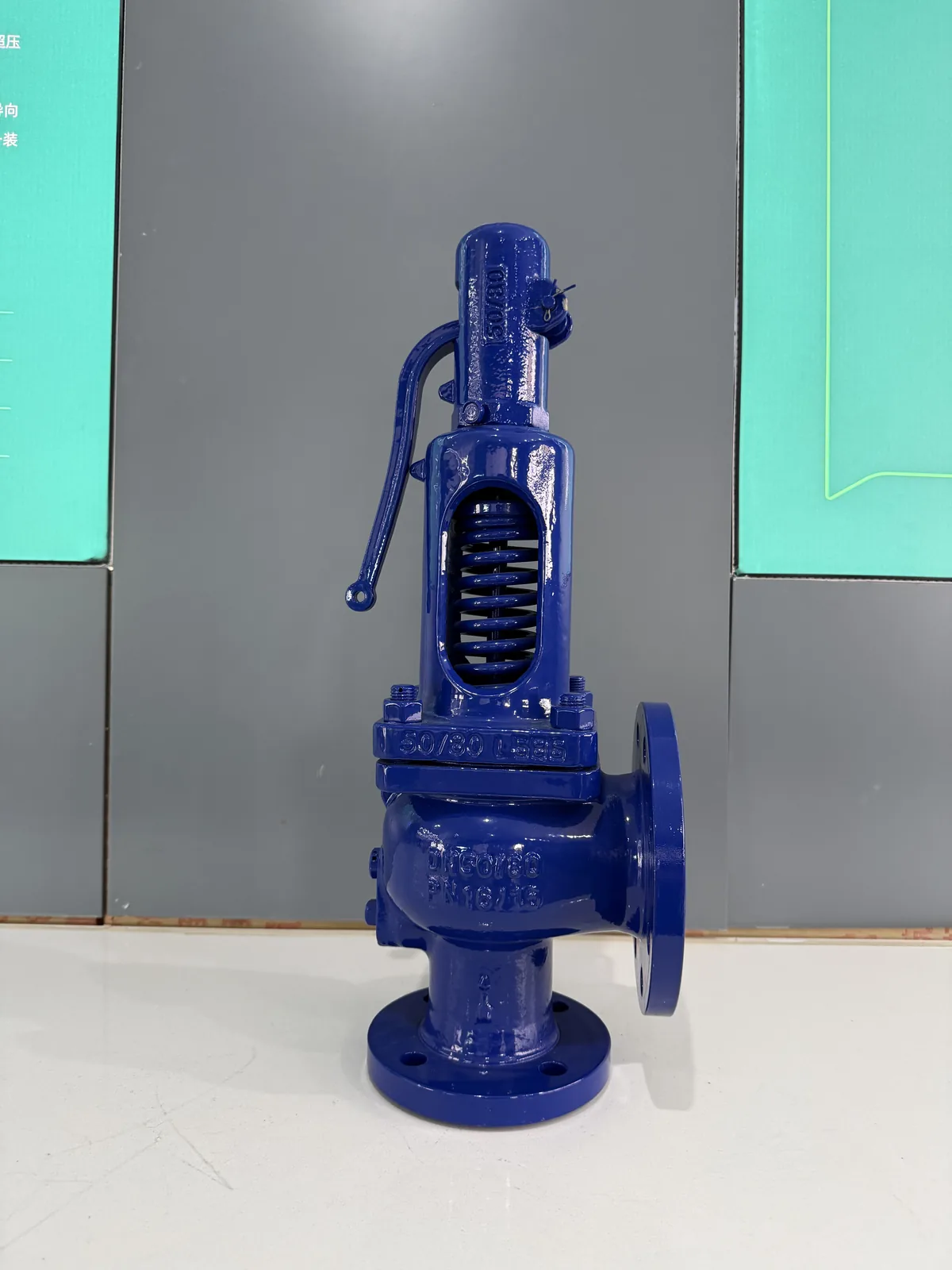
Real Production Evidence for Application Review
For Steam Safety Valves for Boilers & Process Steam | ZOBAI service, supplier review should connect valve construction to set pressure, medium, temperature, capacity, back pressure and the governing code. This actual ZOBAI photograph documents blue open-bonnet spring-loaded safety valve on display. Review it with drawings, material records and pressure-test documents.