Food & Beverage Safety Valves for Sanitary, Steam, CO₂ and Utility Systems
Food and beverage safety valves protect sanitary process vessels, dairy pasteurizers, brewing tanks, beverage carbonation systems, CO₂ storage and distribution lines, steam boilers, CIP/SIP circuits, hot water loops, compressed air receivers, nitrogen blanketing systems and refrigeration utilities from overpressure. The correct PSV or PRV must be selected from the protected equipment, medium, set pressure, required relieving capacity, hygiene requirement, material compatibility, cleaning method, discharge route and documentation requirement.
Where Safety Valves Are Used in Food and Beverage Plants
Food and beverage plants use both sanitary pressure relief valves and industrial utility safety valves. Product-contact service requires hygienic design, cleanability and material compatibility, while utility systems focus more on pressure, temperature, capacity and safe discharge.
Dairy Processing
Used on milk reception systems, pasteurizers, UHT lines, balance tanks, cream systems and CIP/SIP circuits. Product-contact valves should consider sanitary connections, cleanability, 316L wetted parts, surface finish and seal compatibility.
Brewery and Fermentation
Used on fermentation tanks, bright beer tanks, yeast systems, steam jackets, CO₂ recovery systems and cleaning lines. Relief review should consider CO₂ generation, tank pressure limits, cleaning chemicals and hygienic maintenance.
Carbonated Beverage Lines
Used on CO₂ storage, carbonation skids, beverage mixing tanks, syrup systems, filling lines and pressure reducing stations. CO₂ pressure, regulator failure, dry ice risk and safe vent routing should be reviewed.
Steam and Hot Water Systems
Used on boilers, steam headers, clean steam generators, jacketed kettles, heat exchangers and hot water loops. Selection should confirm set pressure, capacity, steam temperature, discharge pipe and inspection documents.
CIP / SIP and Cleaning Circuits
Used on cleaning supply lines, return lines, caustic tanks, acid wash systems and sterilization loops. Material and seals must tolerate cleaning chemicals, temperature cycling and repeated washdown.
Refrigeration and Utility Gas
Used on ammonia refrigeration, CO₂ refrigeration, compressed air, nitrogen blanketing and process gas skids. Utility valves may not be product-contact, but pressure relief sizing and discharge safety remain critical.
Food and Beverage PSV Selection Starts With the Pressure Rise Cause
A food or beverage plant may use safety valves for product-contact process equipment, steam systems, carbonation systems, cleaning circuits and refrigeration utilities. Each system has a different overpressure cause and a different material or hygiene requirement.
Steam Boiler or Steam Header Overpressure
Boiler firing, pressure control failure or blocked downstream steam demand can raise pressure in steam systems. Safety valves must be sized for required steam capacity and installed with safe discharge piping.
CO₂ Regulator Failure or Carbonation Overpressure
Beverage carbonation systems, CO₂ supply lines and beer tanks can overpressure if a regulator fails or downstream flow is blocked. CO₂ relief must consider gas capacity, vent location and asphyxiation risk.
Thermal Expansion in Trapped Liquid Lines
Water, syrup, cleaning solution, milk product, hot oil or glycol trapped between isolation valves can expand as temperature changes. Thermal relief is important for blocked-in liquid sections.
CIP / SIP Heating and Cleaning Pressure Rise
Caustic wash, acid wash, hot water and sterilization circuits may see pressure spikes from pump deadhead, heating, blocked return or valve misoperation. Seal and material compatibility should be checked.
Fermentation Gas Generation
Fermentation tanks generate CO₂ and can overpressure if vents, regulators or relief paths are blocked. The safety valve should match tank MAWP, gas generation rate and hygienic cleaning requirements.
Refrigeration System Overpressure
Ammonia, CO₂ or glycol refrigeration packages can overpressure during heat input, compressor upset, blocked outlet or valve isolation. Discharge routing and local safety requirements must be reviewed carefully.
Food and Beverage Safety Valve Application Cases with Typical RFQ Data
These cases show how food and beverage safety valve requirements are usually described before model selection. Final sizing must be confirmed by the project datasheet, equipment pressure rating, sanitary requirement, applicable code and verified relief calculation.
Case 1: Dairy Pasteurizer Hot Water Loop Safety Valve
Thermal ExpansionThis duty is often not product-contact, but it is close to food processing equipment. The valve should be installed so that discharge cannot contaminate product areas, electrical panels or walking surfaces.
Case 2: Brewery Bright Beer Tank Pressure Relief
CO₂ GenerationBeer tank relief valves must combine pressure protection with hygienic maintenance. Dead legs, difficult-to-clean pockets and incompatible seals can create sanitation and maintenance problems.
Case 3: Carbonated Beverage CO₂ Skid Safety Valve
Regulator FailureCO₂ is common in beverage plants but should not be treated as ordinary air service. Discharge should be routed away from enclosed or low-ventilation areas, and the valve should match regulator failure capacity.
Case 4: CIP Caustic Tank and Cleaning Line Relief
Chemical CleaningCIP valves must tolerate cleaning chemicals and temperature cycling. EPDM, PTFE, FKM or other seal materials should be selected according to the actual cleaning solution, temperature and concentration.
Case 5: Food Plant Steam Boiler Safety Valve
Steam ProtectionSteam safety valves are usually utility valves, but they support critical food production. Capacity, set pressure calibration, discharge direction and periodic inspection access should be confirmed before order.
Case 6: Ammonia Refrigeration Relief Valve
Refrigeration UtilityRefrigeration valves may not touch food product, but failure can affect plant safety and production continuity. Ammonia relief requires careful discharge routing and site-specific safety review.
Food and Beverage Safety Valve Data Matrix
| Service | Typical Medium | Hygiene / Temperature Concern | Common Relief Cause | Required Engineering Check | Risk if Missed |
|---|---|---|---|---|---|
| Dairy process vessel | Milk, cream, product vapor space, cleaning solution | Product-contact cleanability and CIP compatibility | Blocked outlet, heating, tank overpressure | Sanitary connection, 316L wetted parts, seal material, cleanability | Contamination, hard-to-clean dead zone or leakage |
| Brewery tank | CO₂, beer vapor space, CIP solution | CIP chemicals and tank hygiene | CO₂ generation, regulator failure, blocked vent | Tank MAWP, gas capacity, sanitary design, CO₂ vent routing | Tank overpressure, poor sanitation or unsafe CO₂ release |
| Beverage carbonation | CO₂ gas, beverage vapor space | Asphyxiation-safe venting and dry ice potential | Regulator failure, blocked outlet, over-carbonation | CO₂ flow capacity, downstream pressure limit, safe discharge | Downstream overpressure or CO₂ accumulation |
| Steam utility | Saturated steam, clean steam, hot water | High temperature and inspection access | Boiler pressure control failure, blocked steam demand | Certified steam capacity, set pressure, discharge pipe, lever requirement | Boiler overpressure or unsafe steam discharge |
| CIP / SIP system | Caustic, acid, hot water, sterilization fluid | Chemical resistance and temperature cycling | Pump deadhead, heating, blocked return | Seal compatibility, drain routing, corrosion resistance, cleanability | Chemical leakage, seal failure or blocked relief path |
| Refrigeration utility | Ammonia, CO₂, glycol, refrigerant vapor | Plant safety and utility continuity | Heat input, compressor upset, blocked outlet | Medium compatibility, discharge header, code basis, documentation | Toxic release, unsafe venting or production shutdown |
How to Specify a Food and Beverage Safety Valve Correctly
1. Confirm product-contact or utility service
Product-contact service may require sanitary connections, hygienic geometry, cleanable surfaces and validated cleaning access. Utility service may prioritize pressure rating, temperature, capacity and discharge piping.
2. Define the protected equipment
Identify the tank, process vessel, pasteurizer, boiler, steam header, CO₂ skid, CIP line, compressor receiver or refrigeration vessel. The protected equipment defines the set pressure boundary.
3. Define the relief scenario
Relief may come from steam pressure rise, CO₂ regulator failure, fermentation gas generation, blocked outlet, pump deadhead, thermal expansion, heating or refrigeration upset. Capacity depends on the governing case.
4. Review hygienic design and cleanability
For sanitary applications, confirm wetted material, surface finish, drainability, clamp connection, dead-leg risk, seat cleanability, CIP/SIP compatibility and whether disassembly is required for inspection.
5. Check seals, elastomers and cleaning chemicals
EPDM, PTFE, FKM and other seal materials should be selected according to product, temperature, fat content, steam exposure, caustic wash, acid wash, sanitizer and sterilization conditions.
6. Confirm documents and inspection access
Food and beverage projects may request datasheets, material certificates, set pressure calibration, pressure test reports, seat tightness tests, surface finish notes, cleaning certificates and nameplate data.
Food Safety Valve Selection Must Consider Cleanability and Safe Discharge
Why sanitary requirements change valve selection
In food and beverage plants, a pressure relief valve may be installed near product zones, washdown areas, packaging areas or utility rooms. For product-contact service, the valve must be cleanable and compatible with the product and cleaning method. For utility service, discharge must still be routed so that steam, CO₂, ammonia, hot water or cleaning solution cannot contaminate food or create operator hazards.
Hygienic selection should review dead-leg risk, surface finish, drainability, sanitary connection, elastomer compatibility, CIP/SIP exposure, external washdown and maintenance access. The valve should protect pressure equipment without becoming a sanitation weak point.
Field installation checks
- Confirm product-contact or non-product-contact classification.
- Use sanitary connections where the process requires hygienic removal and cleaning.
- Avoid pockets where product, water or cleaning solution can remain stagnant.
- Route steam, CO₂, ammonia and chemical discharge to a safe location.
- Check elastomer compatibility with product, cleaning chemicals and temperature.
- Provide access for inspection, recalibration, cleaning and valve removal.
- Confirm surface finish and material certificates when required by the buyer.
Standards and Documents to Confirm Before Ordering
Common standard and hygiene references
Food and beverage pressure relief specifications may reference sanitary design standards, local food equipment requirements, boiler or pressure vessel codes, utility gas standards and owner specifications. The applicable document set should be confirmed before quotation.
- 3-A Sanitary Standards where dairy, beverage or food-contact sanitary equipment approval is required.
- EHEDG hygienic design principles where European hygienic design expectations apply.
- FDA cGMP / 21 CFR Part 117 expectations for cleanable food equipment in U.S.-related projects.
- ASME BPVC Section VIII or local pressure vessel requirements for receivers, tanks and pressure equipment.
- Steam safety valves for boilers, steam headers and clean steam systems where applicable.
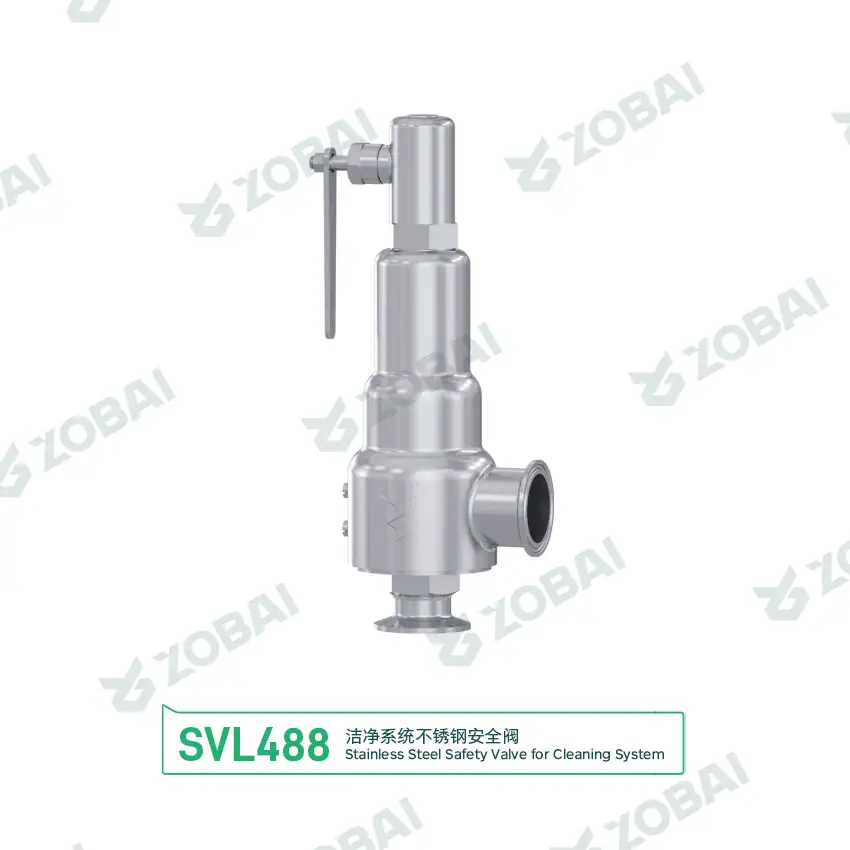
- Sanitary safety valves for CIP/SIP, surface finish, elastomers, washdown and product-contact documentation.
- Industrial gas safety valves for CO₂, nitrogen, compressed air and other food-plant utility gas systems.
Typical document package
Documentation should be agreed before manufacturing, especially for dairy, beverage, sanitary process, steam boiler, CO₂, ammonia refrigeration and clean utility applications.
- Technical datasheet with model, size, orifice, set pressure and connection.
- Sizing calculation or certified relieving capacity confirmation.
- Set pressure calibration record.
- Pressure test report and seat tightness test report when required.
- Material certificate for pressure-retaining and wetted parts when specified.
- Surface finish note for product-contact surfaces when required.
- Elastomer / seal material confirmation for product and cleaning chemicals.
- Cleaning, degreasing, packaging or sanitary inspection record when specified.
Food and Beverage Safety Valve RFQ Data Checklist
| Required Data | Why It Matters | Example Input |
|---|---|---|
| Service classification | Defines sanitary, product-contact or utility requirements. | Product-contact, non-product-contact, utility steam, CO₂, refrigeration |
| Protected equipment | Defines pressure boundary and overpressure source. | Milk tank, fermenter, steam boiler, CO₂ skid, CIP line, ammonia receiver |
| Medium | Determines sizing, material, seal and hygiene requirements. | Milk, beer, syrup, CO₂, steam, hot water, caustic, acid, ammonia |
| Relief scenario | Determines required relieving capacity. | Regulator failure, steam overpressure, CO₂ generation, thermal expansion |
| Set pressure | Defines valve opening pressure. | 1.5 barg, 3 barg, 6 barg, 10 barg, 150 psi |
| Operating pressure | Confirms operating margin and leakage risk. | Normal and maximum operating pressure |
| Required relieving capacity | Confirms whether the valve can protect the system. | kg/h steam, Nm³/h CO₂, L/min liquid, SCFM air |
| Temperature | Affects material, spring, seat and elastomer selection. | Ambient, 80°C CIP, 121°C SIP, saturated steam |
| Cleaning method | Determines sanitary design and seal compatibility. | CIP caustic, acid wash, SIP steam, manual cleaning, washdown |
| Connection | Ensures compatibility with hygienic or utility piping. | Tri-clamp, DIN sanitary, SMS, NPT, flange, welded end |
| Material and seal | Prevents corrosion, contamination and leakage. | 316L, EPDM, PTFE, FKM, food-grade elastomer, stainless steel spring |
| Required documents | Avoids delays after purchase order. | Datasheet, drawing, MTC, calibration report, pressure test, surface finish note |
Final selection must be confirmed by equipment MAWP, medium properties, hygiene requirement, cleaning method, applicable code, verified sizing basis and engineering review.
Common Food and Beverage Safety Valve Selection Mistakes
Using an industrial valve in product-contact service
Product-contact areas may require sanitary geometry, cleanable surfaces, compatible seals and hygienic connections. A standard industrial valve can become a cleaning weak point.
Ignoring CIP and SIP compatibility
Cleaning chemicals and sterilization temperatures can damage unsuitable seals. Seal material should be selected for product, caustic, acid, sanitizer and steam exposure.
Venting CO₂ into low-ventilation areas
CO₂ relief from carbonation, fermentation or storage systems should be routed to a safe, ventilated location to reduce asphyxiation risk.
Buying by connection size only
A sanitary clamp size does not confirm relieving capacity. Set pressure, medium, required flow, temperature and cleaning requirement must be reviewed together.
Ignoring dead legs and drainability
Poor installation can leave product or cleaning solution trapped around the valve. Dead-leg control, drainage and access are part of hygienic valve selection.
Forgetting utility discharge safety
Steam, ammonia, hot water and cleaning chemical relief may not touch food directly, but unsafe discharge can injure operators or contaminate processing areas.
Continue Your Food and Beverage Pressure Relief Review
These related pages help move from food and beverage application requirements to detailed safety valve selection, sizing, sanitary service review and utility pressure protection.
Food & Beverage PSV Link Map
Use these links to move from food and beverage application review to sanitary valve selection, utility steam sizing, CO₂ gas protection, installation checks and recognized hygiene or pressure-vessel references.
Food and Beverage Safety Valve FAQ
Prepare a Complete Food and Beverage PSV Datasheet Before Quotation
Send the service classification, protected equipment, medium, relief scenario, set pressure, operating pressure, required capacity, temperature, cleaning method, sanitary connection, material and seal requirement, discharge route and required documents. A complete datasheet helps avoid unsafe assumptions and speeds up engineering review.
Minimum RFQ data
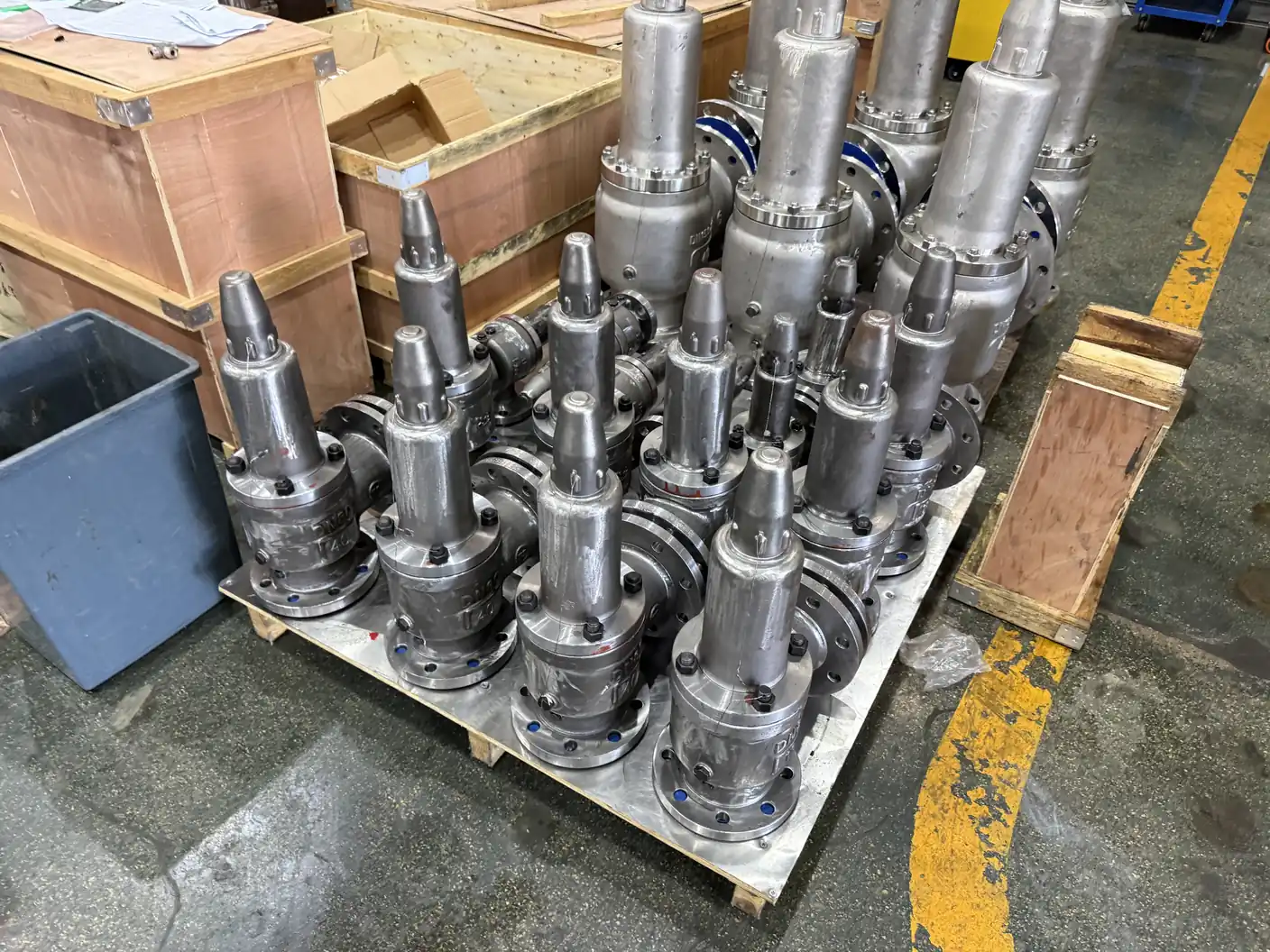
Real Production Evidence for Application Review
For Food & Beverage Safety Valves for Sanitary PSV Systems | ZOBAI service, supplier review should connect valve construction to set pressure, medium, temperature, capacity, back pressure and the governing code. This actual ZOBAI photograph documents large stainless steel safety valves grouped on a pallet. Review it with drawings, material records and pressure-test documents.