LNG Safety Valves for Cryogenic Storage, Liquefaction, Regasification, BOG and Loading Systems
LNG Safety Valves for Cryogenic Storage, Liquefaction, Regasification, BOG and Loading Systems
LNG safety valves protect cryogenic storage tanks, LNG transfer lines, loading arms, unloading stations, LNG pumps, vaporizers, regasification skids, boil-off gas systems, BOG compressors, cold boxes, LNG fuel gas systems, bunkering skids and marine LNG packages from overpressure. Correct selection starts with set pressure, protected equipment MAWP, cryogenic temperature, blocked-in LNG thermal expansion, boil-off gas generation, fire exposure, vaporizer failure, two-phase flashing, back pressure, discharge destination, material toughness, extended bonnet requirement, seat tightness, insulation clearance and required cryogenic test documents.
Where LNG Safety Valves Are Used
LNG relief service is different from ordinary natural gas service because the valve may see cryogenic liquid, cold vapor, flashing flow, rapid boil-off, trapped liquid expansion and low-temperature embrittlement risk. The valve must protect pressure equipment and remain reliable under very low temperature conditions.
LNG Storage Tanks and Tank Piping
Used on storage tank nozzles, tank top vapor spaces, fill lines, withdrawal lines, recirculation lines and tank protection systems. Selection should review tank design pressure, boil-off rate, fire case, vacuum protection, emergency venting and cold vapor discharge.
LNG Transfer Lines and Loading Arms
Used on loading lines, unloading arms, marine terminals, truck loading skids, bunkering systems and isolated cryogenic pipe sections. Thermal relief is critical when LNG can be trapped between closed valves and warmed by ambient heat.
LNG Pumps and Send-Out Systems
Used on submerged pumps, high-pressure send-out pumps, recirculation systems and pump discharge headers. Valve selection should review pump curve, deadhead pressure, minimum flow, cold liquid flashing, vibration and discharge return route.
Vaporizers and Regasification Skids
Used on ambient air vaporizers, open rack vaporizers, submerged combustion vaporizers, shell-and-tube vaporizers and regasification packages. Relief cases include blocked gas outlet, heat input upset, tube rupture and cold liquid isolation.
Boil-Off Gas and Compressor Systems
Used on BOG headers, compressors, knockout drums, gas receivers and fuel gas conditioning systems. Selection should review low-temperature gas, compressor blocked discharge, suction pressure control, vent or flare back pressure and leakage tightness.
LNG Fuel Gas and Marine Bunkering
Used on LNG fuel supply systems, marine bunkering skids, satellite stations, ISO container systems and small-scale LNG packages. Compact layouts require careful review of valve orientation, cold vent location, isolation policy and operator safety.
LNG Safety Valve Selection Starts With Cryogenic Relief Scenario
LNG systems can overpressure through liquid expansion, boil-off, blocked outlet, pump deadhead, vaporizer upset, fire exposure or compressor failure. The selected relief device must match the phase, temperature and discharge system for the governing case.
Blocked-In LNG Thermal Expansion
LNG trapped between closed valves can build pressure quickly as heat leaks into the line. Cryogenic thermal relief valves should be reviewed on loading lines, pump recirculation lines, vaporizer inlet lines and isolated pipe sections.
Boil-Off Gas Generation
Heat ingress into LNG storage, transfer lines or low-temperature equipment creates boil-off gas. Relief review should include normal BOG, emergency BOG, blocked vapor outlet and vent or flare system capacity.
LNG Pump Deadhead or Blocked Discharge
LNG pumps can overpressure discharge piping if the outlet is blocked or minimum flow path is unavailable. Selection should review pump curve, shutoff head, cold liquid flow, flashing behavior and return system back pressure.
Vaporizer Outlet Blockage
When LNG is vaporized and gas outlet flow is restricted, vaporizer pressure can rise. The relief case should consider heat input, LNG inlet flow, gas properties, cold-end isolation and downstream gas header pressure.
Fire Exposure and Emergency Relief
Storage vessels, process vessels, vaporizers and LNG piping may require fire-case relief review. Emergency discharge should be routed to an approved safe vent, flare or cold relief system.
Flashing, Two-Phase Flow and Cold Discharge
LNG relief may start as liquid and flash into vapor as pressure drops. Valve capacity, outlet piping, cold plume behavior, icing risk and discharge material compatibility should be reviewed together.
LNG Safety Valve Application Cases with Typical RFQ Data
These cases show how LNG relief valve requirements are commonly described before model selection. Final sizing must be confirmed by project process data, LNG composition, protected equipment design, relief calculation, discharge system review and applicable code basis.
Case 1: Blocked-In LNG Transfer Line Thermal Relief Valve
Thermal ReliefBlocked-in LNG thermal relief is often small in flow but severe in pressure rise. The discharge route must remain open and suitable for cold flashing liquid or vapor.
Case 2: LNG Storage Tank Pressure Relief Valve
Storage Tank ReliefLNG tank relief devices should be coordinated with boil-off gas handling, vacuum protection and emergency venting. Overpressure and vacuum protection should not be treated separately.
Case 3: LNG Pump Discharge Safety Valve
Pump ProtectionLNG pump relief requires pump curve review and cryogenic discharge planning. A normal liquid relief valve may not be suitable without low-temperature material and seat review.
Case 4: LNG Vaporizer Outlet Safety Valve
RegasificationVaporizer relief may involve cold gas or warm natural gas depending on upset condition. Outlet temperature and gas composition should be included in the datasheet.
Case 5: BOG Compressor Discharge Safety Valve
BOG CompressorBOG compressor relief should be selected from compressor maximum credible flow, not normal BOG rate only. Vent or flare system back pressure must be checked.
Case 6: LNG Bunkering Skid Relief Valve
Marine / BunkeringLNG bunkering skids need clear discharge philosophy because emergency shutdown can isolate cold liquid sections. Thermal relief and gas relief should be coordinated.
LNG Safety Valve Data Matrix
| LNG Service | Typical Medium | Common Relief Cause | Required Engineering Check | Recommended Valve Review | Risk if Missed |
|---|---|---|---|---|---|
| Blocked-in LNG line | LNG, flashing methane-rich liquid, cold vapor | Thermal expansion from heat leak into isolated liquid | Trapped volume, heat leak, set pressure, discharge route and flashing behavior | Cryogenic thermal relief valve with suitable seat and low-temperature materials | Rapid overpressure, cold liquid release or valve leakage after thermal cycling |
| LNG storage tank | Boil-off gas, methane vapor, nitrogen traces | BOG generation, blocked vapor outlet, emergency venting case | Tank design pressure, BOG rate, low-pressure capacity, vacuum protection and safe venting | Tank pressure/vacuum relief system and certified low-pressure relief device | Tank overpressure, vacuum damage, unsafe vapor release or icing blockage |
| LNG pump discharge | LNG, cold liquid methane mixture, flashing liquid | Pump deadhead, blocked discharge, minimum flow failure | Pump curve, shutoff head, cold liquid capacity, return pressure and vibration | Cryogenic liquid relief valve or spring-loaded cryogenic PSV | Pump damage, line rupture, unstable relief or unsafe return discharge |
| Vaporizer outlet | Natural gas, cold methane-rich gas, warm gas | Gas outlet blockage, heat input upset, regulator failure | Gas capacity, outlet temperature, downstream design pressure and vent dispersion | Gas PSV or pilot operated valve for clean gas where suitable | Downstream overpressure, high noise or unsafe gas plume |
| BOG compressor | Boil-off gas, methane-rich gas, nitrogen traces | Blocked discharge, recycle failure, compressor control failure | Compressor map, maximum flow, pulsation, vibration and back pressure | Gas PSV or pilot operated safety valve with leakage review | Compressor receiver overpressure, leakage or unstable relief |
| LNG loading / bunkering skid | LNG, cold vapor, natural gas | Trapped LNG, blocked transfer, ESD isolation | ESD sequence, trapped volume, transfer flow, discharge philosophy and operator safety | Cryogenic thermal relief plus gas PSV arrangement where required | Overpressure after isolation, cold plume exposure or blocked relief path |
How to Specify an LNG Safety Valve Correctly
1. Confirm whether the relief case is liquid, vapor or flashing flow
LNG systems may relieve cold liquid, boil-off gas, warm natural gas, flashing liquid or two-phase flow. Valve type, capacity, outlet piping and discharge destination should be selected from the actual relieving phase.
2. Select materials for cryogenic toughness
Body, bonnet, nozzle, disc, stem, spring, bolting, seat, gasket and trim should be suitable for cryogenic temperature. Low-temperature impact requirements, stainless steel grades and project material specifications should be confirmed before quotation.
3. Review extended bonnet and cold box installation
Cryogenic valves may need extended bonnets to protect spring and packing areas from extreme cold. Cold box penetration, insulation thickness, valve orientation and maintenance access should be checked in the layout stage.
4. Check discharge route and back pressure
Relief may discharge to tank return, BOG header, flare, vent stack, cold vent or safe drain system. Back pressure, freezing, condensation, cold plume, ignition risk and oxygen-deficient atmosphere risk should be reviewed.
5. Confirm thermal relief for every blocked-in LNG section
LNG trapped in isolated piping can create severe pressure rise. Transfer lines, loading arms, pump discharge lines, vaporizer inlets and bypass sections should be checked for thermal relief coverage.
6. Define cryogenic testing and documents
LNG projects commonly require material certificates, low-temperature material confirmation, pressure test records, set pressure calibration, seat tightness test, cleaning records and project-specific inspection documents.
LNG Relief Valves Must Be Reviewed With Insulation, Cold Discharge, Back Pressure and Safe Venting
Why LNG relief valve installation controls real performance
LNG relief performance depends on the full cryogenic system. A correctly sized valve can still fail if the inlet line is too long, the discharge line freezes, insulation blocks inspection, cold liquid pockets remain trapped, or the outlet is routed toward personnel, ignition sources, air intakes or enclosed areas.
Installation should review short inlet path, valve orientation, cold box interface, insulation clearance, bonnet warming, outlet support, thermal contraction, safe vent elevation, cold plume direction, ice formation, drainability, flare or BOG header back pressure, ESD isolation sequence, maintenance access and whether the discharge route can handle cold liquid, vapor or flashing two-phase flow.
Field installation checks
- Confirm set pressure, protected equipment MAWP and cryogenic temperature rating.
- Check every blocked-in LNG section for thermal relief coverage.
- Keep inlet pressure loss within the project design limit.
- Route cold liquid, flashing LNG and gas discharge to approved safe systems.
- Review outlet back pressure from vent stack, BOG header, tank return or flare system.
- Protect personnel from cold plume, frostbite risk, oxygen-deficient atmosphere and ignition hazards.
- Provide insulation clearance, tag visibility, inspection access and safe valve removal space.
Standards and Documents to Confirm Before Ordering
Common LNG relief references
LNG safety valve specifications may reference NFPA, ASME, API, ISO, EN, GB, local LNG terminal regulations, marine rules, owner cryogenic piping standards and project-specific relief philosophy. The applicable design basis should be confirmed before quotation.
- NFPA 59A where LNG production, storage and handling requirements are specified by the project.
- API 520 for pressure-relieving device sizing and selection reference where required.
- API 521 for pressure-relieving and depressuring system review, flare, venting and system-level relief cases.
- ASME BPVC Section VIII where protected vessels, receivers, vaporizers or separators are pressure vessels.
- ASME B31.3 where LNG process piping or cryogenic plant piping is specified under process piping rules.
- API 526 when flanged steel pressure relief valve dimensions and pressure classes are specified.
- API 527 when seat tightness testing is required by project specification.
Typical LNG valve document package
Documentation should be agreed before manufacturing, especially for LNG terminals, regasification skids, BOG compressors, marine bunkering, truck loading and EPC export projects.
- Technical datasheet with tag number, model, size, orifice, set pressure and connection.
- Sizing calculation or certified relieving capacity confirmation.
- Cryogenic temperature basis, LNG composition and relieving phase statement.
- Material certificates for body, bonnet, nozzle, disc, stem, spring and pressure-retaining parts.
- Low-temperature material confirmation or impact test documentation where specified.
- Set pressure calibration certificate, pressure test report and seat tightness test report.
- Cleaning, degreasing, drying, packing and preservation records where required.
- General arrangement drawing with extended bonnet, insulation clearance, weight and discharge orientation.
Official Standards Sources for LNG Relief Valve Review
Use ZOBAI internal pages for application guidance, RFQ preparation and product selection. Use the official publisher pages below when project specifications require LNG, cryogenic piping, pressure vessel, relief sizing or seat tightness standard identification.
LNG Safety Valve RFQ Data Checklist
| Required Data | Why It Matters | Example Input |
|---|---|---|
| Protected equipment | Defines pressure boundary, code basis and set pressure limit. | LNG tank, transfer line, pump discharge, vaporizer, BOG compressor, loading skid |
| MAWP / design pressure | Defines the maximum pressure the valve must protect. | Low-pressure tank value, 10 barg, 16 barg, 40 barg, Class 150/300 piping |
| Set pressure | Defines valve opening pressure and capacity basis. | Tank set point, line protection value, pump discharge protection set pressure |
| Relief scenario | Determines required capacity and phase behavior. | Blocked-in LNG, BOG generation, pump deadhead, vaporizer outlet blockage, fire case |
| Medium and phase | Affects sizing, material, discharge design and valve configuration. | LNG liquid, flashing LNG, boil-off gas, cold natural gas, warm natural gas, two-phase flow |
| LNG composition | Affects molecular weight, boiling behavior, density and relief calculation. | Methane-rich LNG with ethane, propane, nitrogen and heavier components |
| Relieving temperature | Controls cryogenic material selection, bonnet design and seat compatibility. | Cryogenic LNG temperature, cold gas temperature, vaporizer outlet temperature |
| Required capacity | Confirms whether the valve can protect the system. | kg/h, Nm³/h, SCFM, boil-off rate, pump curve, thermal expansion basis |
| Back pressure and discharge route | Influences capacity, stability, safety and valve configuration. | Tank return, BOG header, flare, vent stack, cold vent, fuel gas system |
| Installation condition | Affects extended bonnet, insulation clearance and maintenance access. | Cold box, outdoor line, insulated piping, loading arm, marine skid, vertical installation |
| Material requirement | Prevents brittle failure, leakage and document rejection. | 316SS, CF8M, low-temperature stainless steel, extended bonnet, PTFE/PCTFE seat where suitable |
| Required documents | Avoids inspection, FAT, shipment and commissioning delays. | Datasheet, drawing, MTC, low-temperature material record, sizing report, calibration report |
Final selection must be confirmed by LNG composition, protected equipment datasheet, cryogenic temperature, relief scenario, required capacity, applicable code, back pressure calculation, certified valve capacity and engineering review.
Common LNG Safety Valve Selection Mistakes
Treating LNG like ordinary natural gas
LNG relief may involve cryogenic liquid, flashing flow or very cold vapor. A standard natural gas PSV may not have suitable materials, bonnet design or seat performance for LNG service.
Missing blocked-in liquid thermal relief
Any isolated LNG section can overpressure when heat enters the line. Loading arms, bypasses, pump lines and vaporizer inlet lines should be checked for thermal relief.
Ignoring flashing and two-phase relief
LNG can flash as pressure drops. The valve and discharge line should be reviewed for phase change, icing, cold plume behavior and safe outlet routing.
Using unsuitable low-temperature materials
Cryogenic service requires material toughness review. Body, trim, bolting, spring, gasket and seat materials should match the specified low-temperature condition.
Forgetting insulation and bonnet clearance
Insulation can block nameplates, levers, vents and maintenance access. Extended bonnet and cold box details should be reviewed before layout is finalized.
Discharging cold vapor into unsafe areas
LNG relief can produce cold vapor clouds and oxygen-deficient atmosphere risk. Vent discharge should be routed to approved safe locations away from personnel and ignition sources.
Continue Your LNG Relief Valve Selection Review
These related pages help move from LNG relief requirements to detailed cryogenic valve selection, sizing, thermal relief, high back pressure review, storage tank protection and complete RFQ preparation.
LNG Safety Valve FAQ
Prepare a Complete LNG Safety Valve Datasheet Before Quotation
Send the protected equipment datasheet, MAWP or design pressure, set pressure, LNG composition, relief scenario, required capacity, relieving phase, relieving temperature, blocked-in volume if applicable, back pressure, discharge route, installation condition, material requirement, extended bonnet requirement, connection standard and required documents. A complete datasheet helps confirm cryogenic compatibility, correct capacity and safe cold discharge.
Minimum RFQ data
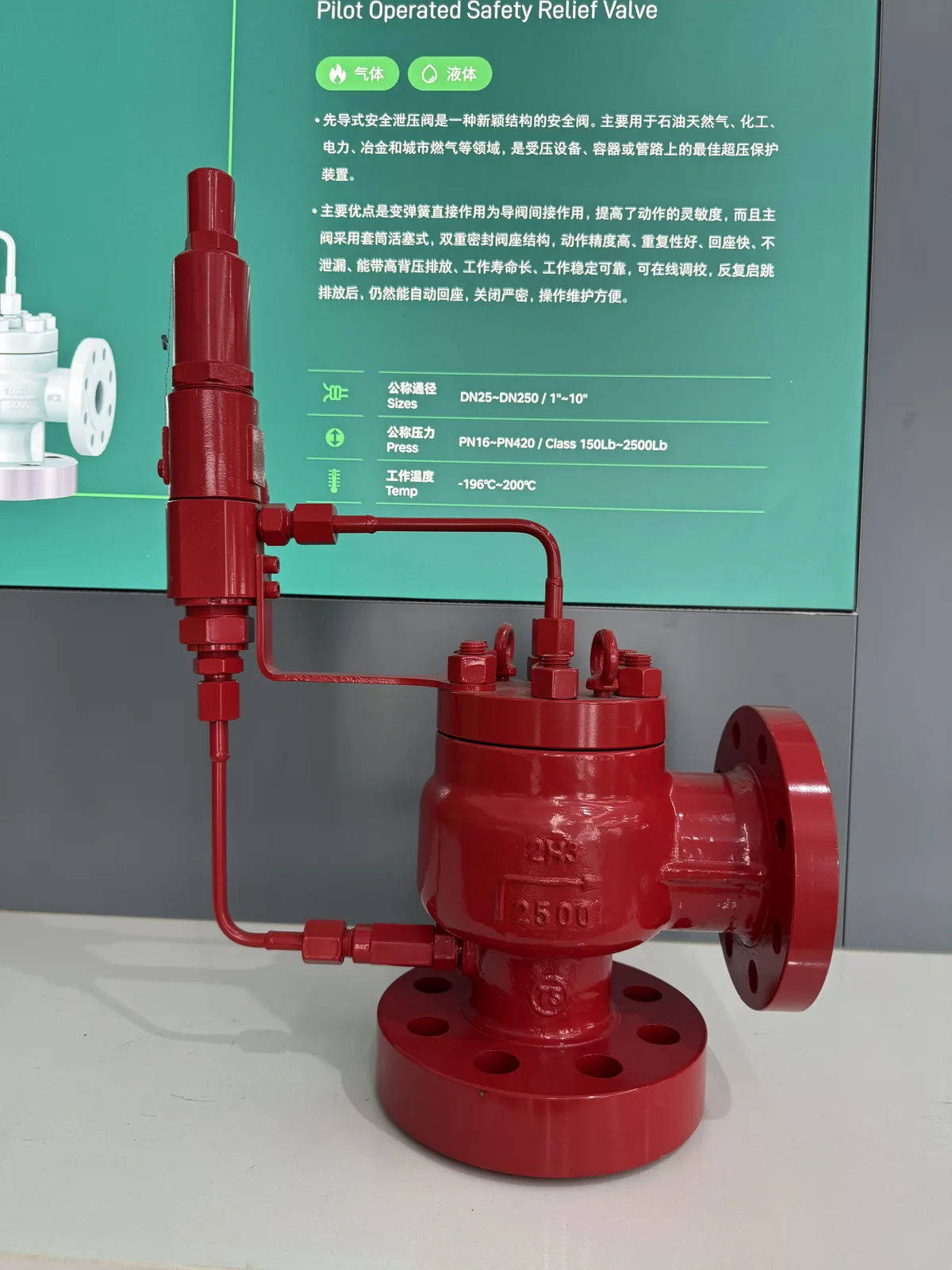
Real Production Evidence for Application Review
For LNG Safety Valves for Cryogenic Relief Systems | ZOBAI service, supplier review should connect valve construction to set pressure, medium, temperature, capacity, back pressure and the governing code. This actual ZOBAI photograph documents red pilot-operated safety relief valve on display. Review it with drawings, material records and pressure-test documents.