
Low-Temperature Safety Valves for Cryogenic and Cold Process Service
This guide covers cryogenic and refrigerated service beyond LNG alone, including industrial gases, liquid oxygen, cold hydrogen, ammonia refrigeration and other systems where low temperature can affect pressure-containing materials, sealing and valve operation.
- Use the minimum credible metal temperature, not only normal operating temperature.
- Verify material toughness, pressure rating and certificate scope at the actual low-temperature condition.
- Check flashing, two-phase relief, icing, condensate freezing and cold discharge together.
- Extended bonnet, seat design, gasket, bellows and installation details must match the specific valve and service.
Low-temperature service is broader than LNG service
Engineering limitation
Low-temperature applications that require dedicated valve review
LNG and Cryogenic Hydrocarbons
Industrial Gases
Oxygen and LOX
Hydrogen Service
Ammonia Refrigeration
Cryogenic Skids and Cold Boxes
Low-temperature PSV selection starts with the governing overpressure case
Blocked-In Liquid Expansion
Boil-Off and Heat Ingress
Vaporizer or Heat-Exchanger Upset
Pump or Compressor Blocked Discharge
Fire Exposure
Flashing or Two-Phase Relief
Material acceptance must be based on the minimum credible metal temperature
Low-temperature material checklist
- Minimum design metal temperature or minimum credible metal temperature
- Body, bonnet and pressure-retaining material grade
- Impact-test temperature and acceptance criteria
- Heat treatment and delivery condition
- Bolting, gasket and flange compatibility
- Bellows and trim material suitability
- PMI or additional alloy verification if specified
- EN 10204 document type and heat-number traceability
- Pressure-temperature rating at the actual cold condition
- Compatibility with the process medium and cleaning requirement
Low-temperature construction must control cold transfer, sealing and operating reliability
Extended Bonnet or Stem
Seat Construction
Spring and Moving Parts
Bellows and Bonnet Vent
Gaskets and Seals
Drainage and Orientation
Cold discharge can affect the valve, piping, structure and surrounding area
Installation review points
- Cold-end piping and outlet material compatibility
- Thermal contraction and expansion allowance
- Independent support and discharge reaction force
- Icing and frozen-condensate risk
- Insulation clearance around bonnet, vent and drains
- Safe vent, flare, return or recovery destination
- Liquid carryover and flashing behavior
- Access for inspection, testing and removal
- Thermal cycling during startup and shutdown
- Personnel protection from cold surfaces and plume
A practical workflow for low-temperature safety valve review
Define the protected equipment
Identify the governing relief case
Establish temperature limits
Determine phase and required capacity
Select material and construction
Review back pressure and discharge
Check installation details
Complete the document package
Information needed for low-temperature valve selection and quotation
Recommended engineering input
- Protected equipment and governing relief scenario
- Medium composition and fluid phase
- Set pressure, MAWP and allowable overpressure
- Operating, design, relieving and minimum temperature
- Required relieving capacity or sizing calculation
- Back pressure and discharge destination
- Valve size, connection and pressure class
- Body, trim, seat, spring, bellows and gasket materials
- Extended bonnet, insulation and installation requirements
- Impact, PMI, MTC, cryogenic test and inspection documents
Continue the low-temperature relief review
LNG Safety Valves
Industrial Gas Safety Valves
Pressure-Temperature Ratings
Material Certificates
Safety Valve Selection Guide
Ask an Engineer
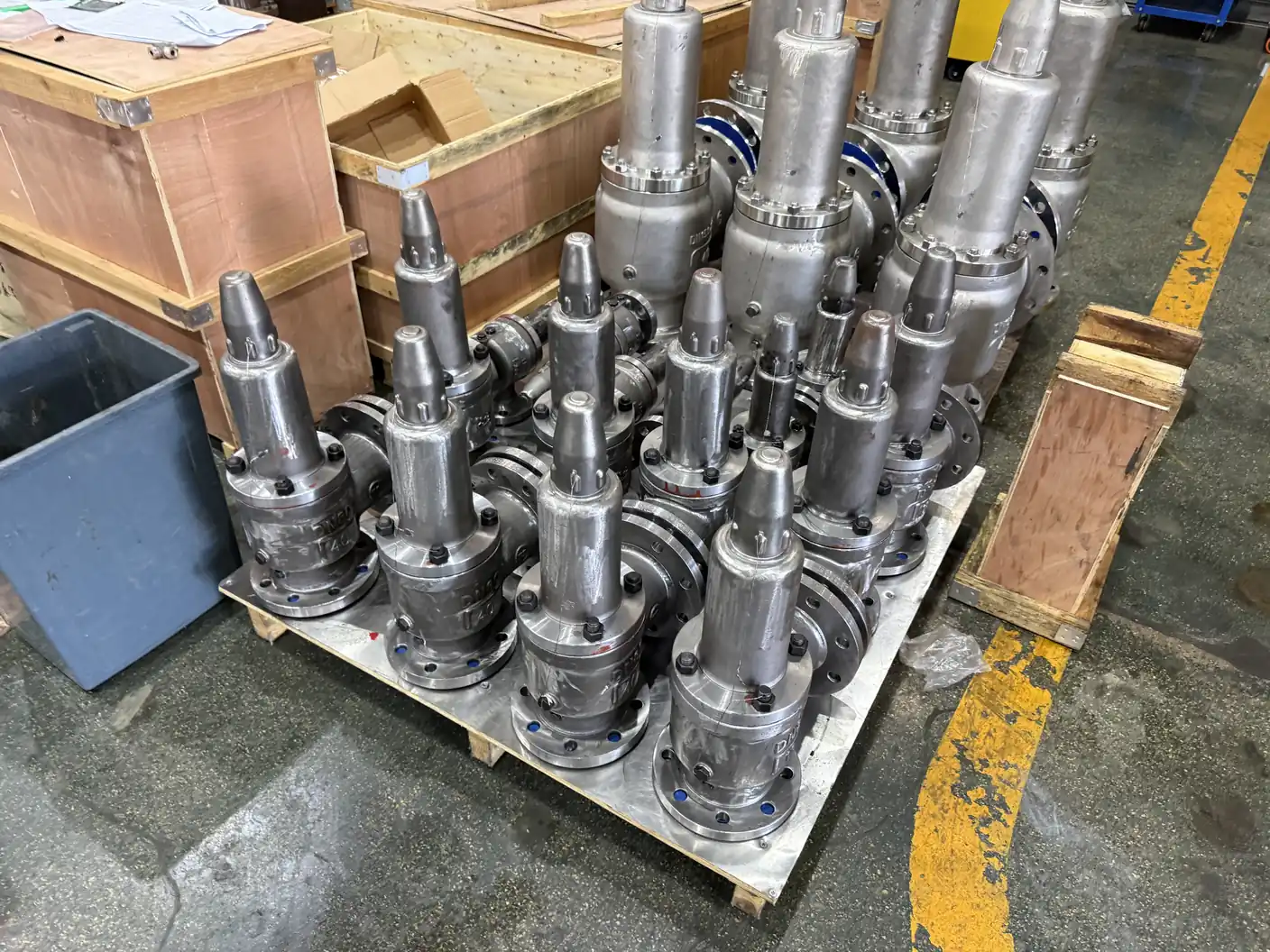
Real Production Evidence for Application Review
For Low-Temperature & Cryogenic Safety Valves | ZOBAI service, supplier review should connect valve construction to set pressure, medium, temperature, capacity, back pressure and the governing code. This actual ZOBAI photograph documents large stainless steel safety valves grouped on a pallet. Review it with drawings, material records and pressure-test documents.
Common questions about low-temperature safety valves
It is any service where the operating, relieving or minimum credible metal temperature can affect material toughness, sealing, valve movement, pressure rating or installation. The applicable threshold depends on material, code and project requirements.
Not exactly. LNG is one important low-temperature application, but low-temperature service also includes industrial gases, LOX, cold hydrogen, refrigerated ammonia, carbon dioxide, refrigeration systems and other cryogenic or refrigerated processes.
No. The exact alloy, product form, heat treatment, impact requirements, pressure rating, component design and material certificates must be checked for the actual minimum temperature.
An extended bonnet may be used to limit cold transfer to the spring, stem or sealing area and to provide insulation clearance. The required length and arrangement depend on the valve design, temperature and installation.
Projects may request material certificates, impact-test results, PMI, heat-treatment records, pressure and seat-tightness reports, cleaning records, drawings, sizing documentation and project-specific cryogenic inspection records.
Yes. Send the medium, relief scenario, pressures, temperature range, required capacity, back pressure, connections, material requirements, installation drawing and required documents.