Share your medium, set pressure, temperature, size, standard, or datasheet, and our team will review your requirement and respond with the appropriate next step.
Safety Valve Material Selection Guide: Body, Trim, Spring and Seat Materials
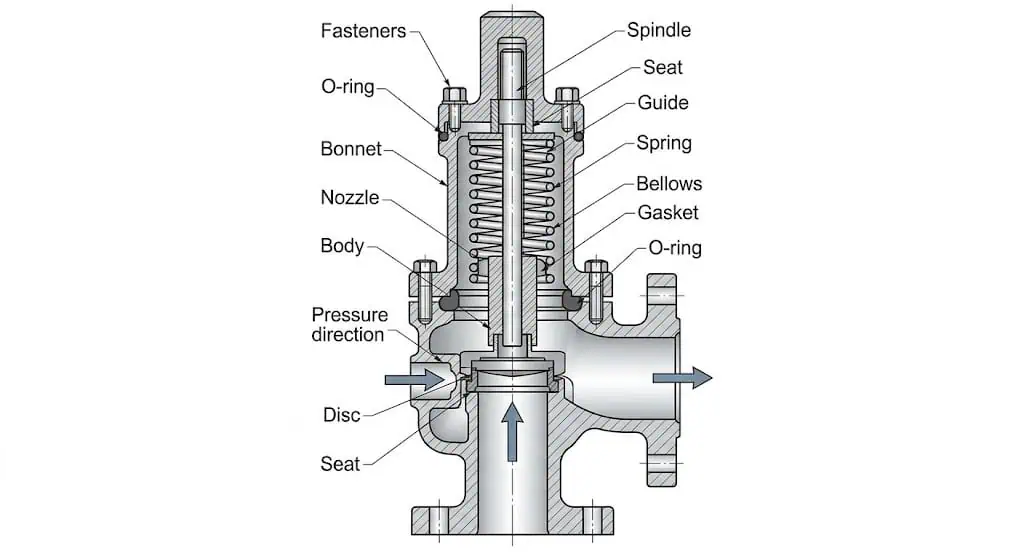
A safety valve material should be selected by reviewing the service medium, temperature, pressure, corrosion mechanism, leakage requirement, applicable standards and each critical component. Body material alone is not enough. The nozzle, disc, seat, guide, spindle, spring, bellows, gasket, O-ring and fasteners may require different materials because they face different loads, corrosion exposure, friction, temperature …
A safety valve material should be selected by reviewing the service medium, temperature, pressure, corrosion mechanism, leakage requirement, applicable standards and each critical component. Body material alone is not enough. The nozzle, disc, seat, guide, spindle, spring, bellows, gasket, O-ring and fasteners may require different materials because they face different loads, corrosion exposure, friction, temperature and movement. For general steam, air or water service, carbon steel or stainless steel may be sufficient. For corrosive chemicals, sour gas, seawater, high temperature, low temperature, oxygen, hydrogen or sanitary service, stainless steel, duplex, Monel, Hastelloy, Inconel, PTFE, PEEK, graphite or certified elastomers may be required. Final selection should be confirmed with sizing data, set pressure, relieving capacity, material certificates, inspection records and the project standard.
Engineering summary: safety valve material selection is a component-by-component engineering review. The material that is acceptable for the body may not be acceptable for the seat, spring, bellows or seal. The wrong material can cause corrosion, seat leakage, galling, set pressure drift, unstable reseating, shorter maintenance intervals, delayed documentation and unnecessary replacement cost.
In this guide, “safety valve,” “pressure relief valve,” “safety relief valve” and “PSV” are discussed from a material-selection perspective. Final terminology should follow the applicable project code and valve standard. Material selection must not be separated from set pressure, overpressure, accumulation, blowdown, back pressure, certified relieving capacity and installation conditions, because these parameters define the real mechanical and thermal load on valve components.
Fig. 1 — Safety valve component material map. Material selection should review pressure-retaining parts, wetted trim, moving parts, sealing parts and special components separately.
What Parts of a Safety Valve Need Material Review?
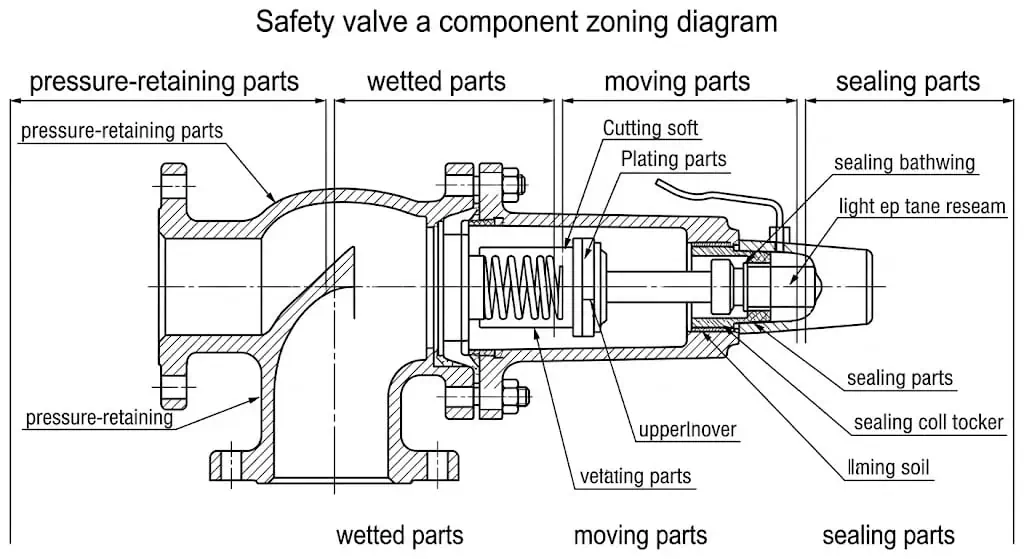
Fig. 2 — Wetted and non-wetted safety valve parts. Wetted trim, spring chamber components, bellows, seals and fasteners may require different material decisions.
Pressure-Retaining Parts: Body and Bonnet
The body and bonnet must be compatible with pressure, temperature, flange rating, external atmosphere and the process fluid where exposed. Carbon steel may be suitable for many general industrial services, while stainless steel safety valves may be needed for corrosive, clean or product-contact service. The review should include design pressure, test pressure, temperature range, casting or forging grade, heat treatment, material certificate and pressure equipment requirement.
Why it matters: if the body or bonnet material is selected only by pressure class, the valve may pass a pressure test but still fail in corrosion, low-temperature impact, sour service or external marine exposure. This affects safety, maintenance cost and procurement lead time.
Wetted Parts: Nozzle, Disc, Seat, Guide and Spindle
Wetted parts often experience more aggressive service than the body because they contact the medium directly and control sealing or movement. The nozzle and disc are especially important for seat tightness. The guide and spindle affect stable lift and reseating. If these parts corrode, gall or erode, the valve may leak, chatter, fail to reseat or require frequent maintenance even when the body remains sound.
Moving Parts: Spring, Stem, Guide and Lift Components
Moving parts must remain free enough to respond when the system pressure reaches set pressure. This is especially important in spring loaded safety valves, where spring force directly affects opening behavior. Corrosion, deposits, galling or thermal distortion can increase friction and delay opening or affect reseating. Materials for the spindle, guide and lift components should be reviewed together with lubrication restrictions, medium cleanliness, bonnet environment and maintenance access.
Sealing Parts: Metal Seat, Soft Seat, Gasket and O-Ring
Seat and seal materials affect leakage, temperature capability, chemical compatibility, blowdown behavior and maintenance cost. Metal seats are often selected for high-temperature or severe service, while soft seats may provide tighter shutoff in qualified clean service. The exact seat material must be supported for the relieving temperature, pressure, chemical exposure, decompression behavior, particles and expected cycling. Gaskets and O-rings must be reviewed for both process exposure and external temperature.
Special Parts: Bellows, Pilot Components and Fasteners
Special components require separate material review. In back pressure balanced safety valves, a metallic bellows can reduce outlet-pressure influence and limit normal process exposure of the spring chamber, but the bellows still sees cyclic movement and may be exposed if it fails. In pilot operated safety valves, pilot tubing and sensing lines may plug or corrode in dirty service. Fasteners may require low-temperature, high-temperature, sour service or corrosion-resistant grades depending on the project specification.
Bolting grade, coating, hardness limit if applicable
Material review note: When sending a safety valve inquiry, do not specify only “carbon steel valve” or “stainless steel valve.” Define body, bonnet, trim, spring, bellows, seat, gasket, O-ring and fastener requirements where the service is corrosive, high-temperature, low-temperature, sour, sanitary or leakage-sensitive.
Start with Service Conditions Before Choosing Material
Medium: Steam, Gas, Liquid, Chemical, Sour Gas or Sanitary Fluid
The first material decision comes from the medium. Steam mainly raises temperature, condensate and erosion concerns. Air and non-corrosive gases may allow simpler material choices. Corrosive chemicals require chemical compatibility review. Sour gas may require cracking-resistant materials under the project-specific sour-service standard; general corrosion resistance alone does not demonstrate resistance to H₂S-related cracking. Sanitary fluids require cleanability, surface finish and product-contact documentation. A material name alone is not enough unless the actual service is known.
Temperature Range and Thermal Cycling
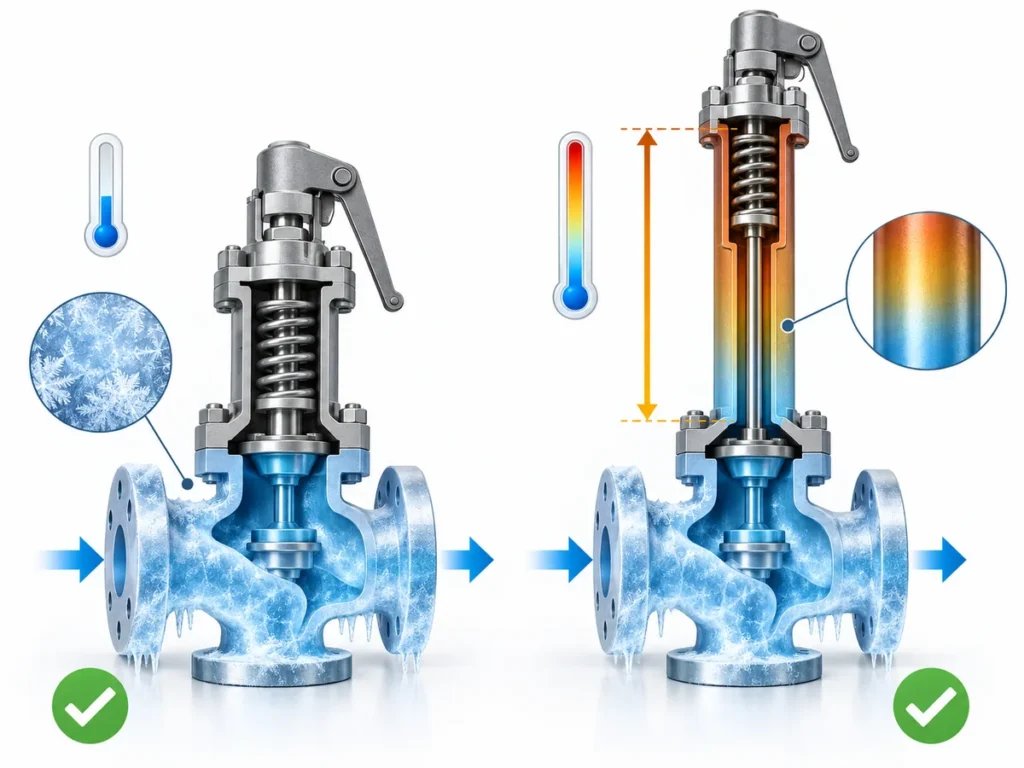
Temperature affects strength, corrosion rate, spring behavior, gasket performance, soft seat limits and bolting selection. High-temperature service can cause spring relaxation or soft seat degradation. Low-temperature service may require impact-tested or low-temperature materials. Thermal cycling can fatigue bellows, harden elastomers and change seat tightness over time.
Pressure Rating, Set Pressure and Certified Relieving Capacity
Material selection must align with pressure class, body rating, set pressure, test pressure and the protected equipment requirement. Set pressure affects when the valve starts to open. Overpressure and accumulation define the pressure margin during the relieving event. Blowdown affects the reseating range. Back pressure affects stability and effective discharge behavior. Required relieving capacity confirms whether the valve can protect the equipment; connection size alone does not prove capacity. For sizing context, see the safety valve sizing and certified relieving capacity guide.
What can go wrong: if the valve is selected by material and connection size only, it may look correct on a datasheet but fail the real protection review. A valve can have an acceptable body material and still have insufficient certified capacity, unstable lift, excessive inlet pressure loss or poor reseating under the actual installation condition.
Corrosion Mechanism, Not Only Corrosion Name
Do not select material only by saying “corrosive service.” General corrosion, pitting, crevice corrosion, chloride stress corrosion cracking, sulfide stress cracking, hydrogen-induced cracking, galvanic corrosion and erosion-corrosion require different responses. Stainless steel may be suitable in one corrosive service and unsuitable in another, especially where chlorides, high temperature or crevices are present.
Leakage Requirement and Seat Tightness Expectation
Seat tightness should be considered before selecting seat material. A soft seat can improve leakage performance in many clean services, but it may be limited by temperature, chemical attack, steam, particles or fire exposure. A metal seat may tolerate severe service better but usually requires careful lapping, hardfacing or maintenance planning where tight shutoff is expected.
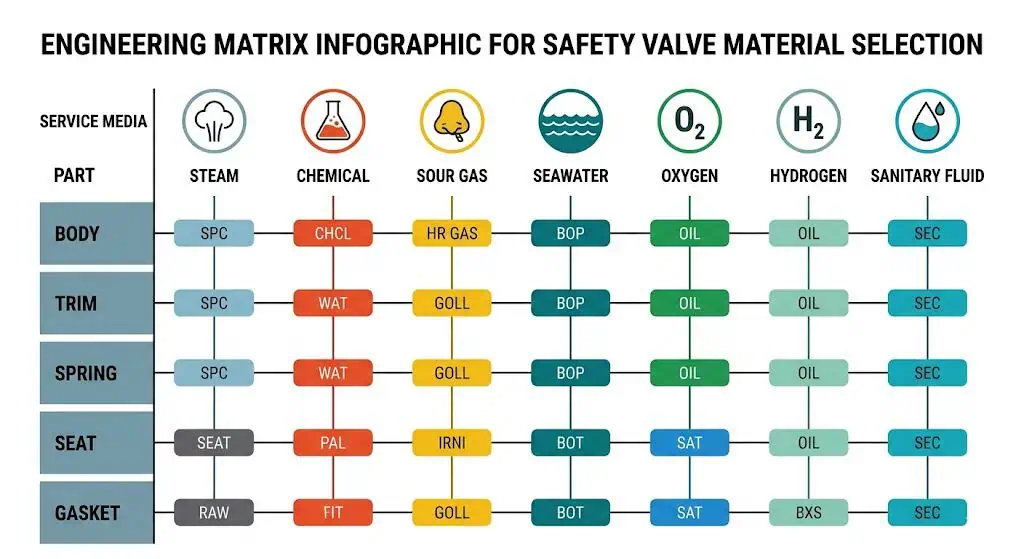
Fig. 3 — Service condition versus material selection matrix. Medium, pressure, temperature, corrosion mechanism and documentation requirements should be reviewed before material confirmation.
Service Condition
Material Risk
Common Material Direction
Verification Needed
Steam
High temperature, erosion, condensate
Carbon steel or alloy / stainless trim depending on temperature
Temperature, seat type, spring material, condensate control
Air / inert gas
Seat leakage, cleanliness, external corrosion
Carbon steel, stainless steel or soft seat where suitable
Leakage requirement, environment, pressure class
Water / liquid
Corrosion, deposits, liquid reaction force
Carbon steel, bronze, stainless or alloy depending on water chemistry
Chlorides, pH, solids, discharge piping
Acid / caustic
Chemical attack, pitting, crevice corrosion
Stainless steel, duplex, Monel or Hastelloy after compatibility review
Concentration, temperature, impurities, material certificate
Seawater / offshore
Chloride corrosion, external atmosphere, galling
Duplex, super duplex, Monel or suitable coating strategy
Chloride level, external protection, bolting, trim compatibility
H₂S / sour service
SSC, HIC, SCC, hardness limit
Project-qualified carbon steel, stainless steel or nickel alloy for the applicable sour-service scope
Carbon steel is commonly used for general industrial steam, air, water and non-corrosive gas services where temperature and corrosion are within suitable limits. It is often economical and available, but it may not be suitable for corrosive chemicals, wet sour service, high chloride service, low-temperature impact requirements or clean service without additional review.
Stainless Steel for Corrosive or Clean Service
Stainless steel is commonly reviewed where corrosion resistance, cleanability or product purity is required. 304, 316 and 316L may be used in different services, but stainless steel is not a universal answer. Chlorides, crevices, temperature and stress corrosion cracking risk must be checked before assuming stainless steel is safe. For product-level material options, review stainless steel safety valves.
Bronze and Brass for Low-Pressure Utility Service
Bronze or brass safety valves may be used in some low-pressure utility, water, air or HVAC-related services. They are not normally selected for severe process, high-temperature, sour gas or aggressive chemical service. The engineering review should confirm pressure rating, temperature, dezincification risk, medium compatibility and local code acceptance.
Duplex, Super Duplex, Monel and Hastelloy for Severe Corrosion
Duplex, super duplex, Monel and Hastelloy may be considered for seawater, chloride-containing media, acids, offshore service or severe chemical exposure. These materials can reduce corrosion risk but increase cost, lead time and documentation complexity. They should be selected based on a defined corrosion mechanism, not simply because the service is described as “corrosive.”
Low-Temperature and High-Temperature Material Considerations
Low-temperature service may require impact-tested materials and compatible bolting. High-temperature service may require alloy steels, stainless trim, high-temperature spring alloys, manufacturer-qualified gaskets or metal seats, depending on the actual pressure-boundary and spring-chamber temperatures. The material review should include body pressure rating, spring exposure, gasket limits, seat material and the expected maintenance interval.
Material Direction
Typical Use
Limitation
When to Review Alternative
Carbon steel
General steam, air, water, non-corrosive gas
Limited corrosion resistance
Wet, chloride, sour, clean or low-temperature service
304 / 316 / 316L stainless steel
Corrosive or clean service
Not immune to chlorides or SCC
High chloride, high temperature, crevice risk
Bronze / brass
Some low-pressure utility services
Limited pressure, temperature and chemical range
Process, severe corrosion or code-controlled service
Duplex / super duplex
Chloride and offshore service
Welding, lead time and project approval
Seawater, brine, chloride stress concerns
Monel
Selected seawater or chemical service
Cost and availability
Marine, hydrofluoric acid or special chemical cases
Hastelloy C-276 / C-22
Severe chemical corrosion
High cost and longer lead time
Acid, mixed chemical or high corrosion risk
Inconel / high-temperature alloy
Spring or high-temperature component service
Not always needed for the body
High-temperature spring, bellows or special trim service
Trim Material Selection: Nozzle, Disc, Seat, Guide and Spindle
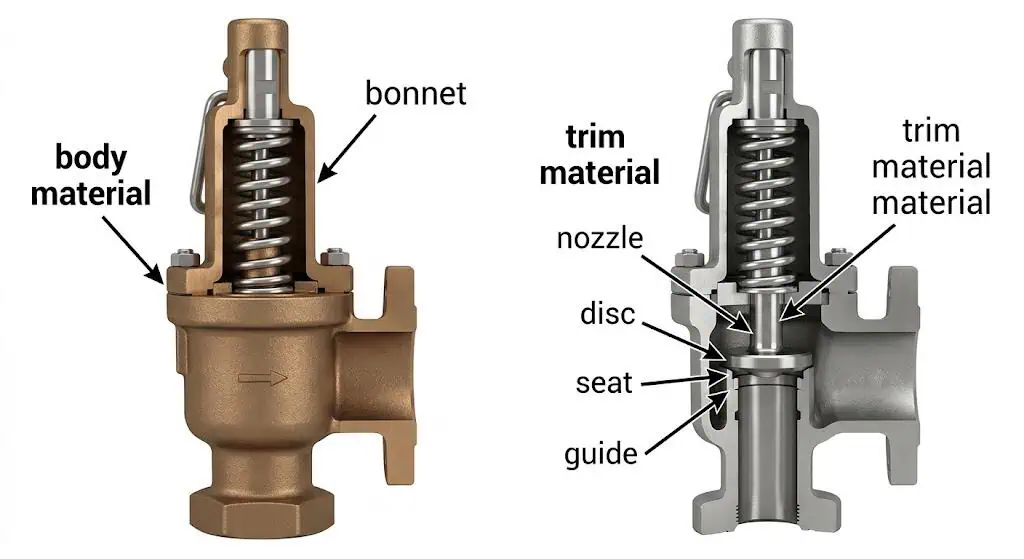
Fig. 4 — Body material and trim material are different engineering decisions. The body may be acceptable while the nozzle, disc, seat, guide or spindle fails first.
Why Trim Material Often Fails Before the Body
The valve body may remain structurally acceptable while the trim fails by corrosion, erosion, galling or deposits. This is common when the body material is selected from a catalog line but trim material is left as the manufacturer’s default. In safety valve service, small damage on the seat, disc or nozzle can create continuous leakage or poor reseating.
Seat and Disc Material for Leakage Control
The seat and disc should be selected with leakage requirement, temperature, particles, erosion and corrosion in mind. Harder or hardfaced surfaces may help in severe service, while soft seating may support tighter shutoff in clean, compatible services. If the process contains solids or sticky deposits, a soft seat may be damaged quickly. Where project specifications require leakage verification, link material choice with API 527 seat tightness testing.
Guide and Spindle Material for Anti-Galling and Stable Movement
Guide and spindle material pairing affects friction, galling and stable lift. Stainless-on-stainless sliding pairs can gall in some conditions if surface finish, hardness or clearance is not controlled. Poor guide material selection can lead to sticking, chatter, misalignment and uncertain reseating.
Hardfacing, Coatings and Surface Treatment Boundaries
Hardfacing or surface treatment may improve wear or erosion resistance, but it is not a substitute for chemical compatibility. Coatings should be reviewed for adhesion, thickness, temperature, erosion and repairability. If the valve will be repaired in the future, the maintenance team should know whether lapping, polishing or replacement is expected.
Field scenario: What problem occurred: a safety valve with a carbon steel body passed the initial pressure test but developed seat leakage after several months in mildly corrosive vapor service. Why it happened: the body material was acceptable, but the default trim material was not suitable for the actual condensate chemistry. Real system cause: the RFQ specified body material and flange rating but did not define nozzle, disc and seat materials. Corrective action: inspect the damaged seat and disc, review the medium and condensate data, and select corrosion-resistant trim. Prevention: specify wetted trim materials separately from body material in the inquiry.
Spring Material Selection and Why It Matters
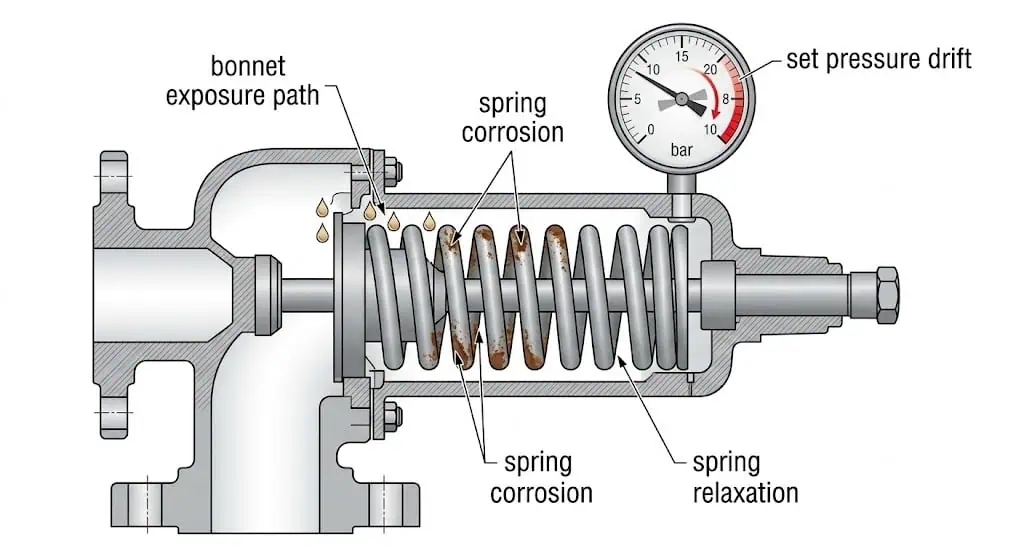
Fig. 5 — Spring corrosion, relaxation or high-temperature exposure can change set pressure behavior and increase maintenance risk.
Standard Spring Steel vs Stainless Steel Springs
The spring determines the opening force and therefore influences set pressure stability. Standard spring steel may be suitable in many protected bonnet environments, but stainless steel or alloy springs may be needed where corrosion, clean service, external atmosphere or bonnet exposure is a concern. For spring-loaded designs, the spring material should be reviewed together with the full spring loaded safety valve configuration.
Inconel X-750 and High-Temperature Spring Service
High-temperature service may require spring materials with better resistance to relaxation. Inconel X-750 or similar high-temperature spring alloys may be reviewed where standard spring materials lose load at elevated temperature. The final choice depends on actual spring chamber temperature, valve design and manufacturer data.
Corrosive Atmosphere Around the Bonnet
The spring may not be in direct contact with process fluid, but it can still corrode if the bonnet is exposed to corrosive atmosphere, leakage, vented vapors or marine environment. Open bonnet designs, bellows leakage and poor maintenance can all change the real spring environment.
Spring Relaxation, Corrosion and Set Pressure Drift
Spring corrosion or relaxation can change the force needed to open the valve. This may cause set pressure drift, premature opening, delayed opening or uncertain reseating. For critical service, the spring material, protective coating, bonnet design and inspection interval should be defined during selection, not left only to maintenance.
Spring Material Direction
Suitable Service
Risk
Verification
Carbon spring steel
General protected service
Corrosion and temperature sensitivity
Bonnet exposure and spring chamber temperature
Stainless steel spring
Moderate corrosion or clean service
May still be limited by high temperature or chlorides
Material grade, environment, temperature
Inconel X-750 or equivalent
High-temperature or demanding spring service
Cost and lead time
Manufacturer spring data and design temperature
Special alloy spring
Corrosive or special atmosphere
Availability and compatibility
Medium, external atmosphere, inspection plan
Field scenario: What problem occurred: a steam safety valve began opening below the expected set pressure after long operation. Why it happened: spring load changed due to elevated spring chamber temperature and aging. Real system cause: the original spring material was selected without reviewing the actual bonnet temperature and maintenance interval. Corrective action: recalibrate the valve, inspect the spring, and review whether a high-temperature spring material is required. Prevention: confirm spring chamber temperature and spring material before order release for high-temperature service.
Seat, Seal, Gasket and O-Ring Material Selection
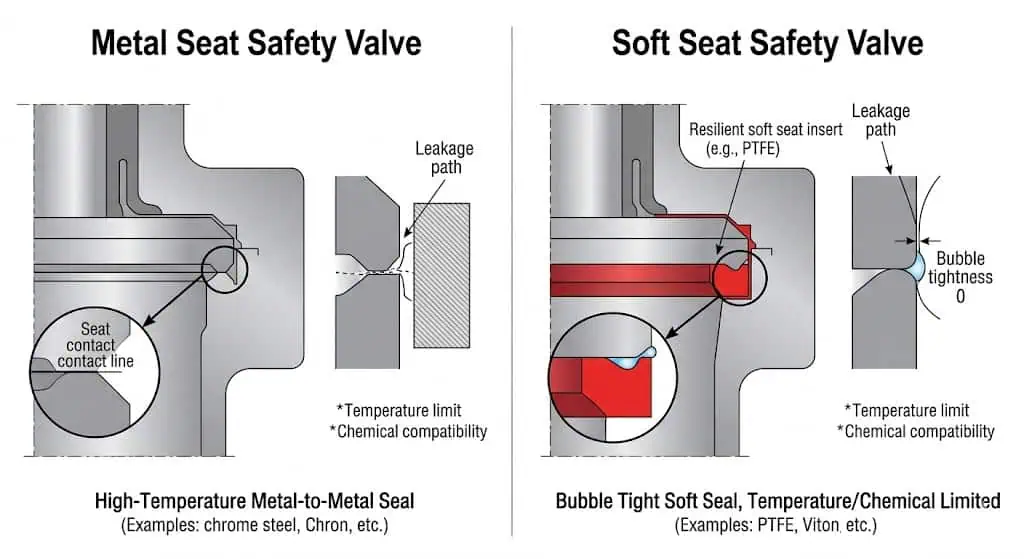
Fig. 6 — Metal seat and soft seat selection affects leakage, temperature capability, chemical compatibility and maintenance planning.
Metal Seat vs Soft Seat
Metal seats are often used for high temperature, steam, severe service or dirty media. They tolerate heat and erosion better in many services but may have different leakage expectations. Soft seats may provide tighter shutoff in clean gas or liquid service, but they must be checked against temperature, chemical attack, particles, fire exposure and maintenance requirements.
PTFE, PEEK, EPDM, FKM, FFKM and Other Soft Materials
PTFE, PEEK, EPDM, FKM, FFKM and other soft materials should not be selected only by name. Each material has different temperature, chemical, compression and aging behavior. Oxygen, steam, solvents, sour service, sanitary service and high-cycle operation may require specific supplier approval and documentation.
Temperature, Chemical Compatibility and Leakage Requirement
The leakage requirement should be discussed with seat material selection. A soft seat may reduce normal leakage in compatible service, but the seat may swell, crack, extrude or harden if exposed to unsuitable chemical or temperature. API 527 may be used where the selected pressure-relief-valve design and project specification use that leakage-test basis; otherwise the project should define the applicable test method and acceptance criterion.
When Soft Seat Materials Should Not Be Used
Soft seat materials may be unsuitable for high-temperature steam, dirty media, abrasive particles, fire exposure, incompatible chemicals or services where seat damage would create unacceptable leakage. For these cases, a metal seat with suitable trim material, surface finish and maintenance plan may be more reliable.
Seat / Seal Material
Possible Benefit
Material Concern
Selection Check
Metal seat
High temperature, steam, severe service tolerance
Leakage depends on lapping and surface condition
Seat tightness requirement and maintenance plan
PTFE
Chemical resistance in many services
Temperature and creep limits
Temperature, pressure, chemical compatibility
PEEK
Higher mechanical strength than many soft seats
Cost and chemical limitations
Temperature, pressure, media compatibility
EPDM
Common elastomer in water or sanitary services
Oil, solvent and high-temperature limits
Medium, cleaning fluid, certificate requirement
FKM
Chemical and temperature range in selected services
Steam and some chemical limitations
Media, temperature, supplier data
FFKM
Severe chemical or high-temperature sealing
Cost and lead time
Criticality, compatibility, spare parts plan
Graphite or other qualified high-temperature gasket
High-temperature sealing
Oxidation and cleanliness limitations
Temperature, medium, flange design
Material Selection by Application and Medium
Steam Safety Valve Materials
Steam safety valves require attention to temperature, condensate, erosion, body rating, spring temperature and seat material. Carbon steel bodies with suitable trim may be acceptable in many services, while higher-temperature steam may require alloy steel, stainless trim, Inconel spring or graphite gasket review.
Air and Non-Corrosive Gas Safety Valve Materials
Air and non-corrosive gas services may allow carbon steel or stainless steel, depending on pressure, external atmosphere and leakage requirement. If tight shutoff is important, soft seat material may be considered, but only if temperature, pressure and cleanliness are compatible.
Liquid Relief Valve Materials
Liquid service requires review of corrosion, deposits, viscosity, solids, water chemistry and discharge reaction. If the liquid contains chlorides, acids, caustic or particles, the trim and seat material may be more important than the body material alone.
Corrosive Chemical Safety Valve Materials
Corrosive chemical service should be reviewed by chemical name, concentration, temperature, contaminants and operating cycle. Stainless steel, duplex, Monel or Hastelloy may be considered, but the correct choice depends on the actual corrosion mechanism. Seat, guide, spring and gasket materials must be checked separately.
Seawater and Offshore Safety Valve Materials
Seawater and offshore environments introduce chloride corrosion, crevice corrosion, external atmospheric corrosion and bolting issues. Duplex, super duplex, Monel or suitable coating and bolting strategies may be considered. External parts and fasteners should not be ignored because they can create maintenance and safety risks.
Sour Gas / H₂S Service Materials
For H₂S-containing oil and gas production environments, material selection may need to comply with NACE MR0175 / ISO 15156 or the project sour service specification. The review may include material grade, heat treatment, hardness, welding, bolting, spring, trim, MTR, PMI and documentation. ISO 15156 / NACE MR0175 should not be used as a generic upgrade for all corrosive service; it addresses H₂S-related cracking within its defined oil and gas production scope, while refining projects may instead reference ISO 17945 / NACE MR0103 where applicable.
Oxygen, Hydrogen and Special Gas Service Materials
Oxygen service may require specific material compatibility, cleaning, non-lubricated assembly and contamination control. Hydrogen service may require review of embrittlement, leakage, pressure, temperature and seal behavior. These services should be reviewed with the project specification and manufacturer procedures rather than selected from a general material table.
Sanitary and Clean Service Materials
Sanitary and clean service often requires 316L or other suitable product-contact materials, defined surface finish, cleanable design, compatible elastomers and traceability documents. CIP/SIP conditions, cleaning chemicals, steam exposure and validation documents can affect both material and seal selection.
Field scenario: What problem occurred: a stainless steel safety valve used in chloride-containing service showed localized corrosion around the seat area. Why it happened: the material was selected as “stainless steel” without reviewing chloride concentration, temperature and crevice conditions. Real system cause: the process created pitting and crevice corrosion risk that the selected grade could not tolerate reliably. Corrective action: review chloride data, temperature and stagnant areas, then evaluate duplex, super duplex or other suitable material. Prevention: define the corrosion mechanism before selecting stainless steel for chloride service.
Standards and Material Documentation to Check
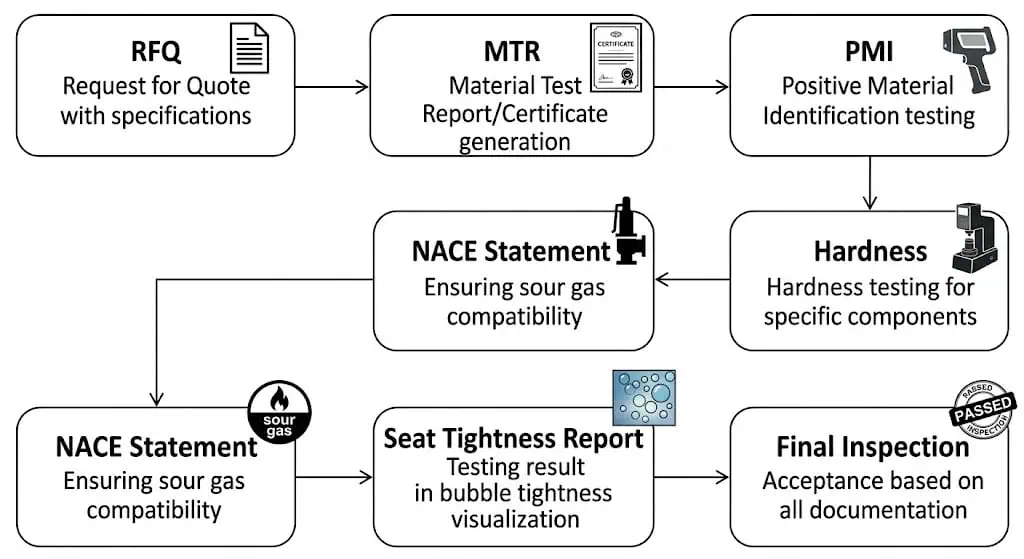
Fig. 7 — Safety valve material documentation workflow. Material certificates, PMI, hardness testing, NACE statement and seat tightness reports should be defined before order release.
ASME BPVC and Pressure-Retaining Material Review
For pressure vessels, boilers and piping systems, review the governing construction code together with ZOBAI’s ASME safety valve standards guide. The official ASME BPVC Section XIII covers overpressure-protection rules for pressure-relief devices, while the protected vessel or boiler remains subject to its applicable construction section. Material review should also confirm the relevant edition, pressure-temperature rating and project certification requirements.
API 520 for Sizing and Selection Context
API 520 sizing guidance connects material selection with the actual medium, set pressure, relieving pressure, temperature, required capacity and valve configuration. API 520 Part I is a sizing and selection reference within its applicable process-industry scope; it is not a chemical-compatibility manual.
API 526 for Flanged Steel Pressure Relief Valve Purchase Specification
API 526 flanged PSV guidance is relevant where the project specifies standardized flanged steel pressure-relief-valve dimensions, pressure classes, orifice designations and purchase details. It does not replace corrosion, low-temperature toughness, sour-service or special-alloy review.
API 527 for Seat Tightness Verification
API 527 may be relevant where the selected metal-seated or soft-seated pressure relief valve and project specification use that test basis. Seat material selection should therefore be connected to the test medium, pressure basis, leakage expectation and acceptance criteria required by the project.
ISO 4126-1 as a Safety Valve Product Standard
ISO 4126 safety valve guidance explains the product-standard context. The official ISO 4126-1 provides general safety-valve requirements, but application-specific material compatibility, pressure-temperature rating and discharge-system conditions still require engineering review.
NACE MR0175 / ISO 15156 for H₂S-Containing Environments
ISO 15156-1:2020 / NACE MR0175 applies to H₂S-containing oil and gas production environments within its defined scope. ISO 17945:2015 / NACE MR0103 addresses SSC-resistant metallic materials for applicable sour petroleum-refining and related processing environments. These standards address cracking resistance within their scopes and do not replace general or localized corrosion review.
ASTM / EN Material Certificates, PMI and Hardness Testing
Material certificates and inspection records help verify that the supplied valve matches the approved specification. Depending on the project, documents may include MTR, EN 10204 3.1 certificate, ASTM grade reference, PMI record, hardness test, heat treatment record, NACE compliance statement, coating record, elastomer certificate, seat tightness report and shell test report.
Document / Test
What It Confirms
When It Matters
MTR / mill certificate
Material grade and heat traceability
Pressure-retaining and wetted parts
EN 10204 3.1 certificate
Inspection certificate where specified
EPC, EU or regulated procurement projects
PMI
Positive material identification
Stainless steel, alloy, sour or critical service
Hardness test
Material hardness within specified limits
NACE / sour service and selected alloy applications
NACE statement
Compliance with sour service requirements where applicable
H₂S-containing oil and gas environments
Seat tightness report
Leakage condition after assembly or repair
Soft seat, clean gas, steam or leakage-sensitive service
Elastomer certificate
Seal material identity and compliance
Sanitary, oxygen, chemical or critical sealing service
Field scenario: What problem occurred: a sour gas project could not release the valve for installation because NACE documentation was incomplete. Why it happened: the material requirement was discussed after purchase instead of during RFQ. Real system cause: hardness limits, MTR, PMI and material compliance statements were not defined before manufacturing. Corrective action: review all pressure-retaining and wetted materials, request missing records, and verify whether the supplied materials meet the project sour service specification. Prevention: include NACE / sour service requirements and documentation deliverables in the first RFQ.
Engineering Evidence Points to Verify Before Purchase
Body material does not define the full safety valve material configuration; trim, spring, bellows, seal and fasteners must be reviewed separately.
Set pressure, overpressure, accumulation, blowdown and back pressure influence component loading, valve stability and reseating behavior.
Certified relieving capacity and orifice / flow path data are more important than connection size when confirming pressure protection.
Seat tightness depends on seat material, surface condition, soft seal compatibility, test method and maintenance condition.
NACE MR0175 / ISO 15156 is relevant to sour service environments; it should not be used as a general substitute for all corrosion compatibility reviews.
Material documents such as MTR, PMI, hardness test and elastomer certificates should be defined before order release, not requested after manufacturing.
Common Material Selection Mistakes
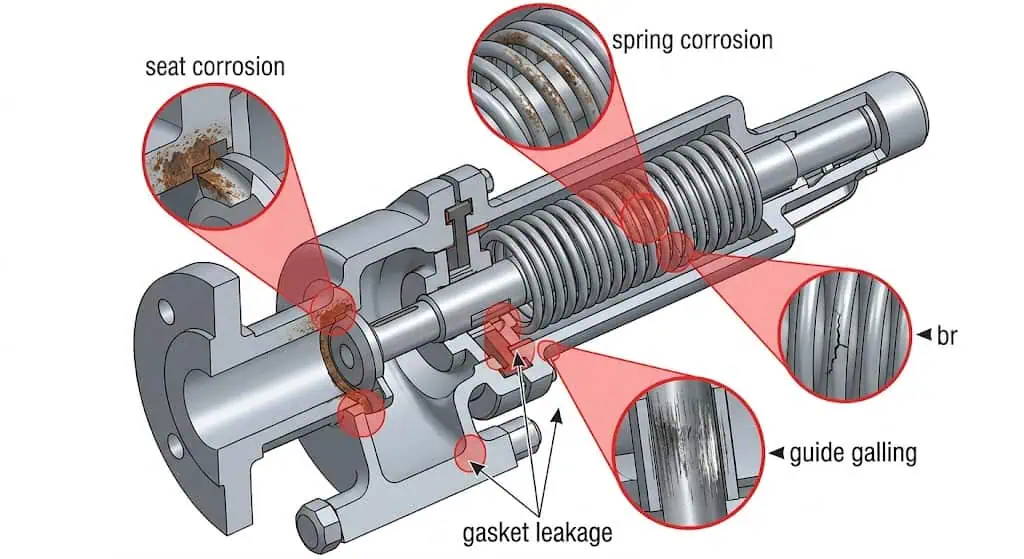
Fig. 8 — Common safety valve material failure locations. Many failures start at trim, spring, bellows, gasket or guide surfaces rather than the valve body.
Selecting Only the Body Material
Specifying “316 stainless steel safety valve” or “carbon steel safety valve” does not fully define the material configuration. The trim, seat, spring, bellows, gasket and fasteners may still be standard materials unless specified separately.
Using Stainless Steel Without Checking Chlorides or SCC
Stainless steel may still suffer pitting, crevice corrosion or stress corrosion cracking under certain chloride and temperature conditions. The corrosion mechanism should be confirmed before selecting a stainless grade.
Ignoring Spring and Bellows Material
Spring and bellows failures can affect set pressure, back pressure compensation and valve stability. These parts may not be visible from the outside but can determine long-term reliability.
Choosing Soft Seat Material Without Temperature Review
A soft seat may reduce leakage in suitable service, but it can fail if exposed to excessive temperature, decompression, steam, incompatible chemicals, fire-case conditions or particles. Selection should follow manufacturer-qualified pressure, temperature, chemistry and cycling limits.
Missing NACE Requirements in Sour Service
If sour service requirements are missed, the valve may require rework, additional testing, document review or replacement. This affects both lead time and project release.
Ordering Special Alloys Without Lead Time Review
Special alloys can solve corrosion problems but may extend lead time and spare part availability. Material choice should consider maintenance and replacement strategy, not only initial purchase.
Mistake
Real Cause
Consequence
Prevention
Only body material specified
Trim and spring ignored
Leakage, galling or set pressure drift
Specify component-level material requirements
Stainless selected for all corrosive services
Corrosion mechanism not reviewed
Pitting, crevice corrosion or SCC
Review chloride, temperature, pH and crevice conditions
Soft seat selected only for tightness
Temperature and chemical limits ignored
Seat swelling, cracking or leakage
Check medium, temperature and supplier data
Spring material left as standard
Bonnet environment not considered
Spring corrosion or set pressure drift
Confirm bonnet exposure and spring material
NACE requirement added late
RFQ did not state sour service
Document gap, rework or rejected valve
Define sour service and certificate requirements at RFQ stage
Safety Valve Material Selection Checklist
Process and Medium Data
Confirm the medium name, phase, concentration, contaminants, pH, chlorides, H₂S, oxygen, hydrogen, solids, viscosity and cleaning fluids. If the medium changes during startup, cleaning or shutdown, include those conditions as well.
Pressure and Temperature Data
Confirm operating pressure, set pressure, design pressure, allowable overpressure / accumulation basis, relieving temperature, minimum temperature, maximum temperature, thermal cycling and discharge condition. These values affect body rating, trim material, spring material, bellows material, seat material and gasket selection.
Corrosion and Compatibility Data
Confirm the corrosion mechanism instead of only stating “corrosive.” Include general corrosion, pitting, crevice corrosion, SCC, SSC, HIC, erosion, external atmosphere and galvanic concerns where applicable.
Component Material Requirements
Define body, bonnet, nozzle, disc, seat, guide, spindle, spring, bellows, gasket, O-ring and fastener materials. For critical service, also define hardfacing, coating, surface treatment, hardness and PMI requirements.
Testing and Documentation Requirements
Define MTR, EN 10204 3.1, PMI, hardness test, NACE statement, seat tightness report, shell test report, elastomer certificate and inspection record requirements before order release.
Medium name and phase
Concentration and contaminants
Operating pressure
Set pressure
Design pressure / MAWP
Allowable overpressure / accumulation basis
Relieving temperature
Minimum and maximum temperature
Corrosion mechanism
Chloride content
H₂S / sour service requirement
Oxygen / hydrogen service requirement
Body and bonnet material
Nozzle, disc and seat material
Guide and spindle material
Spring material
Bellows material
Seat / seal material
Gasket and O-ring material
MTR / PMI requirement
NACE / hardness requirement
Seat tightness requirement
Set pressure test requirement
Spare parts and lead time review
RFQ Checklist for Safety Valve Material Selection
Fig. 9 — RFQ material checklist flow. Complete service data and certificate requirements help prevent wrong material selection, rework and delivery delay.
Required Process Data
Provide medium, phase, concentration, temperature, pressure, set pressure, required relieving capacity, operating cycle, contaminants, solids, cleaning media and external environment.
Required Material Data
Provide required body, bonnet, trim, spring, bellows, seat, gasket, O-ring and fastener materials. If material is open for manufacturer recommendation, state the service conditions clearly.
Required Standards and Certificates
State whether ASME, API, ISO, PED, NACE, ASTM, EN or project-specific material rules apply. Confirm MTR, EN 10204 3.1, PMI, hardness test and NACE documentation requirements.
Required Testing and Inspection Records
Request set pressure test, seat tightness test, shell test, material certificate, PMI record, hardness record, elastomer certificate and final inspection report where required by the project.
Project review CTA: Need help selecting safety valve materials for steam, corrosive chemicals, sour gas, seawater, sanitary service or high-temperature applications? Send ZOBAI your medium, operating pressure, set pressure, relieving temperature, required capacity, corrosion data, chloride / H₂S / oxygen / hydrogen condition, valve type, material requirement and certificate requirement for engineering review before quotation.
Related Safety Valve Material and Engineering Resources
Use these pages to connect component-level material selection with corrosion, temperature, pressure rating, back pressure, installation and documentation review.
Common safety valve materials include carbon steel, stainless steel, bronze, duplex, Monel, Hastelloy, Inconel, PTFE, PEEK, EPDM, FKM, FFKM, graphite and other materials depending on the component and service condition.
How do you select safety valve material?
Select safety valve material by reviewing medium, pressure, set pressure, temperature, corrosion mechanism, leakage requirement, body material, trim material, spring material, seat material, gasket material and applicable standards.
Is stainless steel always better than carbon steel?
No. Stainless steel provides better corrosion resistance in many services, but it is not always required and may still fail in certain chloride, high-temperature or crevice conditions. Carbon steel may be suitable for many general industrial services.
What is safety valve trim material?
Trim material refers to internal parts such as nozzle, disc, seat, guide and spindle. These parts contact the medium or control movement and sealing, so they may require different materials from the body.
What material is used for safety valve springs?
Safety valve springs may use carbon spring steel, stainless steel, Inconel X-750 or other alloy materials depending on temperature, corrosion, bonnet environment and set pressure stability requirements.
What material is suitable for corrosive service safety valves?
The suitable material depends on the specific corrosion mechanism. Stainless steel, duplex, super duplex, Monel or Hastelloy may be considered, but chemical concentration, temperature, chlorides, pH and contaminants must be reviewed.
What material is suitable for steam safety valves?
Steam safety valves commonly use carbon steel or alloy steel bodies with suitable trim, spring and gasket materials. High-temperature steam may require stainless trim, Inconel spring, graphite gasket or other high-temperature materials.
What is the difference between metal seat and soft seat?
A metal seat is generally more suitable for high temperature and severe service, while a soft seat can provide tighter shutoff in compatible clean service. Soft seat material must be checked against temperature, chemical exposure and particles.
When is NACE MR0175 / ISO 15156 required?
ISO 15156 / NACE MR0175 may be required for H₂S-containing oil and gas production environments within its scope. Petroleum-refining environments may instead require ISO 17945 / NACE MR0103. Confirm the applicable standard, material condition, hardness, heat treatment, welding and documentation during RFQ.
What material documents should be requested with a safety valve?
Typical documents include MTR, EN 10204 3.1 certificate where required, PMI record, hardness test, NACE statement, heat treatment record, elastomer certificate, seat tightness report and final inspection report.
Standards and Technical Reference Links
Safety valve material selection should be verified according to the project specification, pressure equipment requirement, process medium, temperature, pressure, corrosion mechanism, valve design and manufacturer data. API 520 Part I may be relevant to sizing and selection context. API 520 Part II may be relevant where installation conditions, inlet pressure loss and outlet piping affect valve operation. API 526 may be relevant for flanged steel pressure relief valve purchase specifications where applicable. API 527 may be relevant for seat tightness testing of metal-seated and soft-seated pressure relief valves. ISO 4126-1 may be relevant as a safety valve product standard. NACE MR0175 / ISO 15156 may be relevant for H₂S-containing oil and gas production environments. ASTM / EN material standards, MTR, PMI and hardness testing may be required by project specification. Specific standard editions, clauses, industry scope and project applicability must be verified before procurement or technical approval.
This article is prepared for technical education and preliminary project discussion. Final safety valve material selection should be reviewed by qualified engineers based on medium, pressure, set pressure, relieving temperature, corrosion mechanism, valve design, body material, trim material, spring material, seat material, gasket material, certification requirement and applicable project standards.
Review focus: safety valve material selection, pressure relief valve materials, body and trim materials, spring materials, seat and seal materials, corrosive service, high-temperature service, NACE service, material certificates and RFQ preparation.
Need Help Selecting Safety Valve Materials?
Send ZOBAI your process medium, operating pressure, set pressure, relieving temperature, required capacity, corrosion data, chloride / H₂S / oxygen / hydrogen condition, valve type, body material preference, trim material requirement, spring material requirement, seat material requirement and certificate requirement. ZOBAI can review the material configuration before quotation, procurement or replacement.
Suggested RFQ attachments: process datasheet, P&ID, medium composition, corrosion report, temperature and pressure data, sizing basis, material specification, NACE requirement, certificate checklist and inspection requirement. For project review, contact ZOBAI safety valve engineering team.
Related Engineering Guides
Continue with these focused guides when the broader selection or maintenance review reaches the corresponding application question:
To provide the best experiences, we use technologies like cookies to store and/or access device information. Consenting to these technologies will allow us to process data such as browsing behavior or unique IDs on this site. Not consenting or withdrawing consent, may adversely affect certain features and functions.
Functional
Always active
The technical storage or access is strictly necessary for the legitimate purpose of enabling the use of a specific service explicitly requested by the subscriber or user, or for the sole purpose of carrying out the transmission of a communication over an electronic communications network.
Preferences
The technical storage or access is necessary for the legitimate purpose of storing preferences that are not requested by the subscriber or user.
Statistics
The technical storage or access that is used exclusively for statistical purposes.The technical storage or access that is used exclusively for anonymous statistical purposes. Without a subpoena, voluntary compliance on the part of your Internet Service Provider, or additional records from a third party, information stored or retrieved for this purpose alone cannot usually be used to identify you.
Marketing
The technical storage or access is required to create user profiles to send advertising, or to track the user on a website or across several websites for similar marketing purposes.