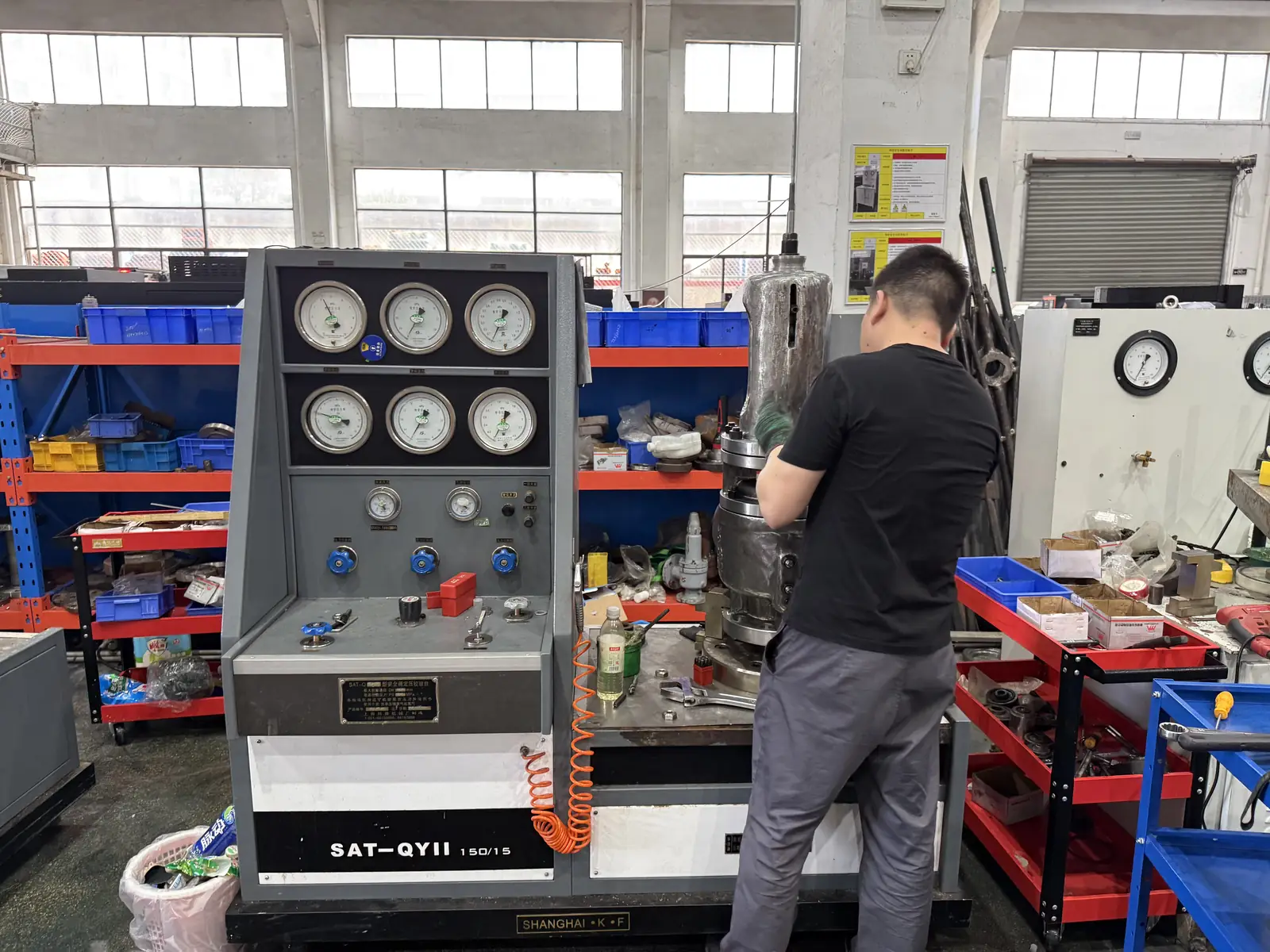
API 520 Safety Valve Sizing for Pressure Relief Valves, PSV Orifice Area and RFQ Documentation
API 520 Part I provides the engineering basis for sizing and selecting pressure-relieving devices used in refinery, petrochemical, gas and process facilities. This guide explains how engineers convert a defined relief scenario and required relieving rate into the minimum discharge area, selected orifice and certified relieving capacity.
It also identifies the process data needed to verify a PSV selection, including set pressure, allowable overpressure, relieving temperature, fluid properties, back pressure and inlet and outlet piping conditions. Use the guide to prepare a complete valve datasheet or RFQ before requesting sizing verification, valve selection or a quotation.
- API 520 Part I is widely used for sizing and selection of pressure-relieving devices in refinery, chemical and related process industry projects.
- API 520 sizing depends on the governing relief scenario, required capacity, relieving pressure, medium properties and temperature.
- API 521 is normally reviewed with API 520 when relief scenarios, fire case, flare and system-level discharge loads must be defined.
- A good API 520 RFQ should include enough data to verify required area, selected orifice, certified capacity and back pressure effect.
››› API 520 Overview
API 520 helps buyers move from relief scenario to required capacity, orifice area and valve selection
API 520 Safety Valve Sizing should be used as an engineering workflow rather than a simple standard reference on a purchase order. A reliable RFQ still needs protected equipment data, set pressure, required relieving capacity, medium properties, relieving temperature, allowable overpressure, back pressure, inlet and outlet piping, material requirements and documentation requirements.
The most common procurement mistake is asking for “API 520 valve size” without giving the relief case. API 520 Part I supports sizing and selection of pressure-relieving devices, but the required flow normally comes from the relief scenario study, often linked with API 521, ASME code requirements and owner project specifications.
What this page helps you confirm
- Which relief scenario controls the sizing basis before a PSV model is selected.
- How API 520 connects required capacity, set pressure, overpressure, back pressure and selected orifice.
- When to review conventional, balanced bellows or pilot operated valve selection.
- Which documents should be requested before production, FAT and shipment.
- How to connect API 520 with API 521, API 526, API 527, ASME and equipment pages.
››› API 520 Sizing Workflow
Key API 520 topics for safety valve sizing and RFQ review
Build these pages as the main internal links under the API 520 standards cluster. They help buyers move from a sizing reference to the actual input data, calculation assumptions, valve type and documents required before quotation.
API 520 Part I
Sizing and Selection
Core reference for pressure-relieving device sizing and selection. Use this when the RFQ asks for API 520 sizing basis, required area, selected orifice, certified capacity or sizing report documents.
Relief Scenario
Sizing Basis Comes First
Relevant when defining blocked outlet, fire case, regulator failure, compressor discharge, tube rupture, thermal expansion, external heat input or other credible overpressure causes before calculating required capacity.
Gas / Vapor Sizing
Compressible Flow Review
Used for natural gas, hydrogen, nitrogen, air, process gas and vapor relief. Review molecular weight, compressibility, temperature, relieving pressure, back pressure and critical or subcritical flow assumptions.
Steam Sizing
Boiler and Process Steam
Relevant for saturated steam, superheated steam, boiler outlets, steam headers, PRV stations and steam heat exchangers. Confirm capacity units, relieving temperature, blowdown and safe venting.
Liquid Sizing
Liquid Relief and Pump Cases
Relevant for water, hydrocarbons, chemicals, pump deadhead, thermal expansion and blocked liquid lines. Review density, viscosity, required flow, inlet loss, outlet route and flashing risk.
Two-Phase / Flashing
When API 520 Alone Is Not Enough
Useful when relief may involve flashing liquid, vapor-liquid mixture, reactor foaming, fire case with liquid inventory or heat exchanger rupture. Two-phase assumptions should be reviewed carefully.
Back Pressure
Conventional, Bellows or Pilot
Supports valve type selection when discharge goes to flare, closed vent, scrubber, silencer, relief header or long outlet pipe. Superimposed and built-up back pressure affect capacity and stability.
Orifice Selection
Required Area vs Certified Capacity
Relevant when moving from calculated required area to selected manufacturer orifice, actual certified capacity and final valve model. Never select only by inlet flange size.
Documentation
RFQ, Datasheet and Sizing Report
In EPC and export projects, API 520 sizing should be supported by datasheet, calculation basis, selected orifice, certified capacity, material documents, set pressure certificate and test records.
››› How to Use API 520
Do not select the valve by pipe size, flange size or standard number alone
API 520 helps with sizing and selection, but the valve cannot be quoted correctly without the governing relief case and process data. A complete RFQ should define required relieving capacity, medium properties, set pressure, allowable overpressure, back pressure, installation and documents.
For example, a natural gas PSV, a steam boiler safety valve, a thermal relief valve for liquid, a compressor discharge PSV and a reactor two-phase relief case may all mention API 520, but each requires different sizing inputs and engineering checks.
Minimum engineering checks
- Confirm the governing relief scenario before calculating capacity or required area.
- Define protected equipment, MAWP, set pressure, allowable overpressure and operating pressure margin.
- Provide required relieving capacity and calculation basis, not only pipe size or flange size.
- State medium phase: gas, vapor, steam, liquid, flashing liquid or two-phase flow.
- Review back pressure, inlet pressure loss, discharge route and installation limitations.
- Request sizing calculation, selected orifice, certified capacity, MTC, set pressure report, pressure test and seat test.
››› Practical Cases
API 520 safety valve sizing application cases with typical RFQ data
These cases show how API 520 sizing requirements usually appear in real RFQs. Final selection must still be confirmed by protected equipment datasheet, relief scenario calculation, selected valve model and project specification.
Case 1: API 520 Gas PSV for a Natural Gas PRV Station
Protected equipment: downstream gas header, regulator station or fuel gas skid. Typical data: gas composition, upstream pressure, regulator failed-open flow, set pressure, downstream MAWP, back pressure, vent route and leakage requirement.
Case 2: API 520 Steam Safety Valve for Boiler or Header Protection
Protected equipment: boiler outlet, steam header, PRV station or steam user. Typical data: saturated or superheated steam condition, set pressure, required capacity, relieving temperature, blowdown, discharge stack and certified steam capacity.
Case 3: API 520 Liquid Relief Valve for Pump Deadhead
Protected equipment: pump discharge line, liquid transfer skid or closed piping section. Typical data: liquid density, viscosity, pump curve, shutoff head, required flow, set pressure, return route, back pressure and flashing risk.
Case 4: API 520 PSV for Compressor Blocked Discharge
Protected equipment: compressor discharge line, gas receiver or interstage vessel. Typical data: compressor map, gas molecular weight, maximum flow, discharge temperature, set pressure, pulsation, vibration and outlet back pressure.
Case 5: API 520 Sizing for Fire Case Vessel Relief
Protected equipment: pressure vessel, separator, storage vessel or process receiver. Typical data: wetted area, inventory, fire case basis, vapor generation, allowable overpressure, flare back pressure and simultaneous relief loads.
Case 6: API 520 RFQ Comparing Required Area and Selected Orifice
Protected equipment: global EPC package or replacement PSV. Typical data: calculated required area, selected API orifice, certified capacity, inlet and outlet size, flange class, material, seat test and inspection records.
››› RFQ Checklist
Information to send when your project requires API 520 sizing
Complete RFQ data helps confirm the required orifice area, selected valve size, certified capacity, back pressure effect, material suitability and documents before production.
- Protected equipment: pressure vessel, boiler, pipeline, tank, compressor, reactor, heat exchanger or skid.
- Applicable basis: API 520 Part I, API 521 relief scenario, ASME code, owner specification or local regulation.
- Relief scenario: blocked outlet, fire case, regulator failure, compressor discharge, tube rupture or thermal expansion.
- Design pressure / MAWP, set pressure, overpressure, operating pressure and operating margin.
- Medium name, phase, molecular weight, density, viscosity, vapor/liquid fraction and special hazards.
- Required relieving capacity, relieving pressure, relieving temperature and calculation basis.
- Back pressure, inlet pressure loss, discharge route, silencer, flare, scrubber, vent or drain system.
- Required documents: datasheet, sizing report, selected orifice, MTC, set pressure certificate, pressure test and seat tightness test.
››› Related Standards & Selection Pages
Continue your API 520 safety valve sizing review
Use these pages to connect API 520 sizing with pressure relief system studies, valve dimensions, seat tightness, product families and final RFQ preparation.
Safety Valve Standards Guide
Open this related resource to compare requirements, prepare RFQ data and complete safety valve selection.
API 521 Pressure Relief Systems
Open this related resource to review relief scenarios, fire case, flare and depressuring system requirements.
API 526 Flanged Safety Valves
Open this related resource to review standardized API orifices, flange ratings, dimensions and steel PSV procurement.
API 527 Seat Tightness Test
Open this related resource to review leakage testing and seat tightness requirements for pressure relief valves.
ASME Safety Valve Standards
Open this related resource to connect API 520 sizing with boilers, pressure vessels and piping code basis.
ISO 4126 Safety Valve Standards
Open this related resource to compare API sizing with ISO safety valve standards and international RFQs.
Safety Valve Sizing
Open this related resource to review engineering inputs for gas, vapor, steam, liquid and two-phase relief.
Pilot Operated Safety Valves
Open this related resource to review pilot valves for clean gas, large capacity and selected back pressure applications.
Spring Loaded Safety Valves
Open this related resource to review conventional, balanced bellows and general spring-loaded PSV selection.
››› FAQ
API 520 Safety Valve Sizing FAQ
Short answers for common procurement, engineering and SEO questions related to API 520 safety valve sizing.
What is API 520 used for in safety valve projects?
API 520 Part I is commonly used for sizing and selection of pressure-relieving devices. In safety valve procurement, it helps define required relief area, selected orifice, capacity basis, valve type considerations and sizing report expectations.
Is API 520 the same as API 521?
No. API 520 is mainly used for sizing and selection of pressure-relieving devices, while API 521 is used for pressure-relief and depressuring systems, including relief scenarios, fire case, flare systems and system-level relief review.
What data is required for API 520 PSV sizing?
An API 520 sizing request should include protected equipment, MAWP, set pressure, allowable overpressure, required relieving capacity, medium, molecular weight or density, temperature, relieving pressure, back pressure, discharge route, material and required documents.
Can a safety valve be selected by inlet size only?
No. Inlet size or flange size only confirms mechanical connection. Safety valve sizing should be based on required relieving capacity, pressure, temperature, medium properties, back pressure and certified valve capacity.
When should back pressure be checked in API 520 sizing?
Back pressure should be checked whenever the valve discharges into a flare, closed vent, scrubber, silencer, relief header, long outlet pipe or any system that can create superimposed or built-up back pressure.
What documents should be included with an API 520 sized safety valve?
Typical documents include valve datasheet, sizing calculation, selected orifice and certified capacity, general arrangement drawing, material certificate, set pressure calibration report, pressure test report, seat tightness test report and inspection records required by the project.
```html
```