
Safety Valve Type Test Certificates and Performance Test Scope
A type test certificate should show which safety valve design was tested, which performance characteristics were verified and how far the results may be applied beyond the exact test specimen. The certificate must be reviewed together with its report number, issuing or witnessing organization, standard, test medium, size and pressure range, valve configuration and stated limitations.
This page explains how to review type-test evidence before using it for valve selection, certified-capacity checks, project approval or supplier qualification.
- A type test applies to the tested design and the extension range stated in the certificate or governing procedure.
- It does not replace routine testing of each production valve or order.
- Capacity, opening, blowdown and seat-tightness evidence must be traced to the stated test method and valve configuration.
- Do not publish or claim a named laboratory, certificate number or certified range unless the original document has been verified.
A type test validates defined performance—not every future valve without limits
Important trust statement
Separate design-level evidence from production-valve inspection records
Type or Performance Test
Routine Production Test
Project Inspection Record
Typical characteristics that may appear in safety valve type-test evidence
Set-Pressure Performance
Relieving Capacity
Blowdown and Reseating
Lift and Functional Stability
Back-Pressure Performance
Seat Tightness
The certificate must define how far the result can be applied
Scope verification checklist
- Valve design and operating principle
- Model or product family
- Orifice designation and effective area
- Inlet and outlet size range
- Set-pressure and pressure-class range
- Test medium and fluid phase
- Temperature range
- Conventional, bellows or pilot configuration
- Material or trim limitations
- Back-pressure and installation limitations
- Standard edition and extension rules
- Validity, revision and withdrawal status
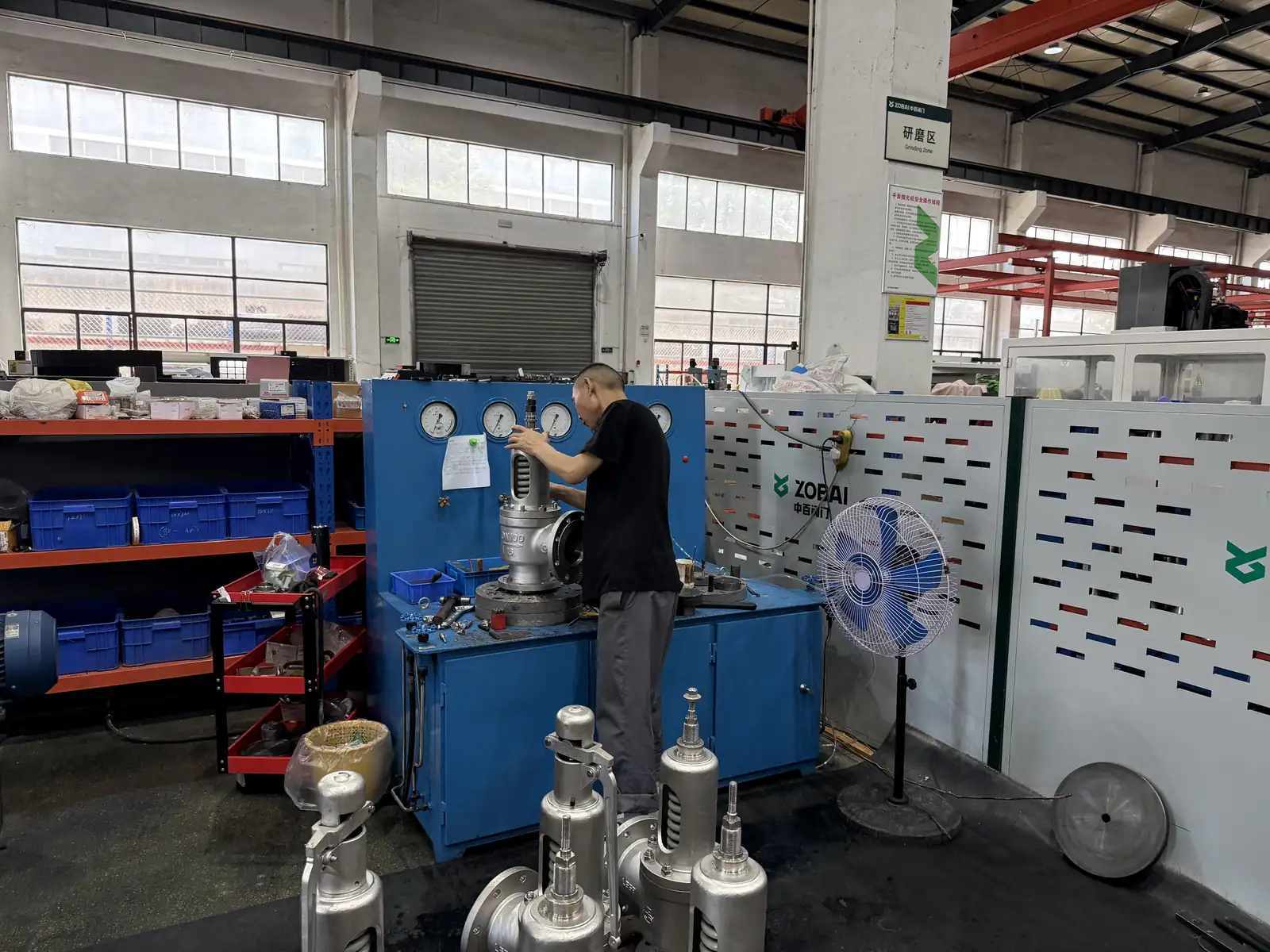
Documentation Connected to Real Production
A certificate or report is useful only when it can be traced to the supplied valve and agreed inspection scope. This actual ZOBAI photograph documents technician calibrating a safety valve on a pressure test stand. Align drawings, material records, pressure-test results and release documents with the purchase specification.
Information that should appear beside every type-test document
Minimum certificate metadata
- Exact document title
- Certificate or test-report number
- Issuing, witnessing or testing organization
- Manufacturer and tested product identification
- Issue date, expiry date or revision
- Referenced standard and edition
- Test medium and test conditions
- Tested model, size, orifice and pressure range
- Measured or certified performance data
- Applicable extension range and exclusions
- Controlled-original request method
Connect the certificate to the sizing, testing and product standard
API 520 Sizing and Selection
ISO 4126 Safety Devices
API 527 Seat Tightness
How to decide whether a type-test certificate supports the offered valve
Identify the project requirement
Identify the offered valve
Match the certificate scope
Review the measured results
Check validity and revision
Resolve exclusions
Request the controlled original
Record the approval basis
Mistakes that make type-test evidence unreliable
Assuming one test covers every model
Ignoring the standard edition
Confusing type tests with routine tests
Using an unreadable certificate image
Ignoring test-medium limitations
Ignoring configuration differences
Relying on a superseded file
Claiming certification without the original
Send the proposed valve and project requirements for scope matching
Recommended request information
- Project, client and end-user requirements
- Applicable standard and edition
- Valve design and model
- Orifice, inlet and outlet size
- Set-pressure and temperature range
- Medium and fluid phase
- Body, trim, seat and bellows materials
- Required capacity or certified-capacity basis
- Back-pressure and special service conditions
- Required certificate, report and approval format
Continue the certificate and engineering review
Use these related ZOBAI resources to continue certificate, material-document and technical-data review.
Safety Valve Certificates
Catalogs & PDF Downloads
Knowledge Center
API 520 Safety Valve Sizing
About ZOBAI
Ask an Engineer
Common questions about safety valve type-test certificates
It is evidence that a defined valve design or test specimen was evaluated under stated conditions and standards. The document should identify the tested configuration, results, applicable range and limitations.
No. Applicability depends on the model, operating principle, orifice, size, pressure, material, medium, temperature and the extension rules stated in the certificate or governing procedure.
A type test validates a representative design or product range. A routine test is performed on a specific production valve or order item, such as set-pressure calibration, shell pressure testing or seat-tightness testing.
Only when the controlled document and supporting test basis explicitly provide the applicable measured or certified capacity for the offered valve range. The selected valve must still be matched to the required relieving load and sizing calculation.
Check the document number, issuer, manufacturer, tested model, orifice and size range, pressure and temperature range, test medium, referenced standard, measured results, extension rules, validity and exclusions.
Yes. Provide the project requirement and proposed valve data. Controlled documents may be supplied after the applicable product scope and intended project use are verified.