
ASME B16.5 Flange Dimensions and Pressure-Temperature Ratings for Safety Valve Connections
A safety valve can be correctly sized and still be unsuitable for the piping system if its flange class, facing, material or bolt pattern is wrong. ASME B16.5 provides the dimensional and pressure-temperature basis used to match flanged valve connections with piping and equipment nozzles from NPS 1/2 through NPS 24.
This guide explains how to verify flange size, class, facing, material group, gasket, bolting and dimensional compatibility before issuing a safety valve RFQ or approving a replacement valve.
- ASME B16.5-2025 covers pipe flanges and flanged fittings from NPS 1/2 through NPS 24, with Class 2500 flanges covered through NPS 12.
- The standard covers pressure-temperature ratings, materials, dimensions, tolerances, marking, testing, bolting, gaskets and flange-joint requirements.
- For safety valves, ASME B16.5 confirms inlet and outlet flange compatibility; it does not calculate required relieving capacity or PSV orifice area.
- Flange class must be checked together with material group and actual temperature. A class designation alone does not confirm service suitability.
ASME B16.5 connects safety valve selection with real piping and equipment flange requirements
What this page helps you confirm
- How ASME B16.5 flange dimensions affect safety valve inlet and outlet connection selection.
- Why flange class must be checked with material group and relieving temperature.
- Which flange data should be included in a safety valve RFQ or replacement enquiry.
- How B16.5 relates to API 526 flanged PSVs, ASME pressure equipment and piping codes.
- What installation and documentation mistakes commonly delay EPC and maintenance projects.
ASME B16.5 is a flange standard used to confirm connection compatibility, dimensions and pressure-temperature ratings
NPS Size Range and Flanged Fittings
Pressure Class and Pressure-Temperature Rating
Flange Dimensions, Bolt Pattern and Thickness
Flange Facing and Gasket Selection
Materials, Marking and Testing
Limits of B16.5 in Safety Valve Projects
How API sizing, ASME code basis and ASME B16.5 flange details work together
Define the protected equipment and relief case
Size the safety valve and select the valve type
Confirm ASME B16.5 inlet and outlet flanges
Specify tests, drawings and documents
ASME B16.5 flange data matrix for safety valve RFQs
| Flange Data | Why It Matters | What to Specify | Risk if Missing |
|---|---|---|---|
| Inlet NPS and outlet NPS | Confirms valve-to-piping fit and API 526 configuration. | Example: 3 in × 4 in, 4 in × 6 in, 6 in × 8 in. | Valve cannot be installed or requires field modification. |
| Flange class | Defines pressure rating basis with material and temperature. | Class 150, 300, 600, 900, 1500 or 2500 as required. | Under-rated connection or rejected inspection package. |
| Facing type | Determines gasket selection and sealing compatibility. | RF, RTJ, FF or project-specific facing. | Leakage, gasket mismatch or installation delay. |
| Material group | Controls pressure-temperature rating and corrosion suitability. | Carbon steel, stainless steel, alloy steel or project material code. | Wrong rating at temperature or document rejection. |
| Pressure-temperature rating | Confirms flange can handle relieving condition. | Check against set pressure, relieving pressure and relieving temperature. | Flange class appears correct but is not suitable at temperature. |
| Gasket and bolting | Supports joint integrity under pressure, temperature and media. | Gasket type, bolt material, nut material and coating if required. | Joint leakage or site procurement delay. |
| Standard edition and documents | Avoids conflict between buyer, EPC and supplier requirements. | ASME B16.5 edition, drawings, MTC, inspection and marking requirements. | Ambiguous RFQ, rework or inspection hold. |
Common safety valve applications requiring ASME B16.5 flange checks
Pressure Vessel Safety Valves
Oil & Gas and Petrochemical Units
Chemical Processing and Corrosive Service
Steam, Boiler and High Temperature Service
Cryogenic and Low Temperature Service
Replacement and Maintenance Projects
Standards normally used with ASME B16.5 flange selection
Typical ASME B16.5 flange document package
- Technical datasheet with tag, model, valve type, inlet size, outlet size, flange class and facing.
- General arrangement drawing showing face-to-face / center-to-face dimensions, weight, flange orientation and maintenance envelope.
- Material certificates for valve body, bonnet, nozzle, disc, flange-connected pressure parts, bolting and trim where required.
- Pressure-temperature rating confirmation for the selected body material and flange class.
- Set pressure calibration certificate, hydrostatic test report and seat tightness test report where required.
- Gasket, bolting, flange finish and connection standard notes for site installation.
- Nameplate data, tag list, inspection witness records and spare parts list where required.
Information to send for an ASME B16.5 flanged safety valve quote
- Protected equipment, tag number, MAWP / design pressure and applicable code.
- Medium, phase, molecular weight, special hazards and corrosion or cleanliness requirements.
- Set pressure, operating pressure, relieving pressure, relieving temperature and required capacity.
- Valve type, API orifice if calculated, certified capacity requirement and back pressure condition.
- Inlet and outlet NPS, ASME flange class, facing type and piping class.
- Material group, body material, trim material, gasket, bolting and low-temperature or high-temperature requirement.
- Installation constraints: existing nozzle, skid dimensions, discharge orientation, outlet support and maintenance access.
- Required documents: GA drawing, MTC, sizing report, calibration, pressure test, seat tightness, marking and inspection records.
Common ASME B16.5 flange selection mistakes
Using flange class without checking temperature
Mixing ASME and EN / DIN flange systems
Selecting by inlet size only
Ignoring facing, gasket and bolting
Using B16.5 as a sizing standard
Forgetting large diameter flange limits
Continue your ASME B16.5 flange and safety valve review
API 526 Flanged Safety Valves
API 520 Safety Valve Sizing
API 521 Pressure Relief Systems
ASME Safety Valve Standards
Pressure-Temperature Ratings
API 527 Seat Tightness Test
Spring Loaded Safety Valves
Pilot Operated Safety Valves
High Back Pressure Service
ASME B16.5 Flange Dimensions FAQ
What is ASME B16.5 used for in safety valve projects?
Is ASME B16.5 a safety valve sizing standard?
What flange data should be included in a safety valve RFQ?
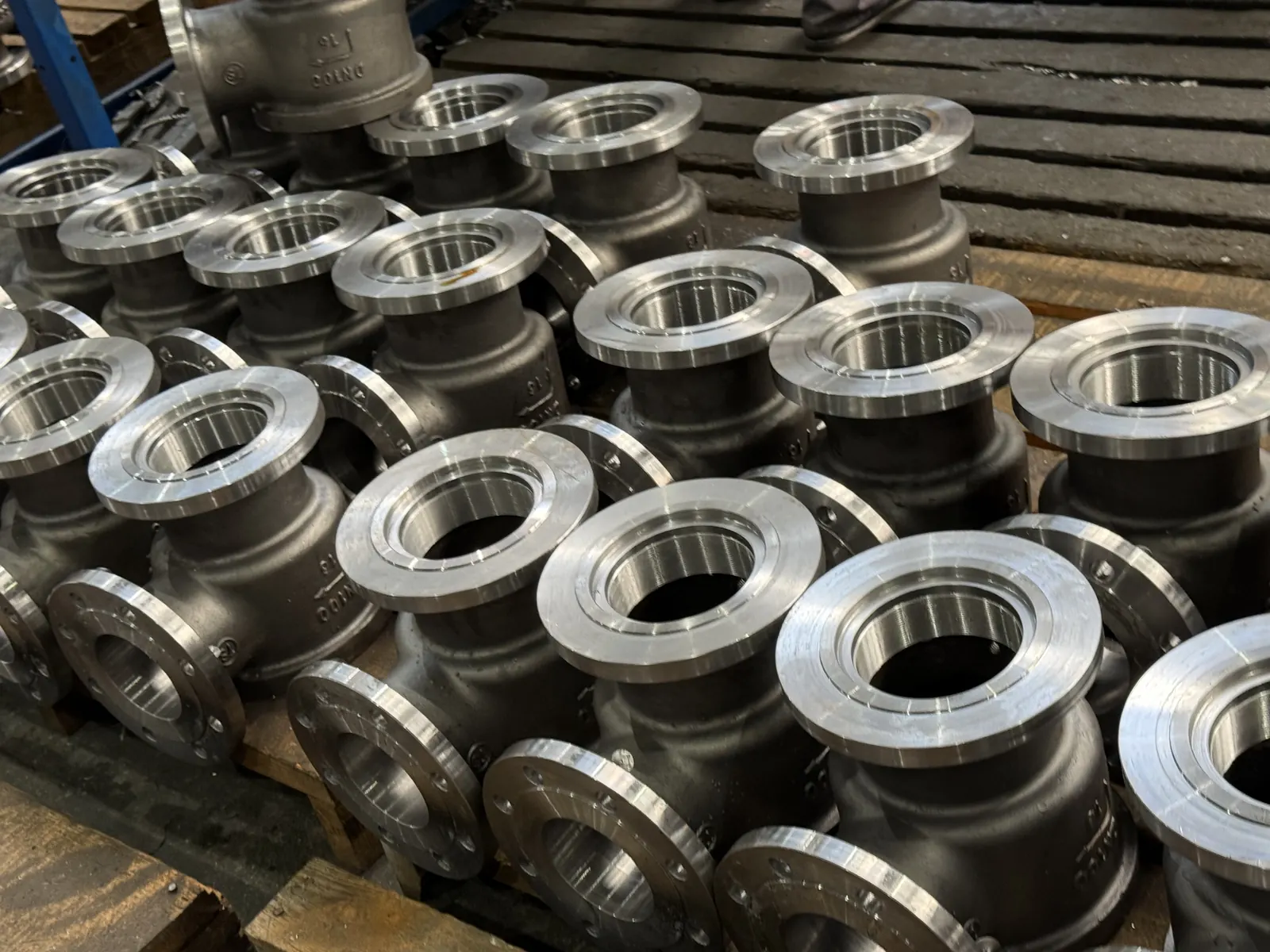
From Code Requirement to Shop-Floor Verification
Standards define technical requirements, but purchase-order compliance depends on design, materials, inspection scope and recorded test results. This actual ZOBAI photograph documents finished-machined flanged valve bodies. It is facility evidence, not a substitute for project-specific certificates or an agreed inspection and test plan.