
Pressure-Temperature Ratings for Safety Valves, Flanges and Pressure-Retaining Materials
A pressure class is not a fixed allowable pressure. The actual limit depends on the governing standard, material group and metal temperature. For a safety valve, this review must cover the body and bonnet pressure boundary, the inlet flange at relieving conditions, the outlet flange under back pressure, and the connected gasket, bolting, piping and equipment nozzle.
- A flange class is not a fixed pressure number; allowable pressure changes with material group and temperature.
- Safety valve set pressure, relieving temperature and accumulated pressure should be checked against the weakest rated pressure boundary.
- Connection rating should be reviewed for both inlet and outlet sides, especially for high back pressure, flare header or steam vent systems.
- RFQs should include design pressure, design temperature, set pressure, relieving temperature, body material, flange class and applicable standard.
››› Rating Basics
Pressure-temperature ratings connect pressure class, material and temperature into one allowable limit
For safety valve projects, pressure-temperature rating is the practical check that prevents a valve or flange from being selected only by nominal size or pressure class. A Class 150, Class 300 or Class 600 connection may have different allowable pressures depending on material group and temperature. Higher temperature generally reduces allowable pressure for many materials, while cryogenic or low-temperature service may require toughness and material documentation in addition to pressure rating.
This page helps procurement, maintenance and engineering teams convert rating requirements into RFQ language: valve body rating, flange class, material group, operating temperature, relieving temperature, set pressure, accumulated pressure, outlet back pressure and document requirements.
What this page helps you confirm
- Which standard controls the valve or flange rating.
- Whether the set pressure and relieving temperature fit the selected material and class.
- Whether the outlet flange is suitable for back pressure and discharge system pressure.
- Which RFQ data avoids wrong body material, flange class or gasket selection.
- How pressure-temperature ratings connect with API 520, API 526 and ASME B16.5.
››› What Controls the Rating
Six checks that control pressure-temperature rating for safety valves
A pressure-temperature rating review should not stop at the valve nameplate. The safe limit is controlled by the combination of standard, material, class, temperature, connection, gasket, bolting and the connected equipment.
01
Applicable Standard
Confirm whether the rating basis is ASME B16.5 for flanges, ASME B16.34 for valves, API 526 for standardized flanged PSVs, EN / DIN PN standards, GB standards or a project specification.
02
Material Group
Carbon steel, stainless steel, alloy steel, low-temperature steel and nickel alloy may have different allowable pressure at the same temperature and class.
03
Pressure Class
Class 150, 300, 600, 900, 1500 and 2500 identify rating classes, but the allowable pressure must still be checked against temperature and material.
04
Design and Relieving Temperature
Use the actual design temperature and relieving temperature. Steam, thermal oil, hot gas and fire case conditions may require a rating higher than normal operation suggests.
05
Inlet and Outlet Connection Rating
Safety valve inlet and outlet ratings may differ. Outlet flange rating matters when there is built-up back pressure, superimposed back pressure, flare header pressure or closed discharge piping.
06
Gasket, Bolting and Joint Limits
A flange rating is only useful when the gasket, bolting, facing, assembly practice and connected equipment are compatible with the same pressure-temperature condition.
››› Engineering Workflow
How to review pressure-temperature ratings before ordering a safety valve
The most reliable workflow is to start from the protected equipment, then confirm the safety valve capacity, valve type and end connection rating. This prevents a valve from being sized correctly but mechanically unsuitable for the actual pressure-temperature condition.
Step 1
Confirm the protected equipment limit
Record MAWP, design pressure, design temperature, material, code basis and the lowest-rated pressure boundary in the system.
Step 2
Define relief case and set pressure
Confirm set pressure, allowable accumulation, relieving pressure, relieving temperature and governing relief scenario.
Step 3
Select valve type and body material
Choose spring-loaded, bellows, pilot-operated, cryogenic or high-temperature design and verify material suitability.
Step 4
Check inlet and outlet rating
Confirm ASME, API, EN/DIN or GB connection rating for inlet and outlet flanges under operating and relieving conditions.
Step 5
Review gasket, bolting and discharge pressure
Check flange facing, gasket, bolting, back pressure, outlet load, flare header or vent system pressure.
Step 6
Lock the RFQ documents
Specify rating standard, material, connection, test reports, MTC, calibration, pressure test and seat tightness documents.
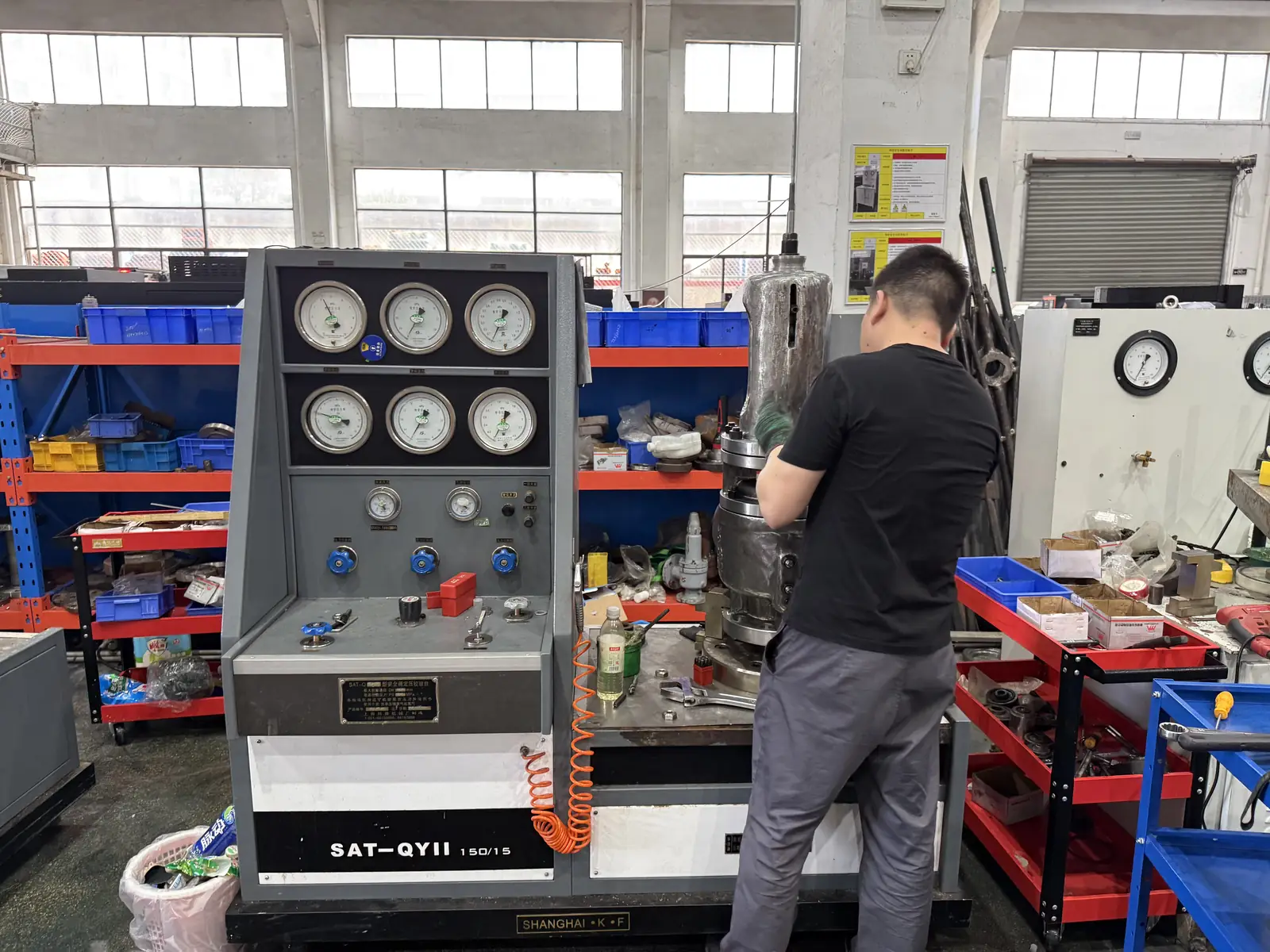
SHOP-FLOOR VERIFICATION
From Code Requirement to Shop-Floor Verification
Standards define technical requirements, but purchase-order compliance depends on design, materials, inspection scope and recorded test results. This actual ZOBAI photograph documents pressure-test control panel and safety valve technician. It is facility evidence, not a substitute for project-specific certificates or an agreed inspection and test plan.
››› Procurement Matrix
Pressure-temperature rating data matrix for safety valve RFQs
| Rating Item | Why It Matters | What to Specify | Risk if Missing |
|---|---|---|---|
| Valve body rating | Body and bonnet must withstand design and relieving conditions. | Body material, pressure class, design temperature, relieving temperature. | Body class suitable at ambient but derated at high temperature. |
| Inlet flange rating | The inlet flange protects the pressure boundary at set pressure and accumulation. | NPS, flange class, facing, material group, set pressure and relieving temperature. | Valve cannot be accepted because inlet rating is below required condition. |
| Outlet flange rating | Outlet can see back pressure from discharge piping, silencer, flare or closed header. | Outlet size, class, back pressure, discharge temperature and piping class. | Outlet flange or downstream piping is not suitable for back pressure. |
| High-temperature service | Temperature can reduce allowable pressure and affect gasket/bolting. | Steam, thermal oil, hot gas, superheated steam or fire case temperature. | Wrong body, gasket or bolting material selected. |
| Low-temperature service | Pressure rating is not enough; toughness and brittle fracture must be reviewed. | Minimum design metal temperature, cryogenic service, low-temperature MTC. | Material accepted by class but rejected by low-temperature requirement. |
| Corrosive or sour service | Corrosion and material limits may reduce practical pressure boundary suitability. | Medium, corrosion allowance, sour service, NACE/ISO requirement, trim material. | Wrong material or missing documentation creates inspection rejection. |
››› Where It Matters Most
Common safety valve applications requiring pressure-temperature rating checks
Steam and Boiler Systems
Superheated steam, boiler outlet lines and steam headers need body, flange, gasket and bolting review at high temperature.
Thermal Oil and Hot Gas
High-temperature service can reduce allowable pressure and require alloy steel, stainless steel or special gasket review.
Cryogenic LNG, LOX and LH2
Low-temperature service requires both rating review and material toughness documentation.
Refinery and Petrochemical Units
API 520/521/526 projects often combine high pressure, high temperature, flare back pressure and material requirements.
Corrosive and Sour Service
Corrosive media can require special material and NACE/ISO documentation beyond normal pressure class.
Replacement PSV Projects
Old valves should not be replaced only by tag size. Confirm current design temperature, material and flange class before ordering.
››› Related Standards
Standards normally used for pressure-temperature rating checks
Different standards control different parts of the rating review. A safety valve RFQ should state the correct rating standard instead of using a generic phrase such as ANSI class or high-temperature rating.
- ASME B16.5 for pipe flanges and flanged fittings up to NPS 24.
- ASME B16.47 for large diameter steel flanges from NPS 26 through NPS 60.
- ASME B16.34 for flanged, threaded and welding-end valve pressure-temperature ratings.
- API 526 for standardized flanged steel pressure relief valves.
- API 520 for sizing and selection after the pressure boundary is defined.
- API 521 for relief scenario and discharge system review.
››› Document Package
Documents to request with a rated safety valve
Document requirements should be agreed before manufacturing, especially for EPC, refinery, chemical, cryogenic, hydrogen, oxygen and boiler projects.
- Datasheet showing set pressure, temperature, body material and connection rating.
- General arrangement drawing with inlet/outlet flange size, class and facing.
- Material certificates for body, bonnet, nozzle, disc, trim, spring, bolting and pressure-retaining parts.
- Pressure test report and set pressure calibration certificate.
- Seat tightness test report where required by API 527 or project specification.
- Low-temperature, high-temperature, sour service or oxygen-clean documentation where applicable.
››› RFQ Checklist
Information to send for a pressure-temperature rated safety valve quote
| RFQ Data | Why It Matters | Example Input |
|---|---|---|
| Design pressure / MAWP | Defines the protected pressure boundary. | 16 barg, 42 barg, 600 psi, vessel MAWP |
| Design temperature | Determines rating table and material limits. | -196°C, -46°C, 200°C, 425°C, 540°C |
| Set pressure | Used with accumulation and relieving condition review. | 10 barg, 15 barg, 300 psi, 1500 psi |
| Relieving temperature | May differ from normal operating temperature. | Superheated steam temperature, fire case temperature, compressor discharge temperature |
| Body material | Controls pressure-temperature rating and documentation. | WCB, WC6, WC9, CF8M, LCB, stainless steel, alloy steel |
| Inlet / outlet flange class | Confirms mechanical connection rating. | ASME Class 150/300/600/900/1500/2500, PN rating |
| Facing and gasket | Affects joint suitability and leakage control. | RF, RTJ, spiral wound gasket, PTFE gasket, oxygen-compatible gasket |
| Back pressure | Controls outlet rating and valve configuration. | Atmospheric vent, 3 barg flare header, 20% built-up back pressure |
| Applicable standard | Avoids mismatched code expectations. | ASME B16.5, ASME B16.34, API 526, EN 1092-1, GB/T standard |
| Required documents | Prevents inspection and commissioning delays. | MTC, drawing, calibration, pressure test, seat test, cleaning record |
Engineering note: Final selection should be checked against the protected equipment datasheet, applicable code, certified capacity, inlet and outlet pressure loss, back pressure, pressure-temperature rating table and project documentation requirements.
››› Common Errors
Common pressure-temperature rating mistakes in safety valve procurement
Assuming class equals fixed pressure
Class 300 or Class 600 is not a single fixed pressure for all materials and temperatures. Check the applicable rating table.
Checking inlet rating but ignoring outlet rating
Outlet pressure can matter when discharge is connected to a flare header, silencer, closed vent or other back-pressure source.
Using normal temperature instead of relieving temperature
The rating check should consider design and relieving temperature, not only normal operating temperature.
Ignoring low-temperature toughness
Cryogenic or low ambient service can require impact-tested or low-temperature material documentation.
Mixing ASME and EN / DIN flanges
ASME Class and EN PN connections are not automatically interchangeable. Dimensions, facing, bolting and gaskets must be checked.
Treating API 520 as a flange rating standard
API 520 helps sizing and selection; flange and valve rating still need ASME B16.5, ASME B16.34, API 526 or the project standard.
››› Related Pages
Continue your pressure-temperature and safety valve review
Use these connected pages to move from rating checks into safety valve sizing, standardized flanged valve selection, seat tightness testing and application-specific material review.
ASME B16.5 Flange Dimensions
Confirm flange size, class, facing, gasket and bolting for safety valve inlet and outlet connections.
API 526 Flanged Safety Valves
Review standardized flanged steel PSV sizes, orifice letters, pressure classes and RFQ data.
API 520 Safety Valve Sizing
Calculate required relief area and capacity after pressure boundary and rating conditions are defined.
High Temperature Safety Valves
Review steam, thermal oil, hot gas and alloy material selection for elevated temperatures.
LNG and Cryogenic Safety Valves
Review cryogenic service, low-temperature material toughness and documentation requirements.
High Back Pressure Service
Check outlet rating, bellows or pilot valve selection, flare header pressure and stability.
››› FAQ
Pressure-Temperature Ratings FAQ
What does pressure-temperature rating mean for a safety valve?
Pressure-temperature rating defines the allowable pressure for a valve body, flange or pressure-retaining part at a specified temperature and material group. For safety valves, it helps confirm whether the selected body material, flange class, gasket, bolting and connected piping are suitable for the design and relieving conditions.
Is flange class the same as allowable pressure?
No. Flange class is a rating designation, but allowable pressure depends on material group and temperature. A Class 300 flange can have different allowable pressure at different temperatures or with different materials.
Which standards are commonly used for pressure-temperature ratings?
Common references include ASME B16.5 for pipe flanges and flanged fittings, ASME B16.34 for valves, ASME B16.47 for large diameter flanges, API 526 for standardized flanged steel pressure relief valves and the applicable project piping or pressure equipment code.
Should safety valve outlet flange rating be checked?
Yes. Outlet flange rating should be checked when discharge piping, flare headers, silencers, closed vents or recovery systems can create back pressure or elevated outlet temperature.
What RFQ data is needed for pressure-temperature rating review?
Provide protected equipment, design pressure, design temperature, set pressure, relieving temperature, medium, body material, inlet and outlet size, flange class, facing, gasket, back pressure, applicable standard and required documents.
Can a valve with the right set pressure still have the wrong pressure-temperature rating?
Yes. A valve can have the correct set pressure and capacity but still be unsuitable if its body material, flange class, gasket, bolting or outlet connection is not rated for the actual design and relieving temperature.
››› Engineering RFQ Support
Send the actual pressure and temperature data before selecting flange class or valve material
For a reliable quotation, send design pressure, design temperature, set pressure, relieving temperature, medium, required capacity, inlet and outlet flange class, body material, back pressure, applicable standard and document requirements. Our engineers can help check the rating basis before confirming the safety valve model.
Minimum rating data
- Design pressure / MAWP
- Design temperature
- Set pressure
- Relieving temperature
- Medium and phase
- Body material
- Inlet / outlet flange class
- Back pressure
- Applicable standard
- Required documents