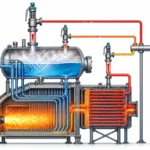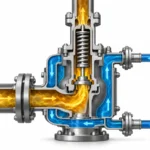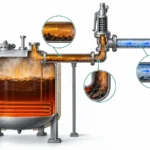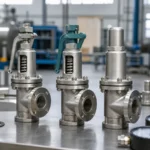
A boiler safety valve with a lifting lever is normally a spring-loaded steam safety valve equipped with a manual lifting, easing or try-lever mechanism. The spring provides the normal closing force. Boiler steam pressure opens the valve automatically at the specified set-pressure condition, while the lever gives authorized personnel a separate mechanical path to lift …

A boiler safety valve with a lifting lever is normally a spring-loaded steam safety valve equipped with a manual lifting, easing or try-lever mechanism. The spring provides the normal closing force. Boiler steam pressure opens the valve automatically at the specified set-pressure condition, while the lever gives authorized personnel a separate mechanical path to lift the disc during an approved function check.
The lever does not verify the complete protection duty. A valve can move when lifted manually and still have the wrong set pressure, inadequate certified steam capacity, damaged seating surfaces, unstable discharge piping or incomplete repair records.
Engineering takeaway: Boiler valve approval must connect MAWP, normal operating pressure, set pressure, required steam capacity, certified capacity, accumulation or overpressure basis, lifting-lever configuration, materials, seat design, discharge piping, testing and documentation. The lever is an accessory—not the pressure-setting or sizing mechanism.
Terminology boundary: In boiler service, “safety valve” normally refers to an automatic reclosing pressure-relief device for steam or another compressible fluid. The lifting lever is an accessory to the spring-loaded valve; it does not convert the valve into a regulating valve, a routine blowdown valve or a legacy weight-and-lever device. Final wording must follow the boiler code, jurisdiction, manufacturer designation and approved datasheet.
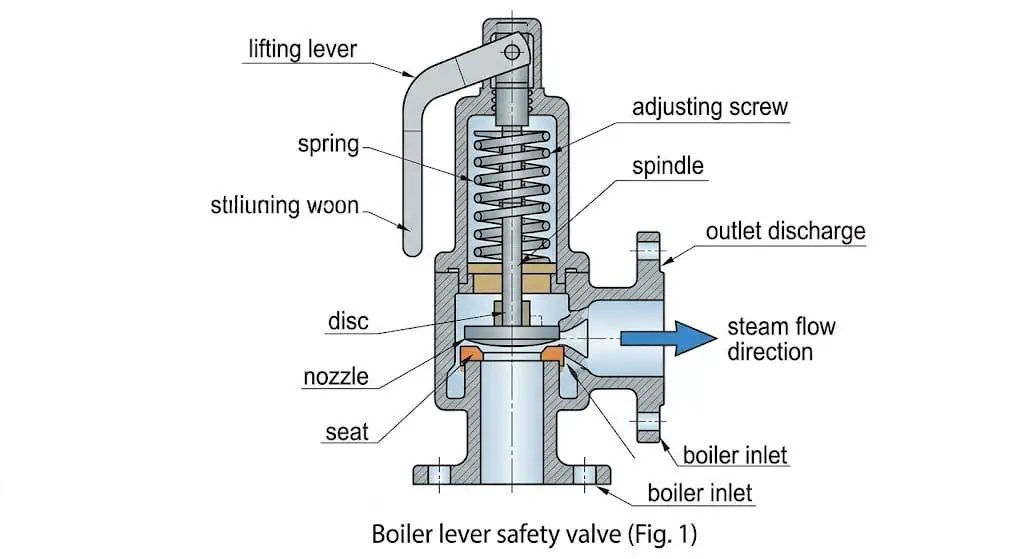
60-Second Boiler Lever Safety Valve Checklist
| Question | Required Answer Before Approval |
|---|---|
| What valve is this? | A modern spring-loaded steam safety valve with a lifting, easing or try lever—not a weight-and-lever loaded legacy valve. |
| What does the lever check? | Mechanical movement and brief manual lifting under an approved procedure. |
| What does it not check? | Automatic set pressure, rated steam capacity, formal seat tightness or code compliance. |
| What protects the boiler? | The complete valve and installation, selected for the boiler pressure basis and required steam-relief duty. |
| Can the valve be replaced by size? | No. Connection size does not prove orifice area or certified steam capacity. |
| Can the lever be used as a vent? | Not as a routine operating or depressurization device. |
| What must be documented? | Datasheet, nameplate, capacity basis, calibration, required leakage test, materials, repair scope, seal and inspection records. |
Immediate hold point: Do not approve a boiler safety valve replacement when the boiler MAWP, set pressure, required steam capacity or existing valve nameplate cannot be confirmed. Mechanical fit does not establish pressure-protection equivalence.
Boiler Lifting Lever vs Lever-Loaded Safety Valve
The phrase “lever safety valve” can describe two different mechanisms. The RFQ and article title should make the distinction explicit.
| Device | Main Closing Load | Lever Function | Typical Context |
|---|---|---|---|
| Spring-loaded safety valve with lifting lever | Compressed spring | Manually lifts spindle or disc during an approved check | Modern boiler, steam and utility service |
| Lever-loaded / weight-and-lever safety valve | External weight acting through a lever | Provides the normal closing load | Legacy boiler, marine or historical equipment |
This page addresses the first device. For the legacy weighted design, use How a Lever-Loaded Safety Valve Works. For current products, use Safety Valves with Lifting, Try or Packed Levers.
RFQ wording: Write “spring-loaded boiler safety valve with lifting lever” rather than only “lever safety valve.” This prevents confusion with a lever-loaded weighted valve.
What This Page Covers
This article is the site’s technical page for modern boiler and steam safety valves fitted with lifting or try levers. It focuses on how the lever differs from automatic valve operation, what a manual-lift check can and cannot prove, and what must be reviewed before selection, installation, inspection or replacement.
It does not replace:
- the boiler-specific governing code and jurisdiction;
- the required steam-capacity calculation;
- manufacturer capacity certification and instructions;
- the plant’s approved operating and test procedure;
- the authorized inspection or repair program.
For the broader boiler system, use Boiler and Steam Safety Valves. For commercial steam-valve options, use Steam Safety Valves.
Why Boiler Service Requires a Dedicated Review
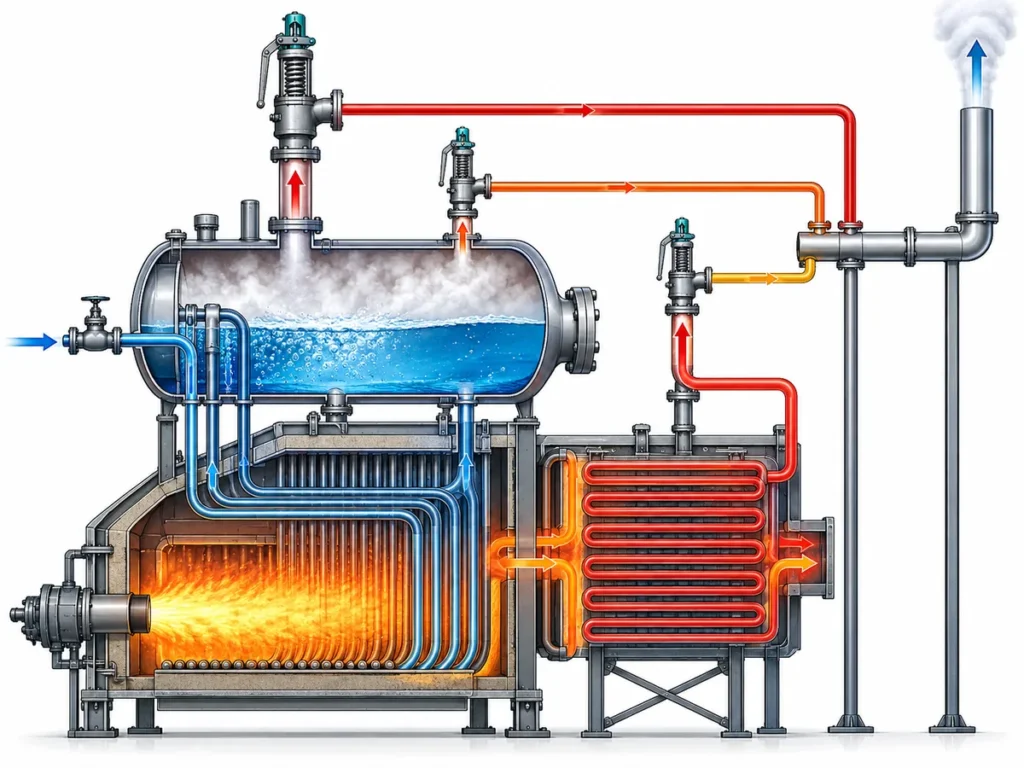
A boiler safety valve must protect equipment that continuously generates or receives thermal energy. The valve must be able to relieve the required steam flow while the pressure remains within the applicable protection boundary.
Pressure Basis
Boiler MAWP or other approved allowable pressure, operating pressure and set-pressure arrangement.
Steam Capacity
Required steam-relief load compared with certified or documented valve capacity.
Discharge Safety
Hot steam, reaction force, noise, drainage, condensate and personnel exposure.
Temperature
Body strength, spring stability, seat, guide, spindle, gaskets and exposed mechanism.
Inspection
Lever requirement, nameplate, calibration, seals, tags, repair route and jurisdictional records.
Operating Margin
Normal pressure must remain sufficiently below the valve’s opening condition for stable closed operation.
Capacity warning: A valve can open at the correct set pressure and still be unable to relieve the boiler’s required steam load. Automatic opening and certified steam capacity are separate acceptance questions.
Four Separate Approval Questions
| Approval Question | Evidence Needed | Why the Lever Cannot Answer It |
|---|---|---|
| Will the valve open at the intended pressure? | Approved set-pressure basis, calibration or test record, corrections where applicable, intact seal and traceable nameplate. | Manual lifting bypasses the automatic pressure-force balance. |
| Can it relieve the required steam load? | Boiler duty, governing relief basis, identified orifice and certified or otherwise accepted steam-capacity data. | A brief lever lift neither produces nor measures the rated steam flow. |
| Will it operate stably when installed? | Direct inlet path, acceptable inlet loss, suitable outlet routing, drainage, supports, reaction-force review and back-pressure assessment. | The lever does not reproduce the full dynamic relief event. |
| Can it return to service legally and traceably? | Applicable code and jurisdiction, repair authorization, test reports, final seal, tags and inspection acceptance. | Mechanical movement is not a compliance record. |
How a Boiler Safety Valve with Lifting Lever Works
- The spring keeps the valve closed.
Spring load acts through the spindle and disc assembly to maintain contact with the nozzle seat during normal boiler operation. - Steam pressure creates opening force.
As boiler pressure rises, upward force beneath the disc increases. - The specified opening characteristic occurs.
At the approved set-pressure condition, the valve begins the required automatic opening response. - Lift and steam flow develop.
Flow forces and valve geometry promote the lift needed to pass the applicable steam capacity. - Pressure falls and the valve reseats.
After the relief source is controlled, spring force closes the valve at its reseating condition. - The lifting lever operates separately.
When used under an approved procedure, the lever mechanically lifts the spindle or disc without proving the automatic set-pressure response.
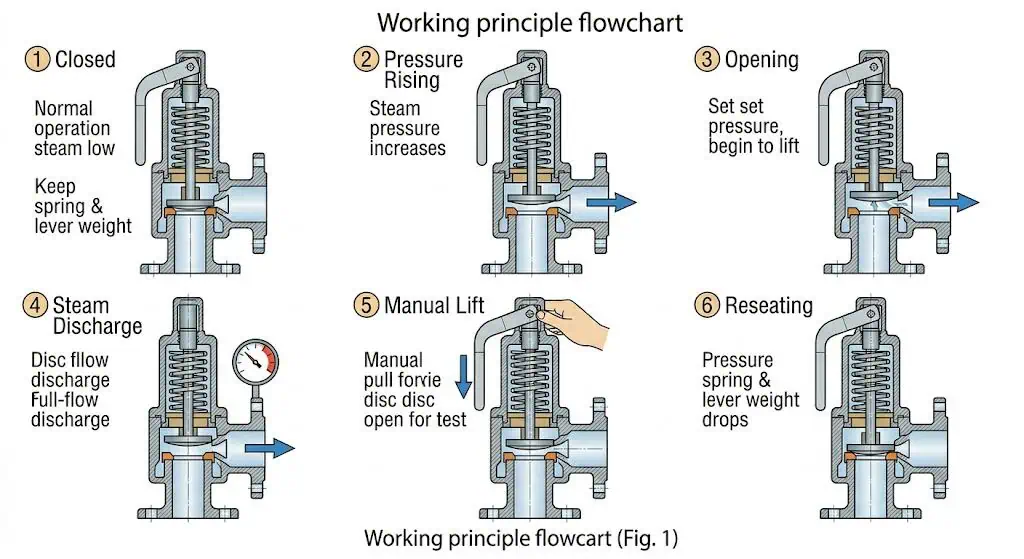
Spring Force, Steam Force and Lift Development
Before opening, the closing load is produced primarily by the compressed spring acting through the spindle and disc. Boiler pressure creates an opposing force over the effective seat area. Once the valve starts to lift, the effective pressure area, huddling or reaction geometry, fluid momentum, guide friction and spring compression all influence the lift response. A simplified force comparison is useful for understanding the mechanism, but it is not a substitute for manufacturer-certified steam-capacity data.
Bench-setting boundary: A set-pressure test verifies the specified opening characteristic under defined conditions. It does not by itself reproduce the boiler’s full steam-generation rate, discharge reaction force, condensate behavior or installed outlet resistance.
For the full spring-force and lift sequence, use How a Spring-Loaded Safety Valve Works.
Lifting Lever, Try Lever, Packed Lever and Closed Cap
| Configuration | Typical Function | Selection Concern |
|---|---|---|
| Open lifting / easing lever | Direct manual lifting for approved boiler or steam checks | Hot-steam exposure, access, accidental operation and external environment |
| Try lever | Functional movement check under defined conditions | Procedure, minimum operating condition, discharge safety and seat contamination |
| Packed lever | Manual lifting with a more controlled external leakage path | Packing material, temperature, friction, emissions and maintenance |
| Closed or sealed cap | Restricts manual access and protects adjustment components | May be preferred for tamper-sensitive or hazardous service but does not provide routine manual lift |
Use Safety Valve with Lever vs Closed Cap Safety Valve for the detailed configuration comparison.
Do not assume every boiler uses the same lever arrangement. The final requirement depends on the boiler category, valve design, pressure, code edition, jurisdiction, owner procedure and manufacturer instructions.
Lever, Cap and Bonnet Must Be Specified Separately
| Construction Item | What It Describes | Typical Procurement Error |
|---|---|---|
| Lifting / easing / try lever | The external mechanism used for approved manual movement. | Assuming every lever style provides the same containment or test function. |
| Open or packed lever | Whether the spindle penetration is exposed or provided with a packing arrangement. | Treating “packed” as proof of suitability for all hazardous steam or vapor service. |
| Closed / sealed cap | The cover over the adjustment and upper spindle area where no routine exposed lifting lever is provided. | Confusing a closed cap with an enclosed spring chamber. |
| Open / closed bonnet | The construction and environment around the spring chamber. | Ordering the wrong thermal exposure, venting or containment arrangement. |
| Adjustment seal | The control used to show or prevent unauthorized set-pressure adjustment. | Accepting a replacement with a missing or untraceable seal. |
Boiler Safety Valve Selection Workflow
Boiler type and code → MAWP → steam-generating duty → required capacity → set pressure arrangement → certified steam capacity → lever/cap configuration → materials → discharge piping → tests and records
- Identify the boiler and governing code.
Confirm power, heating, hot-water, packaged, waste-heat or another boiler category. - Confirm the pressure basis.
Record MAWP, normal and maximum operating pressure, set pressures and number of valves. - Establish the required steam capacity.
Use the approved boiler output or governing relief basis rather than the old connection size. - Verify the valve capacity.
Compare required capacity with the identified valve’s certified or documented steam capacity. - Confirm steam condition.
State saturated or superheated steam and relieving temperature. - Select the valve construction.
Review full-lift design, bonnet, seat, spring, lever and cap configuration. - Review installation.
Check the boiler connection, outlet, drains, supports, reaction force and safe discharge. - Define inspection and documentation.
Agree calibration, leakage test, seal, tag, capacity and repair records before purchase.
For detailed sizing and capacity review, use the Safety Valve Sizing and Certified Capacity Guide.
Capacity and Replacement Evidence Hierarchy
| Evidence | What It Supports | What It Does Not Prove Alone |
|---|---|---|
| Existing valve tag and nameplate | Historical identity, set pressure and some original capacity information. | That the current boiler duty, code basis or piping remains unchanged. |
| Connection size and pressure class | Mechanical interface and pressure-temperature compatibility. | Orifice area, lift or steam capacity. |
| Set-pressure certificate | Automatic opening adjustment under the documented test condition. | Required steam capacity or installed stability. |
| Certified / accepted steam-capacity data | Supported flow performance for the identified valve and conditions. | That the boiler relief calculation and selected set-pressure arrangement are correct. |
| Repair and resealing record | Traceability of authorized work and final adjustment. | That an installation or process modification has been reviewed. |
If a cold differential test pressure or another correction is required because the test condition differs from service temperature or outlet pressure, it must come from the applicable code, valve design and approved procedure. Do not invent a field correction or copy one from a different valve.
Pressure and Capacity Terms for Boiler Service
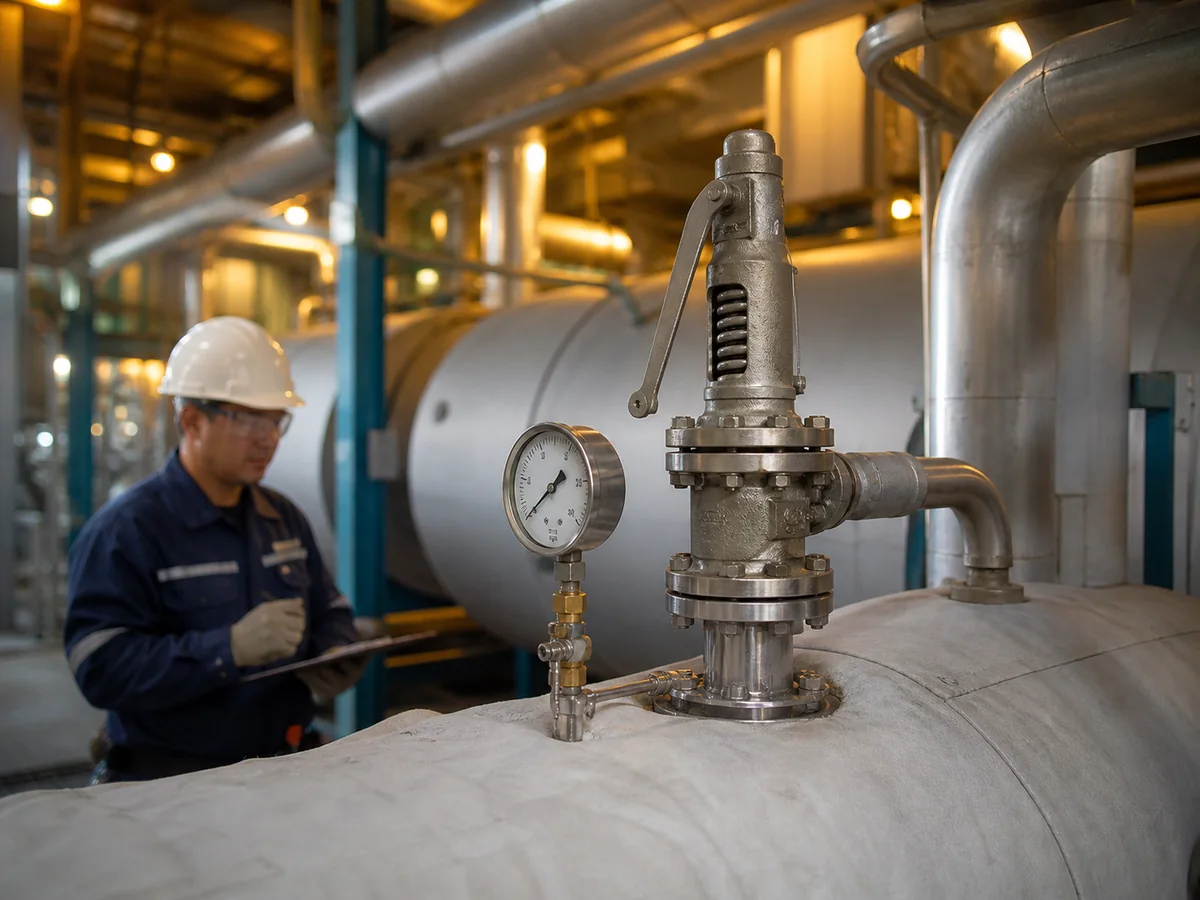
| Term | Boiler Meaning | Common Error |
|---|---|---|
| MAWP / allowable pressure | The approved pressure boundary for the protected boiler. | Using valve pressure class as the boiler limit. |
| Operating pressure | The normal pressure while the valve remains closed. | Running too close to set pressure and blaming leakage only on the seat. |
| Set pressure | The pressure associated with the specified automatic opening characteristic. | Treating it as proof of full lift or capacity. |
| Overpressure / accumulation | Pressure rise during the relieving event using the applicable reference. | Using one universal percentage without checking the boiler code and valve arrangement. |
| Blowdown | The difference between set and reseating pressure. | Adjusting it without an authorized valve-specific procedure. |
| Required steam capacity | The steam flow that must be relieved for the boiler protection duty. | Copying the old flange size or nominal bore. |
| Certified / documented capacity | The steam capacity supported for the identified valve and conditions. | Assuming any valve of the same inlet size has the same capacity. |
For detailed definitions, use Set Pressure, Overpressure, Accumulation and Blowdown.
Why Correct Set Pressure Can Still Produce Inadequate Protection
Set pressure answers when automatic opening begins under the specified condition. Required relieving capacity answers how much steam the boiler protection system must discharge. Certified or accepted valve capacity answers what the identified valve can pass under its rated basis. All three must be consistent. A correctly calibrated but undersized valve may lift on time while boiler pressure continues to rise.
Engineering range note: Operating margin, permissible pressure rise, reseating behavior and capacity acceptance vary with boiler category, valve design, number of installed valves, adopted code, jurisdiction and manufacturer data. No universal percentage is applied in this article.
Try-Lever Test: What It Checks and What It Does Not
A try-lever check mechanically lifts the valve through the lever mechanism. The approved procedure may use it to confirm that the external lever, spindle and disc can move and that the valve can reseat after release.
It May Check
- lever and linkage movement;
- that the disc is not completely seized;
- brief steam discharge when the approved condition exists;
- initial reseating observation after release.
It Does Not Prove
- automatic set pressure;
- rated or certified steam capacity;
- formal seat-tightness acceptance;
- blowdown compliance;
- installation or code compliance.
Do not use the lever as a routine vent, pressure controller or depressurization method. Repeated manual lifting can damage seating surfaces, disturb scale and expose personnel to hot steam. Provide a dedicated depressurization route when routine venting is required.
Conditions to Resolve Before Any Manual-Lift Check
Applicable code, jurisdiction and plant procedure identified
Manufacturer instructions available
Authorized and trained person assigned
Required boiler operating condition confirmed
Outlet and drain path verified clear
Personnel exclusion and safe body position established
Hot-steam and noise hazards controlled
Post-test leakage and reseating observation planned
Abnormal-result response defined
Test result and valve identity recorded
No universal test pressure is stated here. The permitted operating condition for manual lifting is code-, valve- and jurisdiction-specific. Follow the governing procedure rather than a percentage copied from another site.
How to Interpret an Abnormal Try-Lever Result
| Observation | Possible Meaning | Required Response |
|---|---|---|
| Lever cannot move or requires abnormal force | Corrosion, bent linkage, packing friction, seized guide or incorrect mechanism. | Stop the test; do not apply an extension bar or impact force. Isolate and inspect through the approved route. |
| Steam flow starts but stops before stable movement | Insufficient permitted test condition, restricted movement, contamination or procedure mismatch. | Record the condition and obtain engineering / inspection direction; do not claim a successful test. |
| Valve does not reseat cleanly | Scale at the seat, disc or guide damage, spring problem or outlet pressure effect. | Do not repeat the lift to “clean” the seat. Inspect and test the valve. |
| Leakage appears or increases after release | Debris, seat damage, misalignment or thermal distortion. | Evaluate leakage, boiler operating risk and authorized removal / repair. |
| Discharge pipe moves, vibrates or retains condensate | Support, reaction-force, drainage or outlet-restriction problem. | Hold further operation or testing until the discharge installation is reviewed. |
Try Lever vs Set Pressure vs Seat Tightness Tests
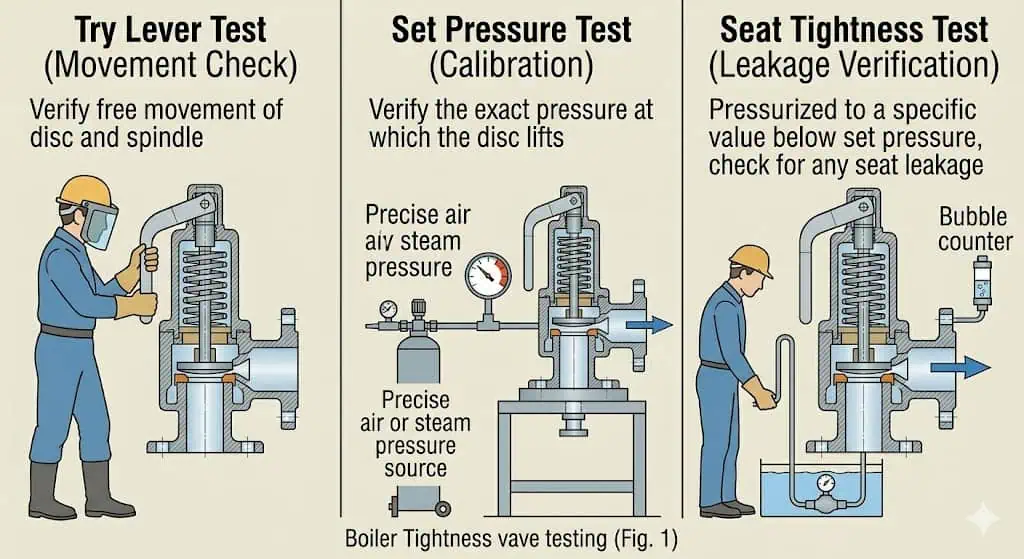
| Check or Test | Primary Purpose | What It Cannot Establish Alone |
|---|---|---|
| Visual inspection | Identify leakage, corrosion, damage, missing seals, poor support or unreadable markings. | Set pressure, capacity or internal condition. |
| Try-lever / manual-lift check | Confirm mechanical movement under an approved condition. | Automatic set pressure, rated capacity or formal seat tightness. |
| Set-pressure test | Verify the specified automatic opening characteristic under defined test conditions. | Full boiler steam capacity or installed discharge-system behavior. |
| Blowdown / reseating observation | Evaluate closing behavior after opening where required by the procedure. | Seat leakage acceptance after stabilization. |
| Seat-tightness test | Measure or assess leakage using the specified test basis. | Required capacity, set-pressure selection or piping suitability. |
| Capacity certification / evidence | Support the valve’s steam-flow performance under stated conditions. | Correct installation, maintenance condition or current calibration. |
API 527 may be specified for seat-tightness testing in applicable projects, but it is not a universal boiler test route and does not establish sizing. Use the API 527 Seat Tightness Test Guide only where the project calls for that basis.
Minimum Information in a Test or Inspection Record
- boiler and safety-valve tag, manufacturer, model, serial number and nameplate photograph;
- applicable procedure, code / jurisdiction reference and test date;
- boiler pressure and steam condition during an in-service movement check;
- personnel authorization and safety controls;
- observed movement, discharge, reseating and post-test leakage;
- set-pressure test medium, test condition, corrections and calibrated instruments where applicable;
- seat-tightness basis and acceptance where specified;
- final adjustment seal, repair organization and inspector acceptance.
Installation and Safe Steam Discharge Checks
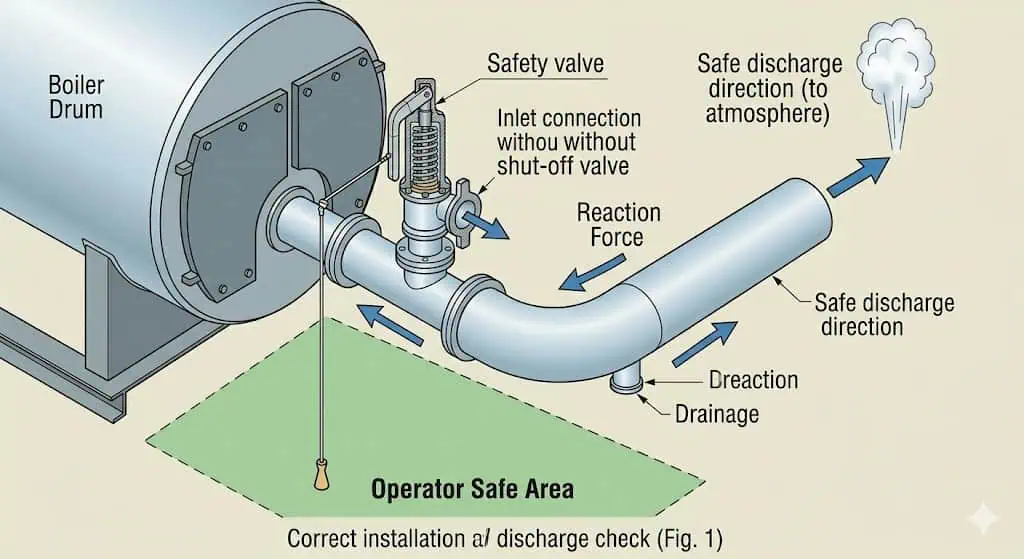
| Installation Item | Review Question | Potential Failure |
|---|---|---|
| Boiler connection | Is the pressure path direct, adequately sized and free from unauthorized isolation? | Restricted flow, delayed response or loss of protection. |
| Inlet pressure loss | Does the connection support stable valve operation at required steam flow? | Chatter, cycling or reduced lift. |
| Outlet size and routing | Can steam discharge without excessive restriction? | Built-up back pressure and unstable discharge. |
| Drainage | Can condensate leave the valve body and discharge piping? | Water hammer, corrosion, seat damage or added load. |
| Reaction-force support | Are pipe supports independent and suitable for discharge loads and thermal movement? | Body distortion, nozzle load or pipe failure. |
| Safe discharge direction | Are personnel, walkways, electrical equipment and air intakes protected? | Burn, noise and environmental hazards. |
| Lever access | Can an authorized person perform a permitted check without entering the discharge path? | Unsafe body position and exposure. |
Use the Safety Valve Installation Guide for the full piping review and How Back Pressure Affects Safety Valve Performance for outlet-pressure effects.
Back Pressure, Drainage and Discharge-Pipe Changes
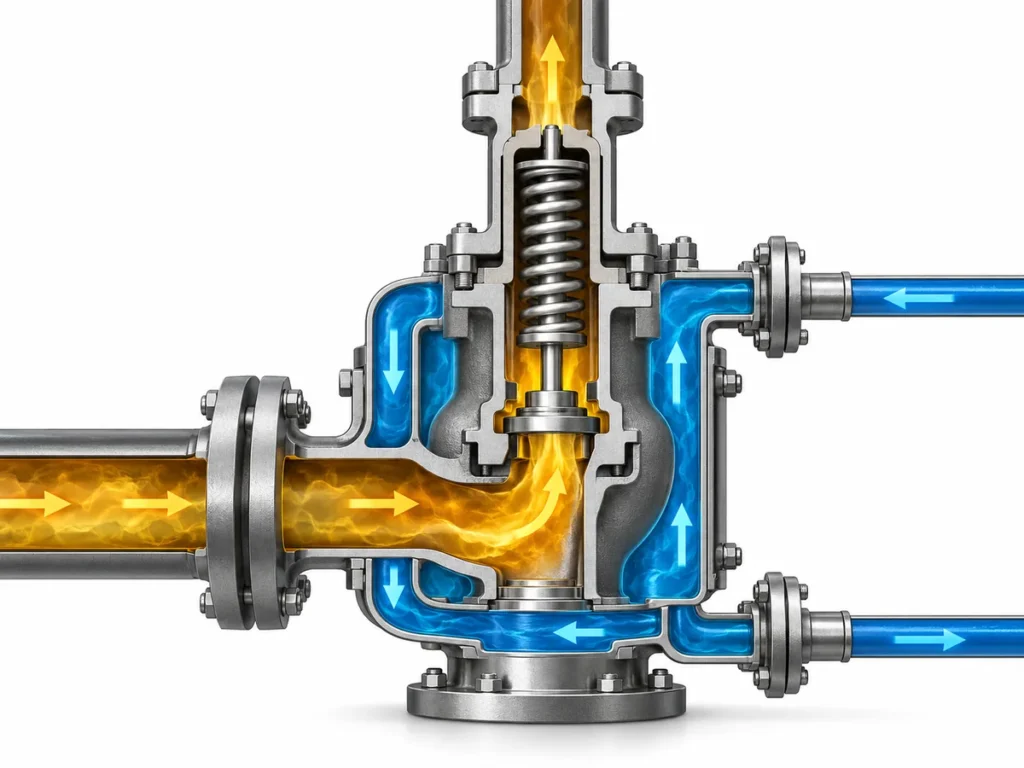
For a boiler valve discharging through piping, outlet pressure may include pressure already present before opening and pressure generated by the relief flow. The effect is valve- and installation-specific. Long runs, elbows, silencers, weather caps, common manifolds, undersized drains or unsupported vertical stacks can change lift, stability, reaction load and reseating.
Modification trigger: A change to the boiler firing rate, outlet pipe, silencer, drain, support, discharge direction or common header should trigger a safety-valve capacity and installation review—even when the valve tag and set pressure remain unchanged.
Materials and Construction for Boiler Steam Service
Steam-temperature suitability should not be judged from the body material alone. The complete valve assembly should be reviewed.
| Component | Steam-Service Review |
|---|---|
| Body and bonnet | Pressure-temperature rating, oxidation, thermal expansion and external environment. |
| Nozzle and disc | Erosion, seat damage, corrosion, hardness and repeated lift events. |
| Guide and spindle | Clearance, galling, alignment, deposits and high-temperature movement. |
| Spring | Approved range, temperature exposure, relaxation, corrosion and identification. |
| Seat design | Metal or other approved construction, leakage basis and repair procedure. |
| Lever mechanism | Corrosion, deformation, pin wear, packing where fitted and free movement. |
| Gaskets and fasteners | Temperature, pressure, oxidation, relaxation and traceable replacement parts. |
Material selection should follow the actual saturated or superheated steam condition, valve design and project specification—not a generic “high-temperature steel” statement.
Seat, Spring and Guide Failure Boundaries
| Component | Typical Boiler-Steam Concern | Possible Result |
|---|---|---|
| Nozzle and disc seating surfaces | Scale, erosion, wire drawing, impact from repeated lifting and unauthorized machining. | Seat leakage, unstable reseating and altered geometry. |
| Guide and spindle | Oxide deposits, galling, distortion, side load from lever linkage and thermal growth. | Delayed lift, sticking or failure to reseat. |
| Spring | Incorrect range, high spring-chamber temperature, corrosion, relaxation or loss of identification. | Set-pressure drift and inconsistent blowdown behavior. |
| Lever pins and fork | Wear, corrosion, deformation, missing retainers or misalignment. | False “free movement,” inability to lift or side loading of the spindle. |
| Gaskets and drains | Temperature degradation, leakage, blocked condensate path or wrong replacement material. | External steam leakage, water accumulation or body stress. |
Metal seating is common in high-temperature steam service, but “metal seat” does not define an acceptable leakage rate or guarantee tight shutoff after a lift. Leakage expectations must be tied to the applicable valve design, code / project test basis and authorized repair limits.
Common Boiler Safety Valve Problems
| Observed Problem | Possible Causes | Engineering Response |
|---|---|---|
| Leakage after manual lift | Debris at the seat, seat damage, scale, misalignment or repeated lever use | Inspect seat/disc, review steam cleanliness, perform authorized repair and required testing. |
| Valve does not reseat | Guide friction, deposits, damaged seat, spring issue, unsuitable blowdown or outlet pressure | Stop repeated lifting; inspect the complete valve and discharge system. |
| Lever or spindle sticks | Corrosion, dirt, deformation, packing friction or poor maintenance | Remove from service under the plant procedure and inspect through an authorized route. |
| Nuisance lifting or simmer | Operating pressure too close to set pressure, pressure fluctuation or seat condition | Review boiler controls, operating margin, calibration and seat condition. |
| Chatter or vibration | Inlet loss, discharge restriction, condensate, valve oversizing or unstable boiler pressure | Review required capacity, inlet/outlet system and evidence of mechanical damage. |
| Valve opens but boiler pressure continues rising | Insufficient steam capacity, incomplete lift, blocked outlet or changed boiler duty | Hold operation and reverify the boiler duty, capacity and installed system. |
| Replacement rejected at inspection | Wrong lever/cap, missing marking, incorrect set pressure, capacity or records | Compare the supplied configuration with the boiler code and approved purchase specification. |
Do not raise set pressure or alter the adjusting screw to stop leakage. Leakage may indicate operating-margin, seat, material, piping or maintenance problems. An unauthorized adjustment can reduce the boiler’s intended protection.
Troubleshooting Sequence Before Adjusting the Valve
- Preserve the as-found condition.
Record pressure, leakage, vibration, lever position, seal condition and recent operating events. - Check the boiler and piping first.
Review firing control, pressure surges, inlet restriction, outlet blockage, condensate and support condition. - Confirm the protection basis.
Compare MAWP, set-pressure arrangement, boiler duty and required steam capacity with current records. - Inspect the complete valve.
Evaluate seat, disc, guide, spindle, spring, lever linkage, drains and nameplate traceability. - Use an authorized test and repair route.
Do not compensate for leakage or nuisance lifting by increasing spring compression in the field.
Illustrative Boiler Cases
Fictional training example — not project data
Case 1: Same Flange, Lower Steam Capacity
Problem: A replacement valve matched the old inlet connection and set pressure, but the boiler pressure continued rising during a high-firing condition.
Cause: The firing system had been upgraded and the required steam-relief load increased. Procurement used the old flange size rather than the current boiler duty and certified capacity.
Correction / prevention: Hold operation, re-establish the governing steam load, compare it with traceable valve capacity data and require capacity review whenever firing rate, heat input or boiler output changes.
Fictional training example — not project data
Case 2: Leakage After a Try-Lever Check
Problem: Continuous steam leakage appeared after an otherwise brief manual-lift check.
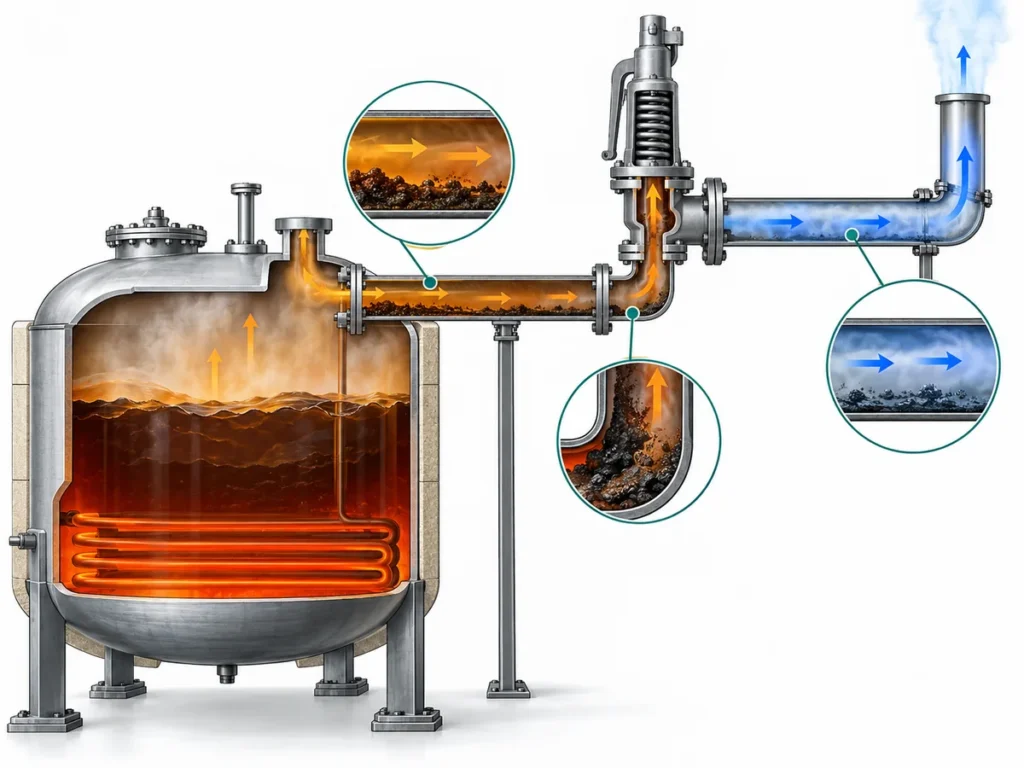
Cause: Scale disturbed during lifting became trapped between the disc and nozzle seat; repeated attempts to “clear” the seat worsened the damage.
Correction / prevention: Stop repeated lever operation, inspect and repair through the authorized route, complete the required set-pressure and leakage tests, and improve steam / water cleanliness and test controls.
Fictional training example — not project data
Case 3: Safe Lever Access, Unsafe Outlet
Problem: The operator could reach the lever from a platform, but the discharge outlet directed hot steam and condensate toward a nearby walkway.
Cause: The lever-access review was separated from the outlet, drain, reaction-force and personnel-exclusion review.
Correction / prevention: Redesign the discharge direction, drainage and independent supports; approve the operator position only after the complete steam-release path is shown to be safe.
Fictional training example — not project data
Case 4: Lever Used for Routine Depressurization
Problem: Maintenance repeatedly lifted the safety valve to vent a small boiler before work, and seat leakage progressively increased.
Cause: The safety valve was treated as an operating vent because no dedicated depressurization arrangement or controlled procedure existed.
Correction / prevention: Inspect and retest the valve, install or designate a suitable depressurization route, and prohibit routine use of the lifting lever as a process-control device.
Maintenance, Repair and Inspection Records
The general maintenance interval and repair route depend on the boiler service, jurisdiction, owner program, valve history and applicable code. A universal test frequency should not be copied into the purchase specification.
Routine Condition Checks
Nameplate and identification readable
Adjustment seal and tag intact
No visible steam leakage or deposits
Lever and pins not bent, loose or corroded
Outlet supports and drains in acceptable condition
No unauthorized isolation or obstruction
No evidence of repeated chatter or vibration
Inspection and test dates traceable
After Adjustment or Repair
The required records may include:
- valve tag, manufacturer, model and serial number;
- nameplate and capacity information;
- as-received condition and repair findings;
- replaced or repaired critical parts;
- set-pressure test basis and result;
- reseating or blowdown information where required;
- seat-tightness result where specified;
- final seal, tag and date;
- repair organization and authorization scope where applicable.
Use the Safety Valve Maintenance and Inspection Guide for the wider plant program. For certificates and traceability, use Safety Valve Certificates and Test Reports.
Return-to-Service Controls After Repair
- Preserve as-found evidence.
Record leakage, set condition, seal status, component damage and service history before cleaning or adjustment. - Control the repair scope.
Identify all critical parts replaced, machined or adjusted and confirm that the organization is authorized for the work required. - Restore manufacturer geometry.
Use approved parts, clearances, spring range, seat finish and assembly procedures. - Complete required tests.
Perform pressure-boundary, automatic set-pressure, reseating / blowdown and seat-tightness checks as required by the governing route. - Restore traceability.
Apply the correct tag, nameplate changes where permitted, final seal, repair report and serial-number linkage. - Correct the system cause.
Do not reinstall until inlet restriction, outlet loading, condensate, operating-margin or capacity problems that contributed to failure have been addressed.
When Selection or Return to Service Must Be Held
Unknown Boiler Pressure Basis
MAWP, boiler category or set-pressure arrangement is unclear.
Unknown Required Steam Capacity
Connection size is being used instead of the boiler duty.
Missing Capacity Evidence
The proposed valve cannot be tied to approved steam-capacity data.
Lever Type Is Ambiguous
The RFQ does not distinguish lifting lever, packed lever, closed cap or legacy weighted design.
Unsafe Discharge
Steam can reach personnel or condensate cannot drain.
Repeated Leakage or Chatter
The valve has not received a root-cause review.
Broken Seal or Unauthorized Adjustment
The current set condition is not traceable.
Repair Scope Exceeds Authorization
The organization or procedure is not approved for the required work.
Technical Approval Matrix
| Hold Point | Minimum Release Evidence |
|---|---|
| Pressure and code basis | Boiler category, jurisdiction, adopted code edition, MAWP and approved set-pressure arrangement. |
| Capacity | Required steam load and traceable certified / accepted valve capacity for the proposed configuration. |
| Lever and construction | Approved drawing identifying lifting device, cap, bonnet, spring, seat, drain and materials. |
| Installation | Accepted inlet, discharge, drainage, support, reaction-force and personnel-safety review. |
| Testing and repair | Approved procedure, calibrated instruments, completed reports, authorized repair scope and final seal. |
RFQ Checklist for Boiler Safety Valves with Lifting Levers
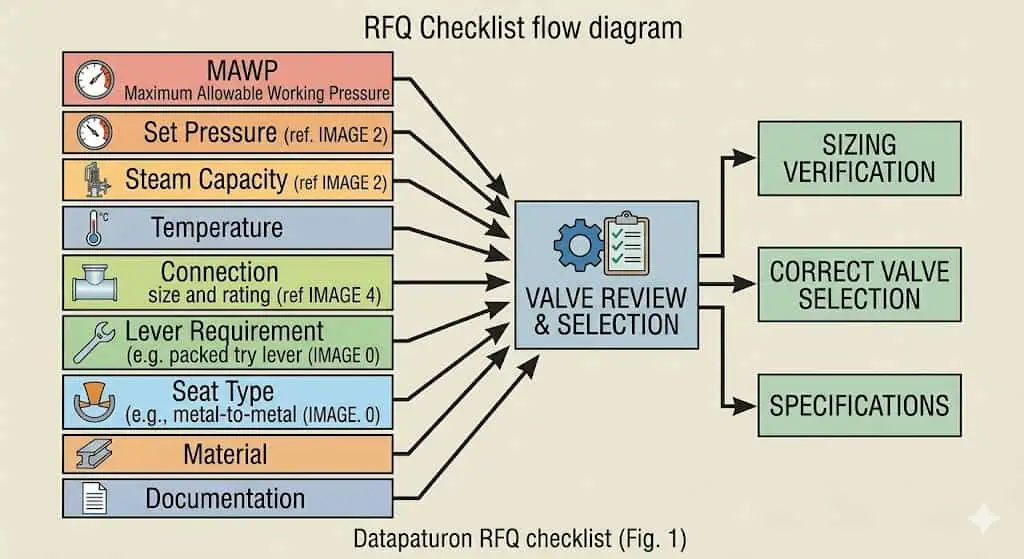
| RFQ Section | Information to Provide |
|---|---|
| Boiler identity | Boiler type, manufacturer, tag, jurisdiction, applicable code and current nameplate. |
| Pressure basis | MAWP, normal and maximum operating pressure, set-pressure arrangement and number of valves. |
| Steam duty | Required steam capacity, saturated or superheated condition, relieving temperature and calculation basis. |
| Valve configuration | Spring-loaded design, full/low lift as applicable, lever type, cap, bonnet, seat and drain requirements. |
| Connections | Inlet/outlet size, rating, facing or thread, orientation and dimensional restrictions. |
| Outlet system | Discharge direction, pipe length, elbows, silencer, drains, support and expected outlet pressure. |
| Materials | Body, nozzle, disc, guide, spindle, spring, lever, gasket and seat requirements. |
| Testing | Set pressure, reseating/blowdown where required, seat tightness and witness/hold points. |
| Documents | Datasheet, drawing, capacity evidence, material certificates, test reports, calibration, seal and repair records. |
| Pressure behavior | Operating margin, allowable pressure-rise basis, reseating / blowdown requirement and known nuisance-lift history. |
| Test conditions | Test medium, cold differential or other approved corrections, witness points, calibrated instruments and acceptance basis. |
| Replacement evidence | Existing nameplate photograph, previous reports, firing / capacity changes, discharge-piping revisions and inspection findings. |
RFQ data-quality rule: Mark unknown values as “to be confirmed.” Do not allow the supplier to infer MAWP, steam capacity, code section, lever requirement or repair route from connection size, an old tag number or a photograph alone.
Replacing or Checking a Boiler Safety Valve?
Send the boiler MAWP, operating pressure, set pressure, required steam capacity, steam condition, existing nameplate, valve connections, outlet arrangement, lifting-lever requirement and inspection documents.
Upload Boiler Valve DataReview Lever Safety ValvesRequest a Boiler Safety Valve QuoteStandards and Authoritative References
Boiler requirements vary by boiler category, jurisdiction and adopted code edition. The table below identifies reference directions, not universal acceptance criteria.
| Reference | Role | Scope Boundary |
|---|---|---|
| ASME BPVC Section I | Construction rules for power boilers and associated boiler pressure-protection requirements | Use the edition and jurisdiction adopted for the actual power-boiler project. ASME official page |
| ASME BPVC Section IV | Construction rules for heating boilers, hot-water heating and related low-pressure boiler equipment | Do not apply Section I assumptions automatically to Section IV equipment. ASME official page |
| ASME BPVC Section XIII | Rules for overpressure protection and pressure-relief devices where the ASME framework applies | Read together with the protected equipment section and adopted jurisdiction. ASME official page |
| ISO 4126-1 | General product requirements for safety valves under the ISO route | It is not a replacement for boiler-specific application and jurisdiction review. ISO official page |
| API 527 | Seat-tightness testing where the project specifically uses this basis | It does not establish boiler steam sizing, set-pressure selection or lever requirements. ZOBAI API 527 Guide |
| NBIC Part 4 | Installation, in-service inspection and repair guidance for pressure-relief devices where adopted | Confirm current edition, jurisdiction and authorized repair route. National Board official page |
| National Board VR Program | Accreditation route for organizations repairing pressure-relief valves under the VR framework | Verify the repair organization’s active certificate and scope. VR Certificate of Authorization |
The current ASME catalogue identifies 2025 editions of BPVC Sections I, IV and XIII. The project, however, may be governed by an earlier edition adopted by the jurisdiction. Procurement and inspection documents should state the actually adopted edition rather than automatically substituting the newest publication.
Standards boundary: Do not claim that every boiler requires the same lifting lever, manual-lift pressure, test interval, seat-tightness method or repair stamp. The applicable requirement must be verified from the actual boiler code, adopted jurisdiction, valve marking, manufacturer instructions and owner program.
FAQ About Boiler Safety Valves with Lifting Levers
What is a boiler safety valve with a lifting lever?
It is normally a spring-loaded steam safety valve fitted with a manual lifting, easing or try lever. The spring provides the closing force, while the lever allows an approved mechanical movement check.
Is it the same as a lever-loaded weighted safety valve?
No. A modern boiler valve uses a spring for normal closing load. A lever-loaded valve uses an external weight and lever as the closing mechanism.
Does every boiler safety valve require a lifting lever?
Not universally. The requirement depends on boiler type, valve design, pressure, code edition, jurisdiction, owner procedure and manufacturer instructions.
What does a try-lever test check?
It can confirm that the lever, spindle and disc can move under the approved test condition and can provide an initial observation of reseating after release.
Does a try-lever test confirm set pressure?
No. The operator mechanically lifts the valve. Automatic set pressure must be verified using the approved set-pressure test or calibration procedure.
Does a try-lever test prove steam capacity?
No. Required steam capacity must be compared with the selected valve’s certified or documented capacity under the applicable boiler basis.
Can the lever be used to depressurize a boiler?
It should not be used as a routine vent or pressure-control device. Routine depressurization requires a dedicated safe arrangement and operating procedure.
Why can a valve leak after manual lifting?
Debris, scale, seat damage, guide friction, corrosion or repeated lever use can prevent clean reseating. The valve should be inspected if leakage continues.
Can a boiler safety valve be replaced by matching connection size?
No. The replacement must also match the boiler pressure basis, set pressure, required steam capacity, certified capacity, steam temperature, construction, lever/cap arrangement and documentation.
What should be checked in the discharge piping?
Review outlet size, restriction, drainage, condensate, reaction force, supports, thermal movement, safe discharge direction, noise and any expected back pressure.
How often should the valve be tested?
The interval is determined by the adopted code, local jurisdiction, boiler type, owner program, service severity, valve history and manufacturer instructions.
What documents are needed after repair or replacement?
Typical records include the approved datasheet, nameplate, capacity evidence, calibration record, required leakage test, material certificates, repair scope, final seal/tag and inspection documentation.
What is the difference between set pressure and boiler accumulation?
Set pressure is associated with the valve’s specified automatic opening condition. Accumulation is the boiler pressure rise during a relieving event relative to the applicable allowable-pressure reference. The permitted relationship depends on the boiler code, valve arrangement and jurisdiction.
Why is certified steam capacity more important than connection size?
Connection size shows how the valve connects to the boiler or piping. Certified or otherwise accepted steam capacity shows whether the identified valve can pass the required steam load under its rated basis. Valves with the same connection can have different orifice areas and capacities.
How does back pressure affect a boiler safety valve?
Outlet restriction or pressure can affect lift, discharge stability, reaction force and reseating depending on the valve and installation. The outlet pipe, silencer, drains, supports and any common header must be reviewed with the valve.
What materials should be checked for high-temperature steam?
Review the body, bonnet, nozzle, disc, guide, spindle, spring, lever mechanism, gaskets, fasteners and seat construction. Temperature suitability and failure risk cannot be determined from body material alone.
What should be verified after a boiler safety valve is repaired?
Verify the repair scope and authorization, critical replacement parts, automatic set pressure, required reseating or blowdown behavior, seat tightness where specified, capacity identity, final seal, tags and complete repair records before return to service.
Does a lever-lift check prove the valve is code compliant?
No. It is only one possible functional observation under an approved procedure. Code compliance also depends on the boiler category, set-pressure arrangement, capacity, marking, installation, inspection, repair authorization and jurisdictional acceptance.
Verify the Boiler Duty Before Ordering the Lever Configuration
Send the boiler nameplate, MAWP, operating pressure, set pressure, required steam capacity, steam temperature, existing valve data, outlet piping and inspection requirements.
Upload Boiler Safety Valve DataRequest a Boiler Valve Review