Learn why a lifting lever does not necessarily mean lever-loaded, how spring and lever-and-weight mechanisms differ, and what to verify before replacement.

A lever safety valve and a lever-loaded safety valve should not be assumed to mean the same thing when an existing valve is being identified or replaced.
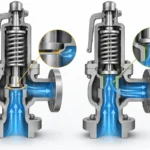
A spring-loaded safety valve can have an external lifting lever while the spring still provides the normal closing load. In a lever-and-weight design, by contrast, the lever is part of the mechanism that applies that load. Safety-valve terminology recognizes spring and lever-and-weight arrangements as forms of direct mechanical loading, while current manufacturer documentation confirms that spring-loaded valves can also be supplied with separate lifting levers.
For replacement work, that difference changes the task. An old description, photograph, visible lever, nominal connection size, or set-pressure value may contribute evidence, but none of those items alone proves that a proposed replacement has the same mechanism or can perform the same protection duty.
The practical sequence is: identify what the lever does → establish the loading mechanism → define the relief duty → verify the replacement candidate.
Are a Lever Safety Valve and a Lever-Loaded Safety Valve the Same Thing?
Not reliably. The word “lever” alone is not enough to establish the valve’s loading mechanism.
The ambiguity comes from two different engineering uses of the word.
A spring-loaded safety valve may have a lifting lever or easing lever that provides a manual means of acting on the spindle or disc mechanism. The valve remains spring-loaded because the spring supplies the normal mechanical closing load. Emerson’s Crosby EM documentation, for example, identifies the product as spring-loaded while separately offering lifting-lever configurations.
A lever-and-weight arrangement is different. There, the lever and weight form part of the mechanical system opposing the fluid force beneath the disc.
In this article, lever-loaded is used as descriptive shorthand for this lever-and-weight or weighted-lever loading concept. It should not be read as a claim that every standard, manufacturer, or jurisdiction uses “lever-loaded safety valve” as the same formal term.
So a legacy note that says only “lever safety valve” is not yet a complete mechanism description.
For replacement work, ask: does the lever lift the valve manually, or does the lever participate in loading the disc?
Until that is known, treating the two names as interchangeable can carry an identification error into the replacement specification.
What Is the Lever Actually Doing: Lifting the Valve or Loading the Disc?
The cleanest way to remove the ambiguity is to separate two specification axes.
| Specification question | What it identifies |
|---|---|
| What provides the normal closing load? | The loading mechanism—for example, a spring or a lever-and-weight arrangement. |
| Is a manual lifting/easing device fitted? | A separate operating feature that can mechanically act on the spindle/disc assembly for its intended function. |
A spring-loaded valve can therefore be described without contradiction as:
Primary closing-load mechanism: spring
Manual lifting arrangement: lifting lever fitted
Current manufacturer documentation confirms that this combination exists. The presence of the external lever does not transform the valve into a lever-and-weight loaded design merely because the lever is visible.
If the existing valve is confirmed to use spring loading, the ZOBAI Spring Loaded Safety Valves page is the appropriate product-family owner for further commercial review.
In a lever-and-weight construction, the lever is part of the normal loading arrangement. The difference is functional, not cosmetic.
Classify the valve by the source of its normal closing load, not simply by whether a lever is visible.
The point here is identification and replacement, not instructions for operating or testing a lifting lever. Those actions depend on the applicable manufacturer procedure and project requirements.
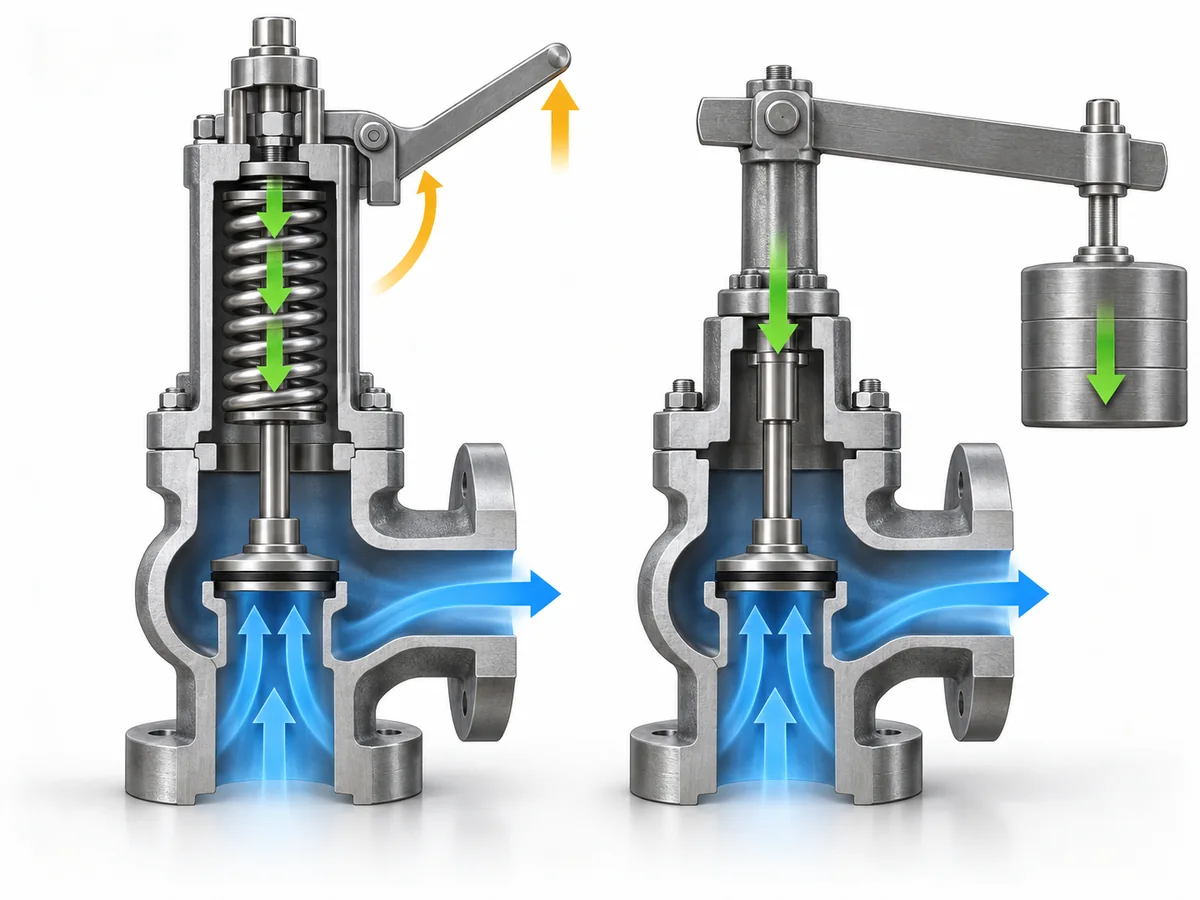
How a Lever-Loaded Mechanism Differs from a Spring-Loaded Valve with a Lever
The mechanical difference is straightforward: what provides the closing load?
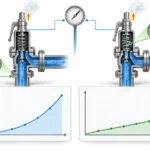
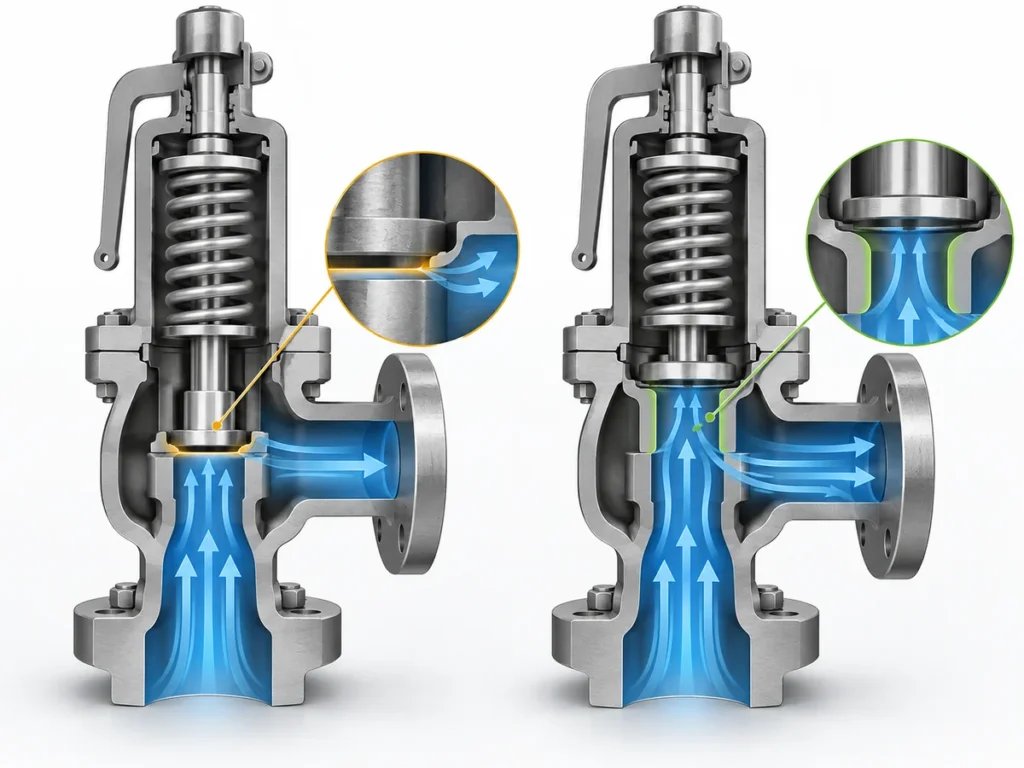
In a spring-loaded safety valve, spring force provides the direct mechanical loading that opposes the fluid force tending to lift the disc.
In a lever-and-weight arrangement, the lever and weight provide that mechanical loading.
Both can fall within the broader concept of a direct-loaded safety valve. The current ISO 4126-1:2013 remains the published Part 1 product standard for safety valves; within the ISO direct-loaded framework, spring, weight, and lever-and-weight are recognized as direct mechanical loading arrangements. “Direct-loaded” therefore should not be read as if it means “spring-loaded only.”
| Comparison point | Spring-loaded valve with lifting lever | Lever-and-weight / weighted-lever design |
|---|---|---|
| Normal closing-load source | Spring | Lever-and-weight arrangement |
| External lever can be present | Yes | Yes |
| Visible lever alone identifies loading method | No | No |
| Lever participates in normal closing load | Not merely because a lifting lever is fitted | Yes, where the lever-and-weight arrangement provides the load |
| Can belong to the broader direct-loaded category | Yes | Yes |
For replacement identification, this leads to a better question than “Do the valves look alike?”
What element supplies the closing load in the existing valve, and what element supplies it in the proposed replacement?
Nothing in this comparison means one architecture is universally superior, or that changing from one loading mechanism to another is automatically acceptable.
Why Legacy Names, Photos and Similar Appearance Can Misidentify a Replacement
Legacy replacement projects rarely begin with perfect documentation. Sometimes the original datasheet is missing and the available evidence is limited to a nameplate, photograph, old drawing, purchase description, or maintenance note.
Those clues are valuable, but they should not all be given the same weight.
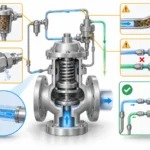
A photograph: A photograph may show an external lever, bonnet style, connection arrangement, or other visible features. It does not by itself prove that the valve is lever-and-weight loaded, because documented spring-loaded valves can also carry lifting levers.
A legacy name: A phrase such as “lever safety valve” tells you how the valve was described. Unless the terminology or construction is otherwise documented, it does not conclusively identify what provides the normal closing load.
The same connection size: The same nominal inlet size does not guarantee the same relieving capacity. Spirax Sarco safety-valve selection guidance distinguishes connection size from actual capacity and other application variables.
The same set pressure: Set pressure is an important input, but it is not a complete replacement specification. Required discharge capacity and relevant application conditions still have to be established.
For an uncertain legacy valve, a practical evidence order is:
- Original manufacturer and model information, if available.
- Original datasheet or sectional drawing.
- Legible nameplate and documented configuration.
- Rated/capacity or project records needed to establish the protected duty.
- Photographs and installation appearance as supporting evidence.
- Legacy shorthand descriptions as clues rather than final mechanism proof.
This is a practical verification hierarchy for the replacement task, not a formal regulatory hierarchy.
If the available evidence still cannot establish the loading mechanism or protected duty, keep the uncertainty visible. Replacing an unknown with a guessed specification does not remove the risk; it moves the uncertainty into procurement.
What Must Be Verified Before Replacing a Lever-Loaded or Uncertain Legacy Valve?
Once the existing valve has been identified as far as reasonably possible, replacement becomes a duty-and-evidence comparison, not a terminology comparison.
Matching the name is not enough. Matching the inlet size is not enough. Matching set pressure alone is not enough.
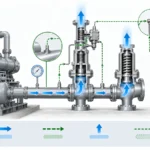
Safety-valve selection guidance distinguishes nominal size from capacity and identifies other application variables that may affect selection, including the disposal system, backpressure, construction/material requirements, operating characteristics, and required approvals.
Establish the Existing Valve and Protected Duty
Confirm, where applicable:
- existing manufacturer and model;
- available nameplate, datasheet, and drawing information;
- actual closing-load mechanism;
- protected equipment;
- service medium and relevant phase/state;
- set-pressure basis;
- required relieving duty or capacity.
The distinction between connection size and capacity deserves particular attention. Two valves may physically fit the same nominal connection while providing different relieving capacity.
If required relieving capacity has not yet been established, use the dedicated Safety Valve Sizing and Certified Relieving Capacity Guide rather than treating this terminology article as a sizing method.
Check the Installed-System Interface
Compare the candidate with the actual system, including as applicable:
- inlet and outlet connections;
- discharge or disposal arrangement;
- relevant backpressure conditions;
- material and seat/seal requirements;
- other operating characteristics that affect the chosen valve.
The exact checklist depends on the protected system. These are engineering-screening variables, not a claim that every installation requires the same data in the same way.
Confirm the Applicable Project and Jurisdiction Basis
A valve that appears mechanically similar may still be unacceptable under the rules governing a particular installation.
For example, current Virginia rules for power and high-pressure, high-temperature water boilers prohibit weighted-lever safety valves within that defined scope and specify direct spring-loaded pop-type replacement under the referenced boiler-code basis.
The example is intentionally narrow. It does not establish that weighted-lever safety valves are prohibited in every jurisdiction or application.
Likewise, ISO 4126-1 is a product standard; it should not by itself be treated as the application-acceptance rule for a specific installed system.
Compare the Proposed Candidate
The candidate needs enough documentation to show what is actually being offered and how it compares with the defined duty. Depending on the project, this may include:
- configuration and connections;
- capacity basis;
- applicable materials;
- required approvals or supporting documentation.
| Screening status | Meaning |
|---|---|
| PROCEED TO ENGINEERING REVIEW | Enough evidence exists to compare the candidate against the defined duty. This is not final approval. |
| HOLD | An important variable remains unresolved, such as the loading mechanism, required capacity, applicable project basis, or a relevant system interface. |
| REJECT KNOWN MISMATCH | Available evidence already shows that the candidate conflicts with a known requirement. |
PROCEED / HOLD / REJECT are engineering-screening labels used by this article. They are not classifications from a standard or regulation.
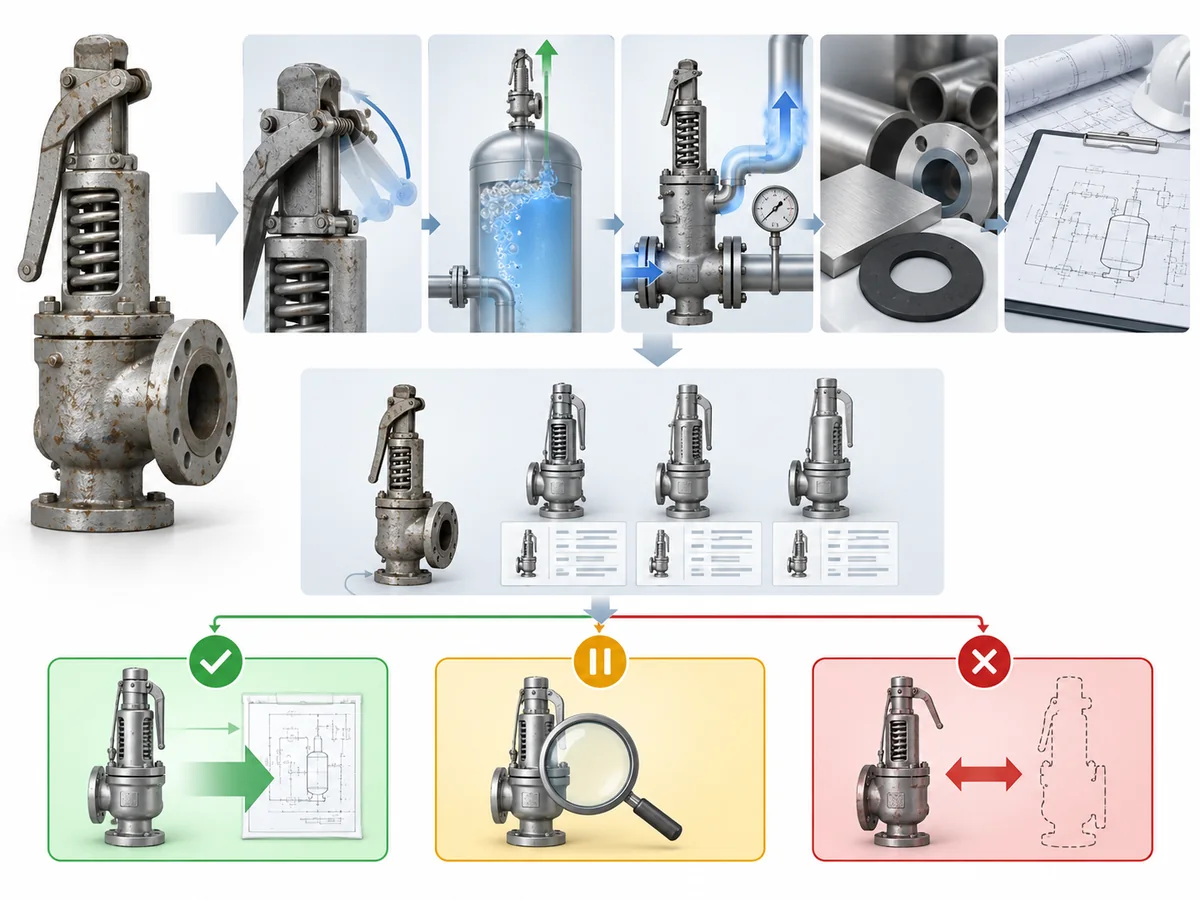
How to Specify the Replacement RFQ Without Repeating the Terminology Error
The final procurement step is to make the ambiguity impossible to miss.
Instead of sending a supplier only:
“Need replacement lever safety valve.”
separate what is known about the loading mechanism from what is known about the lifting arrangement.
A replacement RFQ can capture:
- existing manufacturer;
- existing model;
- available nameplate / drawing / datasheet;
- protected equipment;
- service medium;
- relevant service phase/state;
- set-pressure basis;
- required relieving duty or capacity;
- inlet connection;
- outlet connection;
- primary closing-load mechanism;
- manual lifting/easing arrangement;
- discharge/backpressure information where applicable;
- material / seat / seal requirements where relevant;
- applicable project specification, jurisdiction, or code basis;
- required certification or documentation;
- items the supplier must confirm for the proposed candidate.
If the original loading mechanism is not known, write unknown. Attach the evidence that is available rather than translating an ambiguous legacy term into a guessed mechanism.
For current lifting-lever product configurations, see ZOBAI Lever Safety Valves. That page owns the commercial product intent; this article remains focused on terminology, mechanism identification, and replacement risk.
The supplier response should make equally clear what construction is being proposed and which project information the recommendation depends on.
Need to replace an unidentified or legacy safety valve?
Send the available nameplate, model information, drawings or photos together with the protected service, set-pressure basis, and required relieving duty. The proposed replacement should be reviewed against the actual mechanism, duty, interfaces, and project requirements before it is treated as equivalent.