Share your medium, set pressure, temperature, size, standard, or datasheet, and our team will review your requirement and respond with the appropriate next step.
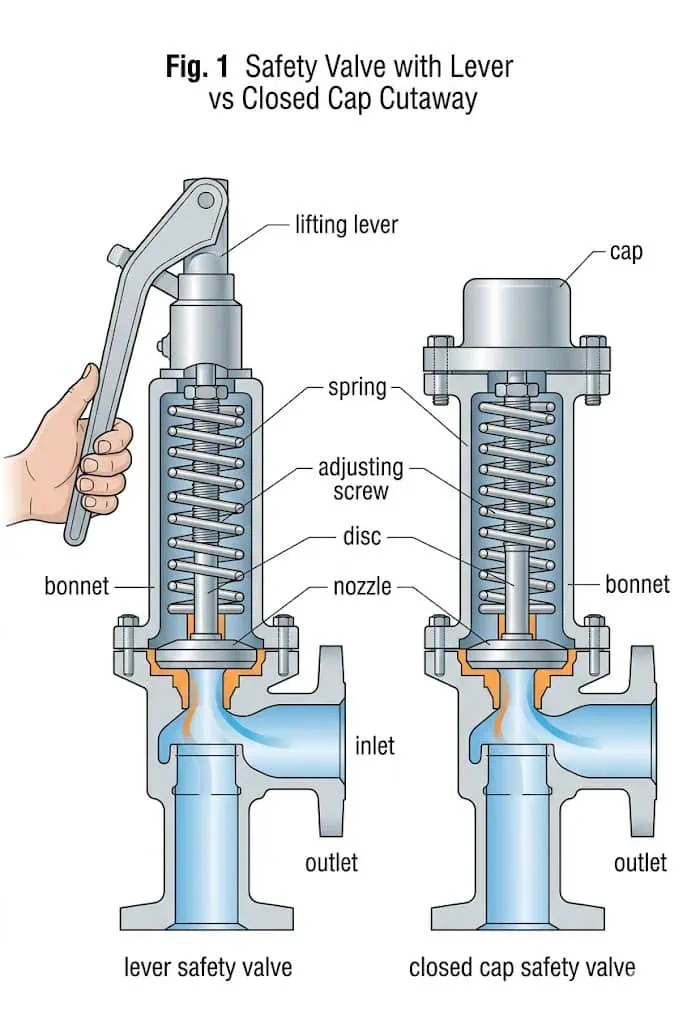
Safety Valve with Lever vs Closed Cap Safety Valve
Quick Answer: Safety Valve with Lever vs Closed Cap Safety Valve A safety valve with a lever uses an open or packed lifting lever to permit a controlled manual lift or mechanical function check where the adopted code, manufacturer instructions, plant procedure and service conditions allow it. A closed cap safety valve has no routine …
Quick Answer: Safety Valve with Lever vs Closed Cap Safety Valve
A safety valve with a lever uses an open or packed lifting lever to permit a controlled manual lift or mechanical function check where the adopted code, manufacturer instructions, plant procedure and service conditions allow it. A closed cap safety valve has no routine exposed lifting lever and is often selected when manual discharge, tampering, contamination or external exposure must be limited. The cap itself is not automatically gas-tight or pressure-containing; the complete cap, packing, bonnet, vent and discharge design must be reviewed.
Engineering summary: lever and cap selection is not a cosmetic detail. It affects manual function checking, external exposure, maintenance access, tamper prevention, leakage path, and documentation. It does not replace valve sizing, set pressure verification, back pressure review, material review, or seat tightness testing.
Pressure-protection boundary: lever or cap style does not establish protection adequacy. The set pressure must be coordinated with the protected equipment MAWP and applicable accumulation limits; required relieving capacity must be compared with manufacturer-supported or certified capacity; inlet pressure loss and outlet back pressure must remain within the approved design basis; and materials must remain compatible with the medium and relieving temperature.
Terminology boundary: “pressure relief valve” is commonly used as the umbrella term. “Safety valve” is often associated with rapid-opening steam or gas service, “relief valve” with liquid or modulating service, and “safety relief valve” with designs approved for specified compressible or incompressible duties. “PSV” is often a project tag and does not identify construction, capacity or certification by itself. See PRV vs PSV vs Safety Valve vs Relief Valve for terminology control.
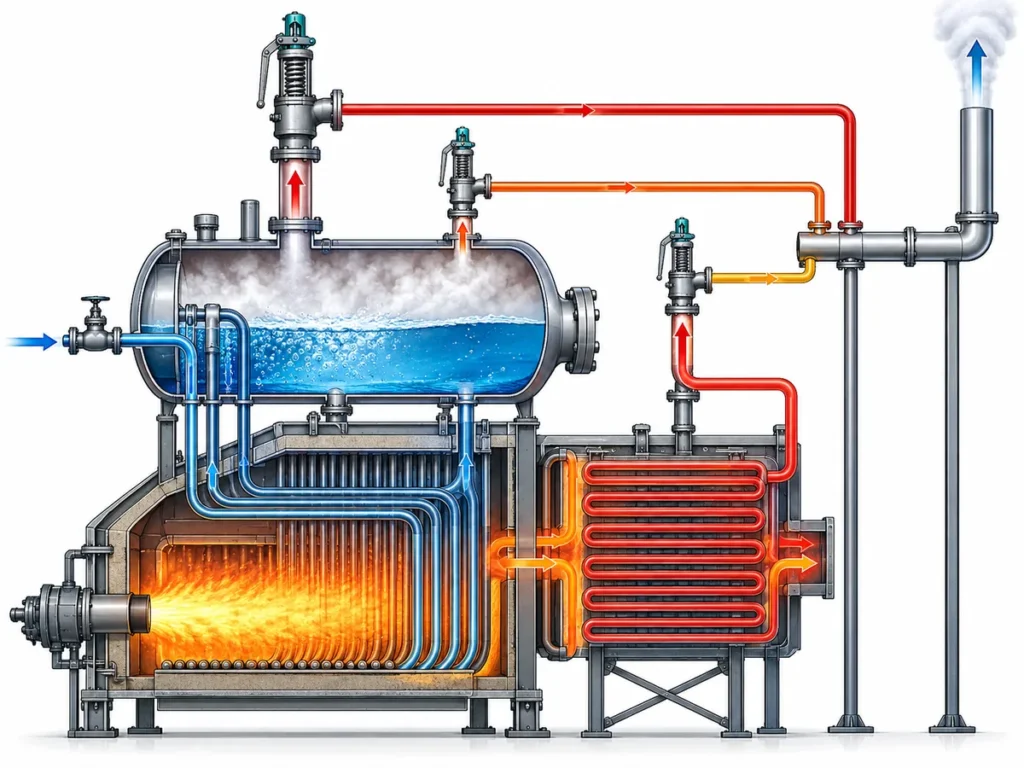
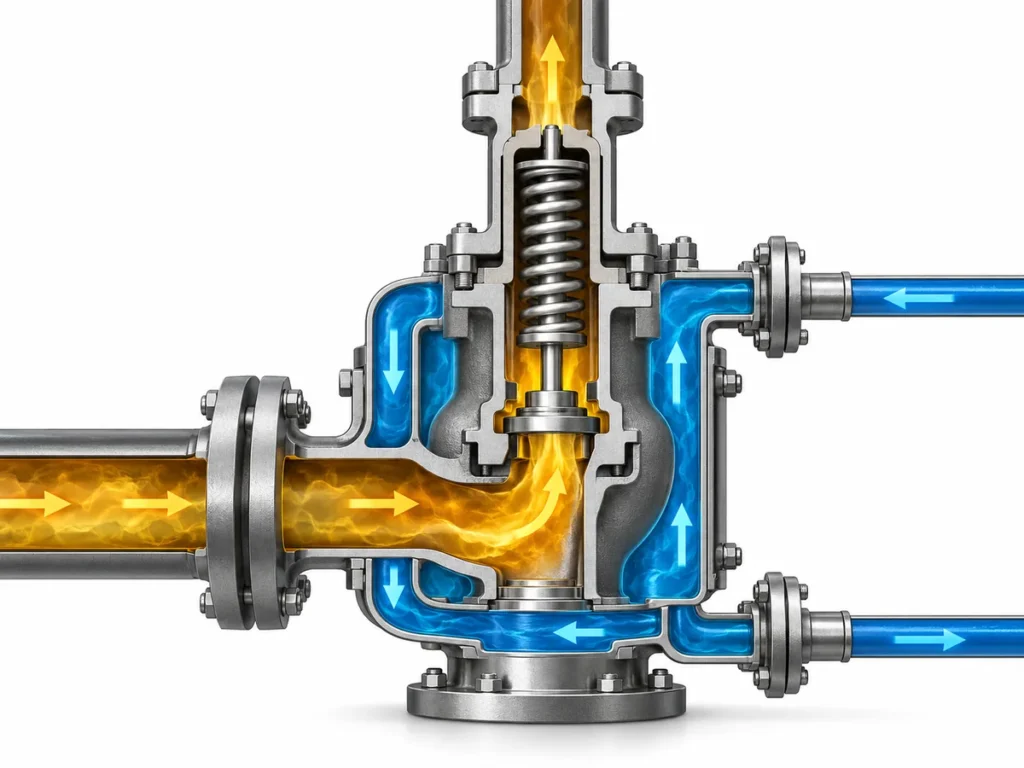
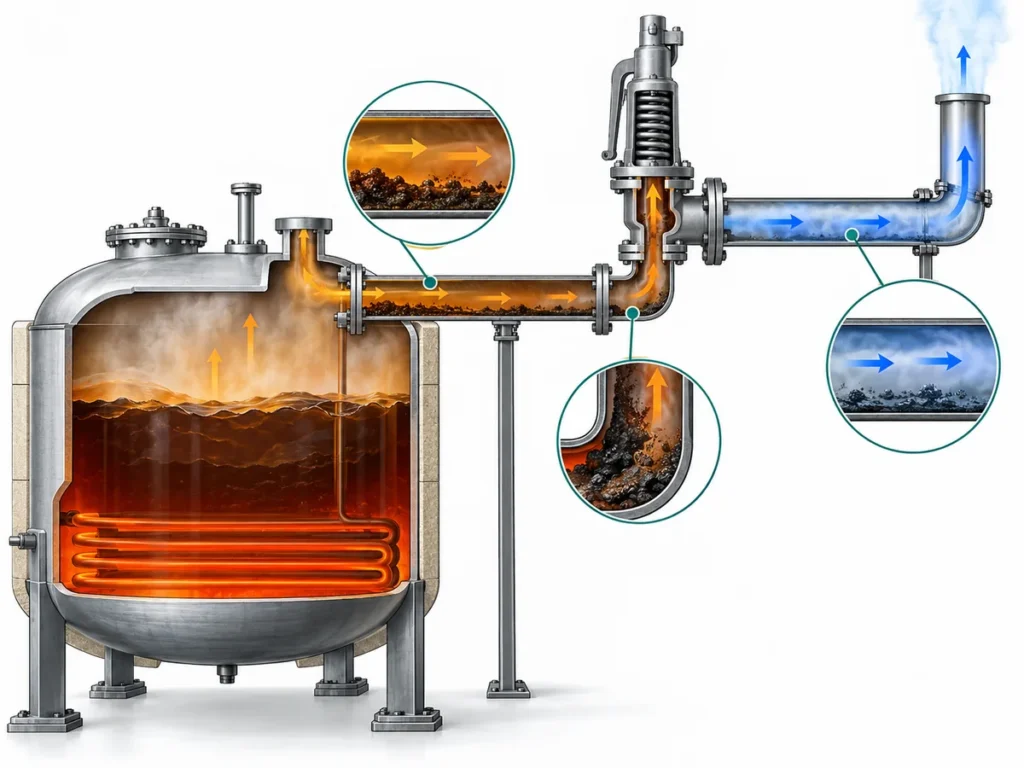
Valve-design boundary: lever and cap terminology is most commonly applied to direct spring-loaded valves. Pilot-operated pressure relief valves use a separate pilot/main-valve system and may use manufacturer-specific field-test connections rather than a mechanical try lever. Do not transfer a lever requirement from a spring-loaded valve to a pilot-operated design without design approval.
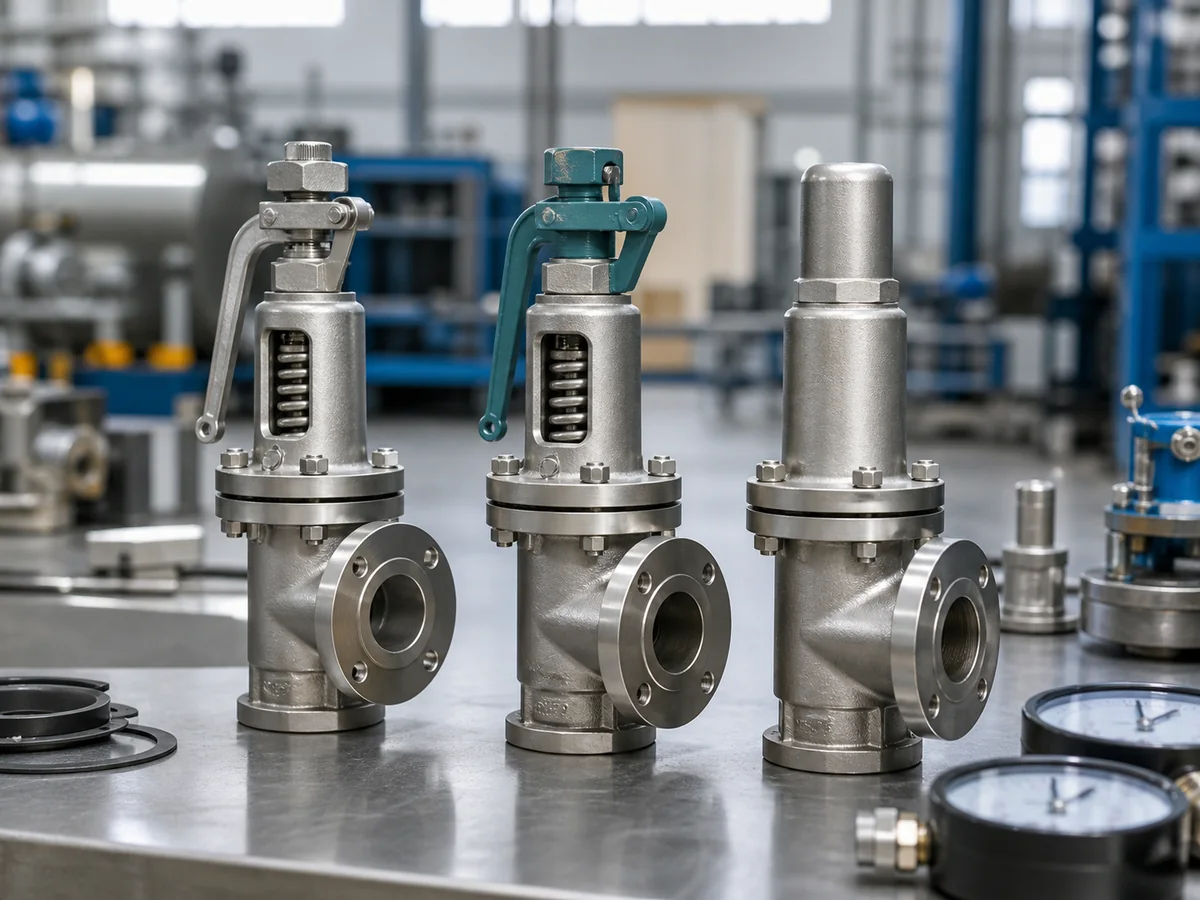
Safety valve with lever versus closed cap safety valve: the lever provides controlled manual lift access, while the closed cap protects the adjustment area and reduces routine external operation points.
Selection Question
Lever / Packed Lever Direction
Closed Cap Direction
Engineering Boundary
Is a manual lifting device required by the approved code, owner specification, or inspection procedure?
Review open or packed lever construction.
Do not select until the requirement is resolved.
Do not infer the requirement from service name alone.
Can the medium be released safely during a controlled manual lift?
Possible only with a defined procedure and safe discharge route.
Usually the safer starting point when exposed manual discharge is unacceptable.
Temperature, toxicity, flammability, noise and personnel access all matter.
Is manual lift required but external leakage must be reduced?
Review a packed lever and compatible packing.
Use only if the lifting requirement can be met another approved way.
Packed construction reduces a leakage path; it does not guarantee containment.
Is tamper resistance the main concern?
Requires lock, seal, guard and operating controls where accepted.
Usually provides fewer exposed operating points.
Final set-pressure adjustment still requires sealing and traceable records.
Does either arrangement prove protection capacity?
No.
No.
Required capacity, certified capacity, inlet loss and back pressure remain separate approvals.
What Is a Safety Valve with Lever?
Lifting Lever, Try Lever, and Manual Function Check
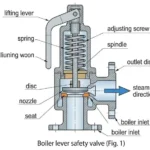
A safety valve with a lever includes an external lifting lever or try lever connected to the spindle or lifting mechanism. Under an approved procedure, the lever can raise the disc from the seat and provide limited evidence that the linkage and moving assembly are not completely seized. It does not reproduce a full relieving event or demonstrate rated lift, blowdown, stability or capacity.
Why it matters: the lever provides inspection access, not process control. It must not be used as a routine vent, blowdown valve, pressure regulator or shortcut for equipment depressurization. Improper lifting can side-load the spindle, drag contamination across the nozzle and disc, damage the seating surfaces, expose personnel to the discharge, and leave the valve leaking after reseating.
The permissible system pressure, lifting method and minimum duration of a lever check are design- and procedure-specific. A check performed at an unsuitable pressure can produce misleading results or inadequate cleaning flow across the seat. The approved procedure should define the pressure condition, personnel exclusion zone, discharge path, condensate drainage, observation criteria and post-lift leakage check.
Open Lever Safety Valve
An open lever safety valve has an exposed lifting mechanism. It is considered where manual lifting is required or permitted and where a controlled release can be directed safely, commonly in selected steam, compressed-air and utility duties. The exposed arrangement simplifies visual inspection but provides the greatest opportunity for weathering, accidental operation and misuse.
Packed Lever Safety Valve
A packed lever safety valve retains manual lift capability while adding packing around the spindle or lifting penetration to reduce one external leakage path. Packing is not a universal containment guarantee: the exact material, temperature rating, chemical compatibility, friction, adjustment and replacement interval must be confirmed, and bonnet venting and discharge routing remain separate requirements.
Where Lever Safety Valves Are Commonly Used
Lever safety valves are commonly reviewed for power and process steam, compressed-air receivers, hot-water equipment and selected clean utility-gas systems. Service name alone is not enough: the RFQ must identify the protected equipment, adopted code, manual-lift requirement, safe discharge route, relieving temperature, medium hazard and inspection procedure.
A controlled lever lift can provide evidence that the spindle and disc assembly are capable of mechanical movement at the time of the check. It may also reveal a seized linkage, external corrosion, damaged packing, an obstructed discharge route, or obvious failure to reseat. The result is limited to the approved test condition and should be recorded with the valve tag, pressure condition, operator, date, discharge observation, and any leakage found afterward.
Lever Check May Help Identify
Lever Check Does Not Prove
Free mechanical movement of the lifting linkage and disc assembly
The calibrated set pressure
Obvious seizure, external corrosion, packing resistance or linkage damage
Required or certified relieving capacity
Whether the valve appears to reclose after the approved check
Rated lift, blowdown or stable performance during a full relief event
Whether discharge creates an immediate access, drainage or personnel hazard
Acceptable inlet pressure loss or outlet back pressure
Whether new leakage is visible or audible after lifting
Compliance with the equipment code or project certification route
Practical limit: forcing the lever, applying sideways force or lifting outside the approved pressure range can damage the spindle, linkage or seat. A successful movement check does not authorize continued service if leakage, abnormal resistance, incomplete reseating, obstructed discharge or damaged packing is observed.
What Is a Closed Cap Safety Valve?
Closed Cap, Screwed Cap, and Sealed Cap Meaning
A closed cap safety valve uses a removable or fixed cap over the adjusting screw and upper spindle area without a routine exposed lifting lever. Manufacturers may use terms such as screwed cap, plain cap, sealed cap or gas-tight cap, but these terms are not interchangeable unless the drawing and datasheet define the sealing construction. “Closed cap” must not be interpreted as a guaranteed pressure-tight enclosure.
How a Closed Cap Protects the Adjustment Area
A closed cap shields the adjusting screw, spindle end and seal from accidental contact, dirt and unauthorized access. It can reduce exposed operating points, but external leakage performance still depends on the cap gasket, threads, packing, bonnet arrangement, vent path and the pressure boundary defined by the manufacturer.
Closed Cap vs Closed Bonnet: Do Not Mix These Terms
Closed cap and closed bonnet are not the same term. The cap describes the arrangement around the upper adjustment or lifting mechanism. The bonnet describes the spring chamber structure. A valve may have a closed bonnet, an open bonnet, a lever, a packed lever, or a closed cap depending on the full design. Confusing these terms in an RFQ can lead to the wrong valve construction.
Closed cap arrangements are commonly evaluated for flammable, toxic or corrosive service; outdoor or dirty locations; tamper-sensitive installations; and systems where routine exposed manual lifting is undesirable. Selection remains conditional: the valve still requires an approved method for setting, testing, inspection and maintenance, and any bonnet vent or pilot vent must terminate at a safe location.
For hazardous, corrosive or sour service, review the cap together with bonnet construction, vent routing, gasket and packing materials, trim metallurgy, seat-tightness requirement, discharge piping and environmental conditions. A closed cap cannot compensate for unsuitable materials, an unsupported capacity rating, excessive back pressure or an unsafe outlet system.
Composite field scenario: An RFQ called for a “closed type safety valve.” The supplier delivered a closed-bonnet valve with an exposed lever, while the purchaser expected a closed cap with no external lift point. The cause was ambiguous terminology, not a manufacturing defect. The corrective action was to revise the datasheet so that lifting arrangement, cap construction, bonnet construction, packing, vent and adjustment seal were separate line items. Future quotations required a sectional drawing and a formal deviation list.
Cap, Lever, Bonnet, and Spring Chamber Are Separate Specifications
A technically complete datasheet separates the lifting arrangement from the cap and bonnet construction. “Closed type,” “sealed type,” or “with cover” is not precise enough for procurement because each supplier may interpret the wording differently.
Specification Item
What It Describes
Typical Options
Why It Matters
Lifting arrangement
How the disc can be lifted manually, if permitted
Open lever, packed lever or no exposed lifting lever, depending on the approved design
Inspection access, external exposure and misuse risk
Temporary test accessory
A device used to restrain lift during an approved test or maintenance activity
Test gag or gag screw, only where supplied by the manufacturer
It is not a lifting device and must be removed before the valve protects equipment
Cap arrangement
How the adjusting screw and spindle end are covered
Screwed cap, sealed cap, plain cap or manufacturer-specific enclosure
Tamper protection, contamination control and access after calibration
Bonnet construction
How the spring chamber is enclosed or ventilated
Open bonnet, closed bonnet or vented enclosed bonnet
Spring cooling, environmental exposure, process isolation and vent routing
Packing and cap gasket
The local sealing system around a packed lever or removable cap
Graphite, elastomer, polymer or project-specific sealing material
Temperature limit, chemical compatibility and fugitive leakage
Adjustment seal
How unauthorized set-pressure changes are detected or prevented
Wire seal, lock, serialized seal or jurisdiction-specific control
Calibration traceability and return-to-service approval
Lever vs Closed Cap: Engineering Comparison Table
Manual Operation and Inspection Access
The main advantage of a lever is manual inspection access where permitted. The main advantage of a closed cap is reduced exposed operation and better protection against unauthorized adjustment or manual discharge. The right choice depends on service hazard and inspection philosophy, not appearance.
Leakage Path and External Exposure
Open lever arrangements may expose the lifting mechanism and create a path where process medium or condensate can be released during manual lifting. Packed lever arrangements reduce this risk but still require sealing review. Closed cap arrangements reduce routine external exposure but require proper testing and documentation.
Tamper Prevention and Adjustment Protection
Closed cap designs are often preferred where tamper prevention matters. A lever can be useful for testing, but it also gives operators a visible device that may be misused. For critical service, sealing after adjustment and repair should be documented.
Maintenance and Documentation Differences
Lever valves may require inspection of the lifting mechanism, packing, spindle movement, and operator safety. Closed cap valves may require cap removal during maintenance, resealing, and documentation of adjustment. In both cases, set pressure, seat tightness, and mechanical movement must be verified according to the applicable procedure.
Item
Safety Valve with Lever
Closed Cap Safety Valve
Engineering Note
Manual lifting
Available where permitted
No routine exposed lever
Manual lift must be allowed by service condition and project rules
Inspection access
Useful for functional checks
Requires maintenance or test procedure
Closed cap does not replace testing
External exposure
Higher with open lever
Lower routine exposure
Important for hot, toxic, flammable, or corrosive media
Tamper risk
Higher if operators misuse lever
Lower exposed operation point
Final adjustment should be sealed and documented
Steam / air service
Often reviewed where manual lift is required
Possible only if permitted by project requirement
Verify code and jurisdiction before ordering
Hazardous service
Open lever usually higher risk
Often better starting choice
Packed lever may be reviewed if manual lift is required
Check cap sealing, adjustment protection, test record
Both require set pressure and seat tightness verification
Application matching should consider service medium, hazard level, discharge safety, manual lift requirement, and whether open lever, packed lever, or closed cap is more appropriate.
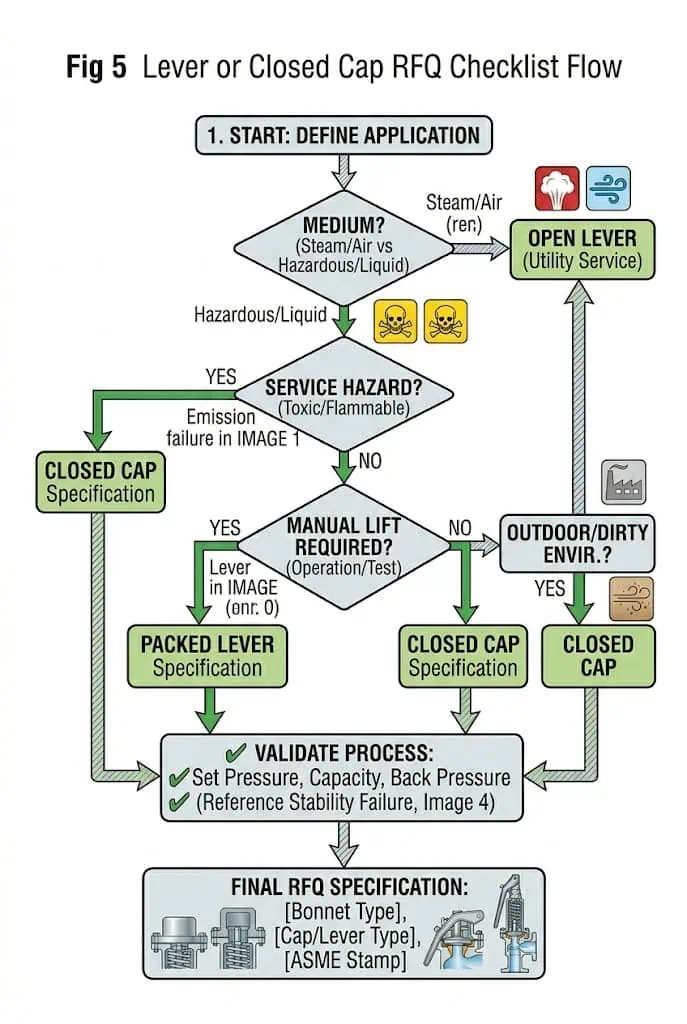
Selection Decision: Start with the Test Requirement and Exposure Risk
Confirm the protected equipment and governing code basis. Boiler, pressure vessel, hot-water and process services may not use the same lifting-device rules.
Confirm whether manual lift is required, permitted, optional or prohibited. Record the exact owner, jurisdictional or inspection requirement instead of relying on a catalogue convention.
Evaluate the released medium. Consider temperature, toxicity, flammability, corrosiveness, phase, noise and the direction of discharge during a test.
Select open lever, packed lever or closed cap. Then specify bonnet, packing, cap gasket, vent and sealing requirements separately.
Complete the pressure-protection review. Verify set pressure, required capacity, certified capacity, inlet loss, back pressure, materials, seat tightness and repair documentation.
When Should You Choose a Safety Valve with Lever?
Boiler, Steam, Air, and Utility Service
A safety valve with lever is commonly reviewed for boiler steam, utility steam, compressed air, and some hot water systems. In these services, manual lift or try lever checking may be required by the project specification, local inspection practice, or plant maintenance procedure. The medium must be safe to discharge during a controlled test.
Manual Test or Try Lever Requirement
If the project requires a manual lifting device, the RFQ should state it clearly. The valve should not be ordered only by size, pressure rating, or previous model number. Manual lift requirement should be checked together with set pressure, relieving capacity, temperature, discharge direction, and personnel safety.
Service Conditions Safe for Controlled Manual Lift
A lever may be appropriate when controlled manual lifting will not release toxic, flammable, corrosive, or dangerously hot media into an unsafe area. Even in steam service, operators must consider discharge direction, noise, thermal hazard, and safe access.
When an Open Lever Is Not Enough and Packed Lever Should Be Reviewed
If the project requires a lifting lever but the medium should not be freely exposed to atmosphere through an open lifting arrangement, a packed lever should be reviewed. The packing arrangement, temperature limit, medium compatibility, and inspection plan should be confirmed before final selection.
Composite field scenario: A boiler steam safety valve matched the connection and set pressure but arrived with a closed cap. Site inspection required an approved lifting device, so the valve could not be accepted. Procurement had copied the previous model number without recording the adopted code and inspection requirement. The order was corrected by confirming the lifting-device requirement, discharge safety and manufacturer-approved construction before replacement.
When Should You Choose a Closed Cap Safety Valve?
Hazardous, Flammable, Toxic, or Corrosive Service
Closed cap safety valves are often a better starting choice when manual exposure to the medium would be unsafe. This includes flammable gas, toxic vapor, corrosive gas, sour service, hydrocarbon vapor, or any service where an exposed lifting lever could create a personnel, environmental, or ignition risk.
Tamper-Sensitive or Leakage-Sensitive Applications
Closed cap designs help reduce exposed operator access to the adjustment area. In tamper-sensitive installations, this can reduce the risk of unauthorized manual lifting or adjustment. In leakage-sensitive service, the closed cap arrangement may also support a cleaner containment philosophy, although final leakage performance still depends on valve design, seat condition, and testing.
Outdoor, Dirty, or Contamination-Sensitive Installations
Outdoor dust, rain, salt spray, and process contamination can affect exposed mechanisms. A closed cap arrangement can help protect upper valve components from contamination, but it does not eliminate the need for regular inspection, corrosion review, and maintenance planning.
When Closed Cap Does Not Replace Proper Testing
A closed cap should not be used as an excuse to skip functional verification. Set pressure testing, seat tightness testing, cap sealing, and documentation remain necessary. If manual lifting is not available, bench testing or approved maintenance procedures become more important.
Composite field scenario: An open-lever valve was copied from utility-air service into a flammable-gas duty. A planned manual check would have released gas near an access platform. The review stopped the test, reassessed the hazardous area, discharge route, bonnet venting, materials and seat-tightness requirement, and selected an approved configuration with fewer exposed release paths. The prevention measure was to include medium hazard and manual-discharge restrictions in the RFQ.
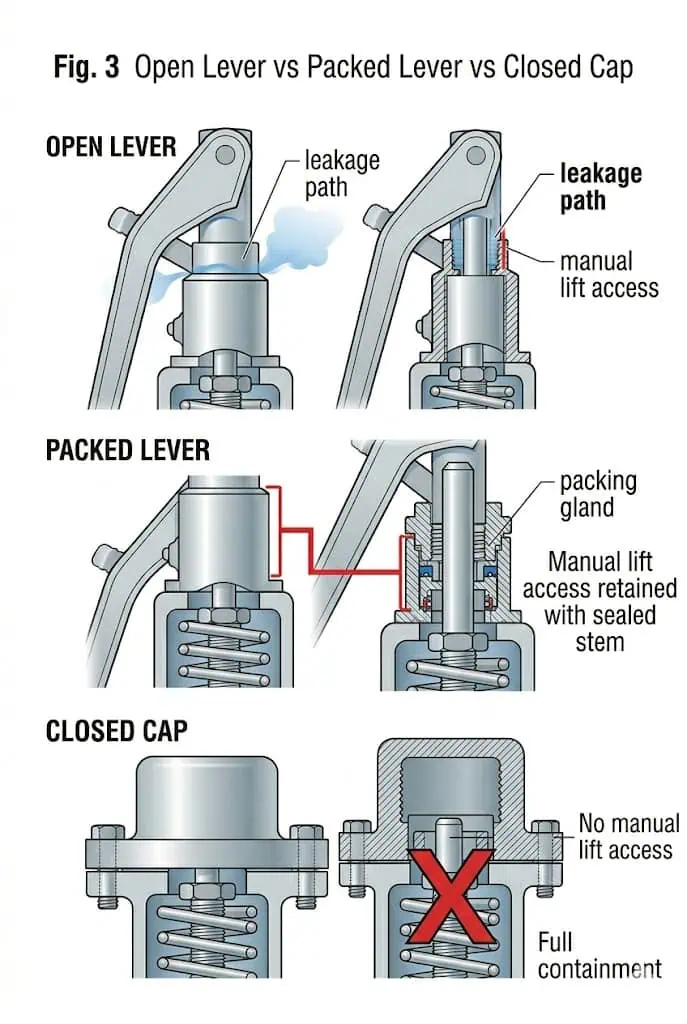
Open lever, packed lever, and closed cap arrangements provide different balances between manual lift access, leakage path control, adjustment protection, and service safety.
Open Lever vs Packed Lever vs Closed Cap
Open Lever Where Controlled Manual Lift Is Safe
Open lever designs are considered only where manual lifting is permitted and the discharge can be controlled without exposing personnel, creating an ignition hazard or releasing an unacceptable medium. “Safe to lift” does not mean the valve may be used for routine venting.
Packed Lever for Manual Lift with Reduced External Leakage Risk
Packed lever designs provide a manual lifting function while reducing the external leakage path around the lever mechanism. They are often reviewed when a lifting lever is required but the medium should not be freely exposed through an open lever arrangement.
Closed Cap for No Routine External Manual Lift
Closed cap designs are preferred when routine exposed manual lifting is not required or not safe. They help protect the adjustment area and reduce tamper risk. However, they require proper maintenance access and testing procedures.
Selection Table by Medium and Site Risk
Cap / Lever Type
Manual Lift
External Exposure / Leakage Path
Typical Service
Avoid When
Open lever
Yes
Most exposed; not a containment feature
Selected steam, air, and utility service where discharge is safe
Medium is toxic, flammable, corrosive, or unsafe to expose
Packed lever
Yes
Reduced local leakage path; packing limits apply
Service requiring manual lift with reduced external leakage risk
Packing material is not compatible or manual lift is not permitted
Closed cap / screwed cap
No routine exposed lever
Fewer exposed operating points; containment is design-specific
Hazardous, corrosive, tamper-sensitive, or leakage-sensitive service
Project code or inspection procedure requires exposed manual lift
Sealed cap
No routine exposed lever
Tamper or adjustment protection; sealing performance is design-specific
Services requiring tamper control or adjustment protection
Frequent field lifting is required and permitted
Component and Material Checks for Lever and Cap Assemblies
Component
Failure or Compatibility Concern
Review Before Approval
Lever arm, pin and fork
Corrosion, looseness, wear, bending or unintended side load on the spindle
Material, mechanical travel, guards, retaining hardware and environmental exposure
Spindle and lifting connection
Misalignment, galling, damaged threads or restricted movement
Straightness, clearance, assembly orientation and manufacturer limits
Packed-lever seal
Hardening, compression loss, swelling, chemical attack or excessive friction
Exact packing grade, temperature, medium compatibility and replacement interval
Cap and cap gasket
Loose cap, damaged threads, gasket degradation, contamination entry or loss of tamper control
Cap material, gasket grade, tightening procedure, seal and access control
Bonnet vent, where required
Plugging, unsafe routing or hidden leakage
Manufacturer drawing, vent destination, drainage and inspection access
Seat, disc and nozzle
Damage after manual lifting, contamination, corrosion or repeated impact
Post-lift leakage, seat condition, material compatibility and seat-tightness criterion
Material boundary: a closed cap or packed lever does not make the valve chemically compatible. Review the body, nozzle, disc, guide, spindle, spring, bellows where fitted, packing, cap gasket and any component exposed through the bonnet or lifting arrangement. For H2S-containing oil-and-gas production service, the applicable ISO 15156 / NACE MR0175 material route and project environmental limits should be confirmed; that standard does not automatically cover every downstream refining duty.
Standards, Inspection, and Testing Considerations
Engineering Check
What It Controls
Lever / Cap Relevance
MAWP and accumulation basis
The protected-equipment pressure boundary and permitted pressure rise during the identified relief case
Neither a lever nor a closed cap changes the equipment protection limit
Set pressure
The specified pressure at which the valve is adjusted to begin its opening response under the applicable test basis
A lever movement check does not calibrate or verify set pressure
Overpressure
Pressure increase above set pressure at which rated or required relieving performance is evaluated
Cap style does not provide additional allowable overpressure
Accumulation
Pressure increase above MAWP during discharge, subject to the applicable equipment code and relief scenario
Must be resolved at system level, not by lever selection
Blowdown and reseating
The pressure interval between opening and stable reclosing
Seat damage, spindle side load or back pressure can worsen reseating and leakage
Required vs supported relieving capacity
Whether the selected model, orifice and relieving conditions can pass the calculated relief load
Connection size, cap style and lever style are not capacity evidence
Inlet pressure loss
The pressure available at the valve inlet and the risk of unstable opening or chatter
A lever cannot correct restrictive inlet piping or pipe strain
Superimposed and built-up back pressure
Opening force balance, effective capacity, stability, blowdown and reseating
Review conventional, balanced or pilot-operated construction separately from cap style
Seat tightness
Acceptable closed-seat leakage after setting, repair or operation
Lever misuse, contamination, unsuitable seat materials or poor repair can increase leakage
ASME Boiler and Pressure Vessel Context
Lever and cap requirements depend on the protected equipment and the adopted code edition, not on a generic catalogue rule. ASME BPVC Section I may govern power-boiler applications, Section VIII may govern pressure vessels, and Section XIII contains overpressure-protection requirements used with the applicable construction section. The project must still confirm jurisdictional adoption, valve certification scope, fluid, temperature, manufacturer design and owner requirements.
Spring-loaded versus pilot-operated boundary: this comparison primarily addresses spring-loaded safety valves with lever or cap options. Pilot-operated pressure relief valves have pilot tubing, sensing and vent arrangements that require a separate cleanliness, back-pressure, field-test and failure-mode review.
Manual Lift Device Requirements: Confirm the Applicable Rule
Do not select or purchase a valve based on a universal statement such as “all safety valves require levers” or “closed caps are always acceptable.” The lifting-device rule must be checked in the adopted edition for the protected equipment and service, together with jurisdictional interpretations, manufacturer certification and owner inspection practice. When the requirement cannot be confirmed, place the order on technical hold.
Set Pressure Test, Seat Tightness, and Sealing
Lever or cap arrangement does not replace set-pressure calibration or seat-tightness testing. A valve may move freely yet open at the wrong pressure, and it may open at the correct pressure yet leak beyond the project acceptance criterion. Where API 527 applies, use the specified valve type, seat material, test medium, test pressure and leakage method; do not describe the result as “zero leakage” unless the applicable specification and test method support that claim. See API 527 Seat Tightness Test.
Inspection Records and Post-Maintenance Recalibration
After adjustment, disassembly, cap removal that affects the seal, packing work or seat repair, complete the applicable set-pressure, functional and seat-tightness tests, restore the adjustment seal, and record the as-found and as-left condition. Where National Board authorization applies, current VR repair requirements are located in the mandatory NBIC Part 4 and associated accreditation documents; the required repair or test-only route must be established before return to service.
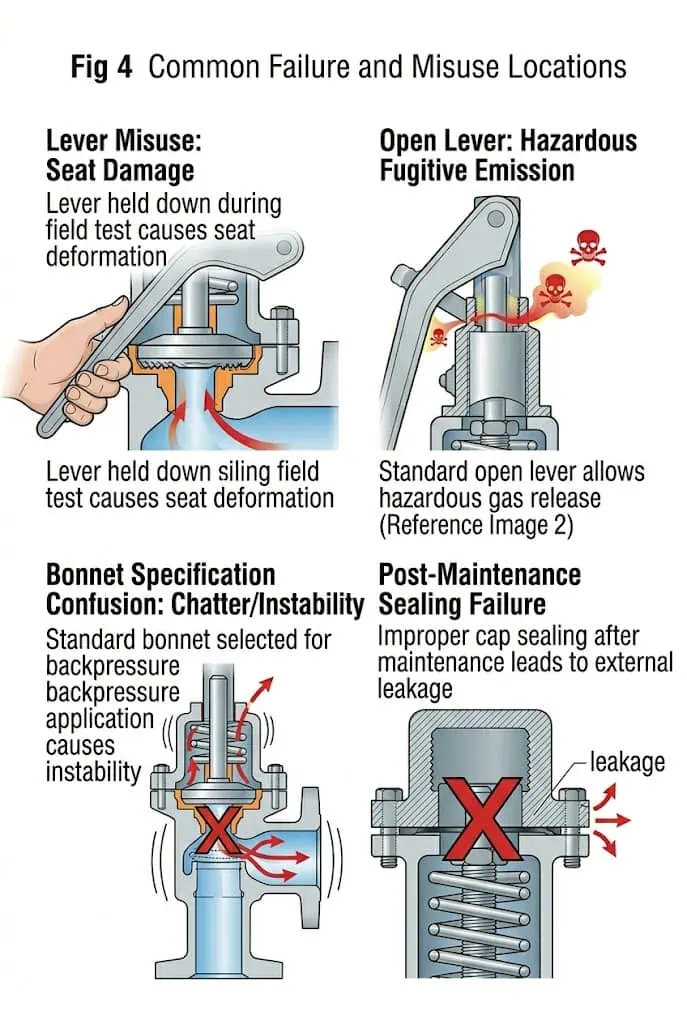
Common problems include lever misuse as a vent, seat damage, external exposure through open lever arrangements, cap and bonnet specification confusion, and missing post-maintenance sealing.
What Each Test or Record Actually Demonstrates
Evidence
What It Can Support
What It Cannot Prove by Itself
Controlled lever-lift record
Mechanical movement and observed reclosing under the recorded condition
Calibrated set pressure, full lift, certified capacity or acceptable back pressure
Set-pressure test certificate
The specified opening adjustment under stated test conditions
Required capacity, installed stability or safe manual discharge
API 527 or project seat-tightness report
Closed-seat leakage under the specified method and pressure
Capacity, blowdown, cap containment or lever suitability
Certified or documented relieving capacity
Supported flow for the identified model, orifice, fluid and pressure basis
Whether the lever or cap style is safe for the site
Repair and resealing record
Controlled work, parts, final setting, test results and adjustment security
Whether the original selection or piping system remains suitable after a process change
Return-to-Service Controls After Lever, Cap, Packing, or Seat Work
Record the as-found condition. Capture tag, serial number, seal condition, visible leakage, set-pressure result where tested, lever movement, cap condition and reported operating problem.
Inspect the complete movement path. Check the lever, pin, fork, spindle, guide, disc, nozzle and any packing for corrosion, wear, distortion, seizure or unauthorized modification.
Control parts and materials. Verify the spring, seat parts, packing, cap gasket, fasteners and replacement components against the approved bill of material or repair procedure.
Reassemble and test under an approved procedure. Complete the required pressure-boundary, set-pressure, functional and seat-tightness tests; a visual check or lever movement alone is insufficient.
Restore adjustment security. Refit the specified cap, lock, seal and nameplate controls, and record the final settings and test instruments.
Correct the system cause. Address unsafe operator practice, discharge routing, contamination, piping load, back pressure or process changes before reinstalling the valve.
Common Selection Mistakes and Field Problems
Using Open Lever on Hazardous or Toxic Service
An exposed lever can create an unacceptable release path on toxic, flammable, corrosive or very hot service. The risk includes deliberate or accidental lifting, leakage around the mechanism, unsafe discharge direction, ignition, personnel exposure and environmental release. A closed cap or packed lever may reduce one risk, but only an approved full-valve and discharge-system design establishes suitability.
Using Closed Cap Where Manual Lift Is Required by Project Specification
A closed cap can be rejected when the adopted code, owner specification or inspection procedure requires an approved lifting device. Resolving the requirement after manufacture can affect certification, testing, delivery and warranty; a field-added lever is not an acceptable assumption.
Treating the Lever as a Pressure Control Device
A lever is not a pressure control device. Using it as a routine vent can scratch the seat, introduce debris into the seating area, damage sealing surfaces, or cause leakage after reseating. If a system needs routine venting or pressure control, a separate valve or control device should be reviewed.
Confusing Cap Type with Bonnet Type
Cap type and bonnet type must be specified separately. “Closed type” is not enough. The RFQ should state whether the valve needs open lever, packed lever, closed cap, screwed cap, sealed cap, open bonnet, closed bonnet, or another manufacturer-specific design.
Mistake
Typical Cause
Field Symptom
Risk
Prevention
Open lever used on hazardous medium
Copied from utility service
Unsafe exposure during manual lift
Personnel, environmental, or ignition risk
Define medium hazard and leakage restrictions
Closed cap used where manual lift is required
Inspection requirement not reviewed
Valve rejected during site inspection
Rework, delay, and replacement cost
Verify code and owner inspection requirement
Lever used as routine vent
Operator misuse
Seat leakage after operation
Maintenance cost and product loss
Train operators and provide proper venting device
Packed lever not specified where needed
Open lever selected by habit
External leakage concern
Unsafe or non-compliant installation
Review packed lever when manual lift and containment are both needed
Cap type confused with bonnet type
Unclear RFQ wording
Wrong construction supplied
Technical clarification and delivery delay
Separate cap, lever, and bonnet requirements
Composite field scenario: A utility-steam valve developed seat leakage after operators repeatedly used the lever to depressurize equipment. The lever had become a substitute for a proper vent. Inspection found seating-surface damage and contamination. The valve was repaired, reset and leakage-tested, while the system received a dedicated depressurization route and an operating rule that prohibited routine lever use.
A complete RFQ should define medium, service hazard, set pressure, required relieving capacity, back pressure, cap type, lever type, bonnet type, seat tightness, and documentation requirements.
Common lesson from the field scenarios: the wrong result did not come from the cap or lever alone. It came from carrying a familiar construction from one service into another without rechecking the inspection requirement, medium hazard, discharge path, operator procedure, capacity basis and post-maintenance test controls.
RFQ Checklist: Data Needed to Choose Lever or Closed Cap
Process Medium and Site Safety Data
The RFQ should identify the medium, fluid phase, toxicity, flammability, corrosiveness, temperature hazard, outdoor exposure, and whether manual discharge can be safely controlled at the installation site.
Pressure, Temperature, and Capacity Data
Cap or lever selection must be reviewed together with set pressure, operating pressure, required relieving capacity, relieving temperature, back pressure, and discharge destination. A correct lever arrangement cannot compensate for an undersized valve.
Procurement warning: matching the inlet connection, outlet connection, pressure class, or previous model number is not enough. Certified relieving capacity, orifice area, inlet pressure loss, and outlet system resistance must still be reviewed when the valve is replaced or when the protected equipment duty has changed.
Lever Type, Cap Type, Bonnet Type, and Seat Requirement
State the required lever or cap arrangement clearly: open lever, packed lever, closed cap, screwed cap, sealed cap, or no routine exposed lever. Also state bonnet type separately when relevant. Include seat material, seat tightness requirement, and whether the valve must be resealed after adjustment.
Testing, Documentation, and Compliance Requirements
Specify the adopted code and edition, certification or marking scope, set-pressure test, seat-tightness test, material certificates, capacity evidence, inspection record, nameplate data, adjustment seal, repair authorization and required document language. If the edition, jurisdiction or lifting-device rule is unresolved, identify it as a technical hold point rather than allowing a supplier assumption.
Process medium and fluid phase
Steam, air, gas, liquid, vapor, or two-phase service
Toxic, flammable, corrosive, or hazardous classification
Operating pressure and set pressure
Protected equipment MAWP and applicable accumulation basis
Required relieving capacity
Operating and relieving temperature
Back pressure and discharge destination
Valve design: conventional spring-loaded, balanced, pilot-operated, or another approved construction
Manual lift requirement
Open lever, packed lever, closed cap, or screwed cap
Bonnet type: open bonnet or closed bonnet
Seat material and seat tightness requirement
Body, trim, spring, gasket, and packing material
Connection standard and pressure class
Installation orientation and access condition
Applicable code and jurisdiction
Set pressure test and documentation requirement
Technical Approval Hold Points Before Purchase
Hold Point
Required Evidence
Reason for Holding the Order
Lever requirement resolved
Current code, owner or jurisdictional requirement recorded on the datasheet
Prevents a closed cap being supplied where manual lift is required, or an exposed lever being supplied where it is unsafe
Prevents “closed type” wording from producing the wrong construction
Pressure-protection duty approved
Relief scenario, required capacity, set pressure, relieving conditions and supported valve capacity
Confirms the valve protects the equipment rather than merely fitting the piping
Material and leakage boundary approved
Body, trim, packing, cap gasket, seat and exposed-component materials; seat-tightness requirement
Controls corrosion, fugitive leakage, sticking and temperature limits
Testing and documentation approved
Inspection and test plan, calibration record, material certificates, sealing record and repair route
Avoids shipment or commissioning delays and establishes traceability
Quotation control: the supplier should list any deviation from the requested lever, cap, bonnet, packing, materials, test method, marking or document package. A silent substitution from packed lever to open lever, from closed cap to closed bonnet, or from the specified seal material to a generic equivalent should be treated as an engineering deviation.
Project review CTA: Not sure whether your safety valve should use an open lever, packed lever, closed cap, or screwed cap? Send ZOBAI your medium, set pressure, operating pressure, relieving capacity, temperature, back pressure, discharge location, service hazard, cap / lever requirement, bonnet requirement, seat tightness requirement, and applicable code. These details help confirm whether a lever safety valve, packed lever design, or closed cap safety valve should be evaluated.
FAQs About Safety Valves with Lever and Closed Cap Safety Valves
What is a safety valve with lever?
A safety valve with lever has an external lifting lever or try lever that allows controlled manual lifting or functional checking where permitted by the service condition and project requirement.
What is a closed cap safety valve?
A closed cap safety valve uses a closed, screwed, or sealed cap arrangement without a routine exposed lifting lever. It is often reviewed where tamper control, containment, or reduced external exposure matters.
What is the difference between open lever and closed cap safety valve?
An open lever provides exposed manual lifting access. A closed cap removes routine exposed manual lifting and protects the adjustment area. The choice depends on service safety, inspection requirements, and project code.
What is a packed lever safety valve?
A packed lever safety valve provides a manual lifting function while using packing around the lifting mechanism to reduce external leakage risk compared with an open lever design.
Is a lifting lever required on all safety valves?
No. Lifting lever requirements depend on service, protected equipment, applicable code, jurisdiction, and owner specification. Boiler, steam, air, or hot water applications may have specific requirements that should be verified before purchase.
Is closed cap the same as closed bonnet?
No. Closed cap refers to the cap or upper actuator arrangement. Closed bonnet refers to the enclosed spring chamber structure. They should be specified separately in the RFQ.
Which is better for steam service, lever or closed cap?
Steam and boiler service often requires careful review of manual lift or try lever requirements. A lever may be required or preferred where manual checking is permitted and discharge is safe. Final selection must follow the project code and site procedure.
Which is better for hazardous or corrosive service?
A closed cap or packed lever is often a safer starting point than an open lever when external release is unacceptable, but neither option is automatically suitable. Confirm cap and bonnet sealing, vent routing, materials, seat tightness, discharge destination, hazardous-area requirements and the need for a lifting device.
Can a closed cap safety valve be manually tested?
A closed-cap valve can be set, function-tested and leakage-tested through the manufacturer-approved bench, field-test or maintenance method, but it has no routine exposed try lever. Do not remove or alter the cap in service unless the procedure, isolation and authorization requirements are satisfied.
What should I specify in an RFQ?
Specify medium, set pressure, relieving capacity, temperature, back pressure, cap type, lever type, bonnet type, material, seat tightness requirement, connection standard, applicable code, and required test documentation.
Does a closed cap improve seat tightness?
Not by itself. Seat tightness depends on valve design, seat material, set pressure condition, medium, cleanliness, maintenance quality, and testing. A closed cap may reduce tamper risk and external access, but leakage control must still be verified by the required seat tightness test.
Can a lifting-lever test verify the safety valve set pressure?
No. A controlled lever lift may show that the mechanical parts can move, but calibrated set pressure must be verified using the approved test procedure and traceable instruments under the specified test condition.
Can the lever be used to depressurize equipment before maintenance?
It should not be used as a routine depressurizing or process venting device. Repeated manual lifting can damage the seat and expose personnel to the discharge. A dedicated vent, drain, blowdown or depressuring system should be used where required.
Does a packed lever make a valve suitable for toxic or flammable service?
Not automatically. Packing reduces one local leakage path, but suitability depends on packing material and friction, cap and bonnet construction, vent routing, discharge destination, seat tightness, trim materials, temperature and the site hazard assessment.
Does lever or cap style change certified relieving capacity?
The cap style is not a substitute for capacity data. Capacity must be verified for the identified valve model, orifice, lift, fluid and relieving conditions. Any configuration change that affects the certified design should be confirmed with the manufacturer.
How does back pressure affect a lever or closed cap safety valve?
Back pressure acts through the valve and discharge system according to the internal construction; the presence of a lever or closed cap does not remove this effect. Review conventional, balanced or pilot-operated design, outlet resistance, bonnet venting and reseating behavior separately.
Why can a safety valve leak after a lever test?
The disc may close on debris, the seating surfaces may be scratched, the spindle may be side-loaded, or the valve may have been lifted under an unsuitable pressure condition. Inspect the seat and movement path and perform the required leakage test before assuming the valve is serviceable.
What must be verified after lever, cap, packing, or seat repair?
Verify parts and materials, mechanical travel, set pressure, functional response, seat tightness, cap and packing assembly, final sealing, serial-number traceability and the repair documentation required by the plant, jurisdiction and applicable authorization system.
Can a lever or closed cap be retrofitted in the field?
Only with written manufacturer and engineering approval under the applicable certification and repair controls. A retrofit can change spindle loading, lift travel, sealing, bonnet venting, marking and certified configuration. Do not drill, weld, machine or substitute a cap or lever as an uncontrolled field modification.
How often should lever and cap assemblies be inspected?
There is no universal interval for every service. Inspection and test frequency should follow the jurisdiction, equipment code, owner program, manufacturer instructions, medium severity, operating history, prior leakage or sticking, corrosion exposure and repair history. A lever that moves freely does not by itself justify extending the valve test interval.
Engineering Points to Verify Before Final Selection
Lever type, cap type, and bonnet type should be specified separately because they describe different parts of the safety valve construction.
Manual lift is an inspection or function-check feature where permitted; it is not a pressure control or routine venting method.
Closed cap can reduce exposed operation and tamper risk, but it does not replace set pressure testing, seat tightness testing, sizing, or material review.
For steam, air, hot water, boiler, and pressure vessel services, manual lifting requirements should be verified against the current official code, local jurisdiction, and owner specification.
For toxic, flammable, corrosive, sour, or hydrocarbon service, open lever exposure should be reviewed as a personnel safety, environmental, and ignition risk.
After repair, cap removal, adjustment, or seat work, the valve should be recalibrated, resealed, and documented according to the plant procedure and applicable regulatory requirement.
A lever check does not establish set pressure, blowdown, certified capacity, inlet-loss acceptability, back-pressure acceptability, or code compliance.
Packed lever suitability depends on the exact packing material, temperature, chemical compatibility, friction, replacement interval, and external leakage requirement.
Connection size, pressure class, lever style, and cap style do not replace comparison of required relieving capacity with manufacturer-supported capacity.
Any change to the discharge header, protected equipment duty, operating pressure, medium, inspection requirement, or valve repair scope should trigger a documented re-review.
A test gag or gag screw is a temporary restraining accessory, not a lifting arrangement; where fitted, its removal and verification should be part of the return-to-service checklist.
Pilot-operated valve field-test provisions, pilot vents and sensing lines require a separate review and should not be inferred from spring-loaded lever/cap terminology.
Standards and Technical References Note
Lever and cap selection should be verified against the adopted project code, local regulation, owner specification and manufacturer documentation. ASME BPVC Section I is relevant to power-boiler construction, ASME BPVC Section VIII, Division 1 to pressure-vessel construction, and ASME BPVC Section XIII to overpressure-protection requirements used with the applicable construction section. Confirm the edition adopted by the jurisdiction and contract.
For applicable refinery and process-industry duties, API 520 Part I addresses sizing and selection, while API 520 Part II addresses installation and engineering analysis. API 527 covers seat-tightness methods; API RP 576 addresses inspection practices; and ISO 4126-1 is a product standard for safety valves, not an application standard. For authorized pressure-relief-valve repair, the National Board VR program refers to the current mandatory NBIC Part 4 and associated accreditation requirements.
Where sour-service material qualification is relevant to oil and gas production, ISO 15156-1:2020 / NACE MR0175 provides general principles for selecting cracking-resistant materials. Its applicability to downstream refining or other services must be checked rather than assumed.
Reference
Role in This Topic
Important Boundary
Official Link
ASME BPVC Section I
Power-boiler construction context, including the project basis for boiler safety valves
Use the adopted edition and jurisdictional interpretation to confirm the actual lifting-device requirement.
Authorized valve repair and test-only accreditation framework where applicable
Current VR requirements are referenced through mandatory NBIC Part 4 and associated accreditation documents; they do not replace sizing or installed-system review.
Standards boundary: public scope pages do not provide enough detail to declare that every valve in a service must have a lever or may use a closed cap. Confirm the adopted edition, protected equipment, service, manufacturer design, marking, certificate scope, owner specification and jurisdiction.
Publishing note: do not state that a lever, closed cap, screwed cap, or packed lever is code-compliant for all applications. The correct requirement depends on current code edition, protected equipment, service medium, temperature, owner specification, local jurisdiction, and manufacturer data. Do not state compliance with ASME, API, ISO, CE, PED, National Board, or other certifications unless ZOBAI has confirmed valid certificates, product scope, edition applicability, and market requirements for the specific valve model.
Engineering Review
This article is prepared for technical education and preliminary project discussion. Final safety valve cap and lever selection should be reviewed by qualified engineers based on the protected equipment, service medium, set pressure, required relieving capacity, temperature, back pressure, discharge location, service hazard, cap type, lever type, bonnet type, material compatibility, testing requirement, and applicable code.
Organizational review: ZOBAI Safety Valve Engineering Team
Reviewer disclosure: This page claims organizational technical review only. A named individual reviewer, qualifications and personal project experience should be added only after they are verified and approved for publication.
Review focus: lever safety valves, open lever, packed lever, closed cap safety valves, screwed cap, closed bonnet distinction, steam and boiler service, hazardous service, set pressure testing, seat tightness, maintenance, documentation, and RFQ preparation.
Related Safety Valve Engineering Resources
For project review, these related ZOBAI pages may help confirm safety valve structure, service suitability, testing requirements, and RFQ data:
Lever Safety Valves — for lifting lever, try lever, and packed lever applications.
Need Help Choosing a Lever or Closed Cap Safety Valve?
For a practical recommendation, send ZOBAI the process medium, fluid phase, set pressure, operating pressure, relieving temperature, required relieving capacity, back pressure, discharge location, service hazard, cap arrangement, lever requirement, bonnet type, material requirement, seat tightness requirement, and applicable code. This information helps determine whether an open lever, packed lever, closed cap, screwed cap, or another safety valve configuration should be reviewed.
Suggested RFQ attachment: P&ID, protected equipment data sheet, relief scenario, valve specification, cap / lever requirement, discharge location, inspection documentation requirement, and applicable code basis.
Related Engineering Guides
Continue with these focused guides when the engineering review reaches the corresponding sizing, selection, installation, or maintenance question:
To provide the best experiences, we use technologies like cookies to store and/or access device information. Consenting to these technologies will allow us to process data such as browsing behavior or unique IDs on this site. Not consenting or withdrawing consent, may adversely affect certain features and functions.
Functional
Always active
The technical storage or access is strictly necessary for the legitimate purpose of enabling the use of a specific service explicitly requested by the subscriber or user, or for the sole purpose of carrying out the transmission of a communication over an electronic communications network.
Preferences
The technical storage or access is necessary for the legitimate purpose of storing preferences that are not requested by the subscriber or user.
Statistics
The technical storage or access that is used exclusively for statistical purposes.The technical storage or access that is used exclusively for anonymous statistical purposes. Without a subpoena, voluntary compliance on the part of your Internet Service Provider, or additional records from a third party, information stored or retrieved for this purpose alone cannot usually be used to identify you.
Marketing
The technical storage or access is required to create user profiles to send advertising, or to track the user on a website or across several websites for similar marketing purposes.