Learn when a balanced bellows pressure relief valve may be unnecessary, needs further verification, or should be compared with another valve architecture.

A balanced bellows pressure relief valve can solve a back-pressure problem, but back pressure by itself is not enough to justify the architecture.
The useful question is narrower: what would make the engineer decide that balanced bellows is unnecessary, not yet verifiable, or a poor match for the actual duty?
Those three outcomes are used here as an engineering screening framework. They are not API, ASME, ISO or regulatory classifications.
First Separate “Unnecessary” from “Unsuitable”
A balanced bellows valve should not be rejected simply because information is missing. It should not be accepted simply because back pressure exists, either.
| Screening state | What it means | What to do next |
|---|---|---|
| Unnecessary | No confirmed condition requires the additional bellows-balancing architecture. | Keep a simpler qualified configuration in the candidate set. |
| Hold / verify | A variable that could change the architecture or valve selection is still unknown. | Obtain the missing system or supplier evidence before accepting or rejecting the candidate. |
| Known mismatch | A confirmed service or project requirement conflicts with the documented capability of the proposed configuration. | Evaluate another qualified configuration. |
An unknown back-pressure condition, unconfirmed bellows material or missing performance evidence belongs in the hold category. None of those facts alone proves that balanced bellows is unsuitable.
A known mismatch requires an actual conflict between the duty or project requirement and the documented valve envelope. Keeping that distinction clear prevents both premature rejection and premature approval.
Back Pressure Alone Does Not Justify a Balanced Bellows Valve
The first screening question is not simply “Is there back pressure?” It is “What back-pressure condition will this valve actually see?”
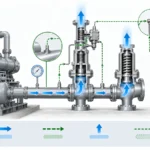
Superimposed back pressure exists at the outlet when the valve is called upon to operate. Built-up back pressure develops as relieving flow passes through the discharge system. Superimposed pressure may also be constant or variable. These conditions should not be collapsed into one undefined back-pressure value; see Emerson’s safety-relief-valve technical data.
That distinction matters because a conventional spring-loaded valve can remain a candidate in some applications with predictable constant superimposed back pressure when the effect is correctly accounted for. Variable downstream pressure creates a different force-balance problem.
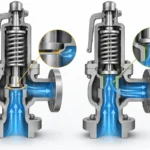
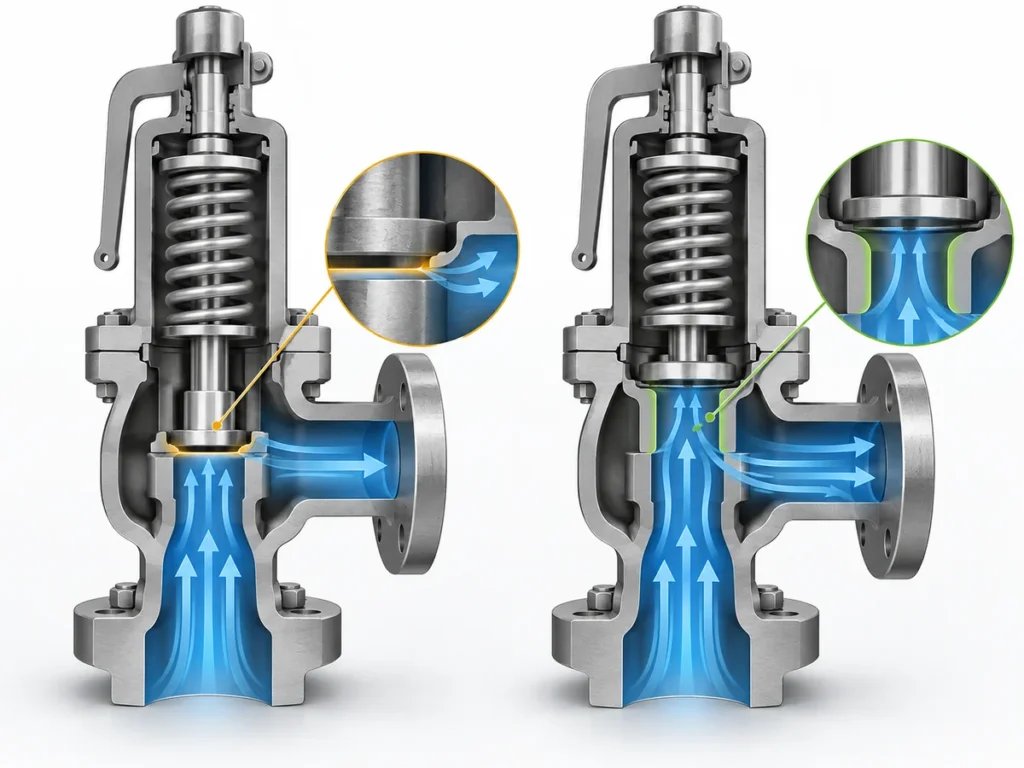
A balanced bellows design reduces the influence of back pressure on a spring-loaded valve, but it does not make downstream pressure irrelevant. The bellows and the complete valve still have design-specific operating limits.
This is why a universal percentage is a poor rejection or acceptance rule. Published limits vary by construction and product family; LESER’s engineering guidance, for example, treats back-pressure limits as design-specific rather than one value for every balanced bellows valve.
Before balanced bellows stays in the candidate set, establish:
- whether the pressure is superimposed, built-up, or both;
- whether superimposed pressure is constant or variable;
- the downstream condition for the governing relief case; and
- the allowable envelope and applicable performance evidence for the exact valve being offered.
“Back pressure exists” is not enough to close the architecture decision.
For the deeper pressure definitions and system effects, use ZOBAI’s back pressure and bellows engineering guide. For the full positive-selection workflow, use the bellows balanced safety valve selection guide. This article stays focused on the conditions that should stop or delay the candidate decision.
When the Bellows Becomes the Limiting Component
The bellows may solve one force-balance problem while creating a different verification requirement. A candidate should therefore be held whenever the bellows itself has not been shown to suit the actual service.
Pressure capability
A metallic bellows has to flex as the valve moves. Its allowable pressure condition belongs to the actual valve construction; it should not be assumed from the label “balanced bellows.” A required downstream condition outside the documented envelope is a genuine mismatch, not simply a reason to apply a generic correction.
Fluid, material and temperature
Corrosive service is not an automatic yes or no for balanced bellows. A bellows may isolate other valve components from the process medium, while the bellows material itself still has to be compatible with that medium. Relieving temperature is similar: the relevant limit is the documented material and construction envelope of the proposed valve, not an article-level maximum temperature.
Repeated cycling
Manufacturer technical literature identifies fatigue, corrosion and rapid cycling among conditions associated with bellows failure. That makes repeated cycling a valid reason to request design-specific evidence, but it does not establish a universal service-life or cycle limit.
Dirty, slurry or viscous service
These services are not automatically reasons to reject a balanced bellows valve. Baker Hughes documents balanced-bellows constructions in which the bellows helps isolate guiding surfaces in slurry or highly viscous service; suitability still depends on the actual construction and process conditions. See the Consolidated 1900 technical fact sheet.
The candidate should remain on hold when any of the following could still change the decision:
- the bellows pressure capability is unverified;
- the bellows material has not been checked against the process fluid;
- the relieving temperature is outside or close to an unconfirmed design limit; or
- the actual cycling duty raises a durability question that the offered design has not addressed.
The negative-selection point is not that bellows are inherently fragile. It is that a balanced designation does not remove the need to qualify the bellows itself.
Bellows Failure and Bonnet Venting Can Change the Selection
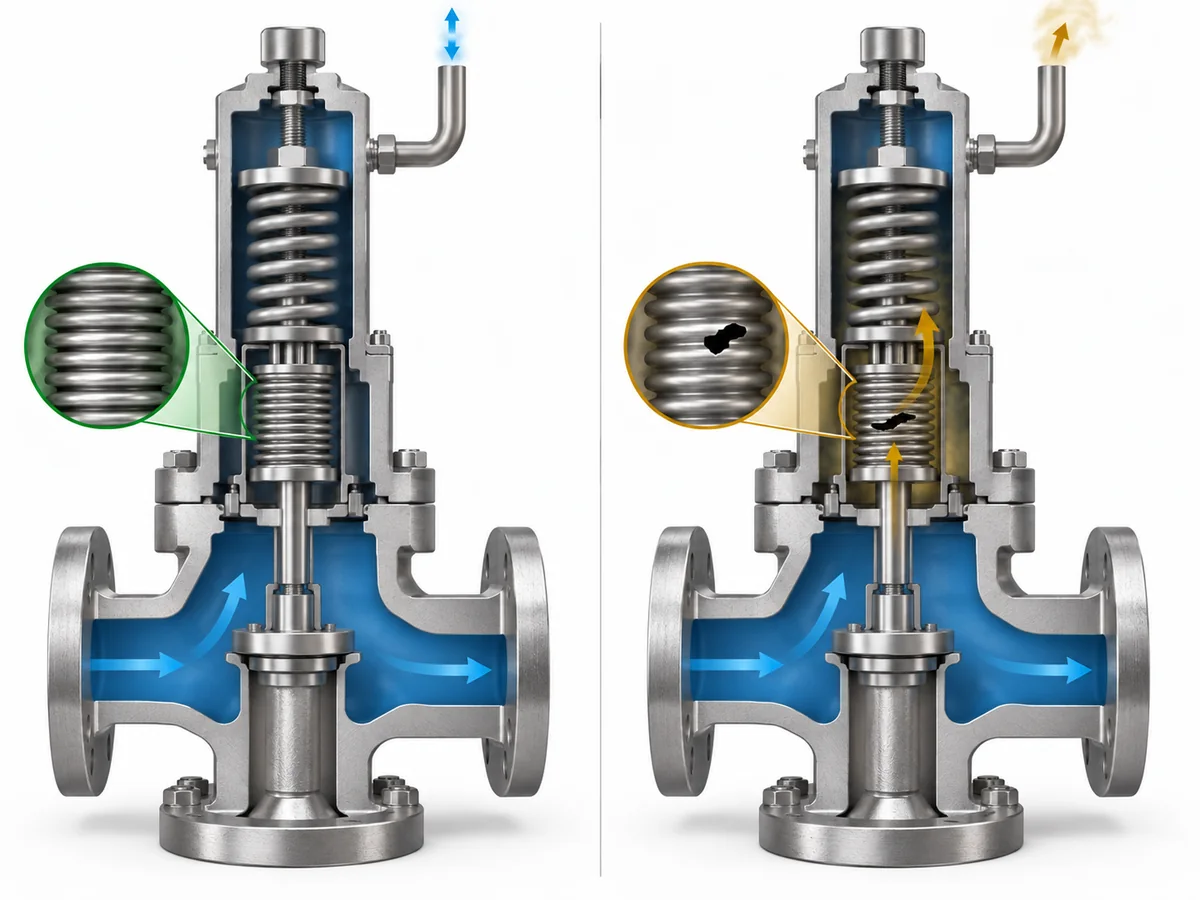
The bonnet vent on a balanced bellows pressure relief valve is part of the functional design, not a cosmetic opening.
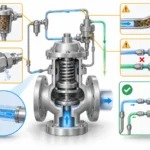
In applicable balanced-bellows constructions, the bonnet must retain the pressure reference required for the balancing function. AIChE process-safety guidance warns that blocking a bellows vent can defeat that intended balance and impair relief performance under back pressure. See AIChE’s pressure-relief-system guidance.
Crosby instructions for its balanced-bellows construction likewise require the bonnet to maintain the intended pressure reference and warn against plugging the vent. See the Crosby EM Series instruction manual.
The failure case matters just as much as normal operation. If a bellows ruptures in an applicable design, process fluid can enter the bonnet space and reach the vent. For a hazardous medium, that potential release path becomes a project-specific safety question.
Bellows failure can also change how back pressure affects the valve, but the consequence is not identical for every design. Some constructions include supplementary balancing provisions; others do not. Those features must be confirmed on the exact valve rather than assumed from the words “balanced bellows.”
| Verification question | Why it can stop the candidate decision |
|---|---|
| What changes in valve behavior if the bellows loses integrity? | The intended back-pressure balance may change. |
| Can process fluid reach the bonnet vent after failure? | The vent may become a release path. |
| What is the consequence if that fluid is hazardous? | The failure path may need project-specific treatment. |
| Does the exact design include backup balancing or a means of detecting bellows leakage? | Failure behavior differs by construction and cannot be assumed. |
If the answers are unknown and they could change the acceptable failure consequence, the balanced-bellows candidate is not ready to be approved.
When Another Relief-Valve Architecture Should Stay in the Candidate Set
Rejecting or holding a balanced-bellows candidate does not automatically identify its replacement. It simply reopens the architecture decision.
| Candidate branch | Why it may stay under review | What still prevents automatic acceptance |
|---|---|---|
| Conventional spring-loaded valve | A simpler configuration may remain viable for some stable, defined downstream conditions. | Its actual back-pressure behavior, setting basis and capacity still have to satisfy the duty. |
| Another balanced direct-spring arrangement | It may avoid a limitation associated with a metallic bellows. | It introduces its own seal, material, temperature and failure-behavior checks. |
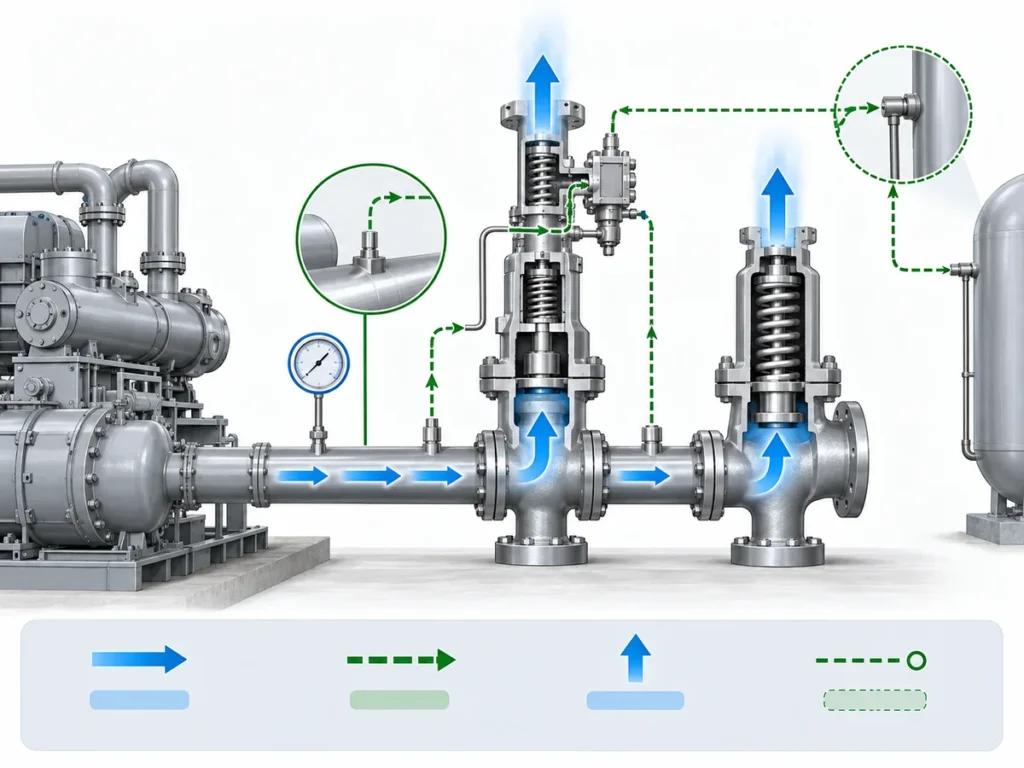
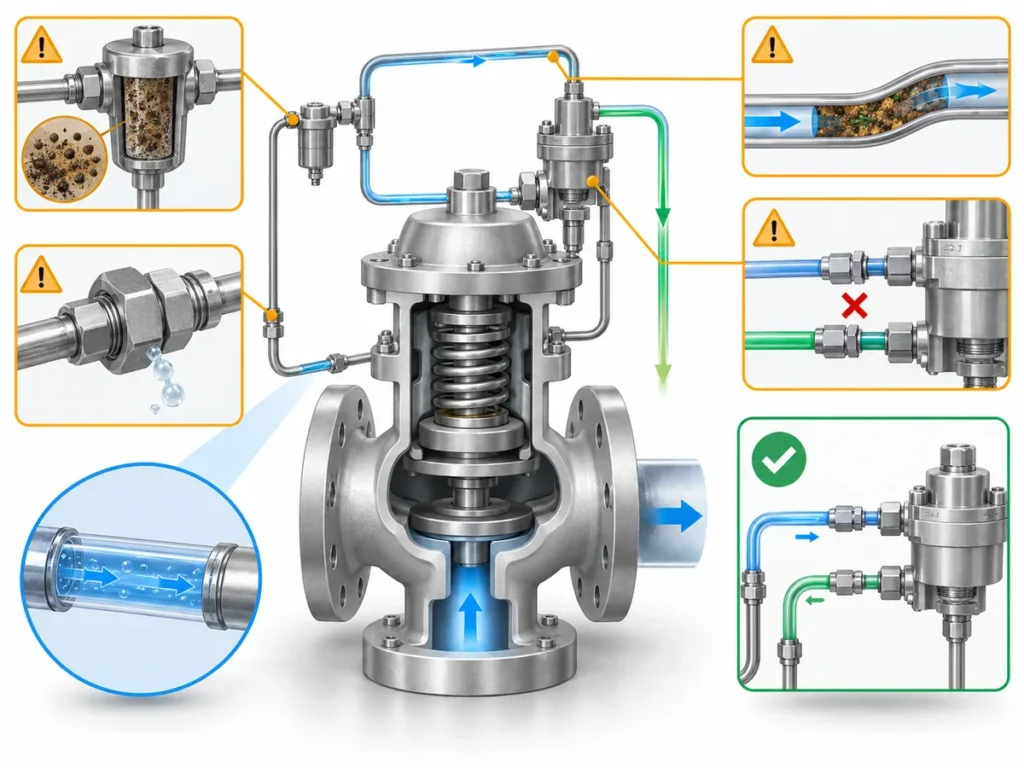
| Pilot-operated relief valve | It provides another architecture for suitable duties without relying on a balancing bellows. | Pilot, sensing, fluid compatibility, contamination and maintenance conditions still matter. |
No row in that table means “upgrade.” Moving away from balanced bellows exchanges one constraint set for another.
The purpose of this article is only to identify when that comparison should reopen. For the full spring-loaded-versus-pilot decision, use ZOBAI’s spring-loaded vs pilot-operated safety valve comparison.
What to Verify Before You Put Balanced Bellows on the RFQ
This section is not a complete safety-valve RFQ checklist. It is the minimum evidence needed to close a hold that could still change the balanced-bellows decision.
| Evidence needed | Decision it closes |
|---|---|
| Defined relief duty, fluid state, relieving pressure, temperature and required capacity | Confirms what the valve actually has to protect and under which relieving condition. |
| Superimposed and built-up back-pressure conditions, including variability where relevant | Shows whether the original reason for considering balanced bellows is correctly defined. |
| Allowable back-pressure envelope and applicable performance data for the exact offered valve | Confirms whether the candidate remains inside the manufacturer’s documented design basis. |
| Bellows material, construction and pressure-temperature limits | Confirms whether the bellows itself is compatible with the actual service. |
| Bellows-failure and bonnet-vent arrangement when failure consequence matters to the project | Confirms how the proposed construction behaves if bellows integrity is lost. |
| Applicable project code, certification and documentation requirements | Separates technical plausibility from project acceptance. |
API 520 Part I treats pressure-relieving-device work as both sizing and selection, so selecting a balanced-bellows architecture does not complete capacity verification or final valve selection. See the API 520 Part I information page.
Project acceptance is another separate question. ASME BPVC Section XIII covers overpressure-protection requirements including pressure-relief-valve design, testing, marking, capacity certification and installation. ISO 4126-1, meanwhile, describes itself as a safety-valve product standard rather than an application standard.
So the candidate can proceed only when the variables capable of changing the architecture have been resolved. If one of those variables remains unknown, keep the decision on hold. If a confirmed requirement conflicts with the documented valve envelope, reopen the architecture comparison.
For the complete balanced-bellows selection and RFQ workflow, use ZOBAI’s bellows balanced safety valve selection guide.
The RFQ question is not simply “Can you supply a balanced bellows valve?” It is “Can the exact valve you are offering satisfy this defined duty, downstream condition and project evidence requirement?”
If those conditions are already defined, you can ask a ZOBAI safety valve engineer to review the candidate before the architecture is locked.