Compare full-lift and low-lift safety valves by discharge-area control, capacity implications, application limits, and the data to verify before selection.

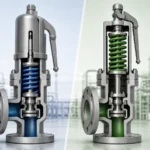
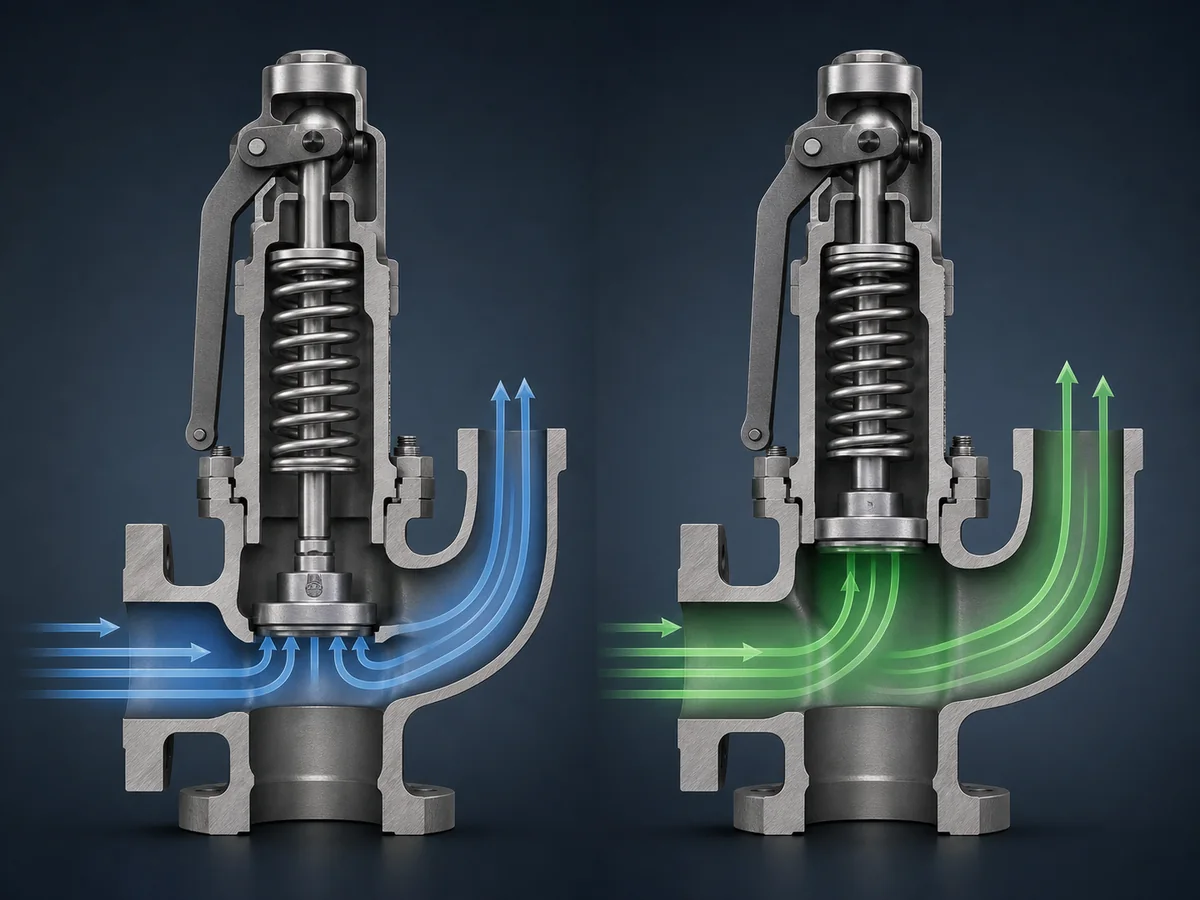
Full-lift and low-lift safety valves are best compared by looking at what controls the available discharge area as the disc moves away from the seat. In a low-lift condition, disc position and the resulting curtain area remain important to the available flow opening. In a full-lift condition, the curtain area has increased far enough that another internal flow area becomes the controlling restriction.
That distinction affects capacity potential, but it does not prove that a particular valve can relieve the duty required by a particular system. A defensible full-lift-versus-low-lift decision still has to connect the required relieving duty with appropriate valve capacity data, applicable project requirements and the limits of the specific valve being considered.
What Actually Makes a Safety Valve Full Lift or Low Lift?
The useful distinction is not simply that one valve “opens farther” than another. Lift describes movement of the disc away from the seat, but the engineering question is whether that movement is still controlling the actual discharge area available to the fluid.
Lift, curtain area and the flow-controlling area
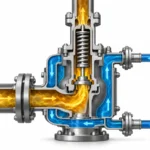
As the disc rises from the seat, it creates an opening around the seating region. This opening is commonly described in terms of curtain area. When curtain area is the controlling discharge area, changing disc position changes the available flow opening.
This is the important characteristic of a low-lift condition: the available discharge area remains dependent on disc position. The word low should therefore not be reduced to an unsupported universal lift percentage. What matters here is the relationship between disc travel and t
he area actually controlling discharge.
In a full-lift condition, the disc has moved far enough that curtain area is no longer the controlling restriction. The valve’s bore or another internal flow passage then determines the controlling discharge area. This area-based distinction is reflected in established pressure-relief engineering terminology and capacity methods.
Engineering terminology reference
and
National Board capacity-method reference.
Why full lift is not the same thing as full bore
Full lift and full bore describe different characteristics. Full lift concerns the relationship between disc travel and the controlling discharge area. Full bore concerns the configuration of the internal flow passage or bore.
A specification, product description or engineering discussion should therefore not treat the two phrases as synonyms. Doing so can make a design classification appear to prove a flow-path characteristic that has not actually been established.
Where “high lift” belongs in the terminology
High lift appears as a separate classification term in some safety-valve terminology. It should not be treated as another name for full lift unless the applicable technical documentation defines the terms that way.
For selection work, keep high lift, full lift and full bore distinct and confirm which classification the relevant valve documentation actually uses.
How Lift Changes the Available Discharge Area and Capacity Potential
Lift matters because it changes the geometry of the opening while curtain area is still controlling the discharge path. This creates a direct engineering connection between disc travel and the flow area available through that part of the valve.
The important qualification is capacity potential. The geometry helps explain why a design can make a different flow area available, but geometry alone does not establish the rated or certified relieving capacity of a particular valve.
When disc lift still limits the available flow area
When curtain area is the controlling restriction, additional disc movement increases the opening available around the seat. In that condition, disc position remains directly relevant to the actual discharge area.
A low-lift design can therefore be constrained by the relationship between disc travel and curtain area. Whether that constraint matters for a project depends on the relieving duty and on the capacity established for the specific valve under the relevant basis and conditions.
What changes when further lift no longer controls the effective discharge area
A full-lift condition changes the governing geometry. Once curtain area is no longer the controlling flow area, another inte
rnal passage determines the available discharge area instead.
It is therefore misleading to assume that every further increase in disc travel produces a corresponding increase in actual discharge area. Once another passage controls the flow path, lift is no longer the only relevant geometric restriction.
Why nominal connection size does not answer this question
Nominal inlet or outlet size describes a connection. It does not, by itself, identify the internal area controlling discharge, nor does it establish relieving capacity.
Connection size is useful installation and specification information, but it cannot substitute for the applicable internal flow-area or valve-capacity data when the required relief duty is being checked.
Why a Full-Lift Valve Is Not Automatically an Adequately Sized Valve
Full lift is a design classification, not proof that a valve can relieve a specific overpressure case. Adequate sizing requires a separate comparison between what the protected system needs to relieve and what the valve has been established to pass on the required basis.
Pressure-relief-device sizing and selection, relieving-capacity determination and lift terminology answer different engineering questions. API treats sizing and selection as a distinct engineering task, while the National Board separately maintains certified relieving-capacity information.
API sizing and selection context
and
National Board certified-capacity context.
Required relieving capacity versus valve capability
The required relieving duty belongs to the protected system and the relief case being evaluated. It answers the question: what must be discharged for the applicable scenario?
Valve capability answers a different question: what can this valve be shown or rated to discharge under the stated basis and conditions?
The two must be compared before the valve can be treated as adequately sized.
Rated or certified capacity versus the words “full lift”
Capacity information connects a valve with an established performance basis. Which rated or certified capacity information is required depends on the applicable code, project requirements and the valve being considered.
Lift classification remains relevant because it describes part of the valve’s discharge geometry. It does not replace the capacity evidence required for the relief case.
Why capacity comparisons need a compatible basis
A capacity value is useful only when its basis and stated conditions are understood. Two figures should not be treated as directly comparable merely because they use the same unit or are associated with valves having the same nominal connection size.
Before using capacity information to prefer a full-lift or low-lift design, confirm that the data are appropriate to the service and comparison being made. Where a formal sizing or certification framework applies, that framework and the project requirements should govern the comparison.
If the required relieving duty has not yet been established, continue with the
safety valve sizing and certified relieving capacity guide
before treating lift classification as a product-selection decision.

Where Full-Lift and Low-Lift Designs Reach Their Application Limits
The more useful application question is not “Which media use full lift?” It is “Under what conditions does the available discharge path become a meaningful constraint for the required relieving duty?”
Product terminology
and application requirements are not the same thing. ISO explicitly identifies its general safety-valve requirements as product requirements rather than an application standard, which is why lift classification should not be converted into a universal service rule.
ISO 4126-1 scope reference.
When required relieving duty makes flow-area limitations important
If a low-lift design has appropriate documented relieving capability for the required duty, satisfies the applicable project requirements and remains within the limits of the specific valve, its lift-dependent curtain area does not by itself make that design unsuitable.
If a candidate design cannot provide the required relieving capability on the applicable basis, that design has to be reconsidered. A full-lift design may be evaluated as an alternative, but its suitability must still be demonstrated against the actual duty and project requirements.
Why fluid or phase alone is not a universal selection rule
Fluid type and phase can affect safety-valve sizing, behaviour and application requirements, so they belong in the selection process. They should not, however, be converted into shortcuts such as “gas means full lift” or “liquid means low lift.”
Those shortcuts omit the required relieving duty, valve design, governing requirements and documented device capability.
Why operating and relieving conditions still matter
Applicable relieving conditions and relevant system conditions can affect the performance expected from a pressure-relief device.
Back pressure is one example. Engineering guidance recognizes that back pressure can influence the performance and relieving capacity of certain conventional direct spring-loaded pressure-relief valves. That effect is design-dependent; it should not be described as an inherent property of either the full-lift or low-lift classification.
Pressure, temperature, materials and service suitab
ility are likewise product-specific matters that must be verified from current manufacturer documentation and the requirements governing the project.
When the lift label is not enough to decide
Do not complete the full-versus-low-lift decision when the relief duty is unknown, the usable capacity basis is unclear, governing project requirements have not been established or the relevant manufacturer limits have not been confirmed.
How to Choose Between Full Lift and Low Lift for a Real Relief Duty
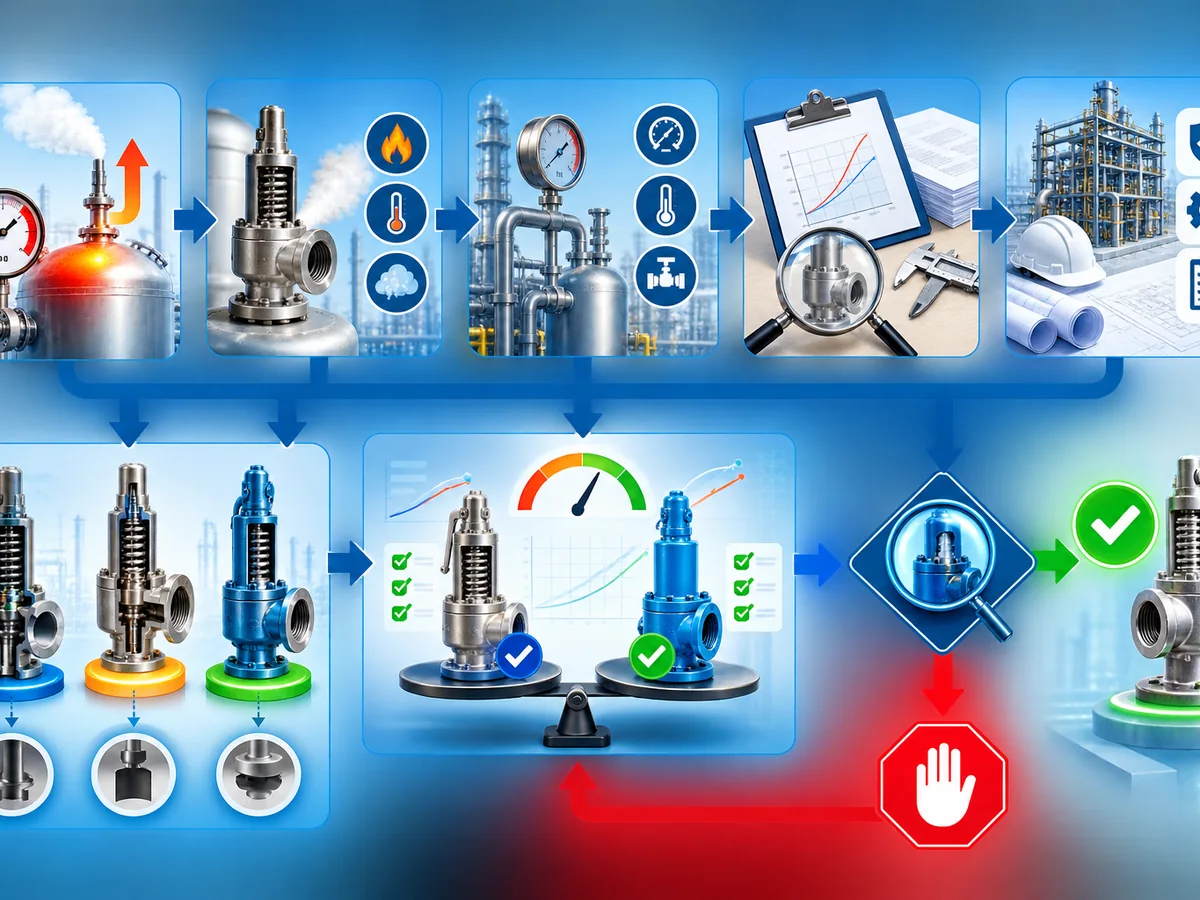
A practical comparison starts with the relief requirement and works toward the lift classification. Starting with the words full lift or low lift reverses that logic and can cause the design label to substitute for the engineering data that actually determine whether either route is suitable.
Start with the required relieving duty
First establish what the pressure-protection system has to relieve
for the case being evaluated. This is the reference point against which a valve’s capability must eventually be checked.
Check fluid, phase and relieving conditions
Identify the service conditions required by the applicable sizing and selection basis. Fluid and phase matter because they are part of the engineering basis for pressure-relief performance, not because each fluid category maps automatically to one lift classification.
Check back-pressure and relevant system conditions
Determine whether relevant system conditions can materially affect the candidate valve design. Back pressure should be reviewed where it is relevant to the valve type and installation.
Do not infer that choosing a full-lift valve automatically eliminates a back-pressure issue, or that a low-lift classification necessarily creates one.
Compare required duty with the valve’s verified capacity basis
Once the relief requirement is understood, compare it with capacity information suitable for the valve and the applicable project basis. The controlling-area relationship explains an important part of the valve design; the capacity evidence determines whether the candidate can satisfy the required duty under the stated conditions.
Confirm the applicable code or standard context
Confirm which code, standard, project specification or regulatory framework governs the application. Product standards, sizing standards and application requirements can have different scopes, so one document should not be assumed to answer every part of the decision.

What to Verify Before Specifying a Full-Lift or Low-Lift Valve
Once the preliminary full-versus-low-lift route is clear, the specification should move from general terminology to verifiable valve data. This is the point where general engineering principles are no longer enough and valve-specific manufacturer evidence becomes necessary.
Lift classification and actual flow-area basis
Confirm how the manufacturer classifies the valve and what flow-area basis is used to describe or establish its discharge performance. Do not assume that a product name, external appearance or nominal size identifies the controlling internal area.
If terms such as full lift, high lift or full bore appear in the documentation, make sure their intended meanings are clear rather than treating them as interchangeable descriptions.
Rated or certified relieving capacity and stated conditions
Obtain the capacity information required by the applicable project basis and confirm the conditions under which that capacity is stated. Where certified relieving capacity is required, check the relevant certified-capacity documentation directly.
Applicable standard and edition
Confirm which current standard or code applies to the project, what part of the valve or selection process it governs, and which edition the project requires.
Standards are revised, and older product literature may continue to cite superseded editions. An older catalog reference should not silently be treated as the current project requirement.
Product-specific pressure, temperature, material and service limits
Pressure range, temperature range, materials and service compatibility are product-specific facts. They should come from current manufacturer documentation for the actual valve under consideration.
General statements about full-lift or low-lift designs cannot establish those limits, and data from one model or manufacturer should not be generalized to another.
Information that requires manufacturer confirmation
Before the valve moves into a final specification or RFQ, verify the product-specific facts that this general comparison cannot answer. Depending on the project, the required confirmation may include:
- the manufacturer’s declared lift classification;
- the applicable flow-area or capacity basis;
- rated or certified relieving-capacity documentation where required;
- the applicable product standard and edition;
- model-specific pressure, temperature, material and service limits; and
- project-specific certification or documentation requirements.
This checklist does not imply that every safety valve requires the same documentation or that any particular manufacturer holds a particular certification.
Full lift and low lift are best used as part of a selection framework, not as the final selection itself. Lift classification narrows the design route; required relieving duty, documented valve capability and governing project requirements complete this part of the valve-selection decision.