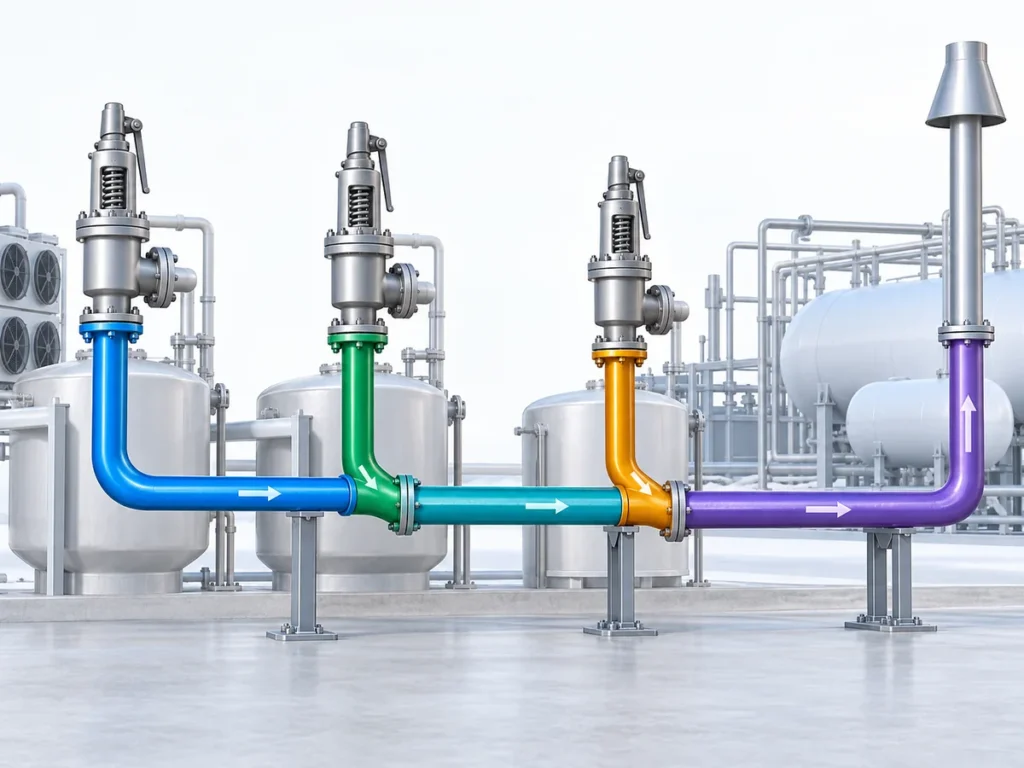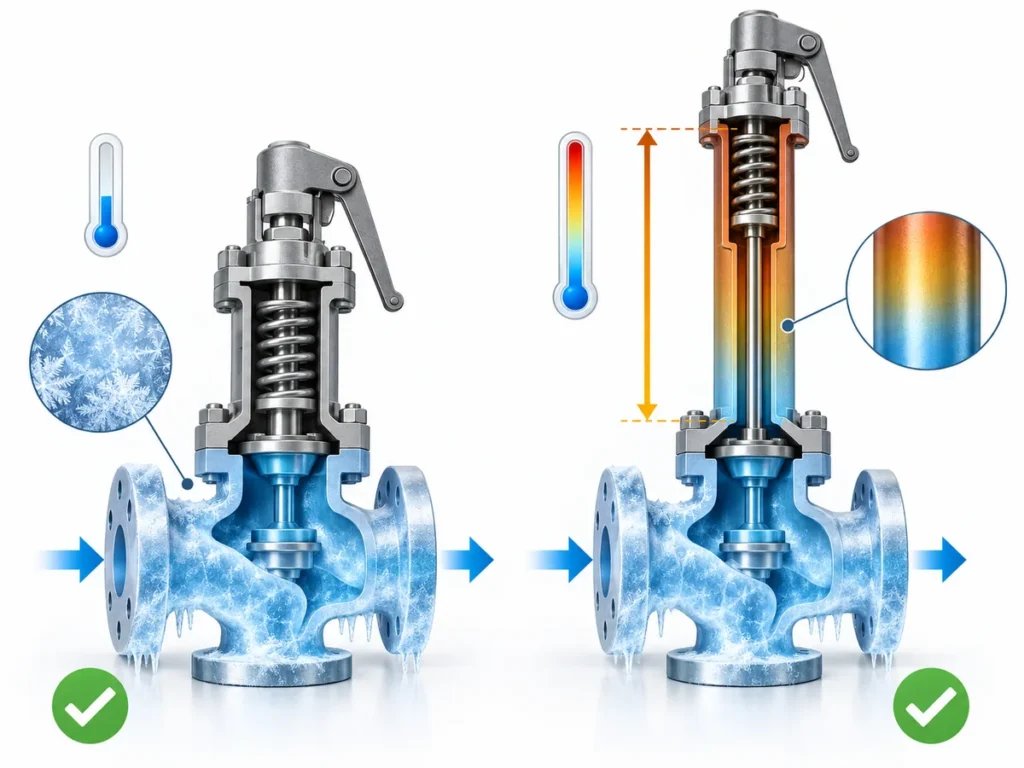
Spring Loaded Safety Valve Engineering How Back Pressure Affects Spring Loaded Safety Valve Performance Back pressure is the pressure acting at the outlet of a safety valve. In a spring loaded safety valve, outlet pressure can affect the opening force, lift, relieving capacity, stability, reseating behavior, leakage risk and discharge piping design. This page explains …

Spring Loaded Safety Valve Engineering
How Back Pressure Affects Spring Loaded Safety Valve Performance
Back pressure is the pressure acting at the outlet of a safety valve. In a spring loaded safety valve, outlet pressure can affect the opening force, lift, relieving capacity, stability, reseating behavior, leakage risk and discharge piping design. This page explains how to separate superimposed and built-up back pressure, when a conventional spring loaded valve may still be suitable, and when bellows balanced, pilot operated or discharge-system changes should be reviewed.
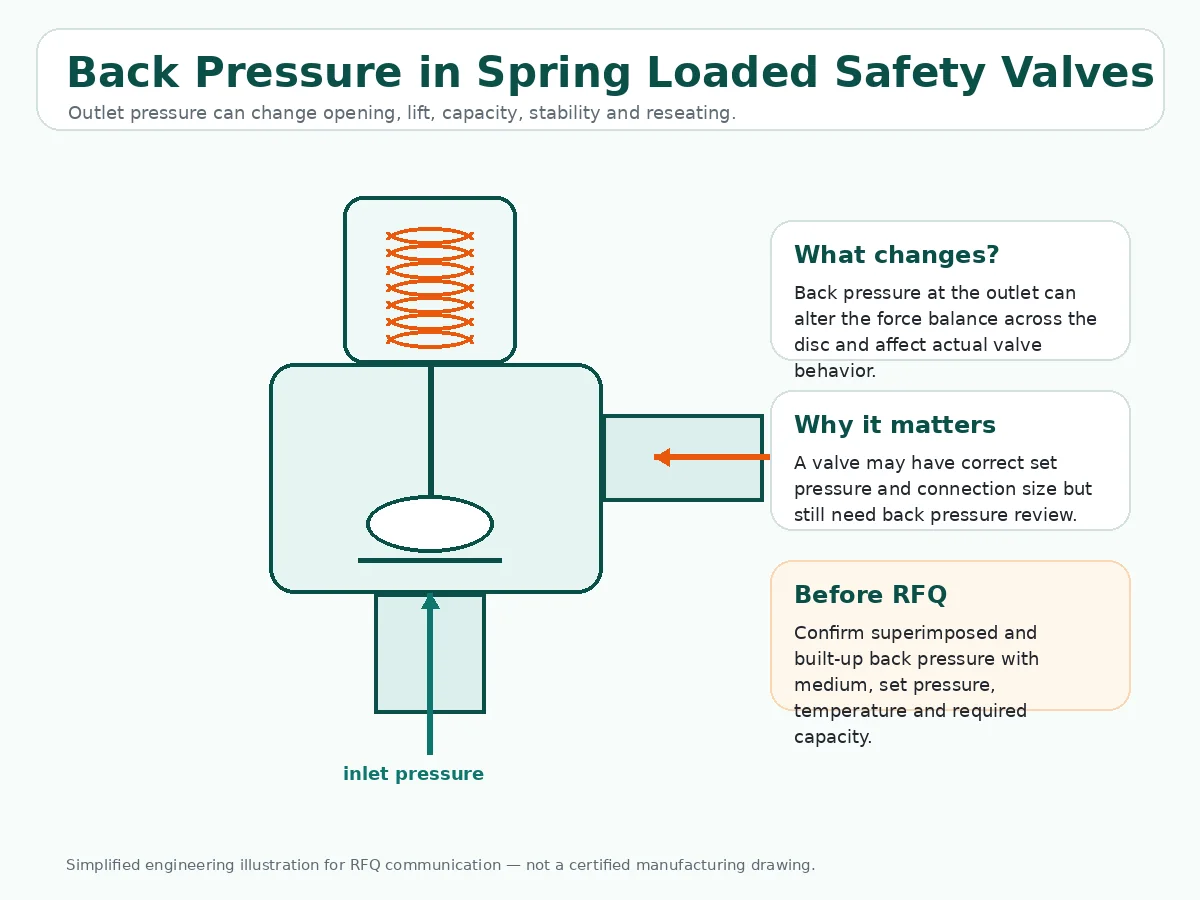
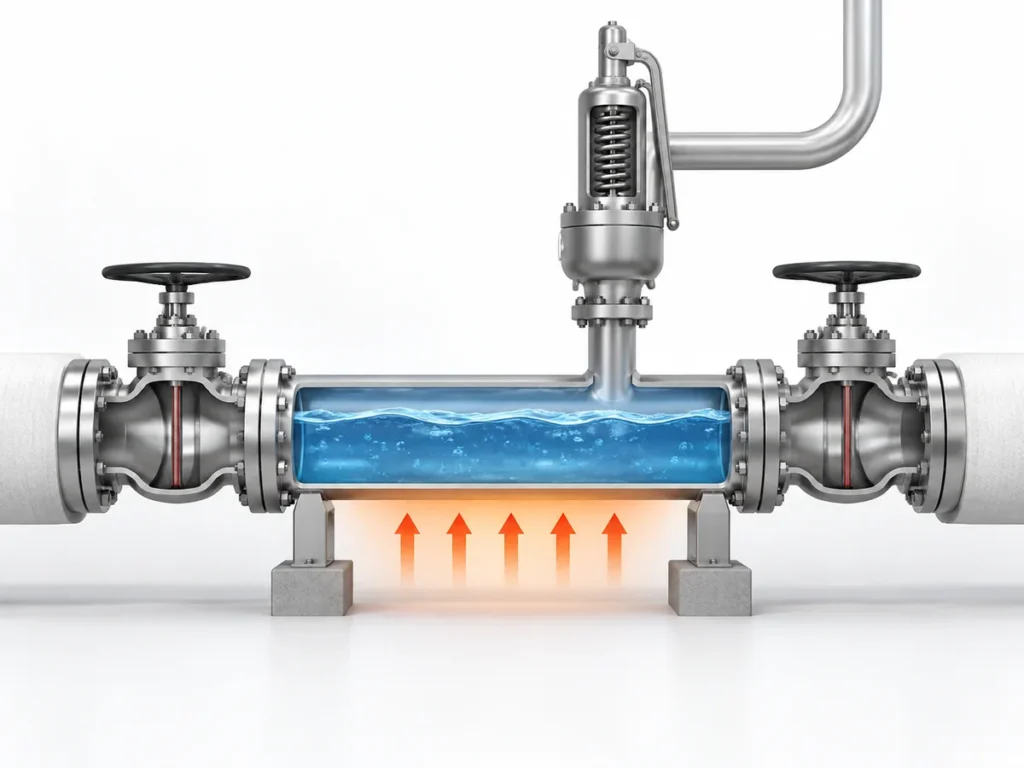
Simplified engineering illustration for RFQ communication; not a certified manufacturing drawing.
Quick Answer: Back Pressure Can Change How a Spring Loaded Safety Valve Opens, Flows and Reseats
Back pressure is the pressure acting at the outlet of a safety valve. In a spring loaded safety valve, outlet pressure can change the force balance across the disc, the available lift, the effective relieving capacity, the stability of the valve during discharge and the pressure at which the valve reseats. For a simple open discharge to atmosphere, back pressure may be low and predictable. For a long discharge pipe, silencer, closed vent, common outlet header, flare line, scrubber system or downstream pressure network, back pressure may become a governing selection factor.
The main selection risk is assuming that a spring loaded safety valve is defined only by inlet size, outlet size and set pressure. It is not. Before quotation or replacement, confirm the protected equipment, relief scenario, medium and phase, MAWP or design pressure, operating pressure, set pressure, required relieving capacity, relieving temperature, superimposed back pressure, built-up back pressure, inlet pressure loss, outlet piping layout, material requirements and applicable standard basis.
For product configuration, start with spring loaded safety valves. For a broader engineering discussion of outlet pressure and bellows design, see ZOBAI’s back pressure and bellows guide.
What Back Pressure Means in a Spring Loaded Safety Valve
In a safety valve system, back pressure is not just “pressure after the valve.” It is the pressure condition at the valve outlet and discharge system that can act against the valve’s opening and flowing behavior. For a spring loaded safety valve, the spring pushes the disc toward the seat. The inlet pressure pushes the disc open. When outlet pressure is present, it can change the net force acting on the disc and internal moving parts, depending on valve design.
This matters because the valve is expected to open at the specified set pressure under defined conditions, achieve sufficient lift to relieve the required load, discharge the required relieving capacity, operate without severe chatter or flutter, reseat properly after pressure decreases and maintain acceptable seat tightness after operation.
Engineering risk: Back pressure is both a sizing issue and an installation issue. It may affect selected valve configuration, outlet size, discharge pipe size, spring chamber design, bellows requirement, pilot-operated alternative, testing scope and RFQ data.
Superimposed vs Built-Up Back Pressure
The first engineering step is to separate superimposed back pressure from built-up back pressure. They are not the same and should not be merged into a single vague “outlet pressure” value during RFQ.
| Back Pressure Type | When It Exists | Typical Source | Why It Matters | What to Provide in RFQ |
|---|---|---|---|---|
| Superimposed back pressure | Present at the valve outlet before the safety valve opens | Closed discharge header, flare/scrubber line, downstream vessel or common vent system | Can affect set pressure, opening force and valve selection, especially if variable | Minimum, normal and maximum outlet pressure before valve opening; constant or variable basis |
| Constant superimposed back pressure | Present before opening and reasonably stable | Controlled downstream header or fixed-pressure receiving system | May be considered in valve setting or selection, subject to manufacturer/project review | Expected constant pressure and basis of control |
| Variable superimposed back pressure | Present before opening but changes with system operation | Common header, multiple relieving devices, flare network or process vent system | More difficult for conventional spring loaded valves because outlet pressure may shift the force balance unpredictably | Pressure range, operating cases, simultaneous relief assumptions and header pressure profile |
| Built-up back pressure | Develops after the safety valve opens because discharge flow creates pressure drop in the outlet system | Long discharge pipe, undersized outlet line, fittings, elbows, silencer, stack, scrubber or flare line | Can reduce capacity, restrict lift, increase instability risk and affect reseating | Discharge layout, pipe size/length, fittings, silencer/header data and calculated built-up back pressure |
| Total back pressure | Combined outlet pressure acting during relief | Superimposed plus built-up back pressure | Used to evaluate whether conventional, bellows balanced or pilot operated designs should be considered | Total expected back pressure under the governing relief case |
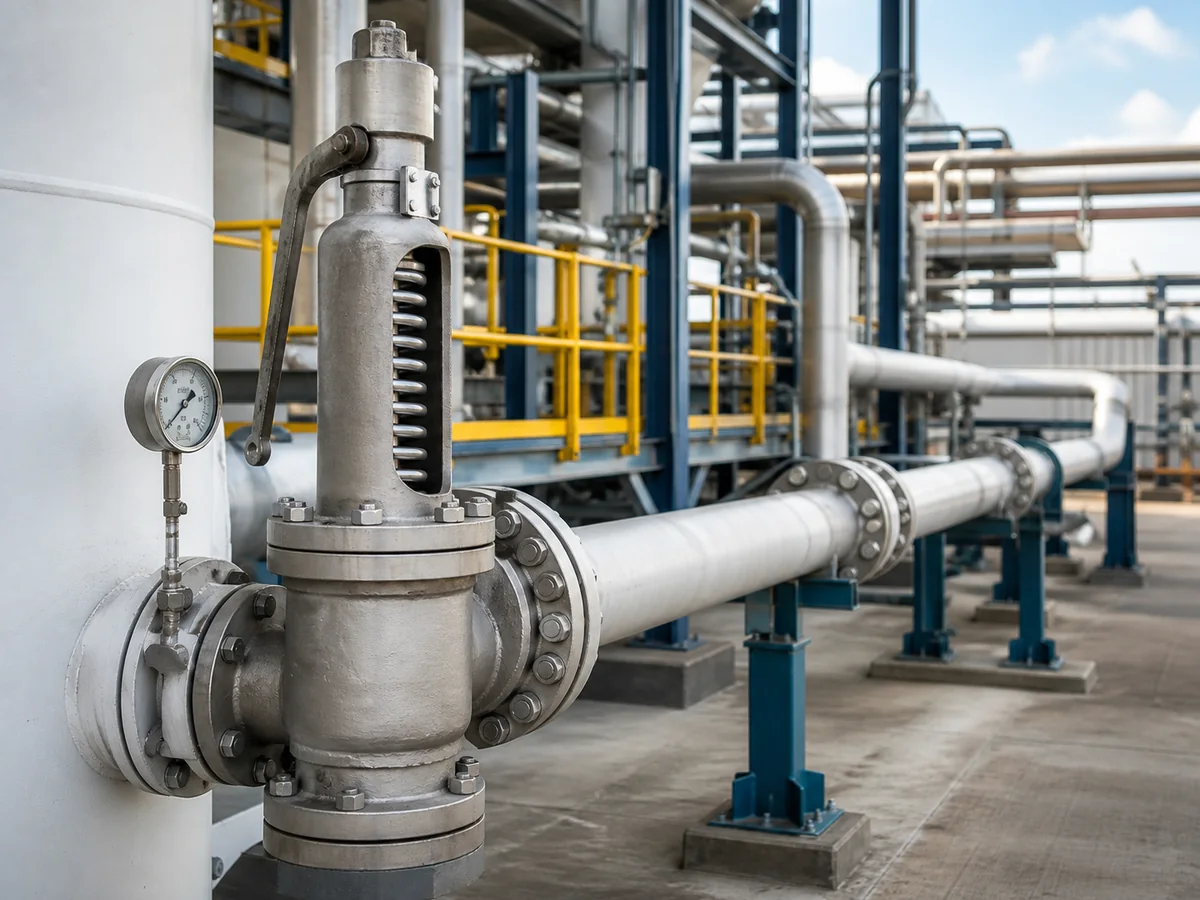
Simplified engineering illustration; actual back pressure must be calculated for the project.
For buyers, the practical rule is simple: do not send only “back pressure: yes” or “closed outlet.” Send the type, range, source and calculation basis.
How Back Pressure Changes the Force Balance
A conventional spring loaded safety valve uses a spring force to hold the disc against the seat. The valve opens when the upward force generated by inlet pressure overcomes the downward closing forces. Outlet pressure can introduce additional forces on internal surfaces exposed to the discharge side. Depending on the valve design, this can change the actual pressure at which the valve starts to open, how far it lifts, how stable it remains during discharge and how it reseats.
This does not mean every spring loaded valve fails under back pressure. Many applications use conventional spring loaded safety valves successfully when outlet pressure is low, predictable and within the valve and project limits. The problem starts when the outlet system is treated as a simple pipe connection rather than a pressure-containing discharge network.
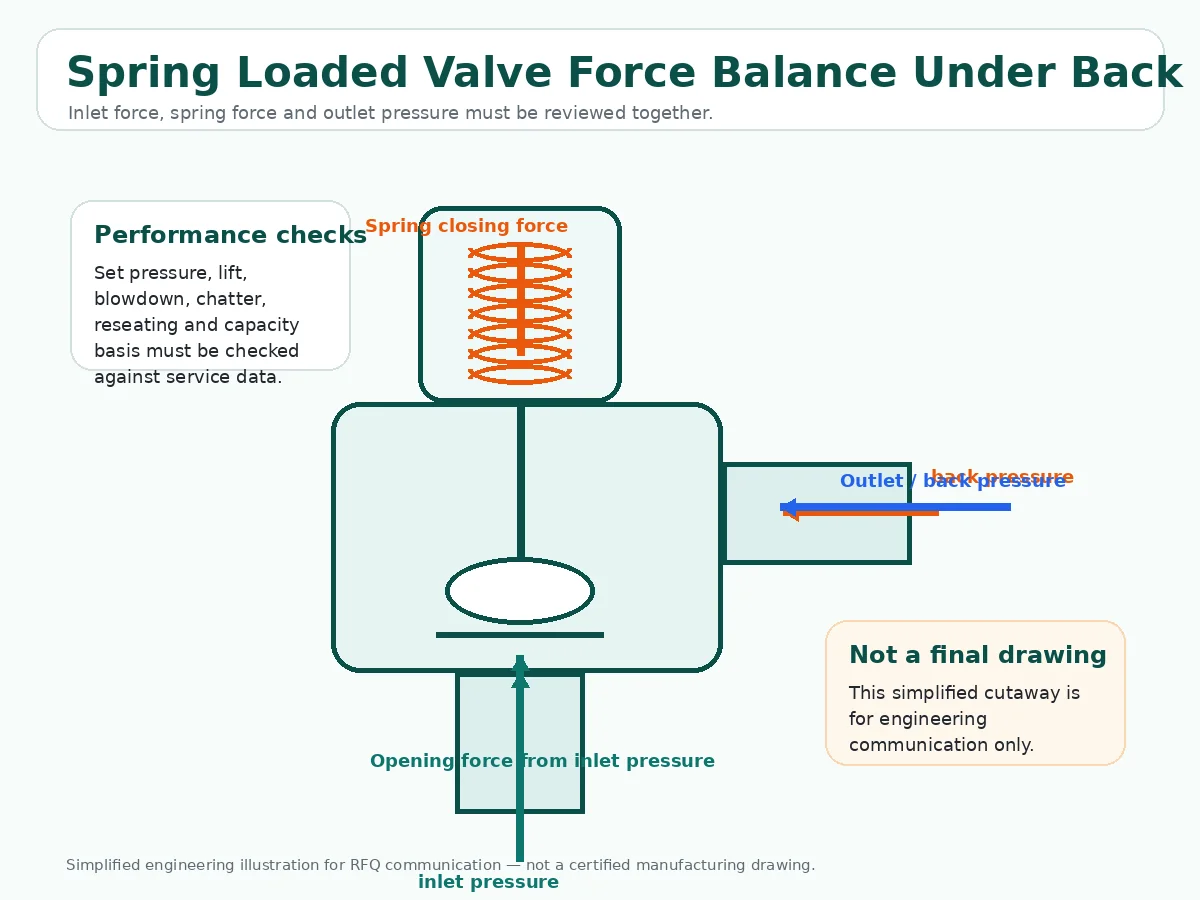
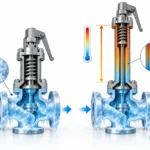
Simplified cross-section for explanation only; selected model geometry and capacity require manufacturer data.
Set pressure is not capacity
Set pressure defines the opening setting under specified conditions. It does not prove the valve can relieve the required load under actual outlet pressure.
Outlet pressure changes behavior
Superimposed and built-up back pressure can affect opening, lift, capacity, chatter, reseating and seat tightness.
Installation matters
Discharge pipe size, length, fittings, header pressure, silencer pressure drop, drainage and support can change the final decision.
Back Pressure Effects on Spring Loaded Safety Valve Performance
| Performance Area | How Back Pressure Can Affect It | Symptoms or Risks | What to Check |
|---|---|---|---|
| Set pressure behavior | Superimposed back pressure may change the effective opening condition for a conventional spring loaded valve | Valve opens late, opens early, simmers or does not match expected set behavior | Superimposed back pressure range, constant vs variable condition, valve design and set pressure basis |
| Opening force | Outlet pressure may add closing or unbalanced forces depending on exposed internal areas | Delayed opening, incomplete opening or unstable initial lift | Valve type, disc/guide geometry, bonnet exposure and manufacturer data |
| Lift | Built-up back pressure can restrict flow and reduce effective lift behavior | Valve does not reach expected lift or capacity | Outlet piping pressure drop, silencer/header resistance and allowable built-up pressure |
| Certified or documented relieving capacity | Capacity may be reduced when outlet pressure is outside the selected basis | Valve fits the piping but cannot relieve the required load | Required relieving capacity, capacity basis, back pressure correction or manufacturer review |
| Chatter / flutter | Excessive inlet loss, high built-up back pressure or unstable outlet header pressure can create dynamic instability | Rapid opening/closing, vibration, noise, mechanical wear and seat damage | Inlet pressure loss, outlet back pressure, valve sizing, discharge layout and operating margin |
| Reseating | Back pressure and system pressure decay can affect where the valve closes | Delayed reseating, repeated cycling or leakage after operation | Blowdown, reseating pressure, spring setting, outlet pressure and medium condition |
| Seat tightness | Chatter, contaminated discharge, wrong material or repeated instability can damage the seat | Leakage after popping or after test | Seat material, service cleanliness, test record, back pressure history and maintenance condition |
| Discharge safety | A closed vent, scrubber, flare line or silencer can add resistance and reaction load | Unsafe discharge, high outlet stress, vibration or structural load | Outlet support, reaction force, drainage, safe venting and piping design |
This table is an engineering screening tool, not a final sizing calculation. Final selection depends on actual service data, manufacturer data, applicable standard version and project approval.
When a Conventional Spring Loaded Safety Valve May Be Acceptable
A conventional spring loaded safety valve may be suitable when the service conditions and discharge system do not create a back pressure problem for the selected valve. Typical favorable conditions include discharge to atmosphere through a short, well-supported outlet line; low and predictable built-up back pressure; no significant superimposed pressure before valve opening; no common discharge header with other relieving devices; acceptable inlet pressure loss; compatible medium and temperature; and required relieving capacity confirmed against manufacturer data.
Even in simple discharge systems, the valve should not be selected by connection size alone. The required relieving capacity, set pressure, medium, temperature and inlet/outlet piping still need to be checked. If the valve is replacing an old unit, the old nameplate and flange size are useful identification data, but they do not prove that the old valve was correctly sized or that the replacement will perform correctly under the current relief scenario.
When Back Pressure Requires a Different Design or System Review
Back pressure becomes a major selection issue when outlet pressure is high, variable, difficult to predict or created by a restrictive discharge path. In these cases, a conventional spring loaded safety valve may still be possible in some projects, but it should not be assumed.
| Condition Found During Review | Main Concern | Possible Engineering Response | Data Needed Before Decision |
|---|---|---|---|
| Variable superimposed back pressure | Opening pressure and stability may shift with header pressure | Consider bellows balanced safety valve, pilot operated safety valve or header review | Outlet pressure range, simultaneous relief assumptions, medium and set pressure |
| High built-up back pressure | Capacity and lift may be reduced | Recalculate discharge piping, increase outlet line size, reduce fittings or review valve type | Outlet pipe size/length, fittings, silencer, vent/flare/scrubber pressure |
| Common discharge header | One valve’s discharge may affect another valve | Header hydraulic review and simultaneous relief case check | Number of valves, relief scenarios, header pressure profile and discharge destination |
| Long outlet pipe or silencer | Flow resistance may increase built-up back pressure | Recalculate outlet line and support; verify noise/silencer pressure drop | Pipe route, equivalent length, silencer data, reaction force and drainage |
| Closed vent or flare system | Downstream pressure may be present before valve opens and increase during relief | Review superimposed and built-up back pressure separately; consider balanced or pilot designs | Header pressure before opening and during relief |
| Two-phase or flashing service | Capacity and stability may be more complex | Require formal sizing and project-specific review | Fluid data, phase behavior, relief scenario and sizing method |
The selection question is not “Which valve type is always better?” The correct question is “Which valve configuration can protect this equipment under the governing relief scenario, with the actual outlet pressure and discharge system?”
Bellows Balanced Safety Valve: When to Consider It
A bellows balanced safety valve is often considered when back pressure affects a conventional spring loaded valve. The bellows is intended to reduce the effect of back pressure on the disc force balance by isolating or balancing certain pressure-exposed areas. This can improve performance in applications where superimposed or built-up back pressure would otherwise affect opening and capacity.
A bellows balanced design may be worth reviewing when total back pressure is not negligible, superimposed back pressure is present in a closed discharge system, built-up back pressure is expected from a long or restrictive outlet line, or the outlet connects to a common header, flare, scrubber or vent system.
However, bellows balanced valves are not universal fixes. Bellows material, fatigue exposure, corrosion resistance, temperature limit, bonnet vent arrangement and inspection/maintenance requirements must be reviewed. The bonnet vent must not be blocked unless the selected design and manufacturer instructions explicitly support that arrangement. For product-level review, see bellows balanced safety valves and back pressure balanced safety valves.
Pilot Operated Safety Valve: When It May Be Reviewed
A pilot operated safety valve may be considered when service conditions require a different operating principle, higher operating pressure margin, larger capacity configuration or design-specific response under certain back pressure conditions. A pilot operated design uses a pilot valve to control pressure above the main valve piston or dome, rather than relying only on a direct spring force acting on the disc.
A pilot operated valve may be reviewed when operating pressure is close to set pressure, required capacity is large relative to available spring loaded options, the application needs a different opening/closing characteristic, or the project accepts the additional complexity of pilot tubing, sensing line and maintenance.
Pilot operated designs also have limits. Pilot tubing, sensing lines, filters, dome pressure, dirt sensitivity, freezing risk, medium compatibility and maintenance access must be considered. For comparison, see spring loaded vs pilot operated safety valve and pilot operated safety valves.
Discharge Piping: The Source of Many Back Pressure Problems
Back pressure is often created by the discharge system rather than by the valve itself. Long pipe runs, undersized outlet lines, multiple elbows, reducers, silencers, vertical stacks, common headers, closed vent systems and flare or scrubber connections can all increase outlet pressure during relief.
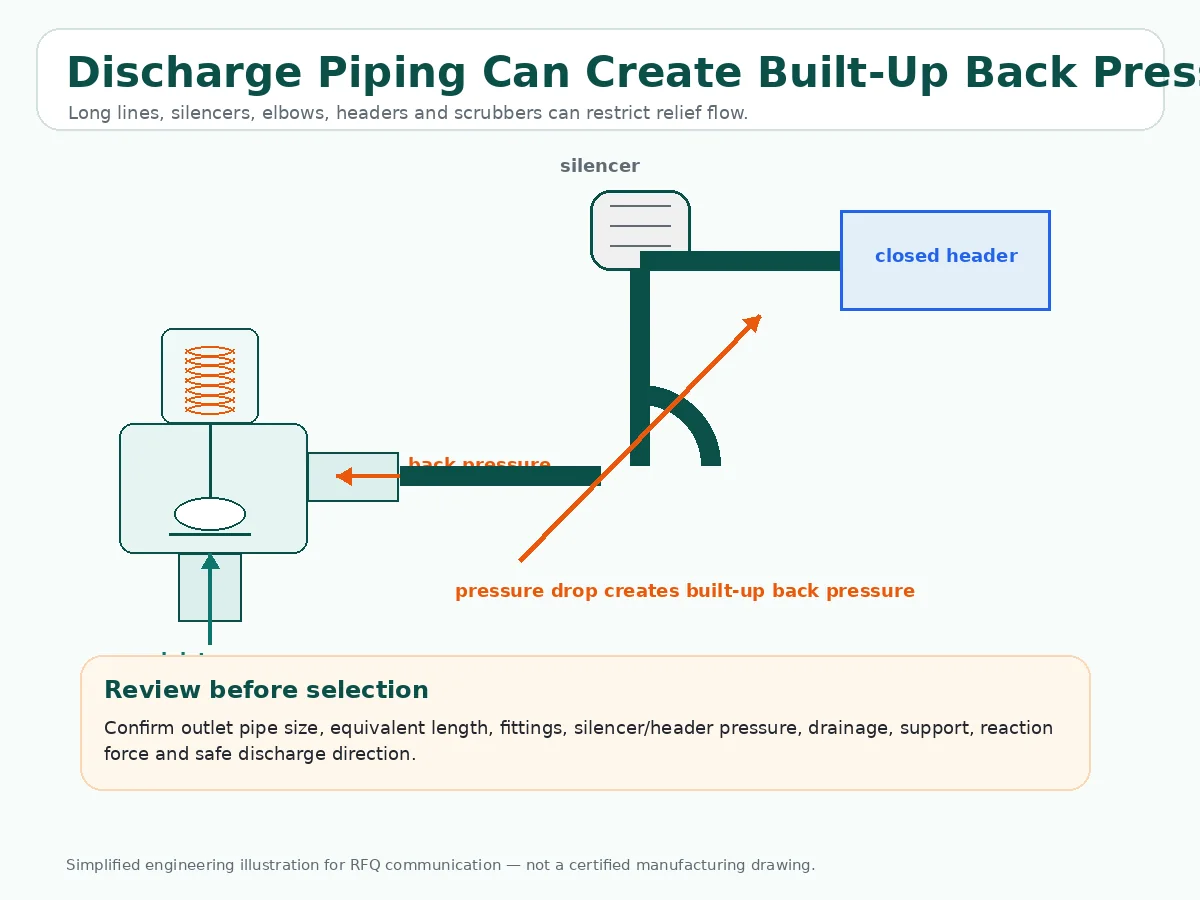
Simplified discharge layout; final installation requires project piping and hydraulic review.
A safe discharge system should be reviewed for outlet pipe size and equivalent length, fittings, branch connections, silencer pressure drop, common header pressure before and during relief, simultaneous relieving cases, drainage, reaction force, pipe support, safe discharge direction, outlet connection rating and material compatibility.
Installation rule: The discharge pipe should not impose heavy unsupported load on the safety valve body, trap liquid where liquid can affect operation, or discharge toward personnel or equipment. For installation checks, refer to the safety valve installation guide.
Back Pressure and Certified Relieving Capacity
Certified or documented relieving capacity is meaningful only under defined conditions. If back pressure is outside the basis used for valve selection, the actual relieving performance may not match the expected capacity. This is especially important when a buyer provides only inlet/outlet size and set pressure.
Before RFQ, separate required relieving capacity, selected valve capacity, certified or documented relieving capacity, connection size and back pressure. Required relieving capacity is the demand side. Certified or documented relieving capacity is the selected valve’s capacity basis under defined conditions. Connection size is only the mechanical interface. Back pressure is the outlet pressure condition that may affect flow and stability.
For capacity review, see ZOBAI’s guide to safety valve sizing and certified capacity and API 520 safety valve sizing.
RFQ / Selection Parameters Checklist
A back pressure review is only as good as the data provided. Procurement teams can speed up engineering review by sending the following information at the inquiry stage.
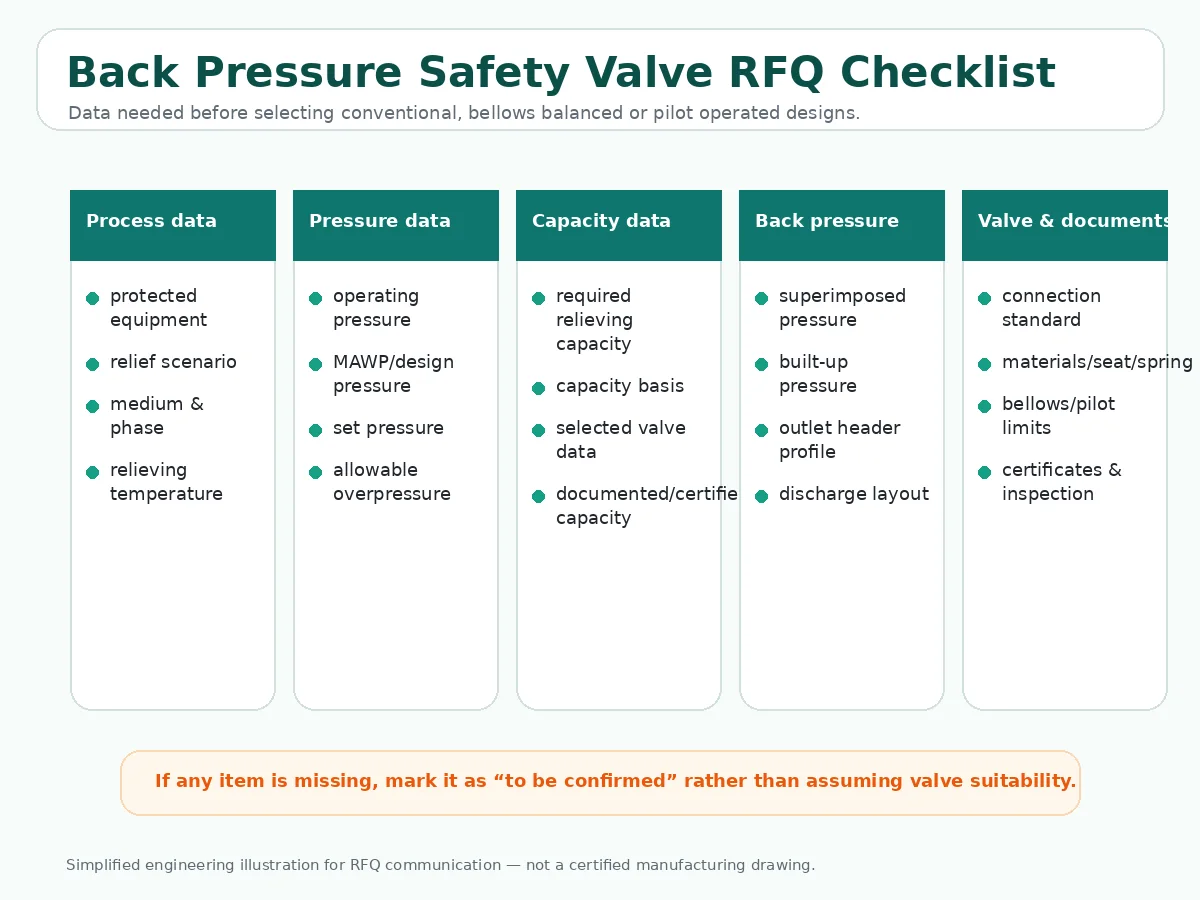
Use this checklist to prepare RFQ data; missing items should be marked as to be confirmed.
| RFQ Parameter | What to Provide | Why It Matters |
|---|---|---|
| Protected equipment | Boiler, vessel, pipeline, compressor, exchanger, tank, reactor, skid or OEM equipment | Defines what the safety valve protects |
| Relief scenario | Fire, blocked outlet, regulator failure, tube rupture, thermal expansion or other case | Determines required relieving capacity |
| Medium and phase | Steam, air, gas, vapor, liquid, two-phase, corrosive, dirty, viscous or cryogenic service | Affects sizing, material, seat and valve type |
| Operating pressure / MAWP / design pressure / set pressure | Normal operating pressure, maximum operating pressure, equipment pressure basis and set pressure | Needed to separate pressure definitions and operating margin |
| Required relieving capacity | Flow rate, units and calculation basis | Central input for valve sizing and capacity check |
| Relieving temperature | Temperature at relieving condition | Affects material, rating, seat, spring and fluid properties |
| Superimposed back pressure | Constant or variable outlet pressure before opening | Affects set pressure behavior and design selection |
| Built-up back pressure | Outlet pressure generated during relief flow | Affects capacity, lift and stability |
| Discharge layout | Outlet pipe size, length, fittings, silencer, header, flare/scrubber connection | Defines outlet pressure and installation risk |
| Inlet piping | Inlet size, length, reducers, elbows and isolation arrangement | Inlet loss can contribute to chatter and instability |
| Connection standard | Flange/thread type, rating, facing and material | Confirms mechanical fit-up and pressure-temperature boundary |
| Material and trim | Body, disc, seat, spring, bellows, gasket and seal requirements | Needed for corrosion, temperature and medium compatibility |
| Applicable standards and documents | API, ASME, ISO, EN/DIN, GB or project specification; datasheet, test certificate, MTC or inspection scope | Defines documentation and project approval expectations |
| Existing valve data | Nameplate photo, model, serial number, old datasheet and installation photos | Helps replacement review but does not replace sizing |
Composite Engineering Scenario for Training
A maintenance team wants to replace a spring loaded safety valve installed on a pressure vessel. The old valve has the same inlet and outlet size as the new valve being considered. The set pressure also appears to match. However, the discharge pipe was modified during a previous plant upgrade and now connects to a closed vent header rather than discharging through a short atmospheric outlet.
This is not a simple like-for-like replacement. The engineer should confirm whether superimposed pressure exists in the closed vent header before opening, how much built-up back pressure develops during the governing relief case, whether the required relieving capacity still matches the selected valve data, whether a conventional spring loaded valve remains suitable, and whether a bellows balanced or pilot operated design should be reviewed.
This scenario is a simplified training example. It is not a real customer case, and no capacity value should be inferred from it.
Common Mistakes in Back Pressure Applications
Mistake 1: Treating outlet size as back pressure control
A larger outlet connection does not automatically mean the discharge system has acceptable back pressure. The full outlet path, including pipe length, fittings, silencers, headers and discharge destination, must be reviewed.
Mistake 2: Combining all outlet pressure into one number
Superimposed and built-up back pressure should be separated. The first exists before the valve opens; the second develops during flow.
Mistake 3: Assuming a bellows solves every back pressure problem
A bellows balanced valve may reduce certain back pressure effects, but bellows material, fatigue, corrosion, bonnet venting, temperature and inspection must be reviewed.
Mistake 4: Forgetting inlet pressure loss
Back pressure is only one side of stability. Excessive inlet pressure loss can also cause chatter and poor performance. Inlet and outlet piping should be reviewed together.
Mistake 5: Replacing an old valve by nameplate size alone
Old nameplate data are useful, but the old installation may have changed. The protected equipment, relief scenario, required capacity and discharge system should be confirmed before replacement.
What Standards Can and Cannot Do
Standards and recommended practices help engineers communicate sizing, installation, testing and documentation requirements. API 520 is commonly used for sizing, selection and installation discussions. API 521 is used in relief and depressuring system discussions, including flare and vent system considerations. ASME, ISO, EN/DIN, GB and project specifications may impose additional requirements depending on the protected equipment and jurisdiction.
However, a standard reference does not automatically prove that a selected valve is suitable for a specific application. The selected valve must still be checked against actual operating data, relief scenario, required capacity, relieving temperature, back pressure, inlet/outlet piping, material compatibility, manufacturer data and project requirements. For standards context, see API 521 pressure relief systems and ASME safety valve standards.
| Reference | Why It Is Relevant | Use Boundary |
|---|---|---|
| API 520 Part I | Official API context for pressure-relieving device sizing and selection. | Use as standards context; do not treat as a complete project specification. |
| API 520 Part II | Official API context for pressure-relieving device installation engineering analysis. | Installation review still requires actual inlet/outlet piping and discharge data. |
| API 521 | Official API context for pressure-relieving and depressuring systems. | Use for system-level relief and depressuring context; final design depends on project review. |
| ASME BPVC Section XIII | Official ASME context for overpressure protection rules. | Does not prove that every valve model automatically carries every certification. |
FAQ
Does back pressure always make a spring loaded safety valve unsuitable?
No. A conventional spring loaded safety valve may be suitable when back pressure is low, predictable and acceptable for the selected valve and project basis. The issue is whether total back pressure affects opening, lift, capacity, stability or reseating.
What is the difference between superimposed and built-up back pressure?
Superimposed back pressure exists at the valve outlet before the safety valve opens. Built-up back pressure develops after the valve opens because discharge flow creates pressure in the outlet piping or header.
Can back pressure change the set pressure behavior?
For a conventional spring loaded safety valve, superimposed back pressure can affect opening behavior depending on valve design and whether the pressure is constant or variable. The selected valve and setting basis should be reviewed with manufacturer data and project requirements.
Does a bellows balanced safety valve eliminate back pressure problems?
No. A bellows balanced valve can reduce certain back pressure effects, but it has limits related to bellows material, temperature, corrosion, fatigue, bonnet venting and inspection.
When should a pilot operated safety valve be considered?
A pilot operated valve may be reviewed when operating margin, capacity, back pressure behavior or application requirements make a direct spring loaded design less suitable. Pilot tubing, sensing line, medium cleanliness, temperature and maintenance must also be checked.
Can I use the same valve size if the outlet piping has changed?
Not automatically. A discharge piping change can alter built-up back pressure and stability. Recalculate or review the outlet system before treating the replacement as equivalent.
What data does ZOBAI need for back pressure review?
Send the protected equipment, relief scenario, medium and phase, operating pressure, MAWP or design pressure, set pressure, required relieving capacity, relieving temperature, superimposed and built-up back pressure, inlet/outlet connection, discharge layout, material requirements and required documents.
Ask ZOBAI to Review Back Pressure Before Selecting a Spring Loaded Safety Valve
Back pressure can change spring loaded safety valve performance even when inlet size, outlet size and set pressure appear correct. Before selecting or replacing a valve connected to a discharge pipe, closed vent, header, silencer, flare or scrubber system, send ZOBAI your operating conditions and discharge layout for engineering review.
For a faster review, include:
- Protected equipment and governing relief scenario;
- Medium and phase, operating pressure, MAWP/design pressure and set pressure;
- Required relieving capacity with units and calculation basis;
- Relieving temperature, superimposed back pressure and built-up back pressure;
- Inlet/outlet connection, discharge piping layout, material requirements and required documents.