Valve Types & Connection Selection What Is a Threaded Safety Valve? A threaded safety valve is a safety valve or pressure relief valve with screwed end connections instead of flanged, welded or clamp connections. The connection can be practical on compact equipment and smaller utility systems, but “threaded” describes only the piping interface. It does …

Valve Types & Connection Selection
What Is a Threaded Safety Valve?
A threaded safety valve is a safety valve or pressure relief valve with screwed end connections instead of flanged, welded or clamp connections. The connection can be practical on compact equipment and smaller utility systems, but “threaded” describes only the piping interface. It does not prove the thread standard, pressure-temperature rating, set pressure, required or certified relieving capacity, seat tightness, material compatibility or code acceptance. Before RFQ or replacement, confirm the protected equipment, governing relief scenario, medium and phase, operating pressure, MAWP or design pressure, set pressure, overpressure or accumulation basis, required capacity, relieving temperature, back pressure, exact thread designation, sealing method, materials and documentation.
Main definition
A pressure relief device with screwed end connections.
Main buyer risk
Replacing by thread size, appearance or partial nameplate data alone.
RFQ priority
Confirm thread form, pressure data, required capacity, medium and documents.
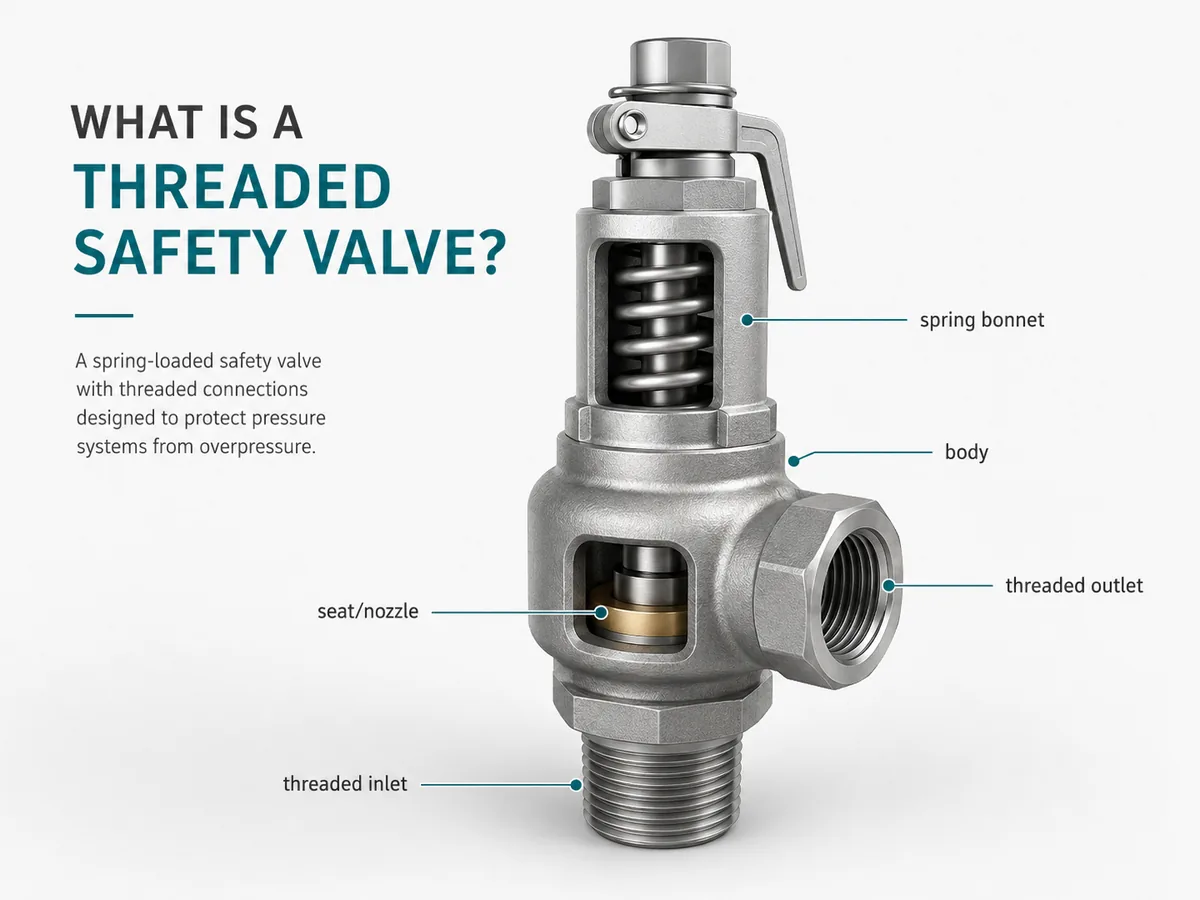
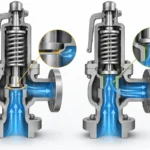
AI-generated engineering visual for article illustration only. Final product appearance, thread type, material, set pressure and capacity must be confirmed against the selected model and project specification.
Quick Answer: What Is a Threaded Safety Valve?
A threaded safety valve is a safety valve or pressure relief valve with threaded end connections. Buyers may also describe it as a screwed safety valve, threaded pressure relief valve, threaded PSV or threaded PRV.
The threaded connection may be practical for compact equipment, smaller vessels, utility systems, skids, compressors or replacement applications where the equipment connection is already threaded. But the connection style is only one part of the specification. A correct inquiry must still confirm protected equipment, relief scenario, medium and phase, operating pressure, MAWP or design pressure, set pressure, required relieving capacity, relieving temperature, back pressure, thread type, material, seat/seal requirements and documents.
For product-family options, review ZOBAI threaded safety valves. For engineering review, send your operating and connection data before quotation or replacement.
Main Parts and Connection Features of a Threaded Safety Valve
A threaded safety valve is still a pressure protection device first. The thread is only the connection method. The valve must still open, relieve, pass the required capacity and reseat correctly under the specified service conditions.
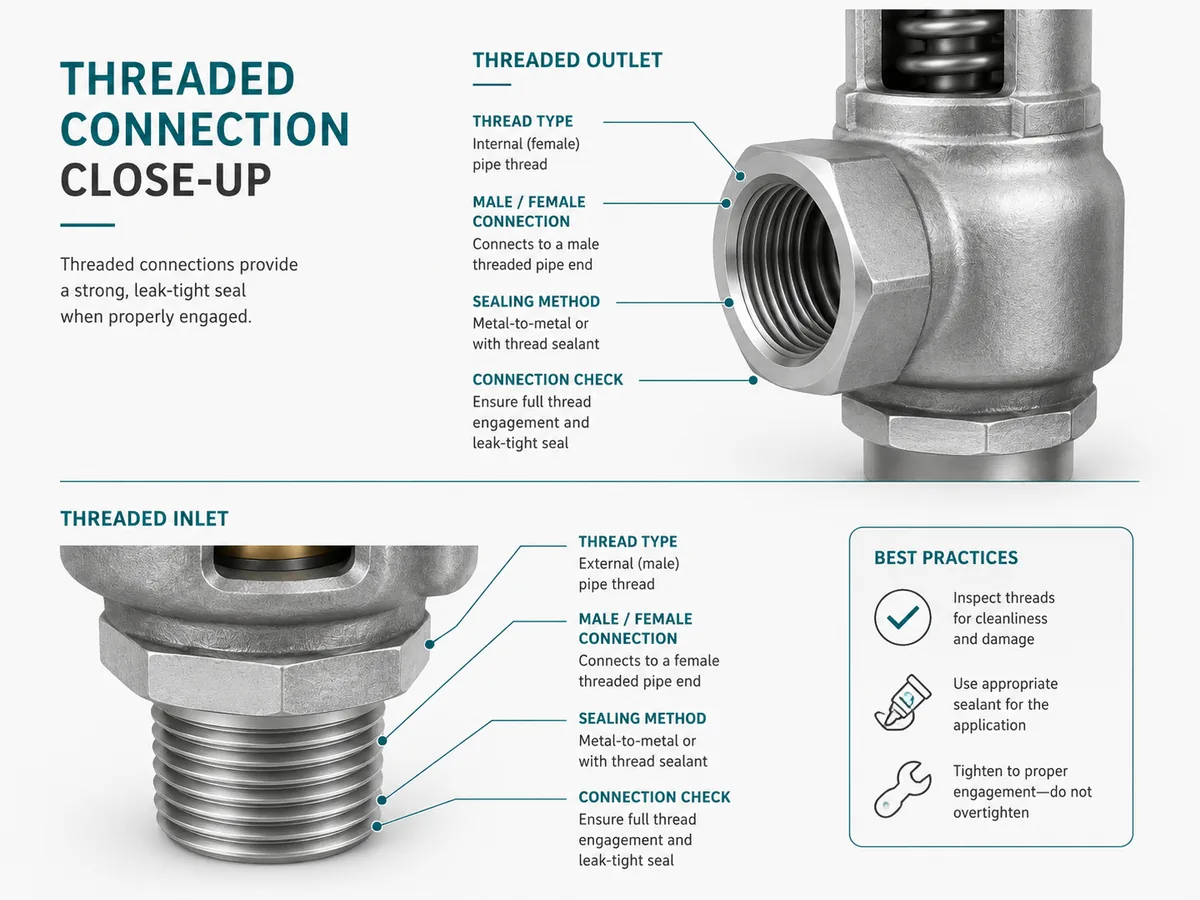
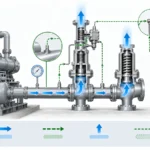
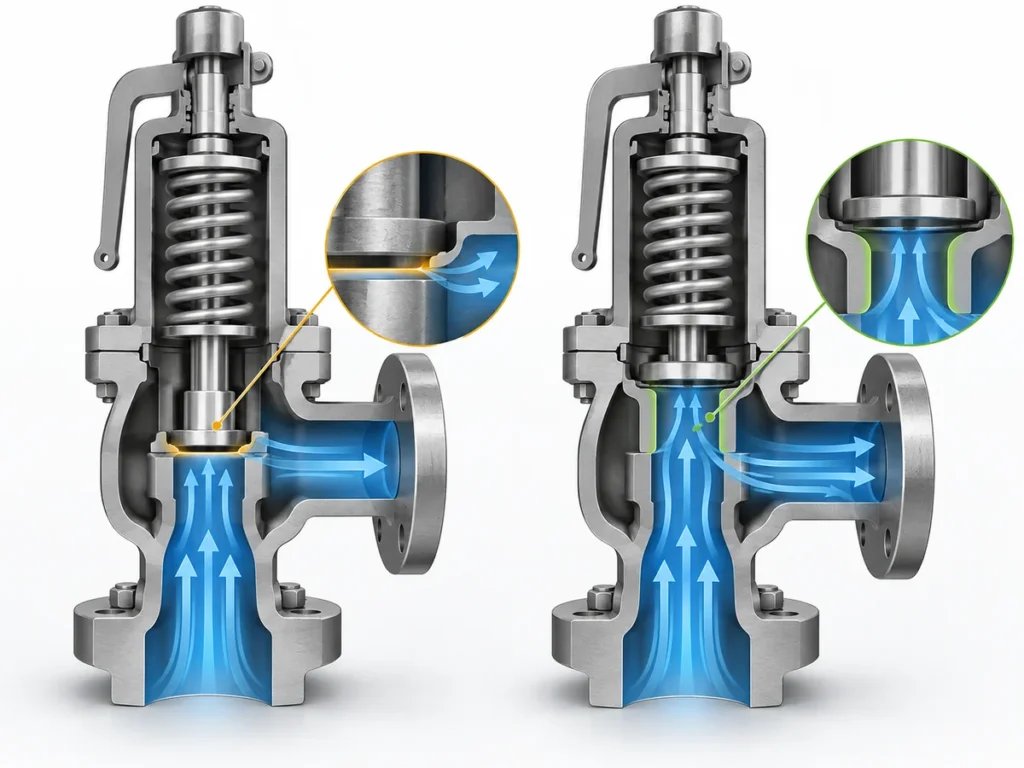
AI-generated engineering visual for connection identification only; it is not a thread standard dimension chart.
Threaded inlet
The inlet connects the valve to protected equipment or upstream piping. Thread type, gender, sealing method, inlet restriction and inlet pressure loss must be reviewed. A threaded inlet connection must not create excessive restriction, blocked flow, sealant intrusion or inlet pressure loss that affects opening behavior or valve stability.
Outlet and discharge path
The outlet must discharge safely and should not be used to support heavy downstream piping without engineering review.
Seat, spring and body
Body, trim, seat, seal and spring materials must match medium, temperature, pressure, corrosion risk and document requirements.
| Specification Item | What to Confirm | Why It Matters |
|---|---|---|
| Thread type | NPT, BSP, G, Rc or project-specific thread. | Prevents wrong fit, leakage and thread damage. |
| Thread size | Nominal inlet and outlet size. | Needed for connection matching, but not capacity proof. |
| Set pressure | Required opening pressure under specified test conditions. | Defines pressure setting, not relieving capacity. |
| Required capacity | Required relieving load and capacity basis. | Confirms pressure protection capability. |
| Material | Body, trim, seat, seal and spring. | Affects corrosion resistance, temperature suitability and documentation. |
| Documents | Datasheet, nameplate, test records, material records and inspection scope. | Supports safe procurement and replacement verification. |
Common Thread Types: NPT, BSP, G and Rc
Threaded safety valves may be described as NPT, BSP, G, Rp, Rc or R. These labels are not interchangeable. ASME B1.20.1 covers common inch pipe-thread forms including NPT. ISO 7-1 covers pipe threads where pressure-tight joints are made on the threads, including R/Rc/Rp designations. ISO 228-1 covers parallel G threads intended for assemblies where pressure tightness is not made on the thread itself. The exact designation, size, gender, tolerance, sealing surface and gauging basis should come from the approved drawing, equipment port or piping specification.
BSP is not one precise thread designation
“BSP” is frequently used as a purchasing shorthand, but it may refer to a taper thread in the ISO 7 family or a parallel G thread in the ISO 228 family. Those connections use different sealing principles. A taper thread may make the pressure-tight joint on the thread, while a G parallel thread normally needs a separate sealing face, gasket, bonded washer or other specified sealing arrangement. An RFQ that says only “BSP 1/2 inch” is therefore incomplete.
| Buyer Term | Official Reference Direction | Typical Engineering Meaning | What Must Still Be Confirmed |
|---|---|---|---|
| NPT | ASME B1.20.1 | General-purpose inch taper pipe thread; thread geometry and gauging are defined by the standard. | Size, internal/external form, engagement, sealant procedure and project acceptance. |
| R / Rc / Rp | ISO 7-1 | Pipe-thread family used where pressure-tight joints are made on the threads. | Exact external/internal designation, mating thread, sealant and gauge verification. |
| G / BSPP | ISO 228-1 | Parallel fastening thread; the standard states that pressure tightness is not made on the thread itself. | Sealing face, gasket or washer design, port geometry and tightening method. |
| “BSP” only | Incomplete purchasing description | May be used informally for different Whitworth-form thread systems. | Do not release the order until the exact standard designation is confirmed. |
Thread-standard boundary: ASME B1.20.1, ISO 7-1 and ISO 228-1 define thread geometry, designation and related verification requirements. They do not establish the safety valve’s relieving capacity, set pressure, pressure rating or code certification.
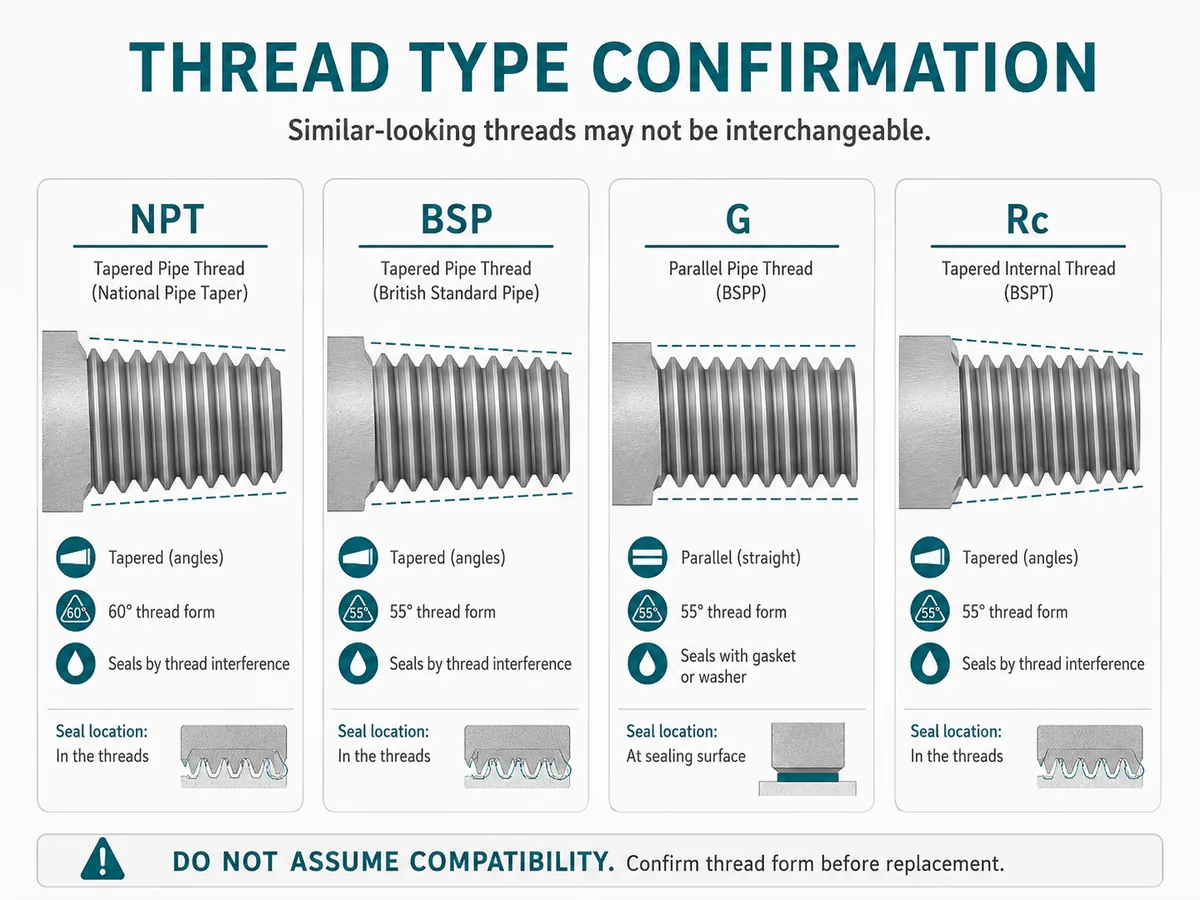
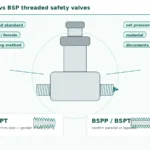
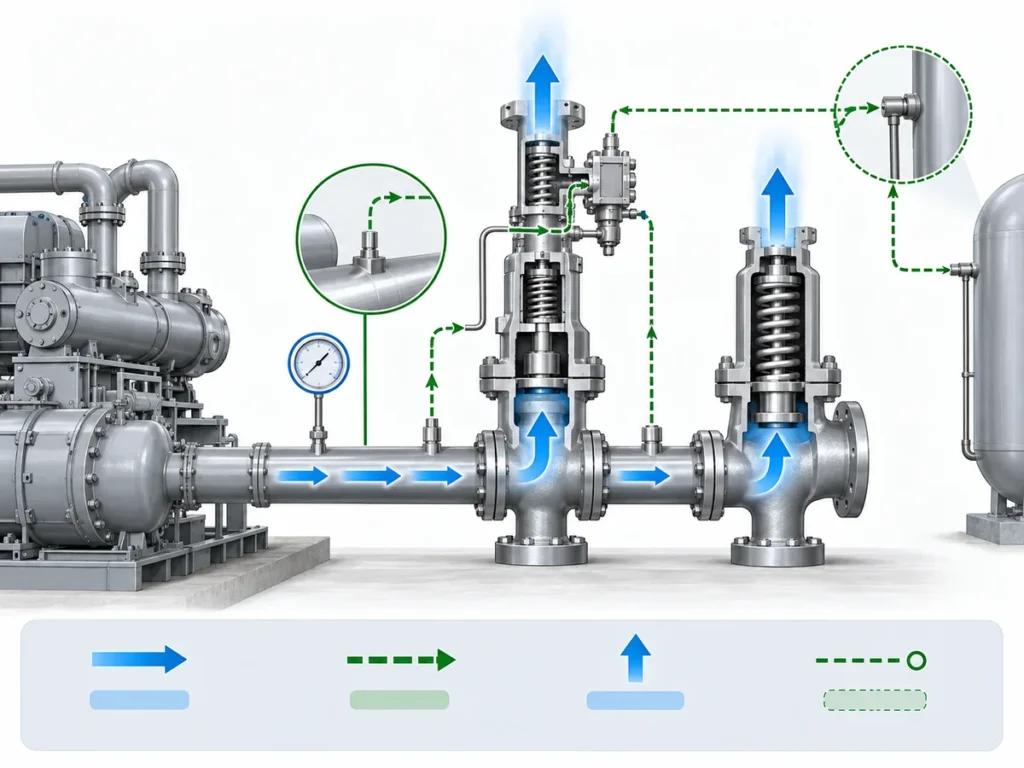
AI-generated simplified engineering illustration; it does not replace thread standards, drawings or gauge verification.
Why similar-looking threads may not be interchangeable
A common replacement mistake is assuming that similar-looking threads are interchangeable. They may not be. An NPT threaded valve should not be treated as automatically interchangeable with BSP, G or Rc threads. Thread angle, taper, pitch and sealing method may differ.
Male/female thread and sealing method
Threaded connections may be male or female. Some connections seal on the thread, while others may rely on a sealing face, gasket, washer or another arrangement. The sealing method must be confirmed rather than assumed.
Connection leakage at the threaded joint is not the same as valve seat leakage, simmer or set-pressure error. If leakage is observed, the inspection should distinguish between thread fit, sealant or gasket condition, installation stress, seat damage, set pressure behavior and service contamination before deciding on replacement. For seat-leakage testing context, review ZOBAI’s API 527 seat tightness test guide.
Thread verification workflow
Identify visible markings
Collect nameplate, body marking, old datasheet and any project drawing.
Confirm thread form
Check NPT, BSP, G, Rc or other project-defined thread using reliable evidence.
Confirm connection details
Record thread size, male/female connection, inlet/outlet arrangement and sealing method.
Verify valve duty
Do not finalize replacement until set pressure, capacity, medium and material are checked.
| Thread Question | Buyer Should Provide | Why It Is Needed |
|---|---|---|
| What thread type is required? | NPT, BSP, G, Rc or project drawing. | Prevents incompatible connection selection. |
| Is the connection male or female? | Inlet and outlet gender. | Prevents installation mismatch. |
| How does the connection seal? | Thread seal, gasket, sealing face or project method. | Separates connection leakage from seat leakage. |
| Is this a replacement? | Existing valve photos, nameplate and old datasheet if available. | Supports interchangeability review beyond thread size. |
| Is the existing thread damaged or uncertain? | Close-up photos, thread gauge result or maintenance note. | Prevents repeating a failed or damaged installation condition. |
Pressure and Capacity Terms Must Not Be Mixed
Threaded safety valve selection often fails when buyers treat thread size, set pressure and capacity as if they describe the same thing. They do not. The threaded connection defines how the valve connects to equipment or piping. It does not define the required relieving load or the selected valve capacity basis.
| Term | What It Means | Why It Matters for Threaded Safety Valves |
|---|---|---|
| Operating pressure | Normal pressure during operation. | Shows operating margin below set pressure and risk of simmer or leakage. |
| MAWP / design pressure | Pressure basis of the protected equipment or system design. | Defines pressure-protection boundary and must not be replaced by thread rating alone. |
| Set pressure | Pressure at which the valve is adjusted to begin opening under specified conditions. | Defines opening point, not the required relieving capacity. |
| Required relieving capacity | Flow rate required to control the governing relief scenario. | Must be calculated or specified from the relief case; thread size alone is not enough. |
| Selected valve capacity basis | Manufacturer-supported or documented capacity basis for the selected valve. | Must match the actual medium, pressure, temperature and back pressure conditions. |
| Pressure-temperature rating | Allowable pressure limit of material/connection at temperature, depending on the applicable rating basis. | Threaded connection and body material must be checked against service temperature and project specification. |
| Relieving pressure | Pressure used for the relieving-capacity evaluation under the governing case. | Must be consistent with the selected code, allowable overpressure and actual sizing basis. |
| Overpressure | Pressure increase above set pressure during relieving. | Affects available driving pressure, lift development and capacity; it is not defined by thread size. |
| Accumulation | Pressure increase above the protected equipment pressure limit during the event, as defined by the applicable code basis. | Determines the allowable system pressure boundary and must be linked to the governing relief scenario. |
| Blowdown / reseating | Difference between opening and reseating behavior after the event. | Affects cycling, leakage and operating stability, but does not replace capacity verification. |
| Inlet pressure loss | Pressure drop between the protected equipment and the valve inlet during relieving. | Threaded adapters, sealant intrusion, long nipples and small passages can contribute to instability or chatter. |
| Back pressure | Pressure acting at the outlet before or during discharge. | Can affect opening, lift, capacity and reseating; threaded construction does not eliminate this effect. |
Capacity caution: A 1/2 inch, 3/4 inch or 1 inch thread does not prove required relieving capacity. The governing relief scenario, fluid properties, relieving pressure, relieving temperature and back pressure must still be reviewed. For standards-focused sizing context, review ZOBAI’s API 520 safety valve sizing guide.
Capacity and test evidence are separate approvals
ISO 4126-1 provides general product requirements for safety valves and explicitly identifies itself as a product standard rather than an application-design standard. For refinery and related applications within its scope, API 520 Part I addresses sizing and selection. Neither source allows a buyer to infer capacity from NPT, BSP, G or Rc connection size.
| Evidence | What It Supports | What It Does Not Prove Alone |
|---|---|---|
| Thread drawing or gauge record | Connection form, size and fit-up basis. | Set pressure, relieving capacity or material suitability. |
| Set-pressure test record | Opening adjustment under recorded test conditions. | Required capacity, certified capacity or installed stability. |
| Seat-tightness report | Closed-valve leakage under the stated test method. | Thread-joint integrity, capacity or correct relief scenario. |
| Certified/documented capacity data | Supported flow capability for a defined model and conditions. | That the plant relief calculation, inlet line and outlet system are correct. |
| Pressure-temperature rating | Allowable material/connection boundary at temperature. | Capacity or compatibility with every process medium. |
Typical engineering scenario: a replacement valve can pass its set-pressure and seat-leakage tests yet remain unsafe if its internal orifice or documented capacity is lower than the governing relief load. The correction is to compare the current required capacity with model-specific capacity evidence before accepting a same-thread replacement.
Where Are Threaded Safety Valves Commonly Used?
Threaded safety valves are often considered where the equipment connection or piping system uses threaded ports and where the required capacity, pressure rating, service condition and project specification allow a threaded connection.
Compact skids and OEM equipment
Threaded valves may be used where space, piping layout and equipment ports are already defined by a skid or OEM design.
Small vessels and utility systems
They may be considered for selected air, gas, water, steam or auxiliary systems when threaded piping is specified.
Replacement and distributor applications
Distributors often receive old valve photos or partial nameplate data, but replacement must not rely on appearance alone.
Preliminary selection matrix
| Condition | Why Threaded May Be Reviewed | Data Still Needed |
|---|---|---|
| Equipment has a threaded port | The connection may match the equipment interface. | Thread form, size, gender, sealing method, pressure rating and service duty. |
| Compact skid or OEM package | Threaded connection may fit limited space and package piping. | Relief scenario, required capacity, vibration, discharge route and maintenance access. |
| Distributor replacement inquiry | Threaded valves are often replaced from existing photos or partial records. | Nameplate, old datasheet, thread evidence, medium, set pressure and capacity basis. |
| Utility air, gas, water or steam service | Threaded connection may be used where project specification allows. | Medium/phase, temperature, material, seat/seal, discharge safety and documents. |
Engineering boundary: Convenience is not a selection basis. Capacity, pressure rating, temperature, back pressure, materials and discharge safety remain necessary.
When a Threaded Safety Valve May Not Be Suitable
A threaded safety valve may not be suitable when the required relieving load, piping specification, vibration, maintenance practice, pressure-temperature condition or project documentation requires another connection type.
Capacity and pressure-rating limits
Threaded connection size does not prove relieving capacity. A buyer should not assume that a larger thread automatically means sufficient capacity or that a same-size threaded replacement will pass the same flow. For capacity-related decisions, review safety valve sizing and certified capacity.
Vibration, maintenance and outlet piping
Threaded connections can be sensitive to installation quality, repeated removal, vibration, sealant practice and piping stress. If the equipment vibrates, the outlet piping is heavy, or the valve must be frequently removed for inspection, the connection and installation should be reviewed carefully.
When a flanged connection may be reviewed
A flanged safety valve may be reviewed when the system requires easier removal, larger connection size, heavier piping, formal piping-class alignment, higher documentation expectations or a project specification that calls for flanged connections.
Review threaded carefully when
- The required relieving capacity is not yet calculated or documented.
- The outlet line is heavy, vibrating, restricted or connected to a header.
- The thread form is uncertain or the old valve is damaged.
- The medium is corrosive, dirty, high-temperature, freezing or polymerizing.
Do not assume
- Do not assume thread size proves capacity.
- Do not assume NPT, BSP, G and Rc are interchangeable.
- Do not assume stainless steel or brass automatically suits the medium.
- Do not assume a standard name proves final compliance.
Threaded Safety Valve vs Flanged Safety Valve
The difference between a threaded safety valve and a flanged safety valve is mainly the end connection. Both may serve pressure relief functions, but installation, maintenance, documentation and piping interface can be different.
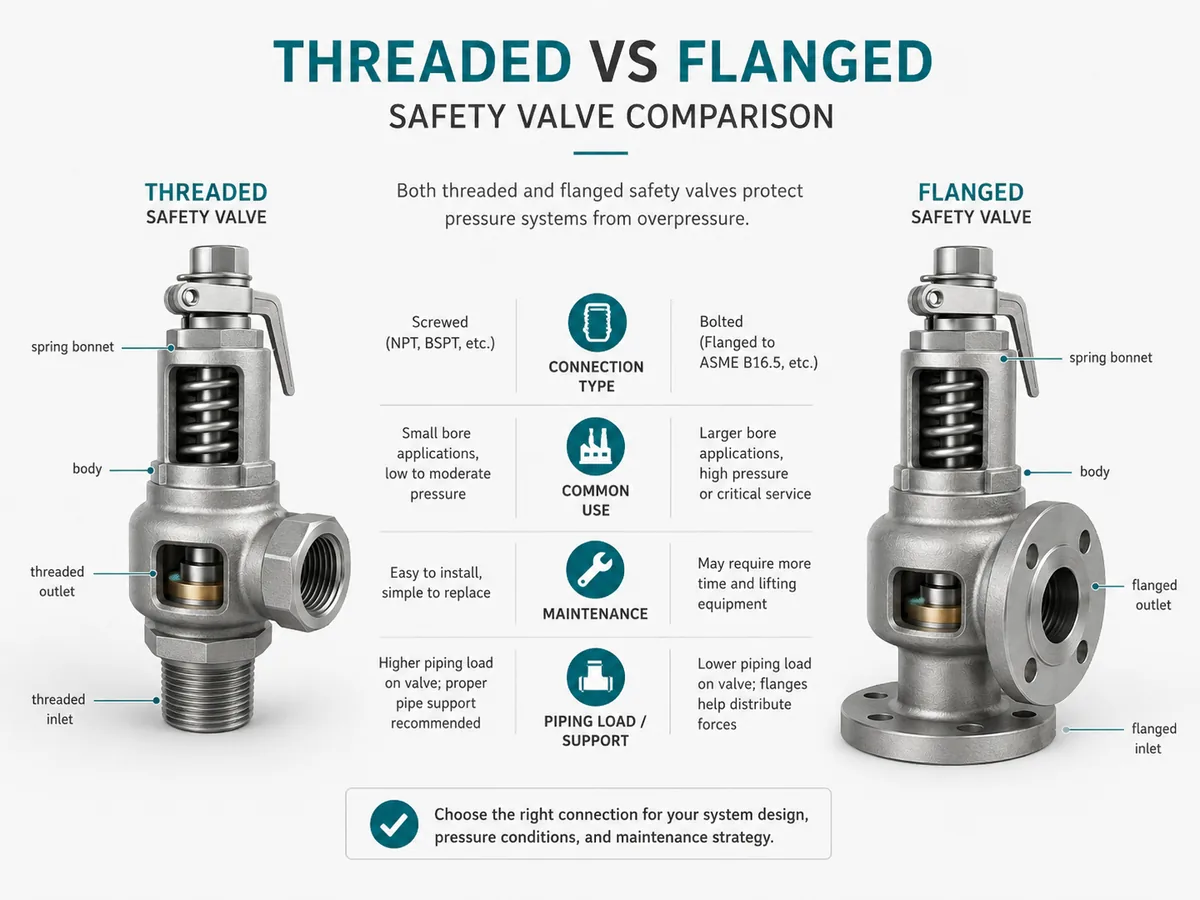
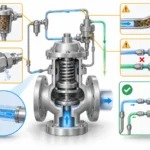
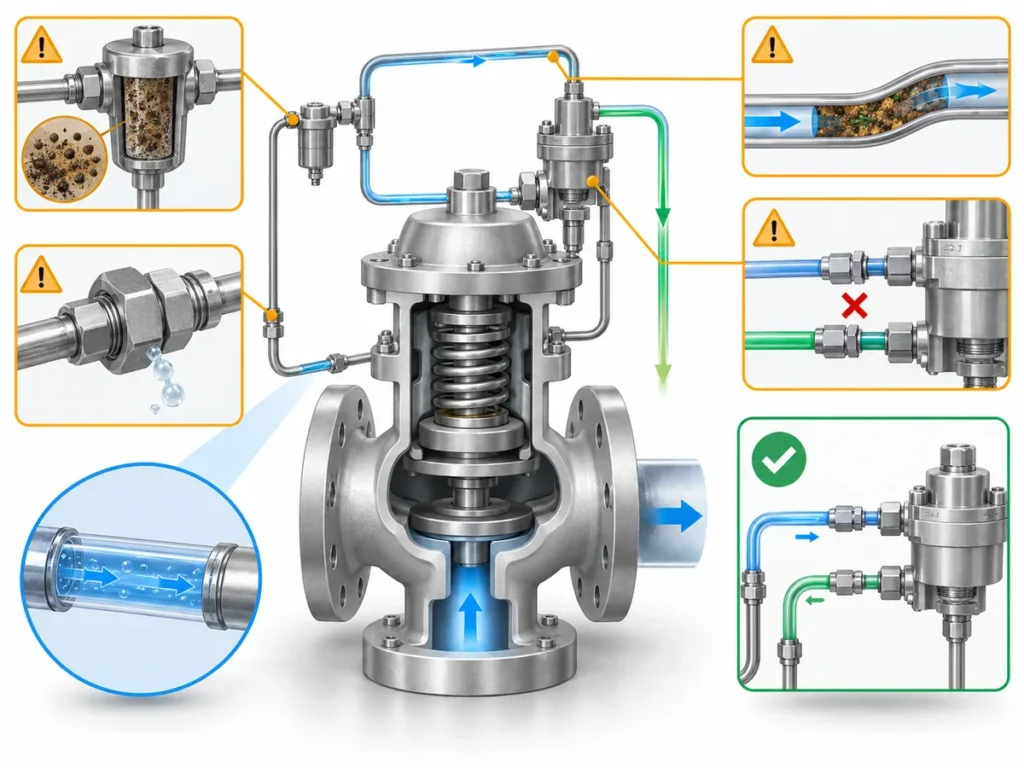
AI-generated selection-boundary illustration, not a universal ranking of connection types.
| Selection Factor | Threaded Safety Valve | Flanged Safety Valve |
|---|---|---|
| Typical connection | Screwed connection. | Bolted flange connection. |
| Common use | Compact equipment, skids, small vessels and utility systems. | Larger piping systems, formal process lines and heavier outlet piping. |
| Capacity assumption | Thread size does not prove capacity. | Flange size does not prove capacity. |
| Maintenance | Requires thread and sealing review during removal and reinstallation. | Often easier to remove and reinstall in piping systems. |
| Project specification | Suitable only if allowed by project requirements. | Often specified by piping class or project standard. |
| Documentation | Must still confirm datasheet, material, test and capacity basis. | May align more directly with piping class and flange standard documentation. |
Engineering Checks Before Selecting a Threaded Safety Valve
Before selecting a threaded safety valve, review the connection as part of the full pressure-protection system. The valve, inlet path, outlet path, sealing method, medium, capacity basis and documents all affect the decision. Official installation guidance for pressure-relieving devices within the API scope is provided by API 520 Part II; its installation focus does not make every API recommendation automatically applicable to every industry or jurisdiction.
Back pressure and outlet piping review
| Item | What to Check | Why It Matters |
|---|---|---|
| Threaded inlet path | Thread engagement, sealant position, upstream restriction and inlet pressure loss. | Excessive restriction or sealant intrusion can affect valve opening behavior, stability and capacity review. |
| Superimposed back pressure | Outlet pressure already present before the valve opens. | May affect opening behavior, capacity or selected configuration. |
| Built-up back pressure | Pressure created in outlet piping during relieving flow. | May reduce capacity or create instability if discharge path is restricted. |
| Outlet piping load | Pipe weight, vibration, thermal movement and support. | A threaded outlet should not be used as structural support for heavy piping. |
| Discharge direction | Safe venting, drainage and routing away from personnel or equipment hazards. | Threaded connection does not remove the need for safe discharge design. |
For deeper back-pressure terminology and balanced-bellows context, review ZOBAI’s back pressure and bellows guide.
Medium and material screening
| Service Condition | Main Risk | What to Confirm |
|---|---|---|
| Steam or high-temperature service | Seat, spring, gasket and body material may be temperature-limited. | Relieving temperature, material rating, bonnet/cap arrangement and discharge condition. |
| Corrosive medium | Body, trim, spring, thread area and seal may corrode differently. | Medium composition, concentration, temperature and material compatibility. |
| Dirty or particle-containing service | Seat damage, leakage or blocked flow path may occur. | Fluid cleanliness, filtration, maintenance access and seat material. |
| Liquid or two-phase service | Sizing and discharge behavior differ from gas/vapor service. | Phase, density, viscosity, back pressure and relief scenario basis. |
| Freezing or outdoor service | Threaded connection, outlet or drain path may freeze or restrict discharge. | Ambient condition, insulation, drainage, orientation and material suitability. |
Component-level material review
| Component | Threaded-Valve Risk | Review Before Approval |
|---|---|---|
| Body and threaded boss | Over-tightening, corrosion, thread galling, cracking or reduced wall at the connection. | Material grade, pressure-temperature limit, engagement, wrenching method and corrosion mechanism. |
| Nozzle, disc and seat | Particles or sealant can damage the seating surfaces and create leakage. | Trim material, seat type, process cleanliness and test acceptance basis. |
| Guide and spindle | Misalignment from piping load or deposits can restrict lift and reseating. | Guide clearance, orientation, vibration, maintenance history and material pairing. |
| Spring | Temperature, corrosion or relaxation can shift set pressure. | Spring range, material, bonnet environment and service temperature. |
| Soft seat, gasket or washer | Swelling, hardening, extrusion or incorrect face geometry can cause leakage. | Exact compound, temperature, medium, sealing-face design and replacement traceability. |
| Outlet connection | Heavy piping can rotate or overload the threaded body connection. | Independent support, thermal movement, reaction force and safe discharge routing. |
Installation do / do-not checklist
Do
- Confirm thread form, size, gender and sealing method before installation.
- Keep the inlet path short, clean and consistent with the project pressure-loss basis.
- Support outlet piping so the valve body is not carrying pipe weight.
- Confirm safe discharge, drainage and maintenance access.
- Record nameplate, datasheet and test documentation for replacement history.
Do not
- Do not force mismatched threads to fit.
- Do not use excessive sealant that may enter the flow path.
- Do not select by thread size and set pressure only.
- Do not ignore vibration, outlet load or repeated removal.
- Do not claim compliance without selected model and document review.
Typical engineering scenario: a valve installed with excessive PTFE tape or paste can shed material into the inlet or leave sealant projecting into the flow path. The observed problem may be seat leakage, delayed lift or unstable operation rather than an external joint leak. The correct action is to remove the valve, inspect the inlet and seat, restore the approved sealing procedure and verify the as-left set pressure and seat condition before return to service.
For broader inlet/outlet piping and discharge considerations, review the safety valve installation guide.
Selection Data Required Before RFQ
A threaded safety valve inquiry should include both pressure-relief data and connection data. Without both, the quotation may be incomplete or technically unsafe.
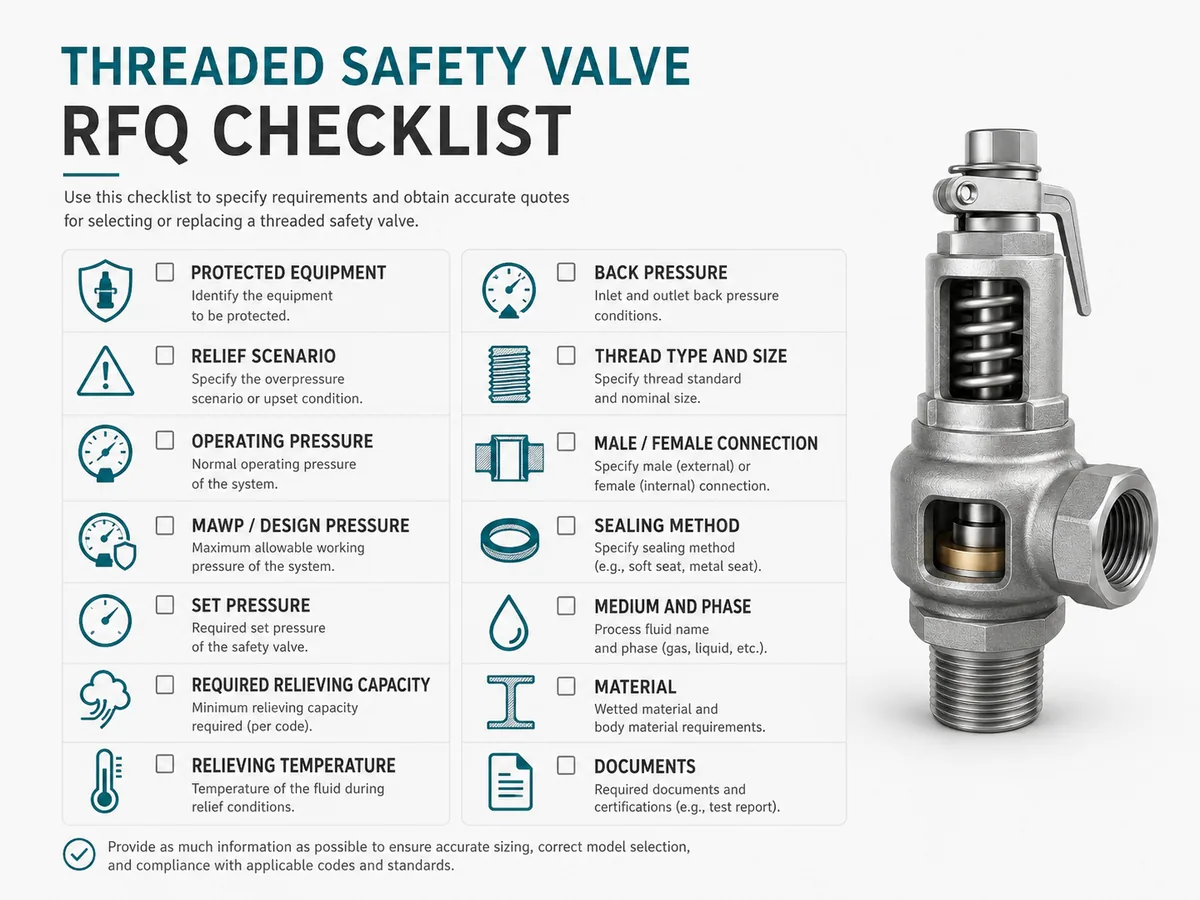
AI-generated RFQ illustration. A quotation or replacement review should not be based only on thread size, set pressure or photos.
| Data Group | Required Input | Why It Matters |
|---|---|---|
| Protected equipment | Vessel, tank, skid, compressor, pipeline, utility system or OEM equipment. | Defines the protected system and design basis. |
| Relief scenario | Blocked outlet, fire case, thermal expansion, regulator failure or other case. | Determines required relieving load. |
| Pressure data | Operating pressure, MAWP/design pressure, set pressure and allowable overpressure basis. | Prevents pressure-definition errors. |
| Capacity data | Required relieving rate, fluid properties and capacity basis. | Prevents selection by thread size only. |
| Thread data | Thread type, size, male/female connection, inlet/outlet details and sealing method. | Prevents mismatch during ordering or replacement. |
| Back pressure and piping | Outlet pressure, discharge route, pipe support, restriction and drainage. | Affects capacity, stability, leakage and safe discharge. |
| Materials/documents | Body, trim, seat, seal, spring, certificates, tests and inspection scope. | Supports procurement and compliance review. |
Test and documentation matrix
| Document / Check | What It Supports | What It Does Not Prove Alone |
|---|---|---|
| Datasheet | Model, size, connection, set pressure, material and service basis. | Does not replace relief calculation or project approval. |
| Nameplate | Identification and key valve information. | Does not prove interchangeability if capacity, thread form or material are unclear. |
| Set pressure test | Opening pressure under specified test conditions. | Does not prove required relieving capacity. |
| Seat tightness test | Leakage performance against a defined test method and acceptance basis. | Does not prove the thread connection will not leak if installed incorrectly. |
| Material records | Traceability for specified parts where required. | Does not prove service compatibility without medium and temperature review. |
| Capacity basis | Whether selected valve can pass the required relieving load. | Must still match actual medium, relieving pressure, temperature and back pressure. |
API 527 describes seat-tightness test methods for applicable metal- and soft-seated pressure relief valves. It does not verify the threaded joint, required relieving capacity or plant installation. Where ASME/National Board certification is required, the National Board NB-18 database can be used to review manufacturers, assemblers and certified device information; the listing must still be matched to the exact model and configuration being purchased.
For pressure-temperature context, review ZOBAI’s pressure-temperature ratings guide. For broader terminology differences, review PRV vs PSV vs safety valve vs relief valve.
Common Mistakes When Buying or Replacing Threaded Safety Valves
Threaded safety valve mistakes often happen because the visible connection is easy to identify while the pressure-protection function is harder to verify.
| Mistake | Why It Is Risky | Correct Check |
|---|---|---|
| Selecting by thread size only | Same thread size may not mean same capacity or construction. | Confirm thread type, set pressure, capacity, material and documents. |
| Confusing NPT/BSP/G/Rc | Similar appearance may hide different thread forms. | Confirm exact thread standard, gender and sealing method. |
| Ignoring capacity | Thread size is not orifice area. | Confirm required relieving capacity and selected valve capacity basis. |
| Ignoring medium | Material and seat may be unsuitable. | Confirm medium, phase, temperature and corrosion risk. |
| Ignoring outlet piping | Discharge may create back pressure, vibration or mechanical load. | Confirm outlet route, support, drainage and safe discharge. |
| Replacing by appearance | Similar-looking valves may not be interchangeable. | Check nameplate, datasheet, thread form and service data. |
| Using more sealant to force a mismatch | Sealant cannot correct incompatible thread geometry and may enter the valve inlet. | Stop installation, identify the thread standard and inspect both mating components. |
| Assuming thread pressure rating equals valve rating | The allowable limit depends on the complete valve design, material and temperature—not the thread label alone. | Use the selected model datasheet and approved pressure-temperature basis. |
| Ignoring as-found evidence after removal | Cleaning or adjustment can erase the evidence of set-pressure drift, deposits or leakage. | Record as-found condition before cleaning or recalibration. |
Replacement Verification Workflow
For a replacement inquiry, the safest workflow is to verify both the connection and the pressure-protection duty. A clear photo can help, but it cannot replace set pressure, capacity, material and service data.
Collect existing evidence
Send full valve photos, nameplate, inlet/outlet thread close-ups, installation photos and old datasheet if available.
Confirm connection
Verify thread type, size, male/female connection, sealing method and any damaged thread condition.
Confirm duty
Review protected equipment, relief scenario, set pressure, MAWP/design pressure and required capacity.
Confirm documents
Check material records, test requirements, capacity basis, inspection scope and project specification.
Composite engineering scenarios for training
The following examples are composite engineering scenarios for training. They do not describe a real customer project, product proof, certified capacity test, accident record or guaranteed ZOBAI model capability.
Compact air receiver replacement
A buyer sends an old threaded safety valve photo from an air receiver, but the nameplate is unclear. ZOBAI would still need set pressure, receiver MAWP/design pressure, required capacity, thread type, medium, temperature and outlet arrangement.
Vibrating compressor package
A threaded valve may fit the port, but vibration, outlet support, inlet pressure loss and maintenance access may change the connection decision.
BSP/NPT replacement confusion
A distributor requests a same-size threaded valve, but the old equipment may use a different thread form. Thread standard and sealing method must be verified before quotation.
Outlet piping rotates the threaded valve body
A small threaded valve is connected to an unsupported discharge line. Thermal movement and pipe weight rotate the valve, damage the thread joint and transmit load into the seat and guide. The correction is to support the outlet independently, inspect the body and trim, replace damaged threaded parts and retest the valve. The prevention is to treat the outlet as a pressure-relief system component rather than as a convenient pipe support point.
Return-to-service checks after repair or replacement
| Step | Minimum Check | Reason |
|---|---|---|
| Identity | Tag, serial number, model, thread form, set pressure and service match the approved record. | Prevents cross-installation and wrong-thread replacement. |
| As-found / repair record | Set-pressure drift, leakage, deposits, damaged parts and repair scope are documented. | Preserves evidence for interval and root-cause review. |
| As-left verification | Set pressure, seat tightness and required functional checks are completed under the approved procedure. | Confirms bench condition after repair; it does not replace capacity or installation approval. |
| Thread and seal | Mating thread, engagement, sealing method and installation torque procedure are correct. | Controls external leakage, cracking, galling and sealant intrusion. |
| Piping | Inlet is unrestricted; outlet is independently supported, drained and safely routed. | Reduces chatter, mechanical load and back-pressure risk. |
| Traceability | Nameplate, seal and final test documents are retained. | Supports later inspection, repair and replacement decisions. |
What ZOBAI Needs to Review a Threaded Safety Valve Inquiry
For a new threaded safety valve inquiry, send the protected equipment, relief scenario, medium and phase, operating pressure, MAWP or design pressure, set pressure, required relieving capacity, relieving temperature, back pressure, inlet and outlet thread details, material requirements, applicable standard and required documents.
For a replacement inquiry, also send photos of the existing valve, nameplate, inlet thread, outlet thread, installation position and surrounding piping. If the old datasheet is available, include it.
- Protected equipment and governing relief scenario
- Medium, phase, operating pressure, MAWP/design pressure and set pressure
- Required relieving capacity and capacity basis
- Relieving temperature and back pressure
- Thread type, thread size, male/female connection and sealing method
- Body, trim, seat, seal, spring, standard and document requirements
- Existing datasheet, nameplate and installation photos for replacement
FAQ About Threaded Safety Valves
What does threaded safety valve mean?
A threaded safety valve is a safety valve or pressure relief valve with screwed end connections at the inlet, outlet or both. The connection style does not define set pressure, capacity, materials or code acceptance.
Is a threaded safety valve the same as a threaded pressure relief valve?
The terms may overlap in buyer communication, but the correct terminology depends on the fluid, operating behavior, code context and regional practice. Confirm the protected equipment, relief scenario, valve function and certification route.
Can I replace a threaded safety valve by thread size only?
No. Thread size does not prove thread form, gender, sealing method, set pressure, orifice, relieving capacity, material, seat design or documentation. Use the original datasheet, nameplate and current service conditions.
What is the difference between NPT and BSP threaded safety valves?
NPT is covered by ASME B1.20.1. “BSP” is an imprecise purchasing term that may refer to taper threads in the ISO 7 family or parallel G threads in ISO 228-1. They should not be assumed interchangeable.
Is BSP the same as G or Rc thread?
No. G is a parallel ISO 228-1 thread where the pressure-tight seal is normally made by a separate face or gasket. Rc is a taper internal thread in the ISO 7-1 family where the joint may be sealed on the thread.
Can more PTFE tape make mismatched threads safe?
No. Sealant cannot correct incompatible thread geometry. Excessive tape or paste may damage the threads, mask poor engagement or enter the valve inlet and contaminate the seat.
When should I choose flanged instead of threaded?
A flanged valve may be preferred when the project requires larger flow capacity, heavier outlet piping, repeated removal, piping-class alignment, easier inspection access or a specified flanged connection.
Does thread size determine relieving capacity?
No. Capacity depends on the governing relief scenario, selected orifice, medium properties, relieving pressure, temperature, lift and back pressure. Connection size only describes the piping interface.
Does a threaded connection determine the valve pressure rating?
No. The allowable pressure-temperature boundary belongs to the complete selected valve design, materials and manufacturer data. A thread designation by itself is not a valve pressure rating.
How does back pressure affect a threaded safety valve?
Back pressure can affect opening, lift, capacity and reseating just as it can with flanged valves. Threaded construction does not make a conventional valve balanced against outlet pressure.
Why can a threaded safety valve leak after installation?
Leakage may come from the thread joint, valve seat, gasket or sealing face. Causes include wrong thread form, insufficient or excessive engagement, unsuitable sealant, piping load, contamination, seat damage or operation too close to set pressure.
What materials should be checked?
Check the body, threaded boss, nozzle, disc, seat, guide, spindle, spring, seals, gaskets and external components. Body material alone does not prove compatibility with the medium, temperature or ambient environment.
Does API 527 prove that a threaded safety valve has enough capacity?
No. API 527 addresses seat-tightness testing for applicable pressure relief valves. It does not prove required capacity, certified capacity, thread compatibility or installed-system performance.
What official standards define NPT, Rc and G pipe threads?
ASME B1.20.1 covers NPT and related inch pipe threads. ISO 7-1 covers R, Rc and Rp pressure-tight thread designations. ISO 228-1 covers parallel G threads where pressure tightness is not made on the thread.
What information should I send before RFQ?
Send protected equipment, relief scenario, medium and phase, operating pressure, MAWP or design pressure, set pressure, required capacity, relieving temperature, back pressure, exact thread designation, size, gender, sealing method, materials, standards and documents.
Can threaded safety valves be used for steam, gas or liquid?
They may be used in selected services if the valve design, capacity, pressure-temperature rating, materials, seat or seal and discharge arrangement are suitable. The fluid phase must be defined before sizing and selection.
What should be checked after repair or reinstallation?
Verify valve identity, as-found and as-left records, set pressure, seat tightness, thread condition, sealing method, inlet cleanliness, outlet support, drainage, nameplate and final seal before return to service.
Does National Board NB-18 prove that any same-size valve is interchangeable?
No. NB-18 provides certification information for manufacturers, assemblers and certified devices. Approval still requires matching the exact manufacturer, model, design, capacity and project certification route.
Technical References
The following official sources support thread identification, safety-valve product requirements, sizing, installation, testing and certification context. A reference does not prove that any specific ZOBAI model is certified or suitable; approval must be tied to the selected model, service conditions, relief calculation and project requirements.
| Official Reference | What It Supports | Use Boundary |
|---|---|---|
| ASME B1.20.1 — Pipe Threads, General Purpose, Inch | NPT and related inch pipe-thread dimensions and gauging. | Does not establish valve capacity, material suitability or code certification. |
| ISO 7-1 — Pipe threads where pressure-tight joints are made on the threads | R/Rc/Rp thread designations, dimensions and tolerances. | Does not prove that an unspecified “BSP” connection is compatible. |
| ISO 228-1 — Parallel pipe threads | G parallel thread form for assemblies where pressure tightness is not made on the thread. | Requires a separate sealing arrangement; the thread alone is not the seal. |
| ISO 4126-1 — Safety valves | General product requirements for safety valves. | ISO states that it is a product standard, not an application-design standard. |
| API 520 Part I — Sizing and Selection | Pressure-relief device sizing and selection within its refinery-related scope. | Does not make connection size a capacity proof or apply automatically to all industries. |
| API 520 Part II — Installation | Installation review and engineering analysis for PRDs within its scope. | Does not correct an undersized valve or wrong thread connection. |
| API 527 — Seat Tightness of Pressure Relief Valves | Seat-tightness methods for applicable metal- and soft-seated PRVs. | Does not prove certified capacity, field stability or threaded-joint integrity. |
| ASME BPVC Section XIII — Rules for Overpressure Protection | ASME overpressure-protection framework and PRD requirements in the applicable BPVC context. | Project adoption, equipment section and jurisdiction still require confirmation. |
| ASME PTC 25 — Pressure Relief Devices | Performance-test terminology and test context for pressure relief devices. | Does not replace the selected code, capacity certification or plant relief calculation. |
| National Board NB-18 — Pressure Relief Device Certification | Manufacturer, assembler and certified-device information in the National Board program. | The listing must match the exact manufacturer, model, design and certification route. |
Standards and Engineering Limitation Note
Threaded safety valve selection may involve pipe-thread standards, safety-valve product standards, overpressure-protection codes, sizing methods, installation guidance and test standards. These references serve different purposes. ASME B1.20.1, ISO 7-1 and ISO 228-1 define thread systems; they do not certify a safety valve. ISO 4126-1 addresses safety-valve product requirements but not the complete application design.
Final selection depends on real service conditions, governing relief scenario, selected manufacturer data, applicable standard version, project specification and local regulatory requirements. This article is for engineering communication and RFQ preparation; it does not replace formal relief sizing, selected model datasheets, capacity verification, applicable code review or project authority approval.
Technical Review Note
This article is prepared for procurement buyers, replacement users, maintenance teams and engineers who need to understand threaded safety valve connection requirements before quotation or replacement. It does not claim that every threaded safety valve is suitable for every medium, pressure, temperature, capacity or jurisdiction.
Coverage: threaded connection definition, NPT/R/Rc/Rp/G boundaries, pressure and capacity terminology, back pressure, materials, installation, test evidence, replacement verification and RFQ data. Publication should still receive project-specific technical and compliance review before use as a selection specification.