Ventiltypen & Anschlussauswahl Was ist ein Sicherheitsventil mit Gewindeanschluss? Ein Sicherheitsventil mit Gewindeanschluss ist ein Sicherheitsventil oder Druckentlastungsventil mit verschraubten Endanschlüssen anstelle von Flansch-, Schweiß- oder Klemmverbindungen. Der Anschluss kann bei kompakten Geräten und kleineren Versorgungssystemen praktisch sein, aber “Gewinde” beschreibt nur die Rohrleitungsschnittstelle. Es bedeutet nicht …

Ventiltypen & Anschlusswahl
Was ist ein Sicherheitsventil mit Gewindeanschluss?
Ein Sicherheitsventil mit Gewindeanschluss ist ein Sicherheitsventil oder Druckentlastungsventil mit verschraubten Endanschlüssen anstelle von Flansch-, Schweiß- oder Klemmverbindungen. Der Anschluss kann bei kompakten Geräten und kleineren Versorgungssystemen praktisch sein, aber “Gewinde” beschreibt nur die Rohrleitungsschnittstelle. Es beweist nicht die Gewindenorm, die Druck-Temperatur-Bewertung, den Ansprechdruck, die erforderliche oder zertifizierte Abblasekapazität, die Sitzdichtheit, die Materialverträglichkeit oder die Code-Akzeptanz. Vor der Anfrage oder dem Austausch bestätigen Sie die geschützte Ausrüstung, das maßgebliche Entlastungsszenario, das Medium und die Phase, den Betriebsdruck, den MAWP oder Auslegungsdruck, den Ansprechdruck, die Überdruck- oder Aufstauungsbasis, die erforderliche Kapazität, die Entlastungstemperatur, den Gegendruck, die genaue Gewindebezeichnung, die Abdichtungsmethode, die Materialien und die Dokumentation.
Hauptdefinition
Ein Druckentlastungsgerät mit verschraubten Endanschlüssen.
Hauptrisiko für Käufer
Austausch nur anhand der Gewindegröße, des Aussehens oder teilweiser Daten auf dem Typenschild.
Priorität bei der Angebotsanfrage
Gewindeform, Druckdaten, erforderliche Kapazität, Medium und Dokumente bestätigen.
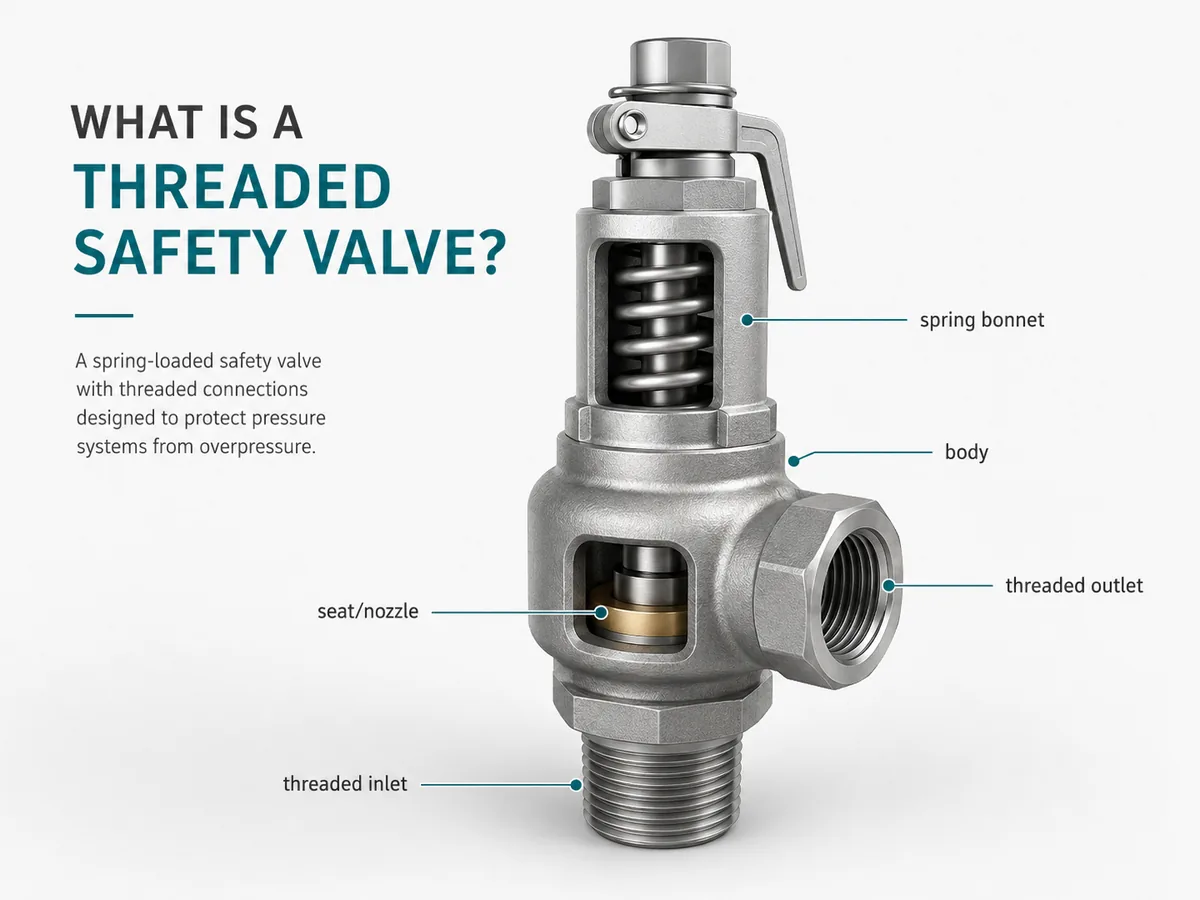
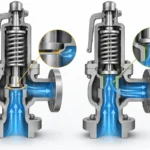
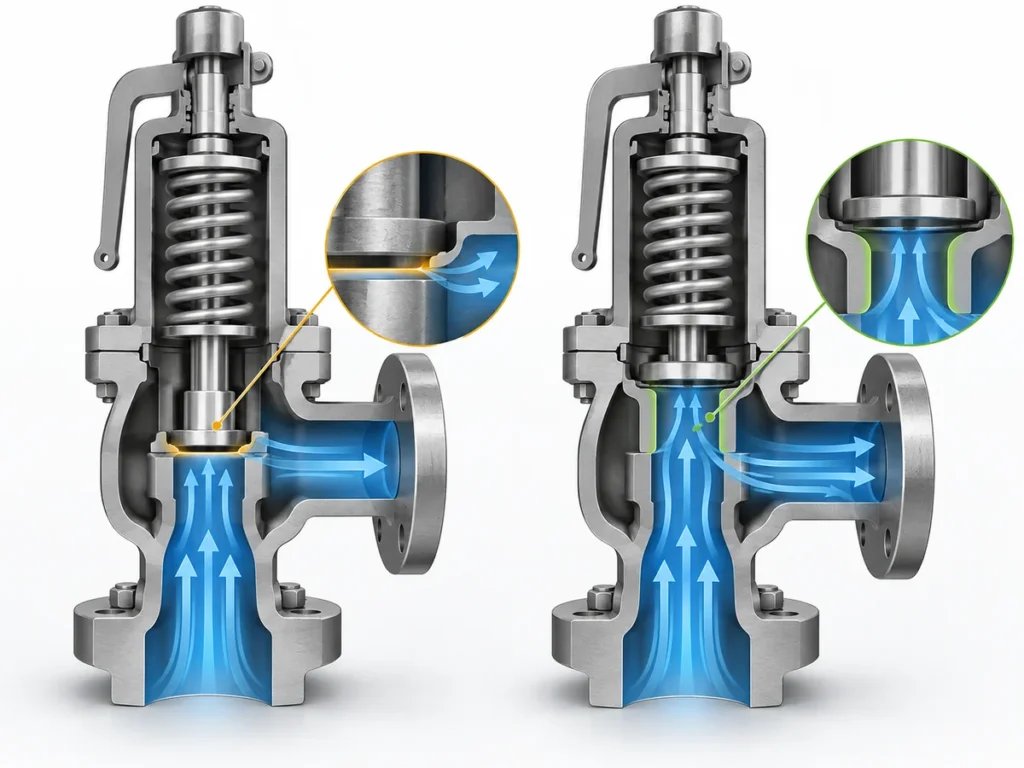
KI-generierte technische Abbildung nur zur Illustration des Artikels. Das endgültige Produkterscheinungsbild, der Gewindetyp, das Material, der Ansprechdruck und die Kapazität müssen anhand des ausgewählten Modells und der Projektspezifikation bestätigt werden.
Schnelle Antwort: Was ist ein Sicherheitsventil mit Gewindeanschluss?
A Sicherheitsventil mit Gewindeanschluss ist ein Sicherheitsventil oder Druckentlastungsventil mit Gewindeanschlüssen. Käufer können es auch als Schraubensicherheitsventil, Gewinde-Druckentlastungsventil, Gewinde-PSV oder Gewinde-PRV bezeichnen.
Der Gewindeanschluss kann für kompakte Geräte, kleinere Behälter, Versorgungssysteme, Skid-Anlagen, Kompressoren oder Ersatzanwendungen, bei denen der Geräteanschluss bereits über ein Gewinde verfügt, praktisch sein. Die Anschlussart ist jedoch nur ein Teil der Spezifikation. Eine korrekte Anfrage muss immer noch die geschützte Ausrüstung, das Entlastungsszenario, das Medium und die Phase, den Betriebsdruck, den MAWP oder den Auslegungsdruck, den Ansprechdruck, die erforderliche Abblasekapazität, die Abblasetemperatur, den Gegendruck, die Gewindeart, das Material, die Sitz-/Dichtungsanforderungen und die Dokumente bestätigen.
Für Produktfamilienoptionen siehe ZOBAI Sicherheitsventile mit Gewindeanschluss. Für die technische Prüfung senden Sie bitte Ihre Betriebs- und Anschlussdaten vor der Angebotserstellung oder dem Austausch.
Hauptteile und Anschlussmerkmale eines Sicherheitsventils mit Gewindeanschluss
Ein Sicherheitsventil mit Gewindeanschluss ist in erster Linie immer noch ein Druckschutzgerät. Das Gewinde ist nur die Verbindungsmethode. Das Ventil muss unter den spezifizierten Betriebsbedingungen immer noch korrekt öffnen, entlasten, die erforderliche Kapazität durchlassen und wieder schließen.
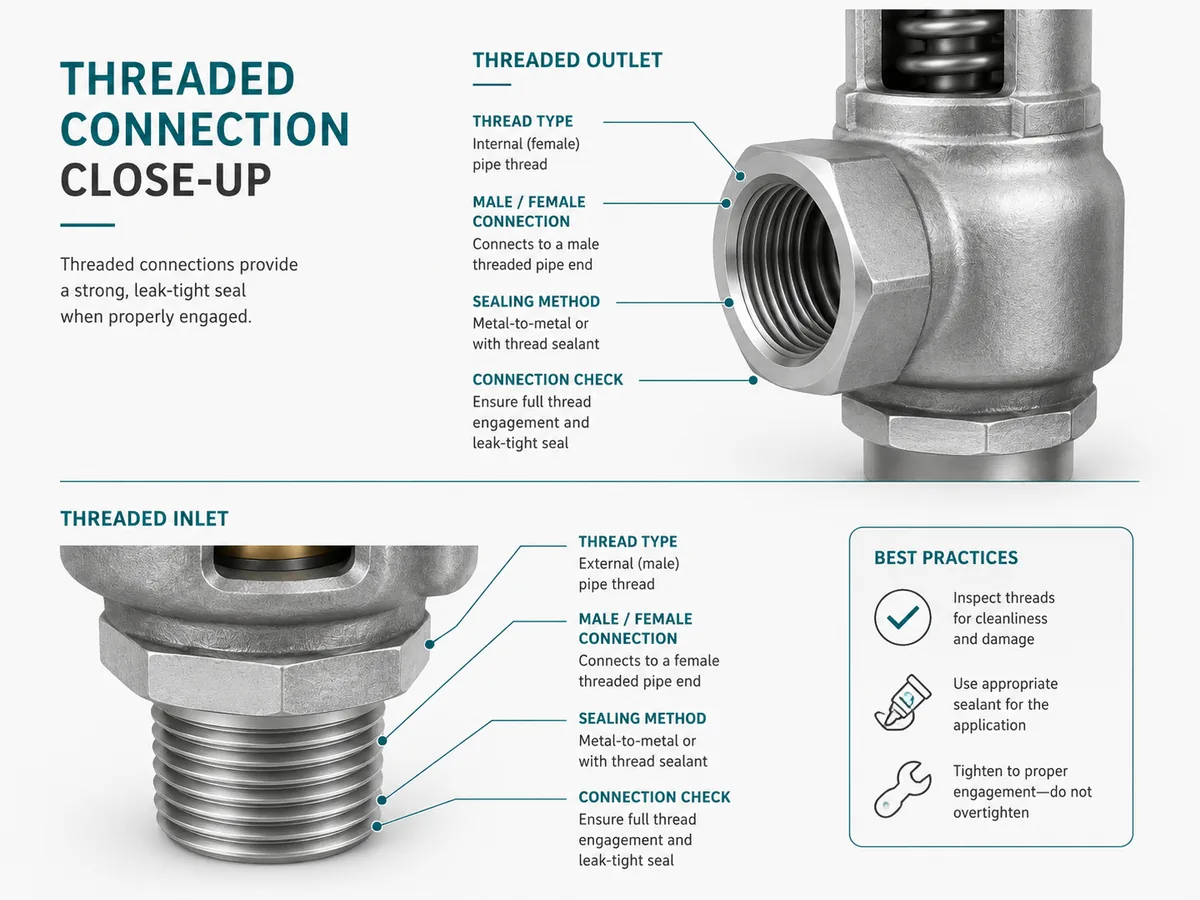
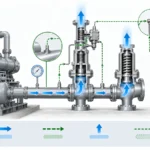
KI-generierte technische Darstellung zur reinen Kennzeichnung des Anschlusses; dies ist keine Tabelle mit Gewindestandardmaßen.
Gewindeanschluss Eingang
Der Eingang verbindet das Ventil mit der geschützten Ausrüstung oder der vorgelagerten Rohrleitung. Gewindetyp, Außengewinde/Innengewinde, Dichtungsmethode, Einlassdrosselung und Einlassdruckverlust müssen geprüft werden. Ein Gewindeanschluss am Eingang darf keine übermäßige Drosselung, blockierten Durchfluss, Eindringen von Dichtmittel oder Einlassdruckverlust verursachen, der das Öffnungsverhalten oder die Ventilstabilität beeinträchtigt.
Auslass- und Abblaseleitung
Der Ausgang muss sicher abblasen und sollte ohne technische Prüfung nicht zur Abstützung schwerer nachgeschalteter Rohrleitungen verwendet werden.
Sitz, Feder und Gehäuse
Materialien von Gehäuse, Garnitur, Sitz, Dichtung und Feder müssen Medium, Temperatur, Druck, Korrosionsrisiko und Dokumentationsanforderungen entsprechen.
| Spezifikationspunkt | Was zu bestätigen ist | Warum es wichtig ist |
|---|---|---|
| Gewindetyp | NPT, BSP, G, Rc oder projektspezifisches Gewinde. | Verhindert falsche Passform, Leckagen und Gewindeschäden. |
| Gewindegröße | Nenn-Einlass- und Auslassgröße. | Erforderlich für die Anschlussabstimmung, jedoch nicht für die Kapazitätsprüfung. |
| Ansprechdruck | Erforderlicher Öffnungsdruck unter spezifizierten Prüfbedingungen. | Definiert den Druckansatz, nicht die Entlastungsleistung. |
| Erforderliche Kapazität | Erforderliche Entlastungslast und Bemessungsgrundlage. | Bestätigt die Druckschutzkapazität. |
| Material | Gehäuse, Garnitur, Sitz, Dichtung und Feder. | Beeinflusst Korrosionsbeständigkeit, Temperatureignung und Dokumentation. |
| Dokumente | Datenblatt, Typenschild, Prüfprotokolle, Materialnachweise und Inspektionsumfang. | Unterstützt die sichere Beschaffung und Ersatzverifizierung. |
Gängige Gewindearten: NPT, BSP, G und Rc
Sicherheitsventile mit Gewindeanschluss können als NPT, BSP, G, Rp, Rc oder R bezeichnet werden. Diese Bezeichnungen sind nicht austauschbar. ASME B1.20.1 deckt gängige Zoll-Rohrgewindeformen einschließlich NPT ab. ISO 7-1 deckt Rohrgewinde ab, bei denen druckdichte Verbindungen an den Gewinden hergestellt werden, einschließlich R/Rc/Rp-Bezeichnungen. ISO 228-1 deckt parallele G-Gewinde ab, die für Baugruppen vorgesehen sind, bei denen die Druckdichtheit nicht am Gewinde selbst hergestellt wird. Die genaue Bezeichnung, Größe, Toleranz, Dichtfläche und Lehrenbasis sollten aus der genehmigten Zeichnung, der Ausrüstungsöffnung oder der Rohrleitungsspezifikation stammen.
BSP ist keine präzise Gewindebezeichnung
“BSP” wird häufig als Einkaufsabkürzung verwendet, kann sich jedoch auf ein Kegelgewinde in der ISO-7-Familie oder ein paralleles G-Gewinde in der ISO-228-Familie beziehen. Diese Verbindungen verwenden unterschiedliche Dichtungsprinzipien. Ein Kegelgewinde kann die druckdichte Verbindung am Gewinde herstellen, während ein paralleles G-Gewinde normalerweise eine separate Dichtfläche, Dichtung, gebundene Unterlegscheibe oder eine andere spezifizierte Dichtungsanordnung benötigt. Eine Anfrage, die nur “BSP 1/2 Zoll” angibt, ist daher unvollständig.
| Käuferbegriff | Offizielle Referenzrichtung | Typische technische Bedeutung | Was noch bestätigt werden muss |
|---|---|---|---|
| NPT | ASME B1.20.1 | Allgemeines zölliges Rohrgewinde mit Kegelgewinde; Gewindegeometrie und Lehrenprüfung sind in der Norm festgelegt. | Größe, Innen-/Außenform, Eingriffslänge, Dichtmittelverfahren und Projektabnahme. |
| R / Rc / Rp | ISO 7-1 | Rohrgewindefamilie, bei der druckdichte Verbindungen über die Gewinde hergestellt werden. | Exakte Außen-/Innenbezeichnung, Gegenstückgewinde, Dichtmittel und Lehrenprüfung. |
| G / BSPP | ISO 228-1 | Paralleles Befestigungsgewinde; die Norm besagt, dass die Druckdichtheit nicht über das Gewinde selbst hergestellt wird. | Dichtfläche, Dichtung oder Unterlegscheibe, Anschlussgeometrie und Anzugsverfahren. |
| “BSP” nur | Unvollständige Bestellbeschreibung | Kann informell für verschiedene Whitworth-Gewindesysteme verwendet werden. | Geben Sie die Bestellung erst frei, wenn die genaue Normbezeichnung bestätigt ist. |
Gewindenorm-Grenze: ASME B1.20.1, ISO 7-1 und ISO 228-1 definieren Gewindegeometrie, Bezeichnung und zugehörige Prüfanforderungen. Sie legen weder die Abblaseleistung, den Ansprechdruck, die Druckstufe noch die Zertifizierung des Sicherheitsventils fest.
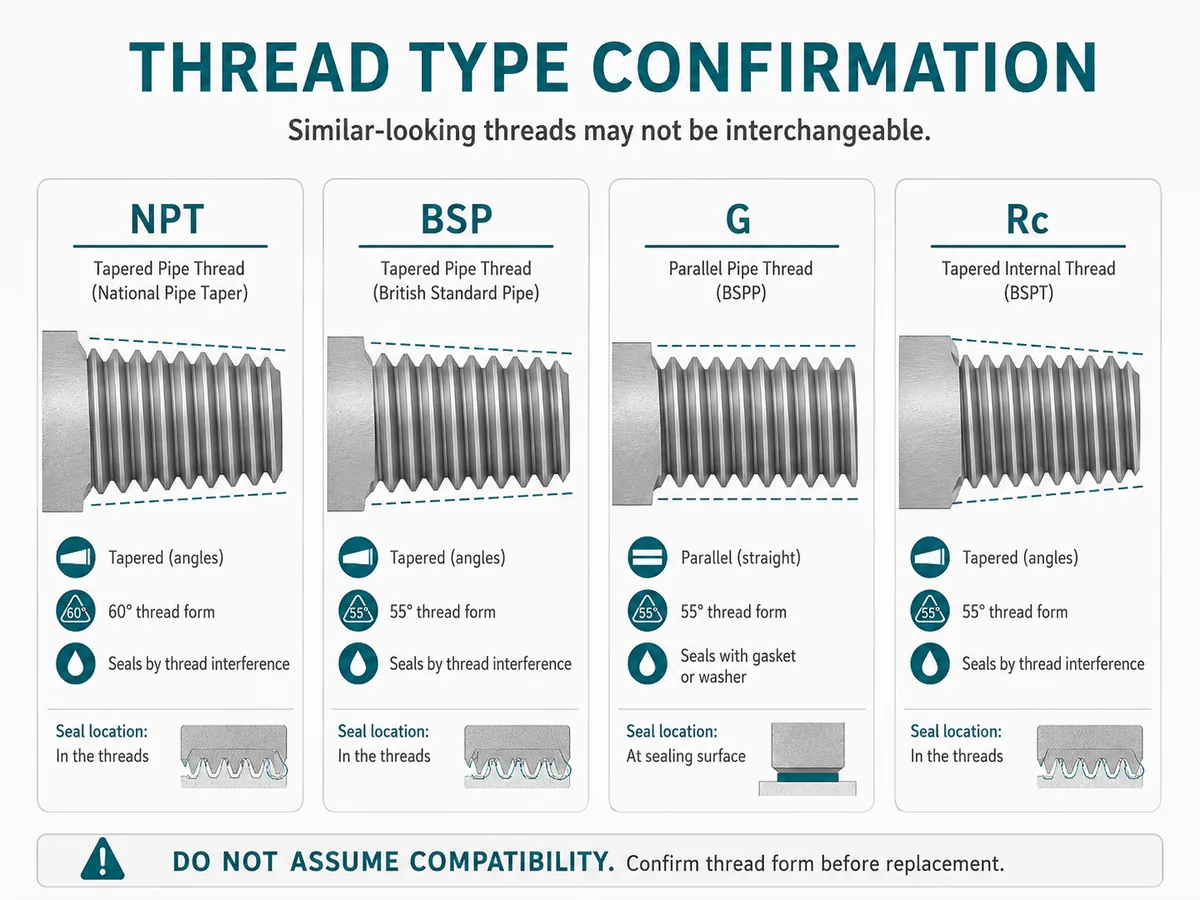
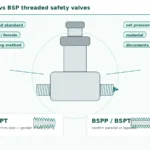
KI-generierte vereinfachte technische Darstellung; sie ersetzt keine Gewindestandards, Zeichnungen oder Gauge-Verifizierung.
Warum ähnlich aussehende Gewinde nicht austauschbar sein können
Ein häufiger Austauschfehler ist die Annahme, dass ähnlich aussehende Gewinde austauschbar sind. Dies ist möglicherweise nicht der Fall. Ein Ventil mit NPT-Gewinde sollte nicht automatisch als austauschbar mit G-, Rc- oder BSP-Gewinden betrachtet werden. Gewindewinkel, Verjüngung, Steigung und Dichtmethode können unterschiedlich sein.
Innengewinde/Außengewinde und Dichtungsmethode
Gewindeanschlüsse können Innen- oder Außengewinde sein. Einige Anschlüsse dichten am Gewinde ab, während andere auf einer Dichtfläche, einer Dichtung, einer Unterlegscheibe oder einer anderen Anordnung beruhen können. Die Dichtungsmethode muss bestätigt und darf nicht angenommen werden.
Leckage am Gewindeanschluss ist nicht dasselbe wie Ventilsitzleckage, Simmering oder Ansprechdruckfehler. Wenn eine Leckage beobachtet wird, sollte die Inspektion zwischen Gewindepassung, Dichtmittel oder Dichtungszustand, Installationsbelastung, Sitzbeschädigung, Ansprechdruckverhalten und Servicekontamination unterscheiden, bevor eine Entscheidung über den Austausch getroffen wird. Für den Kontext der Sitzleckageprüfung siehe ZOBAI's API 527 Dichtheitsprüfung Leitfaden.
Workflow zur Gewindeprüfung
Sichtbare Markierungen identifizieren
Typenschild, Gehäusemarkierung, altes Datenblatt und alle Projektzeichnungen sammeln.
Gewindeform bestätigen
NPT, BSP, G, Rc oder ein anderes projektspezifisches Gewinde anhand verlässlicher Beweise prüfen.
Anschlussdetails bestätigen
Gewindegröße, Innen-/Außengewindeanschluss, Einlass-/Auslassanordnung und Dichtungsmethode aufzeichnen.
Ventilfunktion verifizieren
Ersetzen Sie das Ventil nicht, bevor Ansprechdruck, Kapazität, Medium und Material geprüft wurden.
| Gewindefrage | Angaben des Käufers | Warum es benötigt wird |
|---|---|---|
| Welcher Gewindetyp wird benötigt? | NPT, BSP, G, Rc oder Projektzeichnung. | Verhindert die Auswahl einer inkompatiblen Verbindung. |
| Ist die Verbindung männlich oder weiblich? | Einlass- und Auslass-Geschlecht. | Verhindert Installationsfehler. |
| Wie dichtet die Verbindung ab? | Gewindedichtung, Dichtung, Dichtfläche oder Projektmethode. | Trennt Verbindungsleckagen von Sitzleckagen. |
| Handelt es sich um einen Ersatz? | Vorhandene Ventilfotos, Typenschild und alte Datenblätter, falls verfügbar. | Unterstützt die Überprüfung der Austauschbarkeit über die Gewindegröße hinaus. |
| Ist das vorhandene Gewinde beschädigt oder unsicher? | Nahaufnahmen, Ergebnis des Gewindelehrdorns oder Wartungshinweis. | Verhindert die Wiederholung eines fehlgeschlagenen oder beschädigten Installationszustands. |
Druck- und Kapazitätsterme dürfen nicht verwechselt werden
Die Auswahl von Sicherheitsventilen mit Gewinde scheitert oft daran, dass Käufer Gewindegröße, Ansprechdruck und Kapazität so behandeln, als würden sie dasselbe beschreiben. Das tun sie nicht. Der Gewindeanschluss definiert, wie das Ventil mit der Ausrüstung oder Rohrleitung verbunden wird. Er definiert nicht die erforderliche Abblaseleistung oder die Grundlage für die ausgewählte Ventilauslegung. Die Gewindegröße allein reicht nicht aus.
| Begriff | Was es bedeutet | Warum es für Sicherheitsventile mit Gewinde wichtig ist |
|---|---|---|
| Betriebsdruck | Normaler Druck während des Betriebs. | Zeigt die Betriebsmarge unterhalb des Ansprechdrucks und das Risiko von Anlaufen oder Undichtigkeiten. |
| BGV / Auslegungsdruck | Druckbasis der geschützten Ausrüstung oder Systemauslegung. | Definiert die Druckschutzgrenze und darf nicht allein durch die Gewindenennung ersetzt werden. |
| Ansprechdruck | Druck, bei dem das Ventil so eingestellt ist, dass es unter spezifizierten Bedingungen zu öffnen beginnt. | Definiert den Öffnungspunkt, nicht die erforderliche Abblasekapazität. |
| Erforderliche Abblaseleistung | Erforderlicher Durchfluss zur Steuerung des maßgebenden Abblaseszenarios. | Muss aus dem Abblasefall berechnet oder spezifiziert werden; die Gewindegröße allein reicht nicht aus. |
| Ausgewählte Ventilauslegungsgrundlage | Vom Hersteller unterstützte oder dokumentierte Auslegungsgrundlage für das ausgewählte Ventil. | Muss das tatsächliche Medium, den Druck, die Temperatur und die Gegendruckbedingungen aufweisen. |
| Druck-Temperatur-Kennlinie | Zulässige Material-/Anschlussgrenze bei Temperatur, abhängig von der geltenden Nennwertbasis. | Gewindeanschluss und Gehäusematerial müssen gegen die Service-Temperatur und die Projekt-Spezifikation geprüft werden. |
| Entlastungsdruck | Druck, der für die Bewertung der Abblaseleistung im maßgeblichen Fall verwendet wird. | Muss mit der gewählten Norm, dem zulässigen Überdruck und der tatsächlichen Auslegungsbasis übereinstimmen. |
| Überdruck | Druckanstieg über den Ansprechdruck während des Abblasens. | Beeinflusst den verfügbaren Antriebsdruck, die Hubentwicklung und die Leistung; er wird nicht durch die Gewindegröße definiert. |
| Drucksteigerung | Druckanstieg über die Druckgrenze des geschützten Geräts während des Ereignisses, wie durch die anwendbare Normbasis definiert. | Bestimmt die zulässige Systemdruckgrenze und muss mit dem maßgeblichen Entlastungsszenario verknüpft sein. |
| Ansprechdruckdifferenz / Wiederverschließdruck | Unterschied zwischen Öffnungs- und Wiedereinsetzverhalten nach dem Ereignis. | Beeinflusst Zyklusverhalten, Leckage und Betriebsstabilität, ersetzt jedoch nicht die Leistungsüberprüfung. |
| Einlassdruckverlust | Druckabfall zwischen dem geschützten Gerät und dem Ventileinlass während der Entlastung. | Gewindeadapter, Eindringen von Dichtmittel, lange Nippel und kleine Durchgänge können zu Instabilität oder Flattern beitragen. |
| Gegendruck | Druck, der am Auslass vor oder während des Ausströmens wirkt. | Kann Öffnen, Hub, Kapazität und Wiedereinsetzen beeinflussen; Gewindekonstruktion beseitigt diesen Effekt nicht. |
Kapazitätshinweis: Ein 1/2 Zoll, 3/4 Zoll oder 1 Zoll Gewinde beweist nicht die erforderliche Abblasekapazität. Das maßgebliche Abblaseszenario, die Fluideigenschaften, der Abblasdruck, die Abblasetemperatur und der Gegendruck müssen weiterhin geprüft werden. Für eine normenorientierte Auslegung, siehe ZOBAI's API 520 Auslegung von Sicherheitsventilen Leitfaden.
Kapazität und Prüfnachweis sind separate Zulassungen.
ISO 4126-1 legt allgemeine Produktanforderungen für Sicherheitsventile fest und identifiziert sich ausdrücklich als Produktnorm und nicht als Anwendungs- oder Auslegungsnorm. Für Raffinerie- und verwandte Anwendungen im Anwendungsbereich, API 520 Teil I behandelt Auslegung und Auswahl. Keine der Quellen erlaubt es dem Käufer, die Kapazität aus der NPT-, BSP-, G- oder Rc-Anschlussgröße abzuleiten.
| Nachweis | Was es unterstützt | Was es allein nicht beweist |
|---|---|---|
| Gewindezeichnung oder Lehrenprotokoll | Anschlussform, -größe und Passungsbasis. | Einstelldruck, Entlastungskapazität oder Materialeignung. |
| Prüfprotokoll für Ansprechdruck | Öffnungseinstellung unter aufgezeichneten Prüfbedingungen. | Erforderliche Kapazität, zertifizierte Kapazität oder installierte Stabilität. |
| Sitzdichtheitsbericht | Leckage bei geschlossenem Ventil unter der angegebenen Prüfmethode. | Gewindeintegrität, Kapazität oder korrektes Entlastungsszenario. |
| Zertifizierte/dokumentierte Kapazitätsdaten | Unterstützte Durchflusskapazität für ein definiertes Modell und definierte Bedingungen. | Dass die Überdruckberechnung der Anlage sowie die Zulauf- und Ablaufleitung korrekt sind. |
| Druck-Temperatur-Kennlinie | Zulässige Material-/Anschlussgrenze bei Temperatur. | Kapazität oder Kompatibilität mit jedem Prozessmedium. |
Typisches technisches Szenario: Ein Ersatzventil kann seine Ansprechdruck- und Sitzdichtheitsprüfungen bestehen und dennoch unsicher sein, wenn seine interne Öffnung oder die dokumentierte Kapazität geringer ist als die maßgebliche Entlastungslast. Die Korrektur besteht darin, die aktuell erforderliche Kapazität mit der modellspezifischen Kapazitätsnachweis zu vergleichen, bevor ein Ersatzventil mit gleichem Gewinde akzeptiert wird.
Wo werden Sicherheitsventile mit Gewindeanschluss häufig eingesetzt?
Sicherheitsventile mit Gewindeanschluss werden oft dort in Betracht gezogen, wo die Ausrüstung oder das Rohrleitungssystem Gewindeanschlüsse verwendet und wo die erforderliche Kapazität, der Nenndruck, die Betriebsbedingungen und die Projekt-Spezifikation einen Gewindeanschluss zulassen.
Kompakte Skid-Anlagen und OEM-Ausrüstung
Gewindeventile können dort eingesetzt werden, wo Platz, Rohrleitungsführung und Ausrüstungsanschlüsse bereits durch ein Skid- oder OEM-Design definiert sind.
Kleine Behälter und Versorgungssysteme
Sie können für ausgewählte Luft-, Gas-, Wasser-, Dampf- oder Hilfssysteme in Betracht gezogen werden, wenn Gewinderohrleitungen spezifiziert sind.
Ersatz- und Händleranwendungen
Händler erhalten oft alte Ventilfotos oder unvollständige Typenschilddaten, aber der Ersatz darf nicht allein auf das Aussehen vertrauen.
Vorläufige Auswahlmatrix
| Bedingung | Warum Gewindeventile in Betracht gezogen werden können | Daten noch benötigt |
|---|---|---|
| Gerät mit Gewindeanschluss | Die Verbindung kann mit der Geräteschnittstelle übereinstimmen. | Gewindeform, Größe, Geschlecht, Dichtverfahren, Druckstufe und Einsatzbereich. |
| Kompakte Skid- oder OEM-Einheit | Ein Gewindeanschluss kann begrenzten Platz und Paketrohrleitungen aufnehmen. | Entlastungsszenario, erforderliche Kapazität, Vibration, Ableitungsroute und Wartungszugang. |
| Anfrage zum Austausch durch Händler | Gewindeventile werden oft anhand vorhandener Fotos oder teilweiser Aufzeichnungen ersetzt. | Typenschild, altes Datenblatt, Gewindenachweis, Medium, Ansprechdruck und Kapazitätsbasis. |
| Betriebsluft, Gas, Wasser oder Dampf | Ein Gewindeanschluss kann verwendet werden, wenn die Projektspezifikation dies zulässt. | Medium/Phase, Temperatur, Material, Sitz/Dichtung, Sicherheitsableitung und Dokumente. |
Technische Grenze: Bequemlichkeit ist keine Auswahbasis. Kapazität, Druckstufe, Temperatur, Gegendruck, Materialien und Sicherheitsableitung bleiben notwendig.
Wann ein Sicherheitsventil mit Gewindeanschluss möglicherweise nicht geeignet ist
Ein Sicherheitsventil mit Gewindeanschluss ist möglicherweise nicht geeignet, wenn die erforderliche Abblaseleistung, die Rohrleitungsspezifikation, Vibrationen, Wartungspraktiken, Druck-Temperatur-Bedingungen oder die Projektdokumentation einen anderen Anschlusstyp erfordern.
Kapazitäts- und Druckbegrenzungen
Die Gewindegröße beweist nicht die Abblasekapazität. Ein Käufer sollte nicht davon ausgehen, dass ein größerer Gewindeanschluss automatisch eine ausreichende Kapazität bedeutet oder dass ein Ersatzventil gleicher Gewindegröße den gleichen Durchfluss bewältigt. Überprüfen Sie für kapazitätsbezogene Entscheidungen Sicherheitsventilauslegung und zertifizierte Kapazität.
Vibrationen, Wartung und Ausgangsleitungen
Gewindeanschlüsse können empfindlich auf Installationsqualität, wiederholtes Entfernen, Vibrationen, Dichtmittelpraktiken und Rohrleitungsspannungen reagieren. Wenn das Gerät vibriert, die Ausgangsleitung schwer ist oder das Ventil für Inspektionen häufig entfernt werden muss, sollten der Anschluss und die Installation sorgfältig geprüft werden.
Wann ein Flanschanschluss geprüft werden kann
A Sicherheitsventil mit Flanschanschluss kann geprüft werden, wenn das System eine einfachere Demontage, eine größere Anschlussgröße, schwerere Rohrleitungen, eine formale Rohrleitungsklassen-Ausrichtung, höhere Dokumentationserwartungen oder eine Projektspezifikation erfordert, die Flanschanschlüsse vorsieht.
Gewinde sorgfältig prüfen, wenn
- Die erforderliche Abblasekapazität ist noch nicht berechnet oder dokumentiert.
- Die Ausgangsleitung ist schwer, vibriert, verengt oder an einen Verteiler angeschlossen.
- Die Gewindeform ist unsicher oder das alte Ventil ist beschädigt.
- Das Medium ist korrosiv, verschmutzt, Hochtemperatur, gefrierend oder polymerisierend.
Gehen Sie nicht davon aus
- Gehen Sie nicht davon aus, dass die Gewindegröße die Kapazität beweist.
- Gehen Sie nicht davon aus, dass NPT, BSP, G und Rc austauschbar sind.
- Gehen Sie nicht davon aus, dass Edelstahl oder Messing automatisch für das Medium geeignet sind.
- Gehen Sie nicht davon aus, dass ein Standardname die endgültige Konformität beweist.
Sicherheitsventile mit Gewindeanschluss vs. Sicherheitsventile mit Flanschanschluss
Der Unterschied zwischen einem Sicherheitsventil mit Gewindeanschluss und einem Sicherheitsventil mit Flanschanschluss liegt hauptsächlich im Endanschluss. Beide können Druckentlastungsfunktionen erfüllen, aber Installation, Wartung, Dokumentation und Schnittstelle zur Rohrleitung können unterschiedlich sein.
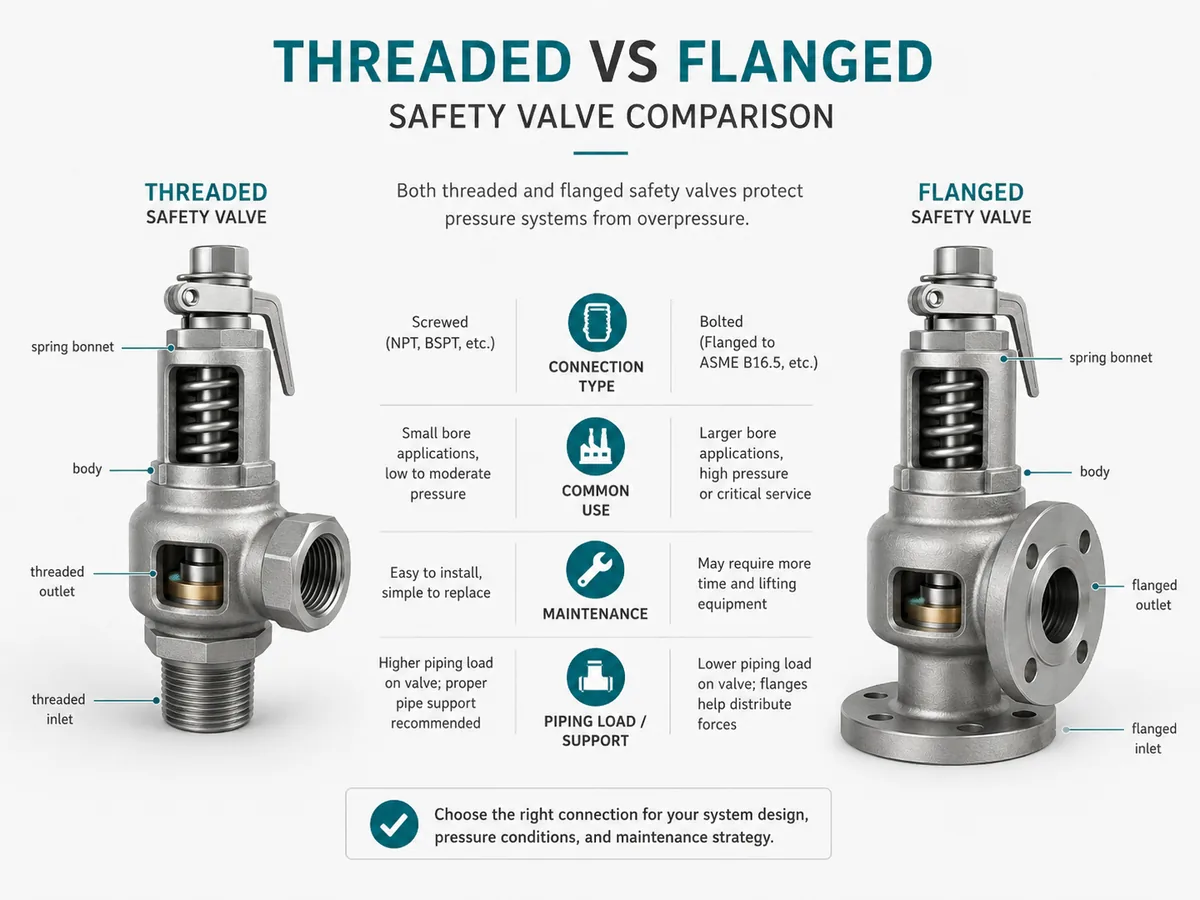
KI-generierte Auswahl-Grenzabbildung, keine universelle Rangfolge der Anschlussarten.
| Auswahlfaktor | Sicherheitsventil mit Gewindeanschluss | Sicherheitsventil mit Flanschanschluss |
|---|---|---|
| Typischer Anschluss | Schraubanschluss. | Verschraubte Flanschverbindung. |
| Häufige Anwendung | Kompakte Ausrüstung, Skid-Anlagen, kleine Behälter und Versorgungssysteme. | Größere Rohrleitungssysteme, formale Prozessleitungen und schwerere Abgangsleitungen. |
| Kapazitätsannahme | Die Gewindegröße beweist keine Kapazität. | Die Flanschgröße beweist keine Kapazität. |
| Wartung | Erfordert eine Überprüfung von Gewinde und Abdichtung bei Ausbau und Wiedereinbau. | Oft einfacher in Rohrleitungssystemen zu demontieren und wieder zu montieren. |
| Projektspezifikation | Nur geeignet, wenn die Projektanforderungen dies zulassen. | Oft durch die Rohrleitungsklasse oder den Projektstandard spezifiziert. |
| Dokumentation | Muss immer noch Datenblatt, Material, Prüf- und Kapazitätsbasis bestätigen. | Kann direkter mit der Rohrleitungsklasse und der Flanschstandarddokumentation übereinstimmen. |
Technische Prüfungen vor der Auswahl eines Sicherheitsventils mit Gewindeanschluss
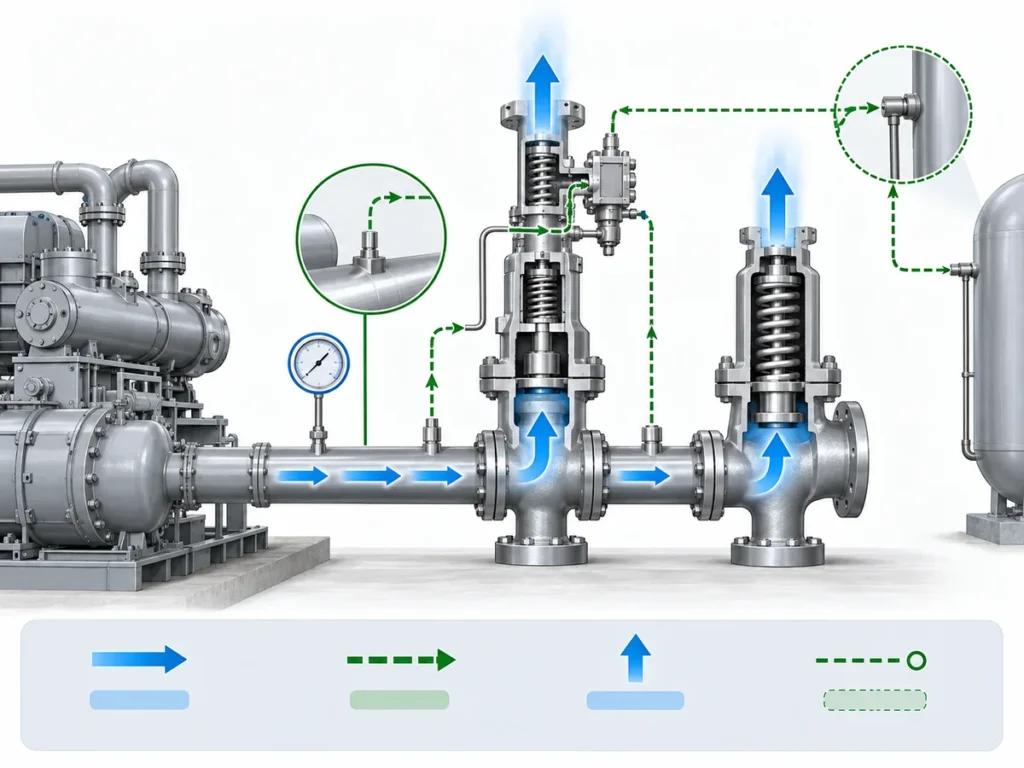
Überprüfen Sie vor der Auswahl eines Sicherheitsventils mit Gewindeanschluss den Anschluss als Teil des vollständigen Druckschutzsystems. Das Ventil, der Zulaufweg, der Ablaufweg, die Abdichtungsmethode, das Medium, die Kapazitätsbasis und die Dokumente beeinflussen die Entscheidung. Offizielle Installationshinweise für druckentlastende Einrichtungen im Geltungsbereich der API werden bereitgestellt von API 520 Teil II; sein Installationsschwerpunkt macht nicht jede API-Empfehlung automatisch auf jede Branche oder Rechtsordnung anwendbar.
Überprüfung von Gegendruck und Auslassleitungen
| Artikel | Was zu prüfen ist | Warum es wichtig ist |
|---|---|---|
| Gewinde-Einlassweg | Gewindeeingriff, Dichtmittelposition, Einlassseitige Drosselung und Einlassdruckverlust. | Übermäßige Drosselung oder Dichtmittel-Intrusion kann das Öffnungsverhalten, die Stabilität und die Kapazitätsprüfung beeinflussen. |
| Überlagernder Gegendruck | Bereits vorhandener Auslassdruck vor dem Öffnen des Ventils. | Kann das Öffnungsverhalten, die Kapazität oder die gewählte Konfiguration beeinflussen. |
| Aufgebauter Gegendruck | Während des Entlastungsstroms im Auslassrohr entstehender Druck. | Kann die Kapazität reduzieren oder Instabilität verursachen, wenn der Auslassweg verengt ist. |
| Auslassrohrlast | Rohrgewicht, Vibration, thermische Bewegung und Lagerung. | Ein Gewindeauslass darf nicht als strukturelle Unterstützung für schwere Rohrleitungen verwendet werden. |
| Abblase-/Auslassrichtung | Sichere Entlüftung, Entwässerung und Führung weg von Personen oder Gefahren für die Ausrüstung. | Eine Gewindeverbindung entbindet nicht von der Notwendigkeit eines sicheren Auslassdesigns. |
Für detailliertere Informationen zu Gegendruck und kompensierten Faltenbälgen, siehe ZOBAI's Gegendruck- und Faltenbalg-Leitfaden.
Prüfung von Medium und Material
| Betriebsbedingung | Hauptrisiko | Was zu bestätigen ist |
|---|---|---|
| Dampf- oder Hochtemperaturanwendungen | Sitz-, Feder-, Dichtungs- und Gehäusematerial können temperaturempfindlich sein. | Entlastungstemperatur, Materialzulassung, Oberteil-/Kappendesign und Abblasezustand. |
| Korrosives Medium | Gehäuse, Innenteile, Feder, Gewindebereich und Dichtung können unterschiedlich korrodieren. | Zusammensetzung, Konzentration, Temperatur und Materialverträglichkeit des Mediums. |
| Verschmutzter oder partikelhaltiger Betrieb | Beschädigung des Sitzes, Undichtigkeiten oder blockierter Strömungsweg können auftreten. | Flüssigkeitsreinheit, Filtration, Wartungszugang und Sitzmaterial. |
| Flüssigkeits- oder Zweiphasenbetrieb | Größe und Entlastungsverhalten unterscheiden sich vom Gas-/Dampfbetrieb. | Phase, Dichte, Viskosität, Gegendruck und Basis des Entlastungsszenarios. |
| Gefrier- oder Außeneinsatz | Gewindeanschluss, Auslass- oder Entleerungsweg können gefrieren oder die Entlastung behindern. | Umgebungsbedingungen, Isolierung, Entwässerung, Ausrichtung und Materialeignung. |
Materialprüfung auf Komponentenebene
| Komponente | Risiko bei Gewindeanschluss | Überprüfung vor Genehmigung |
|---|---|---|
| Gehäuse und Gewindestutzen | Übermäßiges Anziehen, Korrosion, Gewindefressen, Rissbildung oder reduzierte Wandstärke am Anschluss. | Materialgüte, Druck-Temperatur-Grenze, Eingriff, Anzugsverfahren und Korrosionsmechanismus. |
| Düse, Kegel und Sitz | Partikel oder Dichtmittel können die Dichtflächen beschädigen und Leckagen verursachen. | Trimmmaterial, Sitztyp, Prozessreinheit und Abnahmekriterien für Prüfungen. |
| Führung und Spindel | Fehlausrichtung durch Rohrleitungslasten oder Ablagerungen können den Hub und das Wiedereinsetzen beeinträchtigen. | Führungsspiel, Ausrichtung, Vibration, Wartungshistorie und Materialpaarung. |
| Feder | Temperatur, Korrosion oder Relaxation können den Ansprechdruck verschieben. | Federbereich, Material, Umgebung des Oberteils und Betriebstemperatur. |
| Weichdichtung, Dichtung oder Unterlegscheibe | Quellung, Aushärtung, Extrusion oder falsche Dichtflächengeometrie können Leckagen verursachen. | Exakte Verbindung, Temperatur, Medium, Dichtflächenausführung und Rückverfolgbarkeit des Austauschs. |
| Auslassanschluss | Schwere Rohrleitungen können die Gewindeverbindung des Gehäuses verdrehen oder überlasten. | Unabhängige Abstützung, thermische Bewegung, Reaktionskraft und sichere Ableitung des Austritts. |
Checkliste für Installation: Ja / Nein
Soll
- Stellen Sie vor der Installation sicher, dass Gewindeform, -größe, -geschlecht und -abdichtungsmethode korrekt sind.
- Halten Sie den Einlassweg kurz, sauber und konsistent mit der Projektbasis für Druckverlust.
- Stützen Sie die Auslassleitung so ab, dass der Ventilkörper kein Gewicht der Rohrleitung trägt.
- Stellen Sie eine sichere Ableitung, Entwässerung und Zugang für Wartungsarbeiten sicher.
- Dokumentieren Sie Typenschild, Datenblatt und Prüfunterlagen für die Ersatzhistorie.
Nicht
- Erzwingen Sie keine nicht übereinstimmenden Gewinde, um sie anzupassen.
- Verwenden Sie keine übermäßige Dichtmasse, die in den Strömungspfad gelangen könnte.
- Wählen Sie nicht nur nach Gewindegröße und Ansprechdruck aus.
- Ignorieren Sie keine Vibrationen, Auslasslasten oder wiederholte Demontagen.
- Beanspruchen Sie keine Konformität ohne Überprüfung des ausgewählten Modells und der Dokumentation.
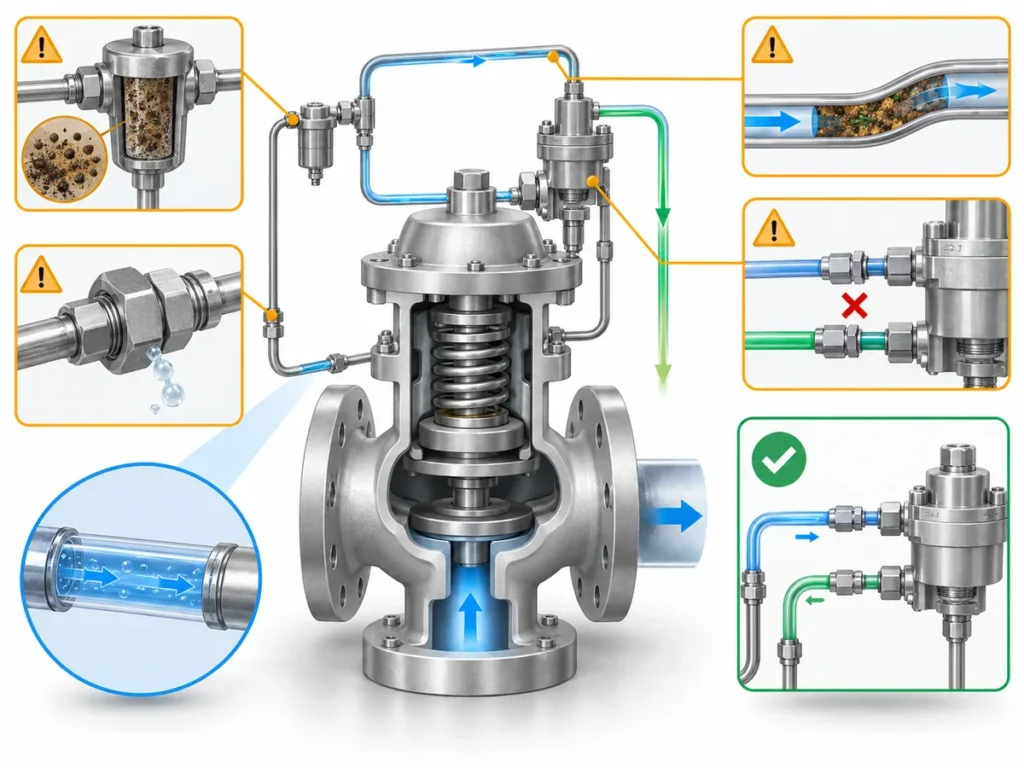
Typisches technisches Szenario: Ein Ventil, das mit übermäßigem PTFE-Band oder -Paste installiert wurde, kann Material in den Einlass abgeben oder Dichtmittel in den Strömungsweg ragen lassen. Das beobachtete Problem kann Sitzleckage, verzögerter Hub oder instabiler Betrieb sein, anstatt einer externen Verbindungsleckage. Die korrekte Maßnahme ist, das Ventil zu entfernen, Einlass und Sitz zu inspizieren, das zugelassene Abdichtungsverfahren wiederherzustellen und den Ansprechdruck und den Sitzzustand vor der Wiederinbetriebnahme zu überprüfen.
Für umfassendere Überlegungen zu Einlass-/Auslassleitungen und Ableitung lesen Sie bitte die Installationsanleitung für Sicherheitsventile.
Auswahldaten erforderlich vor Angebotsanfrage (RFQ)
Eine Anfrage für ein Sicherheitsventil mit Gewindeanschluss sollte sowohl Druckentlastungsdaten als auch Anschlussdaten enthalten. Ohne beides kann das Angebot unvollständig oder technisch unsicher sein.
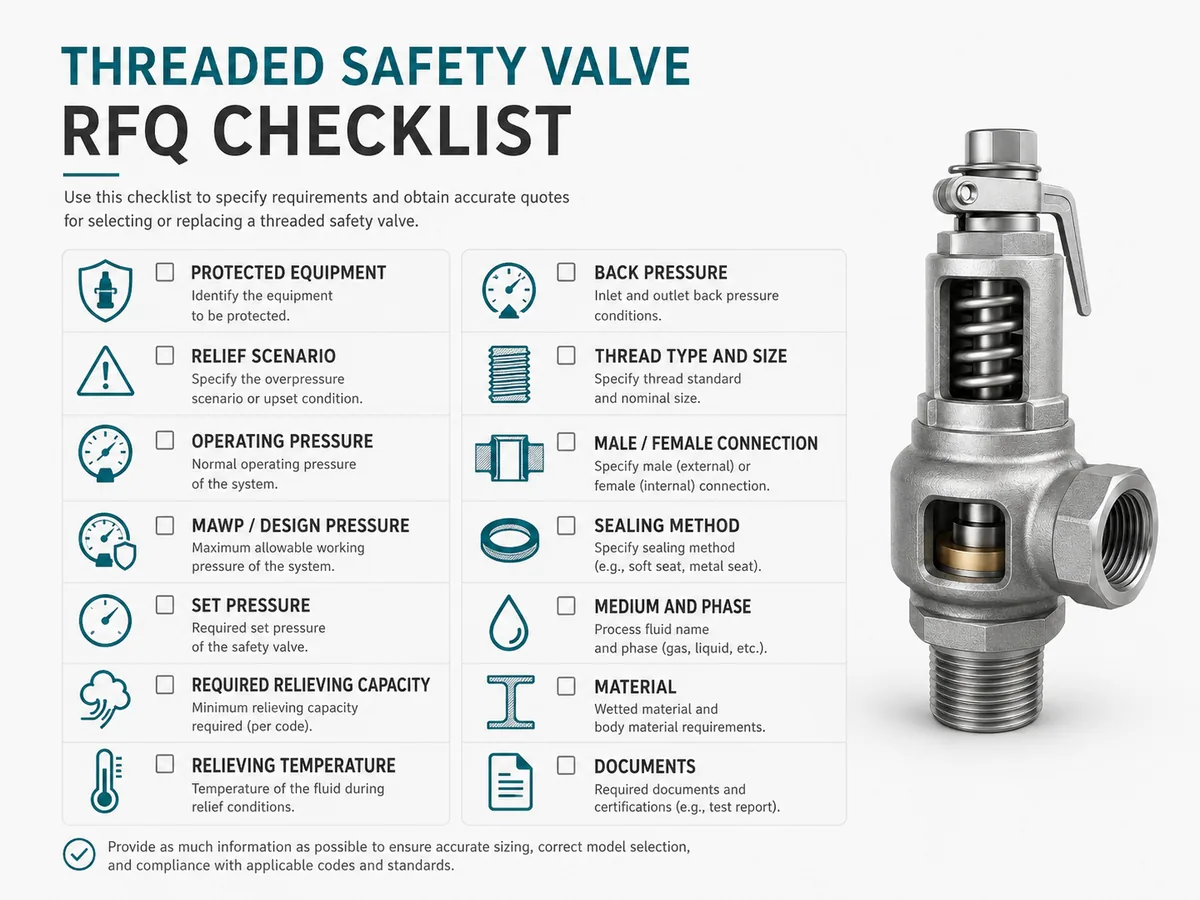
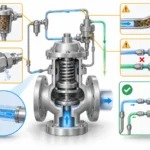
KI-generierte RFQ-Illustration. Ein Angebot oder eine Ersatzprüfung sollte nicht nur auf Gewindegröße, Ansprechdruck oder Fotos basieren.
| Datengruppe | Erforderliche Eingaben | Warum es wichtig ist |
|---|---|---|
| Geschütztes Equipment | Behälter, Tank, Skid, Kompressor, Pipeline, Versorgungssystem oder OEM-Ausrüstung. | Definiert das geschützte System und die Auslegungsbasis. |
| Entlastungsszenario | Blockierter Auslass, Brandfall, thermische Ausdehnung, Reglerausfall oder anderer Fall. | Bestimmt die erforderliche Entlastungslast. |
| Druckdaten | Betriebsdruck, MAWP/Auslegungsdruck, Ansprechdruck und zulässige Überdruckbasis. | Verhindert Fehler bei der Druckdefinition. |
| Kapazitätsdaten | Erforderliche Abblaseleistung, Fluideigenschaften und Kapazitätsbasis. | Verhindert die Auswahl nur nach Gewindegröße. |
| Gewindedaten | Gewindetyp, Größe, Innen-/Außengewinde, Einlass-/Auslassdetails und Dichtungsmethode. | Verhindert Fehlbestellungen oder falsche Ersatzteile. |
| Gegendruck und Rohrleitung | Auslassdruck, Abführungsleitung, Rohrhalterung, Einschränkung und Entwässerung. | Beeinflusst Kapazität, Stabilität, Leckage und sichere Ableitung. |
| Materialien/Dokumente | Gehäuse, Innenteile, Sitz, Dichtung, Feder, Zertifikate, Prüfumfang und Inspektion. | Unterstützt Beschaffung und Compliance-Prüfung. |
Prüf- und Dokumentationsmatrix
| Dokument / Prüfen | Was es unterstützt | Was es allein nicht beweist |
|---|---|---|
| Datenblatt | Modell, Größe, Anschluss, Ansprechdruck, Material und Servicebasis. | Ersetzt keine Entlastungsberechnung oder Projektgenehmigung. |
| Typenschild | Identifikation und wichtige Ventilinformationen. | Beweist keine Austauschbarkeit, wenn Kapazität, Gewindeform oder Material unklar sind. |
| Ansprechdruckprüfung | Öffnungsdruck unter spezifizierten Testbedingungen. | Beweist keine erforderliche Abblasekapazität. |
| Dichtheitsprüfung des Sitzes | Leckageverhalten gemäß definierter Prüfmethode und Akzeptanzkriterien. | Beweist nicht, dass der Gewindeanschluss bei falscher Installation nicht undicht wird. |
| Materialaufzeichnungen | Rückverfolgbarkeit für spezifizierte Teile, wo erforderlich. | Beweist keine Kompatibilität ohne Prüfung von Medium und Temperatur. |
| Kapazitätsbasis | Ob das ausgewählte Ventil die erforderliche Abblaseleistung erbringen kann. | Muss immer noch mit tatsächlichem Medium, Abblasedruck, Temperatur und Gegendruck übereinstimmen. |
API 527 beschreibt Prüfverfahren für die Dichtsitzprüfung von anwendbaren Druckentlastungsventilen mit metallischer und weicher Abdichtung. Es prüft nicht die Gewindeverbindung, die erforderliche Abblaseleistung oder die Anlageninstallation. Wenn eine ASME/National-Board-Zertifizierung erforderlich ist, kann die National Board NB-18-Datenbank zur Überprüfung von Herstellern, Montagebetrieben und zertifizierten Geräteinformationen verwendet werden; die Auflistung muss dennoch mit dem genauen Modell und der Konfiguration übereinstimmen, die gekauft werden.
Für den Druck-Temperatur-Kontext, siehe ZOBAI's Druck-Temperatur-Werte Leitfaden. Bei größeren Terminologieunterschieden prüfen Sie Druckentlastungsventil vs. Sicherheitsventil vs. Sicherheitsventil vs. Entlastungsventil.
Häufige Fehler beim Kauf oder Austausch von Sicherheitsventilen mit Gewindeanschluss
Fehler bei Sicherheitsventilen mit Gewindeanschluss entstehen oft, weil die sichtbare Verbindung leicht zu identifizieren ist, während die Druckschutzfunktion schwerer zu überprüfen ist.
| Fehler | Warum es riskant ist | Korrekte Prüfung |
|---|---|---|
| Auswahl nur nach Gewindegröße | Gleiche Gewindegröße bedeutet nicht unbedingt gleiche Kapazität oder Konstruktion. | Bestätigen Sie Gewindetyp, Ansprechdruck, Kapazität, Material und Dokumente. |
| Verwechslung von NPT/BSP/G/Rc | Ähnliches Aussehen kann unterschiedliche Gewindeformen verbergen. | Bestätigen Sie den genauen Gewindestandard, das Außengewinde/Innengewinde und die Dichtungsmethode. |
| Kapazitätsermittlung ignorieren | Gewindegröße ist nicht gleich Öffnungsfläche. | Erforderliche Abblaseleistung und die Grundlage der ausgewählten Ventilleistung bestätigen. |
| Medium ignorieren | Material und Sitz können ungeeignet sein. | Medium, Phase, Temperatur und Korrosionsrisiko bestätigen. |
| Ignorieren der Auslassleitungen | Der Abblasevorgang kann Gegendruck, Vibrationen oder mechanische Belastungen verursachen. | Auslassleitung, Unterstützung, Entwässerung und sichere Ableitung bestätigen. |
| Austausch nach Aussehen | Ähnlich aussehende Ventile sind möglicherweise nicht austauschbar. | Typenschild, Datenblatt, Gewindeform und Service-Daten prüfen. |
| Mehr Dichtmittel verwenden, um eine Fehlpassung zu erzwingen | Dichtmittel kann eine inkompatible Gewindegeometrie nicht korrigieren und kann in den Ventileinlass gelangen. | Montage stoppen, Gewindenorm identifizieren und beide Passpartner prüfen. |
| Annahme, dass die Gewindedruckstufe der Ventilstufe entspricht | Der zulässige Grenzwert hängt von der gesamten Ventilkonstruktion, dem Material und der Temperatur ab – nicht nur von der Gewindekennzeichnung. | Verwenden Sie das Datenblatt des ausgewählten Modells und die genehmigte Druck-Temperatur-Basis. |
| Ignorieren der Befunddokumentation nach dem Ausbau | Reinigung oder Einstellung kann die Hinweise auf Sollwertdrift, Ablagerungen oder Leckage beseitigen. | Befund vor der Reinigung oder Neukalibrierung dokumentieren. |
Workflow zur Überprüfung von Ersatzventilen
Für eine Ersatzanfrage ist der sicherste Arbeitsablauf die Überprüfung der Verbindung und der Druckschutzfunktion. Ein klares Foto kann helfen, ersetzt aber nicht die Daten zu Ansprechdruck, Kapazität, Material und Einsatzbedingungen.
Vorhandene Nachweise sammeln
Vollständige Ventilfotos, Typenschild, Nahaufnahmen der Einlass-/Auslassgewinde, Installationsfotos und ggf. altes Datenblatt senden.
Anschluss bestätigen
Gewindetyp, Größe, Innen-/Außengewinde, Dichtungsmethode und Zustand beschädigter Gewinde prüfen.
Betriebsbedingungen bestätigen
Geschütztes Equipment, Abblaseszenario, Ansprechdruck, MAWP/Konstruktionsdruck und erforderliche Kapazität prüfen.
Dokumente bestätigen
Prüfen Sie Materialaufzeichnungen, Prüfanforderungen, Kapazitätsbasis, Inspektionsumfang und Projektspezifikation.
Zusammengesetzte Ingenieurszenarien für Schulungszwecke
Die folgenden Beispiele sind zusammengesetzte Ingenieurszenarien für Schulungszwecke. Sie beschreiben kein reales Kundenprojekt, keinen Produktnachweis, keine zertifizierte Kapazitätsprüfung, keinen Unfallbericht und keine garantierte Fähigkeit eines ZOBAI-Modells.
Austausch eines kompakten Luftbehälters
Ein Käufer sendet ein Foto eines alten Sicherheitsventils mit Gewindeanschluss von einem Luftbehälter, aber das Typenschild ist unklar. ZOBAI benötigt dennoch Ansprechdruck, maximal zulässigen Betriebsdruck (MAWP)/Auslegungsdruck des Behälters, erforderliche Kapazität, Gewindetyp, Medium, Temperatur und Anordnung des Auslasses.
Vibrierendes Kompressorpaket
Ein Gewindeventil passt möglicherweise in die Öffnung, aber Vibrationen, Auslassunterstützung, Einlassdruckverlust und Wartungszugang können die Entscheidung für den Anschluss beeinflussen.
Verwechslung beim Austausch von BSP/NPT
Ein Händler fordert ein Gewindeventil gleicher Größe an, aber die alte Ausrüstung verwendet möglicherweise eine andere Gewindeform. Der Gewindestandard und die Dichtungsmethode müssen vor der Angebotserstellung überprüft werden.
Ablaufleitung dreht den Ventilkörper mit Gewindeanschluss
Ein kleines Ventil mit Gewindeanschluss ist an eine nicht abgestützte Ableitung angeschlossen. Thermische Bewegung und Rohrgewicht drehen das Ventil, beschädigen die Gewindeverbindung und übertragen Last auf Sitz und Führung. Die Korrektur besteht darin, den Auslass unabhängig abzustützen, Gehäuse und Innenteile zu prüfen, beschädigte Gewindeteile zu ersetzen und das Ventil erneut zu prüfen. Die Vorbeugung besteht darin, den Auslass als Bestandteil des Druckentlastungssystems zu behandeln und nicht als praktischen Rohrauflagepunkt.
Prüfungen vor der Wiederinbetriebnahme nach Reparatur oder Austausch
| Schritt | Minimale Prüfung | Grund |
|---|---|---|
| Identität | Typenschild, Seriennummer, Modell, Gewindeform, Ansprechdruck und Einsatzbedingungen stimmen mit dem genehmigten Datensatz überein. | Verhindert Verwechslung und Austausch mit falschem Gewinde. |
| Ist-Zustand / Reparaturprotokoll | Ansprechdruckabweichung, Leckage, Ablagerungen, beschädigte Teile und Reparaturumfang werden dokumentiert. | Bewahrt Nachweise für Intervall- und Ursachenanalyse. |
| As-left-Verifizierung | Ansprechdruck, Sitzdichtheit und erforderliche Funktionsprüfungen werden nach dem genehmigten Verfahren durchgeführt. | Bestätigt den Prüfstandszustand nach der Reparatur; ersetzt nicht die Kapazitäts- oder Installationsfreigabe. |
| Gewinde und Dichtung | Passendes Gewinde, Einschraubtiefe, Dichtungsart und Anzugsdrehmomentverfahren sind korrekt. | Kontrolliert äußere Leckagen, Anspringen, Fressen und Eindringen von Dichtmittel. |
| Rohrleitungen | Der Einlass ist uneingeschränkt; der Auslass ist unabhängig abgestützt, entwässert und sicher geführt. | Reduziert Flattern, mechanische Belastung und Gegendruckrisiko. |
| Rückverfolgbarkeit | Typenschild, Plombe und Endprüfprotokolle werden aufbewahrt. | Unterstützt spätere Inspektions-, Reparatur- und Austauschentscheidungen. |
Was ZOBAI zur Überprüfung einer Anfrage für ein Sicherheitsventil mit Gewindeanschluss benötigt
Senden Sie für eine neue Anfrage für ein Sicherheitsventil mit Gewindeanschluss die geschützte Ausrüstung, das Entlastungsszenario, Medium und Phase, Betriebsdruck, MAWP oder Auslegungsdruck, Ansprechdruck, erforderliche Entlastungskapazität, Entlastungstemperatur, Gegendruck, Details zu Einlass- und Auslassgewinden, Materialanforderungen, anwendbaren Standard und erforderliche Dokumente.
Senden Sie für eine Ersatzanfrage auch Fotos des vorhandenen Ventils, des Typenschilds, des Einlassgewindes, des Auslassgewindes, der Installationsposition und der umgebenden Rohrleitungen. Wenn das alte Datenblatt verfügbar ist, fügen Sie es bei.
- Geschützte Ausrüstung und maßgebliches Entlastungsszenario
- Medium, Phase, Betriebsdruck, MAWP/Auslegungsdruck und Ansprechdruck
- Erforderliche Entlastungskapazität und Kapazitätsbasis
- Abschaltemperatur und Gegendruck
- Gewindeart, Gewindegröße, Außengewinde/Innengewinde und Dichtungsmethode
- Gehäuse, Innenteile, Sitz, Dichtung, Feder, Norm- und Dokumentenanforderungen
- Vorhandene Datenblatt-, Typenschild- und Installationsfotos für den Ersatz
Häufig gestellte Fragen zu Sicherheitsventilen mit Gewindeanschluss
Was bedeutet Sicherheitsventil mit Gewindeanschluss?
Ein Sicherheitsventil mit Gewindeanschluss ist ein Sicherheitsventil oder Druckentlastungsventil mit verschraubten Endanschlüssen am Einlass, Auslass oder beiden. Die Anschlussart definiert nicht den Ansprechdruck, die Kapazität, die Materialien oder die Normenkonformität.
Ist ein Sicherheitsventil mit Gewindeanschluss dasselbe wie ein Druckentlastungsventil mit Gewindeanschluss?
Die Begriffe können in der Kundenkommunikation überlappen, aber die korrekte Terminologie hängt vom Medium, dem Betriebsverhalten, dem Normenkontext und der regionalen Praxis ab. Bestätigen Sie die geschützte Ausrüstung, das Entlastungsszenario, die Ventilfunktion und den Zertifizierungsweg.
Kann ich ein Sicherheitsventil mit Gewindeanschluss nur nach der Gewindegröße ersetzen?
Die Gewindegröße allein beweist nicht die Gewindeform, das Geschlecht, die Dichtungsmethode, den Ansprechdruck, die Öffnung, die Abblasekapazität, das Material, das Dichtungsdesign oder die Dokumentation. Verwenden Sie das Originaldatenblatt, das Typenschild und die aktuellen Betriebsbedingungen.
Was ist der Unterschied zwischen Sicherheitsventilen mit NPT- und BSP-Gewinde?
NPT ist in ASME B1.20.1 abgedeckt. “BSP” ist ein unpräziser Einkaufsbegriff, der sich auf konische Gewinde nach ISO 7 oder parallele G-Gewinde nach ISO 228-1 beziehen kann. Sie sollten nicht als austauschbar angesehen werden.
Ist BSP dasselbe wie G oder Rc-Gewinde?
G ist ein paralleles ISO 228-1-Gewinde, bei dem die druckdichte Abdichtung normalerweise durch eine separate Dichtfläche oder Dichtung erfolgt. Rc ist ein konisches Innengewinde aus der ISO 7-1-Familie, bei dem die Verbindung über das Gewinde abgedichtet werden kann.
Kann mehr PTFE-Band undichte Gewinde sicher machen?
Nein. Dichtmittel kann inkompatible Gewindegeometrien nicht korrigieren. Übermäßiges Band oder Paste kann die Gewinde beschädigen, schlechten Eingriff maskieren oder in den Ventileinlass gelangen und den Sitz kontaminieren.
Wann sollte ich geflanschte statt verschraubter Anschlüsse wählen?
Ein geflanschter Sicherheitsventil kann bevorzugt werden, wenn das Projekt eine größere Durchflusskapazität, eine schwerere Auslassleitung, wiederholte Demontage, Ausrichtung nach Rohrleitungsklasse, einfacheren Inspektionszugang oder einen spezifizierten Flanschanschluss erfordert.
Bestimmt die Gewindegröße die Abblaseleistung?
Die Kapazität hängt vom maßgebenden Entlastungsszenario, der gewählten Öffnung, den Mediumseigenschaften, dem Ansprechdruck, der Temperatur, dem Hub und dem Gegendruck ab. Die Anschlussgröße beschreibt nur die Schnittstelle zur Rohrleitung.
Bestimmt ein Gewindeanschluss die Druckstufe des Ventils?
Nein. Die zulässige Druck-Temperatur-Grenze gehört zum vollständigen ausgewählten Ventildesign, den Materialien und den Herstellerdaten. Eine Gewindebezeichnung allein ist keine Druckstufe des Ventils.
Wie wirkt sich der Gegendruck auf ein Sicherheitsventil mit Gewindeanschluss aus?
Der Gegendruck kann die Öffnung, den Hub, die Kapazität und das Wiederverschließen beeinflussen, genauso wie bei geflanschten Ventilen. Die Gewindekonstruktion macht ein konventionelles Ventil nicht ausbalanciert gegenüber dem Auslassdruck.
Warum kann ein Sicherheitsventil mit Gewindeanschluss nach der Installation undicht sein?
Undichtigkeiten können vom Gewindeanschluss, dem Ventilsitz, der Dichtung oder der Dichtfläche herrühren. Ursachen sind falsche Gewindeform, unzureichende oder übermäßige Einschraubtiefe, ungeeignetes Dichtmittel, Rohrleitungsbelastung, Verschmutzung, Sitzbeschädigung oder Betrieb zu nahe am Ansprechdruck.
Welche Materialien sollten geprüft werden?
Überprüfen Sie Gehäuse, Gewindebuchse, Düse, Kegel, Sitz, Führung, Spindel, Feder, Dichtungen und externe Komponenten. Allein das Gehäusematerial beweist keine Kompatibilität mit dem Medium, der Temperatur oder der Umgebungsatmosphäre.
Beweist API 527, dass ein Sicherheitsventil mit Gewindeanschluss über ausreichende Kapazität verfügt?
Nr. API 527 behandelt die Dichtheitsprüfung von Ventilsitzen für anwendbare Druckentlastungsventile. Es beweist keine erforderliche Kapazität, zertifizierte Kapazität, Gewindekompatibilität oder Leistung im installierten System.
Welche offiziellen Normen definieren NPT-, Rc- und G-Rohrgewinde?
ASME B1.20.1 behandelt NPT und verwandte Zoll-Rohrgewinde. ISO 7-1 behandelt R-, Rc- und Rp-druckdichte Gewindebezeichnungen. ISO 228-1 behandelt parallele G-Gewinde, bei denen die Dichtheit nicht durch das Gewinde erreicht wird.
Welche Informationen sollte ich vor der Angebotsanfrage senden?
Geschützte Ausrüstung, Entlastungsszenario, Medium und Phase, Betriebsdruck, MAWP oder Auslegungsdruck, Ansprechdruck, erforderliche Kapazität, Entlastungstemperatur, Gegendruck, genaue Gewindebezeichnung, Größe, Ausführung, Abdichtungsart, Werkstoffe, Normen und Dokumente.
Können Sicherheitsventile mit Gewindeanschluss für Dampf, Gas oder Flüssigkeiten verwendet werden?
Sie können in ausgewählten Medien eingesetzt werden, wenn Ventilkonstruktion, Durchflusskapazität, Druck-Temperatur-Einstufung, Werkstoffe, Sitz oder Dichtung und Abblasanordnung geeignet sind. Die Fluidphase muss vor der Auslegung und Auswahl definiert werden.
Was sollte nach der Reparatur oder Wiedereinbau geprüft werden?
Ventilidentität, Ist- und Soll-Zustandsprotokolle, Ansprechdruck, Sitzdichtheit, Gewindezustand, Abdichtungsmethode, Sauberkeit des Einlasses, Abstützung des Auslasses, Entwässerung, Typenschild und endgültige Versiegelung vor der Wiederinbetriebnahme prüfen.
Beweist das National Board NB-18, dass jedes Ventil gleicher Größe austauschbar ist?
Nr. NB-18 enthält Zertifizierungsinformationen für Hersteller, Monteure und zertifizierte Geräte. Die Zulassung erfordert weiterhin die Übereinstimmung von Hersteller, Modell, Konstruktion, Kapazität und projektbezogenem Zertifizierungsweg.
Technische Referenzen
Die folgenden offiziellen Quellen unterstützen die Gewindeidentifikation, Produktanforderungen an Sicherheitsventile, Auslegung, Installation, Prüfung und Zertifizierungskontext. Eine Referenz beweist nicht, dass ein bestimmtes ZOBAI-Modell zertifiziert oder geeignet ist; die Zulassung muss an das ausgewählte Modell, die Betriebsbedingungen, die Abblasberechnung und die Projektanforderungen gebunden sein.
| Offizielle Referenz | Was es unterstützt | Anwendungsgrenzen |
|---|---|---|
| ASME B1.20.1 — Rohrgewinde, allgemeiner Gebrauch, Zoll | NPT- und verwandte Zoll-Rohrgewindeabmessungen und -prüfung. | Legt keine Ventilkapazität, Materialeignung oder Code-Zertifizierung fest. |
| ISO 7-1 — Rohrgewinde für druckdichte Verbindungen im Gewinde | R/Rc/Rp-Gewindebezeichnungen, -abmessungen und -toleranzen. | Beweist nicht, dass eine unspezifizierte “BSP”-Verbindung kompatibel ist. |
| ISO 228-1 — Parallele Rohrgewinde | G-Parallelgewindeform für Baugruppen, bei denen die Druckdichtheit nicht im Gewinde hergestellt wird. | Erfordert eine separate Abdichtung; das Gewinde allein ist nicht die Abdichtung. |
| ISO 4126-1 – Sicherheitsventile | Allgemeine Produktanforderungen für Sicherheitsventile. | ISO gibt an, dass es sich um eine Produktnorm handelt, nicht um eine Anwendungs- und Auslegungsnorm. |
| API 520 Teil I – Auslegung und Auswahl | Auslegung und Auswahl von Druckentlastungseinrichtungen im raffinereispezifischen Anwendungsbereich. | Macht die Anschlussgröße nicht zum Nachweis der Kapazität und gilt nicht automatisch für alle Branchen. |
| API 520 Teil II — Installation | Überprüfung der Installation und technische Analyse von Druckentlastungseinrichtungen im Anwendungsbereich. | Korrigiert kein zu klein ausgelegtes Ventil oder eine falsche Gewindeverbindung. |
| API 527 — Dichtheit von Druckentlastungsventilen | Prüfverfahren für die Sitzdichtheit für anwendbare Ventile mit metallischer und weicher Dichtung. | Weist keine zertifizierte Kapazität, Feldstabilität oder Integrität der Gewindeverbindung nach. |
| ASME BPVC Section XIII — Regeln für Überdruckschutz | ASME-Rahmenwerk für Überdruckschutz und Anforderungen an Druckentlastungseinrichtungen im anwendbaren BPVC-Kontext. | Projektübernahme, Ausrüstungsabschnitt und Zuständigkeit müssen weiterhin bestätigt werden. |
| ASME PTC 25 – Druckentlastungseinrichtungen | Prüfbegriffe und Prüfkontext für Druckentlastungseinrichtungen zur Leistungsbewertung. | Ersetzt nicht die ausgewählte Auslegung, Kapazitätszertifizierung oder die Entlastungsberechnung der Anlage. |
| National Board NB-18 – Zertifizierung von Druckentlastungsgeräten | Informationen zu Hersteller, Monteur und zertifizierten Geräten im National-Board-Programm. | Die Auflistung muss exakt mit Hersteller, Modell, Konstruktion und Zertifizierungsweg übereinstimmen. |
Hinweis zu Normen und technischen Einschränkungen
Die Auswahl von Sicherheitsventilen mit Gewindeanschluss kann Rohrgewindenormen, Produktnormen für Sicherheitsventile, Überdruckschutzvorschriften, Auslegungsmethoden, Installationshinweise und Prüfnormen umfassen. Diese Referenzen dienen unterschiedlichen Zwecken. ASME B1.20.1, ISO 7-1 und ISO 228-1 definieren Gewindesysteme; sie zertifizieren kein Sicherheitsventil. ISO 4126-1 behandelt Produktanforderungen an Sicherheitsventile, jedoch nicht die vollständige Anwendungsauslegung.
Die endgültige Auswahl hängt von den realen Betriebsbedingungen, dem maßgeblichen Entlastungsszenario, den Daten des ausgewählten Herstellers, der anwendbaren Standardversion, der Projektspezifikation und den lokalen behördlichen Anforderungen ab. Dieser Artikel dient der technischen Kommunikation und der Vorbereitung von Angebotsanfragen; er ersetzt nicht die formale Auslegung der Entlastung, die Datenblätter des ausgewählten Modells, die Kapazitätsverifizierung, die Prüfung des anwendbaren Codes oder die Genehmigung durch die Projektbehörde.
Hinweis zur technischen Überprüfung
Dieser Artikel wurde für Einkäufer, Ersatzteilnutzer, Wartungsteams und Ingenieure erstellt, die die Anschlussanforderungen von Sicherheitsventilen mit Gewindeanschluss vor der Angebotserstellung oder dem Austausch verstehen müssen. Er erhebt keinen Anspruch darauf, dass jedes Sicherheitsventil mit Gewindeanschluss für jedes Medium, jeden Druck, jede Temperatur, jede Kapazität oder jede Gerichtsbarkeit geeignet ist.
Abdeckung: Definition des Gewindeanschlusses, NPT/R/Rc/Rp/G-Grenzen, Druck- und Kapazitätsterminologie, Gegendruck, Werkstoffe, Installation, Prüfnachweise, Austauschprüfung und RFQ-Daten. Die Veröffentlichung sollte vor der Verwendung als Auswahlspezifikation dennoch einer projektspezifischen technischen und Compliance-Prüfung unterzogen werden.