
ISO 4126 Safety Valve Standard Guide for Safety Valves, Relief Devices and RFQ Documentation
When a project specifies ISO 4126, the standard number alone is not enough for a reliable safety valve quotation. The protected equipment, valve type, set pressure, relieving capacity, medium, temperature, back pressure, installation arrangement, test method and documentation requirements must be reviewed together. This guide explains how the ISO 4126 family is used in practical RFQs for safety valves, pilot operated valves, bursting disc combinations and two-phase relief cases.
- ISO 4126 is a family of standards for safety devices for protection against excessive pressure.
- ISO 4126-1 is the product standard normally referenced for safety valves, while ISO 4126-4 covers pilot operated safety valves.
- ISO 4126-3 addresses safety valves or CSPRS installed in series with bursting disc safety devices upstream of the valve.
- ISO 4126-9 supports application and installation review, while ISO 4126-10:2024 covers sizing of safety valves and bursting discs for gas/liquid two-phase flow.
ISO 4126 helps buyers define valve type, performance, testing and documentation before procurement
What this page helps you confirm
- Which ISO 4126 part is relevant to the valve or relief device in your RFQ.
- How ISO 4126 connects to real safety valve datasheets and sizing inputs.
- When to review pilot operated valves, bursting disc combinations or CSPRS.
- Which documents should be requested before production, FAT and shipment.
- How ISO 4126 relates to ASME, API and DIN / EN references in international safety valve RFQs.
Key ISO 4126 references for safety valve and relief device RFQs
Safety Valves
Bursting Disc Safety Devices
Safety Valve + Bursting Disc Combination
Pilot Operated Safety Valves
Controlled Safety Pressure Relief Systems
Common Data
Application and Installation
Two-Phase Flow Sizing
European CE / PED Projects
Do not select the valve by standard number alone
Minimum engineering checks
- Confirm valve type: spring-loaded, pilot operated, bursting disc combination, CSPRS or thermal relief.
- Define protected equipment, MAWP, set pressure, allowable overpressure and operating pressure margin.
- Provide required relieving capacity and calculation basis, not only pipe size or flange size.
- State medium phase: gas, vapor, steam, liquid, flashing liquid or gas/liquid two-phase flow.
- Review back pressure, inlet pressure loss, discharge route and installation limitations.
- Request sizing calculation, material certificate, set pressure report, pressure test and seat test.
ISO 4126 safety valve application cases with typical RFQ data
Case 1: ISO 4126-1 Spring-Loaded Safety Valve for a Pressure Vessel
Case 2: ISO 4126-4 Pilot Operated Safety Valve for Clean Gas
Case 3: ISO 4126-3 Bursting Disc Upstream of a Safety Valve
Case 4: ISO 4126-10 Two-Phase Relief From a Reactor
Case 5: EN ISO 4126 for CE / PED Pressure Equipment
Case 6: International RFQ Comparing ISO 4126 With API / ASME
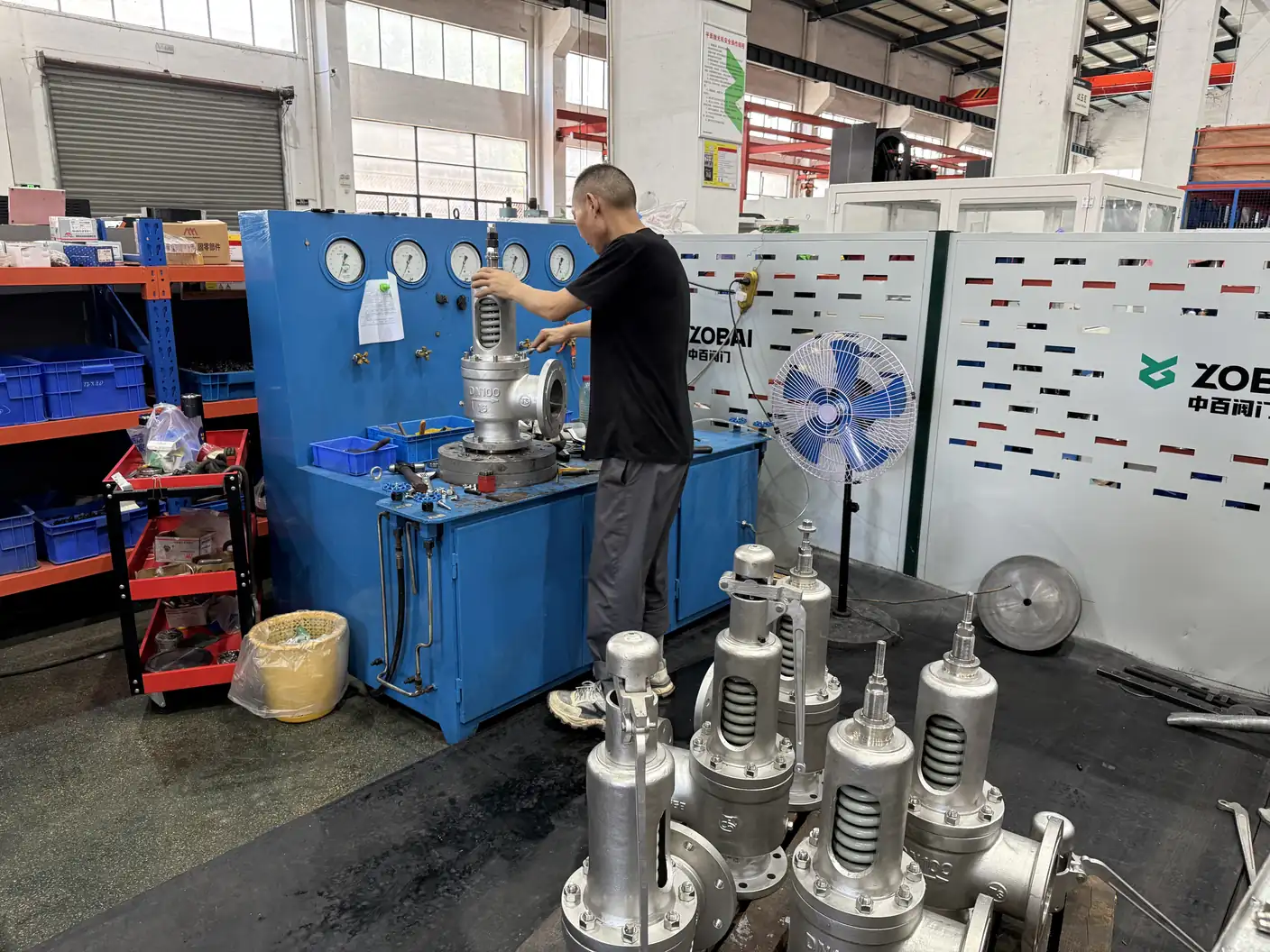
From Code Requirement to Shop-Floor Verification
Standards define technical requirements, but purchase-order compliance depends on design, materials, inspection scope and recorded test results. This actual ZOBAI photograph documents safety valve pressure-testing workstation. It is facility evidence, not a substitute for project-specific certificates or an agreed inspection and test plan.
Information to send when your project specifies ISO 4126
- Protected equipment: pressure vessel, boiler, pipeline, tank, compressor, reactor, heat exchanger or skid.
- Applicable reference: ISO 4126-1, -2, -3, -4, -5, -7, -9, -10, EN ISO 4126 or project standard.
- Valve type: spring-loaded safety valve, pilot operated valve, bursting disc combination, CSPRS or two-phase relief device.
- Design pressure / MAWP, set pressure, overpressure, operating pressure and operating margin.
- Medium name, phase, molecular weight, density, viscosity, vapor/liquid fraction and special hazards.
- Required relieving capacity, sizing basis, relief scenario and calculation method.
- Back pressure, inlet pressure loss, discharge route, silencer, flare, scrubber, vent or drain system.
- Required documents: datasheet, drawing, sizing report, MTC, set pressure certificate, pressure test and seat tightness test.