
API 576 Pressure-Relief Valve Inspection, Testing and Repair Guide
API RP 576 provides inspection and repair guidance for self-actuated pressure-relieving devices used in oil, gas, refinery and petrochemical facilities. It connects on-stream condition checks, shop inspection, functional testing, failure analysis, repair control and record keeping into an owner-user inspection program.
This guide explains how API 576 is used to inspect spring-loaded and pilot-operated pressure-relief valves, rupture disks and related devices—without confusing inspection practice with API 520 sizing, API 527 seat-tightness acceptance or the legal inspection interval required by the jurisdiction and equipment code.
- API RP 576, 5th Edition, was published in September 2024.
- The recommended practice covers inspection and repair of self-actuated pressure-relieving devices.
- API 576 supplements the owner-user inspection program; it does not replace jurisdictional or API 510/570 interval requirements.
- Inspection results should feed back into repair scope, interval review, spare strategy and relief-system reliability.
Inspection guidance for devices already placed in service
Edition note
API 576 covers more than conventional spring-loaded PSVs
Direct-Acting Spring-Loaded Valves
Pilot-Operated Pressure-Relief Valves
Balanced Bellows Valves
Rupture Disk Devices
Pin-Actuated Devices
Weight-Loaded Pressure/Vacuum Vents
The program should connect service risk, device history and failure consequences
Minimum program data
- Protected equipment and valve tag
- Valve type, model, size and serial number
- Set pressure, service and discharge route
- Operating pressure and temperature history
- Known fouling, corrosion or polymerization risk
- Previous as-found test result
- Repair and replacement-part history
- Last inspection and next due date
- Relief-event or leakage history
- Responsible inspector and approved procedure
Check the installed valve and relief path before removing the device
Identification and Seals
External Leakage
Corrosion and Mechanical Damage
Inlet and Isolation Condition
Outlet and Discharge Condition
Operating History
Record the as-received condition before cleaning or adjustment
Teardown inspection checklist
- Photograph and identify the received condition
- Perform the approved as-found test before adjustment where safe and required
- Record deposits, corrosion and foreign material
- Inspect nozzle and disc seating surfaces
- Check guides, spindle, spring and moving clearances
- Inspect bellows, pilot parts, tubing and seals
- Verify pressure-containing parts and bolting
- Identify non-original or incorrectly installed components
- Measure wear, damage and critical dimensions
- Document parts repaired, lapped or replaced
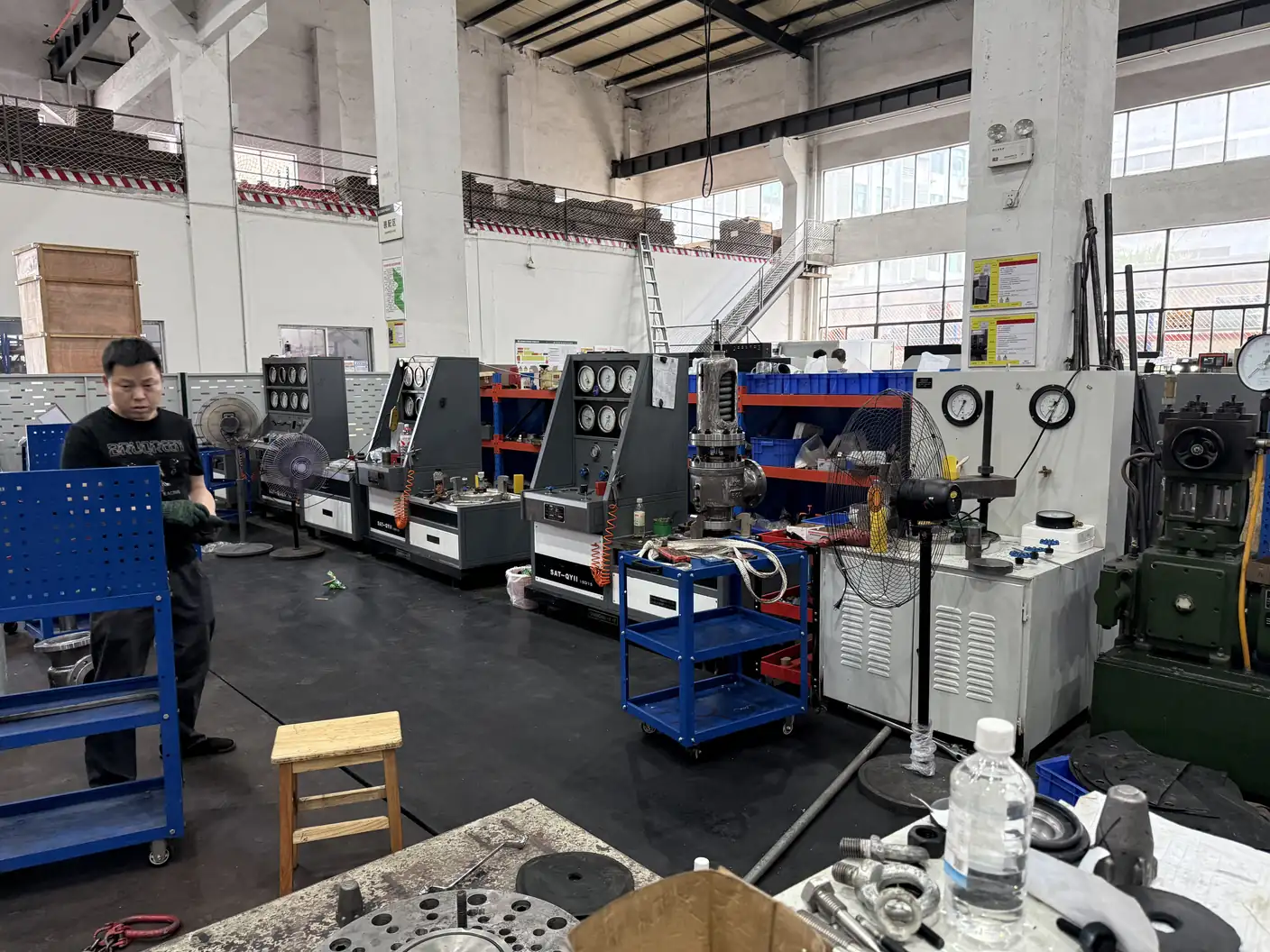
From Code Requirement to Shop-Floor Verification
Standards define technical requirements, but purchase-order compliance depends on design, materials, inspection scope and recorded test results. This actual ZOBAI photograph documents technician working beside safety valve test benches. It is facility evidence, not a substitute for project-specific certificates or an agreed inspection and test plan.
Inspection findings should identify the mechanism, not only the failed part
Corrosion and Erosion
Fouling and Deposits
Seat Damage and Leakage
Spring and Mechanical Degradation
Bellows or Pilot Failure
Installation and System Causes
Separate as-found performance from final acceptance testing
Test and repair records
- As-found opening or set-pressure result
- Test medium and test equipment identification
- Observed leakage or seat condition
- Repair and replacement-part details
- Spring range and adjustment status
- Final set-pressure result
- Seat-tightness test pressure and acceptance basis
- Pilot, bellows or accessory functional checks
- Seal, tag and nameplate verification
- Inspector, repairer and approval signatures
There is no single API 576 interval for every valve and every service
Factors that can shorten the interval
- Corrosive, fouling, polymerizing or dirty service
- High temperature or severe thermal cycling
- Frequent lifting, simmering or process upsets
- Set-pressure drift or poor as-found results
- Seat leakage or repeated maintenance findings
- Bellows, pilot or rupture-disk damage
- Unstable inlet or outlet piping conditions
- Process, capacity, pressure or composition change
- High consequence of failure
- Jurisdictional or owner-user maximum interval
A complete inspection record should support the next maintenance decision
Valve Identification
As-Found Condition
Repair Scope
Final Test Results
Return-to-Service Controls
Program Feedback
Eight-step API 576 inspection and return-to-service workflow
Review the valve history
Inspect the installed condition
Remove and identify
Perform the as-found evaluation
Disassemble and inspect
Repair under control
Complete final testing
Release and update the program
Information needed before sending a valve for inspection or repair
Recommended inspection input
- Valve tag, model, size, serial number and set pressure
- Protected equipment and process service
- Medium, operating pressure and temperature
- Known back pressure and discharge arrangement
- Reason for removal and observed symptoms
- Last inspection and repair history
- Required as-found testing
- Required set-pressure and seat-tightness criteria
- Replacement-part and material requirements
- Inspection report, certificates and release documents
Continue the inspection, testing and reliability review
Safety Valve Maintenance Guide
API 527 Seat Tightness
Safety Valve Installation
API 520 Safety Valve Sizing
Safety Valve Certificates
Ask an Engineer
Common questions about API 576 PRV inspection
API RP 576 provides recommended practices for inspecting and repairing self-actuated pressure-relieving devices in owner-user facilities. It covers installed inspection, shop inspection, testing, failure causes, repair and records.
API RP 576, 5th Edition, was published in September 2024. Projects should confirm the edition required by the owner-user, jurisdiction or inspection plan.
The scope includes direct-acting spring-loaded valves, pilot-operated pressure-relief valves, rupture disks, pin-actuated devices and weight-loaded pressure/vacuum vents.
No. The interval depends on the applicable inspection code and jurisdiction, service severity, owner-user program, previous findings, valve history and consequences of failure.
As-found testing documents the valve condition before cleaning or adjustment where the approved procedure allows. Final testing verifies the repaired and adjusted valve meets the required set-pressure, leakage and functional criteria.
No. API 576 addresses inspection and repair practice. API 527 provides a seat-tightness test and leakage acceptance basis when it is specified for the valve.
Recheck sizing when throughput, composition, pressure, temperature, MAWP, relief scenario, inlet piping, outlet piping or flare-header conditions have changed.