Pharmaceutical Safety Valves for GMP, Clean Steam, WFI and Process Systems
Pharmaceutical safety valves protect clean steam generators, SIP lines, WFI loops, purified water systems, bioreactors, fermenters, sterile buffer tanks, formulation vessels, API reactors, lyophilizers, autoclaves, compressed gas skids and utility systems from overpressure. In pharmaceutical service, the valve must be selected not only by pressure and capacity, but also by GMP documentation, cleanability, sterilization compatibility, material traceability, surface finish, drainability, seal material and validation support.
Where Safety Valves Are Used in Pharmaceutical Facilities
Pharmaceutical pressure relief applications include both GMP-critical process systems and general plant utilities. A clean steam safety valve, WFI thermal relief valve, sterile vessel PSV and API reactor relief valve may all protect pressure equipment, but their hygiene, material and documentation requirements can be completely different.
Clean Steam and SIP Systems
Used on clean steam generators, SIP supply lines, sterilization manifolds, bioreactor SIP circuits, sterile filter housings and autoclave steam supplies. Selection should review certified steam capacity, condensate drainage, high temperature, sterile boundary and documentation.
WFI and Purified Water Loops
Used on WFI storage, hot WFI loops, purified water distribution, heat exchangers, point-of-use branches and blocked-in liquid sections. Thermal expansion, hygienic installation, 316L wetted parts and drainability should be reviewed.
Bioreactors and Fermenters
Used on cell culture bioreactors, microbial fermenters, seed tanks and gas supply manifolds. Relief review should consider gas sparging, blocked vent filters, foam, SIP cycles, aseptic boundary and cleanable valve geometry.
Sterile Buffer and Formulation Vessels
Used on sterile mixing vessels, buffer preparation tanks, formulation skids and hold vessels. Key checks include nitrogen blanketing, transfer pump deadhead, CIP/SIP, surface finish, sanitary connections and batch release documentation.
API and Solvent Processing
Used on API reactors, solvent receivers, hydrogenation systems, crystallizers, filters and dryers. Corrosion, solvent vapor, toxic discharge, reaction relief, explosion risk and material compatibility must be evaluated.
Compressed Gas and Utility Systems
Used on nitrogen, clean compressed air, CO₂, oxygen, vacuum break systems, autoclaves, HVAC humidification and plant utilities. These valves may be outside product contact, but still require pressure protection and documented calibration.
Pharmaceutical PSV Selection Starts With the Pressure Rise Cause
Pharmaceutical facilities often combine sterile processing, utility steam, clean fluids, compressed gases and solvent systems. The correct valve is selected from the governing overpressure scenario and the GMP impact of the system it protects.
Clean Steam Overpressure
Pressure control failure, blocked steam demand or generator upset can raise clean steam pressure. Safety valves should be selected for certified steam capacity, set pressure, high-temperature service and safe discharge.
SIP Heating and Condensate Restriction
Sterilization-in-place can expose valves to high temperature, rapid pressure cycling and condensate. Drainability, material, seal compatibility and post-SIP reseating should be reviewed.
Thermal Expansion in WFI or Purified Water Lines
Hot WFI, purified water or cleaning solution trapped between closed valves can expand. Thermal relief valves should be reviewed for blocked-in liquid sections, heat exchangers and point-of-use branches.
Nitrogen or Clean Gas Regulator Failure
Regulator failure can expose sterile vessels, buffer tanks, chromatography skids or low-pressure users to high supply pressure. The valve should protect the weakest downstream pressure boundary.
Blocked Vent Filter or Vessel Outlet
Bioreactors, sterile hold vessels and formulation tanks may overpressure if vent filters, transfer lines or outlets are blocked. Gas flow, foam, liquid carryover and aseptic discharge path should be reviewed.
Reaction, Solvent Vapor or API Process Upset
API systems may face reaction heat, solvent vapor generation, hydrogen pressure, toxic release or blocked outlet. Relief selection should include chemical compatibility and safe discharge to scrubber, flare or closed collection.
Pharmaceutical Safety Valve Application Cases with Typical RFQ Data
These cases show how pharmaceutical safety valve requirements are usually described before model selection. Final sizing must be confirmed by project datasheet, equipment MAWP, GMP impact assessment, applicable code and verified relief calculation.
Case 1: Clean Steam Generator Safety Valve
Clean SteamClean steam systems often support sterilization, so valve documentation and repeatable set pressure performance are important. Discharge piping should avoid condensate accumulation that could affect valve operation or create water hammer.
Case 2: WFI Hot Loop Thermal Relief Valve
WFI Thermal ReliefWFI relief valves should not create a stagnant pocket. Hygienic installation, surface finish, drainability and material certificates should be defined before quotation.
Case 3: Bioreactor Gas Supply and Vent Protection
Aseptic VesselBioreactor relief valves must protect the vessel without becoming a contamination risk. Vent filter blockage, gas sparging and SIP exposure should be reviewed together.
Case 4: Sterile Buffer Preparation Vessel PSV
Nitrogen BlanketingLow-pressure pharmaceutical vessels are vulnerable to gas regulator failure. The safety valve must match the actual protected pressure boundary, not the upstream nitrogen supply pressure.
Case 5: API Solvent Reactor Safety Valve
API / Solvent ProcessAPI process relief may involve flammable, toxic or corrosive media. Material compatibility, discharge treatment and relief scenario review are as important as the valve pressure rating.
Case 6: Autoclave or SIP Header Safety Valve
Sterilization UtilitySterilization systems often see repeated heating and cooling. Valve materials, springs and seals should remain stable through thermal cycling and periodic recalibration.
Pharmaceutical Safety Valve Data Matrix
| Pharmaceutical Service | Typical Medium | GMP / Temperature Concern | Common Relief Cause | Required Engineering Check | Risk if Missed |
|---|---|---|---|---|---|
| Clean steam | Clean steam, SIP steam | High temperature, condensate, sterilization exposure | Pressure control failure, blocked steam demand | Steam capacity, drainability, high-temperature seal, calibration record | Unstable relief, condensate issues or failed sterilization support |
| WFI / purified water | WFI, purified water, hot water | Hot loop, hygienic surface, dead-leg control | Thermal expansion, blocked-in liquid | 316L wetted parts, sanitary connection, surface finish, drainability | Stagnation, contamination risk or line overpressure |
| Bioreactor / fermenter | Sterile air, O₂, N₂, CO₂, vapor space, foam | CIP/SIP, aseptic boundary, filter blockage | Gas regulator failure, blocked vent filter, foam carryover | Gas capacity, cleanability, sterile boundary, SIP temperature | Vessel overpressure or contamination risk |
| Sterile buffer vessel | Nitrogen, aqueous buffer, clean liquid vapor space | Low-pressure vessel, product-contact surface | Regulator failure, blocked outlet, pump deadhead | Set pressure accuracy, sanitary design, seal compatibility, MTC | Tank deformation, leakage or batch contamination |
| API process | Solvent vapor, reaction gas, acid, alkali, hydrogen, nitrogen | Corrosion, flammability, toxicity, reaction heat | Reaction upset, blocked vent, fire case, tube rupture | Relief case, material compatibility, discharge treatment, two-phase risk | Undersized PSV, toxic release or corrosion failure |
| Compressed gas utility | N₂, clean compressed air, O₂, CO₂, process gas | Cleanliness, dryness, oil-free requirement | Regulator failure, compressor overpressure, blocked outlet | Gas cleanliness, seat tightness, vent routing, pressure rating | Downstream overpressure or gas release hazard |
How to Specify a Pharmaceutical Safety Valve Correctly
1. Confirm GMP impact and product-contact status
First define whether the valve is product-contact, clean utility, sterile boundary, direct impact, indirect impact or general utility. This determines documentation, surface finish, material traceability and validation expectations.
2. Define the protected equipment
Identify the clean steam generator, WFI loop, bioreactor, sterile tank, API reactor, autoclave, lyophilizer, filter housing, gas skid or utility header. Equipment MAWP defines the set pressure boundary.
3. Define the relief scenario
Relief may come from steam pressure rise, gas regulator failure, blocked vent filter, thermal expansion, pump deadhead, reaction upset, tube rupture or blocked outlet. Capacity must match the governing case.
4. Review hygienic design and cleanability
For GMP-critical service, review 316L wetted material, surface finish, electropolishing, sanitary connection, drainability, dead-leg risk, CIP/SIP exposure and whether the valve can be inspected or removed without contamination risk.
5. Check material, elastomer and sterilization compatibility
PTFE, EPDM, FKM, silicone or other seal materials should be reviewed against product, clean steam, WFI, CIP chemicals, SIP temperature, solvents and cleaning agents. API and solvent service may require special alloys or soft parts.
6. Confirm documentation before production
Pharmaceutical projects often require material certificates, surface finish records, calibration reports, pressure test reports, seat tightness tests, cleaning certificates, FAT records, tag numbers and traceable documentation packages.
Pharmaceutical Safety Valves Must Support Cleanability, Sterility and Traceability
Why GMP service changes valve selection
In pharmaceutical facilities, a safety valve can be part of a validated clean utility, sterile boundary or product-contact system. The valve must protect equipment from overpressure without creating contamination risk, uncleanable geometry, unverified material contact or undocumented calibration.
Hygienic selection should review surface finish, weld or clamp connection, drainability, dead-leg control, seal compatibility, steam sterilization, cleaning chemical exposure, batch documentation and access for routine testing. For API or solvent service, safe discharge routing and chemical compatibility become equally important.
Field installation checks
- Confirm product-contact, clean utility or general utility classification.
- Avoid dead legs, stagnant pockets and non-drainable installation points.
- Confirm CIP/SIP exposure temperature and cleaning chemical compatibility.
- Route clean steam, solvent, gas or API relief to a safe approved destination.
- Check set pressure calibration access and periodic testing method.
- Confirm material certificates, surface finish records and tag traceability.
- Review whether maintenance can be performed without contamination risk.
Standards and Documents to Confirm Before Ordering
Common standard and GMP references
Pharmaceutical pressure relief specifications may reference GMP regulations, ASME BPE, ASME BPVC, ASME B31.3, ISO, EN, GB, USP utility requirements, owner standards and validation documents. The applicable document set should be confirmed before quotation.
- FDA 21 CFR Part 211 Subpart D for pharmaceutical equipment design, construction, cleaning and maintenance expectations in U.S. cGMP projects.
- ASME BPE when bioprocessing, pharmaceutical hygienic design, surface finish, CIP/SIP and material documentation are specified.
- ASME BPVC Section VIII or local pressure vessel requirements for clean steam generators, autoclaves, receivers and pressure equipment.
- ASME B31.3 Process Piping or local piping requirements where pharmaceutical process piping and pressure relief connections are specified.
- ISO 4126 Safety Valve Standards and ISO 4126-1 references when safety valve product requirements are specified.
- API 520, API 527 and ASME safety valve standards where project pressure relief sizing, seat tightness or ASME code language is required.
- USP pharmaceutical water guidance where WFI, purified water or analytical water expectations influence clean utility design.
- Owner specifications for sterile service, WFI, clean steam, oxygen service, API solvent service and validation documentation.
Typical pharmaceutical document package
Documentation should be agreed before manufacturing, especially for GMP-critical, clean steam, WFI, sterile process, API solvent and validated utility applications.
- Technical datasheet with model, size, orifice, set pressure and connection.
- Sizing calculation or certified relieving capacity confirmation.
- Set pressure calibration certificate.
- Pressure test report and seat tightness test report when required.
- Material certificate for pressure-retaining and wetted parts when specified.
- Surface finish record, electropolishing note or roughness report when required.
- Seal / elastomer material confirmation for CIP, SIP, product or solvent exposure.
- Cleaning, degreasing, passivation, packaging, FAT or tag documentation when specified.
Pharmaceutical Safety Valve RFQ Data Checklist
| Required Data | Why It Matters | Example Input |
|---|---|---|
| GMP impact classification | Defines documentation, material and validation expectations. | Product-contact, clean utility, sterile boundary, direct impact, general utility |
| Protected equipment | Defines pressure boundary and overpressure source. | Bioreactor, WFI loop, clean steam generator, sterile tank, API reactor, autoclave |
| Medium | Determines sizing, material, seal and hygiene requirements. | Clean steam, WFI, purified water, nitrogen, sterile air, solvent, buffer, API vapor |
| Relief scenario | Determines required relieving capacity. | SIP overpressure, regulator failure, thermal expansion, blocked vent filter |
| Set pressure | Defines valve opening pressure. | 1.5 barg, 3 barg, 6 barg, 10 barg, 150 psi |
| Operating pressure | Confirms operating margin and leakage risk. | Normal and maximum operating pressure |
| Required relieving capacity | Confirms whether the valve can protect the system. | kg/h steam, Nm³/h gas, L/min liquid, SCFM air |
| Relieving temperature | Affects material, spring, seat and elastomer selection. | Ambient, 85°C WFI, 121°C SIP, 134°C sterilization, solvent temperature |
| Cleaning / sterilization method | Determines hygienic design and seal compatibility. | CIP, SIP, clean steam, caustic wash, acid wash, solvent cleaning, passivation |
| Connection and surface finish | Ensures compatibility with hygienic piping and validation requirements. | Tri-clamp, ASME BPE clamp, orbital weld end, Ra requirement, electropolished |
| Material and seal | Prevents corrosion, contamination, extractable risk and leakage. | 316L, Hastelloy, PTFE, EPDM, FKM, silicone, FDA-compliant elastomer if specified |
| Required documents | Avoids delays during FAT, commissioning and qualification. | Datasheet, drawing, MTC, calibration, pressure test, surface finish, FAT record |
Final selection must be confirmed by equipment MAWP, GMP impact assessment, medium properties, cleaning method, applicable code, verified sizing basis and engineering review.
Common Pharmaceutical Safety Valve Selection Mistakes
Using a utility valve in product-contact service
Product-contact or sterile boundary service may require hygienic geometry, 316L wetted parts, controlled surface finish, cleanable design and traceable documents. A standard industrial valve can create GMP risk.
Ignoring CIP and SIP compatibility
Repeated exposure to clean steam, caustic, acid, WFI or sterilization temperature can damage unsuitable seals. Elastomers and soft seats should be selected for the real cleaning cycle.
Missing dead-leg and drainability review
Poor installation can create stagnant pockets where water, product or cleaning solution remains. Drainability and dead-leg control are part of pharmaceutical valve selection.
Replacing by clamp size only
A sanitary clamp size does not prove relieving capacity, material, surface finish, set pressure or documentation suitability. Replacement should match the full datasheet.
Forgetting material traceability
Pharmaceutical projects often require MTCs, wetted material records, surface finish reports, seal material confirmation and calibration certificates. These should be requested before order.
Unsafe discharge from solvent or gas systems
API solvents, nitrogen, oxygen, CO₂ or hydrogen relief may require safe venting, scrubber connection, closed collection or explosion-risk review. Outlet routing should be part of the RFQ.
Continue Your Pharmaceutical Pressure Relief Review
These related pages help move from pharmaceutical application requirements to detailed safety valve selection, clean utility review, sizing, material compatibility and pressure protection.
Authoritative References for Pharmaceutical Pressure Relief Projects
These references support the compliance and engineering review around pharmaceutical pressure relief, clean utility systems, hygienic equipment, pressure vessels, process piping and safety valve testing.
Pharmaceutical Safety Valve FAQ
Prepare a Complete Pharmaceutical PSV Datasheet Before Quotation
Send the GMP impact classification, protected equipment, medium, relief scenario, set pressure, operating pressure, required capacity, temperature, cleaning or sterilization method, surface finish requirement, connection standard, material and seal requirement, discharge route and required documents. A complete datasheet helps avoid unsafe assumptions and speeds up engineering review.
Minimum RFQ data
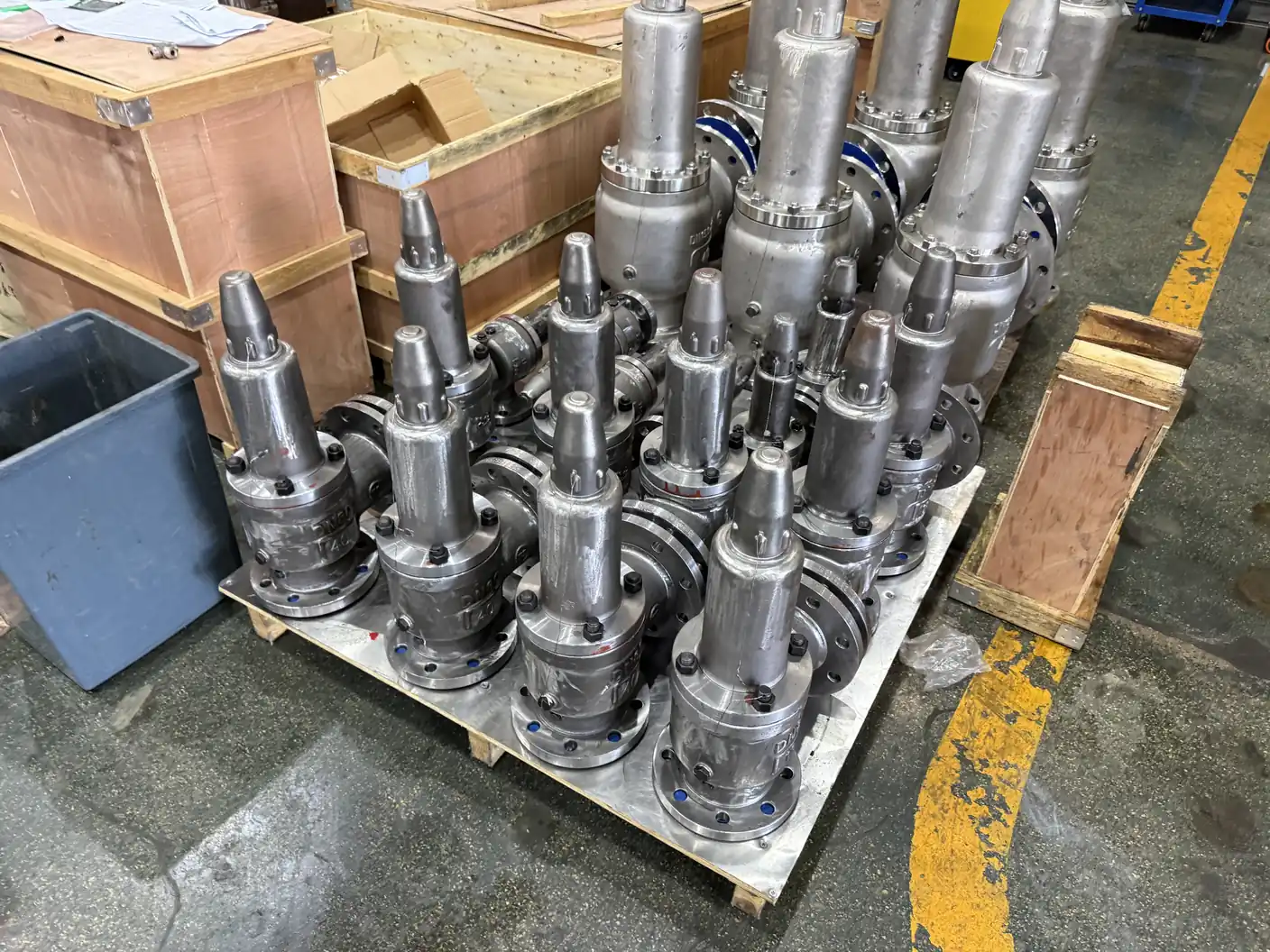
Real Production Evidence for Application Review
For Pharmaceutical Safety Valves for GMP & Clean Steam Systems | ZOBAI service, supplier review should connect valve construction to set pressure, medium, temperature, capacity, back pressure and the governing code. This actual ZOBAI photograph documents large stainless steel safety valves grouped on a pallet. Review it with drawings, material records and pressure-test documents.