
Risoluzione dei problemi delle valvole di sicurezza pilotate Le valvole di sicurezza pilotate possono diventare inaffidabili in servizi con sporco, cere, incrostazioni o polimerizzazione perché il circuito pilota dipende da piccoli percorsi di rilevamento, filtri, restrizioni, sedi del pilota e passaggi per la pressione della camera. Non è necessario che un deposito blocchi l'ugello della valvola principale per creare un serio problema di protezione dalla pressione. Se il pilota non riesce a rilevare...

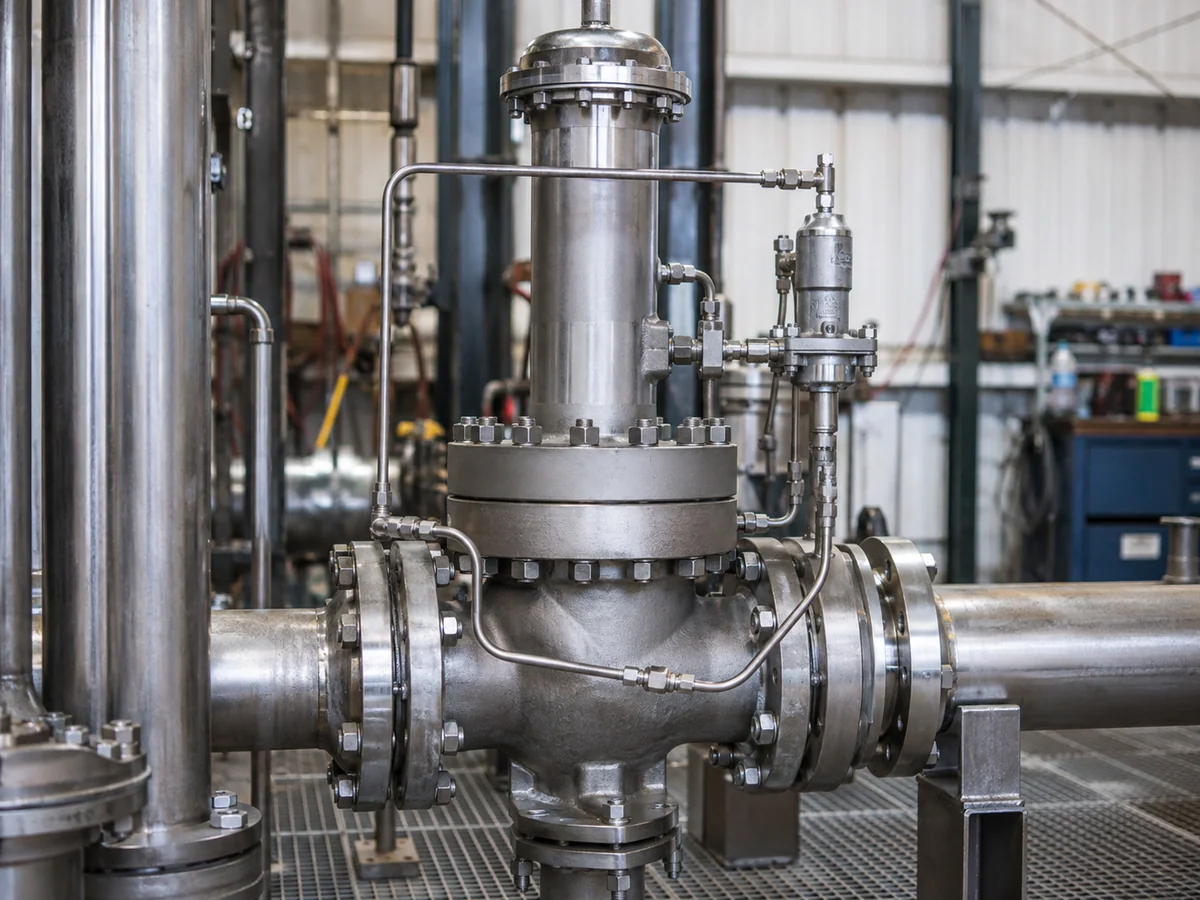
Risoluzione dei problemi delle valvole di sicurezza pilotate
Le valvole di sicurezza pilotate possono diventare inaffidabili in servizi con sporco, cere, incrostazioni o polimerizzazione perché il circuito pilota dipende da piccoli percorsi di rilevamento, filtri, restrizioni, sedi del pilota e passaggi per la pressione della camera. Non è necessario che un deposito blocchi l'ugello della valvola principale per creare un serio problema di protezione dalla pressione.
Se il pilota non riesce a rilevare correttamente la pressione, a caricare o scaricare la camera al momento giusto, o a richiudere in modo pulito, la valvola principale può aprirsi in ritardo, funzionare in modo instabile, perdere o non richiudere. La domanda più importante non è se la valvola sia chiamata pilotata, ma se il circuito pilota selezionato possa rimanere funzionale nel servizio effettivo.
Ciò non significa che una valvola di sicurezza pilotata sia automaticamente inadatta a ogni servizio sporco. Significa che il servizio deve essere valutato per tipo di contaminante, formazione di cera o polimero, profilo di temperatura, dati di pressione, capacità di scarico richiesta, contropressione, installazione e accessibilità per la manutenzione prima della quotazione o della sostituzione.
Risposta rapida: perché il servizio sporco crea un rischio speciale per le valvole di sicurezza pilotate
Una valvola di sicurezza pilotata utilizza un sistema pilota per controllare la pressione sopra il disco o pistone della valvola principale. In servizio pulito, questo può supportare un'elevata pressione di esercizio, una tenuta ermetica e un comportamento di apertura controllato. In servizio sporco, ceroso o polimerizzante, lo stesso circuito di controllo può diventare il punto debole.
Il rischio principale non è solo “sporcizia nella valvola”. La questione ingegneristica è se il pilota possa ancora trasmettere, scaricare e ripristinare la pressione di controllo con la tempistica richiesta per lo scenario di scarico governante.
La valvola principale può essere pulita mentre il circuito pilota è già compromesso
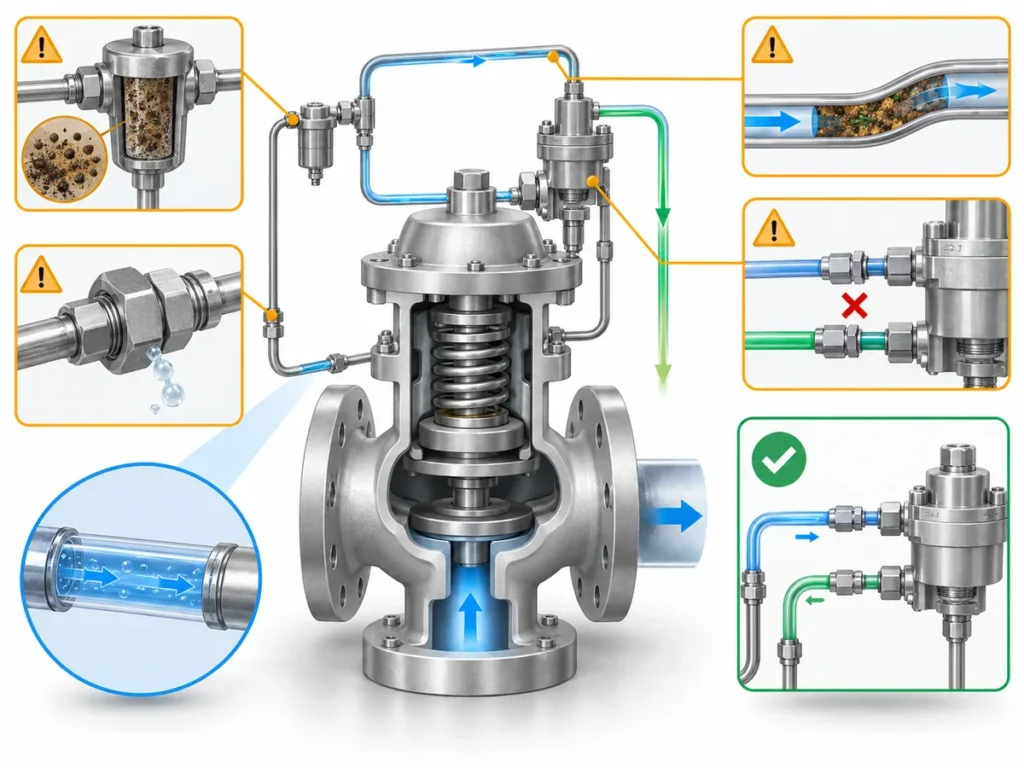
Un errore comune nella risoluzione dei problemi è ispezionare solo la sede, l'ugello e l'uscita della valvola principale, per poi presumere che la valvola sia accettabile perché il passaggio più grande non è visibilmente ostruito. In un design pilotato, la valvola principale e il circuito pilota svolgono compiti diversi.
La valvola principale fornisce il percorso del flusso di scarico. Il circuito pilota decide quando e come la valvola principale può aprirsi e richiudersi. Se una linea di rilevamento o una restrizione del pilota è parzialmente ostruita, il pilota potrebbe non rilevare abbastanza rapidamente la pressione effettiva del recipiente o della linea. Se il percorso di sfiato della cupola è limitato, la valvola principale potrebbe non aprirsi come previsto. Se il percorso di carica della cupola è limitato dopo lo scarico, la valvola potrebbe richiudersi lentamente o continuare a perdere.
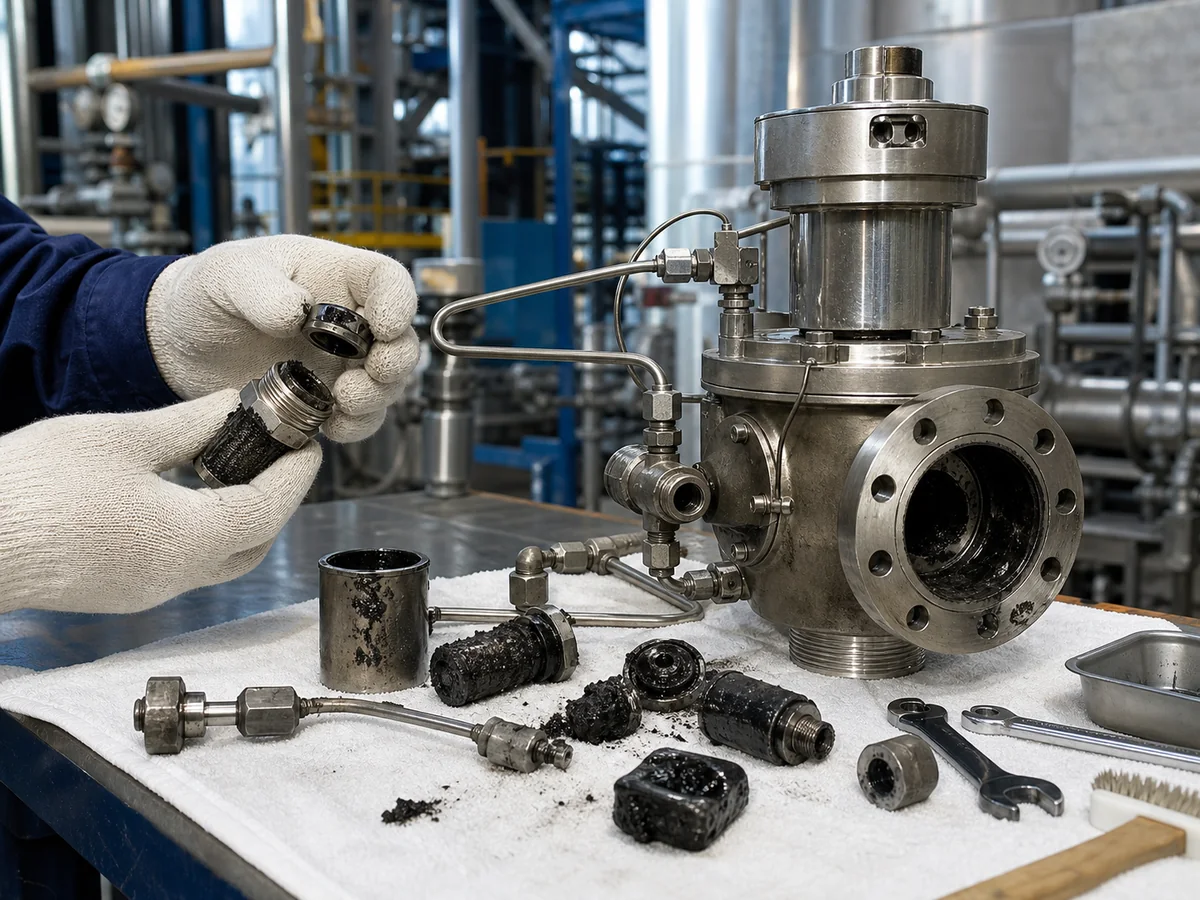
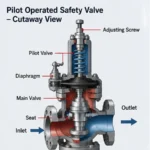
Illustrazione tecnica semplificata; non è un disegno costruttivo né una sezione di modello certificata.
Catena di guasto: la contaminazione del processo entra o si forma all'interno di un piccolo passaggio → il passaggio diventa limitato, appiccicoso o bloccato → la trasmissione della pressione o lo sfiato della camera cambiano → la risposta del pilota cambia → l'apertura, la stabilità o la richiusura della valvola principale diventano inaffidabili.
Ecco perché Valvole di sicurezza pilotate in servizio sporco devono essere esaminate come sistemi di controllo completi, non solo come corpi valvola principali.
Parti del circuito pilota che richiedono una verifica separata
| Area del circuito pilota | Rischio in servizio sporco | Verifica ingegneristica |
|---|---|---|
| Linea di rilevamento | Bloccato, parzialmente limitato, raffreddato, cerato o riempito di depositi | Percorso, pendenza, lunghezza, rischio di isolamento, perdita di calore e depositi rilevati |
| Ingresso / restrizione del pilota | Solidi o depositi appiccicosi rallentano la risposta del pilota | Pulizia, condizione del filtro e geometria del passaggio rispetto al progetto del produttore |
| Sede del pilota | Particelle o depositi impediscono la tenuta del pilota | Superficie di sede, storico delle perdite, registro di pulizia e guarnizioni compatibili |
| Percorso di carica del serbatoio | Ripressurizzazione lenta del serbatoio dopo lo sfioro | Ripristino della pressione del serbatoio, depositi e condizioni del tubo pilota |
| Percorso di sfiato / scarico del serbatoio | La valvola principale può aprirsi lentamente o non raggiungere il comportamento di apertura previsto | Pulizia del percorso di sfiato, instradamento dello sfiato e disposizione approvata dal produttore |
| Filtro o filtro a rete | Protegge i passaggi del pilota ma può diventare il punto di restrizione | Intervallo di ispezione, condizione dell'elemento, effetto della pressione e accesso per la manutenzione |
Non Tutti i Servizi con Fluidi Sporchi Falliscono allo Stesso Modo
I servizi con particolato sporco, cere e polimerizzazione non devono essere trattati come un'unica categoria generica di “servizio sporco”. Ogni meccanismo influisce in modo diverso sul circuito pilota e ciascuno modifica la decisione ingegneristica.
| Meccanismo di servizio | Posizione tipica di guasto | Cosa modifica la decisione |
|---|---|---|
| Contaminazione da particelle | Filtro, linea di rilevamento, ingresso pilota, restrizione, sede pilota | Carico di particelle, fonte di detriti, disposizione del filtro, pulizia iniziale e accesso per manutenzione |
| Deposizione di idrocarburi cerosi o pesanti | Linee di piccolo diametro più fredde, tubazioni stagnanti, passaggi pilota a basso flusso | Profilo di temperatura, comportamento di comparsa della cera, condizioni di spegnimento, temperatura ambiente e perdita di calore |
| Mezzo polimerizzante o reattivo | Passaggio di controllo a basso flusso, tasca stagnante, sede o tubazione pilota | Tempo di residenza, chimica, dipendenza dall'inibitore, finestra di temperatura e ricorrenza dopo la pulizia |
| Comportamento di incrostazione sconosciuto | Non può essere dato per scontato | Non finalizzare la selezione finché non sono definiti il fluido di processo, i depositi e la cronologia di manutenzione |
Servizio con particolato sporco: come i solidi ostruiscono o limitano il circuito di controllo
Il servizio con particolato sporco può includere ruggine, incrostazioni, fini di catalizzatore, detriti di tubazioni, prodotti di corrosione, sabbia, solidi di processo o trascinamento da apparecchiature a monte. Queste particelle possono essere intermittenti piuttosto che costanti. Una valvola può superare un'ispezione iniziale e diventare comunque inaffidabile dopo l'avvio, la manutenzione, la pulizia delle linee, il cambio del catalizzatore o un disturbo a monte.
Ritardo di rilevamento
Una linea di rilevamento parzialmente ostruita può ritardare il segnale di pressione che raggiunge il pilota. La valvola può sembrare accettabile in un'ispezione statica ma rispondere troppo lentamente durante un evento reale.
Carico del filtro
Un filtro del pilota può proteggere i passaggi a valle, ma diventa un elemento di manutenzione. Se si carica di solidi, può diventare il successivo punto di restrizione.
Errore di pressione della camera
Una carica o uno sfiato limitato può far sì che la valvola principale risponda nel momento sbagliato, si apra lentamente, si richiuda in ritardo o perda dopo il funzionamento.
La restrizione parziale è spesso più difficile da diagnosticare rispetto al blocco completo. Una linea completamente ostruita può essere rilevata durante l'ispezione. Un percorso parzialmente ostruito può ancora far passare una certa pressione, ma non abbastanza rapidamente per un'azione protettiva stabile durante un evento di scarico reale.
Confine importante: La filtrazione non è la stessa cosa della qualificazione per servizio sporco. Un filtro può ridurre le particelle solide a monte del filtro, ma non può prevenire automaticamente la precipitazione di cere, la formazione di polimeri, depositi appiccicosi sulla sede del pilota, un percorso di rilevamento inadeguato o un'esposizione a temperature non idonee.
Servizio con fluidi cerosi e idrocarburi pesanti: la deposizione può dipendere dalla temperatura
Il servizio con fluidi cerosi è diverso dal normale servizio sporco. Il fluido può apparire accettabile alla normale temperatura di esercizio, per poi depositare cera quando la temperatura scende in una linea di rilevamento di piccolo diametro, nei tubi pilota, nelle connessioni esterne o nei volumi stagnanti.
La linea di processo principale può rimanere calda e in flusso, mentre il circuito pilota vede una velocità inferiore e condizioni termiche diverse. Questo può creare depositi localizzati anche quando l'apparecchiatura protetta non appare molto sporca. Per fluidi riscaldati, viscosi o che solidificano, Valvole di sicurezza camiciate può far parte di una revisione più ampia delle condizioni di servizio, ma non sostituisce automaticamente una valutazione POSV per servizio sporco.
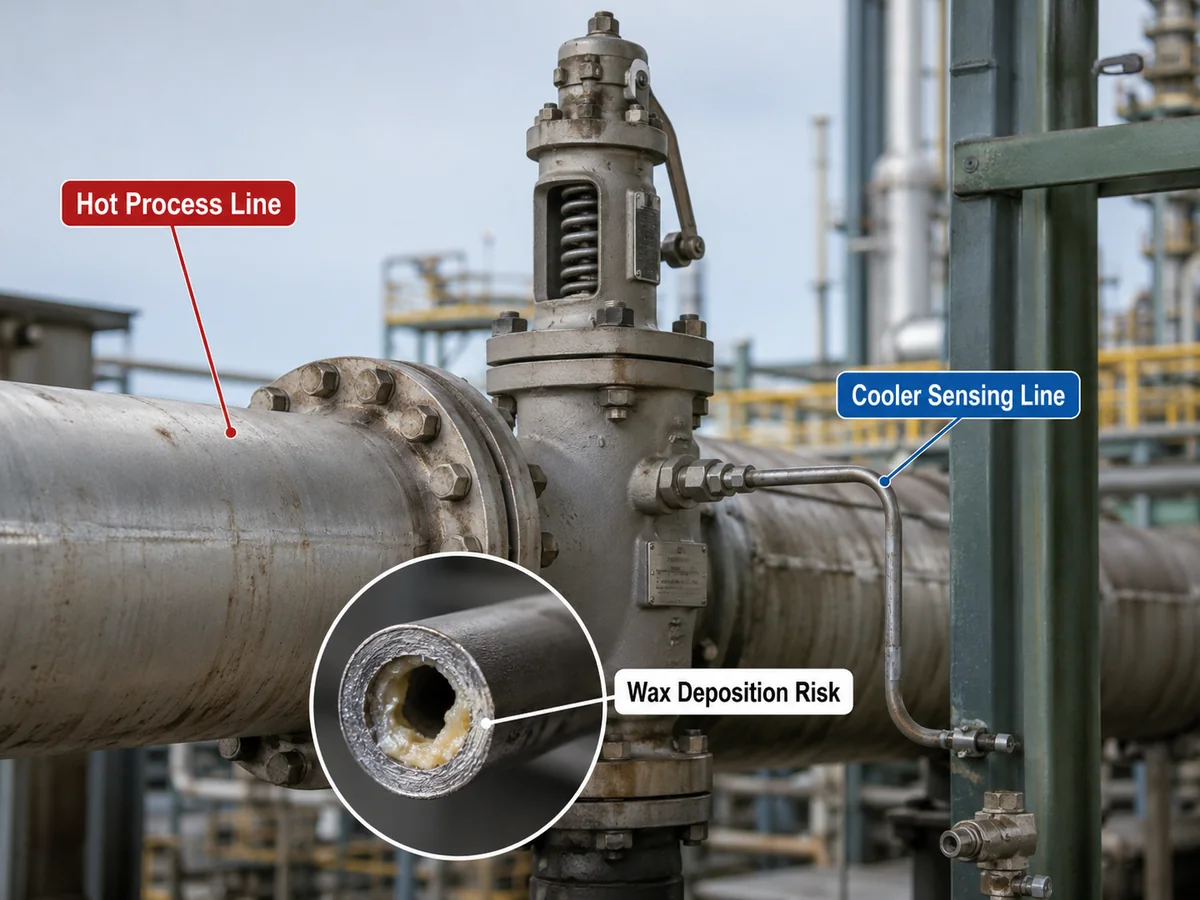
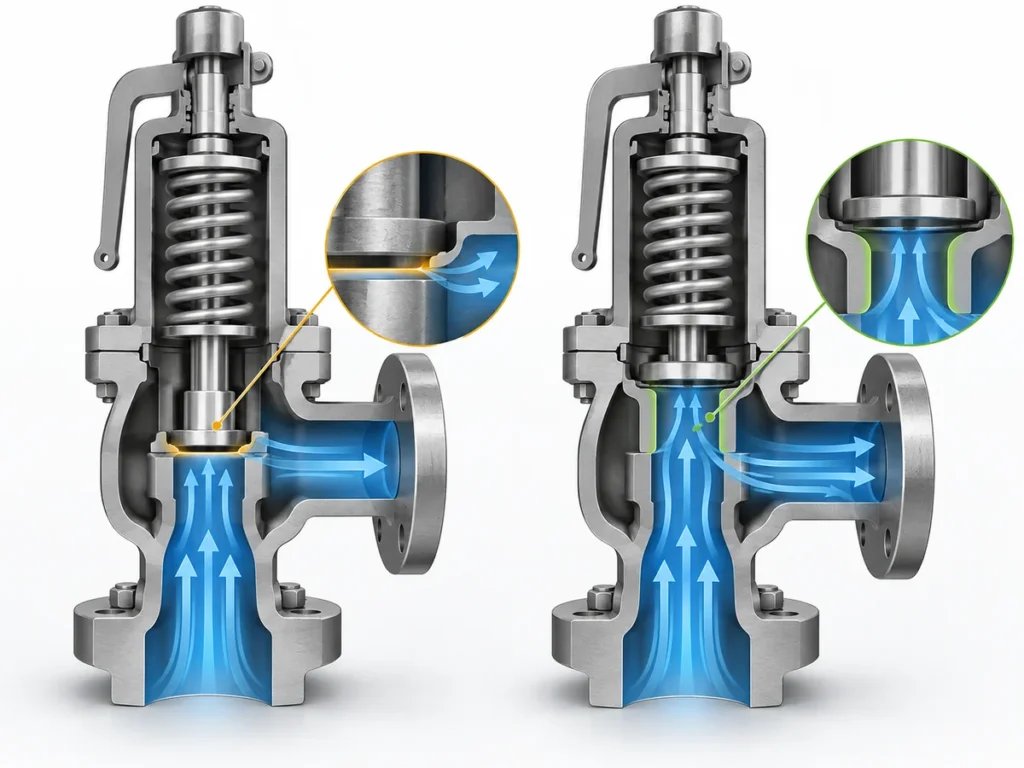
Immagine di ingegneria concettuale; la temperatura e il comportamento della cera devono essere confermati per il fluido di processo effettivo.
I punti di revisione importanti includono la normale temperatura di esercizio, la temperatura di scarico, le temperature di avviamento e spegnimento, la temperatura ambiente minima, la perdita di calore dalle linee di rilevamento di piccolo diametro, le posizioni stagnanti o con fondo cieco, il percorso e la pendenza delle linee, i requisiti di isolamento o tracciamento termico e se il servizio si raffredda al di sotto di una condizione di comparsa o deposizione della cera.
L'isolamento o il tracciamento termico non devono essere considerati una soluzione automatica. Devono essere valutati in base al fluido di processo, al design della valvola, alla disposizione del rilevamento, all'accesso per la manutenzione e ai requisiti di sicurezza del progetto. In alcuni casi, la condizione più severa non è il funzionamento normale, ma l'avviamento a freddo, lo spegnimento, lo standby, il funzionamento invernale o il servizio intermittente.
Servizio con polimerizzazione: una piccola restrizione può diventare un deposito crescente
Il servizio con polimerizzazione richiede una revisione ancora più attenta perché il deposito può formarsi all'interno del circuito pilota piuttosto che arrivare semplicemente come sporco dalla tubazione a monte. Se il fluido di processo può polimerizzare in determinate condizioni di temperatura, tempo di residenza, esposizione all'ossigeno, catalizzatore, inibitore, pressione o flusso stagnante, i piccoli passaggi di controllo diventano aree ad alto rischio.
La differenza più importante è la progressione. Una piccola quantità di accumulo di polimero può modificare la risposta di pressione. Questo cambiamento può aumentare il tempo di residenza o ridurre il lavaggio. La restrizione può quindi peggiorare nel tempo.
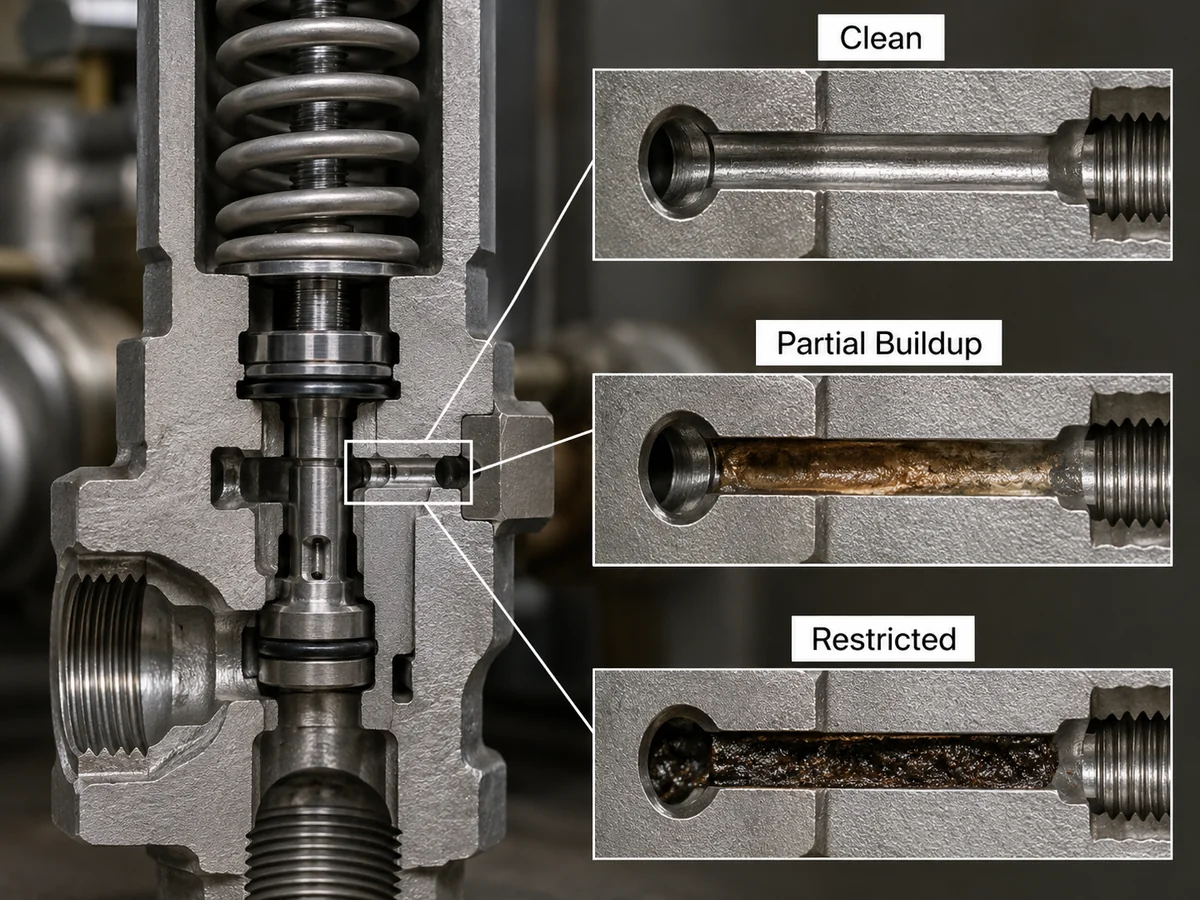
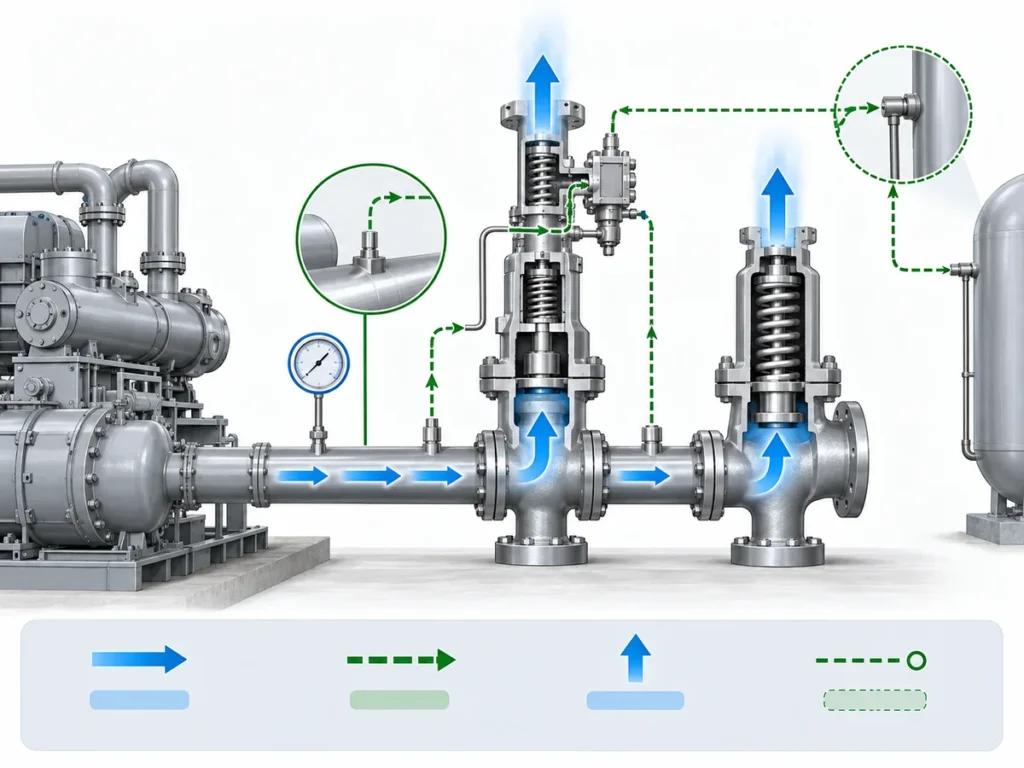
Illustrazione tecnica semplificata; il rischio effettivo di polimerizzazione dipende dalla chimica di processo e dalle condizioni operative.
Un modello di manutenzione ripetuto di pulizia e ritorno in servizio è un segnale di allarme. Se la pulizia del pilota ripristina temporaneamente il funzionamento ma gli stessi sintomi si ripresentano, la causa principale potrebbe non essere una scarsa manutenzione. Potrebbe essere che la configurazione del pilota selezionata crei o esponga una tasca stagnante in cui il fluido non è stabile.
Per i fluidi polimerizzanti, la richiesta di preventivo o la revisione della sostituzione non dovrebbe limitarsi a dimensione della valvola, pressione di taratura e classe delle flange. Dovrebbe includere composizione del processo, meccanismo di polimerizzazione, dipendenza dagli inibitori, finestra di temperatura, sensibilità ai volumi stagnanti, storico di manutenzione e prove del produttore per la configurazione del pilota proposta.
Quale comportamento di guasto dovrebbero cercare gli ingegneri?
Il servizio sporco, ceroso o polimerizzante può produrre diversi sintomi osservabili. Questi sintomi non dimostrano da soli la causa principale, ma indicano dove iniziare l'ispezione.
- ritardo nella risposta di apertura;
- comportamento di taratura incoerente in servizio;
- modulazione o ciclaggio instabile quando il progetto del pilota è modulante;
- apertura della valvola principale più lenta del previsto;
- sfiato incompleto della camera superiore;
- ripressurizzazione lenta della camera superiore;
- perdite dopo il funzionamento;
- mancata richiusura pulita;
- aumento della frequenza di manutenzione;
- incrostazioni ripetute dopo la pulizia;
- comportamento diverso dopo lo spegnimento, il freddo o il cambiamento della composizione del processo.
| Sintomo Osservato | Possibile meccanismo di contaminazione | Cosa controllare per primo | Non dare per scontato |
|---|---|---|---|
| Risposta ritardata | Linea di rilevamento o ingresso pilota limitato | Pulizia del percorso di rilevamento, condizioni del filtro e instradamento | La pressione di taratura è errata |
| Apertura lenta della valvola principale | Sfiato del serbatoio o scarico del pilota limitato | Percorso di sfiato del serbatoio, scarico del pilota e passaggi di controllo | Ugello principale sottodimensionato |
| Mancata richiusura | Contaminazione della sede del pilota o ripressurizzazione lenta del serbatoio | Sede del pilota, percorso di carica della camera e depositi | Solo la sede principale è danneggiata |
| Perdite intermittenti | Depositi sulla sede del pilota o controllo pilota instabile | Condizione del pilota, parti morbide e storico di manutenzione | Solo il materiale della sede è la causa |
| Ciclaggio o instabilità | Combinazione di sporcamento, perdita di carico in ingresso, contropressione o dimensionamento errato | Circuito pilota, perdita di carico in ingresso, sistema di scarico e dimensionamento della valvola | Il servizio sporco è l'unica causa |
| Aumento della frequenza di manutenzione | Sporcamento progressivo, accumulo di cera o formazione di polimeri | Tipo di deposito, registri di pulizia e ciclo operativo | Intervallo di manutenzione più breve è una soluzione permanente |
| Problemi dopo lo spegnimento a freddo | Depositi di cera o fluidi pesanti nelle linee di piccolo diametro | Profilo di temperatura, percorso delle linee e sezioni stagnanti | La temperatura operativa normale dimostra l'idoneità |
| Incrustazioni ripetute dopo la pulizia | Formazione di depositi all'interno del percorso di controllo | Tendenza alla polimerizzazione, volume stagnante e chimica di processo | La pulizia da sola risolve il problema |
Non diagnosticare l'otturazione del pilota senza escludere cause a livello di sistema
L'otturazione del pilota è solo una possibile spiegazione. Un dispositivo di sfioro fa parte di un sistema installato. Prima di decidere che il servizio sporco ha causato il guasto, gli ingegneri dovrebbero anche esaminare le cause a livello di sistema.
Perdita di Pressione in Ingresso
Una perdita di carico eccessiva tra l'apparecchiatura protetta e l'ingresso della valvola può causare un funzionamento instabile. Un circuito pilota limitato può creare un sintomo simile, quindi entrambi devono essere controllati. Il guida all'installazione delle valvole di sicurezza dovrebbe essere verificato quando la connessione di ingresso, la posizione del sensore, il supporto delle tubazioni o la disposizione dello scarico possono influenzare il comportamento della valvola.
Contropressione in uscita
La contropressione può modificare il comportamento della valvola di sicurezza a seconda del tipo di valvola, della configurazione e del sistema di scarico. La contropressione sovrapposta e la contropressione generata devono essere esaminate separatamente. Una valvola pilotata non risolve automaticamente ogni condizione di contropressione, e il servizio sporco non elimina la necessità di verificare le tubazioni di scarico e la resistenza del sistema di uscita. Per informazioni di base, rivedere Contropressione e soffietto.
Dimensionamento e margine operativo
Una valvola sovradimensionata, un flusso stabile insufficiente, uno scarso margine operativo o un orifizio selezionato in modo errato possono anche causare un funzionamento instabile. La pressione di taratura non è la capacità. La dimensione della connessione non è la capacità di scarico certificata o documentata. Una valvola può essere fisicamente collegata al sistema e comunque non essere adatta al carico di scarico richiesto. La base della capacità deve essere verificata rispetto a dimensionamento della valvola di sicurezza e alla capacità di sfioro certificata.
Revisione del sistema di scarico
Se il sintomo può coinvolgere le tubazioni di scarico, la depressurizzazione, la perdita di carico in ingresso, la definizione dello scenario di scarico o l'interazione del sistema, la revisione non deve fermarsi al corpo della valvola. Il API 521 sistemi di sfioro pressione contesto più ampio può essere rilevante per valutare se il sistema installato supporta ancora la funzione protettiva prevista.
Problemi di manutenzione o assemblaggio
Dopo la riparazione o la pulizia, errori di assemblaggio, guarnizioni danneggiate, parti morbide errate, tubazioni bloccate, impostazione pilota errata o test incompleti possono creare sintomi che sembrano incrostazioni di processo. Esaminare i registri come trovato e come lasciato prima di prendere una decisione di sostituzione.
Scorciatoie non sicure da evitare nella sostituzione di POSV in servizio sporco
Non sostituire solo in base alla dimensione della flangia
La dimensione della connessione dimostra solo la connessione fisica. Non dimostra l'orifizio selezionato, il coefficiente, la capacità certificata, la base del fluido o l'idoneità per lo scenario di scarico principale.
Non trattare la pressione di taratura come capacità
La pressione di taratura identifica l'impostazione della pressione. Non dimostra la capacità di scarico richiesta, la capacità nominale, il comportamento bifase o l'idoneità dopo una modifica del processo.
Non aggiungere un filtro senza revisione
Un filtro può aiutare, ma può anche diventare una restrizione. Dimensioni del filtro, accesso, condizioni dell'elemento, intervallo di manutenzione e approvazione del produttore sono importanti.
Non modificare informalmente il tubing del pilota
La posizione di rilevamento, il percorso del tubing, gli sfiato, la purga, il tracciamento termico e le disposizioni di alimentazione pulita influenzano la funzione protettiva e non dovrebbero essere modificati in campo senza revisione ingegneristica.
Purga, rilevamento remoto, alimentazione pulita, riscaldamento e altre opzioni di mitigazione richiedono una revisione progettuale
Esistono possibili strategie di mitigazione per alcuni servizi sporchi, cerosi o polimerizzanti, ma devono essere esaminate come soluzioni ingegnerizzate, non come improvvisazioni sul campo.
Alimentazione pilota pulita o esterna
Ciò può ridurre l'esposizione del circuito pilota alla contaminazione del processo, ma la compatibilità con il design della valvola e la funzione di protezione della pressione deve essere confermata.
Purga o rilevamento remoto
Un sistema di purga non deve compromettere la precisione del rilevamento e una linea di rilevamento remota deve comunque rappresentare la pressione dell'apparecchiatura protetta.
Controllo della temperatura
Il tracciamento termico o l'isolamento possono essere rilevanti per il servizio ceroso, ma devono essere esaminati in relazione al comportamento del fluido, ai requisiti di sicurezza e all'accesso per la manutenzione.
Altre direzioni di revisione possono includere filtri pilota approvati dal produttore, percorsi alternativi delle linee di rilevamento, volumi stagnanti minimizzati, disposizioni pilota specifiche per il servizio, punti di ispezione accessibili e prove di manutenzione definite in base alla storia di servizio effettiva.
Non modificare un circuito pilota in campo senza l'approvazione dell'ingegneria. Modifiche non approvate alle linee di rilevamento, ai filtri, agli sfiato, all'alimentazione pulita, al flusso di spurgo o al riscaldamento possono compromettere la funzione protettiva.
Evidenze e limiti del produttore
La documentazione del produttore per le valvole di sicurezza pilotate mostra comunemente che accessori o configurazioni specifici per il servizio possono esistere per alcune famiglie di prodotti. Esempi includono rilevamento della pressione remoto, filtrazione del pilota, disposizioni per fonte di media pulita, opzioni per servizio sporco e altre modifiche al circuito pilota. Ciò supporta la necessità di una revisione del produttore, ma non rende la filtrazione, lo spurgo, il rilevamento remoto o il riscaldamento una soluzione universale per ogni servizio sporco.
- Documentazione della valvola di sicurezza pilotata Emerson Anderson Greenwood mostra opzioni della famiglia di prodotti come il rilevamento della pressione remoto. Queste sono opzioni specifiche del prodotto, non un'approvazione generale per tutti i servizi.
- Documentazione Baker Hughes Consolidated 3900 POSRV include il contesto delle opzioni per servizio sporco / precipitazione / fluido viscoso per una famiglia di prodotti POSRV definita. Questo dovrebbe essere usato come evidenza specifica del produttore, non come un'affermazione sul modello ZOBAI.
Per la revisione RFQ ZOBAI, ciò significa che l'acquirente deve fornire il mezzo di processo effettivo, la fase, i contaminanti, il profilo di temperatura, i dati di pressione, la capacità richiesta, la contropressione, la disposizione di rilevamento e le prove di manutenzione. La configurazione finale deve essere confermata rispetto alla serie di valvole selezionata, ai dati del produttore, all'edizione del codice applicabile, alla specifica di progetto e ai requisiti normativi locali.
Quando dovresti riconsiderare l'uso di una valvola di sicurezza pilotata?
Una valvola di sicurezza pilotata può essere ancora adatta in alcuni servizi contaminati se il meccanismo di contaminazione è compreso e la configurazione approvata dal produttore affronta il rischio. Dovrebbe essere riconsiderata quando il servizio ha un'alta probabilità di intasamento, deposizione, crescita di polimeri o guasto di manutenzione nel circuito di controllo.
| Condizione di servizio | Direzione di revisione POSV | Preoccupazione principale |
|---|---|---|
| Gas o vapore pulito | Revisione POSV normale | Input standard di pressione, capacità, contropressione e materiali |
| Solidi fini occasionali | Revisione speciale pilota/filtro | Evidenza di restrizione e manutenzione |
| Carico particolato elevato | Revisione ad alto rischio | Intasamento rapido di filtro o passaggio |
| Idrocarburo ceroso | Revisione di temperatura e deposizione | Punti freddi di piccolo diametro e sezioni stagnanti |
| Fluido polimerizzante | Revisione specialistica del servizio | Crescita di depositi nei percorsi di controllo a basso flusso |
| Meccanismo di contaminazione sconosciuto | Non finalizzare la selezione | Definizione del servizio insufficiente |
| Incrustazione ripetuta frequente | Rivalutare la configurazione della valvola | La pulizia potrebbe non risolvere la causa principale |
| Servizio critico con scarso accesso | Revisione approfondita dell'affidabilità | Ispezione e manutenzione potrebbero essere impraticabili |
Direzione finale della selezione: Mantenere, Rivedere o Riconsiderare
Mantieni il percorso di revisione POSV
Utilizzare il normale percorso di revisione POSV solo quando il fluido di processo è sufficientemente pulito, il circuito pilota è compatibile con il servizio, la capacità richiesta e la contropressione sono confermate e l'accesso per la manutenzione è realistico.
Revisione speciale POSV richiesta
Utilizzare questo percorso per solidi occasionali, tendenza alla cera, rischio di intasamento del filtro, incertezza della linea di rilevamento o storico di servizio che mostra incrostazioni intermittenti ma non crescita incontrollata di depositi.
Riconsiderare la configurazione
Riconsiderare la configurazione di scarico della pressione quando il servizio presenta solidi pesanti, blocchi ripetuti di cera, crescita di polimeri, depositi sconosciuti, scarso accesso per la manutenzione o guasti ripetuti dopo la pulizia. Una selezione più ampia della valvola può essere poi esaminata tramite il Guida alla selezione delle valvole di sicurezza.
Le configurazioni alternative devono essere valutate rispetto allo scenario di scarico effettivo, alla capacità di scarico richiesta, alla contropressione, alla compatibilità dei materiali, all'installazione e alla base normativa applicabile. Non devono essere selezionate solo perché il servizio è descritto come sporco.
Prove di ispezione e manutenzione da esaminare
Per una valvola esistente, l'evidenza più utile è solitamente la condizione al momento del ritrovamento. Prima di ordinare una sostituzione, raccogliere informazioni che mostrino dove inizia la catena di guasto.
- foto delle condizioni del filtro pilota;
- depositi trovati nelle linee di rilevamento;
- contaminazione della sede del pilota;
- condizioni del tubo della cupola;
- frequenza di pulizia;
- data e condizione dopo l'ultimo intervento di manutenzione;
- pressione di taratura rilevata e pressione di taratura finale;
- risultati delle prove di tenuta della sede, se applicabili;
- storico delle perdite;
- storico della temperatura di esercizio;
- storico di arresti o condizioni di freddo;
- variazioni della composizione del processo;
- eventi di manutenzione a monte o presenza di detriti;
- scheda tecnica e targhetta esistenti;
- parti di ricambio e materiali di consumo sostituiti in precedenza;
- registri delle modifiche gestionali.
Una prova della sola pressione di taratura non dimostra che la valvola installata sia adatta al servizio sporco. La tenuta della sede, la risposta del pilota, la base della capacità, la tubazione installata e la contaminazione del servizio devono essere esaminati separatamente.
Richiesta di preventivo e dati di sostituzione per servizio sporco, ceroso o polimerizzante
Prima di richiedere un preventivo o una raccomandazione di sostituzione, inviare dati sufficienti per definire il servizio di protezione e il rischio di contaminazione.
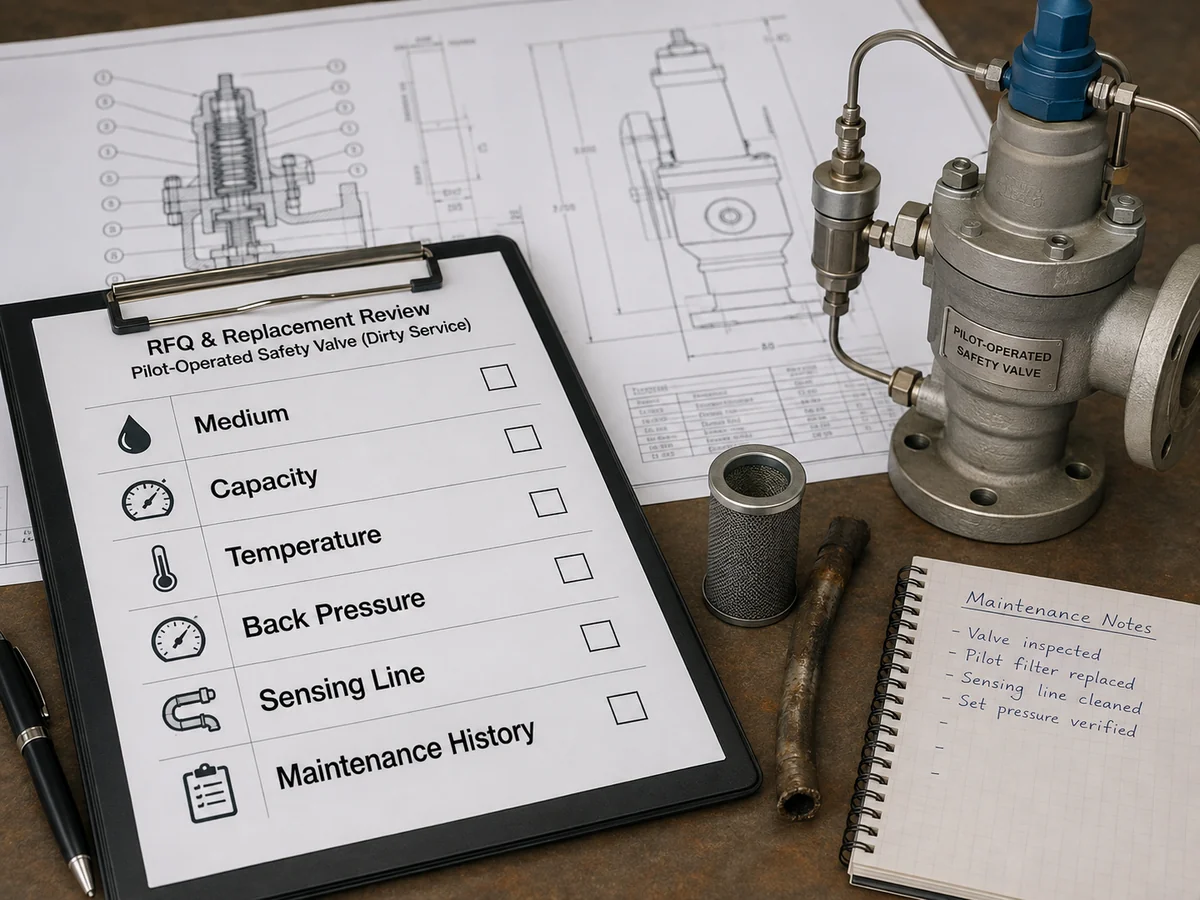
Checklist solo visiva; non sostituisce la revisione ingegneristica del progetto.
| Dati richiesti | Perché è Importante |
|---|---|
| Apparecchiatura protetta | Conferma cosa deve essere protetto |
| Scenario di sfioro dominante | Definisce perché la valvola deve scaricare |
| Mezzo e composizione | Identifica i rischi di contaminazione, cera o polimeri |
| Base di fase | I servizi con gas, vapore, liquido e bifase non sono intercambiabili |
| Descrizione di solidi o contaminazione | Definisce il rischio di intasamento e filtro |
| Tendenza a cera o depositi | Determina il rischio di sporcamento correlato alla temperatura |
| Tendenza alla polimerizzazione | Determina il rischio di crescita di depositi nei passaggi stagnanti |
| Pressione operativa / MAWP / pressione di taratura | Separa il funzionamento normale, il limite dell'apparecchiatura protetta e la taratura della valvola |
| Capacità di sfioro richiesta e base di calcolo della capacità | Conferma la portata da proteggere |
| Temperatura di sfioro | Influisce su materiali, depositi e base di dimensionamento |
| Contropressione sovrapposta e accumulata | Influisce sul comportamento della valvola prima e durante lo scarico |
| Disposizione di ingresso, uscita e linea di rilevamento | Aiuta a valutare la perdita di carico in ingresso, gli effetti di scarico e la geometria soggetta a contaminazione |
| Disposizione esistente di filtri, spurgo o alimentazione pulita | Mostra la strategia attuale di controllo della contaminazione |
| Materiali e parti morbide | Conferma la compatibilità con il fluido di processo e la temperatura |
| Targhetta esistente, scheda tecnica e storico di manutenzione | Evita la sostituzione basata solo sull'aspetto |
| Codice e documenti applicabili | Definisce la base di accettazione del progetto |
Il rischio principale nella selezione è sostituire la valvola basandosi solo su aspetto, dimensione della flangia o pressione di taratura della targhetta. La sola dimensione della connessione non dimostra la capacità, e la sola pressione di taratura non dimostra che la valvola selezionata possa proteggere il caso di scarico principale.
Per la revisione relativa al dimensionamento, vedere la guida ZOBAI su API 520 dimensionamento valvole di sicurezza.
Flusso di lavoro per l'indagine sui guasti prima della sostituzione
- Confermare l'apparecchiatura protetta e lo scenario di sfioro applicabile. Non diagnosticare la valvola separatamente dal sistema che protegge.
- Raccogliere le prove come trovate. Fotografare il filtro del pilota, la linea di rilevamento, i depositi, i tubi, la sede del pilota e i risultati della manutenzione prima della pulizia.
- Identificare il meccanismo di contaminazione. Separare solidi particolati, depositi di cera, crescita di polimeri, trascinamento di liquido e sporcamento sconosciuto.
- Controllare gli effetti del sistema. Rivedere la perdita di ingresso, la contropressione di uscita, il margine operativo, il dimensionamento della valvola e la tubazione di scarico prima di incolpare il solo pilota.
- Verificare le disposizioni approvate dal produttore. Confermare se per il design della valvola selezionato sono supportati filtro, spurgo, alimentazione pulita, rilevamento remoto o riscaldamento.
- Ricontrollare la capacità e la base normativa. La capacità richiesta, la capacità certificata/documentata, la fase del fluido e l'edizione della norma adottata devono ancora essere confermate.
- Decidere se la sostituzione con lo stesso tipo è accettabile. Se il meccanismo di guasto rimane irrisolto, ripetere la stessa configurazione della valvola potrebbe ripetere il guasto.
Scenari di ingegneria compositi
Gli scenari seguenti sono esempi illustrativi di formazione. Non sono casi cliente ZOBAI e non devono essere considerati come prova delle prestazioni del prodotto.
Scenario Composito 1: Incrostazioni da particolato dopo manutenzione a monte
Una valvola pilotata inizia a rispondere in modo incoerente dopo che l'apparecchiatura a monte viene aperta per manutenzione. La sede della valvola principale appare accettabile, ma si trovano detriti nel percorso di rilevamento e nel filtro del pilota. La probabile catena di guasto è migrazione di detriti, parziale ostruzione del pilota e trasmissione ritardata della pressione.
L'azione correttiva non è semplicemente ripristinare la valvola. Il percorso di rilevamento, il filtro del pilota, la sede del pilota e la pulizia a monte dovrebbero essere verificati. La misura di prevenzione può includere il controllo della pulizia all'avvio, la revisione della filtrazione e i requisiti di evidenza della manutenzione.
Scenario Composito 2: Idrocarburo ceroso dopo arresto a freddo
Una valvola funziona in modo accettabile durante il normale funzionamento a caldo ma diventa inaffidabile dopo l'arresto a freddo. L'ispezione trova depositi cerosi in una piccola connessione di rilevamento esterna. La probabile catena di guasto è calo di temperatura, deposizione di cera e comunicazione di pressione limitata.
La revisione deve includere la temperatura ambiente minima, la condizione di spegnimento, il percorso delle tubazioni, i punti di ristagno e le opzioni di controllo della temperatura approvate dal produttore. L'isolamento da solo non deve essere considerato una soluzione al problema.
Scenario composito 3: fluido polimerizzante con pulizia ripetuta
Una valvola torna alla normalità dopo la pulizia del pilota, ma sintomi simili ricompaiono dopo un periodo di funzionamento. La catena di guasto può essere la formazione di polimero in un passaggio del pilota a basso flusso o in un volume di controllo stagnante.
La pulizia ripetuta può ripristinare il funzionamento a breve termine senza risolvere la causa principale. La chimica del servizio, il tempo di residenza, la disposizione del pilota e l'idoneità della configurazione della valvola devono essere esaminati prima di selezionare lo stesso design sostitutivo.
Normative e limiti di ingegneria
Le valvole di sicurezza pilotate possono essere specificate e revisionate secondo gli standard di scarico della pressione e i codici per apparecchi a pressione adottati dal progetto. ISO 4126-4 è uno standard di prodotto per le valvole di sicurezza pilotate e non deve essere trattato come un'approvazione di selezione per ogni servizio sporco, ceroso o polimerizzante. ZOBAI fornisce anche una panoramica interna di Standard per valvole di sicurezza ISO 4126 per gli acquirenti che necessitano di un contesto normativo più ampio. API 520 Parte I è un riferimento per il dimensionamento e la selezione dei dispositivi di scarico della pressione nel servizio di raffineria. API 521 affronta i sistemi di sfioro e depressurizzazione. ASME BPVC Sezione XIII è un riferimento per le regole per la protezione da sovrappressione.
L'edizione adottata, i requisiti giurisdizionali, i dati del produttore e le specifiche di progetto devono essere verificati per ogni progetto. Questo articolo non sostituisce il calcolo del sistema di scarico, la revisione del produttore o l'approvazione normativa locale.
FAQ
Le valvole di sicurezza pilotate possono essere utilizzate in servizio con fluidi sporchi?
A volte, ma non per assunzione. Il servizio con fluidi sporchi richiede la revisione del meccanismo di contaminazione, del circuito pilota, del percorso di rilevamento, della disposizione del filtro o dello spurgo, dell'accesso per la manutenzione, delle condizioni di temperatura e della configurazione approvata dal produttore.
Un filtro pilota può prevenire il guasto della POSV?
Un filtro può ridurre la contaminazione solida che entra nel circuito del pilota, ma può anche diventare una restrizione. Non previene automaticamente la deposizione di cera, la formazione di polimeri, i depositi appiccicosi sulla sede del pilota o un percorso non corretto della linea di rilevamento.
Perché si accumula cera nelle linee di rilevamento del pilota?
La cera può rimanere mobile nella linea di processo calda, ma depositarsi quando le linee di rilevamento di piccolo diametro o i tubi pilota si raffreddano. Bassa velocità, sezioni stagnanti, arresto a freddo e instradamento inadeguato possono aumentare il rischio di depositi.
Perché il servizio di polimerizzazione è difficile per una valvola pilotata?
Il servizio con fluidi polimerizzanti può formare depositi all'interno dei passaggi di controllo a basso flusso o stagnanti. Anche un piccolo accumulo può modificare la risposta del pilota, lo sfiato della camera o il comportamento di richiusura.
Il servizio sporco può causare l'apertura ritardata di una valvola pilotata?
Sì. Se la linea di rilevamento, l'ingresso del pilota, il filtro o la restrizione di controllo sono parzialmente ostruiti, la pressione potrebbe non raggiungere il pilota in modo corretto o abbastanza rapido. La risposta della valvola può essere ritardata o instabile.
Come posso capire se l'instabilità è causata da sporcizia del pilota o dalla tubazione?
Controllare entrambi. Anche la perdita di carico all'ingresso, la contropressione all'uscita, la selezione di una valvola sovradimensionata, uno scarso margine operativo e gli effetti della tubazione di scarico possono causare instabilità. La contaminazione del pilota deve essere confermata con evidenze ispettive.
Quando si dovrebbe prendere in considerazione un'altra configurazione di valvola di sicurezza?
Considerare un'altra configurazione quando il servizio presenta solidi pesanti, depositi ricorrenti di cera, formazione di polimeri, scarso accesso per la manutenzione, comportamento di contaminazione sconosciuto o intasamento ripetuto del pilota nonostante la pulizia e la revisione del produttore.
Richiedi una revisione ingegneristica prima di sostituire una POSV per servizio sporco
Se la valvola di sicurezza pilotata viene utilizzata in servizi sporchi, cerosi o polimerizzanti, inviare le condizioni di processo prima di selezionare una valvola sostitutiva. Una corretta valutazione deve determinare se il circuito pilota può essere progettato per il servizio o se deve essere valutata un'altra configurazione di sfioro.
Includere l'apparecchiatura protetta, lo scenario di sfioro prevalente, il fluido e la fase, la descrizione della contaminazione, la pressione di esercizio, la MAWP o pressione di progetto, la pressione di taratura, la capacità di scarico richiesta, la temperatura di scarico, la contropressione, le tubazioni di ingresso e uscita, la disposizione della linea di rilevamento, i materiali, il datasheet esistente, la targhetta e la cronologia di manutenzione.
Commenti
Kesari Alloys
L'enfasi sul trattare le valvole di sicurezza pilotate come sistemi di controllo completi, piuttosto che concentrarsi solo sulla valvola principale, è cruciale. L'articolo evidenzia giustamente come una linea di rilevamento parzialmente ostruita possa portare a una risposta lenta della pressione, che può essere catastrofica durante eventi di scarico. Avete osservato casi di studio specifici in cui una valutazione inadeguata del circuito pilota ha causato guasti alle valvole? Sarebbe interessante sapere quanto sia comune questo problema in vari settori.