
استكشاف أخطاء صمام الأمان الذي يعمل بالبايلوت وإصلاحها يمكن أن تصبح صمامات الأمان التي تعمل بالبايلوت غير موثوقة في الخدمات القذرة أو الشمعية أو الملوثة أو البلمرة لأن دائرة البايلوت تعتمد على مسارات استشعار صغيرة ومرشحات وقيود ومقاعد بايلوت وممرات ضغط القبة. لا يلزم أن تسد الرواسب فوهة الصمام الرئيسي لتسبب مشكلة خطيرة في الحماية من الضغط. إذا لم يتمكن البايلوت من الاستشعار ...

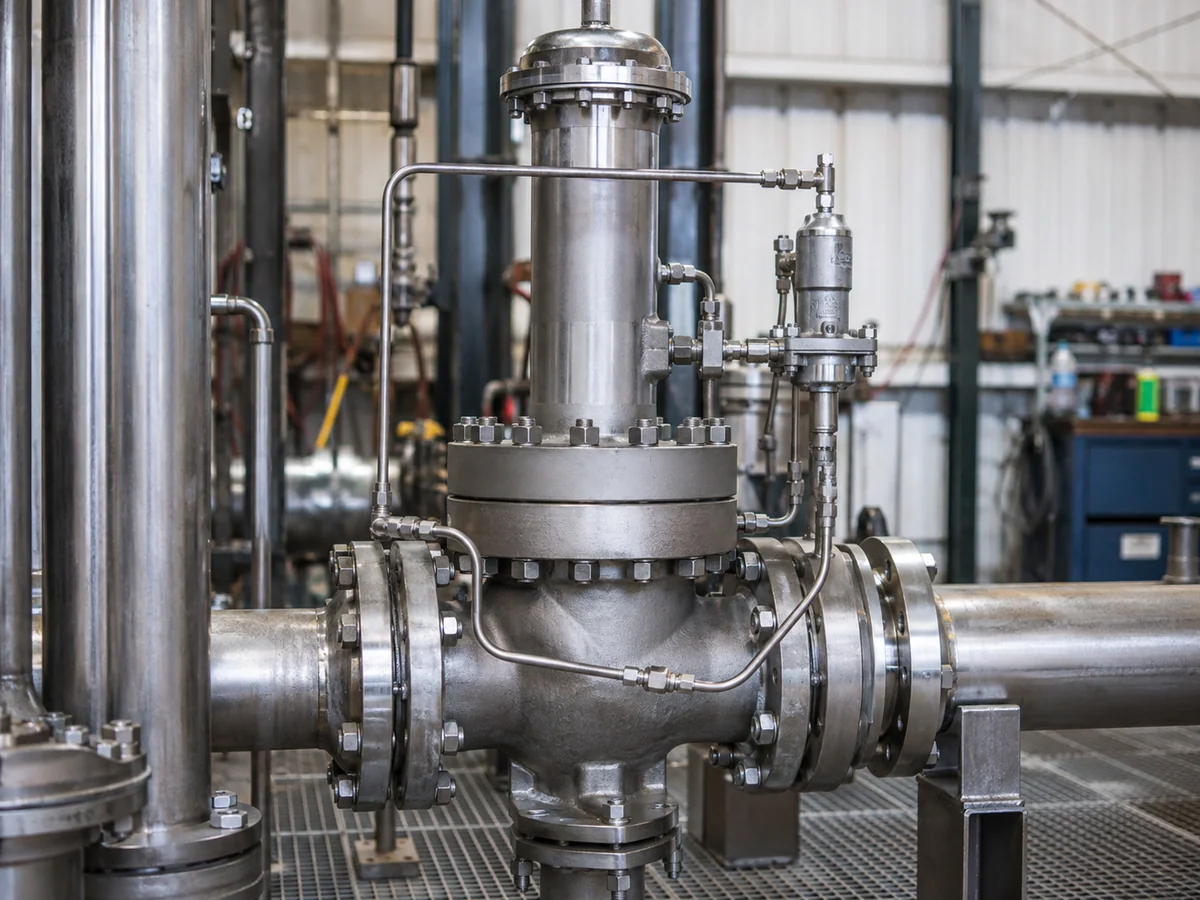
استكشاف أخطاء صمام الأمان الذي يعمل بالبايلوت وإصلاحها
يمكن أن تصبح صمامات الأمان التي تعمل بالبايلوت غير موثوقة في الخدمات القذرة أو الشمعية أو الملوثة أو البلمرة لأن دائرة البايلوت تعتمد على مسارات استشعار صغيرة ومرشحات وقيود ومقاعد بايلوت وممرات ضغط القبة. لا يلزم أن تسد الرواسب فوهة الصمام الرئيسي لتسبب مشكلة خطيرة في الحماية من الضغط.
إذا لم يتمكن البايلوت من استشعار الضغط بشكل صحيح، أو شحن القبة أو تنفيسها في الوقت المناسب، أو إعادة الإغلاق بشكل نظيف، فقد يفتح الصمام الرئيسي متأخرًا، أو يعمل بشكل غير مستقر، أو يتسرب، أو يفشل في إعادة الإغلاق. السؤال الأكثر أهمية ليس ما إذا كان الصمام يسمى يعمل بالبايلوت، ولكن ما إذا كانت دائرة البايلوت المختارة يمكن أن تظل وظيفية في الخدمة الفعلية.
هذا لا يعني أن صمام الأمان الذي يعمل بالبايلوت غير مناسب تلقائيًا لكل خدمة قذرة. هذا يعني أنه يجب مراجعة الخدمة بحثًا عن نوع الملوثات، أو تكوين الشمع أو البوليمر، أو ملف درجة الحرارة، أو بيانات الضغط، أو سعة التنفيس المطلوبة، أو الضغط الخلفي، أو التركيب، أو سهولة الصيانة قبل تقديم عرض السعر أو الاستبدال.
إجابة سريعة: لماذا تشكل الخدمة القذرة خطرًا خاصًا على صمامات الأمان التي تعمل بالبايلوت
يستخدم صمام الأمان الذي يعمل بالبايلوت نظام بايلوت للتحكم في الضغط فوق قرص الصمام الرئيسي أو المكبس. في الخدمة النظيفة، يمكن أن يدعم ذلك ضغط التشغيل المرتفع والإغلاق المحكم وسلوك الفتح المتحكم فيه. في الخدمة القذرة أو الشمعية أو البلمرة، يمكن أن تصبح نفس دائرة التحكم نقطة الضعف.
الخطر الرئيسي ليس فقط “الأوساخ في الصمام.” السؤال الهندسي هو ما إذا كان البايلوت لا يزال بإمكانه نقل ضغط التحكم وتنفيسه واستعادته بالتوقيت المطلوب لسيناريو التنفيس الحاكم.
قد يكون الصمام الرئيسي نظيفًا بينما تكون دائرة البايلوت معرضة للخطر بالفعل
من الأخطاء الشائعة في استكشاف الأخطاء وإصلاحها فحص مقعد الصمام الرئيسي والفوهة والمخرج فقط، ثم افتراض أن الصمام مقبول لأن الممر الأكبر غير مسدود بشكل مرئي. في تصميم يعمل بالبايلوت، يؤدي الصمام الرئيسي ودائرة البايلوت مهام مختلفة.
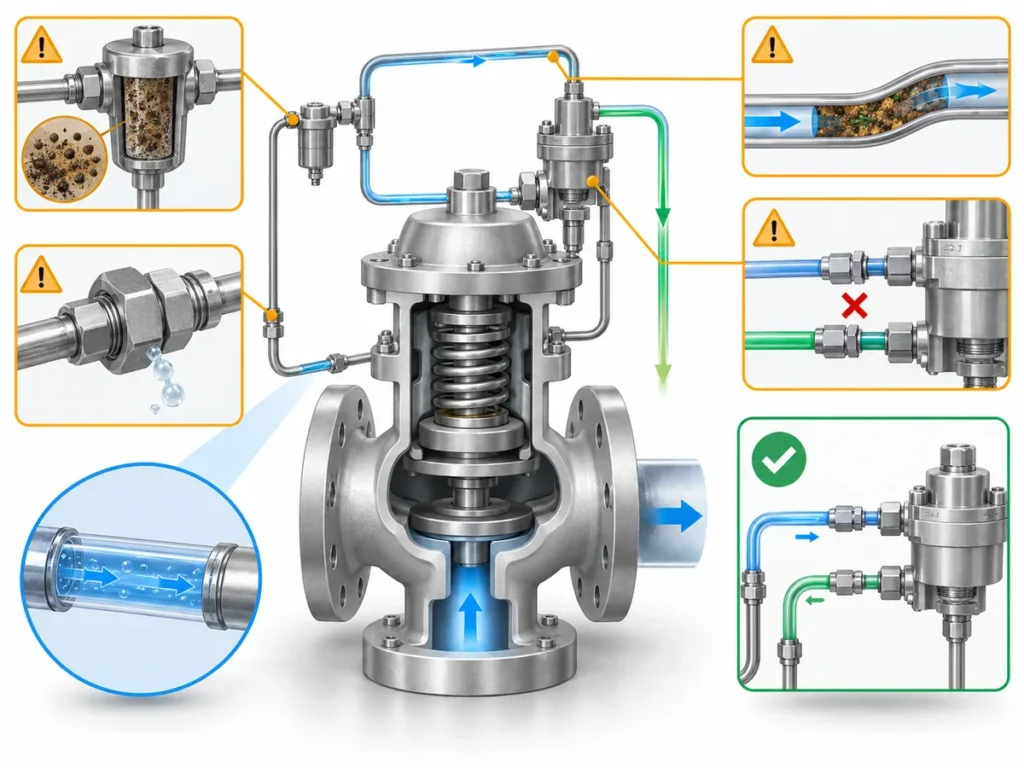
يوفر الصمام الرئيسي مسار تدفق التنفيس. تحدد دائرة البايلوت متى وكيف يُسمح للصمام الرئيسي بالفتح والإغلاق. إذا كان خط الاستشعار أو خانق البايلوت مسدودًا جزئيًا، فقد لا يرى البايلوت الضغط الفعلي للوعاء أو الخط بسرعة كافية. إذا كان مسار تنفيس القبة مقيدًا، فقد لا يفتح الصمام الرئيسي كما هو متوقع. إذا كان مسار شحن القبة مقيدًا بعد التنفيس، فقد يعيد الصمام الإغلاق ببطء أو يستمر في التسرب.
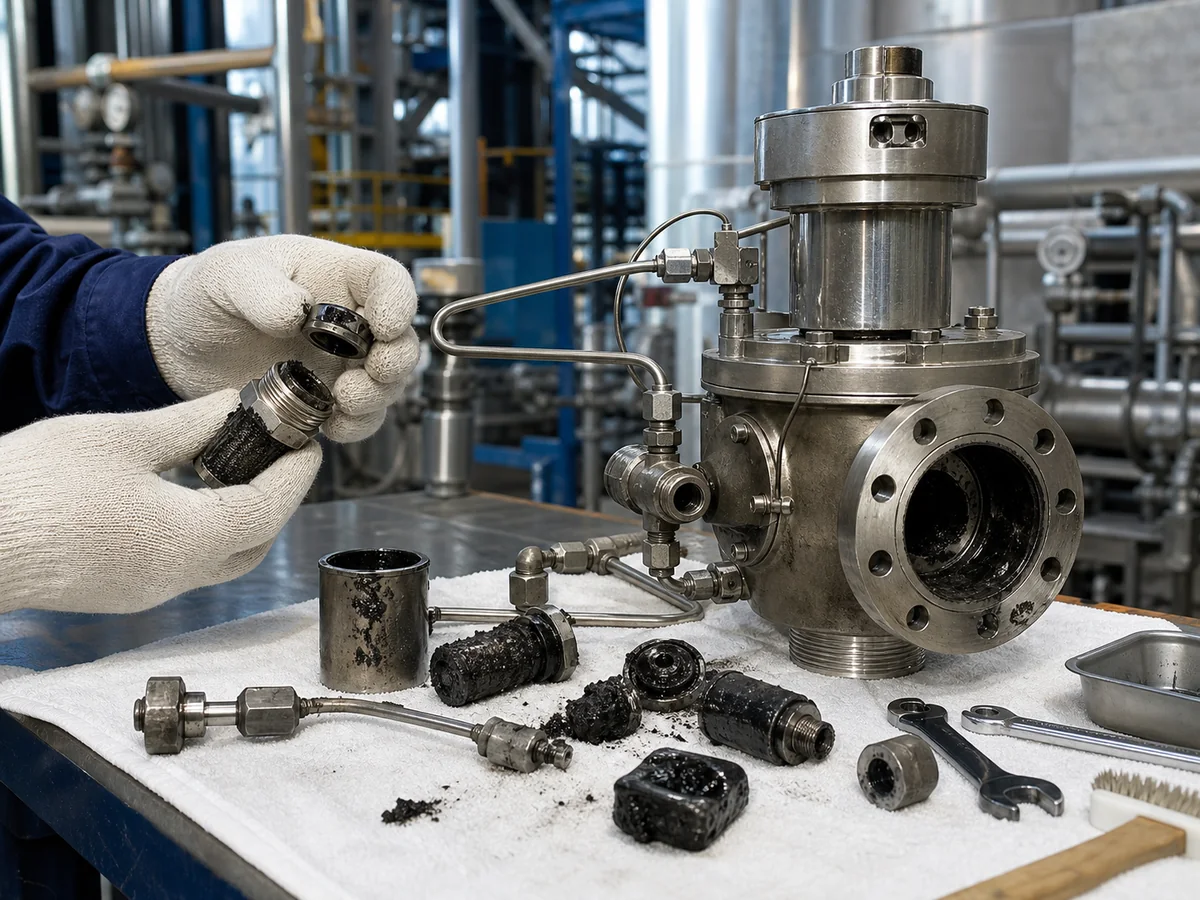
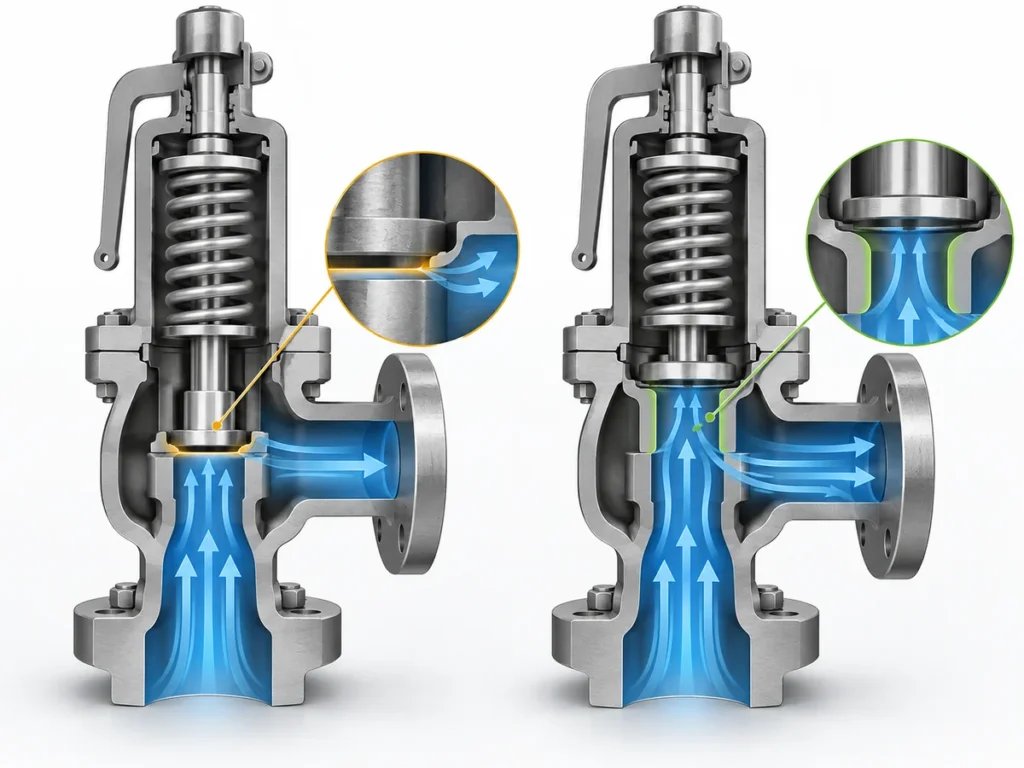
رسم توضيحي هندسي مبسط؛ وليس رسمًا تصنيعيًا أو مقطعًا معتمدًا للموديل.
سلسلة الفشل: يدخل التلوث أو يتشكل داخل ممر صغير ← يصبح الممر مقيدًا أو لزجًا أو مسدودًا ← يتغير نقل الضغط أو تنفيس الغطاء ← يتغير استجابة البايلوت ← يصبح فتح الصمام الرئيسي أو ثباته أو إعادة إحكامه غير موثوق.
لهذا السبب صمامات أمان تعمل بالبايلوت في الخدمة القذرة يجب مراجعتها كنظم تحكم كاملة، وليس كأجسام الصمام الرئيسي فقط.
أجزاء دائرة البايلوت التي تحتاج مراجعة منفصلة
| منطقة دائرة البايلوت | خطر الخدمة القذرة | الفحص الهندسي |
|---|---|---|
| خط الاستشعار | مسدود أو مقيد جزئيًا أو مبرد أو مشمع أو ممتلئ بالرواسب | المسار، الميل، الطول، خطر العزل، فقدان الحرارة والرواسب الموجودة |
| مدخل البايلوت / المقيّد | المواد الصلبة أو الرواسب اللزجة تبطئ استجابة البايلوت | النظافة وحالة الفلتر وهندسة الممر مقابل تصميم الشركة المصنعة |
| مقعد البايلوت | الجسيمات أو الرواسب تمنع إحكام إغلاق البايلوت | سطح المقعد، تاريخ التسرب، سجل التنظيف والمواد اللينة المتوافقة |
| مسار شحن الحجرة العلوية | إعادة الضغط البطيئة للحجرة العلوية بعد التنفيس | استعادة ضغط الحجرة العلوية، الرواسب وحالة أنابيب البايلوت |
| مسار تنفيس/تفريغ الحجرة العلوية | قد يفتح الصمام الرئيسي ببطء أو يفشل في الوصول إلى سلوك الفتح المتوقع | نظافة مسار التنفيس، توجيه التنفيس والترتيب المعتمد من الشركة المصنعة |
| الفلتر أو المصفاة | يحمي ممرات البايلوت ولكنه قد يصبح نقطة التقييد | فاصل الفحص، حالة العنصر، تأثير الضغط وإمكانية الوصول للصيانة |
ليست كل الخدمات الملوثة تفشل بنفس الطريقة
لا ينبغي التعامل مع الوسائط الملوثة بالجسيمات والشمعية والبلمرة كفئة واحدة عامة تحت مسمى “الوسائط الملوثة”. فكل آلية تؤثر على دائرة البايلوت بشكل مختلف، وكل منها يغير القرار الهندسي.
| آلية التشغيل | موقع الفشل النموذجي | ما الذي يغير القرار |
|---|---|---|
| تلوث جسيمات | الفلتر، خط الاستشعار، مدخل البايلوت، التقييد، مقعد البايلوت | تحميل الجسيمات، مصدر الحطام، ترتيب الفلتر، نظافة بدء التشغيل وإمكانية الوصول للصيانة |
| ترسب شمعي أو هيدروكربوني ثقيل | خطوط أصغر قطرًا وأكثر برودة، أنابيب راكدة، ممرات بايلوت منخفضة التدفق | ملف درجة الحرارة، سلوك ظهور الشمع، حالة الإغلاق، درجة الحرارة المحيطة وفقدان الحرارة |
| وسط بلمرة أو تفاعلي | ممر تحكم منخفض التدفق، جيب راكد، مقعد البايلوت أو الأنابيب | زمن المكوث، الكيمياء، الاعتماد على المثبط، نافذة درجة الحرارة والتكرار بعد التنظيف |
| سلوك التلوث غير المعروف | لا يمكن افتراض ذلك | لا تقم بإنهاء الاختيار حتى يتم تحديد الوسط والرواسب وسجل الصيانة |
خدمة الجسيمات الملوثة: كيف تسد المواد الصلبة أو تقيد دائرة التحكم
قد تشمل خدمة الجسيمات الملوثة الصدأ، والقشور، وبقايا المحفز، وحطام الأنابيب، ومنتجات التآكل، والرمل، والمواد الصلبة للعملية، أو المواد المحمولة من المعدات الأولية. قد تكون هذه الجسيمات متقطعة وليست ثابتة. يمكن للصمام اجتياز الفحص الأولي ومع ذلك يصبح غير موثوق بعد بدء التشغيل أو الصيانة أو تنظيف الخط أو تغيير المحفز أو اضطراب المنبع.
تأخر الاستشعار
يمكن لخط الاستشعار المقيد جزئيًا أن يؤخر إشارة الضغط التي تصل إلى البايلوت. قد يبدو الصمام مقبولًا في الفحص الثابت ولكنه يستجيب ببطء شديد أثناء حدث حقيقي.
تحميل الفلتر
يمكن لفلتر البايلوت حماية الممرات النهائية، لكنه يصبح عنصر صيانة. إذا تحمل بالمواد الصلبة، يمكن أن يصبح نقطة التقييد التالية.
خطأ ضغط القبة
يمكن أن يؤدي الشحن أو التنفيس المقيد إلى استجابة الصمام الرئيسي في الوقت الخطأ، أو فتحه ببطء، أو إعادة الإغلاق متأخرًا، أو التسرب بعد التشغيل.
غالبًا ما يكون التقييد الجزئي أصعب في التشخيص من الانسداد الكامل. يمكن العثور على الخط المسدود تمامًا أثناء الفحص. قد يمر المسار المقيد جزئيًا ببعض الضغط، ولكن ليس بالسرعة الكافية لإجراء حماية مستقر أثناء حدث تنفيس حقيقي.
حدود هامة: الترشيح ليس هو نفسه التأهيل للخدمة الملوثة. يمكن للفلتر تقليل الجسيمات الصلبة قبل الفلتر، لكنه لا يمكنه تلقائيًا منع ترسب الشمع، أو تكوين البوليمر، أو رواسب مقعد البايلوت اللزجة، أو سوء توجيه خط الاستشعار، أو التعرض لدرجة حرارة غير مناسبة.
خدمة الشمع والهيدروكربونات الثقيلة: يمكن أن يعتمد الترسيب على درجة الحرارة
خدمة الشمع تختلف عن الخدمة القذرة العادية. قد يبدو السائل مقبولاً عند درجة حرارة التشغيل العادية، ثم يترسب الشمع عندما تنخفض درجة الحرارة في خط استشعار صغير القطر، أو أنابيب البايلوت، أو توصيلة خارجية، أو حجم راكد.
قد يظل خط العملية الرئيسي ساخنًا ومتدفقًا، بينما تشهد دائرة البايلوت سرعة أقل وظروفًا حرارية مختلفة. يمكن أن يؤدي ذلك إلى ترسب موضعي حتى عندما لا يبدو الجهاز المحمي متسخًا بشدة. بالنسبة للوسائط الساخنة أو اللزجة أو المتصلبة،, صمامات أمان مزودة بغلاف قد تكون جزءًا من مراجعة أوسع لظروف الخدمة، لكنها ليست بديلاً تلقائيًا عن تقييم POSV للخدمة القذرة.
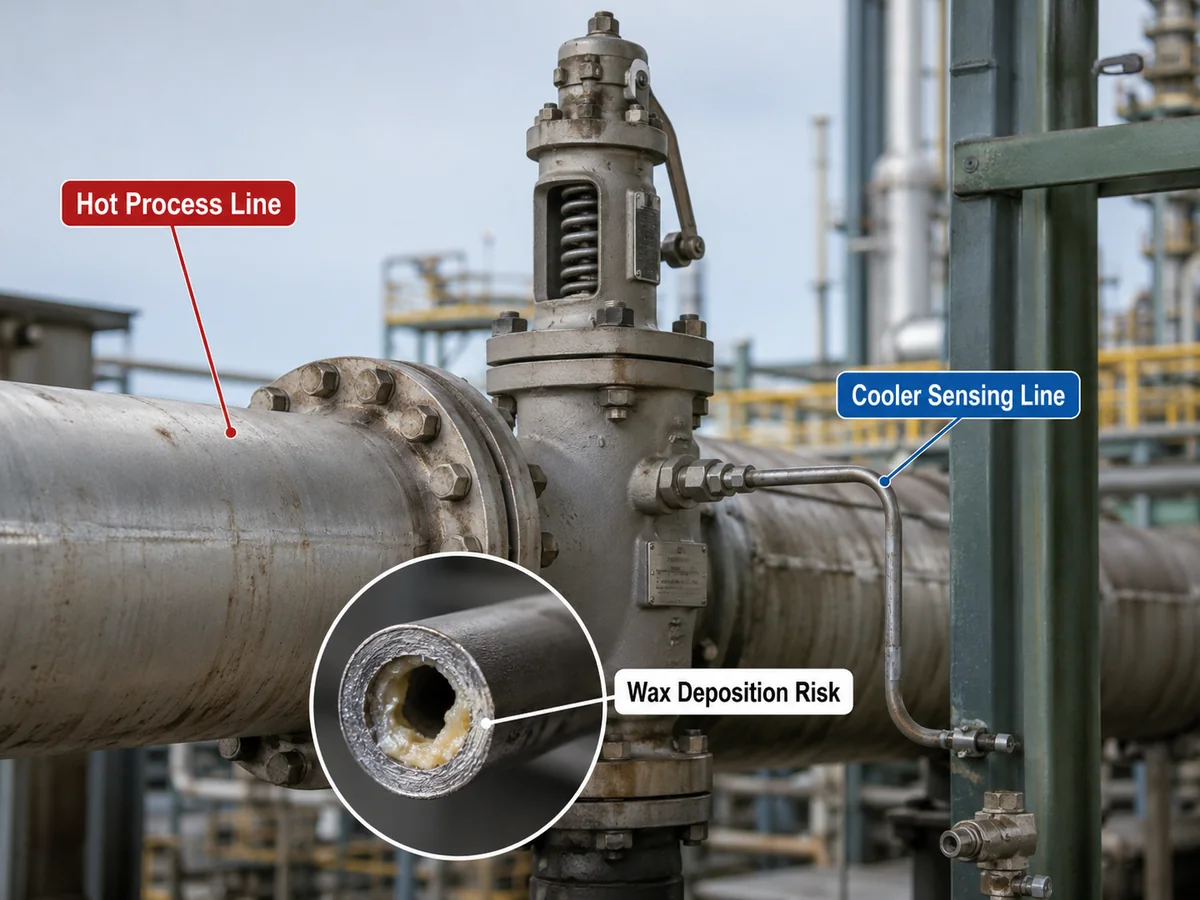
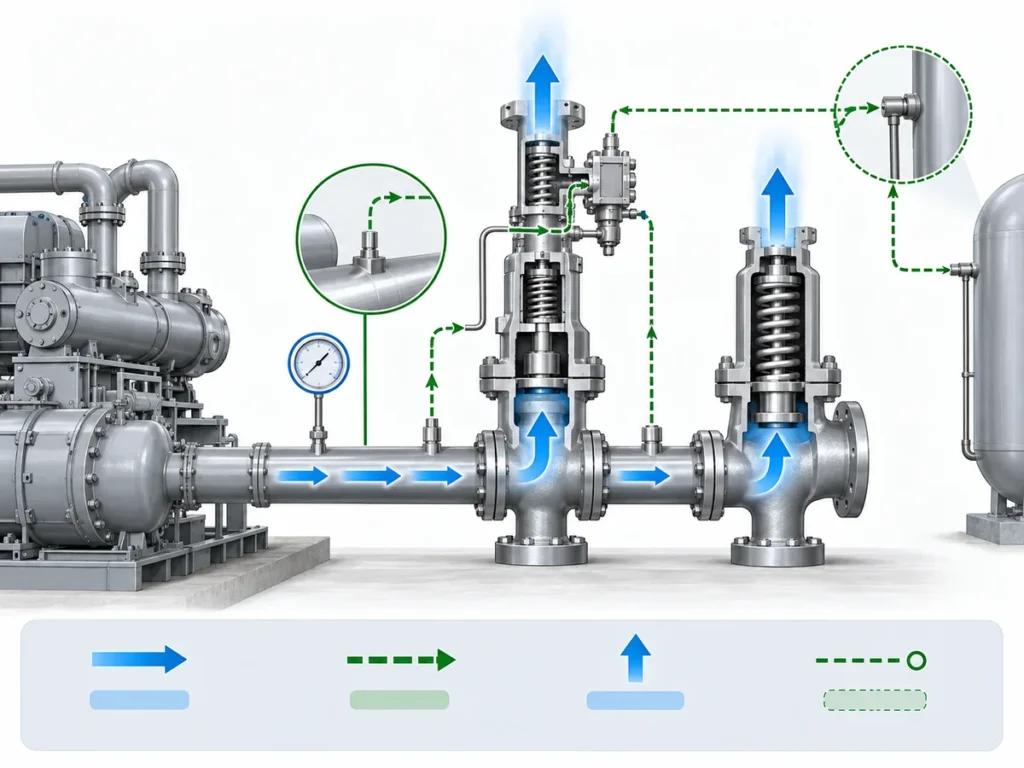
رسم هندسي مفاهيمي؛ يجب تأكيد سلوك درجة الحرارة والشمع للسائل الفعلي للعملية.
تشمل نقاط المراجعة المهمة درجة حرارة التشغيل العادية، ودرجة حرارة التنفيس، ودرجة حرارة بدء التشغيل والإيقاف، والحد الأدنى لدرجة الحرارة المحيطة، وفقدان الحرارة من خطوط الاستشعار صغيرة القطر، ومواقع الركود أو الأطراف الميتة، وتوجيه الخطوط وانحدارها، ومتطلبات العزل أو التدفئة، وما إذا كانت الخدمة تبرد إلى ما دون حالة ظهور الشمع أو الترسيب.
لا ينبغي التعامل مع العزل أو التدفئة كحل تلقائي. يجب مراجعتها مقابل سائل العملية، وتصميم الصمام، وترتيب الاستشعار، ووصول الصيانة، ومتطلبات السلامة للمشروع. في بعض الحالات، لا تكون الحالة الأشد هي التشغيل العادي، بل بدء التشغيل البارد، أو الإيقاف، أو وضع الاستعداد، أو التشغيل الشتوي، أو الخدمة المتقطعة.
خدمة البلمرة: قيد صغير يمكن أن يتحول إلى ترسب متزايد
تتطلب خدمة البلمرة مراجعة أكثر دقة لأن الترسب قد يتشكل داخل دائرة البايلوت بدلاً من أن يصل ببساطة كأوساخ من خط الأنابيب العلوي. إذا كان وسيط العملية يمكن أن يتبلمر في ظل ظروف معينة من درجة الحرارة، أو زمن المكوث، أو التعرض للأكسجين، أو المحفز، أو المثبط، أو الضغط، أو ظروف التدفق الراكد، تصبح الممرات الصغيرة للتحكم مواقع عالية الخطورة.
الفرق الأكثر أهمية هو التقدم. يمكن أن يؤدي تراكم البوليمر الصغير إلى تغيير استجابة الضغط. يمكن أن يزيد هذا التغيير من زمن المكوث أو يقلل من التنظيف. يمكن أن يزداد القيد سوءًا بمرور الوقت.
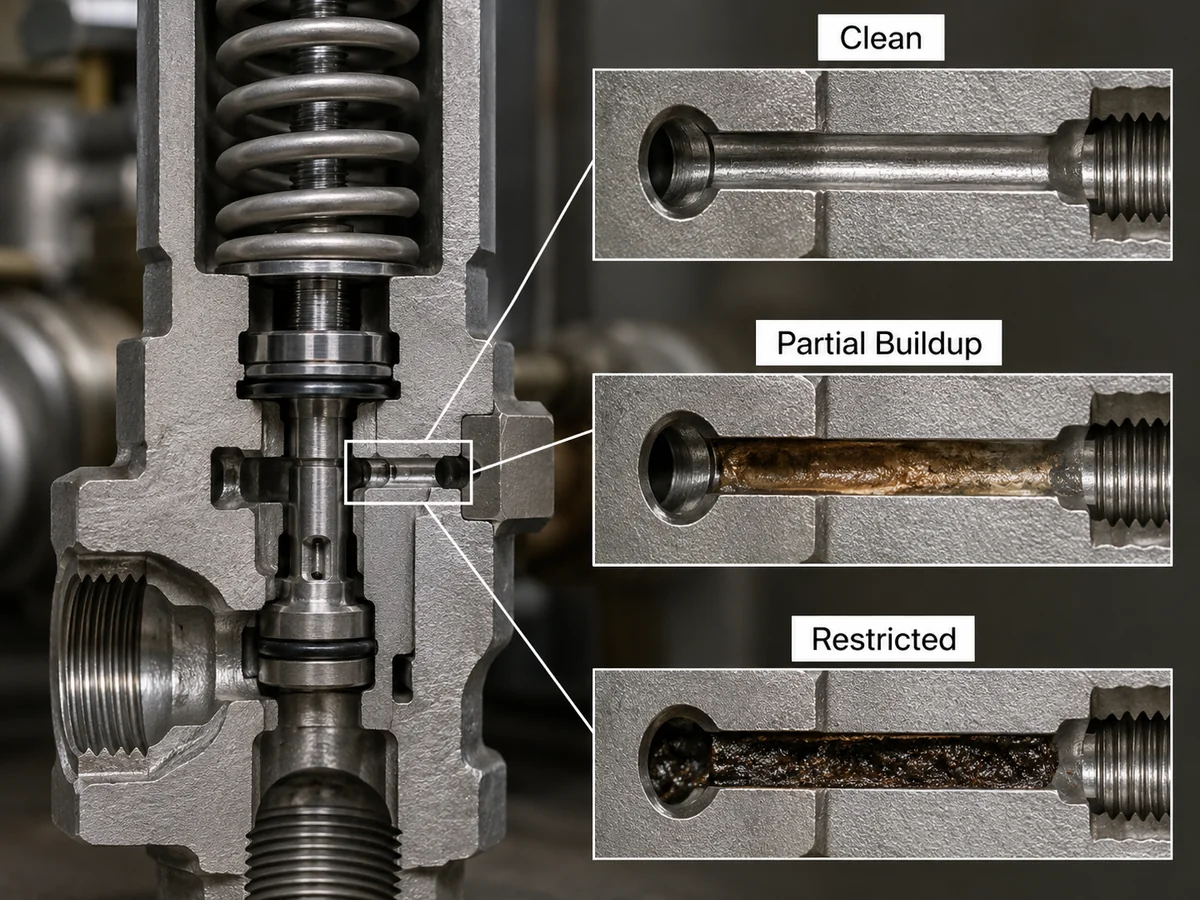
رسم توضيحي هندسي مبسط؛ يعتمد خطر البلمرة الفعلي على كيمياء العملية وظروف التشغيل.
نمط الصيانة المتكرر للتنظيف والإعادة يعد علامة تحذيرية. إذا كان تنظيف البايلوت يعيد التشغيل مؤقتًا ولكن الأعراض نفسها تعود، فقد لا يكون السبب الجذري هو سوء الصيانة. قد يكون أن ترتيب البايلوت المختار يُنشئ أو يُعرّض جيبًا راكدًا حيث لا يكون المائع مستقرًا.
بالنسبة لوسائط البلمرة، يجب ألا يتوقف طلب عرض السعر أو مراجعة الاستبدال عند حجم الصمام وضبط الضغط وتصنيف الفلنجة. يجب أن يشمل تكوين العملية، وآلية البلمرة، والاعتماد على المثبط، ونافذة درجة الحرارة، وحساسية الحجم الراكد، وسجل الصيانة، وأدلة الشركة المصنعة لتكوين البايلوت المقترح.
ما سلوك الفشل الذي يجب أن يبحث عنه المهندسون؟
يمكن أن تسبب الخدمة المتسخة أو الشمعية أو البلمرة عدة أعراض ملحوظة. هذه الأعراض لا تثبت السبب الجذري بحد ذاتها، لكنها تشير إلى أين يجب أن يبدأ الفحص.
- تأخر استجابة الفتح؛;
- سلوك ضبط غير متناسق في الخدمة؛;
- تعديل أو دورات غير مستقرة حيث يكون تصميم البايلوت معدِّلًا؛;
- فتح الصمام الرئيسي أبطأ من المتوقع؛;
- تنفيس غير كامل للقبة؛;
- إعادة ضغط بطيئة للقبة؛;
- تسرب بعد التشغيل؛;
- فشل في إعادة الإغلاق بشكل نظيف؛;
- زيادة تكرار الصيانة؛;
- تكرار التلوث بعد التنظيف؛;
- سلوك مختلف بعد الإغلاق أو الطقس البارد أو تغير تركيب العملية.
| العرض الملاحظ | آلية التلوث المحتملة | ما يجب التحقق منه أولاً | لا تفترض |
|---|---|---|---|
| استجابة متأخرة | خط الاستشعار أو مدخل البايلوت مقيد | نظافة مسار الاستشعار وحالة الفلتر والتمديدات | ضبط الضغط خاطئ |
| فتح الصمام الرئيسي بطيء | تنفيس القبة أو عادم البايلوت مقيد | مسار تنفيس القبة وعادم البايلوت وقنوات التحكم | الفوهة الرئيسية أصغر من اللازم |
| الفشل في إعادة الإغلاق | تلوث مقعد البايلوت أو إعادة ضغط القبة بطيئة | مقعد البايلوت ومسار شحن القبة والرواسب | تلف مقعد الصمام الرئيسي فقط |
| تسرب متقطع | رواسب على مقعد البايلوت أو تحكم غير مستقر في البايلوت | حالة البايلوت والمواد الاستهلاكية وسجل الصيانة | مادة المقعد وحدها هي السبب |
| التذبذب أو عدم الاستقرار | مزيج من التلوث وفقدان الضغط عند المدخل والضغط الخلفي أو عدم تطابق المقاس | دائرة البايلوت وفقدان الضغط عند المدخل ونظام المخرج وتحديد مقاس الصمام | الخدمة المتسخة هي السبب الوحيد |
| زيادة وتيرة الصيانة | التلوث التدريجي أو تراكم الشمع أو تكوين البوليمر | نوع الرواسب وسجلات التنظيف ودورة التشغيل | فاصل صيانة أقصر هو حل دائم |
| مشاكل بعد الإيقاف البارد | ترسب الشمع أو السوائل الثقيلة في الخطوط ذات القطر الصغير | ملف درجة الحرارة، ومسار الخط، والمقاطع الراكدة | درجة حرارة التشغيل العادية تثبت الملاءمة |
| ترسب متكرر بعد التنظيف | تكوّن الرواسب داخل مسار التحكم | ميل البلمرة، والحجم الراكد، وكيمياء العملية | التنظيف وحده يحل المشكلة |
لا تشخّص انسداد البايلوت قبل استبعاد الأسباب على مستوى النظام
انسداد البايلوت هو مجرد تفسير واحد محتمل. جهاز تنفيس الضغط جزء من نظام مركّب. قبل تحديد أن الخدمة القذرة تسببت في العطل، يجب على المهندسين أيضًا مراجعة الأسباب على مستوى النظام.
فقدان ضغط المدخل
فقدان الضغط الزائد بين المعدات المحمية ومدخل الصمام يمكن أن يسبب تشغيلًا غير مستقر. يمكن أن تسبب دائرة البايلوت المقيدة عرضًا مشابهًا، لذا يجب فحص كلاهما. الـ دليل تركيب صمامات الأمان يجب مراجعتها عندما قد تؤثر وصلة الدخول أو موقع الاستشعار أو دعم الأنابيب أو ترتيب التفريغ على سلوك الصمام.
الضغط الخلفي للمخرج
يمكن أن يغير الضغط الخلفي سلوك صمام الأمان اعتمادًا على نوع الصمام والتكوين ونظام التفريغ. يجب مراجعة الضغط الخلفي المتراكب والضغط الخلفي المتولد بشكل منفصل. لا يحل الصمام الذي يعمل بالبايلوت تلقائيًا كل حالة ضغط خلفي، والخدمة المتسخة لا تلغي الحاجة إلى فحص أنابيب التفريغ ومقاومة نظام المخرج. للمراجعة، راجع الضغط الخلفي والمنفاخ.
التشغيل وهامش التشغيل
يمكن أن يسبب الصمام كبير الحجم أو التدفق المستقر غير الكافي أو هامش التشغيل الضعيف أو الفتحة المختارة بشكل غير صحيح تشغيلًا غير مستقر. ضغط الضبط ليس سعة. حجم الوصلة ليس سعة تنفيس معتمدة أو موثقة. قد يكون الصمام متصلًا فعليًا بالنظام ومع ذلك يكون غير مناسب لحمولة التنفيس المطلوبة. يجب التحقق من أساس السعة مقابل حساب مقاسات صمامات الأمان وسعة التنفيس المعتمدة.
مراجعة نظام التنفيس
إذا كان العرض قد يشمل أنابيب التفريغ أو خفض الضغط أو فقدان الدخول أو تعريف سيناريو التنفيس أو تفاعل النظام، فلا يجب أن تتوقف المراجعة عند جسم الصمام. السياق الأوسع أنظمة تنفيس الضغط API 521 قد يكون ذا صلة عند تقييم ما إذا كان النظام المركب لا يزال يدعم وظيفة الحماية المقصودة.
مشاكل الصيانة أو التجميع
بعد الإصلاح أو التنظيف، يمكن أن يؤدي خطأ التجميع أو الأختام التالفة أو المواد اللينة الخاطئة أو الأنابيب المسدودة أو إعداد البايلوت غير الصحيح أو الاختبار غير المكتمل إلى ظهور أعراض تبدو وكأنها تلوث في العملية. راجع سجلات الحالة عند الاستلام والحالة بعد الإصلاح قبل اتخاذ قرار الاستبدال.
اختصارات غير آمنة يجب تجنبها عند استبدال صمام أمان يعمل بالبايلوت في خدمة متسخة
لا تستبدل بحجم الفلنجة فقط
حجم الوصلة يثبت الاتصال الفيزيائي فقط. لا يثبت الفتحة المختارة أو المعامل أو السعة المعتمدة أو أساس المائع أو الملاءمة لسيناريو التنفيس الحاكم.
لا تتعامل مع ضبط الضبط كسعة
ضبط الضبط يحدد قيمة الضبط. لا يثبت سعة التنفيس المطلوبة، أو السعة المقدرة، أو سلوك المرحلتين، أو الملاءمة بعد تغيير العملية.
لا تقم بإضافة فلتر دون مراجعة
قد يساعد الفلتر، ولكنه قد يصبح أيضًا قيدًا. حجم الفلتر، وإمكانية الوصول، وحالة العنصر، وفاصل الصيانة، وموافقة الشركة المصنعة كلها أمور مهمة.
لا تقم بتغيير أنابيب البايلوت بشكل غير رسمي
موقع الاستشعار، ومسار الأنابيب، والتنفيس، والتطهير، والعزل الحراري، وترتيبات الإمداد النظيف تؤثر على وظيفة الحماية، ولا ينبغي تعديلها ميدانيًا دون مراجعة هندسية.
التطهير، والاستشعار عن بعد، والإمداد النظيف، والتدفئة، وخيارات التخفيف الأخرى تحتاج إلى مراجعة التصميم
توجد استراتيجيات تخفيف محتملة لبعض الخدمات المتسخة أو الشمعية أو البلمرة، ولكن يجب مراجعتها كترتيبات هندسية، وليس كارتجال ميداني.
إمداد بايلوت نظيف أو خارجي
قد يقلل هذا من تعرض دائرة البايلوت للتلوث بالعملية، ولكن يجب تأكيد التوافق مع تصميم الصمام ووظيفة الحماية من الضغط.
التطهير أو الاستشعار عن بعد
يجب ألا يؤثر نظام التطهير على دقة الاستشعار، ويجب أن يظل خط الاستشعار عن بعد ممثلًا لضغط المعدات المحمية.
التحكم في درجة الحرارة
قد يكون العزل الحراري أو التدفئة مناسبًا للخدمة الشمعية، ولكن يجب مراجعته مقابل سلوك السائل ومتطلبات السلامة وإمكانية الوصول للصيانة.
قد تشمل اتجاهات المراجعة الأخرى مرشحات البايلوت المعتمدة من الشركة المصنعة، أو مسارات بديلة لخط الاستشعار، أو تقليل الأحجام الراكدة، أو ترتيبات بايلوت خاصة بالخدمة، أو نقاط فحص يسهل الوصول إليها، أو أدلة صيانة محددة بناءً على تاريخ الخدمة الفعلي.
لا تقم بتعديل دائرة البايلوت في الموقع دون موافقة هندسية. التغييرات غير المعتمدة على خطوط الاستشعار أو المرشحات أو فتحات التنفيس أو الإمداد النظيف أو تدفق التطهير أو التدفئة يمكن أن تضر بوظيفة الحماية.
أدلة الشركة المصنعة وحدودها
توثق الشركات المصنعة لصمامات التنفيس التي تعمل بالبايلوت عادةً أن بعض الملحقات أو التكوينات الخاصة بالخدمة قد تكون متاحة لعائلات منتجات معينة. تشمل الأمثلة استشعار الضغط عن بُعد، وترشيح البايلوت، وترتيبات مصدر الوسيط النظيف، وخيارات الخدمة القذرة، وتعديلات أخرى لدائرة البايلوت. وهذا يدعم الحاجة إلى مراجعة الشركة المصنعة، لكنه لا يجعل الترشيح أو التطهير أو الاستشعار عن بُعد أو التدفئة حلاً عامًا لكل خدمة قذرة.
- وثائق Emerson Anderson Greenwood لصمامات التنفيس التي تعمل بالبايلوت تُظهر خيارات عائلة المنتجات مثل استشعار الضغط عن بُعد. هذه خيارات خاصة بالمنتج، وليست موافقة عامة لجميع الخدمات.
- وثائق Baker Hughes Consolidated 3900 POSRV تتضمن سياق خيار الخدمة القذرة / الترسيب / السوائل اللزجة لعائلة منتجات POSRV محددة. يجب استخدام هذا كدليل خاص بالشركة المصنعة، وليس كادعاء لنموذج ZOBAI.
بالنسبة لمراجعة طلب عرض الأسعار من ZOBAI، هذا يعني أن المشتري يجب أن يوفر الوسيط الفعلي للعملية، والطور، والملوثات، وملف درجة الحرارة، وبيانات الضغط، والسعة المطلوبة، والضغط الخلفي، وترتيب الاستشعار، وأدلة الصيانة. يجب تأكيد التكوين النهائي مقابل سلسلة الصمام المختارة، وبيانات الشركة المصنعة، وإصدار الكود المطبق، ومواصفات المشروع، والمتطلبات التنظيمية المحلية.
متى يجب إعادة النظر في استخدام صمام أمان يعمل بالبايلوت؟
قد يظل صمام الأمان الذي يعمل بالبايلوت مناسبًا في بعض الخدمات الملوثة إذا تم فهم آلية التلوث وكان التكوين المعتمد من الشركة المصنعة يعالج المخاطر. يجب إعادة النظر فيه عندما تكون الخدمة ذات احتمالية عالية للانسداد أو الترسيب أو نمو البوليمر أو فشل الصيانة في دائرة التحكم.
| حالة الخدمة | اتجاه مراجعة صمام الأمان الذي يعمل بالبايلوت | الاهتمام الرئيسي |
|---|---|---|
| غاز نظيف أو بخار | مراجعة عادية لصمام الأمان الذي يعمل بالبايلوت | مدخلات قياسية للضغط والسعة والضغط الخلفي والمادة |
| مواد صلبة دقيقة عرضية | مراجعة خاصة للبايلوت/الفلتر | أدلة التقييد والصيانة |
| تحميل جسيمات كثيف | مراجعة عالية الخطورة | انسداد سريع للفلتر أو الممر |
| هيدروكربون شمعي | مراجعة درجة الحرارة والترسيب | مناطق باردة صغيرة القطر وأقسام راكدة |
| سائل بلمرة | مراجعة خدمة متخصصة | نمو الرواسب داخل مسارات التحكم منخفضة التدفق |
| آلية تلوث غير معروفة | لا تقم بإنهاء الاختيار | تعريف خدمة غير كافٍ |
| انسداد متكرر | إعادة تقييم تكوين الصمام | قد لا يحل التنظيف السبب الجذري |
| خدمة حرجة مع ضعف الوصول | مراجعة موثوقية قوية | قد يكون الفحص والصيانة غير عمليين |
اتجاه الاختيار النهائي: إبقاء، مراجعة، أو إعادة نظر
الاحتفاظ بمسار مراجعة صمام الأمان الذي يعمل بالبايلوت
استخدم مسار مراجعة صمام الأمان الذي يعمل بالبايلوت العادي فقط عندما يكون الوسط نظيفًا بدرجة كافية، وتكون دائرة البايلوت متوافقة مع الخدمة، ويتم تأكيد السعة المطلوبة والضغط الخلفي، ويكون الوصول للصيانة واقعيًا.
مطلوب مراجعة خاصة لصمام الأمان الذي يعمل بالبايلوت
استخدم هذا المسار في حالات وجود مواد صلبة عرضية، أو ميل لتكوين الشمع، أو خطر انسداد الفلتر، أو عدم اليقين في خط الاستشعار، أو سجل تشغيل يُظهر انسدادًا متقطعًا دون نمو ترسبات غير متحكم فيه.
إعادة النظر في التكوين
أعد النظر في تكوين تنفيس الضغط عندما يحتوي الخدمة على مواد صلبة كثيفة، أو انسداد شمعي متكرر، أو نمو بوليمر، أو ترسبات غير معروفة، أو صعوبة في الوصول للصيانة، أو فشل متكرر بعد التنظيف. يمكن بعد ذلك مراجعة اختيار أوسع للصمامات من خلال دليل اختيار صمامات الأمان.
يجب تقييم التكوينات البديلة مقابل سيناريو التنفيس الفعلي، وسعة التنفيس المطلوبة، والضغط الخلفي، وتوافق المواد، والتركيب، وأساس الكود المطبق. لا ينبغي اختيارها فقط لأن الخدمة موصوفة بأنها متسخة.
أدلة الفحص والصيانة التي يجب مراجعتها
بالنسبة لصمام موجود، فإن الدليل الأكثر فائدة عادةً هو الحالة عند الفحص. قبل طلب استبدال، اجمع معلومات تُظهر أين تبدأ سلسلة الفشل.
- صور لحالة فلتر البايلوت؛;
- ترسبات موجودة في خطوط الاستشعار؛;
- تلوث مقعد البايلوت؛;
- حالة أنبوب القبة؛;
- تكرار التنظيف؛;
- التاريخ والحالة بعد آخر حدث صيانة؛;
- ضبط الضغط كما وُجد وكما تُرك؛;
- نتائج اختبار إحكام المقعد عند الاقتضاء؛;
- سجل التسرب؛;
- سجل درجة حرارة التشغيل؛;
- سجل الإغلاق أو الطقس البارد؛;
- تغيرات تكوين العملية؛;
- أحداث الصيانة أو الحطام في المنبع؛;
- ورقة البيانات واللوحة الاسمية الحالية؛;
- قطع الإصلاح السابقة والمواد الاستهلاكية؛;
- سجلات إدارة التغيير.
اختبار ضبط الضغط وحده لا يثبت أن الصمام المركب مناسب للخدمة المتسخة. يجب مراجعة إحكام المقعد، واستجابة البايلوت، وأساس السعة، وخطوط الأنابيب المركبة، وتلوث الخدمة بشكل منفصل.
بيانات طلب عرض السعر والاستبدال للخدمات المتسخة أو الشمعية أو البلمرة
قبل طلب عرض سعر أو توصية بالاستبدال، أرسل بيانات كافية لتحديد واجب الحماية وخطر التلوث.
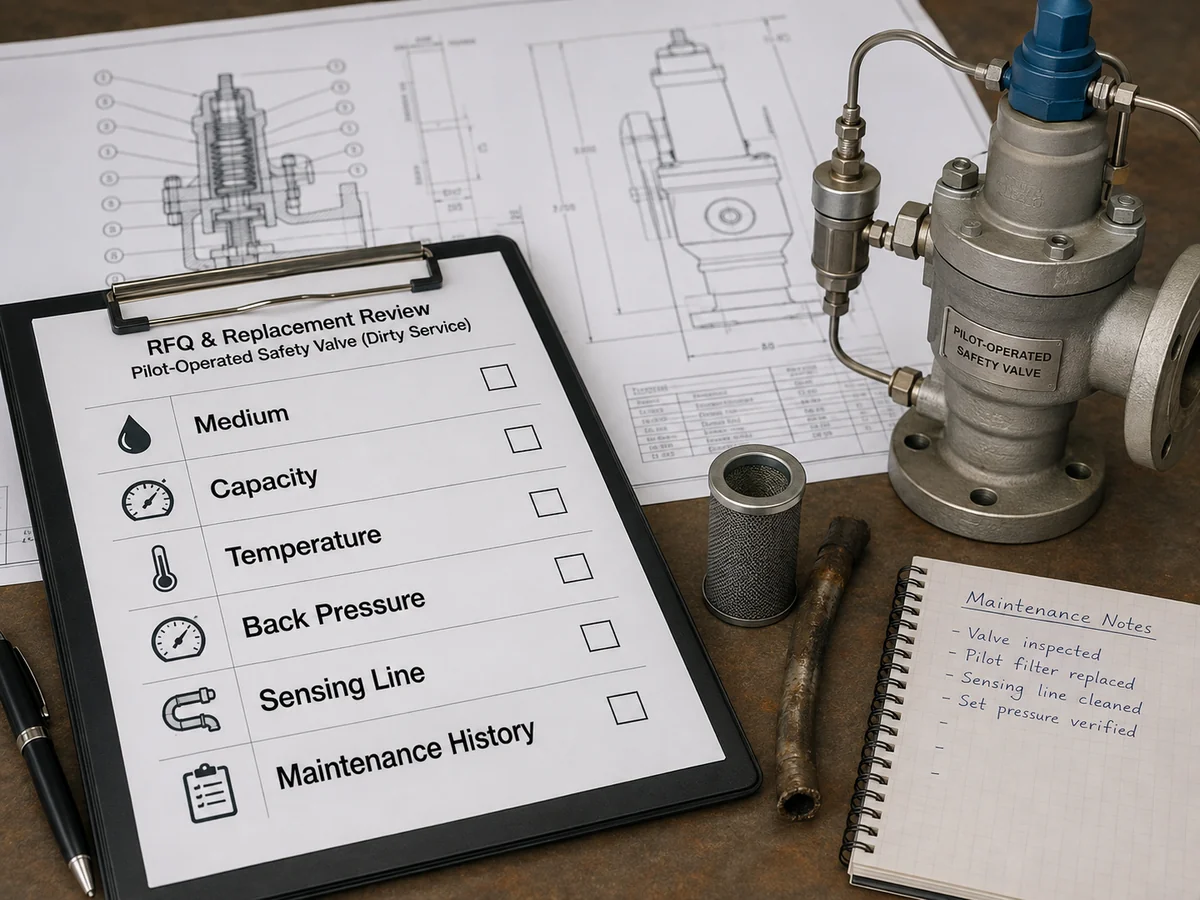
القائمة المرجعية مرئية فقط ولا تغني عن مراجعة الهندسة للمشروع.
| البيانات المطلوبة | لماذا هو مهم |
|---|---|
| المعدات المحمية | يؤكد ما يجب حمايته |
| سيناريو التنفيس الحاكم | يحدد سبب تنفيس الصمام |
| الوسط وتكوينه | يحدد مخاطر التلوث أو الشمع أو البلمرة |
| أساس الطور | لا يمكن تبادل واجبات الغاز أو البخار أو السائل أو الطورين |
| وصف المواد الصلبة أو التلوث | يحدد خطر الانسداد والفلتر |
| ميل الشمع أو الترسيب | يحدد مخاطر التلوث المرتبطة بدرجة الحرارة |
| ميل البلمرة | يحدد مخاطر نمو الرواسب في الممرات الراكدة |
| ضغط التشغيل / الحد الأقصى لضغط التشغيل الآمن / ضغط الضبط | يفصل بين التشغيل العادي وحد حماية المعدات وضبط الصمام |
| السعة المطلوبة للتنفيس وأساس السعة | يؤكد مهمة التدفق المراد حمايتها |
| درجة حرارة التنفيس | يؤثر على المادة والرواسب وأساس الحساب |
| الضغط الخلفي المتراكب والمتزايد | يؤثر على سلوك الصمام قبل وأثناء التفريغ |
| ترتيب المدخل والمخرج وخط الإحساس | يساعد في تقييم فقد المدخل وتأثيرات التفريغ والهندسة المعرضة للتلوث |
| الترتيب الحالي للمرشح أو التطهير أو الإمداد النظيف | يظهر استراتيجية التحكم في التلوث الحالية |
| المواد والمواد اللينة | يؤكد التوافق مع الوسط ودرجة الحرارة |
| لوحة البيانات والبيانات الفنية وسجل الصيانة الحالي | يمنع الاستبدال بناءً على المظهر فقط |
| الكود والمستندات المطبقة | يحدد أساس قبول المشروع |
خطر الاختيار الرئيسي هو استبدال الصمام بناءً على المظهر أو حجم الفلنجة أو ضبط الضغط الاسمي فقط. حجم التوصيل وحده لا يثبت السعة، وضبط الضغط وحده لا يثبت أن الصمام المختار يمكنه حماية حالة التنفيس الحاكمة.
لمراجعة متعلقة بالحسابات، راجع دليل ZOBAI إلى حساب مقاسات صمامات الأمان API 520.
سير عمل التحقيق في الفشل قبل الاستبدال
- تأكيد المعدات المحمية وسيناريو التنفيس الحاكم. لا تقم باستكشاف أخطاء الصمام بشكل منفصل عن النظام الذي يحميه.
- اجمع الأدلة كما وجدت. صور فلتر البايلوت وخط الإحساس والرواسب والأنابيب ومقعد البايلوت ونتائج الصيانة قبل التنظيف.
- حدد آلية التلوث. افصل الجسيمات الصلبة وترسب الشمع ونمو البوليمر وحمل السائل والترسبات غير المعروفة.
- تحقق من تأثيرات النظام. راجع فقدان المدخل والضغط الخلفي للمخرج وهامش التشغيل وحسابات الصمام وأنبوب التفريغ قبل إلقاء اللوم على البايلوت وحده.
- مراجعة الترتيبات المعتمدة من الشركة المصنعة. تأكيد ما إذا كان الفلتر أو التطهير أو إمداد الهواء النظيف أو الاستشعار عن بُعد أو التسخين مدعومًا لتصميم الصمام المحدد.
- إعادة التحقق من السعة وأساس الكود. يجب تأكيد السعة المطلوبة، والسعة المعتمدة/الموثقة، وطور الوسط، وإصدار المعيار المعتمد.
- تحديد ما إذا كان الاستبدال بنفس النوع مقبولاً. إذا ظل سبب العطل دون حل، فقد يؤدي تكرار نفس تكوين الصمام إلى تكرار العطل.
سيناريوهات هندسية مركبة
السيناريوهات التالية هي أمثلة تدريبية توضيحية. وهي ليست حالات عملاء ZOBAI ولا ينبغي التعامل معها كدليل على أداء المنتج.
السيناريو المركب 1: انسداد الجسيمات بعد الصيانة الأولية
يبدأ صمام يعمل بالبايلوت في الاستجابة بشكل غير متسق بعد فتح المعدات الأولية للصيانة. يبدو مقعد الصمام الرئيسي مقبولاً، ولكن تم العثور على حطام في مسار الاستشعار وفلتر البايلوت. من المرجح أن سلسلة العطل هي انتقال الحطام، وتقييد جزئي للبايلوت، وتأخر في نقل الضغط.
الإجراء التصحيحي ليس مجرد إعادة ضبط الصمام. يجب مراجعة مسار الاستشعار، وفلتر البايلوت، ومقعد البايلوت، ونظافة المعدات الأولية. قد يشمل إجراء الوقاية التحكم في النظافة عند بدء التشغيل، ومراجعة الترشيح، ومتطلبات توثيق الصيانة.
السيناريو المركب 2: هيدروكربون شمعي بعد إيقاف التشغيل البارد
يعمل الصمام بشكل مقبول أثناء التشغيل الطبيعي الساخن ولكنه يصبح غير موثوق بعد إيقاف التشغيل البارد. يكشف الفحص عن رواسب شمعية في وصلة استشعار خارجية صغيرة القطر. من المرجح أن سلسلة العطل هي انخفاض درجة الحرارة، وترسب الشمع، وتقييد نقل الضغط.
يجب أن تشمل المراجعة درجة الحرارة المحيطة الدنيا، وحالة الإغلاق، ومسار الخط، والجيوب الراكدة، وخيارات التحكم في درجة الحرارة المعتمدة من الشركة المصنعة. لا ينبغي افتراض أن العزل وحده يحل المشكلة.
السيناريو المركب 3: سائل يتبلمر مع تنظيف متكرر
يعود الصمام إلى وضعه الطبيعي بعد تنظيف البايلوت، ولكن تظهر أعراض مماثلة مرة أخرى بعد فترة من التشغيل. قد يكون سلسلة الفشل ناتجة عن تكوين بوليمر في ممر بايلوت منخفض التدفق أو حجم تحكم راكد.
قد يؤدي التنظيف المتكرر إلى استعادة التشغيل على المدى القصير دون حل السبب الجذري. يجب مراجعة كيمياء الخدمة، وزمن المكوث، وترتيب البايلوت، وملاءمة تكوين الصمام قبل اختيار نفس تصميم الاستبدال.
المعايير والحدود الهندسية
يمكن تحديد صمامات الأمان التي تعمل بالبايلوت ومراجعتها وفقًا لمعايير تخفيف الضغط وقوانين معدات الضغط المعتمدة في المشروع. ISO 4126-4 هو معيار منتج لصمامات الأمان التي تعمل بالبايلوت ولا ينبغي التعامل معه كموافقة على اختيار التطبيق لكل خدمة متسخة أو شمعية أو بلمرة. توفر ZOBAI أيضًا نظرة عامة داخلية على معايير صمامات الأمان ISO 4126 للمشترين الذين يحتاجون إلى سياق أوسع للمعايير. API 520 الجزء الأول هو مرجع لحساب واختيار أجهزة تخفيف الضغط في خدمة المصافي. API 521 يعالج أنظمة تنفيس الضغط وتخفيضه. ASME BPVC القسم XIII هو مرجع لقواعد الحماية من الضغط الزائد.
يجب التحقق من الإصدار المعتمد، والمتطلبات القانونية، وبيانات الشركة المصنعة، ومواصفات المشروع لكل مشروع. لا تحل هذه المقالة محل حساب نظام التخفيف، أو مراجعة الشركة المصنعة، أو الموافقة التنظيمية المحلية.
أسئلة شائعة
هل يمكن استخدام صمامات الأمان التي تعمل بالبايلوت في الخدمات ذات الوسائط الملوثة؟
في بعض الأحيان، وليس افتراضيًا. تتطلب الخدمة الملوثة مراجعة آلية التلوث، ودائرة البايلوت، ومسار الاستشعار، وترتيب الفلتر أو التطهير، وإمكانية الوصول للصيانة، وظروف درجة الحرارة، والتكوين المعتمد من الشركة المصنعة.
هل يمكن لفلتر البايلوت أن يمنع فشل صمام الأمان الذي يعمل بالبايلوت؟
يمكن للمرشح أن يقلل من التلوث الصلب الداخل إلى دائرة البايلوت، لكنه قد يصبح أيضًا عائقًا. لا يمنع تلقائيًا ترسب الشمع، أو تكوين البوليمر، أو الرواسب اللزجة على مقعد البايلوت، أو سوء توجيه خط الاستشعار.
لماذا تتراكم الشمع في خطوط استشعار البايلوت؟
قد يبقى الشمع متحركًا في خط العملية الساخن، لكنه يترسب عندما تبرد خطوط الاستشعار صغيرة القطر أو أنابيب البايلوت. يمكن أن تزيد السرعات المنخفضة والأقسام الراكدة والإيقاف البارد وسوء التمديدات من خطر الترسيب.
لماذا تُعد خدمة البلمرة صعبة بالنسبة لصمام الأمان الذي يعمل بالبايلوت؟
يمكن أن تؤدي خدمة البلمرة إلى تكوين رواسب داخل ممرات التحكم منخفضة التدفق أو الراكدة. حتى التراكم الصغير يمكن أن يغير استجابة البايلوت أو تنفيس الحجرة أو سلوك إعادة الإغلاق.
هل يمكن أن تتسبب الخدمة المتسخة في تأخر فتح صمام الأمان الذي يعمل بالبايلوت؟
نعم. إذا كان خط الاستشعار أو مدخل البايلوت أو الفلتر أو خانق التحكم مسدودًا جزئيًا، فقد لا يصل الضغط إلى البايلوت بشكل صحيح أو بسرعة كافية. قد يكون استجابة الصمام متأخرة أو غير مستقرة.
كيف يمكنني تحديد ما إذا كان عدم الاستقرار ناتجًا عن تلوث البايلوت أم عن خطوط الأنابيب؟
افحص كليهما. يمكن أن يسبب فقدان ضغط المدخل، والضغط الخلفي للمخرج، واختيار صمام بحجم أكبر من اللازم، وهامش تشغيل ضعيف، وتأثيرات خط التفريغ عدم الاستقرار أيضًا. يجب تأكيد تلوث البايلوت بأدلة الفحص.
متى يجب التفكير في تكوين آخر لصمام تنفيس الضغط؟
فكر في تكوين آخر عندما يحتوي الخدمة على مواد صلبة ثقيلة، أو ترسب شمعي متكرر، أو تكوين بوليمر، أو صعوبة الوصول للصيانة، أو سلوك تلوث غير معروف، أو انسداد متكرر للبايلوت على الرغم من التنظيف ومراجعة الشركة المصنعة.
اطلب مراجعة هندسية قبل استبدال صمام أمان يعمل بالبايلوت في خدمة متسخة
إذا كان صمام الأمان الذي يعمل بالبايلوت مستخدمًا في خدمة تحتوي على أوساخ أو شمع أو بلمرة، فيرجى إرسال ظروف التشغيل قبل اختيار صمام بديل. يجب أن يحدد المراجعة المناسبة ما إذا كان يمكن تصميم دائرة البايلوت لهذه الخدمة، أو ما إذا كان يجب تقييم تكوين آخر لتنفيس الضغط.
يرجى تضمين المعدات المحمية، وسيناريو التنفيس الحاكم، والوسط وطوره، ووصف التلوث، وضغط التشغيل، وMAWP أو ضغط التصميم، وضبط الضغط، وسعة التنفيس المطلوبة، ودرجة حرارة التنفيس، والضغط الخلفي، وخطوط الدخول والخروج، وترتيب خط الاستشعار، والمواد، وورقة البيانات الحالية، ولوحة الاسم، وسجل الصيانة.
التعليقات
سبائك كيساري
يعد التركيز على التعامل مع صمامات الأمان ذات التشغيل التجريبي كنظم تحكم متكاملة بدلاً من التركيز فقط على الصمام الرئيسي أمرًا بالغ الأهمية. يسلط المقال الضوء بشكل صحيح على كيف يمكن لخط الاستشعار المقيد جزئيًا أن يؤدي إلى استجابة ضغط بطيئة، وهو ما قد يكون كارثيًا أثناء أحداث التنفيس. هل لاحظت دراسات حالة محددة حيث أدى التقييم غير الكافي لدائرة التشغيل التجريبي إلى فشل الصمامات؟ سيكون من المثير للاهتمام معرفة مدى شيوع هذه المشكلة عبر مختلف الصناعات.