Valvole di sicurezza per ossigeno per pipeline O2, LOX, compressori, gas medicali e sistemi di ossigeno industriali
Valvole di sicurezza per ossigeno per pipeline O2, LOX, compressori, gas medicali e sistemi di ossigeno industriali
Le valvole di sicurezza per ossigeno proteggono le pipeline industriali di ossigeno, i collettori di ossigeno gassoso, i serbatoi di stoccaggio LOX, i vaporizzatori di ossigeno criogenico, i compressori di ossigeno, i generatori di ossigeno PSA / VPSA, i sistemi di alimentazione di ossigeno medicale, le stazioni di taglio e saldatura dell'ossigeno, le teste di ossigeno degli impianti siderurgici, le unità di ossidazione chimica, i sistemi di ossigenazione delle acque reflue, i sistemi di prova aerospaziale e gli skid di riempimento bombole di ossigeno dalla sovrapressione. La corretta selezione inizia con la concentrazione di ossigeno, la fase gassosa o liquida, la pressione di taratura, la pressione massima di lavoro ammissibile (MAWP) dell'apparecchiatura protetta, la capacità di scarico richiesta, il requisito di pulizia per ossigeno, il rischio di accensione, la compressione adiabatica, l'impatto di particelle, la compatibilità dei materiali, il design della sede, la tenuta, la contropressione, la destinazione dello scarico e i documenti di ispezione richiesti.
Dove vengono utilizzate le valvole di sicurezza per ossigeno
Il servizio di sfioro per ossigeno non è un servizio ordinario con aria o gas inerte. L'ossigeno supporta fortemente la combustione e contaminazioni, materiali inadatti, velocità eccessiva, compressione adiabatica, impatto di particelle o scarsa pulizia possono creare rischio di accensione. La selezione della valvola dovrebbe combinare il dimensionamento per lo sfioro con la compatibilità e il controllo della pulizia dell'ossigeno.
Pipeline e collettori di ossigeno industriali
Utilizzate su collettori di ossigeno di impianti siderurgici, distribuzione O2 in impianti chimici, collettori di aree gas, stazioni di riduzione pressione e reti di alimentazione ossigeno ad alta portata. La selezione dovrebbe considerare la pressione della pipeline, il flusso del regolatore in caso di guasto aperto, il controllo della velocità, la pulizia, la posizione dello sfiato e il confine di pressione a valle.
Serbatoi di stoccaggio LOX e sistemi criogenici di ossigeno
Utilizzato su serbatoi di stoccaggio di ossigeno liquido, scatole fredde, linee isolate sottovuoto, pompe criogeniche, vaporizzatori e sistemi di trasferimento LOX. La revisione dello sfioro dovrebbe includere l'espansione del liquido bloccato, l'ebollizione, l'esposizione al fuoco, i materiali a bassa temperatura e lo scarico di ossigeno freddo.
Sistemi di compressori e booster di ossigeno
Utilizzato su compressori di ossigeno, pacchi booster, compressori di riempimento bombole, ricevitori di scarico e recipienti intermedi. La selezione dovrebbe esaminare la mappa del compressore, lo scarico bloccato, la temperatura di scarico, le vibrazioni, le pulsazioni, la costruzione pulita per ossigeno e lo sfiato sicuro.
Sistemi di generatori di ossigeno PSA / VPSA
Utilizzato su uscite di generatori di ossigeno, ricevitori di prodotto, recipienti tampone, pacchi di setacci molecolari e skid di ossigeno a valle. I casi di sfioro includono l'uscita bloccata, il guasto del controllo di pressione, il sovrapressione del ricevitore e il guasto del regolatore a valle.
Sistemi di ossigeno medicale e gas per la sanità
Utilizzato su collettori di ossigeno medicale, sistemi di alimentazione di ossigeno sfuso, vaporizzatori, regolatori di linea e distribuzione di ossigeno ospedaliera. I requisiti possono includere pulizia rigorosa, controllo della pressione, tracciabilità, tenuta della sede, etichettatura e documenti di verifica specifici del progetto.
Sistemi di processo e combustione dell'ossigeno
Utilizzato su bruciatori ossi-combustibili, sistemi di taglio, reattori di ossidazione, unità di gassificazione, ossigenazione delle acque reflue, sistemi di supporto per la generazione di ozono e banchi di prova. La selezione dovrebbe esaminare il servizio ossidante, l'alta purezza, il ciclo di pressione, il controllo della contaminazione e la separazione delle fonti di innesco.
La selezione della valvola di sicurezza per ossigeno inizia con lo scenario di sfioro, la pulizia e il rischio di innesco
I sistemi di ossigeno possono sovrapressionare a causa di guasti del regolatore, scarico bloccato del compressore, blocco dell'uscita del vaporizzatore, espansione del liquido di ossigeno bloccato, sovrapressione del ricevitore PSA, apporto di calore o esposizione al fuoco. La valvola selezionata deve fornire la capacità certificata ed essere compatibile con il servizio di ossigeno.
Regolatore di pressione guasto in posizione aperta
Un regolatore di ossigeno bloccato aperto può esporre tubazioni, serbatoi o apparecchiature di processo a valle, con rating inferiore, a pressioni superiori a monte. La valvola di sicurezza a valle deve essere dimensionata in base alla portata di guasto aperto e alla pressione di progetto a valle.
Scarico bloccato del compressore di ossigeno
I compressori di ossigeno possono sovrapressurizzare le tubazioni di scarico e i serbatoi se una valvola a valle si chiude o la logica di controllo fallisce. Il dimensionamento dovrebbe considerare la portata massima del compressore, la temperatura di scarico, la purezza dell'ossigeno, la pulsazione, la vibrazione e la pressione di sfiato in uscita.
Espansione termica LOX bloccata in linea
L'ossigeno liquido intrappolato tra valvole chiuse può creare un rapido aumento di pressione a causa della dispersione di calore nella linea. Il controllo di sfioro termico dovrebbe essere considerato su linee di trasferimento LOX, linee di pompe criogeniche, ingressi di vaporizzatori e sezioni liquide isolate.
Blocco dell'uscita del vaporizzatore
I vaporizzatori di ossigeno possono continuare a generare ossigeno gassoso mentre il flusso a valle è limitato. La revisione dello sfioro dovrebbe includere la portata di alimentazione LOX, il duty del vaporizzatore, la pressione di uscita, la temperatura del gas, la contropressione e la dispersione sicura dello sfiato.
Sovrapressione del ricevitore di prodotto PSA / VPSA
I ricevitori e i serbatoi di accumulo dei generatori di ossigeno possono sovrapressurizzare se le valvole di uscita si chiudono, i controlli falliscono o i regolatori a valle limitano il flusso. La valvola di sfioro deve proteggere il ricevitore e il confine di pressione dello skid a valle.
Contaminazione, impatto di particelle e compressione adiabatica
Il servizio con ossigeno può innescare contaminanti, materiali morbidi non idonei o particelle durante una pressurizzazione rapida. La specifica della valvola dovrebbe includere materiali compatibili con l'ossigeno, preparazione per pulizia ossigeno, imballaggio e controllo della pulizia durante l'installazione.
Casi applicativi di valvole di sicurezza per ossigeno con dati tipici di richiesta di offerta (RFQ)
Questi casi mostrano come i requisiti delle valvole di sicurezza per ossigeno sono comunemente descritti prima della selezione del modello. Il dimensionamento finale deve essere confermato dalla fase dell'ossigeno, dalla purezza, dalla scheda tecnica dell'apparecchiatura protetta, dallo scenario di sfioro, dal requisito di pulizia, dalla revisione del sistema di scarico e dagli standard di progetto.
Caso 1: Valvola di sicurezza per stazione PRV di ossigeno a valle
Guasto del regolatoreLa valvola di sicurezza della stazione PRV di ossigeno dovrebbe essere dimensionata in base alla condizione di guasto aperto. Le apparecchiature a valle non devono essere protette basandosi solo sulla domanda normale di ossigeno.
Caso 2: Sistema di scarico per serbatoio di stoccaggio LOX e vaporizzatore
Ossigeno criogenicoIl servizio LOX richiede sia la revisione dei materiali criogenici che la revisione della compatibilità con l'ossigeno. La manipolazione "oxygen-clean" e l'imballaggio protetto devono essere definiti prima della spedizione.
Caso 3: Valvola di sicurezza in scarico compressore di ossigeno
Protezione compressoreLe valvole di sicurezza per compressori di ossigeno devono essere selezionate con i dati del compressore e i requisiti di pulizia per servizio con ossigeno. Olio, grasso e materiali morbidi incompatibili devono essere esclusi dalle parti bagnate.
Caso 4: Valvola di sicurezza ricevitore generatore di ossigeno PSA
Generatore di ossigenoI sistemi PSA e VPSA possono produrre gas arricchito di ossigeno anziché ossigeno puro, ma la pulizia compatibile con l'ossigeno e la revisione dei materiali potrebbero essere comunque richieste dal progetto.
Caso 5: Valvola di sicurezza per collettore di ossigeno medicale
Gas medicaleIl servizio di ossigeno medicale richiede normalmente un controllo documentale più rigoroso rispetto al servizio di gas industriali generici. La pulizia, l'imballaggio e la tracciabilità devono essere allineati alle specifiche del progetto.
Caso 6: Reattore di processo con ossigeno o skid di ossidazione PSV
Ossigeno di processoLo sfioro di ossigeno di processo può coinvolgere gas ossidante miscelato con vapori combustibili. La selezione della valvola deve essere integrata con lo studio di sfioro del processo e la revisione della compatibilità dei materiali.
Matrice dati valvola di sicurezza per ossigeno
| Servizio con ossigeno | Mezzo Tipico | Causa comune di scarico | Controllo Ingegnieristico Richiesto | Revisione raccomandata della valvola | Rischio in caso di omissione |
|---|---|---|---|---|---|
| Stazione PRV per ossigeno | Ossigeno industriale, O2 ad alta purezza, gas arricchito di ossigeno | Regolatore guasto in apertura, perdita bypass, blocco a valle | Flusso con apertura in caso di guasto, pressione di progetto a valle, velocità, pulizia per ossigeno e posizione di sfiato | Valvola di sicurezza per gas "oxygen-clean" con sede e trim compatibili | Sovrapressione a valle, rischio di accensione o rilascio insicuro di ossigeno |
| Stoccaggio e vaporizzatore LOX | Ossigeno liquido, vapore di ossigeno freddo, ossigeno in evaporazione | Boil-off, liquido bloccato, blocco dell'uscita del vaporizzatore, dispersione di calore | Materiale criogenico, dispersione di calore, volume intrappolato, evaporazione, formazione di ghiaccio e sfiato a freddo sicuro | Valvola di sicurezza per ossigeno criogenico o valvola di sicurezza termica per ossigeno | Sovrapressione rapida, rottura fragile, atmosfera arricchita di ossigeno o rischio di ustione da freddo |
| Scarico compressore ossigeno | Ossigeno gassoso compresso | Scarico bloccato, guasto di controllo, chiusura valvola a valle | Mappa compressore, temperatura di scarico, pulsazione, vibrazione e assemblaggio pulito per ossigeno | PSV pulita per ossigeno con materiali qualificati e revisione tenuta sede | Sovrapressione pacco compressore, accensione, perdita o chatter |
| Ricevitore ossigeno PSA / VPSA | Gas arricchito di ossigeno o ossigeno di prodotto | Blocco in uscita, guasto controllo pressione, sovrapressione ricevitore | Concentrazione di ossigeno, MAWP ricevitore, flusso generatore e pulizia particolato | Valvola di sicurezza pulita per ossigeno per servizio con ossigeno arricchito | Sovrapressione ricevitore, contaminazione o rifiuto documenti di progetto |
| Sistema di ossigeno medicale | Ossigeno medicale | Guasto regolatore, sovrapressione vaporizzatore, blocco a valle | Pulizia, tracciabilità, etichettatura, verifica pressione di taratura e sfiato approvato | Valvola pulita per ossigeno con documentazione per gas medicali ove specificato | Non conformità, contaminazione, perdita o sfiato non sicuro vicino ad aree occupate |
| Unità di processo ossigeno / ossidazione | Ossigeno, gas arricchito di ossigeno, miscela di vapore di processo | Uscita bloccata, reazione anomala, guasto del controllo, caso di incendio | Concentrazione di O2, miscela combustibile, comportamento di fase, contropressione e compatibilità | PSV di processo con materiali compatibili con ossigeno e documentazione completa | Dimensionamento di fase errato, rischio di accensione o scarico di processo non sicuro |
Come specificare correttamente una valvola di sicurezza per ossigeno
1. Confermare concentrazione, fase e purezza dell'ossigeno
Specificare ossigeno gassoso, ossigeno liquido, gas arricchito di ossigeno, ossigeno medicale, ossigeno industriale, ossigeno ad alta purezza o miscela di ossigeno di processo. La concentrazione e la fase dell'ossigeno determinano i requisiti di pulizia, materiale, dimensionamento e scarico.
2. Definire la pressione massima di progetto (MAWP) e la pressione di taratura dell'apparecchiatura protetta.
Iniziare con la pressione di progetto della tubazione, la MAWP del ricevitore, la taratura del vaporizzatore, la pressione del pacco compressore, la taratura del manifold per gas medicali o il limite dello skid di processo a valle. La valvola deve proteggere il confine di pressione meno critico credibile.
3. Dimensionare in base allo scenario di sfioro dominante.
Gestire sovrapressione in ingresso, blocco scarico compressore, blocco uscita vaporizzatore, sovrapressione ricevitore PSA, blocco espansione LOX, esposizione al fuoco e sfogo reazione di processo. Il caso più critico determina la capacità della valvola.
4. Specificare materiali compatibili con l'ossigeno
Corpo, cappello, ugello, disco, stelo, molla, guarnizione, sede e parti morbide devono essere adatti alla concentrazione di ossigeno, alla pressione, alla temperatura e alle condizioni di flusso. Le parti non metalliche richiedono una revisione speciale in servizio con ossigeno.
5. Definire pulizia, imballaggio ed etichettatura per ossigeno
Le valvole pulite per ossigeno devono essere pulite, asciugate, ispezionate, tappate, insacchettate ed etichettate secondo i requisiti di pulizia del progetto. La manipolazione in campo deve preservare la pulizia fino all'installazione.
6. Revisionare percorso di scarico, velocità e controllo accensione
Lo scarico di sfogo dell'ossigeno deve essere convogliato in una posizione sicura e ben ventilata, lontana da materiali combustibili, olio, grasso, esposizione del personale e fonti di accensione. Devono essere valutati contropressione, rumore e rischio di atmosfera arricchita di ossigeno.
Le valvole di sfogo per ossigeno devono essere revisionate considerando pulizia, materiali, ventilazione, velocità e rischio di accensione
Perché l'installazione della valvola di sicurezza per ossigeno controlla la sicurezza reale
Le prestazioni della valvola di sicurezza per ossigeno dipendono dall'installazione completa. Una valvola dimensionata correttamente può ancora creare rischi se l'ingresso è contaminato, lo scarico sfocia verso materiali combustibili, la valvola è installata con contaminazione da olio o grasso, la linea di scarico crea eccessiva contropressione o la manipolazione in campo distrugge la preparazione per la pulizia dell'ossigeno.
L'installazione dovrebbe considerare perdita di pressione in ingresso, orientamento della valvola, tappi e sacchetti per ossigeno pulito, conservazione della pulizia, attrezzi sgrassati, sigillanti compatibili, supporto di scarico, direzione del camino di sfiato, rischio di atmosfera arricchita di ossigeno, separazione da materiali combustibili, contropressione, velocità di aumento della pressione, controllo particelle, condizioni di bassa temperatura, accesso alla manutenzione e procedure di sostituzione sicura della valvola.
Verifiche di installazione sul campo
- Confermare la pressione di taratura, la MAWP e la concentrazione di ossigeno prima dell'installazione.
- Mantenere le valvole per ossigeno pulite, tappate, sigillate e protette fino all'installazione.
- Utilizzare guarnizioni, sigillanti e procedure di installazione compatibili con l'ossigeno.
- Tenere olio, grasso, polvere, trucioli metallici e lubrificanti incompatibili lontani dalle parti bagnate.
- Instradare lo scarico dell'ossigeno in una posizione esterna sicura e ben ventilata.
- Verificare la contropressione in uscita dallo stack di sfiato, dall'header di scarico o dal sistema di scarico collegato.
- Garantire un accesso sicuro per la calibrazione, l'ispezione, il test di tenuta e la sostituzione della valvola.
Standard e documenti da confermare prima dell'ordine
Riferimenti comuni per lo sfiato dell'ossigeno
Le specifiche delle valvole di sicurezza per ossigeno possono fare riferimento a standard ASTM, CGA, NFPA, ASME, API, ISO, EN, GB, normative sui gas medicali, standard di pulizia dell'ossigeno del proprietario e filosofia di sfiato del progetto. La base di progettazione applicabile deve essere confermata prima del preventivo.
- ASTM G88 per la guida alla progettazione di sistemi di ossigeno, ove specificato dal progetto.
- ASTM G93 / G93M per i livelli di pulizia e i metodi di pulizia per attrezzature arricchite di ossigeno, ove specificato.
- CGA G-4.4 per i requisiti di sistemi di tubazioni e condotte per ossigeno, ove specificato.
- NFPA 55 ove lo stoccaggio, l'uso o la manipolazione di gas compressi o fluidi criogenici siano parte del progetto.
- NFPA 99 ove i sistemi di ossigeno medicale o i sistemi di gas per strutture sanitarie siano parte dell'ambito del progetto.
- API 520 per il dimensionamento e la selezione dei dispositivi di scarico della pressione, ove richiesto.
- API 521 per la revisione del rilascio di pressione a livello di sistema, depressurizzazione e scarico, ove richiesto.
- ASME BPVC Sezione VIII ove ricevitori di ossigeno, serbatoi di stoccaggio, vaporizzatori o recipienti di processo siano recipienti a pressione.
- ASME B31.3 dove specificato per tubazioni di processo con ossigeno o tubazioni su skid.
Pacchetto documentale tipico per valvole per ossigeno
La documentazione deve essere concordata prima della produzione, specialmente per sistemi LOX, ossigeno medicale, skid compressori ossigeno, impianti PSA, collettori ossigeno per acciaierie, ossigeno ad alta purezza e progetti EPC per l'esportazione.
- Scheda tecnica con numero di matricola, modello, dimensione, orifizio, pressione di taratura e connessione.
- Calcolo di dimensionamento o conferma della capacità di scarico certificata.
- Concentrazione di ossigeno, fase, purezza, temperatura operativa e temperatura di sfioro di base.
- Certificato di pulizia per ossigeno, dichiarazione di pulizia o registro procedura di pulizia ove specificato.
- Imballaggio protetto, tappatura, insacchettamento e registri di etichettatura per ossigeno pulito ove richiesto.
- Certificato dei materiali per corpo, cappello, ugello, disco, trim, molla e parti che trattengono la pressione.
- Certificato di calibrazione pressione di taratura, rapporto di prova di pressione e rapporto di tenuta sede.
- Disegno generale con dimensioni, peso, orientamento dell'uscita e ingombro per la manutenzione.
Fonti normative ufficiali per la revisione delle valvole di sicurezza per ossigeno
Utilizzare le pagine interne ZOBAI per la guida alle applicazioni, la preparazione delle richieste di offerta e la selezione dei prodotti. Utilizzare le pagine dell'editore ufficiale di seguito quando le specifiche di progetto richiedono la progettazione di sistemi per ossigeno, la pulizia per ossigeno, la tubazione per ossigeno, gas compressi, gas medicali, dimensionamento dello sfioro di pressione o identificazione degli standard per recipienti a pressione.
Checklist dati per richiesta di offerta (RFQ) per valvole di sicurezza per ossigeno
| Dati Richiesti | Perché è Importante | Input di Esempio |
|---|---|---|
| Apparecchiatura protetta | Definisce il limite di pressione del contenimento, la base normativa e il limite di pressione di taratura. | Linea ossigeno (O2), serbatoio LOX, vaporizzatore, ricevitore compressore, ricevitore PSA, collettore ossigeno medicale |
| Pressione massima di progetto / Pressione di progetto | Definisce la pressione massima che la valvola deve proteggere. | 6 barg, 16 barg, 40 barg, 100 barg, Class 300, MAWP vaso, limite sistema gas medicali |
| Pressione di taratura | Definisce la pressione di apertura della valvola e la base di capacità. | Valore di protezione ricevitore, valore di protezione a valle del regolatore, pressione di impostazione di scarico termico LOX |
| Concentrazione e purezza dell'ossigeno | Influisce sulla pulizia, compatibilità, rischio di accensione e revisione dei materiali. | 93% Ossigeno PSA, ossigeno industriale, ossigeno medicale, ossigeno 99,5%, gas arricchito di ossigeno |
| Fase dell'ossigeno | Influenza dimensionamento, materiale, temperatura e progettazione dello scarico. | Ossigeno gassoso, ossigeno liquido, vapore di ossigeno freddo, gas di processo arricchito di ossigeno, LOX in evaporazione |
| Scenario di sfioro | Determina la capacità richiesta e la configurazione della valvola. | Regolatore guasto in posizione aperta, scarico compressore bloccato, blocco uscita vaporizzatore, LOX bloccato, sovrapressione ricevitore PSA |
| Capacità richiesta | Conferma se la valvola può proteggere il sistema di ossigeno. | kg/h, Nm³/h, SCFM, mappa compressore, flusso da guasto aperto del regolatore, flusso vaporizzatore, base espansione termica |
| Temperatura operativa e di sfioro | Controlla materiale, sede, guarnizione e revisione criogenica. | Ossigeno ambientale, temperatura di scarico compressore, ossigeno gassoso freddo, temperatura ossigeno liquido |
| Contropressione e percorso di scarico | Influenza capacità, stabilità, rischio atmosfera arricchita di ossigeno e configurazione della valvola. | Sfiato atmosferico, camino di sfiato ossigeno, collettore di scarico, scarico sicuro all'esterno, sistema di trattamento |
| Requisiti di pulizia e imballaggio | Previene contaminazione e scarti di installazione. | Pulito per ossigeno, sgrassato, tappato, doppio sacchetto, pulito per servizio ossigeno, livello di pulizia del progetto |
| Requisiti di materiale e sede | Previene problemi di accensione, perdite e compatibilità. | Guarnizioni in acciaio inox, sede in PTFE / PCTFE ove applicabile, sede metallica, guarnizione compatibile con ossigeno, materiale criogenico |
| Documenti richiesti | Evita ritardi in acquisto, ispezione e messa in servizio. | Scheda tecnica, disegno, MTC, rapporto di dimensionamento, certificato di pulizia per ossigeno, rapporto di calibrazione, prova di pressione, prova di tenuta sede |
La selezione finale deve essere confermata da concentrazione di ossigeno, fase, scheda tecnica dell'apparecchiatura protetta, pressione di taratura, scenario di sfioro, capacità richiesta, norma applicabile, requisito di pulizia per ossigeno, calcolo della contropressione, capacità certificata della valvola e revisione ingegneristica.
Errori comuni nella selezione delle valvole di sicurezza per ossigeno
Trattare l'ossigeno come aria compressa ordinaria
Il servizio con ossigeno ha una maggiore sensibilità all'accensione. Materiali della valvola, pulizia, imballaggio, manipolazione, progettazione della sede e percorso di scarico devono essere verificati per la compatibilità con l'ossigeno.
Mancanza di requisiti di pulizia per ossigeno
Una valvola può essere dimensionata correttamente ma inadatta se non viene pulita, asciugata, tappata, insacchettata e protetta per il servizio con ossigeno secondo i requisiti del progetto.
Utilizzo di materiali morbidi incompatibili
I materiali di sedi, guarnizioni ed elastomeri devono essere verificati per concentrazione di ossigeno, pressione e temperatura. I materiali morbidi standard potrebbero non essere accettabili.
Ignorare il rischio di pressurizzazione rapida
La pressurizzazione rapida può creare riscaldamento adiabatico. I sistemi a ossigeno dovrebbero esaminare la velocità di aumento della pressione, il comportamento del regolatore, la dinamica di apertura della valvola e le pratiche di installazione pulita.
Scarico di ossigeno vicino a materiali combustibili
Lo scarico di ossigeno può creare un'atmosfera arricchita di ossigeno. Le uscite di sfiato dovrebbero essere posizionate lontano da olio, grasso, materiali combustibili, aree confinate e zone di lavoro del personale.
Dimenticare le condizioni criogeniche di LOX
I sistemi LOX richiedono la revisione dei materiali a bassa temperatura, lo sfiato termico per liquidi bloccati, il percorso di scarico a freddo, lo spazio per l'isolamento e la conservazione della pulizia criogenica.
Continua la revisione della selezione della valvola di sicurezza per ossigeno
Queste pagine correlate aiutano a passare dai requisiti di sfiato dell'ossigeno alla selezione dettagliata della valvola, al dimensionamento, alla revisione criogenica, al servizio di gas ad alta pressione, alla compatibilità dei materiali e alla preparazione completa della richiesta di offerta (RFQ).
FAQ Valvole di Sicurezza per Ossigeno
Preparare una scheda tecnica completa della valvola di sicurezza per ossigeno prima del preventivo
Inviare la scheda tecnica dell'attrezzatura protetta, MAWP o pressione di progetto, pressione di taratura, concentrazione di ossigeno, fase dell'ossigeno, purezza, scenario di sfioro, capacità richiesta, pressione operativa, temperatura operativa, temperatura di sfioro, dati del compressore o dati del regolatore in caso di guasto aperto ove applicabile, contropressione, percorso di scarico, requisito del materiale, requisito del sedile, requisito di pulizia per ossigeno, requisito di imballaggio, standard di connessione e documenti richiesti. Una scheda tecnica completa aiuta a confermare il corretto dimensionamento O2, la compatibilità con l'ossigeno, la costruzione pulita e lo scarico sicuro di gas ossidante.
Dati minimi per RFQ
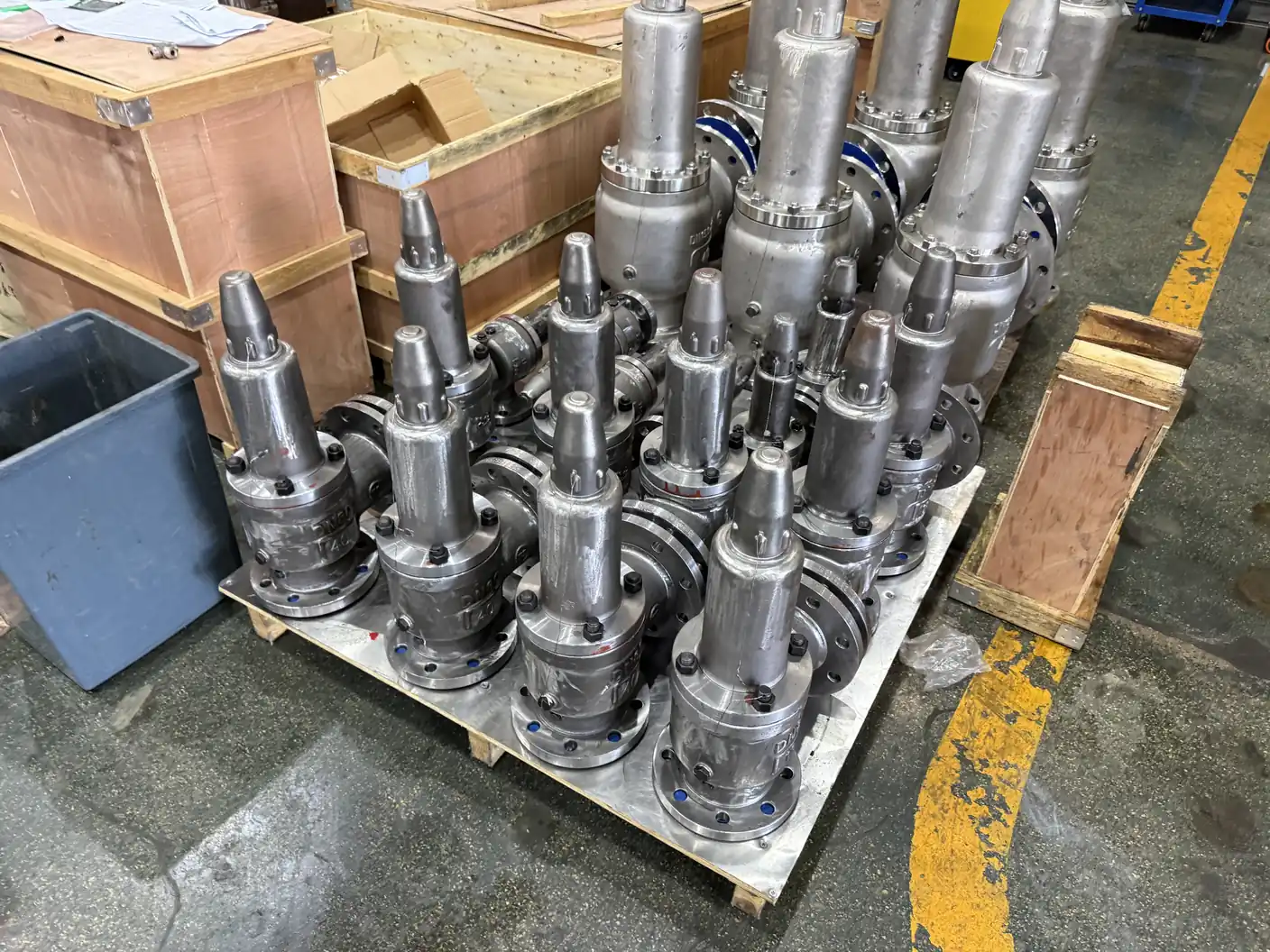
Evidenza di Produzione Reale per Revisione Applicazione
Per le valvole di sicurezza per ossigeno per sistemi O2 e LOX | La revisione del servizio e del fornitore ZOBAI dovrebbe collegare la costruzione della valvola alla pressione di taratura, al fluido, alla temperatura, alla capacità, alla contropressione e al codice applicabile. Questa fotografia ZOBAI documenta grandi valvole di sicurezza in acciaio inossidabile raggruppate su un pallet. Esaminarla con disegni, registri dei materiali e documenti di prova di pressione.