
- Engineering Guide
Safety Valve Back Pressure and Balanced Bellows Selection Guide
This guide shows how to define superimposed and built-up back pressure, decide when a conventional, balanced bellows or pilot-operated valve should be reviewed, and prepare the data needed for a defensible PSV selection.
- Superimposed back pressure exists before the valve opens and may be constant or variable.
- Built-up back pressure develops after opening because of resistance in the discharge path.
- Total back pressure during relief is the combination of superimposed and built-up components.
- Balanced bellows reduce the force effect of outlet pressure but do not automatically eliminate capacity, stability or discharge-system limits.
Back pressure must be defined before the valve type is finalized
Engineering limitation
Use the correct terms in calculations, datasheets and RFQs
Superimposed Back Pressure
Built-up Back Pressure
Total Back Pressure
Outlet pressure can affect force balance, flow and closing behavior
What must be checked
- Effect on opening or cold differential test pressure
- Available lift and stable valve action
- Gas, vapor, steam or liquid capacity correction
- Blowdown and reseating behavior
- Chatter risk from inlet and outlet interaction
- Outlet flange and body pressure-temperature rating
- Common-header simultaneous relief cases
- Discharge reaction force and piping support
A balanced bellows reduces the pressure-area force acting on the disc holder
Outlet pressure acts on the valve
A conventional force imbalance can develop
Bellows area provides compensation
Remaining limits are still verified
When a balanced bellows valve should be evaluated
Typical review triggers
- Discharge to a flare or common relief header
- Variable pressure exists before the valve opens
- Long or restrictive outlet piping creates built-up pressure
- Conventional valve opening or blowdown may be affected
- Corrosive or fouling outlet fluid should be isolated from the spring chamber
- Project specification explicitly requires a balanced design
- The selected valve’s certified back-pressure limits need verification
Choose the design from the actual pressure profile and operating requirement
Conventional Spring-Loaded
Balanced Bellows
Pilot-Operated
Balanced does not mean unrestricted or maintenance-free
Bellows pressure and temperature limit
Capacity correction still applies
Bonnet vent must remain functional
Corrosion and fouling
Fatigue and vibration
Failure case must be evaluated
A practical workflow for back pressure and valve-type selection
Define the discharge destination
Quantify superimposed pressure
Calculate built-up pressure
Determine total pressure profile
Compare valve designs
Verify certified limits
Review bellows and vent
Lock the RFQ and calculation package
Information needed for a back-pressure and bellows review
Recommended engineering input
- Protected equipment and governing relief scenario
- Fluid composition, phase and relieving temperature
- Set pressure, allowable overpressure and required capacity
- Minimum, normal and maximum superimposed back pressure
- Calculated built-up back pressure at governing flow
- Outlet piping size, length, fittings and discharge destination
- Common-header simultaneous relief assumptions
- Body, trim, bellows and seat material requirements
- Bonnet vent handling and hazardous-release requirements
- Applicable API, ASME, ISO, EN or project specification
Continue the pressure-relief system review
Bellows Balanced Safety Valves
High Back Pressure Applications
Safety Valve Installation
API 520 Safety Valve Sizing
API 521 Relief Systems
Safety Valve Selection Guide
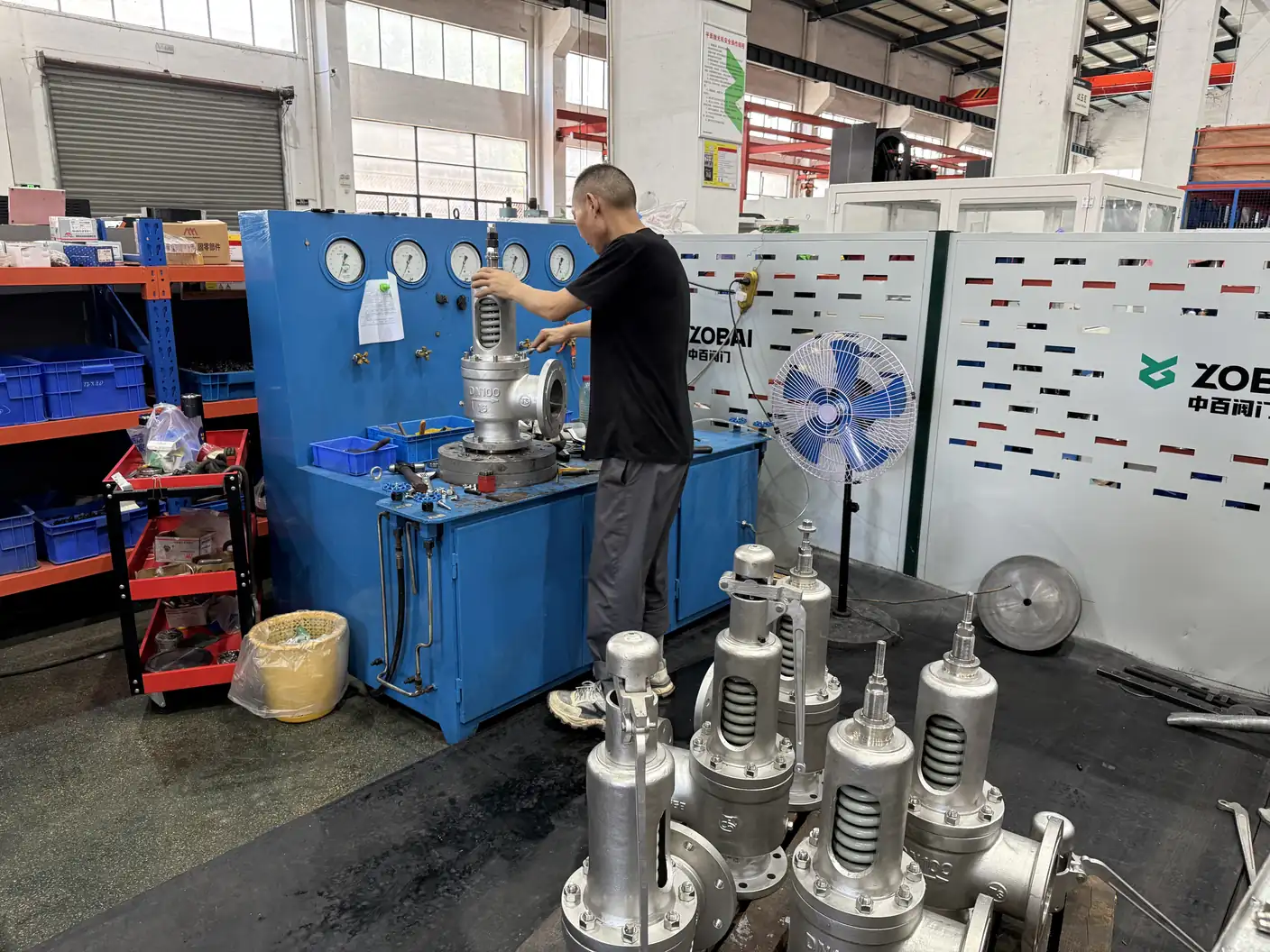
Engineering Review Connected to the Build
Engineering advice should translate into drawings, materials, machining, assembly and test records. This actual ZOBAI photograph documents safety valve pressure-testing workstation. Confirm service data, acceptance criteria and the required document package before release.
Common questions about back pressure and balanced bellows valves
Back pressure is the pressure at the outlet of a pressure-relief valve. It includes superimposed pressure that exists before opening and built-up pressure generated by relief flow through the downstream system.
Superimposed back pressure exists before the valve opens and may be constant or variable. Built-up back pressure develops after opening because of flow resistance in the outlet piping, fittings, header or disposal equipment.
Depending on valve design and pressure conditions, back pressure can change the force balance, opening behavior, lift, capacity, stability, blowdown and reseating. The specific effect must be checked against certified valve data.
A balanced bellows uses an effective area that reduces the pressure-area force of outlet pressure on the moving assembly. It can also isolate the spring chamber from the valve outlet during normal operation.
No. Capacity correction, flow stability, bellows pressure-temperature limits, outlet-system pressure and manufacturer-certified back-pressure limits still have to be verified.
Normally it should remain open or be routed as required by the approved design. Plugging it can pressurize the bonnet if the bellows leaks and can remove a useful indication of bellows failure. Hazardous venting must be routed safely.
Send the relief scenario, medium, set pressure, required capacity, temperature, minimum and maximum superimposed back pressure, built-up back pressure, outlet piping, discharge destination, materials, standards and required documents.