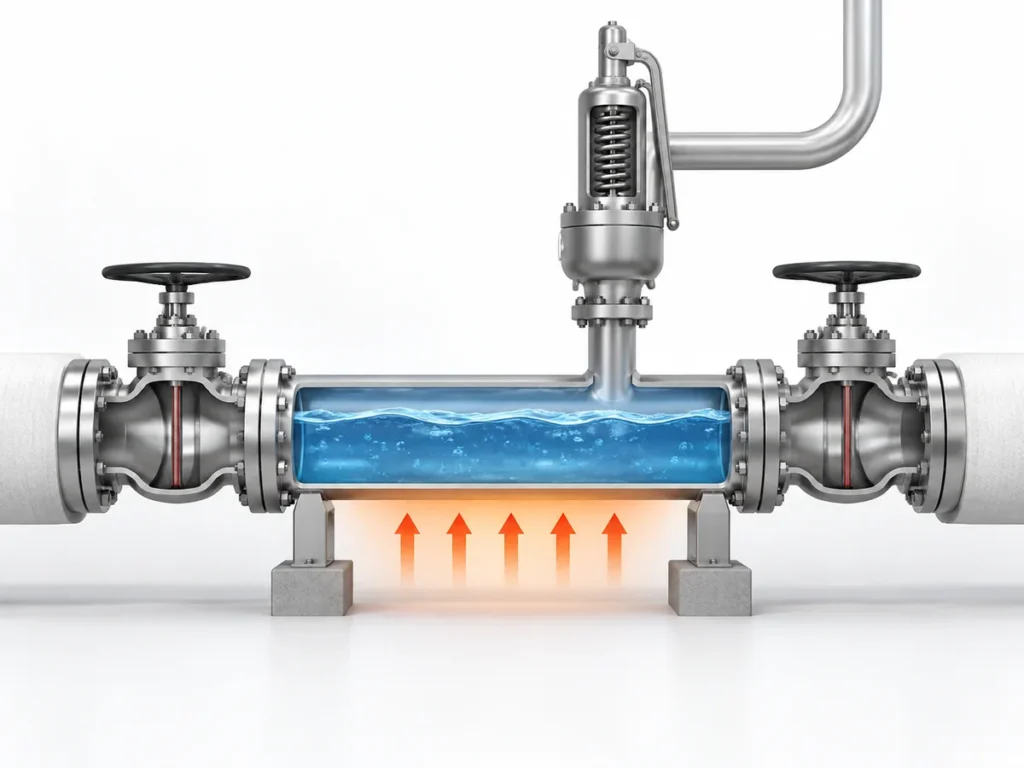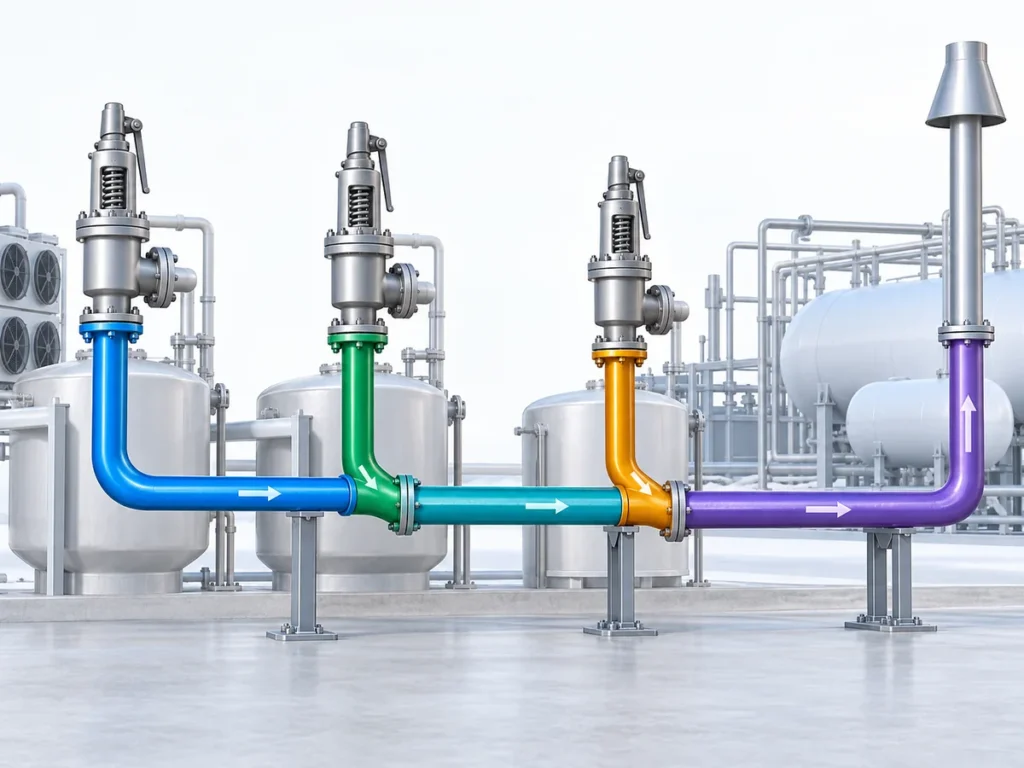
Capacità della valvola di sicurezza e selezione dell'orifizio Capacità della valvola di sicurezza vs. dimensione della connessione: cosa determina realmente il flusso? La dimensione della connessione di una valvola di sicurezza indica come la valvola si adatta alla tubazione. L'orifizio e la capacità di scarico certificata indicano se la valvola selezionata può scaricare il carico richiesto. Questi valori sono correlati, ma non sono intercambiabili. …

Capacità della valvola di sicurezza e selezione dell'orifizio
Capacità della valvola di sicurezza vs dimensione della connessione: cosa determina realmente il flusso?
La dimensione della connessione di una valvola di sicurezza indica come la valvola si adatta alla tubazione. L'orifizio e la capacità di scarico certificata indicano se la valvola selezionata può scaricare il carico richiesto. Questi valori sono correlati, ma non sono intercambiabili.
Regola decisionale di ingegneria: approvare prima la richiesta di scarico, poi l'orifizio selezionato e la capacità supportata, e infine la connessione di ingresso/uscita. Una valvola che si adatta alla flangia può comunque essere sottodimensionata per lo scenario di sovrappressione predominante.

La selezione finale deve utilizzare il fluido di processo effettivo, la pressione di scarico, la temperatura di scarico, la sovrappressione ammissibile, la contropressione, il modello selezionato e la base normativa applicabile.
Risposta rapida
La dimensione della connessione non è la capacità della valvola di sicurezza. Le dimensioni di ingresso e uscita descrivono l'interfaccia meccanica con il sistema di tubazioni. La dimensione dell'orifizio descrive l'apertura interna di flusso o l'area di flusso designata. La capacità di scarico certificata o supportata dal produttore è il flusso che la valvola selezionata può scaricare in condizioni definite di fluido, pressione, temperatura e condizioni di prova o calcolo.
Due valvole possono entrambe essere marcate 2 × 3 pollici o DN50 × DN80 e avere comunque designazioni di orifizio, caratteristiche di alzata e capacità supportate diverse. Il confronto corretto è quindi:
Carico di sfioro richiesto
Il flusso che l'apparecchiatura protetta deve scaricare durante lo scenario di scarico principale.
Capacità valvola selezionata
Il flusso supportato dell'esatto modello di valvola e orifizio nelle condizioni di scarico applicabili.
Dimensione connessione
L'interfaccia di ingresso e uscita utilizzata per il montaggio, la classificazione delle tubazioni e la verifica dell'installazione.
Per la metodologia completa di dimensionamento, utilizzare la guida di ZOBAI Guida al dimensionamento e alla capacità certificata delle valvole di sicurezza. Questa pagina si concentra solo sull'errore comune di considerare la dimensione della flangia come prova della capacità.
Dimensione della connessione, dimensione dell'orifizio e capacità di scarico sono valori diversi
I registri di approvvigionamento spesso descrivono una valvola di sicurezza tramite dimensione di ingresso, dimensione di uscita e pressione di taratura. Queste informazioni sono utili per l'identificazione, ma non definiscono il percorso di flusso interno né dimostrano che la valvola proteggerà l'apparecchiatura. I seguenti tre valori devono essere esaminati separatamente.
| Valore di selezione | Cosa descrive | Cosa non prova | Evidenza Tipica |
|---|---|---|---|
| Dimensione connessione ingresso e uscita | Interfaccia nominale della tubazione, dimensione della flangia o della filettatura, tipo di faccia e classe di pressione | Area di flusso interna, capacità richiesta o capacità di scarico supportata | Disegno di assieme generale, specifica delle tubazioni, targhetta e tabella dimensionale |
| Orifizio o dimensione dell'ugello | Apertura di flusso interna, famiglia di orifizi designata o confine di flusso effettivo | Capacità per ogni fluido e condizione senza il coefficiente applicabile e la base di pressione | Scheda tecnica del produttore, designazione API 526 dove applicabile, dati di progettazione certificati |
| Capacità di sfioro certificata o documentata | Flusso supportato per una configurazione di valvola definita e condizioni di scarico dichiarate | Che il calcolo di scarico dell'impianto, la tubazione di ingresso o il sistema di scarico siano corretti | Tabella di capacità certificata, calcolo del produttore, elenco, scheda tecnica o documento di progetto approvato |
Non stimare la capacità dal diametro esterno della valvola o dal solo DN/NPS. Se il modello esatto, l'orifizio e la base di capacità non possono essere verificati, contrassegnare la capacità come non confermata e sospendere l'approvazione tecnica.
Perché due valvole con la stessa dimensione di connessione possono avere capacità diverse
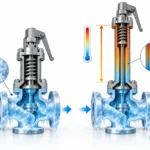
I produttori possono utilizzare lo stesso corpo o la stessa flangiatura per più orifizi interni. L'ingresso e l'uscita visibili possono quindi rimanere invariati mentre cambiano la gola dell'ugello, la geometria della sede, il portadischi, la guida e l'alzata. Diverse serie di prodotti possono anche utilizzare coefficienti diversi, disposizioni di blowdown e basi di certificazione.
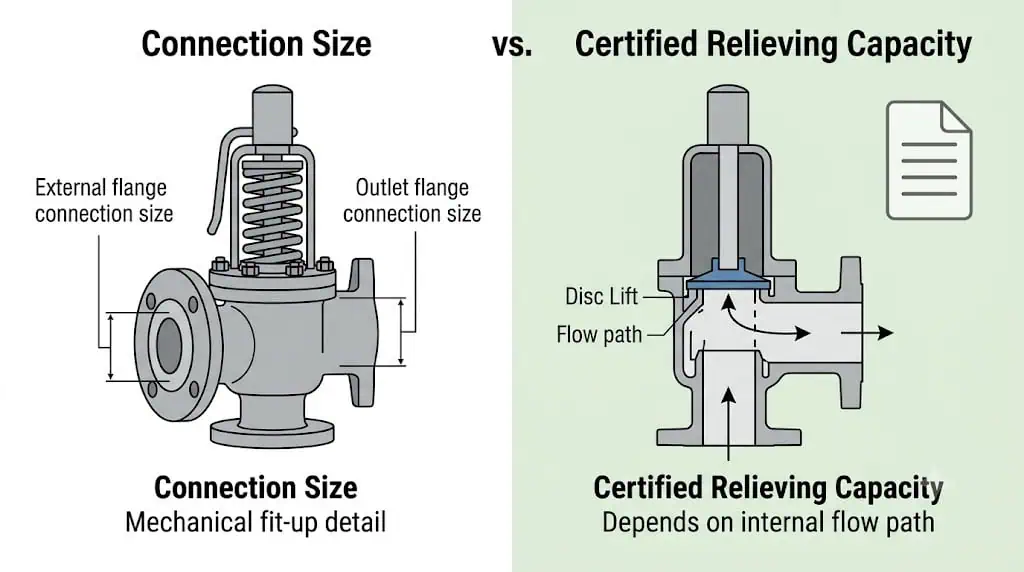
L'illustrazione spiega il principio di selezione; non è un disegno di fabbricazione certificato.
| Fattore | Come cambia la decisione sulla capacità |
|---|---|
| Area dell'ugello o orifizio effettivo | Un'area di flusso supportata più ampia può far passare più fluido quando le restanti condizioni di dimensionamento sono comparabili. |
| Alzata della valvola e geometria del disco | L'area di apertura disponibile e il percorso del flusso influenzano le prestazioni di scarico del progetto selezionato. |
| Fluido e fase | Vapore, gas, vapore saturo e liquido richiedono proprietà del fluido e trattamenti di dimensionamento diversi. Il servizio bifase può richiedere un metodo approvato dal progetto. |
| Pressione di impostazione e di sfioro | La pressione disponibile durante lo scarico influisce sul flusso supportato e deve corrispondere alla base di calcolo. |
| Temperatura di sfioro | La temperatura modifica la densità e altre proprietà del fluido e può anche limitare i materiali o i componenti con sede morbida. |
| Contropressione | La contropressione sovrapposta e accumulata può influire sulla capacità e sulla stabilità, in particolare per i progetti convenzionali a molla. |
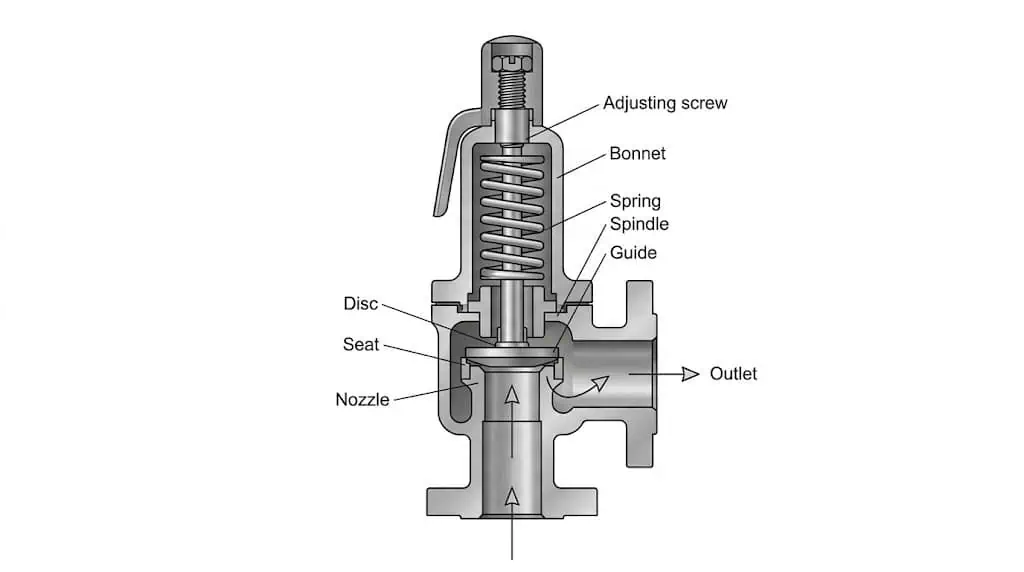
Esempio di sostituzione: stessa connessione 2 × 3, diverso orifizio interno
Un acquirente richiede una valvola di sicurezza a molla da 2 × 3 pollici alla pressione di taratura esistente. Due preventivi si adattano alle stesse flange, ma gli orifizi selezionati e le capacità documentate sono diversi. Approvare la valvola più economica basandosi solo sulla dimensione della connessione può creare una sostituzione sottodimensionata.
Azione corretta: identificare l'apparecchiatura protetta e il caso di scarico predominante, confermare il carico richiesto, quindi confrontare tale carico con la capacità esatta del modello/orifizio. Approvare la connessione 2 × 3 solo dopo che il controllo della capacità è superato.
Capacità di scarico richiesta vs capacità certificata o supportata della valvola
La selezione della valvola di sicurezza è un confronto tra domanda e capacità. La capacità di scarico richiesta deriva dal sistema protetto e dal suo scenario di sovrappressione predominante. La capacità supportata della valvola deriva dal design della valvola selezionata in condizioni definite. La dimensione della connessione appartiene alla verifica delle tubazioni e non può sostituire nessuno dei due lati di questo confronto.
| Domanda di ingegneria | Evidenza richiesta | Limite di approvazione |
|---|---|---|
| Cosa deve essere scaricato? | Apparecchiatura protetta, scenario predominante, fluido/fase e carico richiesto approvato | Mantenere in sospeso se lo scenario di scarico o la portata richiesta mancano |
| A quali condizioni? | Pressione di taratura, sovrappressione o accumulo ammissibile, pressione di scarico e temperatura di scarico | Mantenere in sospeso se i termini di pressione o le unità sono misti |
| La valvola selezionata può gestire quella portata? | Modello esatto, orifizio, fonte della capacità, fluido di riferimento e correzioni applicabili | Mantenere il punto di controllo se la capacità è copiata da un altro modello o dedotta dalla dimensione |
| Funzionerà una volta installata? | Verifica della perdita di carico in ingresso, contropressione allo scarico, percorso di scarico, drenaggio e supporto | Sospendere se le condizioni di installazione differiscono dalla base di calcolo della capacità |
| Si adatterà alla tubazione? | Dimensione della connessione, pressione nominale, superficie di tenuta, dimensioni e compatibilità dei materiali | L'approvazione meccanica non rilascia un punto di controllo aperto sulla capacità |
I confronti di capacità devono utilizzare la stessa base
Prima di confrontare la capacità richiesta e quella supportata, allineare le unità, la base del fluido, la pressione di scarico, la temperatura e le ipotesi di contropressione. Non confrontare kg/h con Nm³/h senza una conversione documentata. Non applicare un valore di capacità per aria direttamente a vapore, liquido o gas di processo. Non introdurre un margine arbitrario solo per far sembrare accettabile la valvola selezionata.
Per gli effetti della contropressione, vedere il guida contropressione e soffietto. Per i limiti di installazione, vedere il guida all'installazione delle valvole di sicurezza.
Cosa dimostra—e cosa non dimostra—la norma API 526
La norma API 526 è comunemente utilizzata per standardizzare le dimensioni delle valvole di sicurezza flangiate in acciaio e le famiglie di orifizi designati nell'ambito del suo campo di applicazione. Questa standardizzazione aiuta ingegneri e acquirenti a confrontare le dimensioni d'ingombro, le combinazioni di connessioni e le designazioni degli orifizi. Non significa che ogni valvola con lo stesso diametro di ingresso/uscita abbia automaticamente la stessa capacità certificata.
La norma API 526 può supportare
- comunicazione standardizzata di dimensioni e connessioni;
- discussioni sulle designazioni degli orifizi nell'ambito del campo di applicazione della norma;
- coordinamento per la sostituzione dell'ingombro e delle tubazioni;
- confronto più coerente delle richieste di preventivo (RFQ).
La norma API 526 non sostituisce
- il calcolo di scarico di riferimento;
- i dati di capacità del produttore per la valvola specifica selezionata;
- la verifica del fluido, della pressione e della temperatura;
- la verifica della contropressione e delle perdite di carico in ingresso.;
- requisiti del codice di progetto e di certificazione.
Utilizzare la Guida alle valvole di sicurezza a flangiate API 526 per il contesto dimensionale e della famiglia di orifizi. Utilizzare la guida guida al dimensionamento più ampia quando è richiesto un flusso di lavoro formale per la capacità.
Flusso di lavoro corretto per la selezione delle valvole di sicurezza
- Identificare l'apparecchiatura protetta. Confermare il tag della caldaia, del recipiente, dello scambiatore, del compressore, della tubazione, del serbatoio o dello skid.
- Identificare lo scenario di sfioro di riferimento. Gli esempi includono uscita bloccata, esposizione al fuoco, guasto del regolatore, espansione termica o rottura del tubo.
- Confermare il carico di scarico richiesto. Registrare il valore, le unità di misura e la base di calcolo.
- Definire le condizioni di scarico. Confermare il fluido, la fase, la pressione di taratura, la pressione di scarico, la temperatura e la base di sovrappressione ammissibile.
- Selezionare il progetto della valvola e l'orifizio. Confrontare la capacità supportata esatta con il carico richiesto approvato.
- Esaminare gli effetti dell'installazione. Verificare la perdita di carico all'ingresso, la contropressione allo scarico, il percorso di scarico, il supporto e il drenaggio.
- Confermare la connessione e la documentazione. Verificare dimensioni, pressione nominale, facce, dimensioni, materiali, prove, marcature e certificati.
Punto di controllo dell'ordine di acquisto: il confronto commerciale può iniziare prima che ogni voce tecnica sia chiusa, ma il modello finale e l'orifizio non devono essere bloccati finché il carico richiesto, la base di capacità o la condizione di installazione non rimangono verificati.
Per la configurazione della valvola a molla, rivedere valvole di sicurezza a molla. Quando il sistema di scarico crea una contropressione significativa o variabile, confrontare i progetti convenzionali, bilanciati a soffietto e pilotati piuttosto che assumere che un nome di costruzione risolva ogni condizione.
Verifica di sostituzione: non sostituire solo in base alle dimensioni
La targhetta della vecchia valvola e la misura della flangia sono input di identificazione utili, ma non dimostrano che la vecchia valvola fosse dimensionata correttamente o rimanga adatta dopo le modifiche di processo. Il debottlenecking, l'aumento dell'apporto termico, le modifiche alle valvole di controllo e le modifiche al collettore di scarico possono invalidare la capacità originale o la base di installazione.
| Verifica Sostituzione | Dati minimi | Procedere o sospendere |
|---|---|---|
| Identificazione della valvola installata | Targhetta, modello, numero di serie, foto chiare, dimensioni e classe di ingresso/uscita | Procedere solo per identificazione |
| Apparecchiatura protetta | Targhetta dell'apparecchiatura, MAWP/pressione di progetto, servizio e scheda tecnica esistente | Sospendere se il servizio protetto è sconosciuto |
| Base di scarico | Scenario determinante e capacità richiesta con unità di misura | Sospendere se la capacità è mancante o obsoleta |
| Sostituzione selezionata | Modello esatto, orifizio e capacità supportata | Sospendere se l'offerta indica solo la dimensione di connessione e la pressione di taratura |
| Installazione | Linea di ingresso, riduzioni, collettore di uscita, contropressione, supporti e drenaggio | Revisionare prima del rilascio finale |
| Documentazione | Scheda tecnica, disegno, prova di capacità, rapporti di prova, registri dei materiali e marcatura | Definire prima dell'emissione dell'ordine di acquisto |
Trigger di gestione delle modifiche: ricalcolare e riqualificare la valvola ogni volta che cambiano la capacità di processo, l'apporto termico, l'apparecchiatura protetta, la base della pressione di taratura, lo scenario di scarico o il sistema di scarico.
Checklist RFQ per la revisione di capacità e connessione
Una RFQ utile deve fornire al fornitore informazioni sufficienti per selezionare un orifizio e verificare la capacità. “DN50 × DN80, 10 bar” non è una specifica completa di valvola di sicurezza.
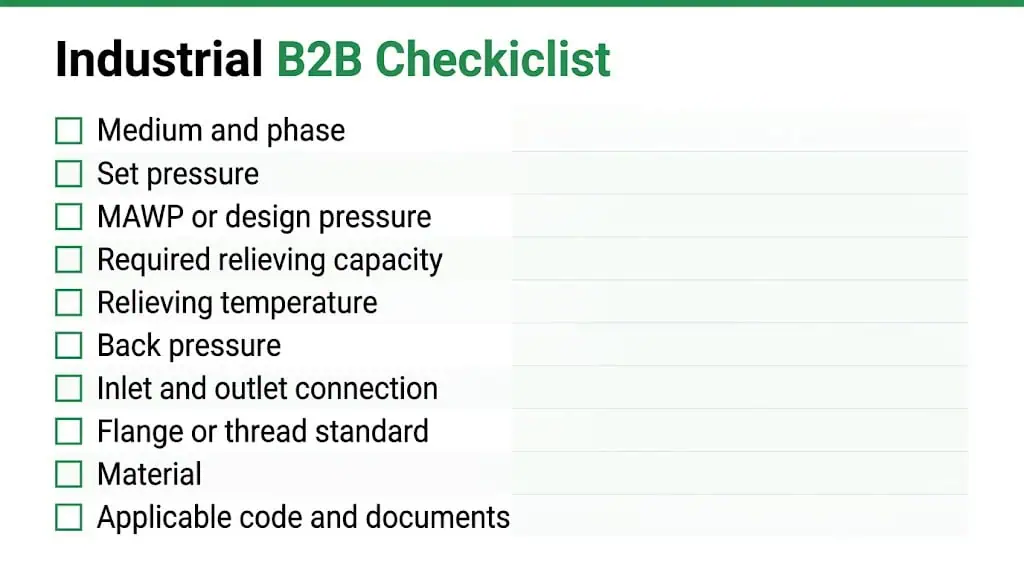
| Parametro Richiesta Preventivo | Cosa fornire | Perché è Importante |
|---|---|---|
| Apparecchiatura protetta e scenario | Tag dell'apparecchiatura e caso di sovrappressione prevalente | Definisce il compito di protezione |
| Fluido e fase | Vapore, gas, vapore, liquido o base bifase approvata; composizione/proprietà dove necessario | Metodo di dimensionamento e revisione materiali |
| Dati di pressione | Pressione di esercizio, MAWP/pressione di progetto, pressione di taratura e base di sovrappressione ammissibile | Definisce il confine di pressione e la pressione di scarico disponibile |
| Capacità di sfioro richiesta | Portata, unità di misura, revisione del calcolo e condizioni di scarico | Fornisce la richiesta che la valvola deve coprire |
| Temperatura di sfioro | Temperatura alla condizione di scarico di riferimento | Influisce sulle proprietà del fluido e sui limiti dei componenti |
| Contropressione | Valori di sovrappressione e di contropressione, inclusi intervalli costanti o variabili | Influisce su costruzione, capacità e stabilità |
| Connessioni | Dimensioni ingresso/uscita, standard, pressione nominale, tipo di facce e vincoli dimensionali | Supporta la verifica di accoppiamento e piping |
| Materiali e documenti | Requisiti di corpo/trim/sede, standard applicabile, prove, certificati e ambito di ispezione | Supporta l'approvazione tecnica e QA |
I valori sconosciuti devono essere contrassegnati “da confermare”. Non devono essere stimati silenziosamente da una vecchia foto della valvola o dal diametro nominale del tubo.
Cinque errori comuni di selezione
1. Considerare DN/NPS come capacità di flusso
La dimensione nominale è una designazione della tubazione, non un valore di portata certificato.
2. Utilizzare la pressione di taratura come risultato del dimensionamento
La pressione di taratura definisce la regolazione di apertura; non definisce il carico di scarico determinante.
3. Riutilizzare la capacità da un altro fluido
I valori di capacità per aria, vapore, gas e liquido non sono intercambiabili senza il metodo e le proprietà corrette.
4. Ignorare la contropressione
La pressione del sistema di scarico può modificare la capacità e la stabilità della valvola anche quando flangia e orifizio sembrano accettabili.
5. Sostituire in base all'aspetto
La vecchia valvola potrebbe essere stata selezionata in modo errato o potrebbe non corrispondere più al servizio di processo attuale.
Regola di approvazione
Richiedere una catena tracciabile dal calcolo di scarico al modello/orifizio selezionato, alla prova di capacità, al disegno, alla targhetta e alla documentazione di prova.
Limite di riferimento tecnico
API 520, API 526, ASME BPVC Sezione XIII, informazioni sulla certificazione National Board e ISO 4126 possono supportare diverse parti di una revisione di sfioro di pressione. Nessuna di esse rende la dimensione della connessione un sostituto della capacità richiesta o supportata. Utilizzare l'edizione e la giurisdizione adottate dal progetto.
FAQ
La dimensione della connessione della valvola di sicurezza è uguale alla capacità?
N. La dimensione di connessione descrive l'interfaccia delle tubazioni di ingresso e uscita. La capacità dipende dall'orifizio interno selezionato, dal design della valvola, dal fluido, dalla pressione, dalla temperatura, dalla contropressione e dai dati prestazionali supportati.
Due valvole di sicurezza 2 × 3 possono avere capacità diverse?
Sì. Possono utilizzare orifizi interni, caratteristiche di alzata, coefficienti, trim o progetti certificati diversi anche se le dimensioni esterne di ingresso e uscita corrispondono.
Cosa è più importante: la dimensione della connessione o la dimensione dell'orifizio?
Servono a scopi diversi. La dimensione di connessione è essenziale per l'adattamento alla tubazione e l'installazione. L'orifizio e la capacità supportata sono fondamentali per dimostrare che la valvola può scaricare il carico richiesto.
La dimensione dell'orifizio API 526 garantisce automaticamente la capacità?
N. L'API 526 supporta la comunicazione standardizzata delle dimensioni e della designazione dell'orifizio nell'ambito del suo campo di applicazione. La capacità esatta della valvola selezionata deve comunque essere verificata per il fluido di processo e le condizioni di scarico applicabili.
La pressione di taratura è sufficiente per selezionare una valvola di sicurezza?
No. La pressione di taratura non definisce la portata di scarico richiesta. La selezione richiede anche lo scenario di riferimento, la capacità richiesta, il fluido, la temperatura di scarico, la sovrappressione ammissibile, la contropressione e le condizioni di installazione.
Posso sostituire una vecchia valvola di sicurezza utilizzando solo la targhetta e la dimensione della flangia?
No. Utilizzare la targhetta per l'identificazione, quindi confermare l'apparecchiatura protetta, lo scenario di sfioro attuale, la capacità richiesta, l'orifizio di sostituzione esatto, la capacità supportata e la condizione della tubazione installata.
La capacità dell'aria può essere utilizzata per servizio vapore, gas o liquido?
Non direttamente. La capacità deve essere verificata in base al fluido effettivo, alla fase, alle proprietà, alla pressione e alla temperatura. Mezzi diversi richiedono il calcolo appropriato o dati supportati.
Cosa deve fornire un fornitore per dimostrare la capacità?
Il fornitore deve identificare il modello esatto e l'orifizio e fornire la fonte di capacità applicabile certificata o supportata dal produttore, le unità, la base del fluido di lavoro, le condizioni di pressione e temperatura e gli eventuali fattori di correzione approvati.
Confermare l'orifizio e la capacità prima dell'ordine
Inviare a ZOBAI l'apparecchiatura protetta, lo scenario di sfioro, la portata richiesta, la pressione di taratura, il fluido, la temperatura di sfioro, la contropressione e i requisiti di connessione. La revisione dovrebbe identificare il modello di valvola selezionato, l'orifizio e la capacità supportata, non solo la dimensione della flangia.