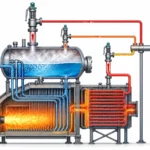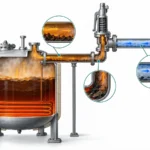
泄压阀(PRV)是一种自力式、可重新关闭的压力保护装置,当进口压力达到其规定的开启条件时开启,排放流体,并在压力降至阀门的回座范围后重新关闭。其作用是使锅炉、压力容器、管道、换热器、压缩机橇及其他承压系统保持在允许压力范围内……

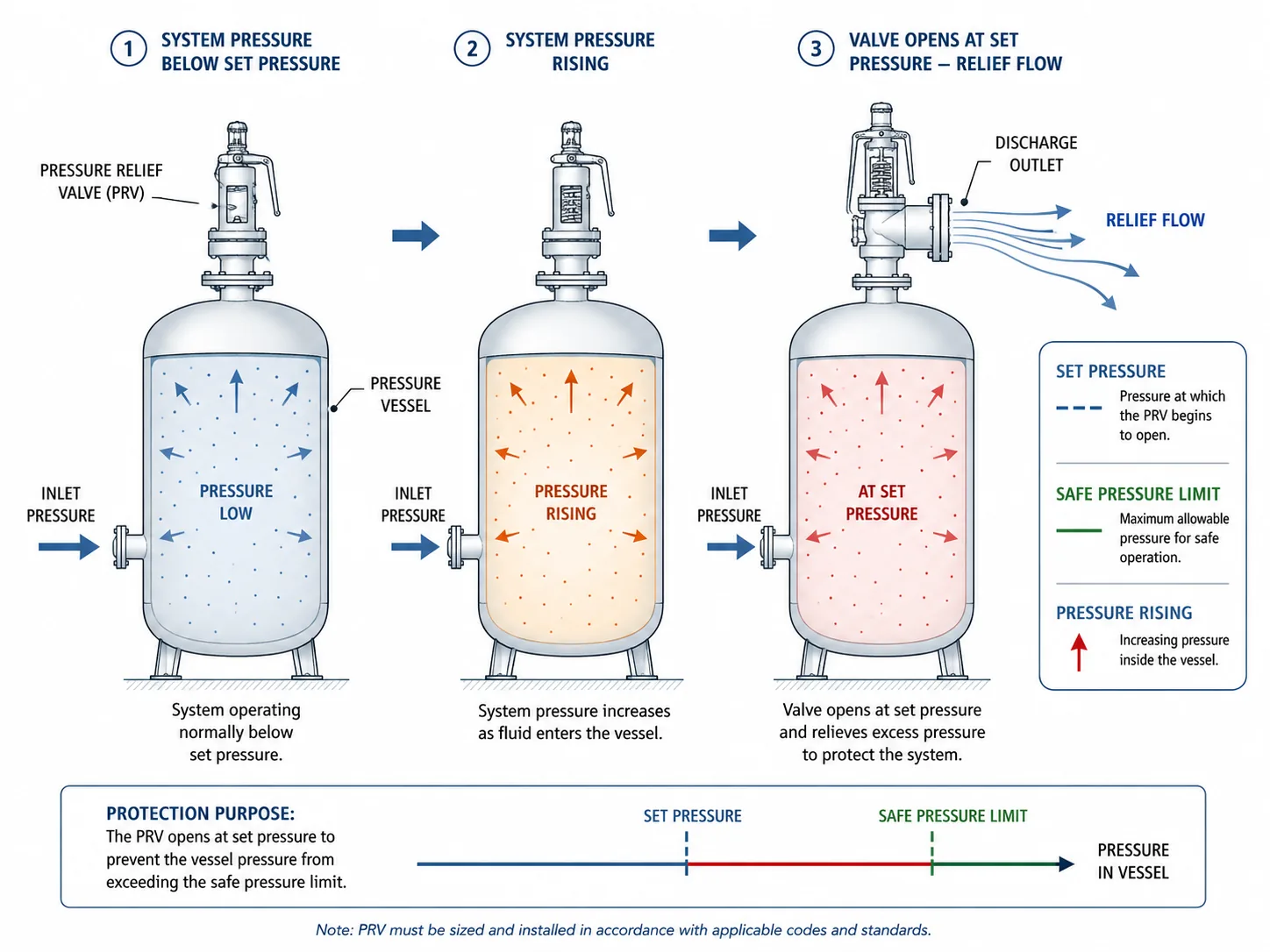
泄压阀(PRV)是一种自力式、可重新关闭的压力保护装置,当进口压力达到其规定的开启条件时开启,排放流体,并在压力降至阀门的回座范围后重新关闭。 其作用是使锅炉、压力容器、管道、换热器、压缩机组及其他承压系统保持在适用设备规范与经批准的泄放依据所规定的允许压力边界内。
“泄压阀”是行业中的广义术语。根据项目标准、流体和开启特性,实际装置可能被标识为安全阀、泄放阀、安全泄放阀、压力安全阀或PSV。该缩写并不确定阀门类型、认证排量、使用流体、背压能力、阀座结构或规范认可。
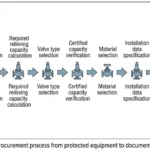
PRV不能仅凭连接尺寸选型。工程上必须先确定被保护设备和可信的超压工况,计算 所需泄放量, ,然后核实拟选阀门的 经认证或其他方式认可的排量, 有效孔径、整定压力、材质及安装后的性能是否满足该工况要求。
工程要点: 即使 PRV 在正确的整定压力下开启,如果它无法通过主导泄放负荷、因入口压力损失或出口背压而变得不稳定、使用了不匹配的阀座、阀瓣、导向、弹簧或密封材料,或缺少所需的规范和试验证据,仍可能不适用。
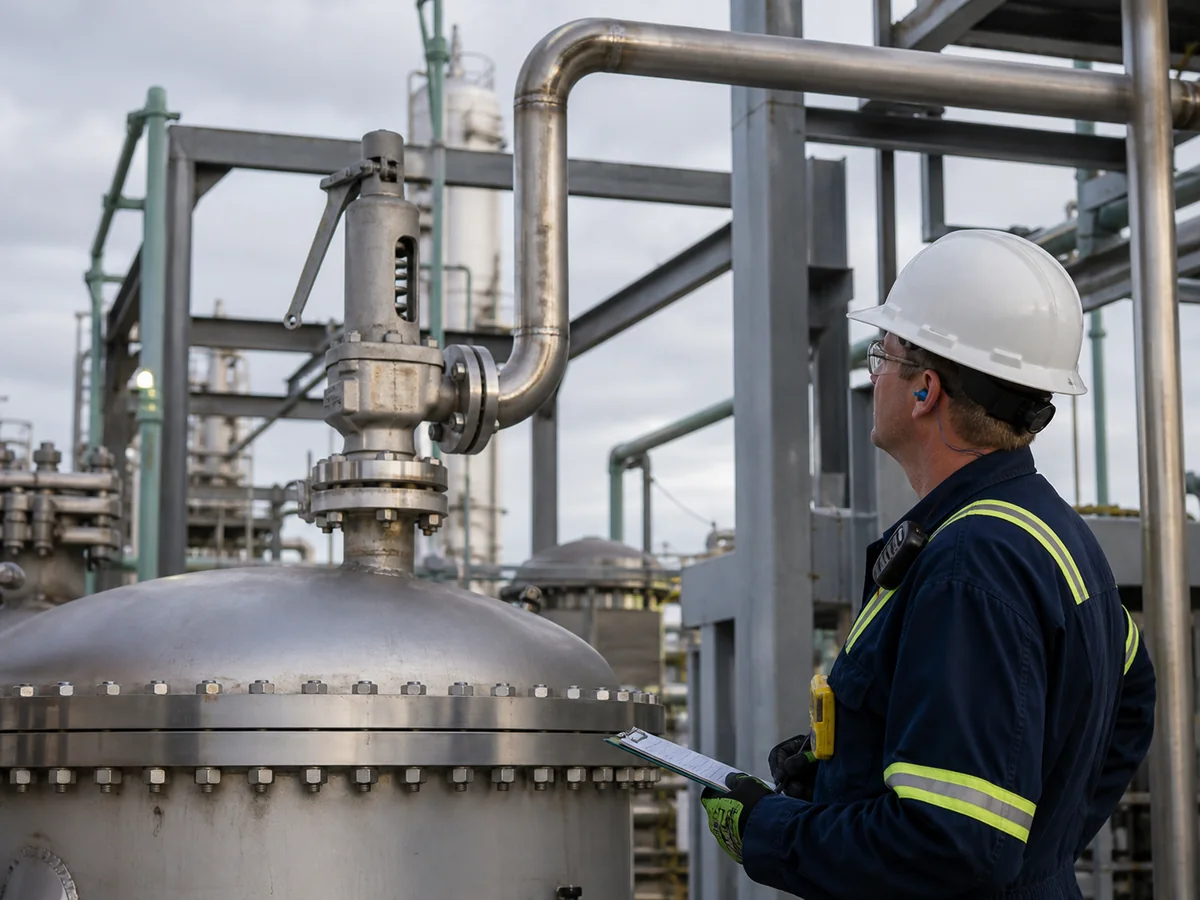
60 秒了解泄压阀
| 问题 | 实用工程解答 |
|---|---|
| PRV 的作用是什么? | 在规定的超压工况下自动开启,排放流体,并在压力下降后重新关闭。 |
| 它靠什么开启? | 进口压力达到该阀门类型、试验介质和标准所规定的开启特性。 |
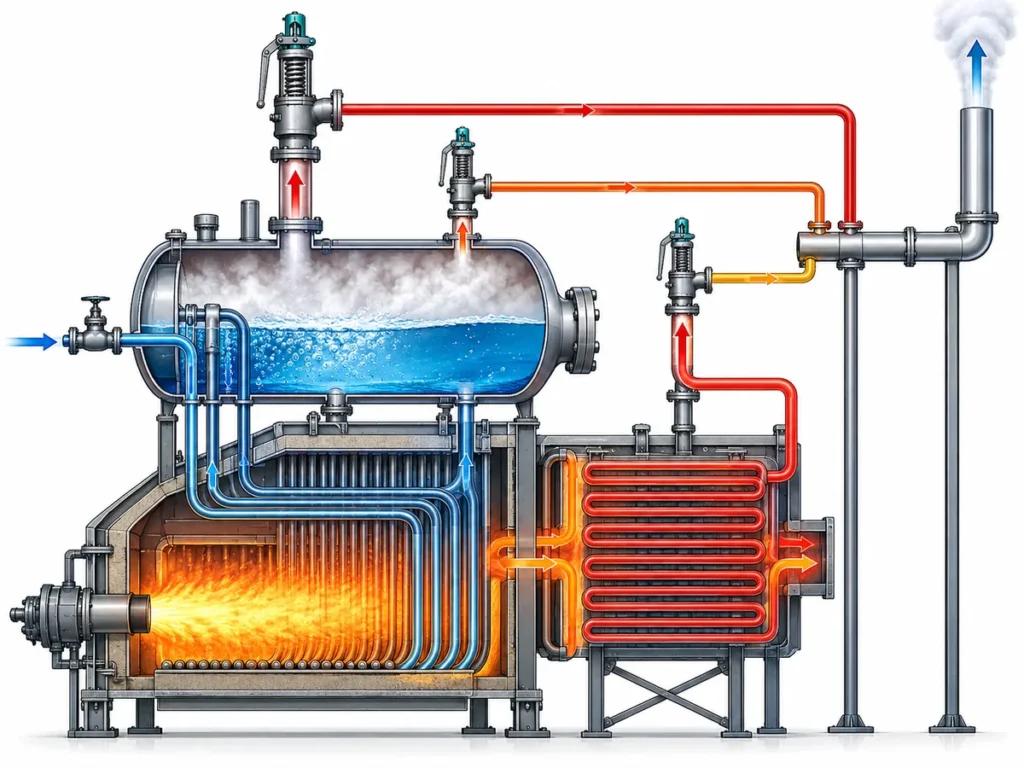
| 它可以保护哪些设备? | 锅炉、压力容器、换热器、压缩机系统、管道、泵出口及封闭液体管段。 |
| 它可以处理哪些流体? | 蒸汽、气体、蒸气、液体、闪蒸或经确认的两相工况,具体取决于设计、定径方法和认证。 |
| 整定压力能证明排量吗? | 不能。整定压力仅确定开启条件;所需流量必须对照认证排量或认可排量进行核算。 |
| 连接尺寸能证明排放能力吗? | 不能。相同进口尺寸的阀门可能具有不同的有效孔径、阀瓣升程和认证排量。 |
| 超压与压力积聚有何区别? | 超压以整定压力为基准;压力积聚以被保护设备的MAWP或许用压力边界为基准。 |
| 哪些因素影响回座? | 启闭压差、工作裕度、背压、密封面状况、导向对中、污染物及阀门设计。 |
| PRV一定指“泄压阀”吗? | 不一定。PRV也可指减压阀。设备完整功能应写入询价单、P&ID标注或更换订单中。 |
| PRV是普通控制阀吗? | 不是。它是在异常工况下起保护作用的装置,而非主要工艺压力控制器。 |
审批暂停点: 在控制泄放工况、所需泄放量、泄放流体相态或出口背压条件仍不明确时,最终选型不具备可辩护性。供应商可建议初步产品系列,但压力保护职责尚未得到验证。
什么是泄压阀?
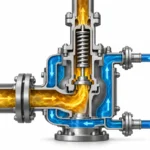
A 泄压阀 是一种可回座的泄压装置,能够对进口压力自动响应。当达到规定的开启条件时,它会从被保护系统中建立一条泄放通道。当压力源降低或隔离、压力下降后,阀门应重新回座。
PRV 是超压保护系统中的一个层级。其他层级可能包括过程控制、报警、停车系统、爆破片、泄压系统、隔离原则和操作规程。正确的架构取决于被保护设备、危害、泄放工况、规范路径和业主需求。
阀门功能
在规定的运行和安装条件下,开启、排放所需负荷、保持稳定并回座。
系统功能
在主导超压工况下,将被保护设备控制在规范允许的压力边界内。
对于 ASME 应用,设备建造章节与超压保护规则需协同使用。因此,设备 MAWP、允许压力积聚、整定压力配置与泄放能力应作为一个整体保护依据处理,而非相互独立的样本参数。
术语说明: 本页将“泄压阀”作为广义介绍性术语。具体项目中可能更具体地使用安全阀、泄放阀、安全泄放阀、PSV 或 PRV。最终定义以经批准的数据表、使用介质、开启特性及认证依据为准。
泄压阀保护哪些设备?
压力容器
接收器、分离器、反应器、过滤器、储罐及工艺罐。
锅炉与蒸汽系统
蒸汽锅炉、集箱、发生器、洁净蒸汽设备及加热容器。
压缩机与气体系统
压缩机机组、空气储罐、气体撬装系统及下游低压设备。
换热器
暴露于管束破裂、出口堵塞或热膨胀的低压侧。
液体管道
封闭液体管段、泵出口管线及液压系统。
Process and OEM Skids
Packaged equipment whose relief device must still match the final installed system.
The protected equipment establishes the pressure boundary, MAWP or applicable allowable limit, relief scenarios and code route. The valve cannot be evaluated independently of that equipment.
Why a Pressure Relief Valve Is Not a Normal Valve
An isolation or control valve is normally selected to stop, route or regulate process flow. A pressure relief valve is selected to protect equipment during an abnormal condition. That changes the technical approval process.
| Normal Process Valve Review | Pressure Relief Valve Review |
|---|---|
| Line size and pressure class | Protected equipment, MAWP and set pressure |
| Normal flow and pressure drop | Governing relief case and required relieving capacity |
| Control or isolation function | Automatic opening, relieving and reseating behavior |
| Body and trim materials | Body, nozzle, disc, guide, spring, bellows, pilot and seat materials |
| Actuator and control signal | Valve design, operating margin, back pressure and certified performance |
| General inspection documents | Calibration, capacity evidence, pressure test, seat tightness and traceability records |
Mechanical fit is not engineering equivalence. A replacement valve may have the same connections and pressure class yet use a smaller orifice, different capacity basis, unsuitable materials or different back-pressure limits.
How Does a Pressure Relief Valve Work?
-
The valve remains closed during normal operation.
A spring, pilot-controlled dome pressure or another approved closing mechanism keeps the disc or main valve on its seat. Adequate operating margin and suitable seat construction are needed to limit simmer and leakage. -
A credible overpressure source raises system pressure.
Examples include blocked outlet, external fire, thermal expansion, regulator failure, tube rupture, gas blow-by or process upset. -
The specified opening condition is reached.
The valve exhibits the opening characteristic defined by its design and test basis. A pop-action gas or steam valve, proportional liquid relief valve and pilot-operated valve should not be assumed to respond identically. -
Lift and flow area develop.
Disc geometry, spring force, pilot action, fluid forces, pressure rise, inlet loss and outlet back pressure affect the available lift and stability. -
安全阀泄放所需流量。
The selected effective orifice and certified or otherwise accepted capacity must meet or exceed the governing required relieving load at the approved relieving conditions. -
Pressure remains within the permitted event boundary.
Overpressure is referenced to set pressure, while accumulation is referenced to the protected equipment’s MAWP or other allowable pressure limit. The applicable code and scenario define the permitted boundary. -
The overpressure source is controlled and pressure falls.
Inventory is discharged, incoming energy or flow is reduced, or the initiating fault is removed. -
阀门回座。
The closing mechanism returns the disc to the seat. Blowdown, back pressure, process pressure recovery, seat damage, guide alignment and contamination influence whether the valve closes tightly and remains stable.
Spring-Loaded Operation
压缩弹簧通过阀杆和阀瓣组件施加关闭力。常规式与波纹管平衡式在出口压力如何影响力平衡方面存在差异。
先导式操作
由先导阀和系统压力控制主阀。性能取决于先导阀设计、取压管路、排放布置、密封件及介质清洁度。
如需了解直接弹簧作用力顺序的详细内容,请参阅 弹簧式安全阀的工作原理.
整定压力边界: 整定压力并非统一的“首次可见动作”点。规定的开启特性取决于阀门设计、试验介质及适用标准。整定压力试验合格并不能证明额定排量、密封性或在役系统稳定性。
PRV 起跳后会发生什么?
在实际泄放事件后,若起跳过程中出现颤振、剧烈振动、脏污或腐蚀性流体、火灾暴露、异常背压、长时间排放或起跳后泄漏,阀门可能需要检查。当根本原因为入口压力损失、选型过大、排放总管阻力或材料不适用时,仅研磨密封面并非完整的纠正措施。
泄压阀、安全阀与 PSV 对比
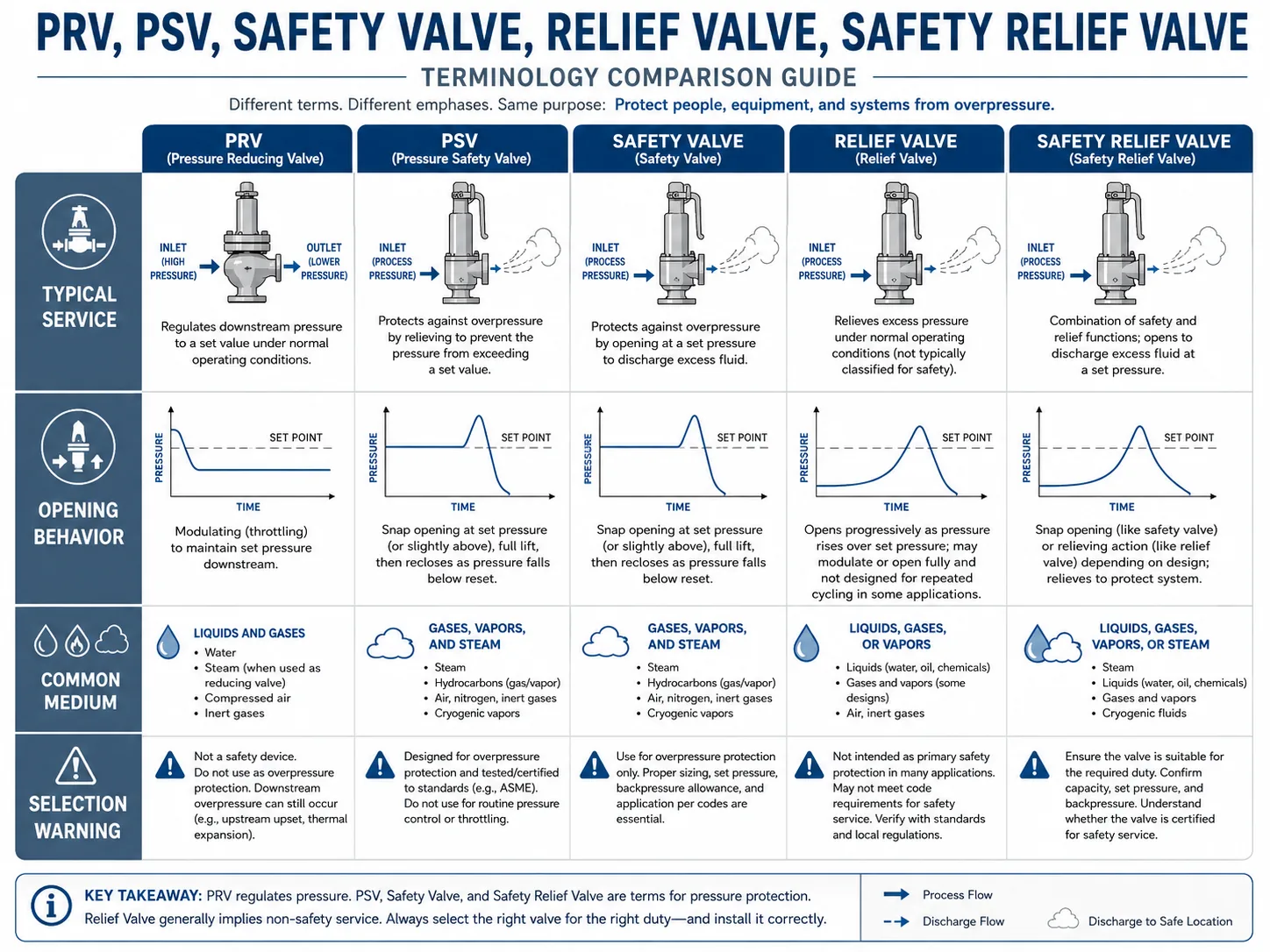
| 术语 | 常见用途 | 常见注意事项 |
|---|---|---|
| 泄压阀 | 自动泄压阀的广义术语 | 不限定流体、开启特性或结构形式。 |
| 泄压阀 | 通常与液体工况或比例开启工况相关 | 行业用法不一,不可假定仅用于液体。 |
| 安全阀 | 通常与快速开启的蒸汽、气体或蒸气工况相关 | 该名称不能证明排量能力或规范认可。 |
| 安全泄放阀 | 用于指定气体或液体工况的广义组合术语 | 必须注明实际工况和排量基准。 |
| PSV | 压力安全阀或泄放装置的常见工艺装置位号 | 不能识别弹簧式、波纹管式或先导式结构。 |
| PRV | 通常指泄压阀;有时指减压阀 | 在询价单(RFQ)中务必写明完整功能。 |
使用 PRV、PSV、安全阀与泄压阀的区别 进行完整术语对比。
泄压阀的主要类型
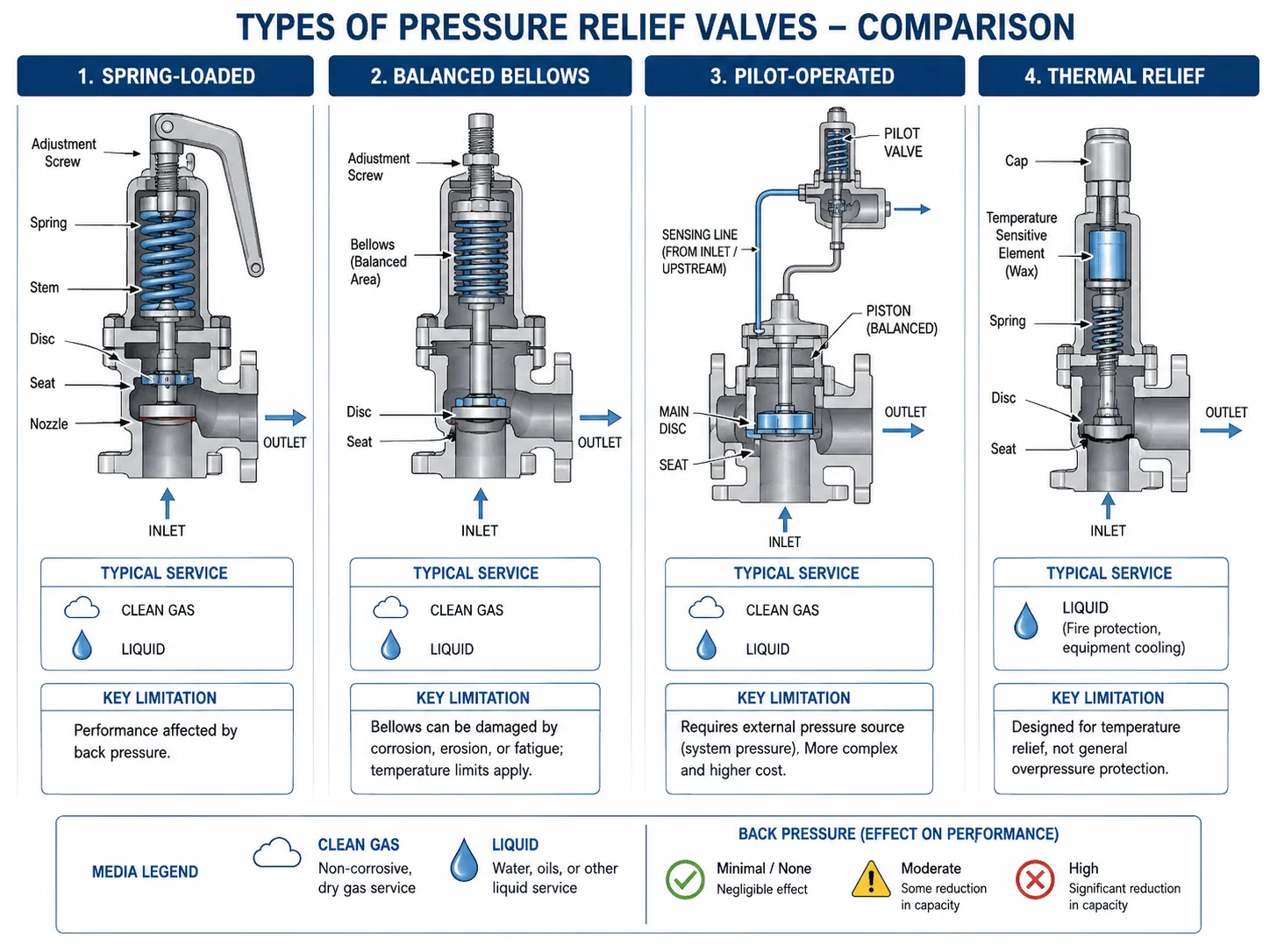
| 阀门类型 | 基本原理 | 典型优势 | 主要选型边界 |
|---|---|---|---|
| 常规弹簧式 | 弹簧力直接抵抗作用于阀瓣的进口压力。 | 结构简单、便于检查,广泛用于多种蒸汽、气体、空气及液体工况。 | 工作裕度、进口压力损失、出口背压、启闭压差及所需排量。 |
| 平衡波纹管 | A bellows is added to reduce the influence of outlet pressure on the moving assembly. | Useful where superimposed or built-up back pressure would adversely affect a conventional valve. | Bellows pressure and fatigue limits, corrosion, bonnet venting, failure mode and capacity corrections. |
| 先导式 | A pilot and system pressure control the main valve or dome pressure. | Tight shutoff and selected clean, high-pressure, large-capacity or high operating-ratio duties. | Pilot cleanliness, sensing and exhaust routing, seals, condensation, freezing, fouling and maintenance access. |
| 热膨胀泄压阀 | A relatively small valve relieves thermal expansion of trapped liquid. | Protects blocked-in liquid sections where heat input causes pressure rise. | Trapped volume, liquid properties, set pressure, safe discharge and whether flashing can occur. |
| Controlled safety pressure relief system | An external control function operates the main relieving valve under the applicable product system. | May be used where a controlled arrangement is specifically engineered and accepted. | System architecture, power or control reliability, applicable ISO 4126-5 route and project acceptance. |
弹簧式与先导式选型边界
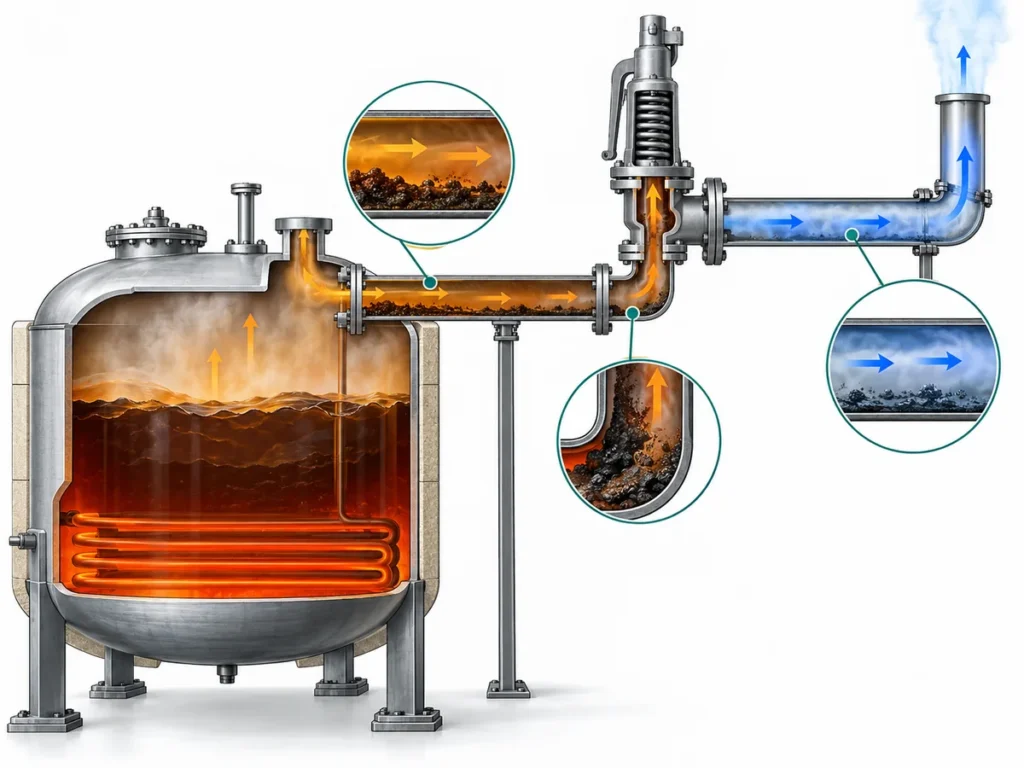
先导式安全阀并不因为整定压力高或出口接入排放总管就自动更优。在合适的洁净工况下,它可能提供严密关闭和良好性能,但先导阀细小通道可能受颗粒、蜡、聚合物、冷凝液、冰或腐蚀产物影响。直接作用弹簧式安全阀对脏污工况可能更耐受,而当背压影响常规安全阀且波纹管材质与排放条件可接受时,可优先选用平衡波纹管式结构。
复合工况示例: 某洁净气体工况选用了先导式 PRV,因为整定压力附近的严密关闭很重要。冷凝液和锈蚀进入引压管后,先导阀响应变得不稳定。纠正措施并非仅更换先导阀阀座;团队改进了排液和污染控制,并重新评估该工况是否足够洁净以适用先导式结构。
用于设计对比,请使用 弹簧式安全阀与先导式安全阀 以及 背压与波纹管工程指南.
泄压阀关键参数
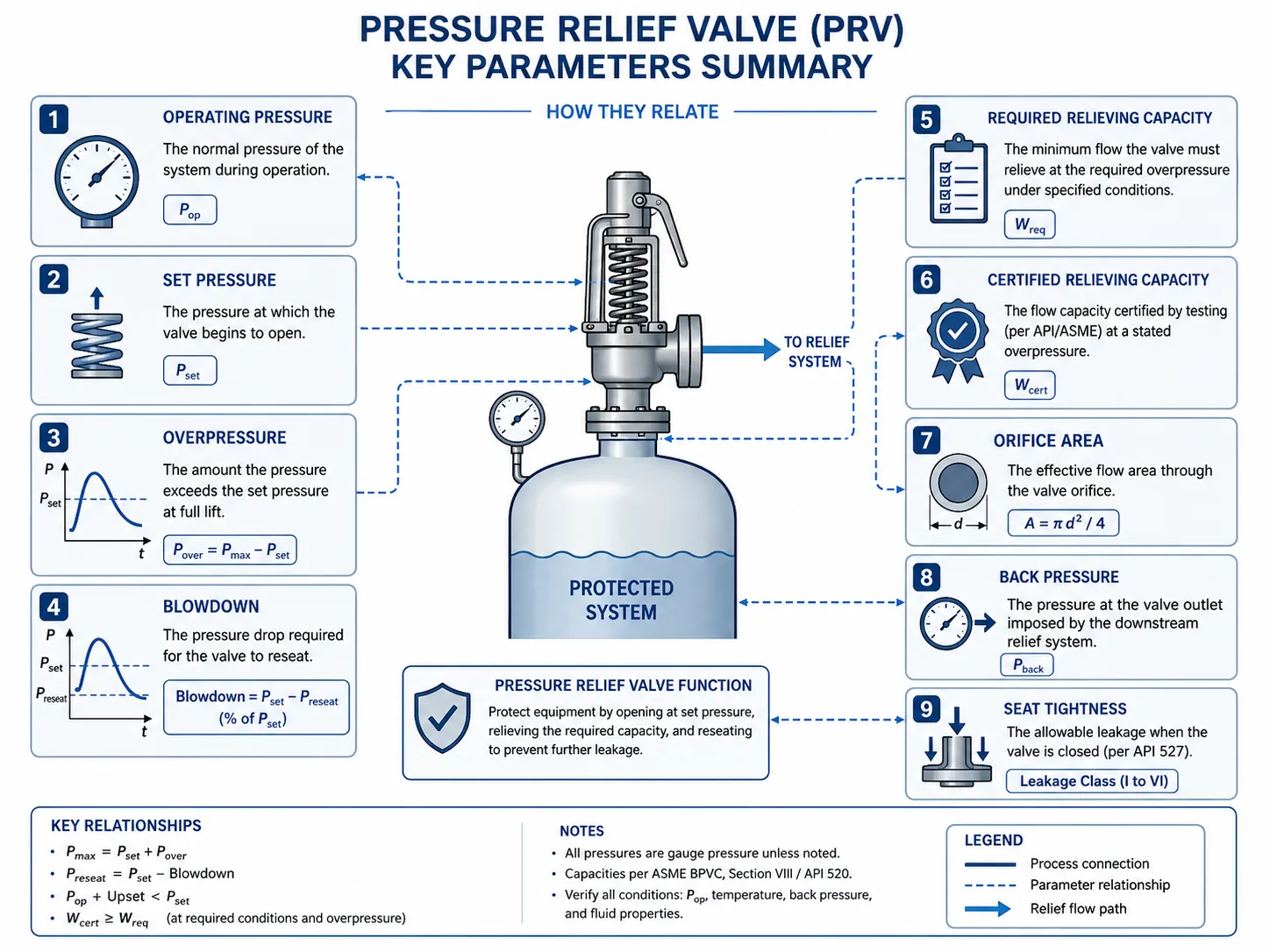
| 参数 | 影响方面 | 不能证明的内容 |
|---|---|---|
| 工作压力 | 开启区域以下的正常阀座载荷、泄漏倾向与工作裕量。 | 该裕量对所选阀门和工艺稳定性是否足够。 |
| 整定压力 | 阀门在规定条件下呈现其规定开启特性时。 | 全启、排量充足、压力积聚可接受或回座严密。 |
| 超压 | 阀门泄放时,高于整定压力的可用压力增量。. | 相对于被保护设备 MAWP 的压力积聚。. |
| 压力积聚 | 高于 MAWP 或其他允许设备压力边界的临时压力升高。. | 所选阀门具有足够排量,能够保持在该压力边界以内。. |
| 泄放压力 | 经批准排量评定中所采用的压力条件。. | 下游压力和安装基准是可接受的。. |
| 所需泄放量 | 经批准的支配性超压工况所产生的最小流量。. | 任何拟选阀门均能通过该负荷。. |
| 认证排量 / 有文件记录的排量 | 在给定流体和压力条件下,所确定阀门型号及孔径的性能。. | 在不同流体、温度、背压或内件条件下的适用性。. |
| 有效孔径 / 流通面积 | 额定流通面积,以及由此确定的潜在泄放能力。. | 机械连接尺寸,或在严重选型过大时仍能保持稳定性能。. |
| 入口压力损失 | 流体开始排放后喷嘴处可获得的压力,以及频跳或颤振的风险。. | 出口系统适用性。. |
| 背压 | 开启力平衡、阀瓣升程、有效排量、启闭压差与回座,视具体设计而定。. | 经台架整定的安全阀在安装后仍具有完全相同的性能。. |
| 启闭压差 / 回座 | 开启与关闭之间的压力范围,以及工艺恢复特性。. | 关闭状态下的密封泄漏验收要求。. |
| 密封性 | 在规定试验条件下关闭状态下的泄漏。. | 所需排量、认证排量或安装稳定性。. |
| 材料 | 腐蚀、冲蚀、磨损咬合、卡涩、泄漏、温度限值及使用寿命。. | 除非已知实际流体组成、温度和失效机理,否则无法判断相容性。. |
详细的压力定义参见 整定压力、超压、压力积聚与启闭压差. 排量计算应依据 安全阀定径与认证排量指南. 阀座泄漏是独立的验收议题,详见 API 527 密封性指南.
复合工况示例: 更换后的阀门在批准的整定压力下开启,但在修订后的出口堵塞工况下无法控制容器压力。原因并非校准问题,而是新阀门的认证排量不足以应对增加的工艺流量。解决方案是重新校核泄放计算和有效孔径,而非调整整定压力。.
证据边界: 整定压力证书、阀座密封性报告、认证排量记录和安装审查分别回答四个不同的工程问题,任何一项都不能替代其他项。.
泄压阀用于哪些场合?
| 应用场合 | 典型超压风险 | 附加审查 |
|---|---|---|
| 压力容器 | 出口堵塞、火灾、调节阀故障或工艺波动 | MAWP、泄放工况、排量与设备规范 |
| 蒸汽锅炉/蒸汽母管 | 蒸汽产生过量或排放堵塞 | 蒸汽排量、温度、疏水与反作用力 |
| 储气罐 | 压缩机控制失效或出口堵塞 | Pressure cycling, operating margin and pulsation |
| 换热器 | Tube rupture, blocked side or thermal expansion | High-to-low pressure interaction and fluid phase |
| Oil, gas, LNG or refinery system | Process upset, fire, gas blow-by or blocked flow | Flare/header back pressure, materials and simultaneous relief |
| Blocked liquid line | 热膨胀 | Discharge destination, material and small-flow basis |
| Process skid | Package-specific failure or upstream pressure source | Final site connections, owner specification and documentation |
What Causes a Pressure Relief Valve to Open?
The valve opens because pressure reaches its specified response condition. The reason pressure rises is called the relief scenario. That scenario determines the required flow and is therefore more important than the catalogue model at the beginning of selection.
出口堵塞
Incoming flow continues while the normal discharge path is closed or restricted.
External Fire
Heat input expands vapor or vaporizes liquid inside exposed equipment.
热膨胀
Trapped liquid expands between closed isolation points.
Regulator or Control Failure
High upstream pressure or excess flow enters lower-pressure equipment.
Heat-Exchanger Tube Rupture
高压流体进入低压侧。
Reaction or Process Upset
Gas generation, heating, cooling failure or abnormal chemistry increases pressure.
Scenario boundary: This overview does not calculate relief loads. Fire, tube rupture, two-phase flow and reactive cases require the applicable engineering method and project assumptions.
Pressure Relief Valve Selection Basics
This page explains what a PRV is. Final selection should move from definition to the protected equipment and governing relief duty.
Protected equipment → credible relief scenario → required relieving capacity → pressure basis → medium and phase → valve type → certified capacity → back pressure → materials → installation → tests and documents
Protected equipment, MAWP and design temperature identified
Governing relief case approved
Required relieving capacity available with units and revision
Operating, set and relieving pressure confirmed
Overpressure or accumulation basis confirmed
Medium composition and relieving phase confirmed
Relieving temperature confirmed
Superimposed and built-up back pressure reviewed
Valve design selected for the actual service
Effective orifice and certified capacity verified
Body, nozzle, disc, guide, spring, bellows, pilot and seat materials verified
Inlet and outlet piping reviewed
Code, testing, marking and certificate scope defined
Inspection, repair and recalibration route defined
Material Compatibility Is a Component-Level Decision
Specifying only the body material is not enough. The nozzle and disc control seat integrity; the guide and spindle control movement; the spring controls calibrated closing force; the bellows and pilot components add their own corrosion and fatigue limits; and soft seats or O-rings can be restricted by temperature, chemistry, ageing and decompression. Sour service may require NACE MR0175 / ISO 15156 review when H2S service and the project specification make it applicable.
Inspection, Recalibration and Repair Boundary
There is no universal inspection interval for every PRV. The interval depends on jurisdiction, equipment code, service severity, fluid cleanliness, corrosion, lift history, previous as-found results and owner procedures. After disassembly, spring or trim replacement, adjustment or repair, the valve should be tested, documented, locked or sealed and returned to service through the applicable quality system. Where required, a National Board VR-authorized repair route may apply.
Repair-control example: A valve returned from maintenance looked clean and passed a visual inspection, but the as-left set pressure had shifted because the spring and adjusting screw were disturbed during disassembly. The valve was removed again, calibrated, seat-tested, tagged and resealed. The lesson is that cleaning or lapping is not the same as verified return to service.
使用 安全阀选型指南 for the full process, the 安全阀材料选用指南 for component-level compatibility, and the Pressure Relief Valves product gateway when the engineering basis is ready for model review.
Common Pressure Relief Valve Mistakes
按连接尺寸选型
The valve fits the nozzle but may have the wrong effective orifice or insufficient certified capacity.
Confusing Set Pressure With Capacity
A correct opening setting does not prove the valve can relieve the governing load.
Ignoring Fluid Phase
Gas, steam, liquid, flashing and two-phase sizing methods are not interchangeable.
忽视背压
Outlet pressure can change lift, stability, effective capacity, blowdown and reseating.
忽视进口压力损失
A restrictive inlet can cause pressure collapse at the nozzle, cycling and chatter after the valve opens.
Using PRV Without the Full Function
The buyer may confuse a pressure relief valve with a pressure reducing valve.
Copying an Old Model Number
Throughput, relief scenarios, header pressure, materials or owner requirements may have changed.
Reviewing Body Material Only
Nozzle, disc, guide, spring, bellows, pilot, gaskets and seat materials can govern reliability.
Assuming Pilot-Operated Is Always Better
Dirty, wet, freezing, crystallizing or polymerizing media can restrict pilot and sensing passages.
Accepting a Generic Certificate Pack
Documents may not cover the supplied model, size, material, set pressure, serial number or manufacturing entity.
Repairing Seat Damage Without Finding the Cause
Chatter, oversizing, back pressure or contamination can damage a newly repaired seat again.
Returning a Repaired Valve Without Recalibration
Cleaning or lapping does not prove the final set pressure, seat tightness, parts traceability or seal status.
使用 Back Pressure Guide for outlet-system effects, the 安装指南 for piping checks, and 安全阀起跳后为何泄漏 for post-lift leakage diagnosis.
示例性工程案例
虚构培训示例——非项目数据
Case 1: Correct Set Pressure, Insufficient Capacity
问题: A replacement PRV matched the original set pressure and inlet flange, but vessel pressure continued rising during the revised fire case.
原因: The process had been debottlenecked and the required relieving load increased, while the replacement valve had a smaller certified orifice than the original approved basis.
更正: Recalculate the governing case, compare required flow with certified capacity and select the correct effective orifice. Do not increase set pressure to compensate for insufficient capacity.
虚构培训示例——非项目数据
Case 2: Stable Shop Test, Chatter After Installation
问题: A conventional spring-loaded PRV passed set-pressure and seat-tightness testing but chattered after its outlet was connected to a longer common header.
原因: The header modification increased built-up and variable superimposed back pressure; inlet pressure loss and oversizing also contributed to unstable lift.
更正: Recalculate the inlet and outlet systems, review simultaneous relief cases and confirm whether conventional, balanced-bellows or pilot-operated construction is appropriate.
虚构培训示例——非项目数据
Case 3: Pilot-Operated PRV in Dirty Gas Service
问题: A pilot-operated PRV initially provided tight shutoff but later showed delayed opening and poor reseating.
原因: Condensate and fine solids restricted the sensing line and pilot passages.
更正: Clean and inspect the pilot circuit, correct drainage and separation, review sensing-line routing and reassess whether a direct spring-loaded design is more tolerant of the actual service.
虚构培训示例——非项目数据
Case 4: Corrosive Trim Causes Early Seat Leakage
问题: A stainless-steel-bodied PRV developed leakage after a short period in chloride-bearing service.
原因: The body material was upgraded, but the nozzle, disc and guide remained a general-service trim and suffered localized corrosion and sticking.
更正: Review the complete wetted and guiding-component material specification, not the body alone, then verify set pressure and seat tightness after repair or replacement.
What Information Is Needed to Buy a Pressure Relief Valve?
| 数据组 | 需提供的信息 | 重要性 |
|---|---|---|
| 受保护设备 | Equipment type, tag, MAWP, design pressure, design temperature and applicable construction code. | Defines the pressure boundary and code route. |
| 泄放工况 | Blocked outlet, fire, tube rupture, thermal expansion, regulator failure, gas blow-by or another approved case. | 确定所需泄放负荷。 |
| 排量 | Required relieving flow, units, calculation revision, governing case and fluid basis. | Allows comparison with certified or accepted valve capacity. |
| 压力基准 | Normal and maximum operating pressure, set pressure, relieving pressure, allowable overpressure or accumulation and CDTP basis where applicable. | Defines opening, capacity and test conditions. |
| 介质及相态 | Composition, steam/gas/liquid/flashing/two-phase condition, cleanliness, corrosivity and hazards. | Controls sizing method, valve type, materials and disposal requirements. |
| 温度 | Operating and relieving temperature, plus ambient limits where relevant. | Controls body, spring, bellows, pilot, gasket and seat limits. |
| 背压 | Minimum, normal and maximum superimposed pressure; built-up pressure; outlet destination and simultaneous-relief assumptions. | Influences force balance, lift, capacity, blowdown and reseating. |
| 安装 | Inlet/outlet size and rating, orientation, pipe layout, silencer, drainage, support and discharge destination. | Identifies inlet-loss, reaction-force, vibration and back-pressure risk. |
| Valve design | Conventional, balanced bellows, pilot-operated, thermal relief or other approved arrangement. | Defines the operating mechanism and service limitations. |
| 材料 | Body, bonnet, nozzle, disc, guide, spindle, spring, bellows, pilot, seals, gaskets and seat requirements. | Controls corrosion, galling, sticking, leakage and service life. |
| 测试 | Pressure test, set-pressure test, seat-tightness test, operational test and inspection hold points. | Defines acceptance evidence for the supplied valve. |
| 文件资料 | Approved datasheet, drawing, capacity evidence, material certificates, calibration report, leakage report, nameplate data and installation manual. | Provides traceability and technical acceptance. |
| Repair history | As-found data, replaced parts, recalibration, resealing and VR documentation where applicable. | Required when purchasing or accepting a repaired or recertified valve. |
使用 安全阀采购检查清单 for quotation comparison and supplier-document review, and 如何编制安全阀数据表用于询价 for a controlled data package.
Have a PRV Datasheet or Relief Calculation?
Send the protected equipment, medium, set pressure, required capacity, relieving temperature, back pressure, materials and document requirements for an initial technical review.
Upload PRV Data View Pressure Relief Valves 获取报价标准与权威参考资料
The applicable code depends on the protected equipment, service, industry, jurisdiction and project specification. The official standard and required edition remain controlling. A list of standards is useful only when each document is connected to its actual role.
| 参考 | Role in PRV Engineering | Official / Supporting Link |
|---|---|---|
| ASME BPVC 第 XIII 卷 | Overpressure-protection rules for applicable boilers, pressure vessels and piping systems, including pressure-relief-device requirements. | ASME 官方页面 |
| ASME BPVC 第 I 卷 | Power-boiler construction route and the equipment context for applicable boiler safety valves. | ASME 官方页面 |
| ASME BPVC 第 VIII 卷 第 1 分册 | Pressure-vessel construction, inspection, testing and certification context, including the protected equipment’s pressure basis. | ASME 官方页面 |
| API 520 第 I 部分 | Sizing and selection of pressure-relieving devices in its covered refinery and process-industry scope. | API 官方页面 |
| API 520 第 II 部分 | Installation and engineering analysis of pressure-relief-device installations. | API 官方页面 |
| API 521 | Pressure-relieving and depressuring-system analysis, including scenarios, flare and disposal-system context. | API 官方页面 |
| API 526 | Standardized flanged steel pressure relief valve dimensions, connection combinations and letter-designated effective orifices. | ZOBAI API 526 Guide |
| API 527 | Seat-tightness test methods and acceptance criteria for applicable conventional, bellows and pilot-operated pressure relief valves. | API publication information |
| API RP 576 | Inspection practices, failure evaluation and maintenance awareness for pressure-relieving devices. | ZOBAI 标准中心 |
| ISO 4126-1 | General product requirements for safety valves irrespective of the design fluid; it is a product standard, not a complete application guide. | ISO 官方页面 |
| ISO 4126-4 | Product requirements for pilot-operated safety valves. | ISO 官方页面 |
| ISO 4126-5 | Product requirements for controlled safety pressure relief systems where that architecture is used. | ISO overpressure-protection standards index |
| National Board / NBIC / VR | In-service inspection and pressure-relief-valve repair authorization where adopted by the jurisdiction, owner or project. | National Board VR page |
| NACE MR0175 / ISO 15156 | Material qualification direction when sour H2S service and the project specification make it applicable. | Apply only to confirmed sour-service requirements. |
标准边界: API 520 applies to defined refinery/process-industry scopes, ISO 4126-1 is a product standard rather than a complete application guide, and ASME requirements depend on the protected equipment and adopted jurisdiction. Verify the actual project edition, scope and code marking before procurement or repair.
FAQ About Pressure Relief Valves
什么是泄压阀?
泄压阀是一种自动回座的压力保护装置,在规定的压力条件下开启,将流体从受保护设备中排出,并在压力降至其回座范围后关闭。
泄压阀是如何工作的?
阀门在正常操作期间保持关闭状态。当入口压力升高时,阀门产生规定的开启响应,阀瓣升起并泄放流量,在超压源得到控制且系统压力下降后,关闭机构使阀门回座。
泄压阀的作用是什么?
其目的是使受保护的压力设备保持在经批准的设计、泄放工况及适用规范所确定的允许压力边界之内。
泄压阀和安全阀是一样的吗?
泄压阀通常用作广义术语。安全阀、泄放阀和安全泄放阀可能根据流体介质、开启特性、制造商设计及项目标准而具有更具体的含义。
PRV与PSV有什么区别?
PRV通常指泄压阀,而PSV在工艺装置中通常指压力安全阀。PRV也可能指减压阀,因此应写明设备的完整功能。
什么原因会导致泄压阀开启?
当进口压力达到规定的响应条件时,阀门开启。压力升高可能由出口堵塞、火灾、热膨胀、调节阀故障、管道破裂、气体窜流或其他可信工况引起。
整定压力与超压有什么区别?
Set pressure is associated with the valve’s specified opening characteristic. Overpressure is the pressure increase above set pressure while the valve is relieving.
超压与压力积聚有什么区别?
Overpressure is referenced to set pressure. Accumulation is referenced to the protected equipment’s MAWP or other allowable pressure boundary.
整定压力能否证明安全阀具有足够的排量?
No. Set pressure identifies the opening condition. Required relieving capacity must be compared with the selected valve’s certified or otherwise accepted capacity.
为什么认证泄放量比连接尺寸更重要?
连接尺寸确认机械配合。认证排量指在规定的条件下,特定阀门、流道孔径及配置所能通过的流量。
背压如何影响泄压阀?
背压会影响开启力平衡、阀瓣升程、有效排量、启闭压差及回座性能。其对常规式、波纹管平衡式和先导式结构的影响各不相同。
何时应考虑使用先导式泄压阀?
对于要求严密关闭、高工作压力比、大排量或特定背压特性的合适洁净工况,可考虑采用。对于脏污、含湿、易冻结或易聚合的工况,需仔细评估。
泄压阀中哪些材质比较重要?
检查阀体、阀盖、阀座喷嘴、阀瓣、导向套、阀杆、弹簧、波纹管、先导组件、垫片、密封件和密封座。仅凭阀体材质无法确定耐腐蚀性或温度适用性。
我可以用相同尺寸的泄压阀替换吗?
未经工程评审不可直接替换。相同的进口连接并不能证明具有相同的有效孔径、认证排量、阀门结构、材质、背压限值或规范认可。
为什么泄压阀能通过测试,但安装后却失效?
实际安装系统可能引入进口压力损失、出口背压、管道载荷、工艺脉动、污染、热效应及流体工况,这些因素在基础试验台上无法复现。
泄压阀应多久检查或重新整定一次?
PRV 没有通用的校验周期。校验周期取决于法规要求、设备规范、工况严苛程度、介质洁净度、腐蚀情况、运行历史、以往校验结果、业主规程及制造商指导。
应向 PRV 供应商索取哪些文件?
如需,请提供经批准的数据表、图纸、排量证明、材质证明、压力试验报告、整定压力标定记录、密封性报告、铭牌数据、安装说明及维修记录。
何时需要采用美国国家锅炉与压力容器检验师协会(National Board)VR 维修途径?
当管辖区域、业主、NBIC 项目或项目规范要求具备认可的压力泄放阀维修授权时,可能需要取得 VR 授权的维修渠道。
Start With the Pressure-Protection Duty
Send the equipment data, relief scenario, required capacity, medium, set pressure, temperature and back-pressure condition before selecting the final PRV model.
Upload Engineering Data Request a Pressure Relief Valve Quote