
PRV、PSV、安全阀、泄压阀和安全泄放阀都是常见的压力保护术语,但它们都不是完整的工程规格。同一缩写在不同行业、业主标准、地区或文件体系中可能描述不同的功能,因此在选型或更换前必须写明完整的设备工况。在许多……

PRV, PSV, safety valve, relief valve and safety relief valve are common pressure-protection terms, but none of them is a complete engineering specification. The same abbreviation can describe a different function in another industry, owner standard, region or document system, so the full device duty must be written out before selection or replacement.
In many process plants, PSV is a tag abbreviation for a pressure safety valve or another approved pressure-relief device. PRV often means pressure relief valve, but in utility, HVAC, water and control documents it can also mean pressure reducing valve. “Safety valve,” “relief valve” and “safety relief valve” can describe different opening characteristics under a particular standard or manufacturer catalogue, yet normal plant language is not always consistent. The nameplate, relief calculation, datasheet, valve drawing and certificate package—not the abbreviation alone—must identify the actual device.
工程要点: Use the abbreviation only as a document identifier. Select and approve the valve from the protected equipment, governing relief scenario, medium and phase, set pressure, required relieving capacity, certified or manufacturer-supported capacity, valve construction, back pressure, materials, installation and required certification.
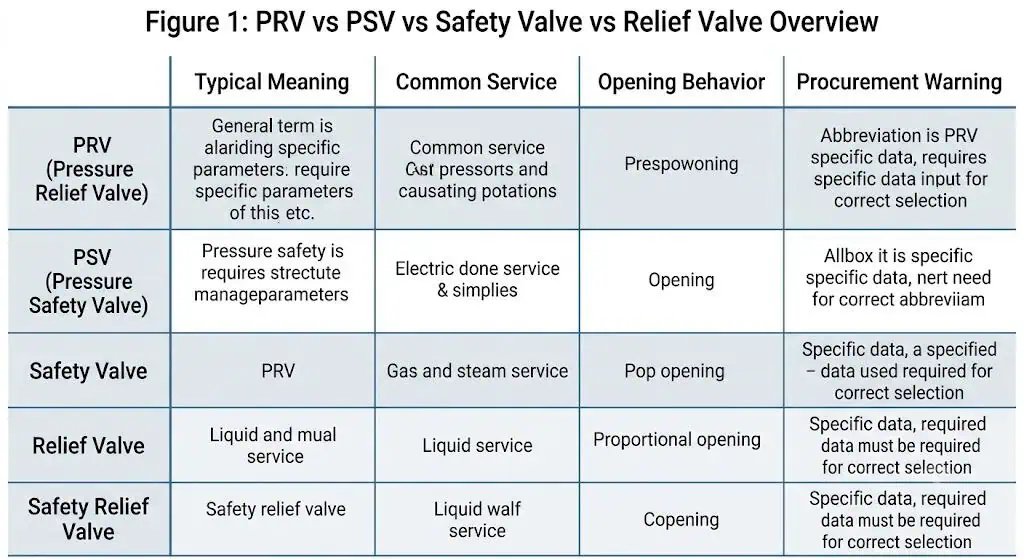
Quick Answer: PRV vs PSV vs Safety Valve vs Relief Valve
| 术语 | 常见用途 | 不能证明的内容 |
|---|---|---|
| PRV | Often pressure relief valve; may also mean pressure reducing valve | Relief function, opening behavior, capacity, code or valve design |
| PSV | Common process-plant tag for a pressure safety or pressure-relief device | Spring-loaded, bellows or pilot design; certified capacity; service suitability |
| 安全阀 | Often associated with rapid-opening protection for compressible fluids | That the capacity, installation and certificate are correct for the project |
| 泄压阀 | Often associated with liquid, thermal-relief or proportional-opening duty | That it is unsuitable for all gas service or automatically accepted for vessel protection |
| 安全泄放阀 | Broad term used for devices suitable for specified gas, liquid or mixed duties | Fluid phase, opening characteristic, sizing method or certification scope |
| Pressure reducing valve | Regulates downstream pressure during normal operation | Independent overpressure protection |
PRV ambiguity: Never place “PRV” alone on an RFQ, replacement order or maintenance instruction when it could mean either a pressure relief valve or a pressure reducing valve. Write the full device function.
What the Abbreviation Does Not Define
| 工程项 | Why the Term Alone Is Insufficient | 所需依据 |
|---|---|---|
| 整定压力 | PRV or PSV does not identify the approved opening setting or code arrangement. | Protected-equipment basis, approved datasheet and calibration record. |
| 超压与压力积聚 | The abbreviation does not define the allowable emergency pressure boundary. | Applicable equipment code, relief scenario and engineering calculation. |
| 所需泄放量 | The tag does not state how much mass or volumetric flow must be discharged. | Approved relief-load calculation with units and revision. |
| 认证排量或文件化排量 | The tag does not identify effective orifice, lift, coefficient or approved flow basis. | Manufacturer or certification data for the exact model and configuration. |
| 背压能力 | The same PSV tag can be attached to conventional, balanced or pilot-operated designs. | Outlet-pressure data, manufacturer limits and installed-system analysis. |
| 密封性 | The term does not establish a leakage-test method or acceptance criterion. | Specified test standard and order-specific test record. |
为什么 PRV、PSV、安全阀和泄放阀容易混淆
术语混淆问题有几个原因:
- 不同行业使用不同的位号命名惯例;;
- 业主规范可能对缩写有不同的定义;;
- 地区和供应商用语存在差异;;
- 旧版 P&ID 可能只包含简短的位号描述;;
- PRV 有两种广泛使用的含义;;
- 商业样本有时会用宽泛术语指代多种阀门设计;;
- 仅凭位号名称可能无法看出工作特性和认证路径。
最稳妥的层级是:
被保护设备 → 泄放工况 → 所需排量 → 阀门功能 → 阀门设计 → 标准与文件 → 最终位号描述
缩写应是最后一道沟通层级,而不是第一个工程决策。
文件控制规则: PSV-101 这样的 P&ID 位号标识的是位置和用途。它应关联到受控设备清单、泄放计算、已批准的数据表、阀门序列号、校准记录和维护历史。仅将位号复制到更换订单中会破坏这条证据链。
PRV 是什么意思?
PRV 作为压力泄放阀
在压力保护文件中,PRV 通常指 泄压阀. 。它可作为宽泛类别,用于弹簧式、波纹管平衡式、先导式、热泄放或其他压力泄放装置。
这种宽泛用法便于讨论,但对最终采购来说过于模糊。一个“PRV”可能保护:
- 气体容器出口堵塞工况;;
- 液体管线热膨胀工况;;
- 压缩机储罐;;
- 泵出口管线;;
- 连接至火炬总管的反应器;;
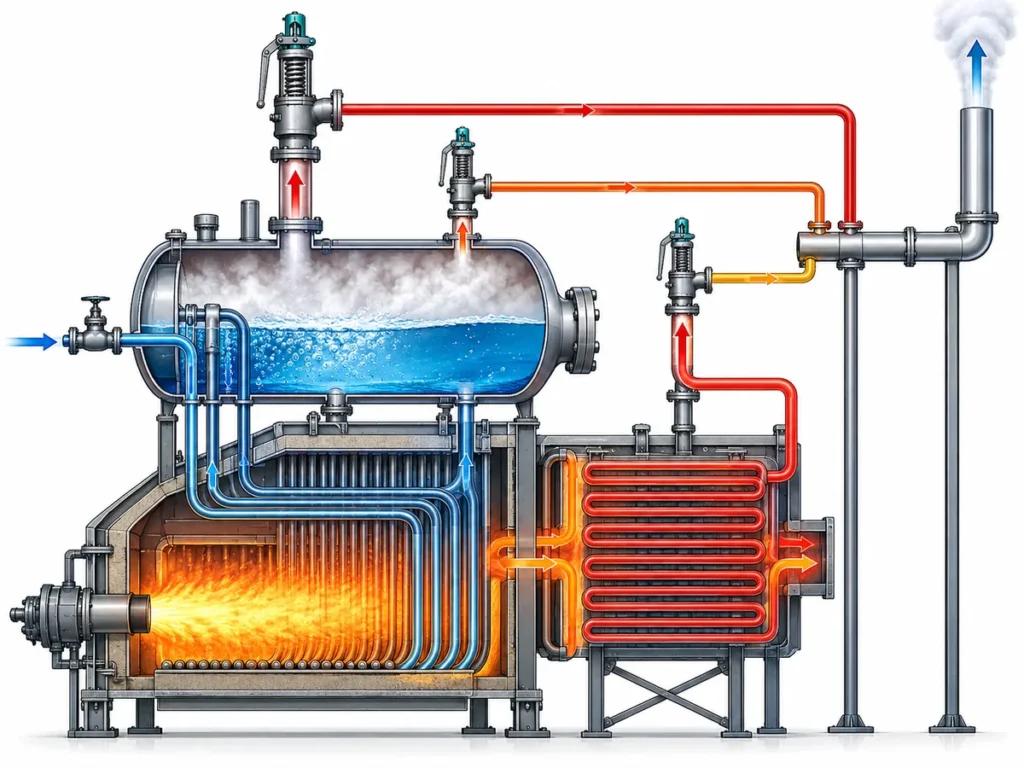
- 按特定规范运行的锅炉或蒸汽系统。
这些工况不采用相同的定径方法、开启特性、阀门结构或排放布置。
PRV 作为减压阀
在水系统、蒸汽输配、暖通空调、公用工程及控制应用中,PRV 可能指 减压阀. 该装置在正常运行期间控制下游压力。它与泄压阀有本质区别,泄压阀响应的是异常超压工况。
泄压阀
当被保护系统压力达到规定条件时开启并排放流体。
Pressure Reducing Valve
Modulates during normal operation to maintain a lower downstream pressure.
Protection-layer warning: 减压阀可能失效开启或失去调节能力。系统可能仍需配置独立的泄压装置,并按可信的调节阀失效工况进行选型计算。
关于基本装置定义,参见 什么是泄压阀?.
为什么减压阀不是最终保护层
减压阀通常通过调节来控制下游压力。若其失效开启、失去感压信号或无法满足所需的调节比,下游设备可能直接承受上游压力源。因此,对于可信的调节阀失效工况,可能需要单独设置泄压装置,并按由此产生的流入量进行选型计算。
不要用“PRV valve”这种写法来回避这一歧义。应写为 减压阀 或 泄压阀, ,然后说明被保护的设备及其功能。
PSV 是什么意思?
PSV 通常指 压力安全阀 在石油、天然气、炼油、石化及其他流程工厂文件中。它通常用作自动装置的位号前缀,该装置用于保护设备免受过压危害。
PSV 往往是工厂用语或项目用语。它本身并不能说明:
- 常规弹簧式、波纹管平衡式还是先导式结构;;
- 气体、蒸汽、液体还是两相介质工况;
- orifice area or certified capacity;
- 背压限值;;
- 密封性要求;;
- 规范标记或证书范围;;
- 排放至大气、密闭排放总管或火炬系统。
完整的 PSV 数据表应将每个位号与泄放计算、批准的数据表、阀门型号、排量基准和检验记录关联起来。
PSV 通常是位号命名惯例,而非结构型式
PSV 可采用常规弹簧式、波纹管平衡式或先导式结构。可排放至大气、密闭回收系统或火炬总管。因此该位号并不能证明其力平衡设计、介质、认证排量、背压限值或密封结构。
采购时保留装置位号,同时补充完整描述——例如“PSV-101,用于烃类蒸气工况的波纹管平衡式压力安全阀”——并附上经批准的数据表。
什么是安全阀?
在许多工程和制造商的语境中, 安全阀 与快速开启或突跳式响应相关联,尤其适用于蒸汽、空气、气体及其他可压缩流体。确切的定义和试验特性必须依据适用标准和阀门设计确定。
典型应用包括:
- 蒸汽锅炉和蒸汽设备;;
- 压缩空气储罐;;
- 气体压力容器;;
- 洁净蒸汽与公用蒸汽系统;;
- 需要快速泄压的工艺设备。
“安全阀”这一名称并不能证明阀门具有足够的泄放能力。整定压力、所需排量、认证排量、流体状态、泄放工况及安装管路仍需核实。
压力相关术语请使用 安全阀整定压力、超压、压力积聚与启闭压差.
蒸汽与锅炉边界: 当阀门用于保护动力锅炉或受 ASME BPVC 第 I 卷管辖的其他设备时,应采用该规范体系对应的术语、排量、标记及安装要求。一般工艺装置 PSV 的说明不能替代锅炉规范要求。
什么是泄压阀?
A 泄压阀 通常与液体工况、热膨胀或随压力升高而增大的开启响应相关。这是一般性的区分,但项目及地区用法存在差异。
典型液体相关工况包括:
- 封闭液体热膨胀;;
- 液压系统;;
- 泵出口保护;;
- 液体容器与工艺管线;;
- 选定的旁路或再循环工况。
液体工况需特别关注密度、粘度、闪蒸、入口损失、反作用力、出口管路布置及运行稳定性。小口径螺纹热膨胀泄压阀与大排量液体泄压阀不应视为等效装置。
术语边界: “泄压阀”并非普遍仅指液体工况,“安全阀”也并非普遍仅指气体工况。实际定义应以适用标准及制造商数据为准。
选型错误示例——将宽泛的“泄压阀”表述用于气体工况: 某气体容器拟选用液体工况比例式泄压阀,原因是原有规格书与供应商报价均使用了宽泛的“泄压阀”一词。问题不仅在于措辞:询价文件遗漏了泄放相态、要求的开启特性、气体排量基准及适用产品标准。应通过明确可压缩流体工况、泄放温度、所需排量、阀门结构及制造商支持的气体或蒸汽性能来修正该方案。
热膨胀泄压是特定的液体工况
热膨胀泄压阀通常用于保护封闭液体因受热或环境升温导致的压力升高。所需泄放负荷可能较小,但仍需审查排放去向、液体相容性及闪蒸可能性。不能仅因连接尺寸匹配,就认为热膨胀泄压阀适用于泵出口封闭工况或蒸汽紧急工况。
什么是安全泄放阀?
安全泄放阀 是一个宽泛的组合术语,用于在具体设计、认证及定径依据支持应用时,可服务于可压缩或不可压缩流体工况的阀门。
The term is useful when a product family covers multiple fluid services, but it should never replace the following information:
- 泄放工况下的介质与相态;;
- 所需泄放量;;
- 整定压力与泄放压力;;
- 开启特性;;
- 孔径与认证排量;;
- 背压与泄放去向;;
- 材料与阀座结构;;
- 适用规范与文件资料。.
两相流警示: 称为安全泄放阀的阀门并不自动适用于闪蒸或两相流。两相流定径及排放系统行为需要由具备资质的工程人员进行评审并经制造商确认。.
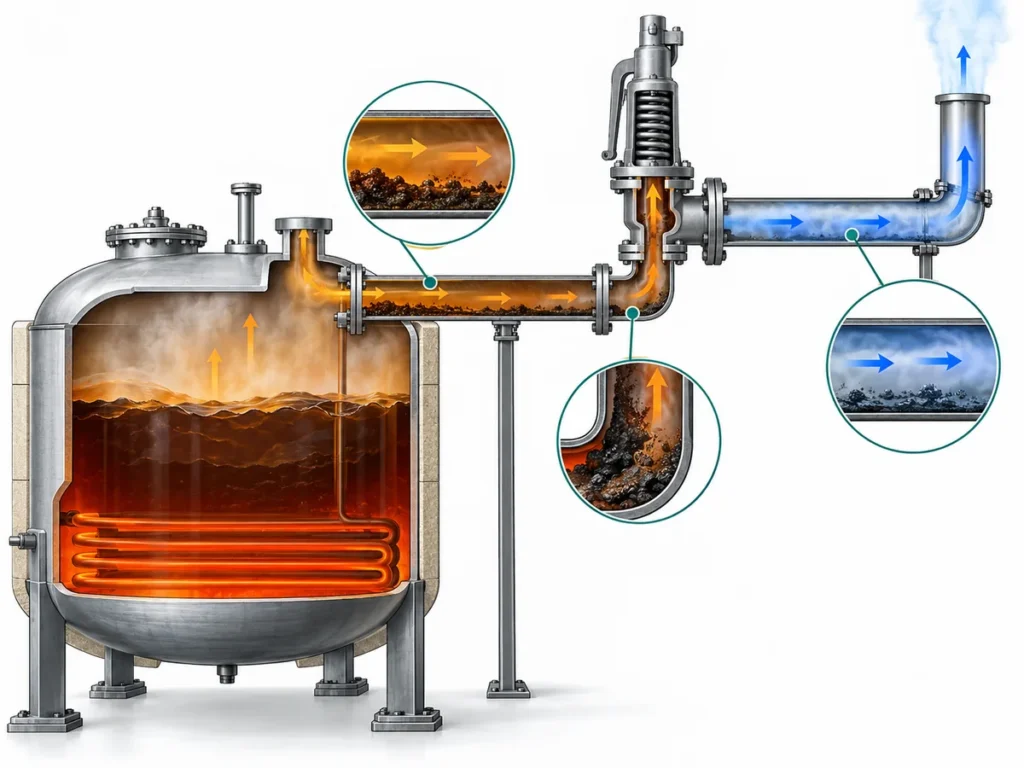
对于混合相态或相态不确定的工况,应根据工况分析确定泄放相态。若闪蒸、夹带液体、泡沫或气体生成改变了实际泄放工况,则按正常运行介质描述选型的阀门可能不适用。.
术语与阀门设计属于不同的选型层面
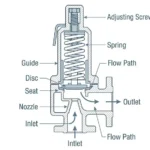
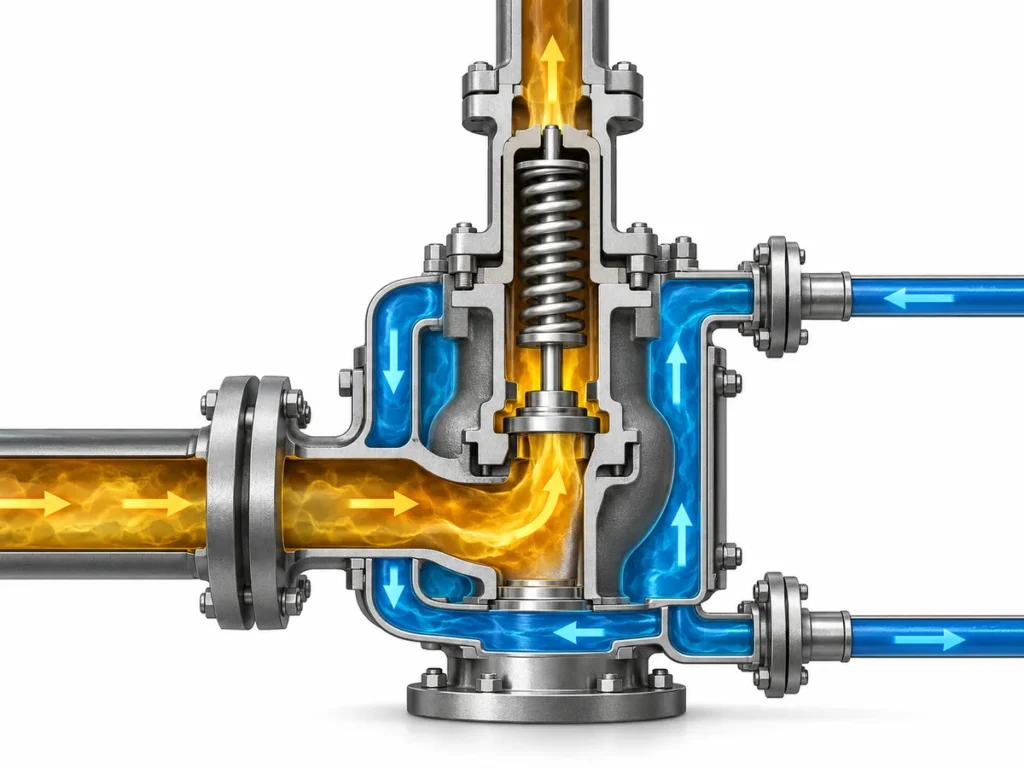
PRV、PSV、安全阀和泄压阀描述的是术语或功能类别。. 弹簧式, 平衡波纹管 和 先导式 描述阀门的结构形式与控制方式。.
| 设计 | 工作原理 | 典型选型问题 |
|---|---|---|
| 常规弹簧式 | 弹簧力直接抵抗进口压力作用力 | 工作裕量与背压是否可接受? |
| 平衡波纹管 | 波纹管降低出口压力对力平衡的影响 | 背压、波纹管材质、排放及失效模式是否可接受? |
| 先导式 | 先导阀与系统压力控制主阀 | 介质是否洁净,取压与排放条件是否适用? |
| 热膨胀泄放设计 | 小型阀门泄放封闭液体膨胀量 | 封闭液体工况及安全排放去向是什么? |
标注为“PSV”的装置可采用前三种设计中的任一种。请对比它们 弹簧式安全阀与先导式安全阀.
设计选型错误示例——仅凭位号名称选用先导式 PSV: 在含湿、含颗粒的气体工况中,先导式阀门出现动作延迟和不稳定。项目方将“PSV”视为普遍适用性的证明,未审查先导通道、取压管凝液、过滤或排放管路走向。整改审查应包括先导回路的清洗与检查、取压管排液,并针对实际介质与直接作用弹簧式设计进行对比。.
弹簧式与先导式选型边界
| 设计 | 潜在优势 | 重要限制 |
|---|---|---|
| 常规弹簧式 | 直接机械动作,检查相对简单。. | 开启与回座可能对附加背压或积聚背压敏感。. |
| 平衡波纹管 | 降低指定出口压力作用力的影响。. | 波纹管材质、疲劳、腐蚀、阀盖排放及失效后果仍是关键。. |
| 先导式 | 可实现严密关闭,并具备选定的高压或接近工作压力裕量下的性能。. | 细小通道、取压管、密封件和排放路径可能受颗粒、凝液、聚合、结晶或结冰影响。. |
正确选型取决于介质、工作压力裕量、所需排量、入口动态特性、背压、环境条件和维护能力,而不是项目将该装置称为 PRV 还是 PSV。.
PRV、PSV、安全阀与泄压阀对比
| 术语 | 常见含义 | 常见使用场景 | 开启关联 | 主要采购风险 |
|---|---|---|---|---|
| PRV | 泄压阀;有时指减压阀 | 含义宽泛,取决于上下文 | 取决于实际装置 | 缩写可能指向错误的功能。. |
| PSV | 压力安全阀 / 工厂压力泄放设备位号 | 工艺容器、气体、蒸汽及其他工厂工况 | 取决于所选阀门设计 | 位号名称被误当作完整规格。. |
| 安全阀 | 自动超压保护阀 | 通常为蒸汽、空气或可压缩流体 | 通常为快速或突跳动作 | 排量与用途代码为假定值,未经核实。. |
| 泄压阀 | 自动泄压阀 | 通常为液体或热膨胀工况 | 通常为比例/调节动作,视设计而定 | 将液体工况的假设错误地套用于气体或蒸汽。. |
| 安全泄放阀 | 压力泄放综合术语 | 气体、液体或指定的混合工况 | 取决于设计与使用工况 | 宽泛的名称掩盖了流体相态与认证范围的限制。. |
| Pressure reducing valve | 正常工作压力调节阀 | 蒸汽、气体、水及公用工程 | 调节以控制下游压力 | 被误认为是独立的超压保护装置。. |
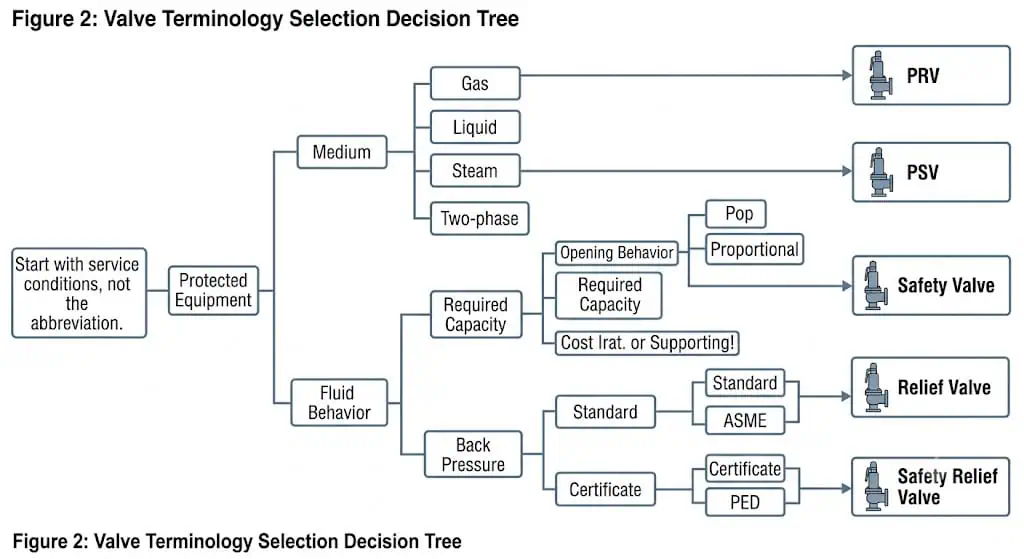
PRV 与 PSV 未定义的各类压力术语
| 术语 | 工程含义 | 重要性 |
|---|---|---|
| 工作压力 | 设备应保持关闭时的系统正常工作压力。. | 裕量不足可能导致颤振、泄漏或误跳。. |
| 整定压力 | 在规定试验条件下,与规定开启特性相对应的压力。. | 决定保护动作何时开始;并不能证明排量。. |
| 超压 | 泄放期间压力超过整定压力的增量。. | 影响阀瓣升程与可用泄放能力。. |
| 压力积聚 | 超过 MAWP 或其他经批准的设备压力边界的压力升高。. | 确定泄放工况下受保护设备的压力限值。. |
| 启闭压差 | 整定压力与回座压力之间的差值。. | 影响工艺恢复、启闭循环和稳定关闭。. |
| 背压 | 存在于或产生于阀门出口侧的压力。. | 根据设计不同,可能改变开启、升程、排量和回座。. |
材料与阀座设计与缩写无关
仅凭阀体材料不能确定适用性。应核查阀嘴、阀瓣、导向件、阀杆、弹簧、波纹管或先导部件、阀座及弹性体。阀嘴和阀瓣处的腐蚀或沉积物可能导致泄漏;导向件处的咬合或污染可能限制运动;弹簧腐蚀或温度暴露可能改变整定状态;不相容的软阀座可能发生膨胀、硬化或失去回弹性。.
如何审查 PRV 或 PSV 更换
不能仅因新阀具有相同的位号、进口尺寸、出口尺寸和整定压力就批准更换。.
最低更换检查项
被保护设备及主导泄放工况
MAWP 或经批准的设备压力基准
所需泄放量与计算修订
流体相态与泄放温度
整定压力与操作裕量
孔径代号或有效流通面积
制造商认证排量
常规式、波纹管式或先导式结构
叠加背压与积聚背压
阀体、内件、弹簧、波纹管、阀座与密封件
进/出口连接与安装外形尺寸
规范标记、证书与试验报告
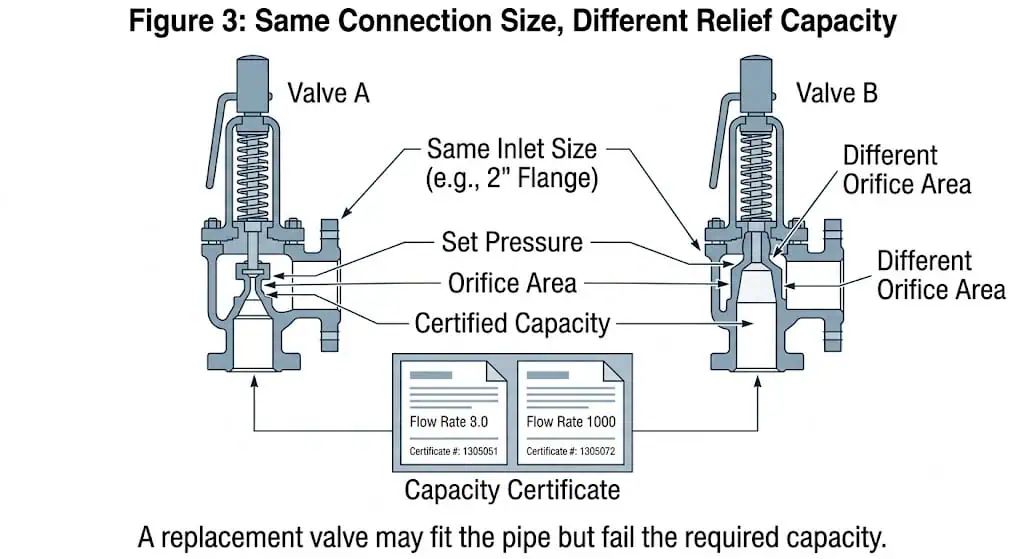
使用 安全阀定径与认证排量指南 用于排量复核及 安全阀采购检查清单 用于投标与文件审查。.
更换依据层级
| 证据 | 其支持内容 | 单独无法证明的内容 |
|---|---|---|
| 旧铭牌或标识 | 识别信息与历史整定信息。. | 当前泄放负荷、内部状况或持续适用性。. |
| 相同连接尺寸 | 潜在的机械适配性。. | 有效孔径、认证排量或安装稳定性。. |
| 整定压力证书 | 规定试验条件下的开启调整。. | 所需排量、现场背压或正确的泄放工况。. |
| 排量证书或制造商数据 | 特定配置下所支持的流量性能。. | 项目泄放计算正确或为最新。. |
| 材料证书 | Traceability of listed metallic components. | Seat tightness, calibration or corrosion suitability for every service condition. |
Repair, Recalibration and Resealing
A replacement review should include the repair route for the removed valve. Seat machining, spring replacement, blowdown-ring adjustment, bellows replacement, pilot work or changes to internal parts can affect opening, blowdown, capacity evidence and leakage. Record the as-found condition, identify installed parts, recalibrate under the approved procedure, perform required pressure and seat-tightness tests, restore tags and seals, and link the final records to the serial number.
Where the jurisdiction, owner or code route requires National Board authorization, confirm whether repair must be performed under a valid VR program. VR authorization addresses pressure-relief-valve repair control; it does not replace the engineering review of the relief scenario or installed piping.
How to Choose the Correct Term for a Project
- Write the full device function.
State pressure relief valve, pressure reducing valve, safety valve, thermal relief valve or another precise description. - 确定被保护设备。
Vessel, boiler, piping, compressor, pump, heat exchanger, reactor or skid. - State the relief scenario.
Blocked outlet, fire, regulator failure, thermal expansion or another approved case. - State the medium and phase.
Steam, gas, vapor, liquid, flashing or two-phase. - State the required capacity.
Include units, relieving pressure, temperature and calculation revision. - Define the valve construction.
Conventional, balanced bellows, pilot-operated, thermal-relief or project-approved alternative. - Define the discharge system.
Atmosphere, safe drain, recovery line, common header or flare. - Define standards and documents.
Code basis, capacity evidence, calibration, leakage, materials and installation records.
Recommended tag description: Keep the plant tag such as PSV-101, but write a complete equipment description and datasheet behind it. The tag supports identification; the datasheet supports engineering.
Approval Hold Points
Full function written without abbreviation ambiguity
Relief calculation and revision approved
Required capacity compared with supported valve capacity
Set pressure checked against MAWP and code arrangement
Fluid phase and relieving temperature confirmed
Back-pressure basis and valve construction accepted
Materials and seat design reviewed
Installation drawing and discharge destination approved
Test and certificate package defined before manufacture
Final nameplate, serial number and documents matched
Illustrative Terminology and Procurement Errors
The two short examples above show how terminology can distort fluid-service and valve-design decisions. The three cases below focus on the errors that are most useful during equipment-list review, replacement approval and discharge-system modification.
How to use these examples: Each case follows the same engineering logic—identify the problem, determine why the terminology or procurement process failed, and define the corrective action required before technical approval. These are fictional training scenarios, not project records or design calculations.
虚构培训示例——非项目数据
Case 1: PRV Meant Two Different Devices
问题: A utility equipment list used “PRV” without a full description. Purchasing requested a pressure reducing valve, while the vessel engineer intended a pressure relief valve for independent overpressure protection.
原因: The abbreviation was treated as a complete equipment description. The list did not identify the protected equipment, relief function, set pressure or required relieving capacity.
纠正/预防: Revise the equipment list, P&ID note and RFQ to state the full device function. Include the protected equipment, tag number, set pressure, governing relief scenario and required capacity so that a regulating valve cannot be confused with a safety device.
虚构培训示例——非项目数据
Case 2: Same PSV Tag, Smaller Capacity
问题: A replacement valve matched the old PSV tag, flange sizes and set pressure, but its internal flow area and supported relieving capacity were lower than those of the original valve.
原因: The replacement review focused on mechanical interchangeability and nameplate pressure. The approved relief calculation, orifice designation, certified capacity and back-pressure basis were not compared.
纠正/预防: Review the replacement against the current governing relief case, required relieving capacity, effective orifice, manufacturer-certified or documented capacity, relieving conditions and back pressure. The tag and connection dimensions should support identification and installation, not determine hydraulic equivalence.
虚构培训示例——非项目数据
Case 3: Same PSV Tag After a Discharge-Header Modification
问题: The existing PSV passed its bench set-pressure test but chattered after its outlet was connected to a longer common discharge header.
原因: The modification review retained the same PSV tag and valve model but did not recalculate built-up back pressure, simultaneous relief flow, outlet-line resistance or the effect on valve stability and reseating.
纠正/预防: Reanalyse the complete outlet system, verify the manufacturer’s allowable back-pressure basis, inspect the disc, seat and guide for chatter damage, and evaluate piping changes, a balanced construction or another valve design before return to service. Any discharge-header modification should trigger a pressure-relief-system review.
Common lesson: A tag or product name identifies the device only at a superficial level. Approval should depend on the full function, protected equipment, relief scenario, medium and phase, set pressure, required and supported capacity, valve construction, back pressure, materials, installation and document scope.
RFQ Checklist When You Are Not Sure Which Term to Use
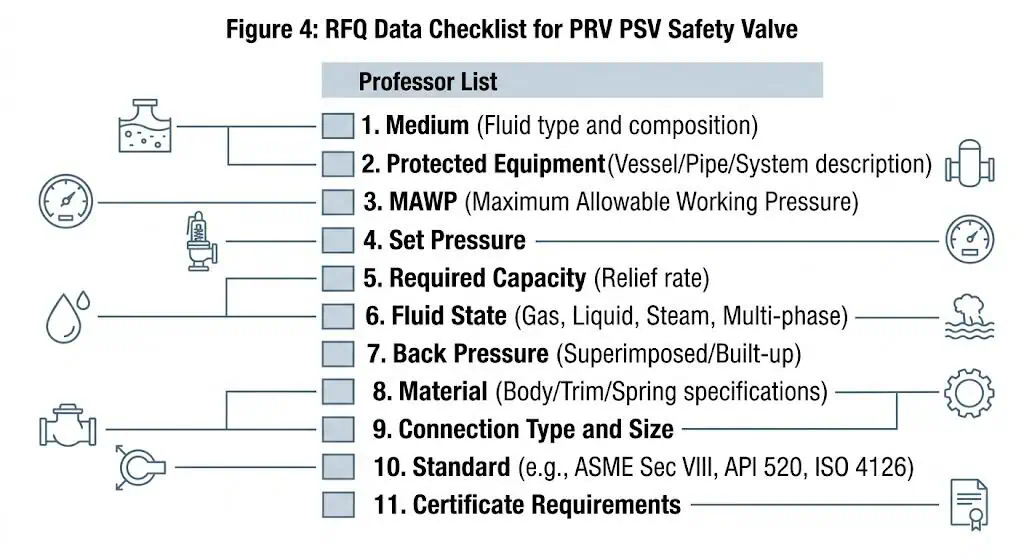
| 询价数据 | 重要性 |
|---|---|
| 被保护设备及位号 | Defines the protected pressure boundary and project identity. |
| Full device function | Eliminates PRV pressure-relief versus pressure-reducing ambiguity. |
| MAWP / 设计压力 | Supports set-pressure and equipment-code review. |
| Operating and set pressure | Supports operating-margin and calibration review. |
| 泄放工况 | Defines why the device must relieve. |
| 介质及相态 | Controls sizing, valve behavior and materials. |
| 所需泄放量 | Defines the minimum hydraulic performance. |
| 泄放压力与温度 | Supports certified-capacity and material verification. |
| 背压与排放去向 | Controls valve design, stability and outlet review. |
| 阀门结构 | Conventional, bellows, pilot or another required design. |
| 材料与密封座 | Controls corrosion, leakage and temperature suitability. |
| 标准与文件 | Defines certification, testing, inspection and project acceptance. |
| 超压/累积压力依据 | Defines the allowed emergency pressure boundary and capacity condition. |
| Blowdown or reseating requirement | Supports stable closure and process recovery. |
| 入口压力损失 | Supports chatter and stability review during flow. |
| 密封性要求 | Defines the test method and acceptance criterion. |
| Repair / recertification route | Defines authorized repair, recalibration, sealing and document requirements. |
Unsure Whether the RFQ Should Say PRV or PSV?
Send the equipment, medium, relief scenario, set pressure, required capacity, relieving temperature, back pressure and document requirements. The engineering data matter more than the abbreviation.
Upload Project Data Request a Pressure Relief Valve Quote
Quotation rule: When terminology is unclear, do not ask the supplier to “choose PRV or PSV” from a connection size. Send the engineering data and require the quotation to state all assumptions, deviations, exclusions and the exact capacity basis.
Common Engineering and Procurement Mistakes
Using PRV Without the Full Name
The buyer cannot tell whether the device relieves or reduces pressure.
Treating PSV as a Valve Design
The tag does not identify conventional, bellows or pilot construction.
Replacing by Pipe Size
The valve may fit but have the wrong orifice and capacity.
Assuming Safety Valve Means Gas Capacity Is Verified
The product name does not replace sizing and certification.
Assuming Relief Valve Means Liquid-Only
Terminology varies; the actual service must be stated.
忽视背压
A flare or common header can change lift, capacity and reseating.
Copying a Legacy Tag
The original relief scenario and certificate may no longer be available.
Requesting “API/ASME Valve” Generically
The exact standard, marking, scope and document route remain unclear.
Raising Set Pressure to Stop Leakage
This can hide seat or operating-margin problems while reducing the intended equipment protection.
Assuming a Certificate Covers Every Model
Certification and hygienic or code claims must match the legal manufacturer, model, size, material and configuration.
Ignoring Repair Traceability
Internal work without recalibration, final sealing and serial-linked records breaks the pressure-protection evidence chain.
Using a Pilot Valve in Dirty Service Without Review
Particles, condensate or polymerizing fluid can impair sensing and pilot passages.
标准与权威参考资料
The references below address different layers of overpressure protection. ASME equipment sections and Section XIII establish code context; API 520 and 521 cover defined refinery and process-industry applications; ISO 4126 provides product requirements; API 527 addresses seat tightness; and NBIC or VR may control repair. Use the edition and route required by the project rather than combining the names into a generic “API/ASME valve” claim.
| 参考 | 作用 | Official / Supporting Link |
|---|---|---|
| ASME BPVC 第 XIII 卷 | Overpressure-protection rules and pressure-relief-device requirements within the ASME framework | ASME 官方页面 |
| ASME BPVC 第 I 卷 | Construction rules for power boilers and the associated boiler pressure-relief context | ASME 官方页面 |
| ASME BPVC 第 VIII 卷 第 1 分册 | Pressure-vessel construction context and applicable overpressure-protection requirements | ASME 官方页面 |
| API 520 第 I 部分 | Sizing and selection of pressure-relieving devices in covered refinery and process-industry applications | API 官方页面 |
| API 520 第 II 部分 | 泄压设备安装的工程分析与安装要求 | API 官方页面 |
| API 521 | Pressure-relieving and depressuring-system design, including disposal and flare-system context | API 官方页面 |
| API 527 | Seat-tightness testing; not sizing, relief-scenario definition or installation validation | ZOBAI API 527 指南 |
| API RP 576 | Inspection and repair practices for pressure-relieving devices in applicable process-industry services | API 官方页面 |
| ISO 4126-1 | 安全阀的通用产品要求,不区分流体介质 | ISO 官方页面 |
| ISO 4126-4 | 先导式安全阀的一般产品要求 | ISO 官方页面 |
| NBIC / National Board VR | Installation, inspection and authorized repair framework where required by the jurisdiction or owner | 美国国家锅炉与压力容器检验师协会官方页面 |
| ZOBAI 标准中心 | Procurement-oriented navigation for ASME, API, ISO, NBIC and related pages | 安全阀标准 |
标准边界: The presence of “PRV,” “PSV,” “API,” “ASME” or “ISO” in a description does not prove certification. Verify the legal manufacturer, model, size, material, standard edition, marking and document scope.
FAQ About PRV, PSV, Safety Valves and Relief Valves
PRV 和 PSV 是同一种阀门吗?
不一定。PRV 通常指泄压阀,而 PSV 通常指压力安全阀或工艺装置中的压力泄放位号。在某些系统中,PRV 也可能指减压阀。
PRV 是什么意思?
它通常指泄压阀,但必须通过图纸、设备清单或技术规格确认其是否指减压阀。
PSV 是什么意思?
在工艺装置术语中,PSV 通常指压力安全阀。其本身并不表示阀门结构、排量或认证信息。
安全阀与泄压阀有什么区别?
安全阀通常与可压缩流体的快速开启相关,而泄压阀通常与液体或比例开启工况相关。具体定义取决于所适用的标准和设计。
什么是安全泄放阀?
这是一个广义的组合术语,指可用于指定气体、液体或混合工况的压力泄放阀。必须注明使用工况和排量依据。
减压阀是安全阀吗?
否。减压阀在正常运行期间调节下游压力。为防止调压器故障或其他超压工况,可能需要单独设置泄压装置。
PSV 可以替换为 PRV 吗?
只有在完整功能和工程数据对比之后。替换件必须满足泄放工况、排量、整定压力、介质、设计、背压、材料、安装及文件资料要求。
连接尺寸是否决定泄放能力?
排量取决于有效流通面积、阀瓣升程、整定压力与泄放压力、流体、温度、背压及制造商认证数据。
PRV 或 PSV 适用哪个标准?
这取决于被保护设备、行业、管辖区域及工况。ASME BPVC、API 520/521、ISO 4126、NBIC 及业主规范可能涉及系统的不同部分。
当术语不明确时,我应该向供应商提供哪些信息?
请提供被保护设备、泄放工况、MAWP、工作压力与整定压力、介质及相态、所需泄放量、泄放温度、背压、阀门结构形式、材质、连接方式及所需文件。
整定压力与超压有什么区别?
整定压力是指在规定试验条件下,与规定开启特性相对应的压力。超压是指泄放过程中超过整定压力的压力增量,有助于建立阀瓣升程和排量。
超压与压力积聚有什么区别?
超压以阀门整定压力为基准。压力积聚以被保护设备的MAWP或其他经批准的压力边界为基准。适用规范和泄放工况决定允许值。
背压如何影响 PRV 或 PSV?
背压会影响安全阀的开启、阀瓣升程、有效排量、启闭压差及回座。其影响取决于阀门为常规式、波纹管平衡式还是先导式,以及该压力是叠加背压还是排放过程中产生的积聚背压。
为什么认证泄放量比连接尺寸更重要?
连接尺寸表示机械接口。排量取决于有效流通面积、阀瓣升程、压力、流体、温度、背压以及该具体阀门配置所支持的性能。
何时应考虑选用先导式安全阀?
可考虑用于特定的洁净流体、高压、大排量或操作裕度较小的工况。必须对先导通道、引压管、冷凝液、颗粒物、结冰、聚合及排放管路进行审查。
PRV 或 PSV 应检查哪些材质?
检查阀体、阀座、阀瓣、导向套、阀杆、弹簧、波纹管或先导组件、密封面及密封件。材料兼容性会影响腐蚀、咬合、卡涩、泄漏、整定压力稳定性及使用寿命。
PRV 或 PSV 应多久检查或重新校验一次?
不存在适用于所有工况的通用周期。应根据适用规范与业主管理程序、工况严苛程度、起跳历史、腐蚀或结垢风险、以往检修实测结果以及制造商说明确定。
PRV 或 PSV 检修后必须验证哪些项目?
记录拆卸时的原始状态,核对更换部件,检查关键内部零件,重新校准整定压力,执行规定的压力试验和密封性试验,恢复铭牌和铅封,并将记录与阀门序列号关联。
Use the Full Function, Not Only the Abbreviation
Send the protected equipment, relief scenario, medium, set pressure, required capacity, relieving temperature, back pressure and certificate requirements. ZOBAI can review the correct valve description and quotation basis.
Upload PRV / PSV Data Request a Pressure Relief Valve Quote

评论
Kesari Alloys
关于 PRV 一词的歧义,尤其是其在不同语境下既可指泄压阀又可指减压阀的双重含义,对工程师而言是一个重要提醒。这种混淆可能导致严重的安全疏漏。若能进一步说明在采购文件中区分这两类阀门的最佳实践,将会很有帮助,尤其是在两类术语可能同时出现的复杂项目中。