蒸汽安全阀指南 什么是蒸汽安全阀?蒸汽安全阀是用于锅炉、蒸汽集箱、压力容器、换热器和蒸汽管道的自动超压保护装置。当蒸汽压力达到整定压力时,阀门开启并排放蒸汽,帮助被保护设备保持在允许压力限值以内。本页……

什么是蒸汽安全阀?
蒸汽安全阀是用于锅炉、蒸汽母管、压力容器、换热器和蒸汽管道的自动超压保护装置。当蒸汽压力达到整定压力时,阀门开启并排放蒸汽,使被保护设备保持在允许压力限值以内。本页说明该阀门的作用、在饱和蒸汽或过热蒸汽工况下的工作原理、选型中常见的错误,以及采购方在询价前必须提供的数据。主要边界是排量:管道尺寸、法兰等级或旧阀外观都不能证明蒸汽泄放能力。最终选型前需确认被保护设备、泄放工况、工作压力、MAWP 或设计压力、整定压力、所需泄放量、泄放温度、背压、连接方式、排放布置、材质、适用规范及所需文件。
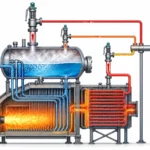
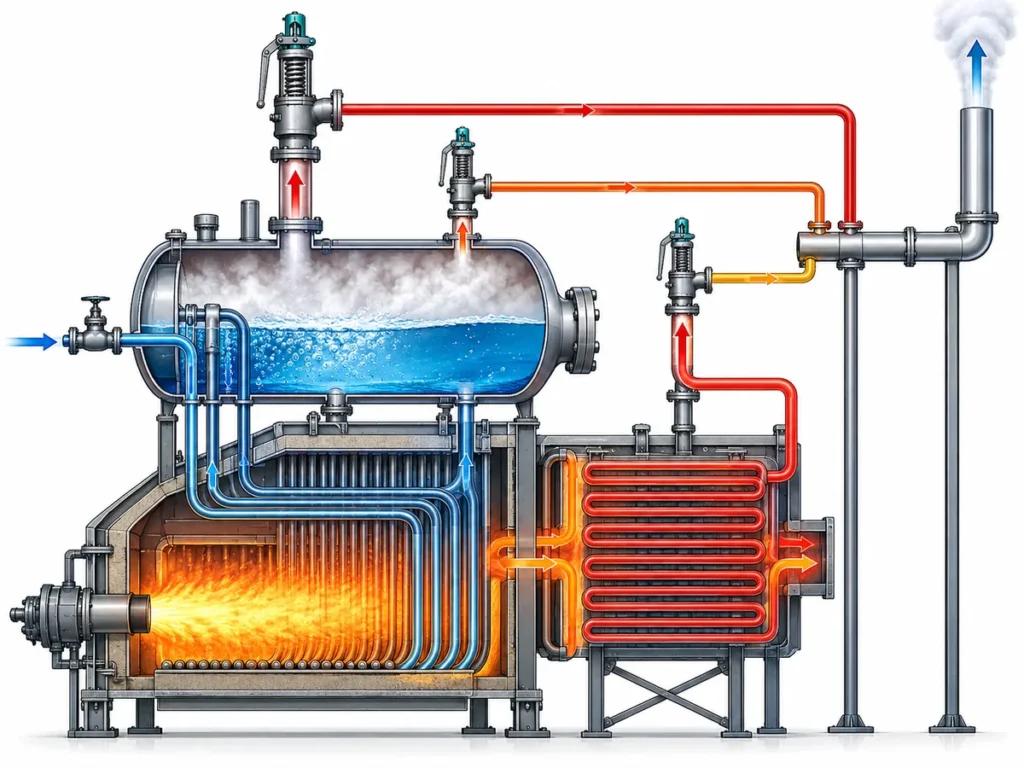
工业概念图;最终产品细节须以实际产品照片、选定阀门数据表或批准图纸为准。
快速解答
蒸汽安全阀不是控制阀、切断阀或减压阀。它是一种保护装置,在正常运行期间保持关闭,当蒸汽压力达到整定压力时自动开启。当锅炉、蒸汽母管、换热器、蒸汽管道、减压站或蒸汽压力设备需要自动超压保护时使用。主要选型风险是使用 DN 尺寸、NPS 尺寸、法兰等级或旧阀门照片作为排量捷径。正确选型需要受保护设备、泄放工况、蒸汽相态、工作压力、MAWP 或设计压力、整定压力、所需泄放量、泄放温度、叠加背压和积聚背压、进出口管道、材质、阀座、弹簧、适用规范及文件。报价前请发送这些数据供工程审核。
什么是蒸汽安全阀?
自动开启
蒸汽排放
压力保护
询价所需数据
基本定义
蒸汽安全阀是一种压力泄放装置,设计为当蒸汽压力达到规定的整定压力时自动开启。其作用是从受保护设备中排放蒸汽,使压力不会继续升高超过适用规范、设备设计和项目要求所规定的允许超压或压力积聚限值。
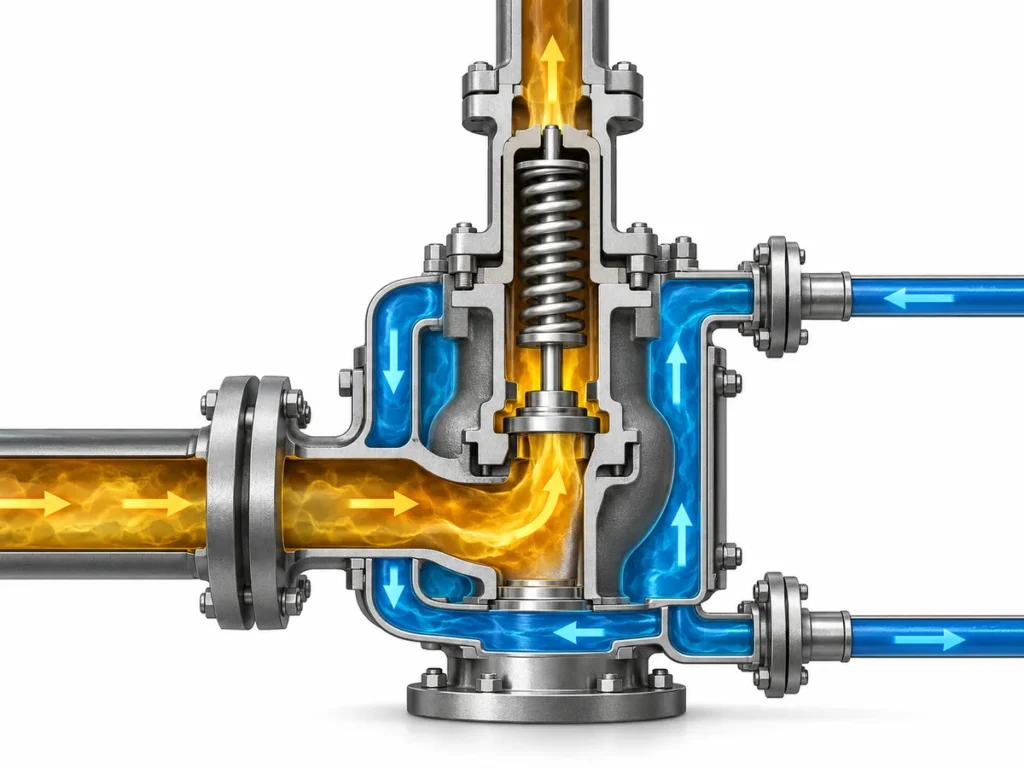
在许多蒸汽系统中,阀门为弹簧式。正常运行期间,弹簧将阀瓣压紧在阀座上。当进口蒸汽压力升高时,压力作用力作用于阀瓣下方。当该作用力在整定压力下克服弹簧载荷时,阀门开始开启并通过出口排放蒸汽。有关更详细的机理说明,请参见 弹簧式安全阀的工作原理.
保护对象
蒸汽安全阀通常用于保护蒸汽锅炉、锅炉汽包、蒸汽母管、换热器、减压站、蒸汽工艺撬装系统和蒸汽压力设备。该阀门并非笼统地保护“蒸汽”,而是在特定泄放工况下保护特定的压力边界。
它不是什么
蒸汽安全阀不应用于调节正常工艺压力。减压阀在正常运行期间控制下游蒸汽压力。蒸汽安全阀在正常运行期间保持关闭,仅在压力达到整定压力条件时开启。
请勿将本文作为定径计算使用。 本文说明选型逻辑和询价准备。最终选型取决于实际泄放工况、所需蒸汽泄放量、所选阀门数据、适用标准版本、制造商文件、项目规格书及当地法规要求。
| 项目 | 实际意义 |
|---|---|
| 主要功能 | 蒸汽设备的自动超压保护。 |
| 正常状态 | 在正常工作压力下保持关闭。 |
| 开启触发条件 | 蒸汽压力达到整定压力。 |
| 排量基准 | 所需蒸汽泄放量与所选阀门文件记录的排量,而非仅依据连接尺寸。 |
| 关键选型风险 | 管道通径、法兰等级或旧阀外观无法证明排量、材料适用性或文件范围。 |
为什么蒸汽工况需要专门的安全阀评审
饱和蒸汽与过热蒸汽
蒸汽工况不能按普通压缩空气处理。饱和蒸汽与过热蒸汽在温度、密度、热含量和泄放特性方面表现不同。这些差异会影响阀门定径、材料、阀座选型、弹簧腔暴露、阀盖设计、泄放管道和试验要求。
温度、冷凝水与泄放风险
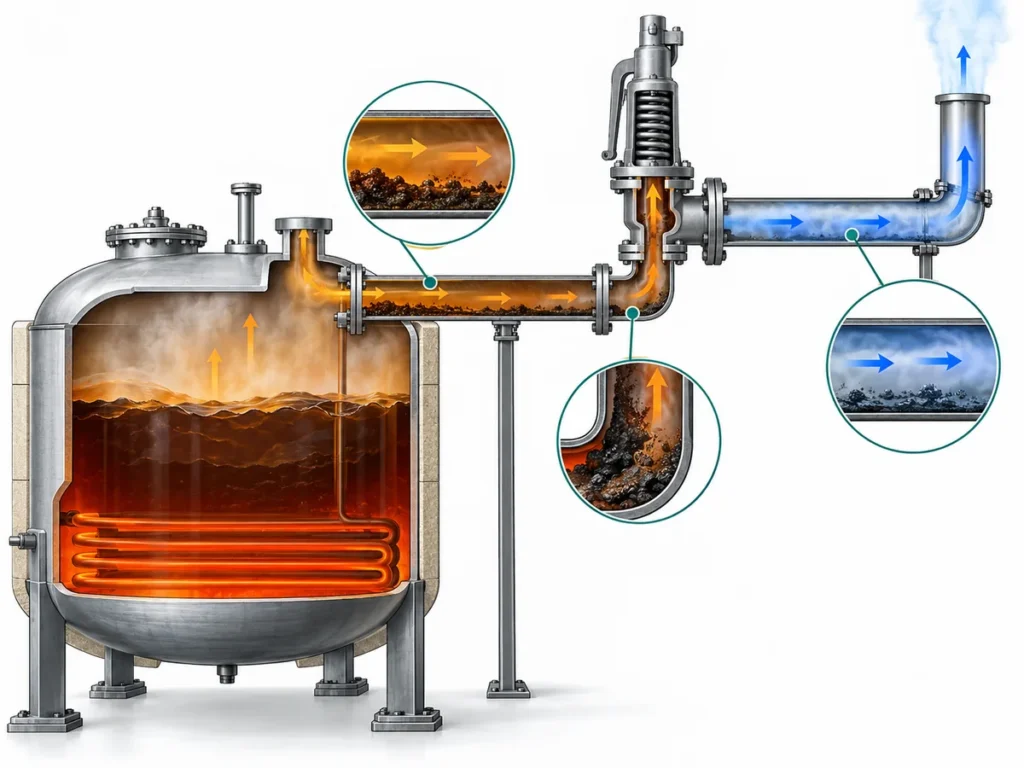
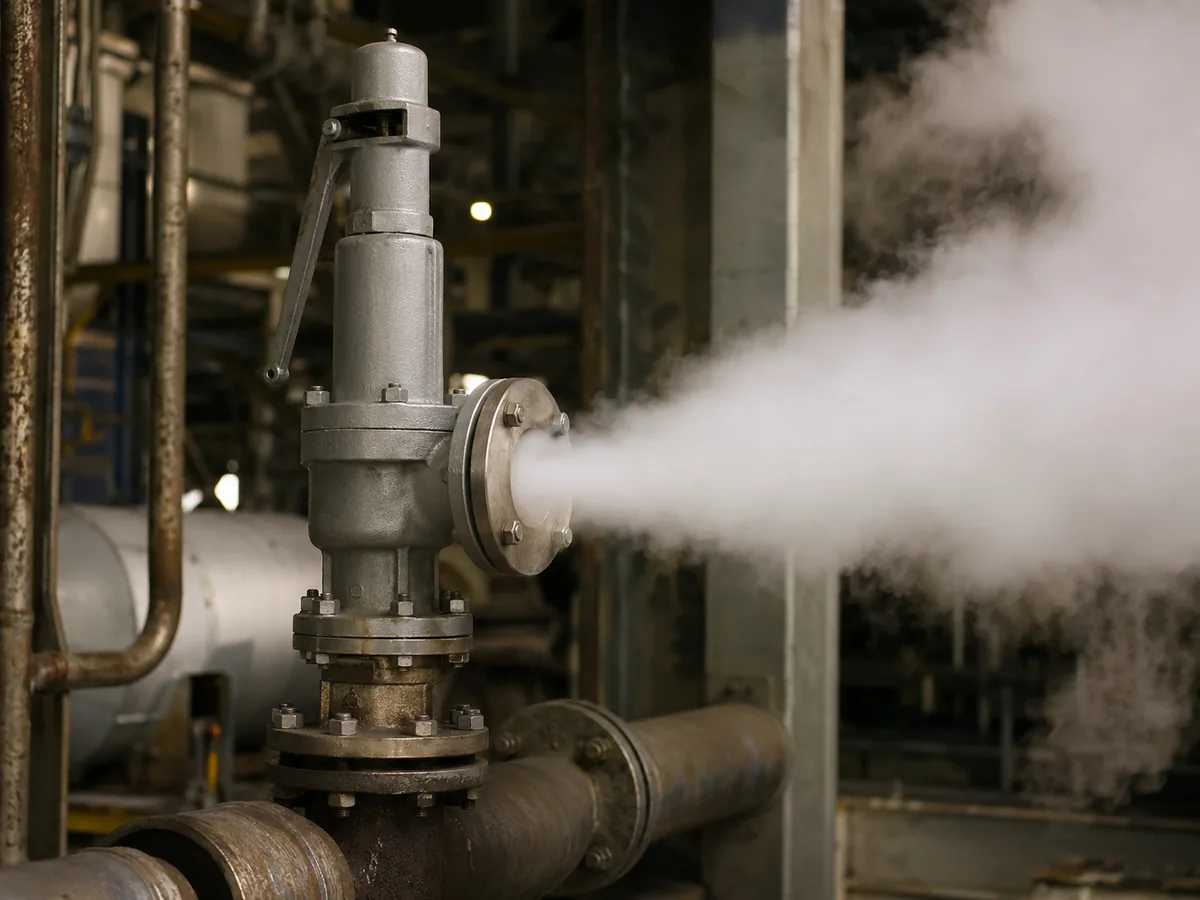
蒸汽泄放可能高温、高噪声且冲击力强。必须对出口管道进行评审,确认安全泄放方向、排凝、热膨胀、支撑和反作用力。若泄放管道积存冷凝水、对阀体施加过大重量或将蒸汽引向人员,可能造成严重的安全和可靠性风险。
蒸汽状态与材料筛选
蒸汽状态会影响阀体材料、内件、阀座、弹簧、垫片和阀盖的评审。仅凭材料牌号不能证明工况适用性。所选阀门应针对泄放温度、, 压力-温度额定值, 、腐蚀或冲蚀条件、保温影响、维护通道以及制造商针对具体型号的数据进行核对。
| 蒸汽工况 | 选型影响 | 需确认事项 |
|---|---|---|
| 饱和蒸汽 | 冷凝水、排凝和阀座密封性可能变得重要。 | Drainage, discharge routing, operating margin, set pressure test and seat condition. |
| 过热蒸汽 | Higher relieving temperature can affect spring chamber, bonnet, trim, seat and gasket review. | 泄放温度、材料限制、阀盖设计、弹簧暴露条件及所选型号数据。 |
| 可能含冷凝水的蒸汽 | 液体聚集可能影响泄放路径和阀门稳定性。 | 低点、排放口、出口管路布置,以及冷凝水是否会在阀门或排放管路处积聚。 |
| 脏污或受污染的蒸汽 | 可能发生密封面损坏、泄漏或卡涩。 | 蒸汽品质、上游污染、维护历史、密封面材料及检验计划。 |
为什么必须核实蒸汽排量
连接尺寸不能证明蒸汽排量。两台入口尺寸相同的阀门可能具有不同的孔径、升程特性、已记录排量、压力等级及适用工况限制。关于排量基础,请参阅 安全阀定径和认证泄放能力.
工程边界: 较大的连接尺寸并不自动意味着蒸汽安全阀选型更安全。所需泄放量、所选阀门排量、压力等级及安装条件必须分别审查。
蒸汽安全阀如何工作?
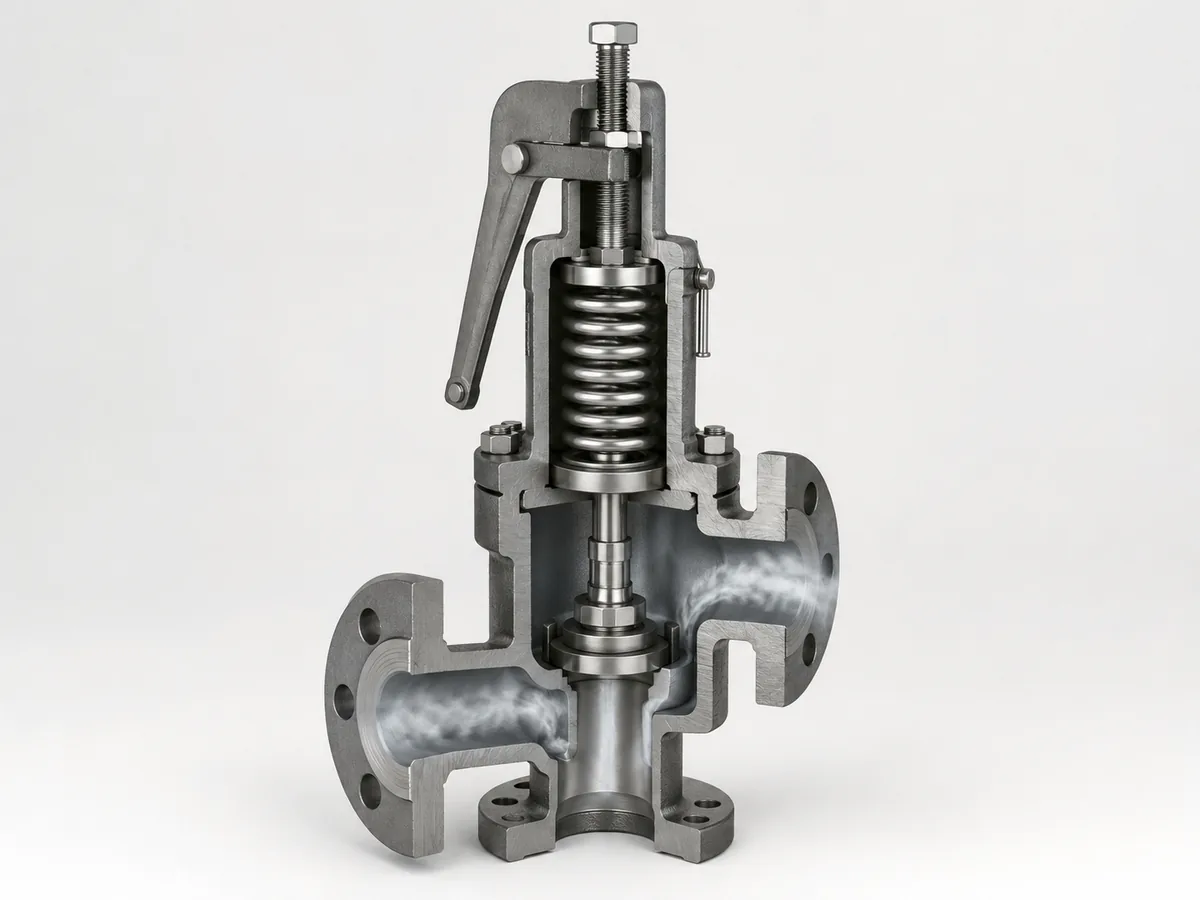
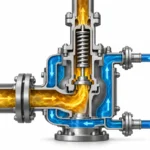
简化工程示意图;非制造图纸、认证剖面图或特定型号排量证明。
正常运行
正常运行时,阀瓣保持密封。弹簧载荷将阀瓣压紧在喷嘴或阀座上,而蒸汽压力向上作用于阀瓣。正常工作压力应低于整定压力并保持适当裕量。
整定压力下开启
整定压力是指在规定的试验或使用条件下,阀门被调整到开始开启时的压力。它不同于工作压力、MAWP、设计压力、压力积聚或排量。
阀瓣升程、排放与回座
随着阀门开启,蒸汽从进口经喷嘴流至阀门出口排出。阀门必须排放足够的蒸汽,以将压力进一步上升限制在被保护设备允许范围内。工况受控且系统压力下降后,阀门回座。
启闭压差与稳定性
启闭压差很重要,因为它影响阀门保持开启的时间以及何时回座。当阀门选型过大、进口压力损失过大、排放背压未正确评估或系统动态不稳定时,可能发生颤振或快速启闭。
| 压力术语 | 在蒸汽阀门评审中的含义 | 常见错误 |
|---|---|---|
| 工作压力 | 使用期间的工作压力。 | 运行压力过于接近整定压力,导致微启或泄漏。 |
| MAWP / 设计压力 | 被保护设备的压力边界。 | 将其作为阀门排量使用,或假定其与整定压力相同。 |
| 整定压力 | 阀门被调整至开始开启时的压力。 | 将其与回座压力或所需排量混淆。 |
| 超压 / 压力积聚 | 根据规范和项目依据,泄放事件期间允许的压力升高。 | 在核查泄放工况时忽略允许限值。 |
| 启闭压差 | 开启与回座行为之间的差异。 | 假定阀门恰好在整定压力下回座。 |
| 背压 | 由排放管道、总管或下游系统引起的出口侧压力。 | 假定出口路径不影响阀门稳定性。 |
蒸汽安全阀用于哪些场合?
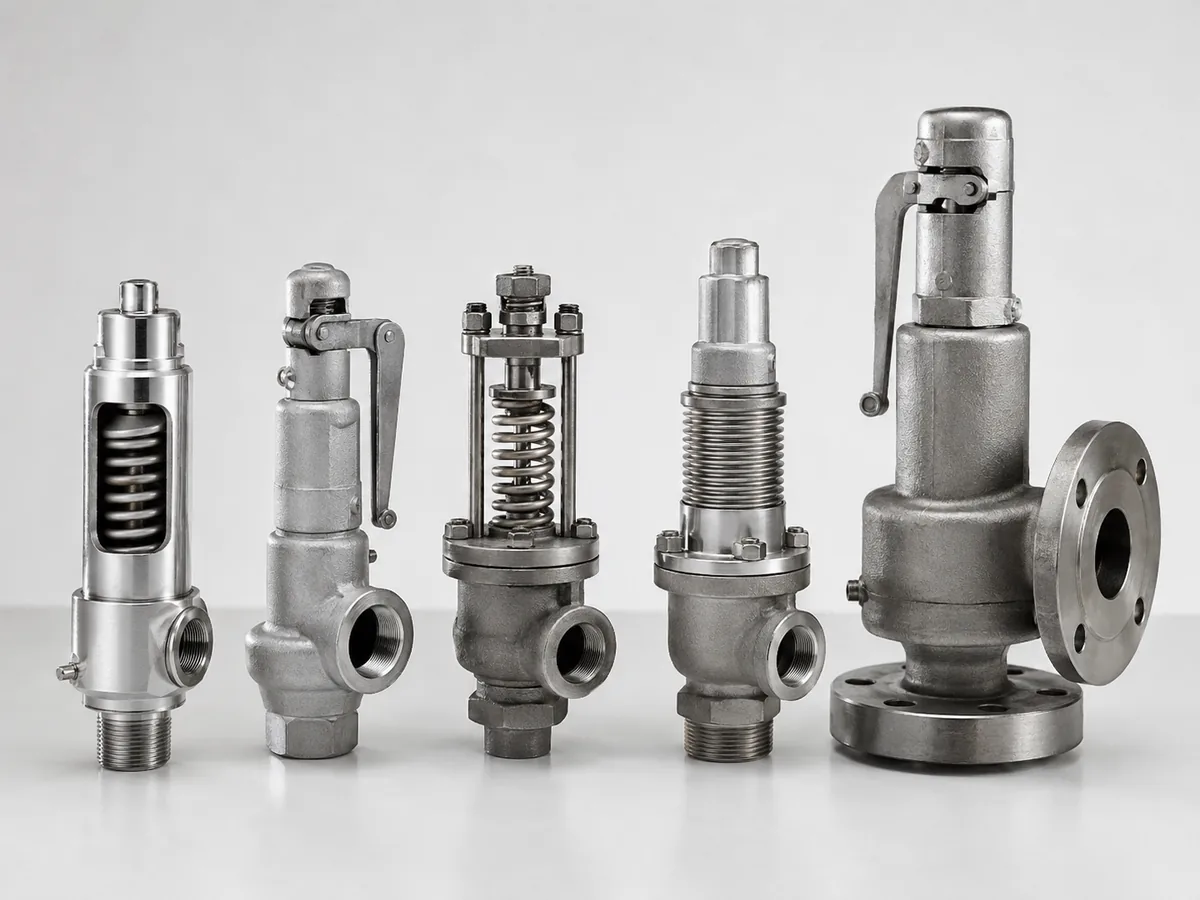
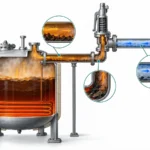
用于询价定位的简化应用图;实际阀门位置取决于项目设计、泄放工况及规范审查。
Boilers and steam drums
Steam boilers are one of the most common applications. The valve protects the boiler or steam drum from pressure exceeding the allowable limit. Boiler MAWP, set pressure arrangement, capacity basis, installation and testing are normally controlled by applicable rules and local requirements.
蒸汽集箱与分配管道
Steam headers distribute steam to multiple users. Overpressure may occur due to upstream control failure, isolation error, blocked outlet or another operating upset.
Heat exchangers and process equipment
Heat exchangers and process equipment may require steam-side or process-side overpressure protection depending on pressure source, design pressure and credible failure scenarios.
Pressure reducing stations
If a pressure reducing device fails open, downstream pressure may rise above the allowable limit. A steam safety valve can protect the downstream system when selected for the credible failure case.
Protected equipment first: The same valve name may appear on a boiler, steam header or pressure reducing station, but the governing relief case, required capacity, set pressure basis and documentation may be different.
Main Types and Configurations Used in Steam Service
Many steam safety valves are direct-acting spring-loaded designs, but “spring-loaded” alone does not complete the specification. The buyer still needs to confirm pressure setting, capacity, lift design, material, seat, bonnet, connection, discharge condition and applicable standard.
Spring-loaded designs
Common direct-acting steam safety valve designs use spring force for closing and inlet steam pressure for opening. The spring range, seat design, guide condition and lift behavior must be checked against the selected model.
Lever and open bonnet designs
Lever and open bonnet safety valves may be used depending on service, inspection practice, local requirements and manufacturer data. Open bonnet selection should be reviewed with actual steam temperature and project requirements.
Flanged, threaded, full-lift and low-lift options
Connection and lift configuration affect installation and capacity review. A lift description alone does not prove suitability.
For commercial product review, open the ZOBAI 蒸汽安全阀 product page after confirming the service data.
Preliminary Selection Matrix for Steam Safety Valve Review
This matrix is not a model selector. It helps the buyer decide what must be clarified before a supplier can review the correct valve family, capacity basis and documentation scope.
| 问题 | 为何会改变决策 | What to send before RFQ |
|---|---|---|
| What equipment is protected? | Boiler, steam header, pressure vessel and heat exchanger service may have different code basis and relief scenarios. | Equipment type, design document, MAWP / design pressure and nozzle connection. |
| 起控制作用的泄放工况是什么? | Heat input, blocked outlet, regulator failure or tube rupture may create different required relieving rates. | Relief case description and calculation basis from the responsible engineer. |
| Is the steam saturated or superheated? | Temperature affects body, trim, seat, spring, gasket and bonnet review. | Steam condition and relieving temperature. |
| Where does the valve discharge? | Atmospheric discharge, vent stack, silencer, long pipe or common header changes back pressure and reaction force review. | Outlet layout, discharge destination, expected superimposed / built-up back pressure. |
| 这是替换现有阀门吗? | Old valve size may not prove capacity, material or documentation equivalence. | Nameplate photo, datasheet, GA drawing, service history and reason for replacement. |
When not to proceed with quick replacement: Do not select by appearance only when the nameplate is missing, capacity basis is unknown, steam temperature changed, discharge piping changed, the system has chatter/leakage history, or the protected equipment duty has been modified.
What Buyers Must Confirm Before Selecting a Steam Safety Valve
The most important RFQ data are pressure and capacity. A steam safety valve cannot be selected safely from connection size alone. Set pressure defines when the valve opens. Required relieving capacity defines how much steam must be discharged. MAWP or design pressure defines the pressure boundary of the protected equipment.
| Data needed | 重要性 |
|---|---|
| 受保护设备 | Defines what pressure boundary must be protected. |
| 泄放工况 | Determines the required relieving case. |
| 蒸汽工况 | Saturated or superheated steam affects temperature and material review. |
| 工作压力 | 检查整定压力以下的正常裕量。 |
| MAWP / 设计压力 | 确定被保护设备的压力限值。 |
| 整定压力 | 确定安全阀开启点。 |
| 所需泄放量 | 判断所选安全阀排量是否足够。 |
| 泄放温度 | 影响阀体、阀内件、阀座、弹簧和垫片选型。 |
| 背压 | 影响稳定性及可能的安全阀配置。 |
| 进口/出口管道 | 影响压力损失、排放安全性和反作用力。 |
| 适用规范/文件 | 确定试验、检验和文件范围。 |
所需排量与所选安全阀规格不同
| 项目 | 含义 | 缺失时的选型风险 |
|---|---|---|
| 所需泄放量 | 在控制泄放工况下保护设备所需的蒸汽流量。 | 即使连接尺寸匹配,阀门也可能偏小。 |
| 所选阀门孔径 / 流通面积 | 所选阀门设计的有效泄放几何尺寸。 | 连接尺寸相同的两台阀门,其排量可能并不相同。 |
| 有据可查或经认证的排量依据 | 所选阀门及工况对应的制造商或规范相关排量依据。 | 采购方无法核实该阀门是否能保护所需工况。 |
| 连接尺寸与压力等级 | 机械配合及压力-温度适用性。 | 机械上匹配的阀门在排量或工况方面仍可能不适用。 |
如需定径参考,请查阅 API 520 安全阀定径. 在锅炉和压力容器项目的标准应用场景中,请查阅 ASME安全阀标准.
蒸汽工况下的背压与泄放复核
背压问题不能仅靠选定阀门类型来解决,必须结合出口系统、泄放去向、预期流量、总管压力及所选阀门设计进行复核。详细工程指南请参阅 背压与波纹管.
| 排放工况 | 复核重点 | 采购方可采取的措施 |
|---|---|---|
| 排入大气 | 安全排放方向、人员防护、反作用力、噪声及冷凝液。 | 提供出口方位、放空立管或消音器要求及现场限制条件。 |
| 出口管道过长 | 累积背压、管道支撑、热膨胀及排液。 | 提供出口管道尺寸、长度、弯头、标高及支撑方案。 |
| 共用排放总管 | 叠加背压与可变背压、同时泄放工况及总管容量。 | 提供总管压力数据、接入阀门及控制性泄放工况。 |
| 消音器或排放立管 | 附加压降、冷凝水排放及结构支撑。. | 如有,请提供消音器/排放立管数据表及布置图。. |
蒸汽安全阀选型常见错误
| 常见误区 | 风险 | 需核查事项 |
|---|---|---|
| 仅按 DN / NPS 选型 | 排量不足或未经核实。. | 所需泄放量及制造商数据。. |
| 将整定压力视为 MAWP | 保护基准错误。. | 设备设计文件及规范要求。. |
| 忽视蒸汽温度 | 材质或弹簧腔不匹配。. | 泄放温度与使用工况。. |
| 忽视背压 | 运行不稳定或性能下降。. | 出口系统与排放总管。. |
| 出口管道未支撑 | 阀门应力与不安全反作用载荷。. | 管道支撑与热位移。. |
| 按外观替换 | 排量、材质或整定值错误。. | 铭牌、数据表、总装图与记录。. |
更换前的故障排查现象
| 故障现象 | 可能原因 | 订购替换件前的检查 | 应避免的不安全做法 |
|---|---|---|---|
| 泄漏或微启 | 工作压力过于接近整定压力、密封面损伤、污染、热变形或试验条件不当。. | 工作余量、整定压力记录、密封面状况、蒸汽品质及维护历史。. | 未查明旧阀泄漏原因便直接订购相同规格。. |
| 颤振 | 选型过大、入口压力损失过大、泄放源不稳定、出口背压或排放管道问题。. | 入口布置、所需排量、出口系统、背压及事件历史。. | 误认为颤振一定是弹簧缺陷。. |
| 频繁开启 | 控制不稳定、工作压力过高、整定压力错误或工艺波动。. | 工作趋势、整定压力、压力控制设备及泄放工况。. | 未经设备/规范审查即提高整定压力。. |
| 回座不良 | Blowdown mismatch, contamination, seat damage, condensate or installation dynamics. | Blowdown behavior, discharge piping, condensate drainage and inspection record. | Changing internal parts without selected model data. |
替换警告: If the old valve leaks, chatters or opens frequently, replacement should include root-cause review. The issue may be related to operating margin, inlet loss, discharge piping, back pressure, condensate, contamination, oversizing or maintenance condition.
Steam Safety Valve Installation and Discharge Checks
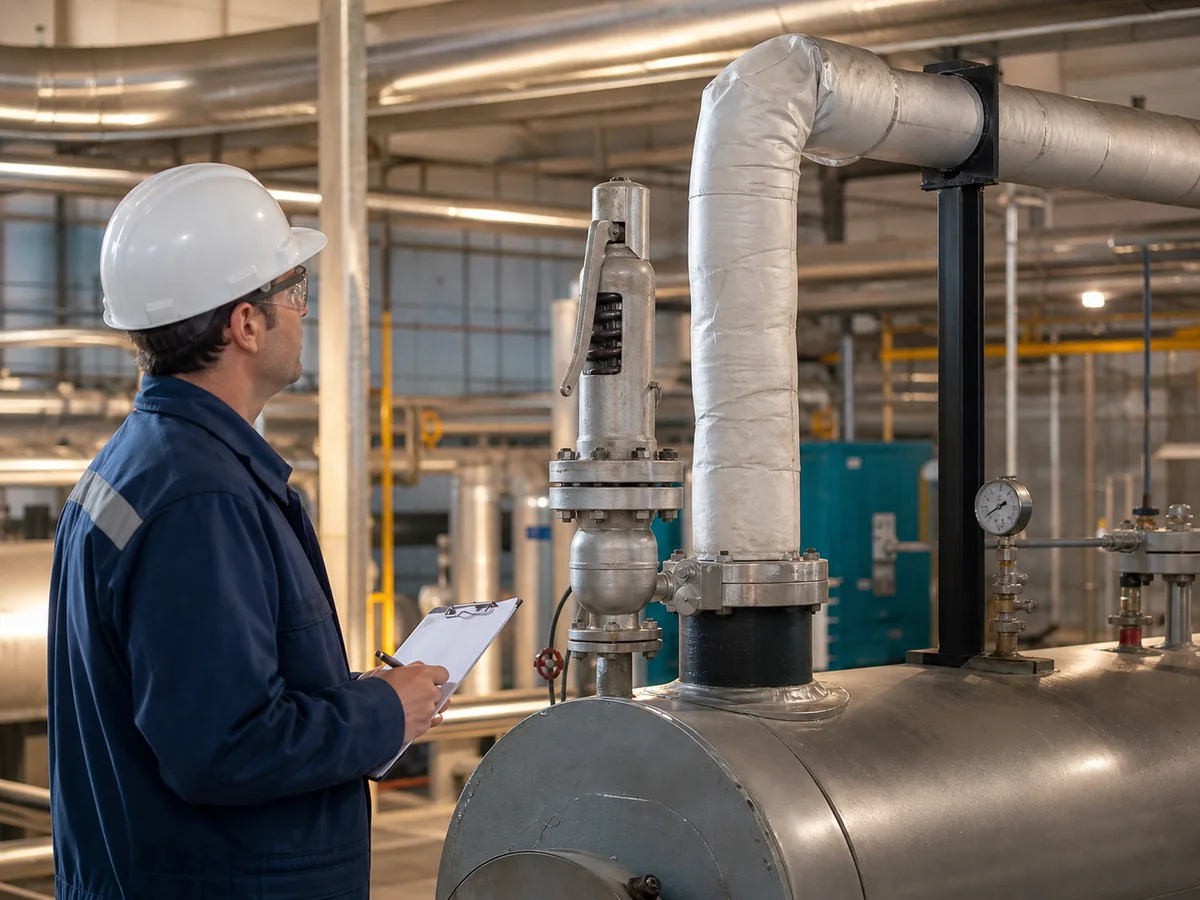
Simplified installation illustration; final installation must follow the selected model instructions, project specification and applicable code.
进口管道
The inlet line should be reviewed for pressure loss, diameter, length, fittings and proximity to the protected equipment. Excessive inlet pressure loss can reduce valve stability and may contribute to chatter.
Outlet discharge and reaction force
Steam discharge can create high velocity, noise, heat and reaction force. Outlet piping should be supported independently so that the valve body is not carrying the weight or thermal movement of the discharge system. For deeper installation guidance, review the 安全阀安装指南.
Drainage, venting and maintenance access
Condensate should not accumulate in a way that blocks discharge or damages the valve. Drainage, venting and maintenance access should be reviewed during installation design. Bonnet vents, caps and drains should not be blocked or modified without engineering review.
Installation do / don’t list
| 应做 | Don’t | 重要性 |
|---|---|---|
| Keep the inlet path short and suitable for the selected valve and code basis. | Do not add long reduced inlet piping without engineering review. | Excessive inlet loss can destabilize the valve. |
| Support outlet piping independently. | Do not let a heavy discharge line hang from the valve body. | Steam discharge creates reaction force and thermal movement. |
| Route discharge to a safe location. | Do not point steam discharge toward personnel, walkways or electrical equipment. | Steam discharge can be hot, noisy and forceful. |
| Provide drainage where condensate can collect. | Do not create a trapped or liquid-filled outlet path. | Condensate can affect discharge and damage components. |
| Follow selected model instructions for bonnet, cap, lever and vent arrangement. | Do not block bonnet vents or modify caps without review. | Configuration changes can affect safety and stability. |
Testing and Documentation to Confirm Before Purchase
Procurement should define the document scope before quotation. The required test records and certificates depend on the selected valve, project specification, applicable standard and inspection plan. Do not assume every valve model automatically includes every document or certification.
| Document or test item | 所支持的内容 | Buyer note |
|---|---|---|
| 数据表 | Set pressure, connection, material, service condition and selected configuration. | Use it as the baseline for technical review. |
| 排量基准 | Whether selected valve capacity matches the required steam relieving load. | Ask how capacity is documented for the selected model and service. |
| Set pressure test record | Calibration of opening pressure under defined conditions. | Confirm test condition and tolerance requirement. |
| 阀座密封性要求 | Leakage expectation after valve closure. | Confirm applicable test method and acceptance basis if required. |
| 材质记录 | Traceability for body, trim, spring, gasket or other parts where specified. | Define required material documents before quotation. |
| Inspection or witness scope | Project QA and release requirement. | State third-party, customer witness or factory inspection requirements early. |
For seat leakage context, the Registry includes the internal guide on API 527 阀座密封性试验. Use that as a testing reference direction, not as an automatic claim for every steam valve model.
更换核实流程
Replacing a steam safety valve is not just matching the old connection. Use a verification workflow before ordering a new valve.
确定被保护设备。
Confirm boiler, steam header, pressure vessel, heat exchanger, pressure reducing station or other protected equipment.
Read the existing nameplate and datasheet.
Capture set pressure, size, material, model, standard marking where present, capacity basis and serial / tag information if readable.
Confirm the governing relief scenario.
Do not assume the old valve was correctly selected. Confirm why the valve is required and what overpressure case it must relieve.
Compare capacity, not only connection.
Check required steam relieving capacity against selected valve documented capacity and selected orifice / flow area.
Review installation and discharge changes.
Check inlet loss, outlet support, drain points, safe discharge direction, common header and back pressure.
Define test and document requirements.
State datasheet, test record, material record, witness inspection and release documents before quotation.
Composite engineering scenario for training: A plant replaces a steam header safety valve after repeated chatter. The old inlet size is visible, but the old capacity basis is missing. Before ordering a similar-looking valve, the team should review operating pressure margin, set pressure, required capacity, inlet pressure loss, outlet header back pressure and discharge drainage. This is a hypothetical training scenario and does not represent a customer case or product proof.
Steam Safety Valve vs Pressure Relief Valve vs Ordinary Valve
Safety valve vs pressure relief valve
The terms safety valve, safety relief valve, pressure relief valve and PSV may be used differently by region, industry and standard. In steam and boiler service, “safety valve” commonly refers to an automatic valve used to discharge steam when pressure reaches the set pressure.
Safety valve vs control valve
A steam control valve or pressure reducing valve controls process pressure during normal operation. A steam safety valve protects against overpressure when normal control or operating conditions fail. These devices should be specified separately.
蒸汽安全阀 RFQ 数据清单
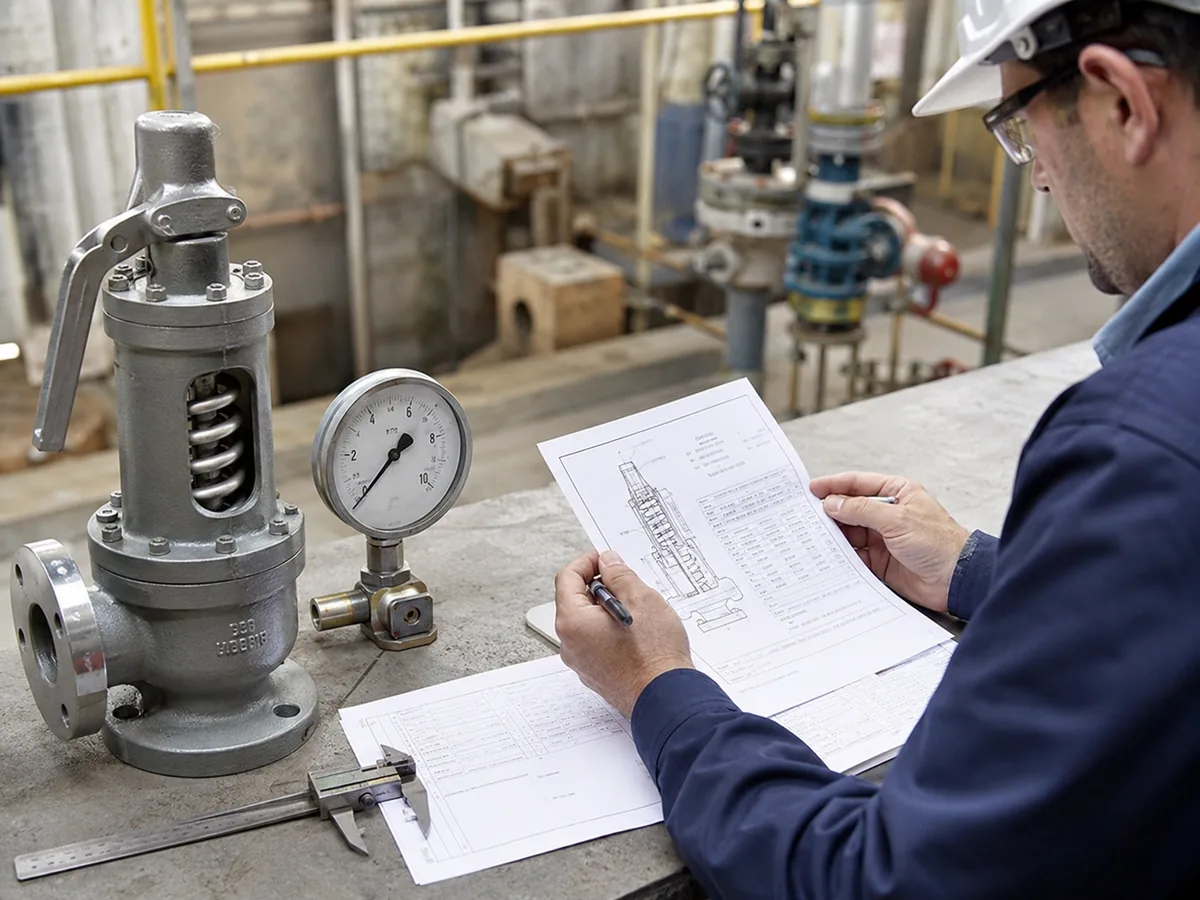
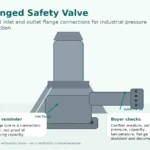
RFQ checklist graphic; final valve selection depends on real service data, manufacturer documentation and project/code review.
Before requesting a quotation, send the real working conditions rather than only a valve size or old valve photo.
被保护设备与泄放工况
Saturated or superheated steam condition
Operating pressure and MAWP / design pressure
Set pressure and allowable overpressure basis
所需泄放量与计算依据
泄放温度
背压与排放去向
Inlet / outlet connection and pressure-temperature rating
Body, trim, seat, spring and gasket requirements
Applicable standard, test and document requirements
When to Ask for Engineering Review
Engineering review is especially important when the old valve nameplate is missing or unreadable, the old valve leaks or chatters, steam temperature is high or superheated, discharge enters a header, back pressure may be variable, the system has been modified, the buyer is changing brand or model, or inspection documents are required.
A steam safety valve is a protective device, not a commodity pipe fitting. Final selection should be based on the real relief scenario, required capacity, steam condition, manufacturer data, applicable standard version, project specification and local regulatory approval process.
常见问题
蒸汽安全阀的作用是什么?
蒸汽安全阀用于保护锅炉、蒸汽母管、压力容器、换热器及蒸汽管道免于超压。当压力达到整定压力时,阀门自动开启并排放蒸汽,以限制压力升高。
蒸汽安全阀与泄压阀是相同的吗?
The terms may overlap depending on region, industry and standard. In steam and boiler service, “safety valve” commonly refers to an automatic overpressure protection valve for steam. Buyers should confirm terminology against the project specification and applicable code.
我可以仅根据管道尺寸选择蒸汽安全阀吗?
管道尺寸或连接尺寸并不能证明蒸汽泄放能力。选型应依据被保护设备、泄放工况、整定压力、所需泄放量、蒸汽状态、温度、背压、连接方式及制造商数据。
选择蒸汽安全阀前需要哪些数据?
至少应提供受保护设备、泄放工况、饱和或过热蒸汽条件、工作压力、MAWP或设计压力、整定压力、所需泄放量、泄放温度、背压、进出口连接、材料要求、适用标准及所需文件。
为什么启闭压差在蒸汽工况中很重要?
启闭压差影响安全阀开启与回座之间的压力差,进而影响蒸汽损失、阀门稳定性、泄漏风险以及排放后系统压力的恢复。
所有蒸汽安全阀都需要开放式阀盖或杠杆吗?
注:开放式阀盖和杠杆式设计可用于某些蒸汽工况,但并非通用要求。正确的配置取决于蒸汽温度、规范要求、检验惯例、安装方式、阀门型号及项目规格。
蒸汽安全阀泄漏或颤振的原因是什么?
可能的原因包括:工作压力过于接近整定压力、阀座损坏、介质污染、入口压力损失过大、背压影响、阀门选型过大、排放管路中存在冷凝水、安装不当或维护状况不良。
蒸汽安全阀何时应由工程师进行复核?
对于新建蒸汽系统、锅炉应用、过热蒸汽、缺少完整铭牌数据的更换、排放至集管、可变背压、反复泄漏、颤振、缺少排量依据或需要正式检验文件的项目,建议进行工程评审。
Standards and Selection Boundary
Standards and code requirements for steam safety valves depend on the protected equipment, jurisdiction, project specification and applicable edition. This article explains engineering selection logic and RFQ preparation. It does not reproduce copyrighted standard text and does not state that any specific valve model automatically complies with ASME, API, ISO, EN, GB or local regulatory requirements.
For related internal guidance, review ASME安全阀标准, API 520 安全阀定径 和 API 521 压力泄放系统.
技术参考资料
The following official pages are provided as reference starting points only. They do not replace the purchased standard text, project specification, local regulatory review, manufacturer data, or approval by the responsible engineer.
Need a Steam Safety Valve Review?
Send your steam operating conditions, protected equipment, set pressure, required relieving capacity, relieving temperature, back pressure, connection requirements and applicable standard for review.