安全阀技术博客 · RFQ参数确认 法兰安全阀询价指南:采购方必须确认的参数 法兰安全阀是通过进口、出口或进出口法兰螺栓连接至设备或管道的泄压阀。法兰仅定义机械接口,并不能证明阀门在……时开启

安全阀技术博客 · RFQ参数确认
法兰安全阀询价指南:采购方必须确认的参数
法兰安全阀是通过进口、出口或进出口法兰螺栓连接至设备或管道的泄压阀。法兰仅确定机械接口,并不能证明阀门在所需压力下开启、通过所需泄放量、在背压下保持稳定、材料相容,或具备项目要求的文件资料。一份技术上可用的询价单必须明确被保护设备和泄放工况,然后说明介质及相态、工作压力和设计压力、整定压力、所需排量、泄放温度、背压、进出口法兰参数、材质、阀门配置、试验及记录。不得仅因法兰尺寸与现有管口匹配就批准选用该阀门。
连接
明确进口和出口尺寸、标准、Class 或 PN、密封面、垫片及配对管道要求。
保护职责
确认主导泄放工况、所需泄放量、压力基准、介质及温度。
验收依据
在报价前明确排量基准、规范标记、试验、材料记录、检验范围及可追溯性。
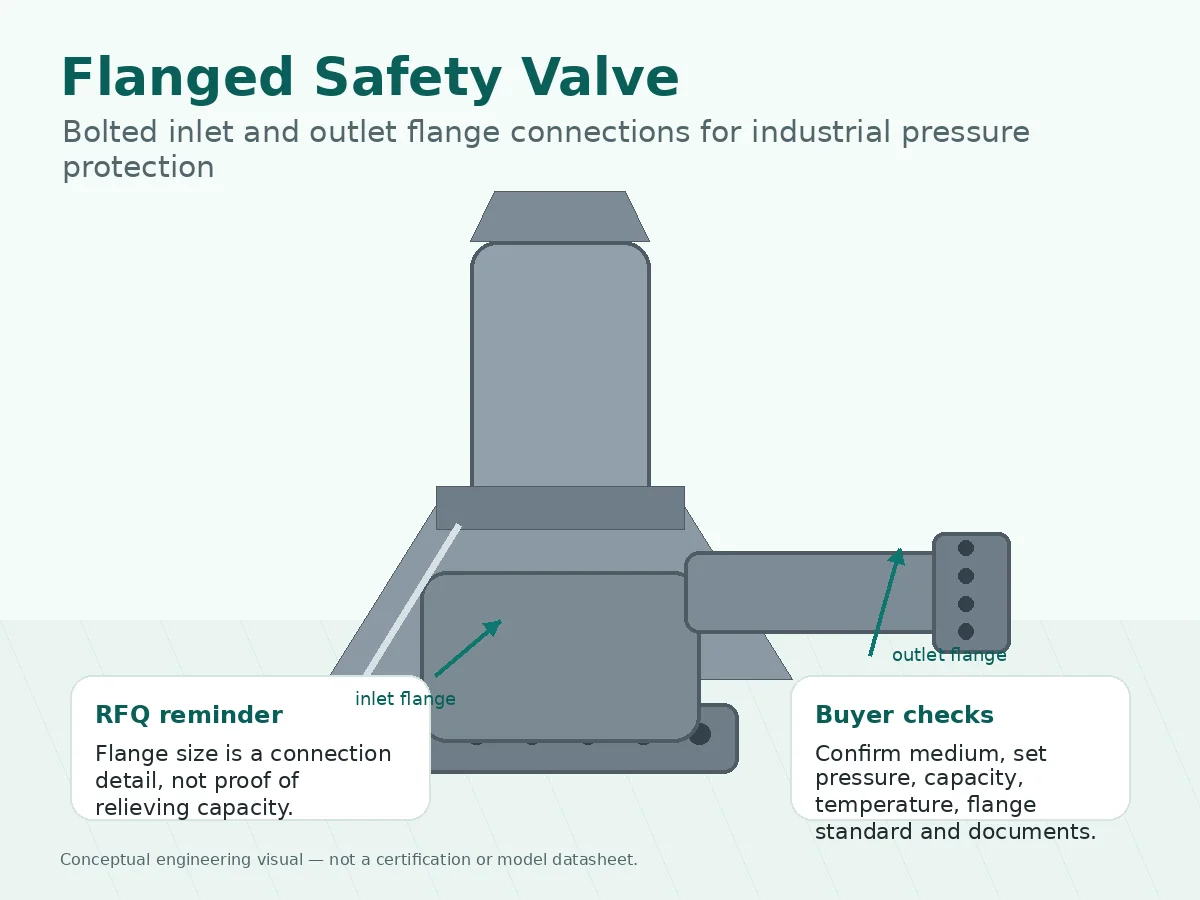
采购法兰安全阀前必须确认哪些内容?
先确认防护工况,再确定连接方式。应从被保护设备和可信的超压工况入手,然后提供介质及相态、工作压力、MAWP 或适用设计限值、整定压力、所需泄放量、泄放压力与温度基准、背压及安装布置。完成上述确认后,询价文件再锁定进口和出口法兰标准、公称尺寸、压力等级或 PN、密封面形式、材质、垫片、螺栓、阀门类型、阀座、弹簧范围、规范标记、试验及文件包。
该 法兰安全阀 分类可支持产品系列导航,但分类页面或型号名称并非定径计算或批准记录。对于排量工作流程,请使用单独的 安全阀定径与认证排量指南.
决策边界: 相同法兰尺寸、相同压力等级或相同整定压力并不构成等效泄放能力。蒸汽、气体、液体和两相工况也需要不同的排量基准,不能仅凭外观互换。
什么是法兰安全阀?
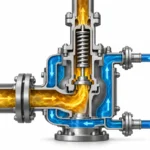
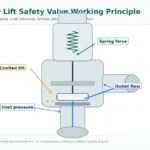
法兰安全阀是一种泄压装置,其进口、出口或两者均采用螺栓法兰连接。法兰提供确定的管道接口和压力边界。安全功能仍取决于内部喷嘴或阀座、阀瓣、导向、阀杆、弹簧或先导系统、升程特性、启闭压差行为、背压响应、材料以及有记录的排量。
术语因行业和标准而异。“安全阀”、“安全泄放阀”、“泄压阀”、“压力安全阀”、PSV、PRV 和 SRV 在商业使用中可能重叠,但仅凭产品名称并非完整的技术定义。在某些语境中,PRV 也指 减压阀, 这是不同的装置。因此,询价单应明确开启特性、使用流体及相态、阀门配置、排量基准、规范标记以及适用的项目定义。ZOBAI 的 泄压阀 页面提供更广泛的产品术语,而本文保留法兰连接和买方数据验证的询价单职责。
法兰连接可确认的内容
法兰数据可确认公称尺寸、尺寸标准、等级体系、密封面、垫片接口、螺栓孔布置以及与设备管口或管道的兼容性。完整说明可标明 ASME、EN、DIN、JIS、GB 或项目专用标准;进口和出口通常需要分别列出。
法兰连接无法确认的内容
法兰并不能证明所需排量或认证排量、整定压力正确、工作裕度可接受、背压工况下运行稳定、材质适用、密封严密性或符合规范。Class 或 PN 标识是连接和材料系统的压力-温度等级参考,并非阀门整定压力或受保护设备的 MAWP。
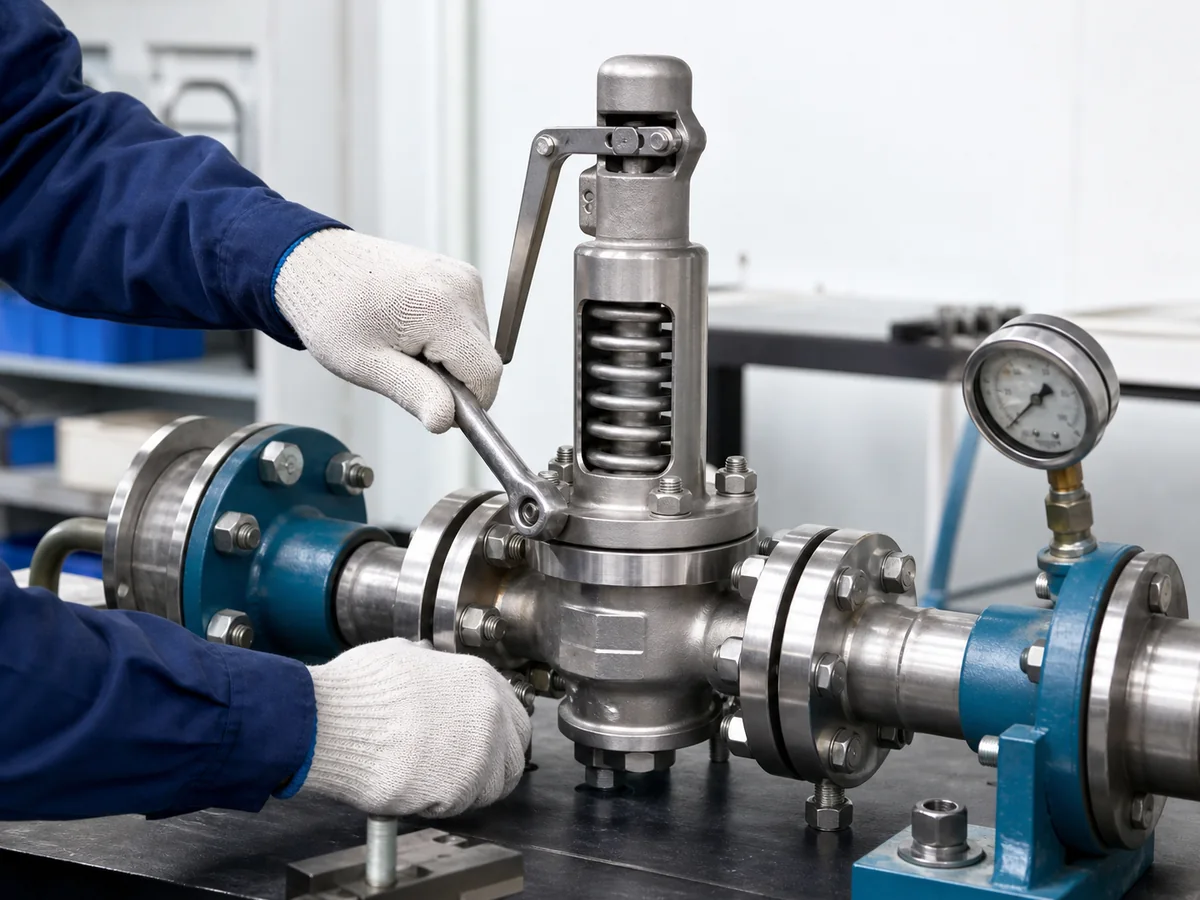
法兰安全阀通常用于哪些场合?
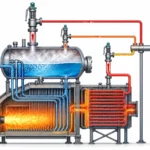
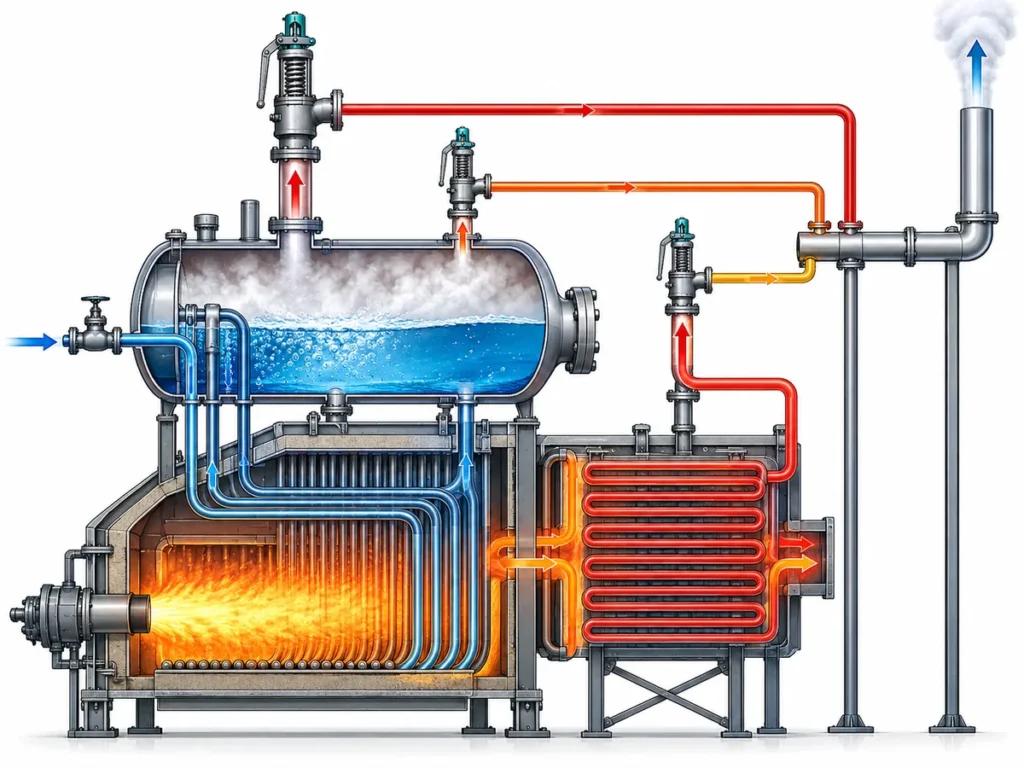
法兰安全阀通常用于压力容器、锅炉、蒸汽集箱、压缩机、工艺撬装、反应器、换热器、气体系统、化工管线以及与放空或泄放集箱连接的装置。这些应用通常采用螺栓连接工厂管道,需要可重复拆卸以便检验,或需要能够承载排放管道的出口连接。
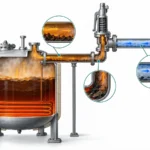
应用名称仅是背景信息。“锅炉阀”、“容器 PSV”或“蒸汽安全阀”并不能确定起控制作用的泄放工况或所需负荷。火灾工况、出口堵塞、调节阀失效、管束破裂、热膨胀、反应失控和公用工程故障可能产生不同的泄放条件,并可能需要不同的装置和系统审查。
受保护设备
确定容器、锅炉、压缩机、换热器、管道、撬装或其他压力系统以及必须保护的限值。
控制工况
说明可信的超压工况和所需泄放负荷,而不是假定管线或管口尺寸决定阀门。
安装系统
标明入口管道、出口走向、集箱、排放口、支撑、隔离布置和检修通道。
使用更广泛的 安全阀选型指南 当主要问题是阀门类型或适用工况而非法兰询价数据时。
“法兰安全阀”何时属于不完整规格?
“法兰”仅作为连接形式说明时才是完整的。该表将有用的采购信息与仍存在实质性工程缺口的表述区分开来。
| 采购方陈述 | 可确认内容 | 仍未知内容 | 需采取的措施 |
|---|---|---|---|
| “我们需要一台法兰连接安全阀。” | 预期的连接形式。 | 被保护设备、泄放工况、压力基准、泄放能力、介质、温度、法兰参数、材质、试验及文件。 | 在选型前索取完整 RFQ 数据。 |
| “进口为 DN80 PN40。” | 一个进口公称尺寸及压力等级标识。 | 法兰标准、密封面形式、材料组别、温度、出口连接、整定压力、泄放能力及管道载荷。 | 明确两端法兰参数并核实压力-温度基准。 |
| “更换件的面到面尺寸和法兰尺寸相同。” | 可能存在尺寸适配问题。 | 孔径、认证排量、弹簧范围、内件、代码标记、背压响应及使用历史。 | 对比铭牌、数据表、认证数据及实际安装条件。 |
| “该阀门通过了整定压力试验。” | 在规定试验条件下测得的开启压力设定值。 | 排量、密封性验收、稳定升程、材料状况及安装系统适用性。 | 不得将整定压力试验视为排量或安装审查。 |
| “出口连接至公共集管。” | 背压与排放系统的相互作用需予以考虑。 | 叠加背压与积聚背压、波动性、同时工况、排放、支撑及阀盖排放管路布置。 | 审查出口系统及采用常规式、波纹管平衡式或先导式配置的必要性。 |
Flanged Safety Valve RFQ Parameters Buyers Should Confirm
A quotation can only be technically meaningful when the supplier can trace the requested valve back to a defined protection duty. Mark unknown data as unknown; do not replace missing values with assumptions.
| RFQ parameter | Engineering effect | 需提供的资料 | Common misuse |
|---|---|---|---|
| 被保护设备及主导泄放工况 | Defines what limit is protected and the load the valve must handle. | Equipment type, MAWP or applicable limit, P&ID or datasheet, and governing scenario or calculation basis. | Selecting from line size without identifying the relief case. |
| Medium, composition, and phase | Controls sizing method, coefficient basis, materials, seat, fouling risk, and discharge handling. | Steam, gas, vapor, liquid, flashing or two-phase condition; composition, density or other properties where required. | Using a gas capacity for liquid or two-phase duty. |
| Operating pressure and operating margin | Affects leakage, simmer, cycling, and stability below set pressure. | Normal and maximum expected operating pressure, including cycling or pressure pulsation. | Applying one fixed percentage to every valve type, medium, and code. |
| MAWP or applicable equipment design limit | Provides the protected-equipment pressure basis. | The value and governing construction code or project rule. | Substituting flange class or line design pressure for equipment MAWP without review. |
| Set pressure and CDTP where applicable | Set pressure defines the adjusted opening point; cold differential test pressure may account for specified service effects during shop setting. | Required set pressure, units, service temperature, back pressure, and project requirement for CDTP. | Treating set pressure or shop test pressure as proof of capacity. |
| 超压、压力积聚与泄放压力基准 | 这些数值影响泄放工况和排量计算,但并非可互换的术语。 | 项目批准的裕量及由此确定的泄放压力基准。 | 未核对设备规范、工况、阀门类型和适用法规,直接套用通用裕量。 |
| 所需泄放量 | 确定所选安全阀在控制工况下必须通过的最小流量。 | 质量流量或体积流量、单位、流体基准、泄放条件及计算依据。 | 用连接尺寸或阀门公称尺寸替代所需排量。 |
| 泄放温度 | 影响流体物性、法兰等级、阀体和内件材质、弹簧环境、垫片及密封座。 | 正常工况、泄放工况及相关环境温度或火灾暴露温度数据。 | 仅按常温条件校核材质。 |
| 背压 | 可能改变开启特性、阀瓣升程、稳定性、启闭压差、排量及配置适用性。 | 叠加背压与积聚背压数值、恒定或变化特性及排放总管工作范围。 | 仅注明“管道排放”,未提供压力数据或布置信息。 |
| 进口与出口管道 | 进口压力损失和出口阻力可能导致不稳定或降低性能;管道还会传递机械载荷。 | 管径、长度、管件、异径管、阀门、标高、排液、支撑及排放去向。 | 假设阀门能够弥补不良的管道布置。 |
| 进口与出口法兰参数 | 决定尺寸配合、压力-温度适用性、垫片接口及螺栓布置。 | 分别注明尺寸、标准、Class 或 PN、密封面、材质、垫片,以及任何项目钻孔或表面处理要求。 | 仅提供 DN 或 NPS。 |
| 阀门结构型式与开启特性 | 常规式、波纹管平衡式和先导式设计对背压和污染的响应不同;突开式、比例式、全启式和微启式描述也需按具体型号确认。 | 所需类型,或供方推荐类型所需的工况条件,以及介质清洁度和维护限制条件。 | 仅凭商业名称选择配置。 |
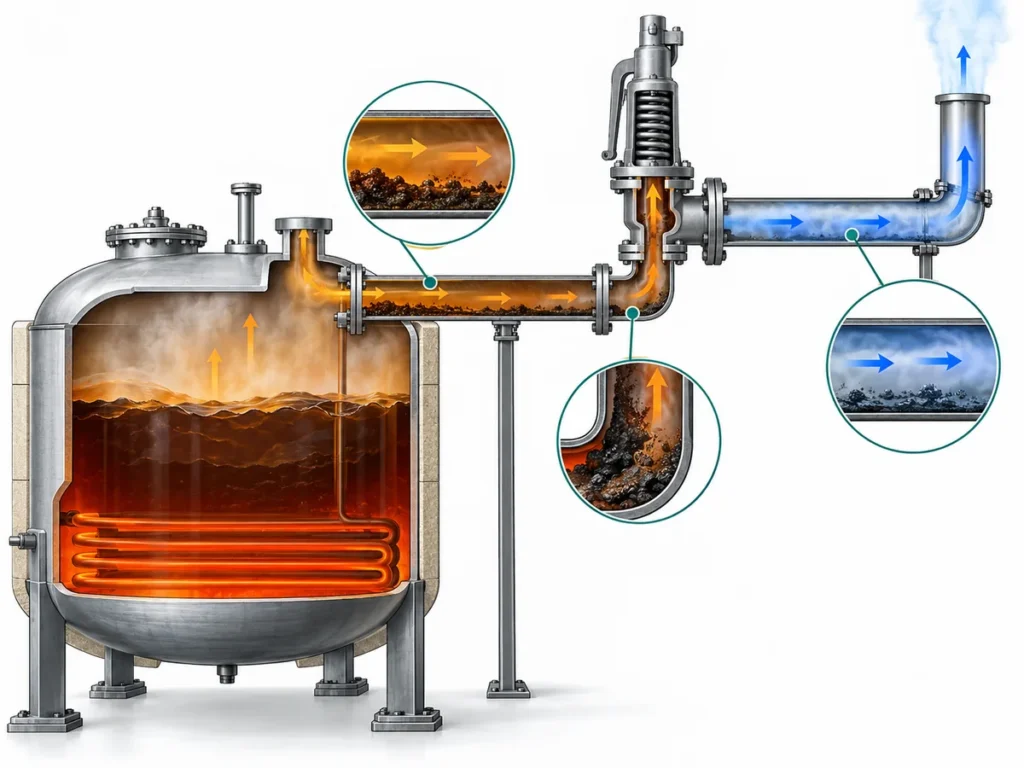
| 材料与密封座 | 阀体、阀盖、阀座、阀瓣、导向套、阀杆、弹簧、波纹管、垫片、填料、软密封阀座和 O 形圈可能面临不同的损伤机理。 | 材料规格、腐蚀数据、温度、污染物、适用时的酸性工况要求以及泄漏验收标准。 | 仅指定阀体材料。 |
| 试验、标记和文件 | 决定项目验收和可追溯性。 | 要求的规范标记、排量证明、整定压力记录、密封性要求、材料记录、检验范围、铭牌、铅封和文件格式。 | 假设每个型号都包含所有证书或试验。 |
以上数值构成询价输入集,本身并不构成批准。责任工程师仍须确认适用规范、泄放计算、所选型号、制造商数据以及安装系统设计。
如何规定进口和出口法兰参数?
将每个法兰端作为单独的条目处理。进口端将阀门连接到被保护设备或进口管道;出口端将其连接到大气、排放烟囱、消音器、回收管线、洗涤器或公共集管。两端通常具有不同的尺寸和压力等级。
进口法兰和进口管道
State the nominal size, flange standard, class or PN, facing, material, gasket, and project-specific finish or drilling. Also review the inlet nozzle and piping because excessive loss, restrictions, pockets, poor alignment, or isolation-valve position can affect valve stability and the pressure seen at the inlet.
Outlet flange and discharge system
State the outlet flange data separately and identify the discharge destination. Outlet piping must be reviewed for resistance, built-up back pressure, reaction force, thermal expansion, support, drainage, liquid pockets, and safe routing. Heavy or misaligned piping should not load the valve body or flange joint.
Facing, gasket, bolting, and pressure-temperature rating
RF, FF, RTJ, and other facing arrangements are not interchangeable by label alone. The mating flange, gasket type, material, bolting, surface condition, assembly procedure, pressure, and temperature must be compatible. A nominal class or PN designation must be checked against the adopted flange standard, material group, and service temperature.
Replacement control: photographs help identify the connection, but the original datasheet, dimensional drawing, flange standard, material, nameplate, and piping specification remain the stronger evidence. Measure only after confirming that the existing installation itself was correct.
Why Flange Size Does Not Prove Relieving Capacity
Connection size answers “will it fit?” Relieving capacity answers “can it protect the equipment under the governing event?” These are different questions. Two valves with the same inlet and outlet flanges can use different effective orifice areas, actual bores, lift, internal geometry, coefficients, fluid bases, and certified or rated capacities.
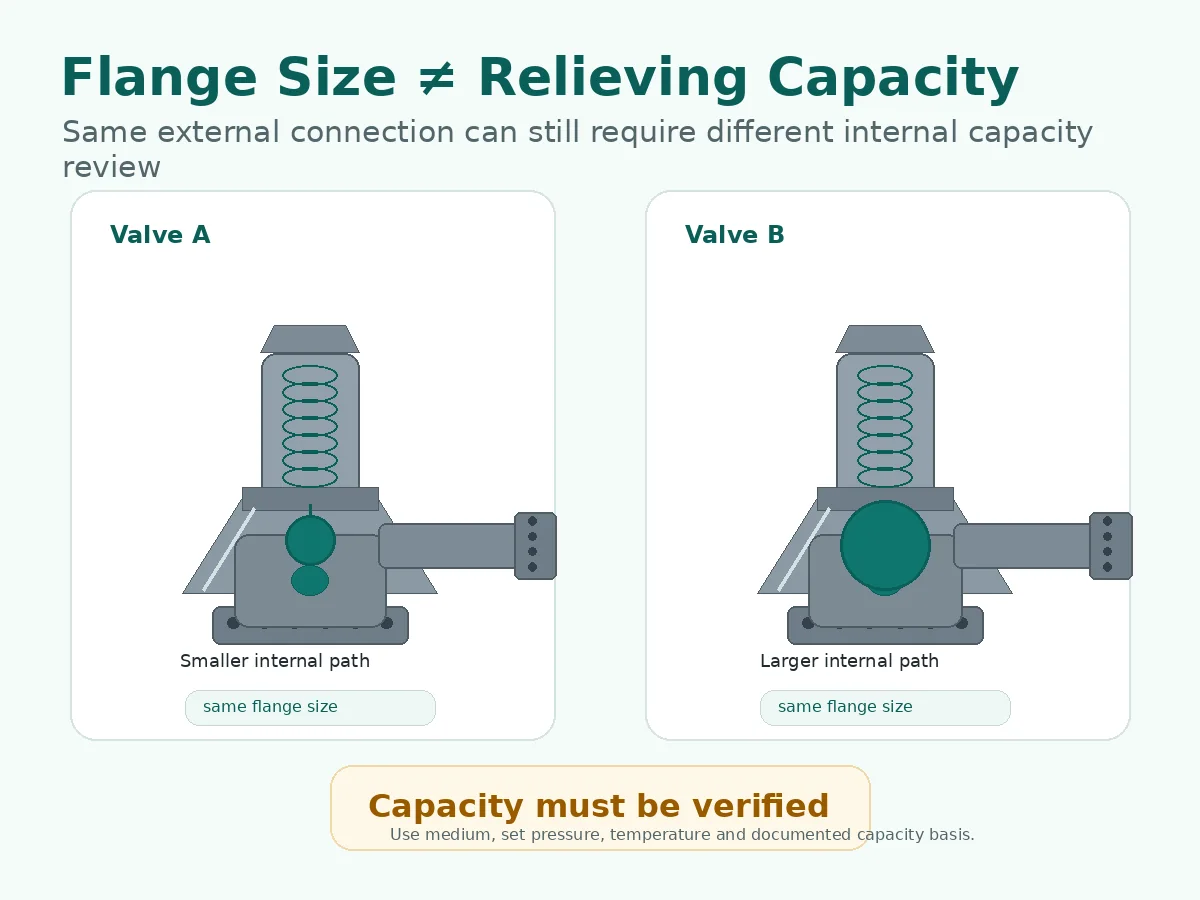
Capacity terms that must remain separate
| 术语 | 工程含义 | RFQ evidence | Do not confuse it with |
|---|---|---|---|
| 所需泄放量 | The load calculated for the governing overpressure scenario. | Calculation sheet or approved flow requirement with units and conditions. | Nominal connection size or catalog maximum. |
| Certified or rated relieving capacity | Documented device performance under defined test and rating conditions. | Applicable certified data, manufacturer rating data, code marking, and exact model/configuration identification. | Set-pressure calibration or seat-tightness test. |
| 有效排放面积 | An area used in a defined sizing or standardization method. | Applicable standard designation and selected valve data. | Actual measured bore or flange bore. |
| Actual bore and internal geometry | Physical flow-path dimensions used by the specific design. | Manufacturer drawing and model-specific data where required. | A standardized effective area without checking the method. |
| Coefficient and fluid basis | The performance basis depends on the calculation method, test medium, phase, pressure, and temperature. | Applicable coefficient, fluid basis, and rating conditions. | Capacity for a different medium or phase. |
| 连接尺寸 | The physical interface to the inlet and outlet piping. | Flange size and standard. | Protection capacity. |
Composite engineering scenario: same flange, insufficient capacity
In a composite engineering scenario, a replacement valve matched the old 2 × 3 in flanges and set pressure, so it was initially treated as equivalent. Review of the selected model later showed a different internal orifice and a lower documented gas capacity than the governing relief load. The correction was to reopen the relief calculation, select a valve with adequate documented capacity, and then verify flange fit and discharge piping. The preventive control is to require capacity evidence and exact model configuration in every replacement comparison.
Where API-style flanged dimensions or effective-orifice designations are relevant, use the dedicated API 526 法兰安全阀指南; API 526 does not replace the relief calculation or the check between required and documented capacity.
What Back-Pressure and Piping Data Belong in the RFQ?
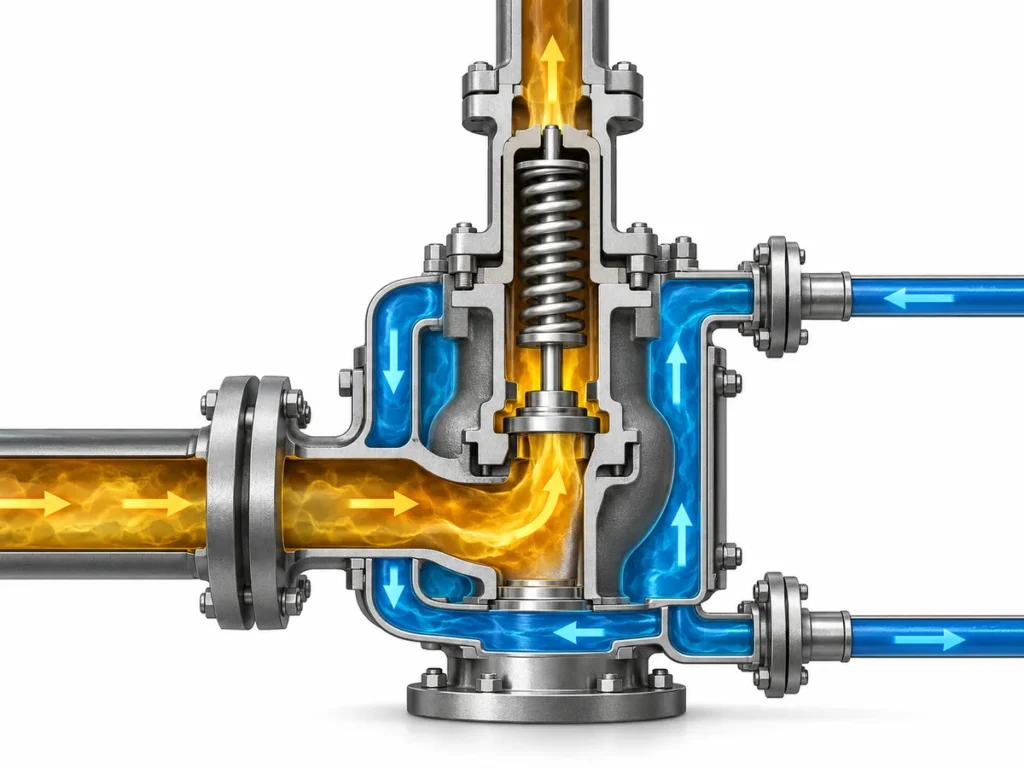
Back pressure is not one number unless the discharge system makes it one. Superimposed back pressure exists at the outlet before the valve opens; built-up back pressure develops from flow through the discharge system after opening. Either can be constant or variable. Their effect depends on valve design, pressure level, variability, discharge resistance, and the manufacturer’s documented limits.
| 状态 | Possible consequence | Data to provide | Review implication |
|---|---|---|---|
| 叠加背压 | May shift opening or closing behavior and affect a conventional design. | Normal, minimum, and maximum outlet pressure before discharge; state whether constant or variable. | Check valve configuration and pressure-setting basis. |
| 积聚背压 | May reduce lift or capacity and promote instability during flow. | Outlet hydraulic calculation, pipe size, length, fittings, silencer, header, and simultaneous cases. | Check outlet sizing and manufacturer limits. |
| 入口压力损失 | Can decouple vessel pressure from valve-inlet pressure and contribute to cycling or chatter. | Inlet line geometry, fittings, branch connection, isolation arrangement, and calculated loss. | Review the installed system, not only the valve adjustment. |
| Liquid pockets or poor drainage | Can add static head, corrosion, freezing, water hammer, or discharge restriction. | Elevation, low points, drains, weather exposure, and fluid phase changes. | Correct routing and drainage before commissioning. |
| Discharge reaction and piping load | Can damage the valve, flange joint, support, or connected nozzle. | Support arrangement, flexibility, reaction calculation, alignment, and thermal movement. | Do not use the valve body as a pipe support. |
| Bellows bonnet vent or pilot sensing path | Incorrect routing, plugging, condensate, icing, or contamination can defeat the intended function. | Vent destination, sensing-line layout, cleanliness, heat tracing, and maintenance access. | Follow the selected manufacturer’s installation requirements. |
Composite engineering scenario: header modification and chatter
In a composite engineering scenario, a conventional spring-loaded valve began cycling after several outlets were connected to a common header. The valve had not changed; the discharge resistance and variable back pressure had. The correction combined a header hydraulic review, outlet-piping changes, and reassessment of whether a balanced-bellows or pilot-operated configuration was appropriate. The preventive control is management of change for every relief-header modification, with simultaneous discharge cases included where credible.
Chatter should not be assigned automatically to spring adjustment. Also check oversized selection, inlet pressure loss, insufficient sustainable flow, outlet resistance, mechanical loads, valve type, and process cycling. See the focused 背压与波纹管指南 for the dedicated mechanism discussion.
Threaded vs Flanged Safety Valve: What Changes in the RFQ?
Both connection forms can be suitable when the valve is correctly sized, configured, installed, and documented. The comparison below is limited to procurement and installation interfaces; it does not assign capacity or compliance based on connection form.
| RFQ factor | Threaded safety valve | Flanged safety valve | Buyer control |
|---|---|---|---|
| Connection identification | Thread form, size, gender, sealing method, and engagement. | Inlet/outlet size, standard, class or PN, facing, gasket, and bolting. | Do not use nominal size without the connection standard. |
| Typical installation context | Often compact equipment or smaller piping, subject to actual service limits. | Often plant piping, equipment nozzles, larger valves, or piped discharge systems. | Use the installed system and maintenance method, not a generic size rule. |
| Mechanical installation risk | Thread damage, sealant contamination, orientation, and torsional load. | Misalignment, gasket selection, bolt loading, piping weight, and flange-face mismatch. | Specify the assembly method and support arrangement. |
| 替换风险 | NPT, BSPP, BSPT, G, Rc, or other thread mismatch. | Same size but different standard, class, facing, dimensions, material, or internal capacity. | Compare datasheets and nameplates, not appearance. |
| Protection performance | Requires the same relief-scenario, pressure, capacity, material, and installed-system review. | Requires the same relief-scenario, pressure, capacity, material, and installed-system review. | Connection form never replaces sizing or certification review. |
For the product-family comparison, review 螺纹安全阀. Keep “threaded vs flanged” comparison intent on the relevant comparison page rather than expanding this RFQ page into a full connection-selection article.
Which Procurement Mistakes Most Often Produce an Unusable Quote?
The highest-risk errors come from treating one visible parameter as a substitute for the complete pressure-protection basis.
Selecting by flange size and class only
“DN80 Class 300” does not state the relief scenario, medium, set pressure, required capacity, relieving temperature, back pressure, facing, material, or documentation. It can produce a dimensionally plausible quote that is technically unverified.
Confusing set pressure, overpressure, accumulation, and relieving pressure
These terms answer different questions. The RFQ should not use them as synonyms or apply a universal percentage. The adopted equipment code, scenario, valve type, jurisdiction, and project specification must define the permitted basis.
Using a set-pressure or seat-tightness test as capacity evidence
A set-pressure test checks the adjusted opening pressure under specified test conditions. A seat-tightness test evaluates leakage under its stated method. Neither establishes the required relieving load or proves certified capacity. The RFQ should identify each test purpose separately.
Ignoring the installed piping system
A correctly manufactured valve can still perform poorly with excessive inlet loss, high or variable outlet back pressure, liquid pockets, poor support, blocked vents, or heavy piping loads. Use the 安全阀安装指南 for installation-specific checks without transferring that page’s full maintenance intent into this RFQ guide.
Replacing by appearance without management of change
Review capacity, orifice, spring range, materials, seat, code marking, flange data, dimensions, back-pressure limits, discharge layout, and service history. If production rate, medium, relief scenario, equipment MAWP, header arrangement, or piping has changed, repeat the relevant sizing and system checks.
How Should Materials, Tests, and Documents Be Screened?
Material selection must follow the components exposed to pressure, process fluid, discharge fluid, temperature, corrosion, galling, deposits, and cyclic movement. Body material alone is not a complete material specification.
| Screening item | Engineering concern | 询价输入 | 验收依据 |
|---|---|---|---|
| 阀体与阀盖 | Pressure-temperature rating, external environment, corrosion, and construction. | Material grade, service temperature, environment, and project material specification. | Manufacturer datasheet, material record where required, and pressure-rating basis. |
| Nozzle, disc, guide, and spindle | Wetted corrosion, erosion, galling, sticking, wear, and seat damage. | Medium composition, contaminants, solids, corrosion mechanism, and required trim. | Exact component material list and model documentation. |
| Spring and bellows | Temperature stability, corrosion, fatigue, pressure balance, and vent environment. | Temperature, bonnet condition, back pressure, vent routing, and corrosion requirement. | Spring range, bellows material, configuration drawing, and manufacturer limits. |
| Gasket, packing, soft seat, and O-ring | Chemical compatibility, temperature, decompression, aging, leakage, and maintenance life. | Medium, pressure, temperature, cleaning chemicals, leakage criterion, and elastomer restrictions. | Material identification, model limit, and required conformity record. |
| Sour service where applicable | H₂S-related cracking and hardness/material-control requirements. | Explicit project adoption of NACE MR0175 / ISO 15156 or other governing sour-service requirement and the service data needed to apply it. | Component-level material, heat treatment, hardness, and project-required documentation. |
| Tests and traceability | Opening-pressure setting, seat tightness, pressure boundary, material identity, repair status, and records. | Required set-pressure test, seat-tightness method, shell test, witness points, as-found/as-left data, resealing, nameplate, and document format. | Test records and traceability matched to the exact valve serial or identification number. |
Composite engineering scenario: upgraded body, unchanged trim
In a composite engineering scenario, a stainless body was requested to address corrosion, but the RFQ did not define the nozzle, disc, guide, spindle, spring, gasket, or soft-seat materials. The valve body remained acceptable while the internal guide corroded and began to bind. The correction was a component-level material review based on the actual medium and temperature. The preventive control is to issue a complete bill-of-material requirements list or state the service conditions clearly enough for every affected component to be reviewed.
Repair and post-maintenance document boundary
For replacements or repaired valves, ask for as-found and as-left data where applicable, the set-pressure test basis, seat-tightness test, parts replaced, spring range, nameplate and seal status, and repair-organization authorization required by the jurisdiction or owner. A National Board VR authorization controls a repair quality-system route where applicable; it does not approve the original sizing, capacity, or installed-system design.
What Should Buyers Send for a Flanged Safety Valve Engineering Review?
Send the shortest data package that still allows the protection duty, valve configuration, connection, and acceptance evidence to be checked. Unknown values should be identified and resolved before final approval.
For a new project
Provide the equipment datasheet or description, P&ID, governing relief scenario, calculation or required capacity, medium and phase, composition or fluid properties where needed, operating pressure, MAWP or design basis, set pressure, overpressure and relieving-condition basis, temperature, back pressure, inlet and outlet piping layout, flange details, material requirements, applicable code, code marking, inspection plan, and document list.
For a replacement
Provide the existing nameplate, original datasheet, model and serial identification, certified or rated capacity evidence, inlet and outlet flange data, dimensional drawing, installation photographs, piping layout, calibration and seat-leakage records, maintenance findings, and any process or header changes since the original installation. Do not assume the old valve was correctly selected.
For a repaired or recalibrated valve
State the governing repair route and required records. Request as-found/as-left values where applicable, set-pressure and seat-tightness results, replaced parts, spring range, material traceability, resealing and nameplate control, and the repair organization’s applicable authorization. Keep repair quality-system evidence separate from sizing and installed-system acceptance.
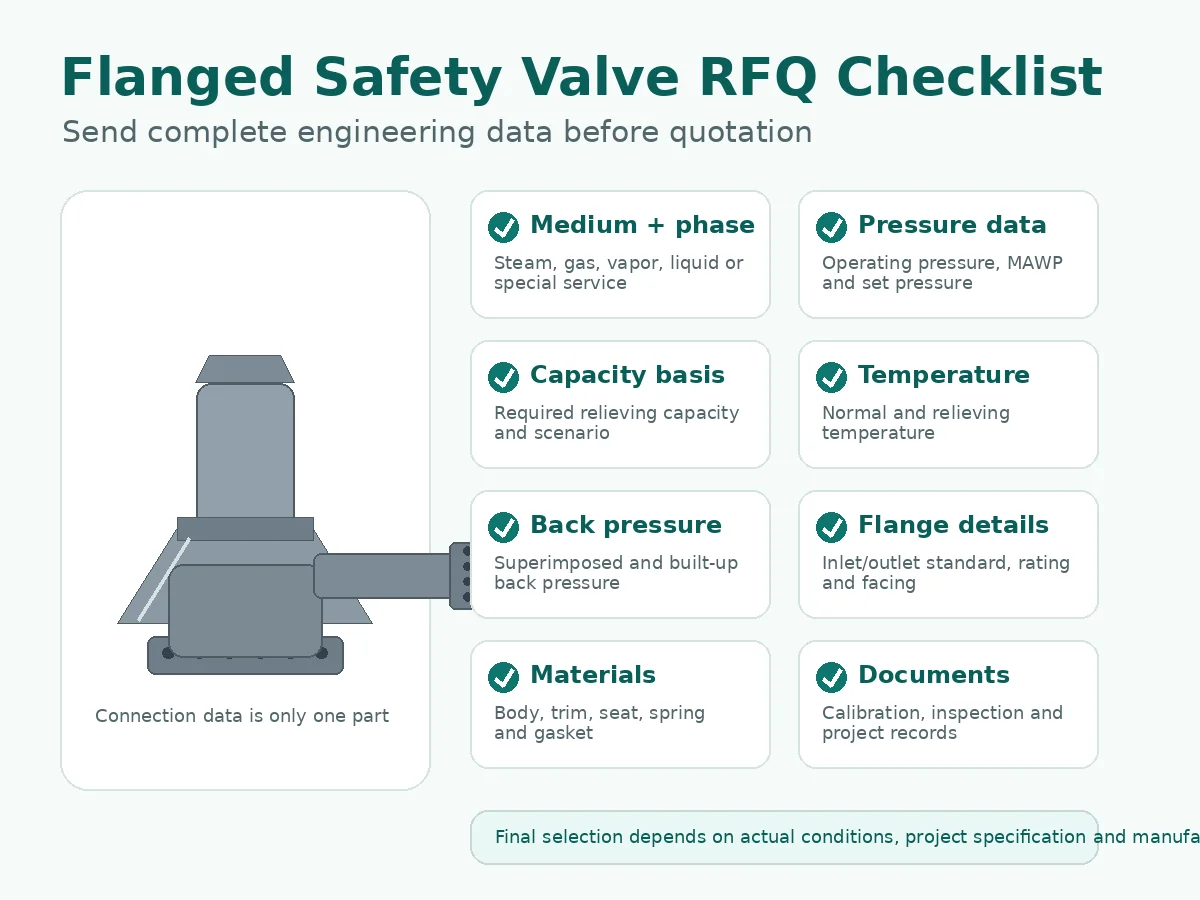
FAQ About Flanged Safety Valve RFQs
什么是法兰安全阀?
它是一种泄压阀,入口、出口或两端采用螺栓法兰连接。法兰确定了管道接口;选型仍需考虑泄放工况、压力基准、排量、介质、温度、背压、材质及文件资料。
法兰安全阀与法兰泄压阀是相同的吗?
The terms may overlap in industrial usage, but the required device must follow the project’s definitions, service, opening characteristic, code marking, and model data. PRV can also mean pressure-reducing valve, so abbreviations should be defined in the RFQ.
法兰尺寸是否决定安全阀排量?
不。排量取决于主导泄放负荷、有效流道面积或内部流道、阀瓣升程、流量系数、介质及相态、压力、温度、背压以及有记录或经认证的阀门性能。
报价前应提供哪些法兰详细信息?
分别列出进口和出口尺寸,并注明法兰标准、压力等级或PN、密封面形式、材质、垫片、螺栓或项目要求、工作温度及相连接管道细节。
整定压力与法兰压力等级有什么区别?
整定压力是指在规定条件下调整后的开启压力。法兰压力等级或PN属于连接件的压力-温度额定体系。两者互不定义。
何时背压变化需要重新评估安全阀?
只要出口管道连接至集管、承受可变压力或受到显著排放阻力影响,均应重新评估。评估结果可能影响出口设计,并决定采用常规式、波纹管平衡式还是先导式结构。
旧阀门能否更换为法兰相同的阀门?
需核对具体型号、流道孔径、排量、整定压力、材质、弹簧范围、铭牌标识、背压限制、外形尺寸及当前工况后方可确定。法兰相同仅表明可能匹配。
整定压力试验或密封性试验能证明泄放能力吗?
不能这样比较。这些试验的目的不同。排量必须依据该阀门及具体工况所适用的、有文件记录或经认证的排量基准,与所需泄放负荷进行核对。
应索取哪些文件?
仅索取项目所需的文件,例如数据表、排量证明、规范标记、整定压力与密封性记录、材质记录、尺寸图纸、检验放行、拆卸前/回装后数据,以及适用时的维修追溯资料。
Request a Flanged Safety Valve RFQ Review
Prepare the protection duty before asking for a model. The review package should connect the protected equipment and relief scenario to pressure, required capacity, medium, temperature, back pressure, piping, flanges, materials, valve configuration, tests, and documents.
For replacement work, include the original datasheet and capacity evidence in addition to photographs and nameplate data. This helps separate dimensional fit from actual performance equivalence.
- 被保护设备及主导泄放工况
- Medium, composition, phase, and relieving conditions
- Operating pressure, MAWP, set pressure, and CDTP basis
- Required relieving capacity and calculation reference
- 叠加背压与积聚背压
- Inlet and outlet piping layout and support
- Flange standard, size, class or PN, facing, gasket, and material
- Valve type, materials, seat, spring, tests, marking, and documents
Official Standards Sources and Selection Limitations
The sources below are scope and edition checkpoints, not certification claims for any ZOBAI model. Confirm the edition adopted by the project, jurisdiction, owner, and equipment construction code; API also lists future revisions in development, so a planned edition must not be treated as the current published edition.
| Official source | Current source status checked July 19, 2026 | How it supports this RFQ page | 边界条件 |
|---|---|---|---|
| ASME BPVC 第 XIII 卷 | ASME 列出了 2025 年版。 | Overpressure-protection rules, device design and marking, capacity certification, installation, and system-design context. | Apply with the governing equipment code and adopted jurisdictional requirements. |
| ASME B16.5 | ASME 列出了 2025 年版。 | Pressure-temperature ratings, materials, dimensions, tolerances, marking, testing, and joint-related flange requirements within its stated scope. | Flange compliance does not establish valve set pressure or relieving capacity. |
| API 标准计划 | Published listings include API 520 Part I, 10th edition; Part II, 7th; API 521, 7th; API 526, 8th; API 527, 5th; and API RP 576, 5th with Addendum 1. Later editions are shown separately as in development. | Separates sizing and selection, installation, relief-system analysis, flanged steel valve standardization, seat tightness, and inspection purposes. | API 526 dimensions or API 527 leakage testing do not replace relief sizing or installed-system review. |
| ISO 4126-1:2013 | ISO lists Edition 3 with Amendment 1:2016 as published. | 安全阀通用产品要求。 | ISO identifies it as a product standard, not an application standard. |
| ISO 4126-4:2013 | ISO states Edition 2 was reviewed and confirmed in 2025. | 先导式安全阀的通用产品要求。 | It does not decide whether a pilot-operated valve is suitable for a specific installed application. |
| 美国国家锅炉与压力容器检验师协会 NB-18 | The National Board describes NB-18 as an always-current searchable certification database. | Supports checks of manufacturers, assemblers, certified device types, and capacity-certification listings. | Match the exact manufacturer, model, configuration, and certification; NB-18 or VR status does not approve sizing or installation. |