Guía de Válvulas de Seguridad para Medios Corrosivos ¿Qué es una Válvula de Seguridad Resistente a la Corrosión? Materiales, Límites y Verificaciones de Selección Una válvula de seguridad resistente a la corrosión es un dispositivo de alivio de presión cuya envolvente de presión, internos mojados y partes funcionales expuestas se seleccionan para un medio o entorno corrosivo definido. No es simplemente una válvula de acero inoxidable. La composición del medio, concentración, fase, contaminantes, temperatura normal y de alivio, presión, riesgo de condensación, atmósfera externa y sistema de descarga determinan qué materiales y detalles de construcción requieren revisión. La resistencia a la corrosión debe cubrir las partes que controlan la apertura, el flujo, la guía y el reasentamiento, no solo el cuerpo. La válvula aún debe tener la presión de ajuste correcta, capacidad de alivio documentada, clasificación de presión-temperatura, respuesta a la contrapresión y instalación. Una etiqueta de material, tamaño de brida o recubrimiento no puede probar la idoneidad de la aplicación; la selección final requiere datos específicos del modelo del fabricante, el estándar del proyecto adoptado y una hoja de datos de servicio completa.

¿Qué es una Válvula de Seguridad Resistente a la Corrosión? Materiales, Límites y Verificaciones de Selección
Una válvula de seguridad resistente a la corrosión es un dispositivo de alivio de presión cuya envolvente de presión, internos mojados y partes funcionales expuestas se seleccionan para un medio o entorno corrosivo definido. No es simplemente una válvula de acero inoxidable. La composición del medio, concentración, fase, contaminantes, temperatura normal y de alivio, presión, riesgo de condensación, atmósfera externa y sistema de descarga determinan qué materiales y detalles de construcción requieren revisión. La resistencia a la corrosión debe cubrir las partes que controlan la apertura, el flujo, la guía y el reasentamiento, no solo el cuerpo. La válvula aún debe tener la presión de ajuste correcta, capacidad de alivio documentada, clasificación de presión-temperatura, respuesta a la contrapresión y instalación. Una etiqueta de material, tamaño de brida o recubrimiento no puede probar la idoneidad de la aplicación; la selección final requiere datos específicos del modelo del fabricante, el estándar del proyecto adoptado y una hoja de datos de servicio completa.
Límite de página: Esta página de definición explica qué significa “válvula de seguridad resistente a la corrosión” y qué verificaciones de ingeniería hacen que esa descripción sea creíble. No proporciona una tabla universal de compatibilidad química, realiza dimensionamiento de alivio, promete un grado de material ni reemplaza una hoja de datos específica del modelo y la aprobación del proyecto.
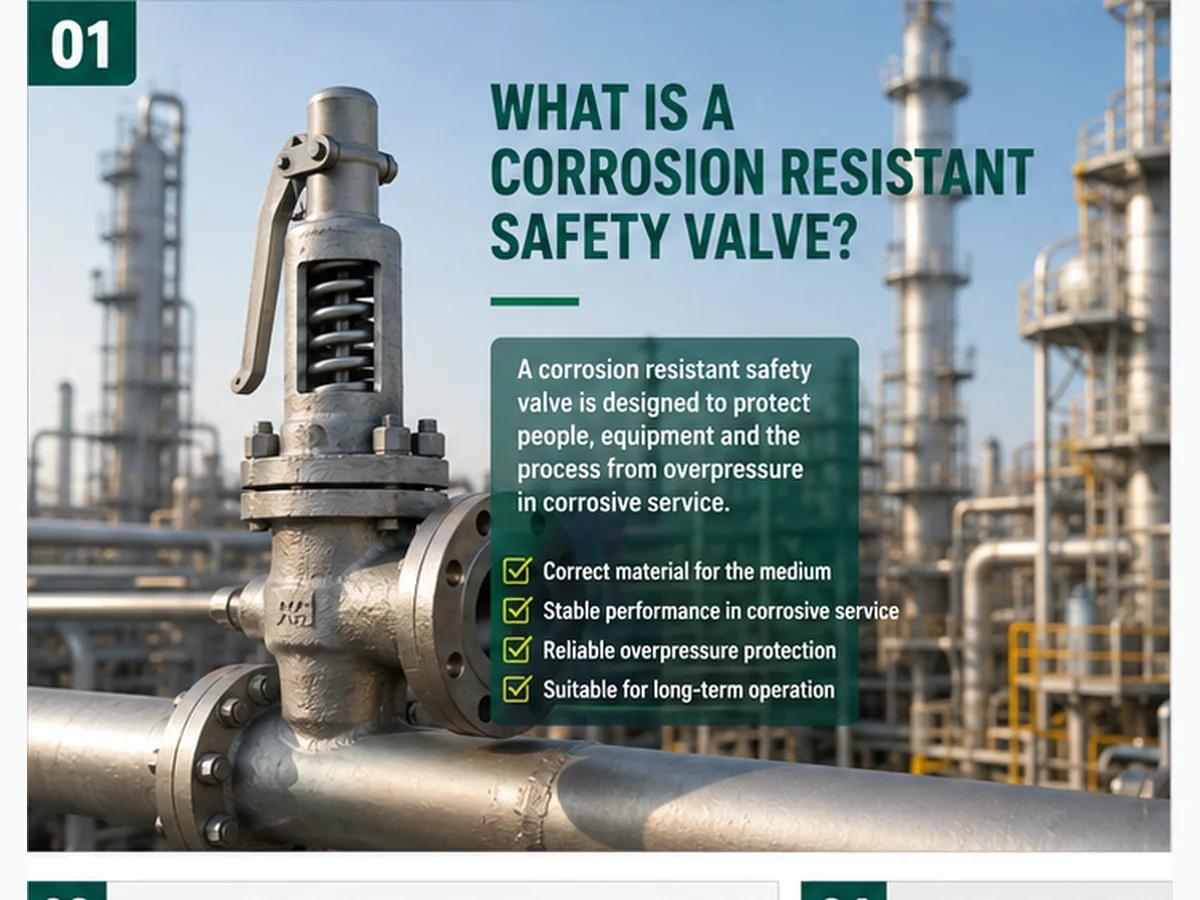
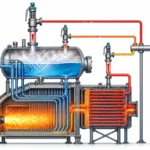
Imagen conceptual industrial; la idoneidad final del material y los detalles del producto deben confirmarse contra la hoja de datos de la válvula seleccionada y la especificación del proyecto.
Respuesta rápida
Una válvula de seguridad resistente a la corrosión se selecciona para un fluido o entorno corrosivo específico, con la compatibilidad de materiales verificada en la envolvente de presión, el trim, las partes de guía, la cámara del resorte, el fuelle, las juntas, los pernos y la ruta de descarga. El acero inoxidable por sí solo no es prueba de compatibilidad. La válvula también debe cumplir con la presión de ajuste requerida, la capacidad de alivio, la temperatura, la contrapresión, la instalación y la base de documentación. .
- Definir el medio exacto, concentración, fase, contaminantes y temperatura de alivio.
- Revisar cada componente funcional mojado o expuesto, no solo el cuerpo.
- Separar la idoneidad del material de la capacidad de alivio requerida y certificada/nominal.
- Verificar la contrapresión de salida, drenaje, exposición de la cámara del resorte y cargas de tubería.
- Utilizar la hoja de datos del modelo seleccionado y la edición del proyecto adoptada para la aprobación final.
¿Qué es una válvula de seguridad resistente a la corrosión?
Definición de ingeniería
Una válvula de seguridad resistente a la corrosión es una válvula de seguridad cuyos materiales y construcción se seleccionan de modo que la corrosión, el agrietamiento por corrosión bajo tensión, los depósitos o el ataque químico no impidan que el dispositivo se abra, levante, descargue, guíe, vuelva a asentar y permanezca hermético a la presión para el servicio especificado. Dependiendo de la exposición, el diseño puede utilizar partes de presión de acero inoxidable o aleación de níquel, trim resistente a la corrosión, asientos metálicos o blandos compatibles, construcción de cámara de resorte protegida, un fuelle, juntas adecuadas y protección externa contra la corrosión.
Sigue siendo un dispositivo de protección contra sobrepresión. La válvula seleccionada debe abrirse según su característica de apertura especificada, evacuar la carga de alivio requerida según el fluido indicado y cerrar dentro de los requisitos de diseño y proyecto aplicables. Los nombres de familias de productos no reemplazan la hoja de datos del modelo seleccionado. Para la secuencia de decisión más amplia, utilice la Guía de selección de válvulas de seguridad.
Límite de terminología: válvula de seguridad, válvula de alivio, PSV, PRV y SRV
La terminología varía según la familia de códigos y la industria. “Válvula de alivio de presión” puede usarse como una categoría amplia de dispositivo, mientras que “válvula de seguridad”, “válvula de alivio” y “válvula de seguridad y alivio” pueden describir diferentes características de apertura o aplicaciones de fluidos. PSV y SRV son abreviaturas comunes de proyecto. PRV es ambiguo porque también puede significar válvula reductora de presión. El nombre por sí solo no puede establecer la base de fluido, la acción de disparo o proporcional, la capacidad certificada, el marcado de código o la idoneidad; esos puntos deben provenir de la hoja de datos de la válvula y del estándar aplicable.
Qué protege
Estas válvulas pueden proteger reactores, recipientes a presión, intercambiadores de calor, separadores, sistemas de gas húmedo, equipos de almacenamiento o transferencia química, depuradores, tuberías y sistemas empaquetados. La selección comienza con el límite de presión protegido y el escenario de alivio dominante, ya que estos determinan la capacidad requerida, la fase del fluido, la temperatura de alivio y la condición de descarga.
Qué “resistente a la corrosión” no significa automáticamente
“Resistente a la corrosión” no significa adecuado para todos los ácidos, álcalis, líquidos que contienen cloruros, disolventes, gas amargo, vapor húmedo, atmósfera de agua de mar o procesos de fase mixta. No significa que el material del cuerpo proteja la tobera, el disco, la guía, el vástago, el resorte, el fuelle, la junta, la junta tórica, los pernos o el sistema de salida. Tampoco demuestra la clasificación de presión, la estanqueidad del asiento, la capacidad de alivio, la certificación de código o el alcance de la inspección.
Límite de selección: La compatibilidad de materiales es una calificación independiente. La capacidad, la presión de ajuste, el margen operativo, la clasificación de presión-temperatura, la contrapresión, la instalación y la documentación deben verificarse por separado. Una válvula puede resistir el medio y aun así ser subdimensionada, inestable o inaceptable para el proyecto.
| Elemento | Significado práctico |
|---|---|
| Función principal | Protección automática contra sobrepresión para un servicio corrosivo definido o con riesgo de corrosión. |
| Estado normal | Cerrado y estanco según la base de aceptación especificada durante la operación normal. |
| Base de apertura | La presión de ajuste especificada y la característica de apertura bajo las condiciones de prueba y servicio aplicables. |
| Base de revisión de corrosión | Composición real, concentración, fase, contaminantes, temperatura normal y de alivio, presión, condensado y exposición externa. |
| Riesgo principal de selección | Tratar un nombre de material genérico como prueba de compatibilidad de componentes, capacidad, estabilidad y documentación. |
Por qué el servicio corrosivo cambia la selección de la válvula de seguridad
La corrosión puede inutilizar la barrera de presión o el mecanismo de operación
La corrosión puede adelgazar o agrietar el cuerpo y el bonete, picar la tobera y el disco, aumentar la fricción de la guía o del vástago, debilitar el resorte, perforar un fuelle, atacar una junta o una junta tórica, oscurecer la placa de identificación y dañar la tubería de entrada o salida. Una válvula de seguridad es un dispositivo dinámico: un ataque localizado en una superficie de guía o sellado puede ser más importante que una pérdida de espesor uniforme en otra parte.
La composición, la fase humectante, los contaminantes y la temperatura de alivio controlan el comportamiento del material
La compatibilidad debe evaluarse en las condiciones que el componente realmente experimenta. El gas seco puede volverse húmedo durante el enfriamiento; el vapor puede condensarse en un bonete o en la línea de descarga; los cloruros pueden concentrarse en los depósitos; los productos químicos de limpieza pueden crear una exposición diferente a la del fluido de proceso. La temperatura normal y de alivio puede cambiar la tasa de corrosión, los límites de los asientos blandos, el comportamiento de las juntas y la presión nominal admisible. Confirme la válvula seleccionada según la normativa aplicable. clasificaciones de presión-temperatura.
Los productos de la corrosión pueden causar fugas, agarrotamiento, elevación inestable y mal reasentamiento
La barrera de presión puede permanecer aparentemente intacta mientras que los depósitos, la cristalización, la polimerización o los productos de la corrosión interfieren con el movimiento del disco y el contacto del asiento. El síntoma resultante puede ser fugas, apertura retardada, elevación restringida, aleteo, traqueteo o fallo al reasentar. El síntoma no identifica la causa raíz por sí solo; la evidencia material, el historial operativo, los datos de la tubería y los hallazgos de la inspección deben revisarse conjuntamente.
Escenario de ingeniería compuesto: Una hoja de datos de gas seco especifica una construcción de cuerpo de acero inoxidable, pero la línea operativa se enfría periódicamente por debajo del punto de rocío del gas ácido. El condensado llega a la guía y al bolsillo de descarga, produciendo depósitos y ataque localizado. El problema observado es el agarrotamiento después del apagado. La corrección es definir la condición de humectación, revisar todas las partes expuestas y el drenaje, y seleccionar materiales utilizando la química real del condensado. El control de prevención es incluir las condiciones de punto de rocío y de arranque/parada en la solicitud de cotización (RFQ). Este es un escenario de formación, no un registro de cliente.
Para H2En servicios de producción de petróleo y gas que contienen azufre o de endulzamiento de gas natural, la norma ISO 15156 / NACE MR0175 puede ser relevante para la selección de materiales metálicos resistentes al agrietamiento. Complementa, en lugar de reemplazar, el código de diseño aplicable. No debe añadirse a todas las solicitudes de cotización de servicios químicos ni tratarse como una norma general de compatibilidad para ácidos, cloruros o refino posterior.
Utilice ISO 15156 / NACE MR0175 solo para los servicios dentro de su alcance
| Factor de servicio | Por qué cambia la selección | Qué confirmar |
|---|---|---|
| Medios ácidos o alcalinos | Puede atacar las partes de presión, el trim, los asientos y las juntas; el comportamiento de la corrosión cambia con la concentración y la temperatura. | Composición, rango de concentración, contaminantes, fase, temperatura normal y de alivio. |
| Cloruros o exposición marina | Puede promover la corrosión localizada o el agrietamiento por corrosión bajo tensión en materiales y condiciones susceptibles. | Fuente de cloruro, exposición húmeda/seca, temperatura, depósitos, grietas, lavado y atmósfera exterior. |
| Gas húmedo o vapor corrosivo | La condensación puede exponer partes que no están humedecidas durante la operación normal en estado estable. | Punto de rocío, condiciones de arranque/parada, química de la condensación, drenaje y enrutamiento de salida. |
| Medios sucios, cristalizantes o polimerizantes | Los depósitos pueden bloquear la ruta de flujo, aumentar la fricción o dañar el asiento. | Sólidos, viscosidad, tendencia a la cristalización/polimerización, método de limpieza e historial de mantenimiento. |
| Temperatura de alivio alta o baja | Puede cambiar el mecanismo de corrosión, las propiedades mecánicas, el comportamiento del resorte y los límites de sellado. | Temperatura normal, de perturbación y de alivio más la base de la clasificación de temperatura-presión. |
Regla de ingeniería: Ninguna aleación es resistente a todos los entornos corrosivos. Seleccione materiales utilizando la exposición real, los datos de servicio o de prueba disponibles, los requisitos mecánicos, la mantenibilidad y la compatibilidad con los componentes adyacentes, no una etiqueta genérica de “resistente a la corrosión”.
¿Dónde se utilizan las válvulas de seguridad resistentes a la corrosión?
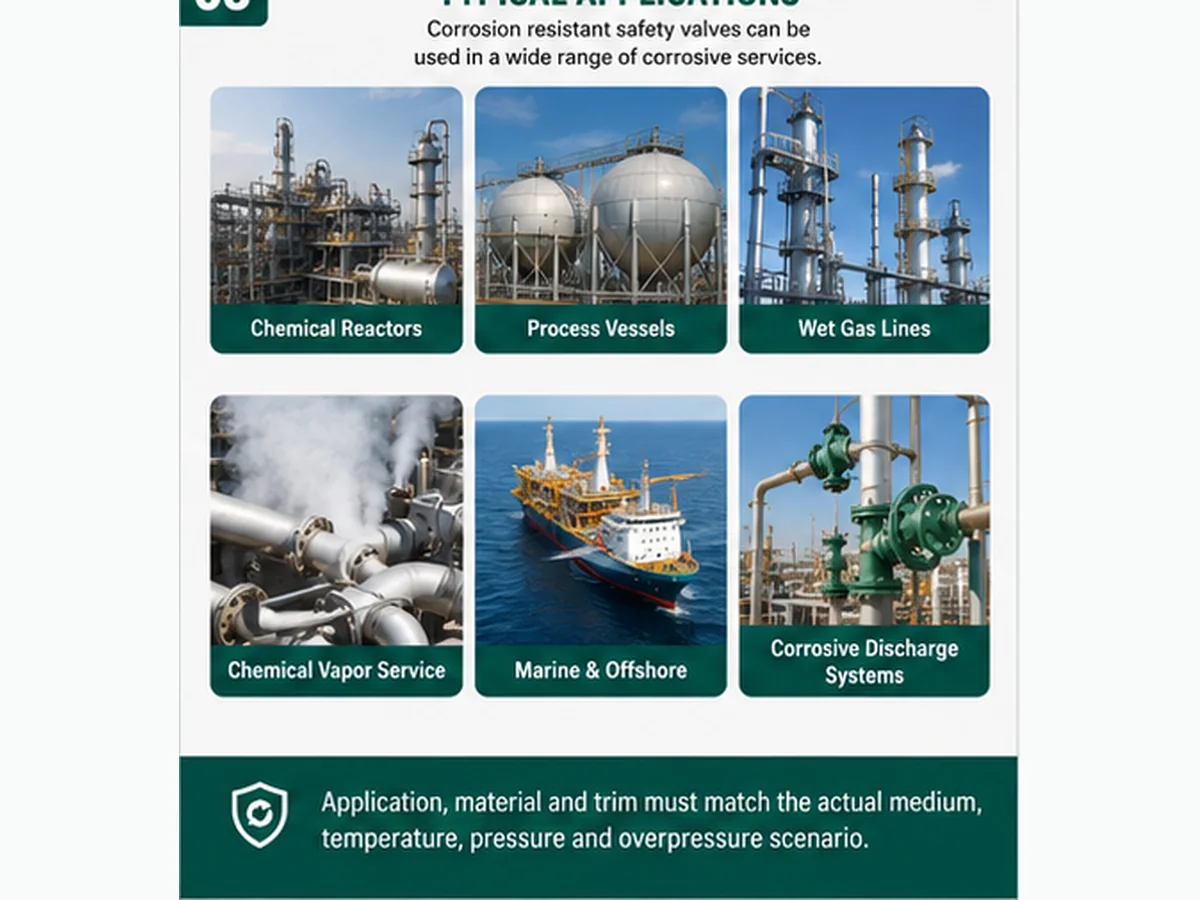
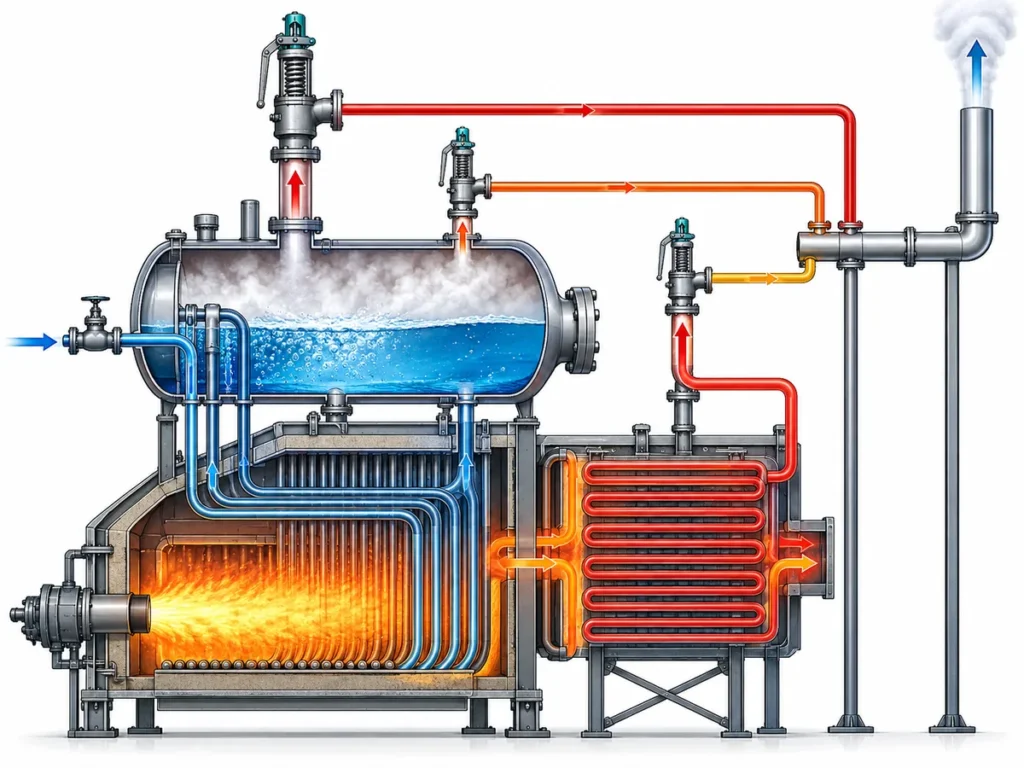
Mapa de aplicación simplificado para orientación de solicitud de cotización; la ubicación real de la válvula y la selección de materiales dependen del equipo protegido, el escenario de alivio y la revisión del proyecto.
Equipos químicos y de proceso
Reactores, recipientes a presión, intercambiadores, separadores y sistemas de transferencia pueden exponer la entrada y el interior mojado a ácidos, álcalis, disolventes, catalizadores o productos de reacción. El escenario de alivio dominante y la composición de alivio pueden diferir de la operación normal.
Servicio de gas húmedo, vapor y condensación
Los gases húmedos y los vapores corrosivos requieren una revisión del punto de rocío, condensado y drenaje, ya que la válvula y el sistema de descarga pueden experimentar una fase líquida que no está presente en la descripción normal del proceso.
Exposición atmosférica en exteriores, marina y corrosiva
Los ataques externos pueden afectar al bonete, la carcasa del resorte, la tornillería, la tapa, la palanca, las ventilaciones, los desagües y la placa de identificación, incluso cuando el fluido del proceso no es corrosivo. El recubrimiento, el material, el drenaje y el acceso para inspección son decisiones separadas.
El servicio higiénico es un problema de selección diferente
El servicio higiénico se centra en la facilidad de limpieza, el drenaje, el acabado superficial y los requisitos de CIP/SIP o de contacto con el producto. Una válvula higiénica también puede sufrir corrosión, pero las definiciones de producto “sanitario” y “resistente a la corrosión” no son intercambiables.
¿Qué partes necesitan revisión de corrosión?
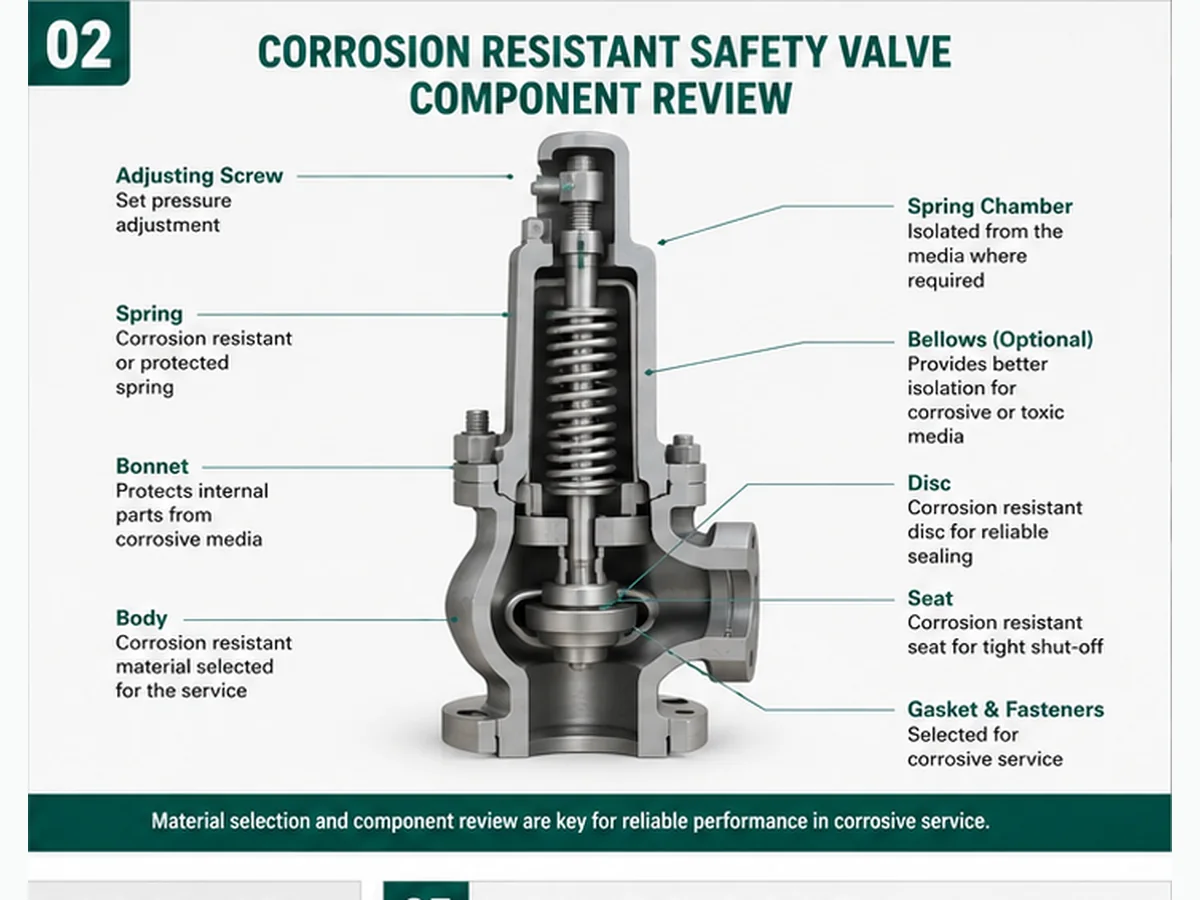
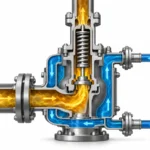
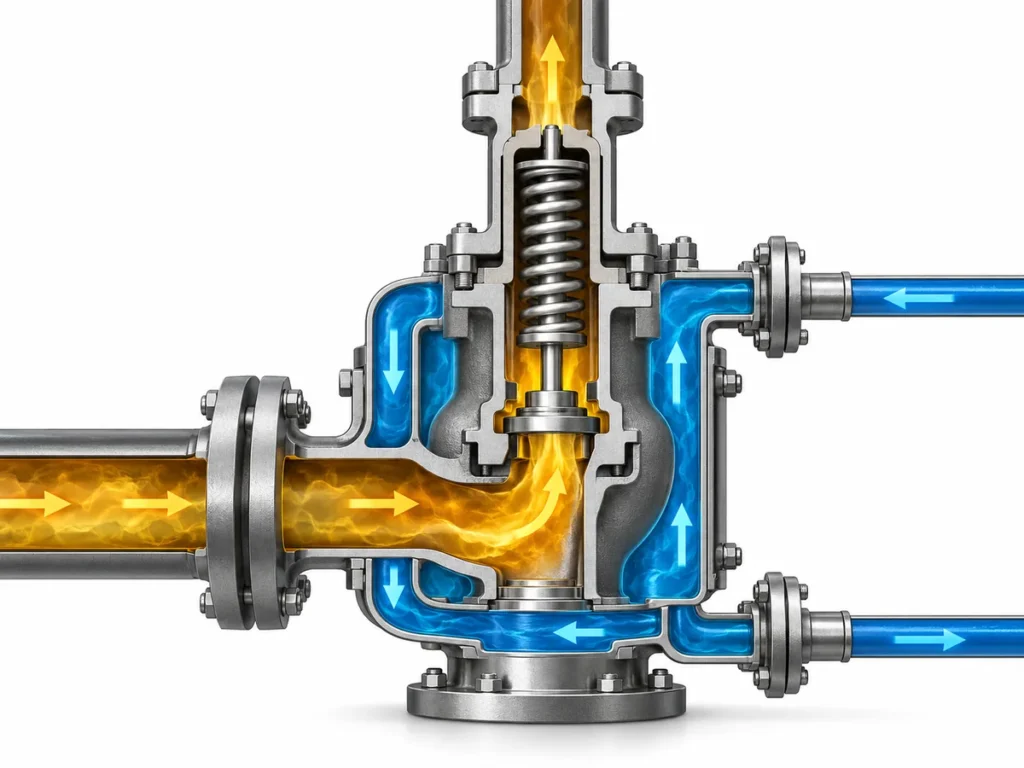
Ilustración de ingeniería simplificada; no es una sección transversal específica del modelo, garantía de material o plano de construcción certificado.
Especificar solo el material del cuerpo es un error frecuente en la adquisición. La revisión debe seguir el límite de presión, la trayectoria del flujo mojada, el mecanismo de movimiento y guía, la cámara del resorte, las juntas, los elementos de fijación y la exposición del lado de descarga. Cada componente puede tener una exposición y una consecuencia de fallo diferentes.
| Componente | Preocupación por la corrosión | Qué confirmar antes de solicitar cotización |
|---|---|---|
| Cuerpo y bonete | Corrosión general o localizada, ataque externo, adelgazamiento o agrietamiento del límite de presión. | Material, especificación de fundición/forja si es necesario, clasificación de presión-temperatura, política de margen de corrosión, alcance de la inspección. |
| Tobera y disco | Picaduras, erosión-corrosión, agarrotamiento o depósitos que cambian el contacto del asiento y la elevación. | Materiales mojados, emparejamiento de durezas, limpieza del medio, cambio de fase/velocidad y método de mantenimiento. |
| Asiento / asiento blando / junta tórica | Ataque químico, hinchazón, endurecimiento, permeación, extrusión o daño por temperatura. | Diseño con asiento metálico o blando, grado del polímero, límites de temperatura, aceptación de fugas y comportamiento de descompresión cuando sea relevante. |
| Guía y husillo | Corrosión localizada, depósitos, agarrotamiento o desalineación que aumentan la fricción. | Combinación de materiales, holguras, exposición a condensados/sólidos, limpieza y evidencia de inspección. |
| Resorte y cámara del resorte | Corrosión o depósitos que alteran la fuerza del resorte, el movimiento o la repetibilidad. | Entorno del bonete, enrutamiento de ventilación, necesidad de fuelle/protección, material del resorte y límites de recubrimiento. |
| Fuelle | Corrosión, fatiga, perforación o bloqueo de la ventilación; el fallo puede alterar la respuesta a la contrapresión. | Aleación del fuelle, movimiento, temperatura, ciclo de servicio, exposición interna/externa y ruta de ventilación. |
| Juntas, empaquetaduras y sellos | Incompatibilidad química, fluencia, relajación, hinchazón o fugas. | Material exacto, límites de temperatura/presión, procedimiento de montaje y trazabilidad de reemplazo. |
| Sujetadores, tapa y piezas externas | Corrosión atmosférica, piezas de ajuste agarrotadas, pérdida de identificación o acceso deficiente. | Entorno externo, material de los tornillos, sistema de recubrimiento, protección de la placa de identificación y acceso para inspección. |
Si el medio corrosivo o la presión de salida pueden alcanzar la cámara del resorte, válvulas de seguridad equilibradas por fuelle o puede ser necesaria la revisión de otra construcción protegida. Un fuelle no es una barrera universal contra la corrosión: la aleación, la temperatura, la fatiga, la ventilación, el movimiento y el modo de fallo siguen siendo específicos del modelo.
Escenario de ingeniería compuesto: Un reemplazo mejora el cuerpo de acero al carbono a acero inoxidable, pero retiene un material de tobera, disco y guía incompatible. La válvula pasa una verificación de presión de ajuste en taller, luego desarrolla fugas en el asiento y movimiento brusco en servicio. La causa de ingeniería es la incompatibilidad de materiales a nivel de componente, no un grado de cuerpo incorrecto. La corrección es revisar el programa completo de materiales mojados y funcionales; el control de prevención es una hoja de datos que nombra por separado los materiales del cuerpo, tobera, disco, guía, vástago, resorte, fuelle, junta y asiento. Este es un caso ilustrativo de formación.
Revisión de las principales opciones de diseño para válvulas de seguridad en medios corrosivos
Construcción en acero inoxidable y aleaciones
La selección de materiales debe coincidir con el mecanismo de corrosión y la carga mecánica. “Inoxidable” es un nombre de familia, no una decisión de compatibilidad, y un mayor contenido de aleación no elimina la necesidad de revisar la fabricación, la dureza, el agarrotamiento y los materiales adyacentes.
Fuelle equilibrado o cámara de resorte protegida
Un fuelle o bonete protegido puede aislar ciertas piezas de la presión de salida o de la descarga corrosiva, pero el propio fuelle se convierte en un componente sensible a la presión y a la fatiga. Su ruta de ventilación y la indicación de fallo deben permanecer abiertas y correctamente enrutadas.
Selección de asiento metálico, asiento blando y junta
Los asientos metálicos evitan los límites de compatibilidad de polímeros, pero pueden ser sensibles a picaduras y partículas. Los asientos blandos pueden reducir las fugas cuando son química y térmicamente adecuados, pero la hinchazón, el endurecimiento, la descompresión y la trazabilidad del reemplazo requieren revisión.
Limitaciones de revestimiento y recubrimiento
Un recubrimiento o revestimiento puede soportar el control de corrosión externo o interno seleccionado solo cuando el fabricante aprueba su ubicación, preparación, espesor, método de reparación y servicio de temperatura/presión. No debe obstruir el flujo, las holguras, las ventilaciones ni las superficies de sellado.
Límites convencionales de válvulas de seguridad de resorte y pilotadas
Las válvulas convencionales son simples pero pueden ser sensibles a la contrapresión y a la exposición del bonete. Los diseños pilotados pueden ofrecer un comportamiento diferente en cuanto a margen operativo y contrapresión, pero las líneas de sensado, los pilotos y los sellos pueden ser vulnerables a obstrucciones, condensación, cristalización o ataque químico.
Controles de inspección, reparación y documentación
Se deben especificar los registros de materiales, los resultados de presión de tarado y estanqueidad del asiento, los datos tal como se encontraron/tal como se dejaron, la trazabilidad de las piezas de repuesto, el re-sellado y la gestión del cambio, cuando sea necesario. Estos registros no reemplazan la revisión de la capacidad o del sistema instalado.
| Opción de diseño | Cuándo puede ser revisado | Límite |
|---|---|---|
| Piezas de presión de acero inoxidable o aleación | Cuando los datos de corrosión respaldan el grado para el fluido real, la temperatura y la condición de fabricación. | No es universal; el grado, la forma del producto, el tratamiento térmico, la dureza, la soldadura y la exposición al servicio pueden ser importantes. |
| Equipamiento resistente a la corrosión | Cuando la tobera, el disco, la guía o la cara del husillo sufren ataque localizado, agarrotamiento, erosión o depósitos. | El equipamiento aún debe moverse, guiarse, sellarse y mantener la geometría de flujo seleccionada. |
| Fuelle equilibrado / cámara protegida | Cuando la presión de salida o la descarga corrosiva puedan afectar a los componentes de la cámara del resorte. | El material del fuelle, la vida útil cíclica, la ventilación, la temperatura, el movimiento y los límites de contrapresión requieren datos del modelo. |
| Asiento blando | Cuando se requiere menor fuga y el elastómero o polímero es compatible con la química, presión y temperatura. | Se debe confirmar la compatibilidad química, la descompresión, el envejecimiento y la trazabilidad de las piezas de repuesto. |
| Revestimiento o recubrimiento | Cuando se aprueba para una superficie y exposición definidas como parte del diseño del fabricante/proyecto. | No reemplaza la revisión de la presión límite, el trimado, el asiento, el área de flujo, la inspección o el código. |
| Configuración pilotada | Cuando el proyecto necesita sus características de margen operativo o contrapresión y el medio es adecuado para el piloto y la ruta de detección. | Servicios sucios, viscosos, que cristalizan, condensan o congelan pueden afectar los pasos y sellos del piloto; usar límites específicos del modelo. |
Escenario de ingeniería compuesto: Se selecciona una válvula pilotada para mejorar el margen operativo, pero el vapor del proceso se condensa en la línea de detección y deja depósitos cristalinos. La apertura se retrasa y la repetibilidad se degrada. La corrección es revisar la limpieza del fluido, el comportamiento de fase, el enrutamiento de la línea de detección y una arquitectura de válvula alternativa. El control de prevención es incluir las condiciones de condensado, sólidos y limpieza en la decisión del tipo de válvula. Este es un escenario ilustrativo, no una reclamación de producto.
Matriz preliminar de revisión para servicio corrosivo
Esta matriz es una herramienta de selección, no una tabla de materiales ni un selector de modelo final. Identifica la información necesaria para definir la exposición a la corrosión y mantener la selección de materiales separada del dimensionamiento de la protección contra sobrepresión.
| Pregunta | Por qué cambia la decisión | Qué enviar antes de la solicitud de cotización (RFQ) |
|---|---|---|
| ¿Qué equipo y límite de presión están protegidos? | El código del equipo, la presión máxima de diseño (MAWP)/presión de diseño y el escenario de alivio establecen la base de la protección contra sobrepresión. | Tipo/etiqueta del equipo, documentos de diseño, presión de operación, presión máxima de diseño (MAWP)/presión de diseño y datos de conexión. |
| ¿Cuál es el escenario de alivio que rige? | La salida bloqueada, el fallo del regulador, la expansión térmica, la reacción descontrolada, la rotura de tubos o la exposición al fuego pueden cambiar el flujo, la fase y la composición. | Descripción del escenario, capacidad requerida y base de cálculo del ingeniero responsable. |
| ¿Cuál es el medio exacto en condiciones normales y de alivio? | La corrosión depende de la composición, concentración, contaminantes, fase humectante, temperatura y presión, no solo del nombre comercial. | Rango de composición, contaminantes, pH cuando sea relevante, condición de fase vapor/líquido/bifásica y temperatura de alivio. |
| ¿Puede ocurrir condensación, sólidos, cristalización o polimerización? | Los depósitos y el cambio de fase pueden afectar la exposición del material, las holguras, el contacto del asiento, el drenaje y el mantenimiento. | Punto de rocío, sólidos, viscosidad, límites de cristalización/polimerización, plan de arranque/parada y limpieza. |
| ¿Hacia dónde descarga la válvula? | La descarga atmosférica, las chimeneas y los cabezales comunes cambian la contrapresión, la exposición a la corrosión, el drenaje y las cargas de reacción. | Dibujo de salida, destino, presión del cabezal, contrapresión acumulada, drenajes y soporte. |
| ¿Qué evidencia y alcance de inspección se requieren? | Los registros de materiales, PMI, registros de pruebas, evidencia de capacidad y puntos de control afectan la aceptación y el plazo de entrega. | Especificación del proyecto, plan de QA, lista de documentos, puntos de retención/observación y nivel de trazabilidad. |
| ¿Qué mecanismo de corrosión es creíble? | El ataque uniforme, la picadura, la corrosión en hendiduras, la corrosión galvánica, la corrosión por erosión y el agrietamiento asistido por el medio requieren controles diferentes. | Hallazgos de inspección previos, estudio de corrosión, datos de laboratorio/servicio, materiales adyacentes y condición de fabricación. |
| ¿Qué términos de presión están confirmados? | Presión de operación, MAWP, presión de ajuste, CDTP, sobrepresión, acumulación y presión de alivio afectan diferentes verificaciones y no deben fusionarse. | Valores de la hoja de datos del proyecto con unidades, base de fluido/prueba, contrapresión y edición del código adoptada. |
Regla de RFQ: “Válvula de seguridad resistente a la corrosión” o “válvula de seguridad de acero inoxidable” no es una especificación completa. Como mínimo, proporcione el medio real y el rango de concentración, fase, contaminantes, temperatura de operación y alivio, términos de presión, carga de alivio, contrapresión, materiales de los componentes y la evidencia requerida.
La resistencia a la corrosión no demuestra la capacidad de alivio
La resistencia a la corrosión y el rendimiento de alivio son verificaciones de ingeniería independientes. Un material compatible no establece el área de flujo requerida, el coeficiente de descarga, la elevación, la estabilidad o la capacidad según el código. Por el contrario, una válvula con capacidad nominal adecuada aún puede fallar porque el asiento, la guía, la cámara del resorte o el sistema de descarga no son químicamente adecuados.
La capacidad de alivio requerida es la carga generada por el escenario de alivio que rige. La válvula seleccionada debe tener una capacidad nominal certificada o aceptada por el proyecto para la base de fluido y las condiciones indicadas. El área efectiva del orificio, el diámetro real, el coeficiente y la elevación no son términos intercambiables, y el tamaño de la conexión de entrada/salida es solo una interfaz mecánica. Las capacidades de vapor, aire/gas, líquido y bifásicas no pueden sustituirse sin el cálculo y la base de datos aplicables. Para la distinción completa, revise dimensionamiento de válvulas de seguridad y capacidad de alivio certificada.
| Elemento | Qué significa | Error común |
|---|---|---|
| Idoneidad del material | Si cada parte de la frontera de presión, mojada, móvil, de sellado y expuesta es adecuada para la química y temperatura reales. | Asumiendo que un grado de material demuestra protección contra la presión o vida útil. |
| Presión de ajuste y CDTP | La presión de ajuste define la base de apertura especificada; el CDTP puede tener en cuenta diferencias de prueba/servicio como contrapresión o temperatura, cuando sea aplicable. | Considerar una prueba de ajuste exitosa como aprobación de capacidad, material o sistema instalado. |
| Capacidad de alivio requerida | La carga que debe ser aliviada para el escenario de control, indicando la fase del fluido y la base de cálculo. | Utilizar el tamaño de la conexión, la apariencia previa de la válvula o el flujo del proceso como atajo. |
| Capacidad de alivio certificada / nominal | Evidencia de capacidad específica del modelo y la configuración para el fluido, presión, temperatura y base estándar indicados. | Asumir que todas las válvulas con el mismo DN/NPS o fundición del cuerpo tienen la misma capacidad. |
| Orificio efectivo, diámetro interior real y coeficiente | Diferentes términos geométricos y de rendimiento utilizados en el dimensionamiento o datos del producto; deben interpretarse utilizando el método aplicable. | Equiparar un diámetro interior medido o una letra de catálogo con la capacidad final aceptada. |
| Contrapresión y pérdida de entrada | Presiones del sistema instalado que pueden afectar la apertura, la capacidad y la estabilidad. | Seleccionar el material correctamente ignorando el rendimiento del sistema de tuberías. |
Para contexto de dimensionamiento, utilice Dimensionamiento de válvulas de seguridad API 520 como ayuda de traducción. La aceptación final de la capacidad requiere el cálculo del proyecto, los datos del fabricante seleccionado y la edición adoptada.
Escenario de ingeniería compuesto: Una expansión del proceso aumenta la carga de alivio de vapor gobernante, pero se mantiene la válvula existente resistente a la corrosión porque su aleación y tamaño de conexión no cambian. La prueba de presión de tarado se supera, pero la base de capacidad original ya no cubre el nuevo caso. La corrección es repetir la revisión de la carga de alivio y la capacidad seleccionada; el control de prevención es un disparador de gestión de cambios siempre que cambien la composición, el rendimiento, el escenario o el sistema de descarga. Este es un escenario de formación.
Revisión de contrapresión y cámara de resorte en servicio corrosivo
La contrapresión debe separarse en presión superpuesta presente antes de la apertura y presión acumulada generada por el flujo de descarga. Cada una puede ser constante o variable. En servicio corrosivo, el sistema de salida también controla si el vapor, el condensado o la descarga mixta llegan al fuelle, bonete, ventilación, cámara de resorte, tubería de salida y equipo aguas abajo. Por lo tanto, el tipo de válvula, el material y el diseño de descarga deben revisarse conjuntamente.
| Condición | Enfoque de revisión | Acción posible antes de la solicitud de cotización |
|---|---|---|
| Descarga atmosférica | Ruteo seguro, penacho corrosivo o líquido, fuerza de reacción, ataque externo, ruido y drenaje. | Proporcione orientación de salida, elevación, exposición cercana, fase del medio y requisito de material. |
| Tubería de salida larga o elevada | Contrapresión acumulada, líquido atrapado, movimiento térmico, cargas de soporte y tolerancia a la corrosión. | Proporcione tamaño de línea, longitud equivalente, accesorios, perfil de elevación, drenajes, soporte y material. |
| Colector de descarga común | Presión superpuesta, presión variable de cabezal, química mixta y suposiciones de alivio simultáneo. | Proporcione presión mínima/máxima de cabezal, dispositivos conectados, casos de alivio y compatibilidad de descarga combinada. |
| Posible exposición de la cámara de resorte o del bonete | Corrosión del resorte, guía, husillo o internos del bonete y consecuencias del bloqueo del venteo. | Confirmar la construcción del bonete, la necesidad de fuelle, la ruta de venteo y la exposición normal/anormal. |
| Fuelle considerado | Compensación de contrapresión más revisión de corrosión, fatiga y modo de fallo del fuelle. | Utilizar los límites del modelo seleccionado para material, movimiento, temperatura, contrapresión y venteo. |
Para el mecanismo a nivel de sistema y el límite de configuración, revisar Contrapresión y fuelle.
Escenario de ingeniería compuesto: Una válvula de acero inoxidable descarga a través de un cabezal horizontal recién agregado. El condensado ácido se acumula en un punto bajo sin drenaje y la presión variable del cabezal llega a la salida antes de la apertura. La fuga del asiento y la corrosión externa aparecen después de varios eventos. La corrección combina drenaje, cálculo de presión del cabezal, revisión de materiales y revisión de la configuración de la válvula. El control de prevención es incluir modificaciones de salida en la gestión del cambio. Este es un caso ilustrativo.
¿Qué información define una válvula de seguridad resistente a la corrosión?
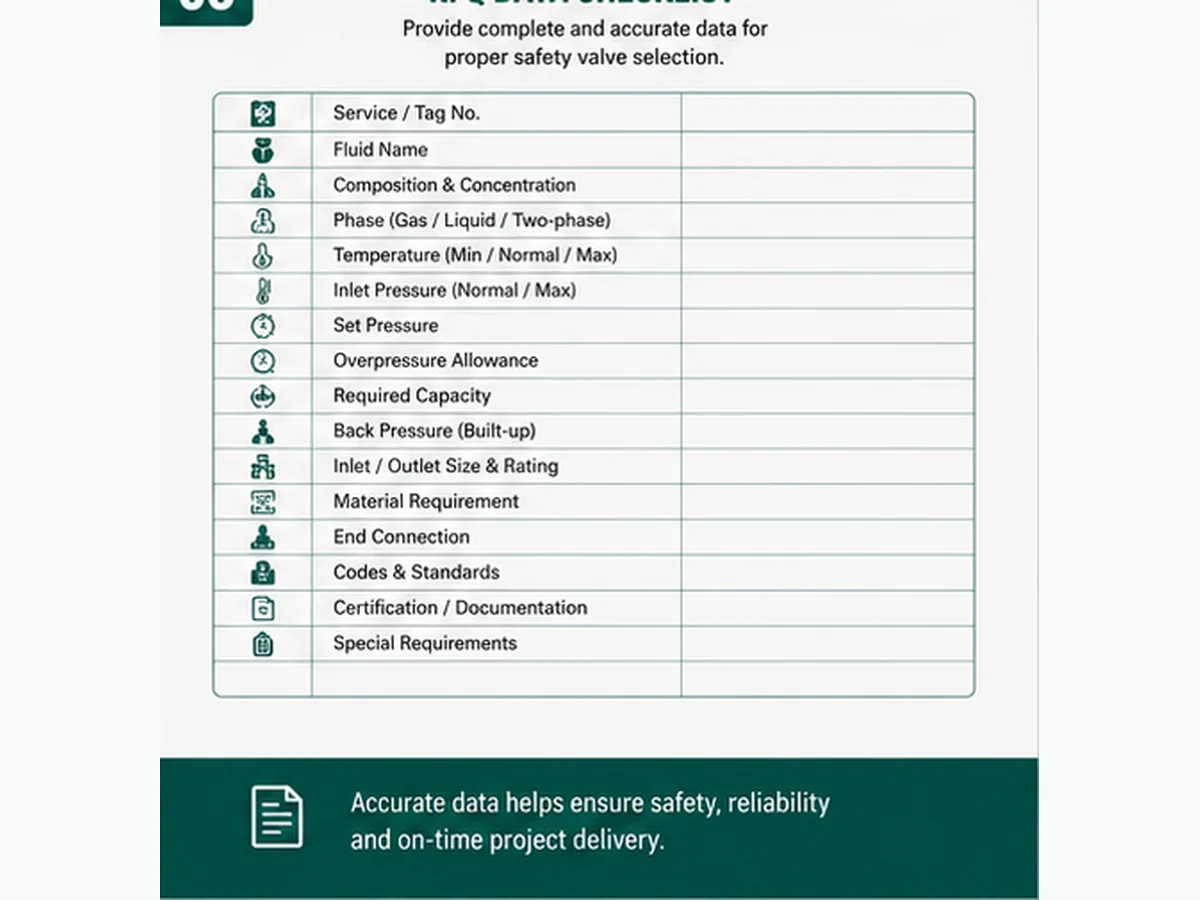
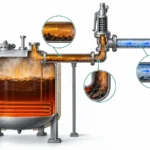
Gráfico de lista de verificación de RFQ; la selección final de la válvula depende de los datos de servicio reales, la documentación del fabricante y la revisión del proyecto/código.
Una definición se convierte en una especificación de ingeniería solo cuando se conocen el equipo protegido, el caso de alivio y la exposición real. La RFQ debe indicar las condiciones normales, anormales, de parada y de alivio cuando cambian de fase o química; de lo contrario, el proveedor no puede confirmar de manera responsable los materiales o la configuración.
Errores comunes en la selección de válvulas de seguridad resistentes a la corrosión
| Error | Riesgo | Verificar mejor |
|---|---|---|
| Asumiendo que el acero inoxidable es siempre suficiente | Corrosión localizada, agrietamiento ambiental, agarrotamiento, ataque de sellos o fallos prematuros. | Confirmar el mecanismo de corrosión, la química exacta, la temperatura, la condición de fabricación y cada componente expuesto. |
| Especificación solo del material del cuerpo | La tobera, el disco, la guía, el vástago, el resorte, el fuelle, la junta o los pernos pueden permanecer vulnerables. | Emitir un programa de materiales a nivel de componente y un mapa de exposición. |
| Ignorando la capacidad y la base del fluido | La válvula puede ajustarse y resistir la corrosión, pero fallar al cumplir con la carga de alivio requerida. | Compare la capacidad requerida con la capacidad nominal aceptada para el fluido y las condiciones reales. |
| Ignorando la contrapresión y el drenaje | Operación inestable, retención de condensado corrosivo, exposición del fuelle/resorte o configuración incorrecta. | Calcule los efectos de salida y revise ventilaciones, drenajes, soportes y materiales. |
| Copiar la válvula antigua | Repite un error histórico de dimensionamiento, material, instalación o documentación después de que las condiciones del proceso hayan cambiado. | Revise el escenario de alivio actual, la química, la capacidad, la placa de características, los datos encontrados y la tubería. |
| Tratar el recubrimiento o el revestimiento como una solución universal | El daño, la desunión o las superficies funcionales desprotegidas pueden anular la estrategia. | Confirme la ubicación aprobada por el fabricante, la preparación, la temperatura, la inspección y el método de reparación. |
Advertencia de reemplazo: Una válvula corroída no debe copiarse solo por tamaño, clase de presión, presión de ajuste o material del cuerpo. Determine si la falla provino de la química, el cambio de fase, la desadaptación de capacidad, la contrapresión, los depósitos, la exposición externa, la práctica de mantenimiento o más de un mecanismo.
Comprobaciones de instalación y descarga en servicio corrosivo
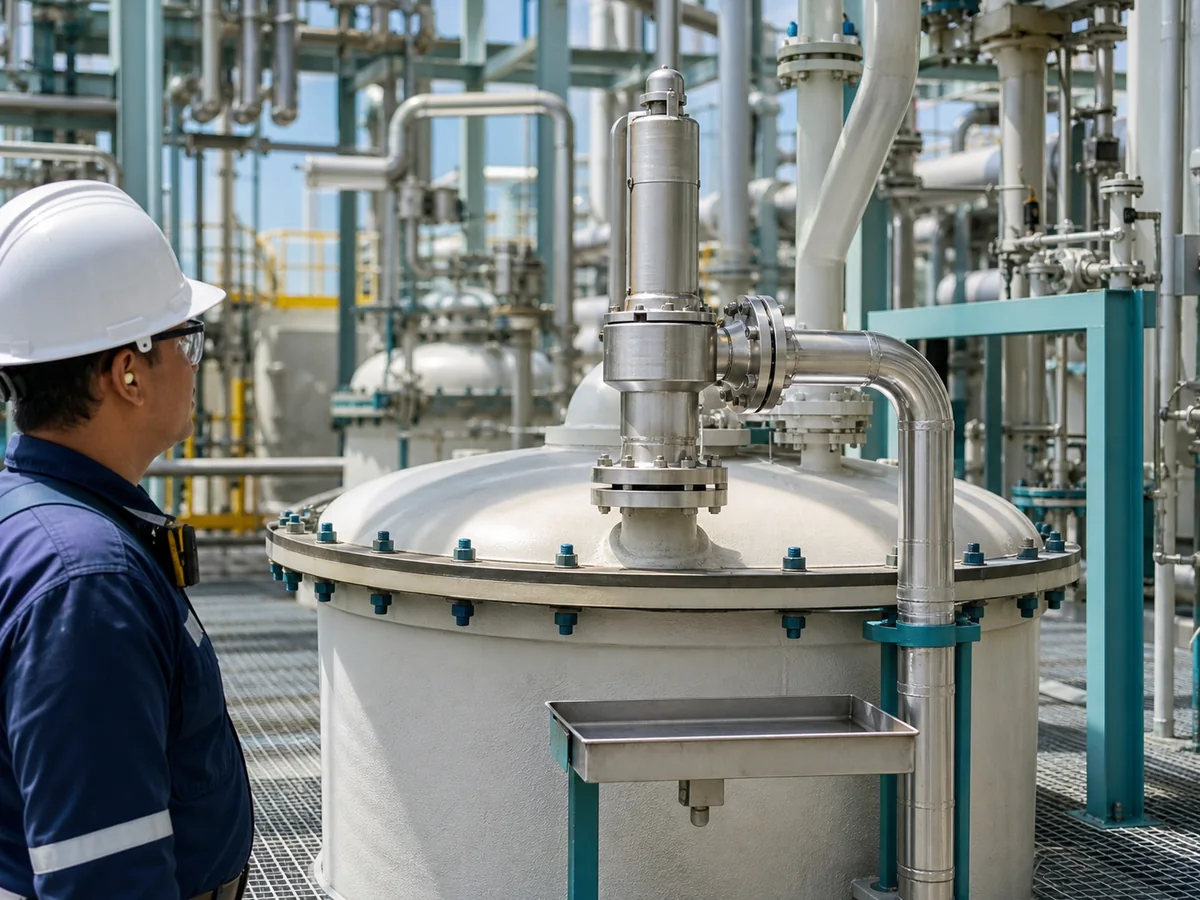
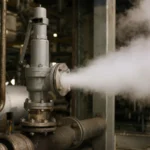
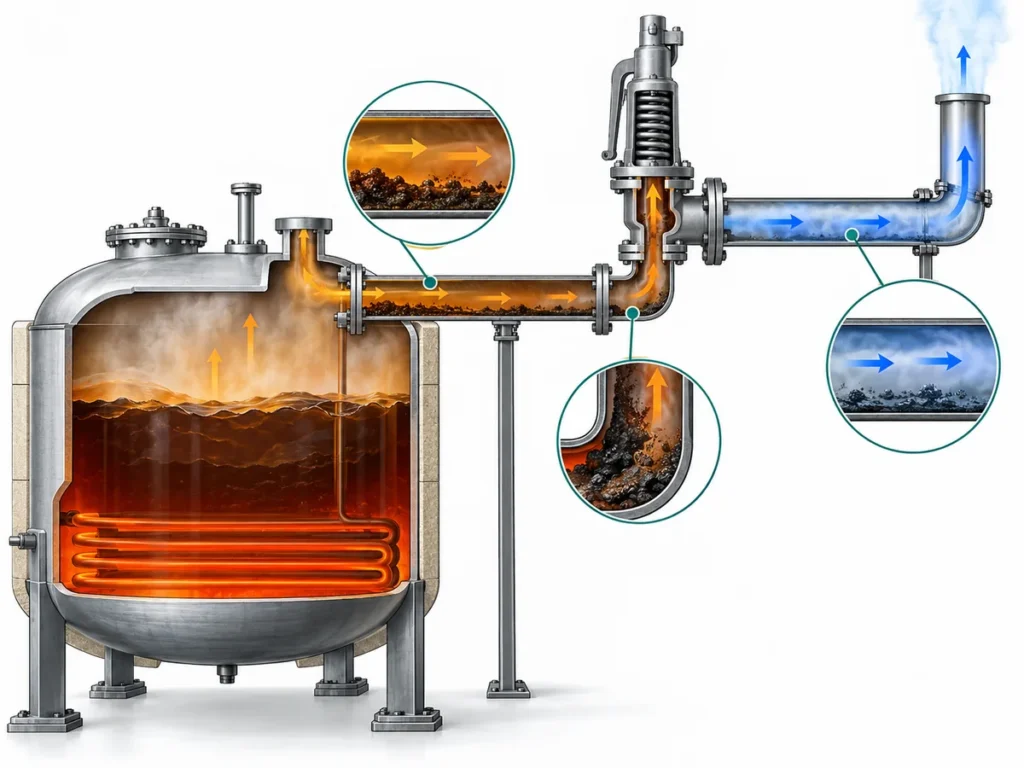
Ilustración simplificada de instalación; la instalación final debe seguir las instrucciones del modelo seleccionado, las especificaciones del proyecto y el código aplicable.
Orientación de montaje, limpieza de entrada y pérdida de presión
Instale la válvula seleccionada en la orientación requerida por el fabricante, el código de construcción y el proyecto. La trayectoria de entrada debe estar limpia, adecuadamente soportada y revisada en cuanto a pérdida de presión, corrosión, depósitos y tensiones en la tubería. Los productos de corrosión o una trayectoria de flujo reducida pueden afectar la estabilidad y la capacidad de entrega, incluso cuando los materiales de la válvula son adecuados.
Soporte de salida, drenaje, fuerza de reacción y descarga corrosiva
Soporte independiente de la tubería de salida y canalización de la descarga a una ubicación aprobada. Revisar la contrapresión superpuesta y acumulada, la fuerza de reacción, el movimiento térmico, los drenajes y los posibles acumulaciones de líquido. La condensación corrosiva puede atacar la salida, el fuelle o la cámara del resorte y puede restringir la descarga si no se gestionan los puntos bajos.
Acceso para inspección e intervalos de mantenimiento basados en el riesgo
El servicio corrosivo puede justificar intervalos de inspección más cortos o basados en la condición, pero no aplica un intervalo universal. Utilizar el historial del proceso, el mecanismo de corrosión, los resultados encontrados, las fugas, los depósitos, el rendimiento del material, la regulación aplicable y el programa de integridad del sitio. Mantener el acceso a las tapas, venteos, drenajes, sellos e identificación. Para revisiones generales de la disposición, revisar la guía de instalación de válvulas de seguridad.
| Hacer | No hacer | Por qué es importante |
|---|---|---|
| Instalar en la orientación aprobada con una entrada corta, limpia y compatible. | No utilizar una entrada larga, reducida o corroída sin una revisión hidráulica y mecánica. | La pérdida de carga en la entrada, los depósitos y la tensión de la tubería pueden afectar la estabilidad de apertura y la capacidad entregada. |
| Soportar la salida de forma independiente y evaluar las cargas de reacción. | No permitir que una línea de descarga pesada o con movimiento térmico cargue el cuerpo de la válvula. | La carga mecánica puede distorsionar la alineación, dañar las conexiones y empeorar las fugas. |
| Proporcionar drenaje donde puedan acumularse condensados o líquidos de lavado. | No crear acumulaciones de líquido no revisadas en la salida, el venteo del bonete o la ruta de detección. | El líquido corrosivo retenido puede atacar componentes, congelarse, polimerizarse o restringir el movimiento. |
| Dirija la descarga corrosiva y las ventilaciones del bonete/fuelle a ubicaciones seguras y aprobadas. | No tape las ventilaciones, drenajes o trayectorias de descarga como solución provisional para fugas. | El enrutamiento bloqueado puede alterar el comportamiento de la válvula o exponer al personal y al equipo. |
| Proporcione acceso para inspección y conserve la placa de identificación, los sellos y la trazabilidad. | No defina un intervalo de inspección fijo sin evidencia de servicio o base regulatoria. | La condición encontrada y el historial de fallos repetidos deben impulsar el plan de mantenimiento. |
Requisitos de pruebas, documentación e inspección
Los requisitos de documentación deben mostrar tres cosas separadas: lo que se seleccionó, qué materiales y construcción se suministraron, y cómo se probó o reparó el dispositivo. Un resultado de presión de tarado no demuestra la estanqueidad del asiento o la capacidad; un certificado de material no demuestra la compatibilidad química; y una autorización de reparación no aprueba el diseño del sistema de alivio instalado.
| Documento / Artículo de prueba | Lo que soporta | Nota del comprador |
|---|---|---|
| Hoja de datos de válvula aprobada | Modelo seleccionado, característica de apertura, términos de presión, base de fluido, materiales, conexiones y límites. | Úselo como línea base técnica controlada; registre las revisiones a través de la gestión del cambio. |
| Registros de materiales a nivel de componente | Materiales especificados de la frontera de presión, del trim, del resorte, del fuelle, de la junta y del asiento donde se requiera trazabilidad. | Definir piezas y nivel de certificado antes de la cotización; no solicitar “certificados de materiales completos” genéricos.” |
| PMI u otra verificación de materiales, si es necesario. | Verificación de piezas de aleación identificadas dentro del programa de verificación de materiales del proyecto. | Indicar piezas, método, requisitos de aceptación y de inspección; la PMI no es un estudio de compatibilidad de corrosión. |
| Prueba de presión de tarado y base CDTP. | Ajuste de apertura bajo condiciones de prueba especificadas, incluyendo la base de corrección aplicable. | Definir medio de prueba, tolerancia y norma aplicable; no establece la capacidad de alivio. |
| Prueba de estanqueidad del asiento | Rendimiento de fugas bajo el método y la base de aceptación indicados. | Mantener separado de la evidencia de presión de tarado y capacidad; ver Prueba de estanqueidad de asiento API 527. |
| Evidencia de capacidad certificada / nominal. | Capacidad de alivio para el tipo de dispositivo seleccionado, configuración y base de fluido. | Comparar con la carga de alivio requerida; verificar fabricante, modelo y configuración. |
| Estado encontrado / estado dejado y trazabilidad de la reparación | Estado antes de la intervención, piezas sustituidas, ajustes, resultados finales, sellado y estado de la placa de identificación. | Cuando se aplique reparación según código, confirmar la ruta de reparación autorizada y los requisitos actuales de NBIC/proyecto. |
| Alcance de inspección / supervisión y liberación | Define puntos de retención, comprobaciones visuales/END, asistencia del cliente o de terceros y registros de liberación. | Indicar los requisitos antes de la cotización; no implicar la aprobación de terceros a partir de un informe de prueba genérico. |
| Registro de gestión del cambio | Muestra si ha cambiado el medio, el caudal, el escenario de alivio, la temperatura, la configuración de la tubería o la configuración de la reparación. | Revalidar las suposiciones sobre materiales, capacidad y sistema instalado tras cambios relevantes. |
Límite del documento: No asumir que cada válvula resistente a la corrosión incluye PMI, trazabilidad completa, resultados API 527, certificación de capacidad, inspección supervisada o registros de reparación según código. Especificar la evidencia exacta requerida y confirmar que se aplica al fabricante, modelo, configuración y alcance de reparación seleccionados.
Problema frecuente post-mantenimiento: Una válvula regresa de la reparación con un resultado de presión de tarado aceptable, pero el asiento continúa fugando porque quedan picaduras en la tobera y el asiento blando de reemplazo no es compatible con el disolvente del proceso. La corrección es la inspección de componentes más la revisión de la estanqueidad del asiento y del material correctos. El control de prevención es retener los datos de cómo se encontró/cómo se dejó, la trazabilidad de las piezas de repuesto y los registros de sellado. Este es un ejemplo de formación compuesto.
Flujo de trabajo de verificación de reemplazo
Cuando una válvula existente muestra corrosión, fugas, agarrotamiento, elevación inestable o identificación dañada, el reemplazo debe comenzar con una revisión de la causa raíz y de la gestión del cambio. Copiar el tamaño antiguo, la presión de tarado o la aleación puede reproducir el mismo fallo o mantener una base de capacidad obsoleta.
Confirmar la base del código del equipo, la condición de proceso actual, el escenario de alivio y la capacidad de alivio requerida.
Fotografiar la placa de características, sellos, cuerpo, entrada, salida, venteos del bonete, soportes, drenajes, depósitos, ubicaciones de corrosión y fugas.
Verificar el rango de composición, contaminantes, fase, punto de rocío, arranque/parada, limpieza, temperatura de alivio y atmósfera externa.
Verificar la capacidad requerida frente a la capacidad aceptada específica del modelo; no inferirla de DN/NPS antiguos o de una prueba de tarado superada.
Cuerpo de la válvula, tobera, disco, guía, vástago, cámara del resorte, fuelle, juntas, fijaciones, sistemas de entrada y salida.
Definir datos de como se encontró/como se dejó, piezas, rango del resorte, trazabilidad de materiales, pruebas, reacondicionamiento/placa de características y ruta de reparación autorizada aplicable.
Escenario de ingeniería compuesto: Una válvula para recipientes químicos tiene un cuerpo de acero inoxidable, asiento picado y cámara de resorte corroída. La hoja de datos del proceso solo indica “vapor ácido”, pero el enfriamiento crea condensado con una concentración diferente. La decisión de reemplazo debe confirmar la carga de alivio, la presión de ajuste, la temperatura de alivio, la química del condensado, los materiales del trim y del asiento, la exposición de la cámara del resorte, la contrapresión, el drenaje de salida y el alcance del documento. La corrección no es simplemente una aleación de cuerpo superior. Este escenario de capacitación genérico no es un caso de cliente ni una reclamación de rendimiento del producto.
Solución de problemas de síntomas relacionados con la corrosión en válvulas
Estos síntomas son indicios de detección, no prueba de un único mecanismo de corrosión. Registre cuándo ocurre el síntoma, conserve la evidencia tal como se encontró y revise el proceso, la tubería, el dimensionamiento y la condición de la válvula antes de la reparación o el reemplazo.
| Síntoma | Posibles causas relacionadas con la corrosión | Comprobaciones antes del reemplazo | Atajo inseguro a evitar |
|---|---|---|---|
| Fuga del asiento | Picaduras, partículas, depósitos, material de asiento/junta incompatible, agarrotamiento o ataque por condensado. | Fugas tal como se encontró, estado del asiento/tobera, química, margen operativo, método de prueba e historial de reparaciones. | Reemplazo solo del cuerpo o aumento de la compresión del resorte. |
| Atascamiento o apertura retardada | Corrosión de la guía/husillo, agarrotamiento, cristalización, polimerización, sólidos o pasos piloto/de detección bloqueados. | Movimiento, depósitos, comportamiento de fase, historial de limpieza, holguras y materiales de los componentes. | Asumir que el ajuste de la presión de tarado por sí solo corrige el movimiento restringido. |
| Oscilación o traqueteo | Dimensionamiento excesivo, pérdida de entrada, contrapresión acumulada/superpuesta, flujo de proceso inestable, depósitos o carga mecánica. | Capacidad requerida y nominal, cálculos de entrada/salida, tendencia de presión, soportes y estado interno. | Cambio de aleación o tamaño de válvula sin una revisión del sistema. |
| Reasentamiento deficiente | Daño del asiento, productos de corrosión, comportamiento de purga inadecuado, contrapresión variable o condensado atrapado. | Superficies del asiento, tendencia de presión, comportamiento de purga/reasentamiento, drenaje de salida y contrapresión. | Pulido o lapeado sin corregir la exposición y la causa de la tubería. |
| Corrosión externa o identificación dañada | Atmósfera marina/química, lavado, daño en aislamiento, fallo de recubrimiento o acoplamiento galvánico. | Entorno externo, recubrimiento/material, pernos, venteos, drenajes, placa de identificación e historial de inspección. | Ignorar las partes externas porque el medio de proceso no es corrosivo. |
Válvula de seguridad resistente a la corrosión frente a válvula de seguridad ordinaria
La función de protección contra sobrepresión es la misma
Una válvula resistente a la corrosión y una válvula de material estándar deben proteger el equipo definido a la presión de tarado correcta y con la capacidad requerida. Ambas requieren una clasificación de presión adecuada, estabilidad, respuesta a la contrapresión, instalación y documentación.
La revisión de la exposición y del material de los componentes es más amplia
El trabajo adicional consiste en identificar los mecanismos de corrosión y mapear la exposición normal, de perturbación, de parada, de alivio y externa a cada componente de la línea de presión, mojado, guía, sellado y de la cámara del resorte.
La resistencia a la corrosión no aumenta la capacidad ni el estado del código
Cambiar la aleación, el asiento o el recubrimiento no aumenta por sí mismo el orificio efectivo, la capacidad nominal, la presión de tarado admisible o el alcance de la certificación. Esas propiedades siguen siendo específicas del diseño seleccionado y de la evidencia.
Cuándo solicitar una revisión de ingeniería
Solicitar una revisión de ingeniería y corrosión cuando el medio no esté completamente definido; cuando la concentración, fase o temperatura varíen; cuando puedan ocurrir condensación, sólidos, cristalización, polimerización, cloruros o H₂S; o cuando la exposición externa sea severa. Proporcionar el equipo protegido, el caso de alivio dominante, los términos de presión, la capacidad requerida, el rango de composición, el comportamiento de fase, el perfil de temperatura, la contrapresión, los requisitos de material a nivel de tubería y componentes.
El reemplazo requiere una revisión adicional después de corrosión, fugas, agarrotamiento, vibración, reparación repetida, identificación faltante, cambio de proceso o modificación del sistema de descarga. Conservar la antigua hoja de datos, placa de identificación, resultados tal como se encontraron, fotos e historial de reparaciones. No copiar la válvula antigua solo porque las dimensiones coincidan.
Preguntas frecuentes
¿Qué es una válvula de seguridad resistente a la corrosión?
Es una válvula de seguridad cuya envolvente de presión, interiores en contacto con el fluido y partes funcionales expuestas se seleccionan para un medio o entorno corrosivo definido. Aún requiere verificación separada de la presión de tarado, capacidad de alivio, contrapresión, instalación y documentación.
¿Es el acero inoxidable siempre suficiente para servicio corrosivo?
El acero inoxidable es una familia de aleaciones, y su idoneidad depende de la composición, concentración, contaminantes, fase, temperatura, condición de fabricación, mecanismo de corrosión y exposición del componente. El grado del cuerpo por sí solo no es evidencia suficiente.
¿Qué datos se necesitan antes de seleccionar una válvula de seguridad resistente a la corrosión?
Proporcione equipos protegidos, escenario de alivio de control, capacidad requerida, composición completa del medio y rango, fase, contaminantes, temperatura de operación y de alivio, términos de presión, contrapresión, tuberías, materiales de los componentes y requisitos de documentación.
¿Qué componentes de las válvulas de seguridad requieren revisión de corrosión?
Potencialmente el cuerpo, bonete, tobera, disco, guía, vástago, asiento, resorte, fuelle, junta, empaque, junta tórica, tornillería, tapa, venteos, tubería de entrada y tubería de salida. La revisión depende de la exposición real.
¿Puede un recubrimiento o revestimiento hacer que cualquier válvula de seguridad sea resistente a la corrosión?
N.º. Un recubrimiento o revestimiento solo es adecuado para superficies y condiciones aprobadas. No puede reemplazar las comprobaciones de la presión de la envolvente, el asiento, el área de flujo, la temperatura, la inspección, la reparabilidad y el diseño del fabricante.
¿La resistencia a la corrosión demuestra la capacidad de la válvula de seguridad?
La idoneidad del material, la capacidad de alivio requerida y la capacidad certificada o nominal específica del modelo son comprobaciones separadas. El tamaño de la conexión, el material del cuerpo y la presión de tarado no demuestran la capacidad.
¿Cuándo se debe considerar un fuelle o una cámara de resorte protegida?
Considérelas cuando la presión de salida o la descarga corrosiva puedan afectar a las partes de la cámara del resorte, sujetas al material del fuelle del modelo seleccionado, los límites de temperatura, fatiga, movimiento, ventilación y contrapresión.
¿Qué documentos se deben solicitar para servicio con corrosión?
Dependiendo del proyecto: hoja de datos controlada, registros de materiales de componentes, alcance de PMI, resultados de presión de tarado y estanqueidad del asiento, evidencia de capacidad nominal, registros de reparación "tal como se encontró" / "tal como se dejó", trazabilidad y registros de inspección/supervisión.
¿Se aplica la norma ISO 15156 / NACE MR0175 a todas las válvulas de seguridad para ambientes corrosivos?
No. Es relevante para entornos definidos de producción de petróleo y gas con contenido de H2S y de endulzamiento de gas natural dentro de su alcance. No es un estándar universal de compatibilidad química y no reemplaza el código de diseño aplicable ni la revisión de materiales del proyecto.
¿Una prueba de presión de tarado superada demuestra la idoneidad del material o la capacidad de alivio?
N.º. Una prueba de presión de tarado verifica el ajuste de apertura bajo condiciones de prueba especificadas. La idoneidad del material, la estanqueidad del asiento, la capacidad nominal y el rendimiento en el sistema instalado requieren pruebas separadas.
Normas y Límite de Selección
Esta página explica los límites de materiales y configuración relacionados con la corrosión para válvulas de seguridad. No reproduce normas con derechos de autor, calcula una carga de alivio, garantiza la compatibilidad química ni declara que un modelo ZOBAI cumple automáticamente con una jurisdicción. ISO 4126-1 es una norma de producto, no un código de aplicación. Los documentos de API tienen alcances definidos para la industria de refinería/proceso. ISO 15156 / NACE MR0175 se utiliza solo para H aplicable2servicio de producción de petróleo y gas que contiene S. Para la descripción general del tema de ZOBAI, consulte Normas de válvulas de seguridad ASME.
Alcance oficial y referencias de edición
Utilice estas páginas oficiales para confirmar el alcance y el estado de publicación actual. La norma adquirida, la edición del proyecto adoptada, la hoja de datos del fabricante y los requisitos reglamentarios locales siguen siendo los que controlan.
- ASME BPVC Sección XIII, 2025 — Normas para la protección contra sobrepresión
- API 520 Parte I, 10ª Edición — Dimensionamiento y selección
- Plan de normas API — Estado de la edición publicada actual para API 520, 521, 526, 527 y RP 576
- ISO 4126-1:2013 con Enmienda 1:2016 — Norma de producto para válvulas de seguridad
- ISO 15156-1:2020 — Alcance de selección de materiales para producción de petróleo y gas que contiene H₂S
- AMPP — Selección de materiales y diseño para el control de la corrosión
- National Board NB-18 — Directorio de certificación de dispositivos de alivio de presión
- Certificado de Autorización National Board VR — Alcance de reparación de válvulas de alivio de presión
¿Necesita una revisión de la ficha técnica de una válvula de seguridad para servicio corrosivo?
Envíe el equipo protegido, el escenario de alivio, la capacidad requerida, la química completa y el rango de concentración, el comportamiento de fase, los términos de presión, el perfil de temperatura, la contrapresión, el diseño de la tubería, los requisitos de materiales de los componentes y la evidencia requerida. Los elementos desconocidos deben marcarse como “pendiente de confirmar”, no deben adivinarse.