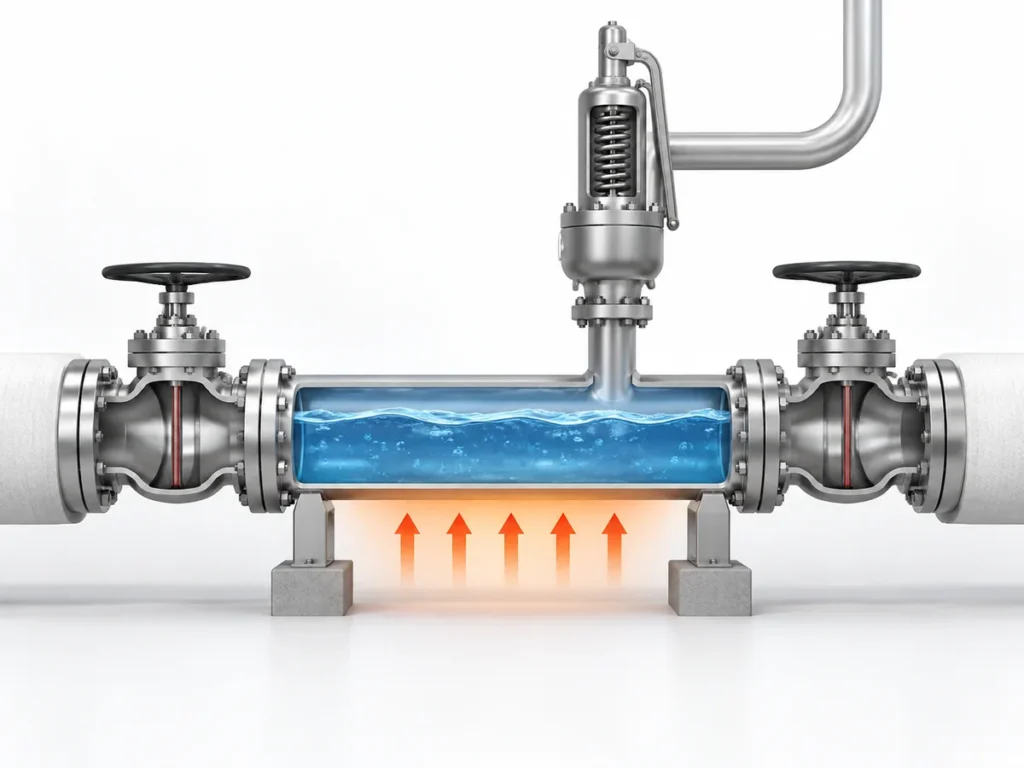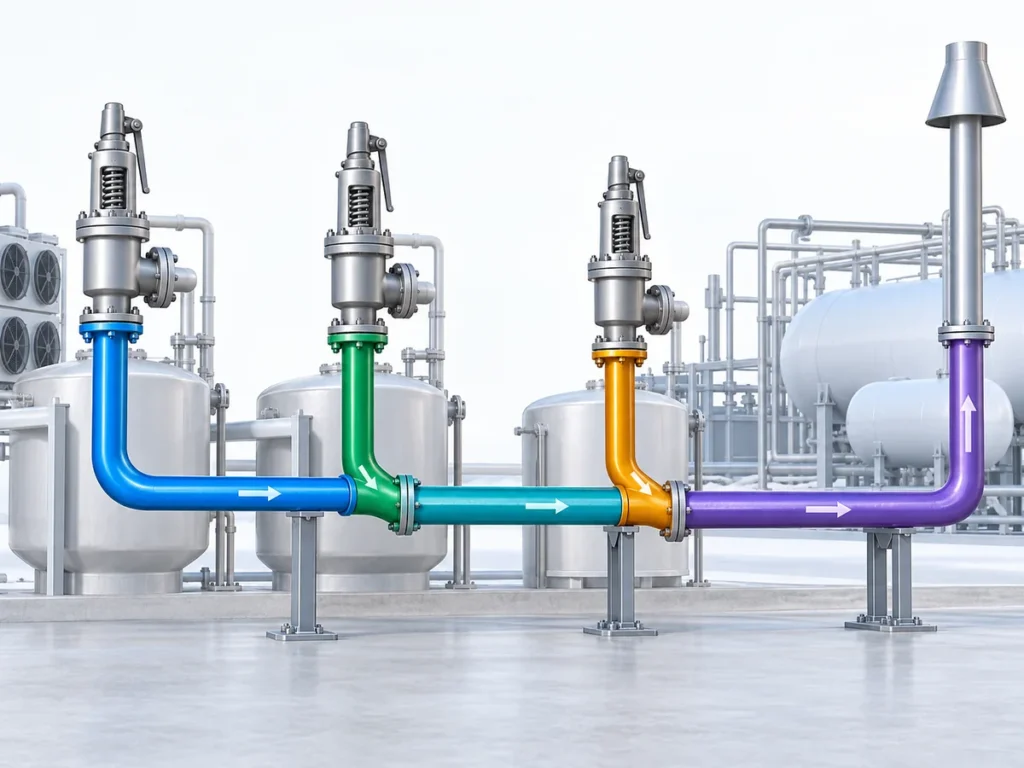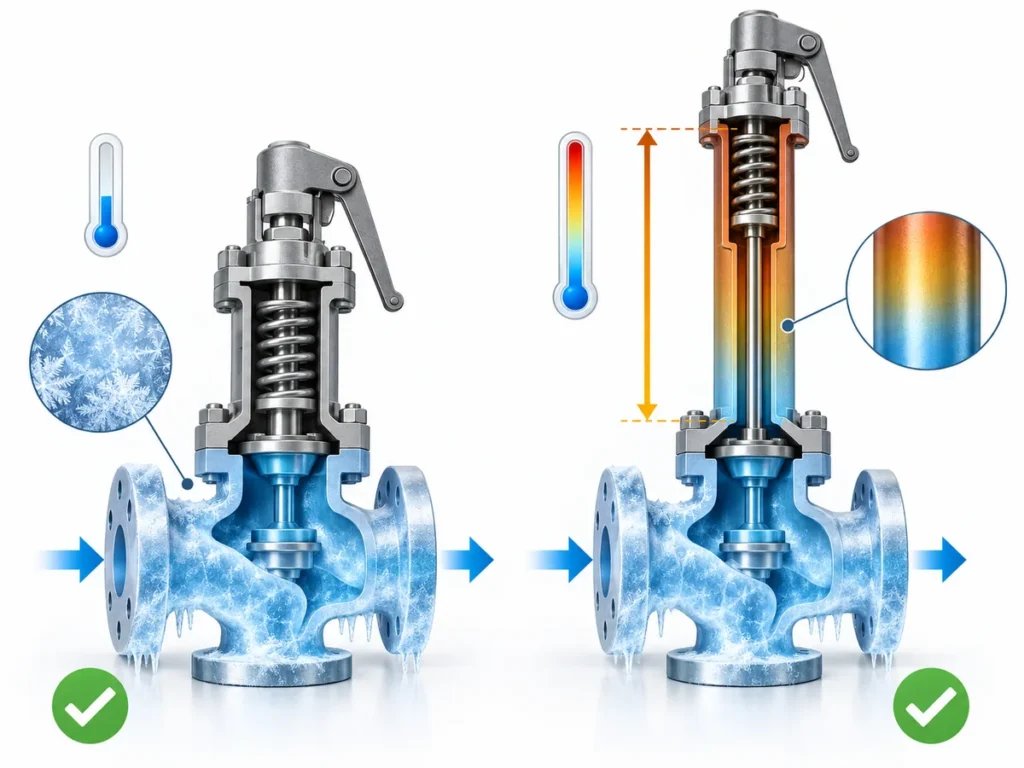
Guía de ingeniería para la resolución de problemas Vibraciones de la tubería, geometría de entrada y recorrido de salida son puntos de revisión habituales tras observar aleteo. Imagen de ingeniería industrial para el contexto del artículo; la disposición final debe confirmarse mediante revisión de ingeniería cualificada. Las pruebas controladas ayudan a separar el estado de la válvula de las causas de instalación del sistema. Imagen de ingeniería industrial para el contexto del artículo; no sustituye a un procedimiento formal…

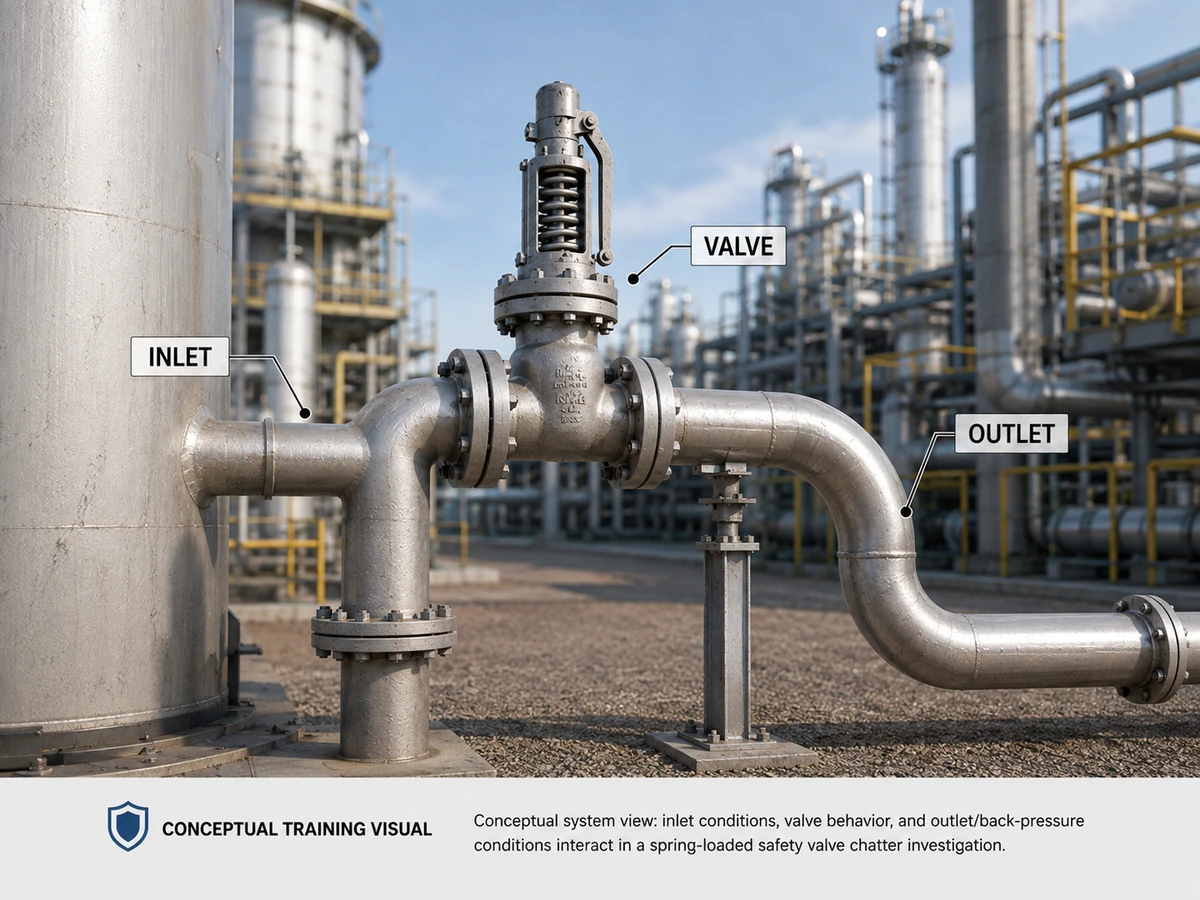
Guía de resolución de problemas de ingeniería
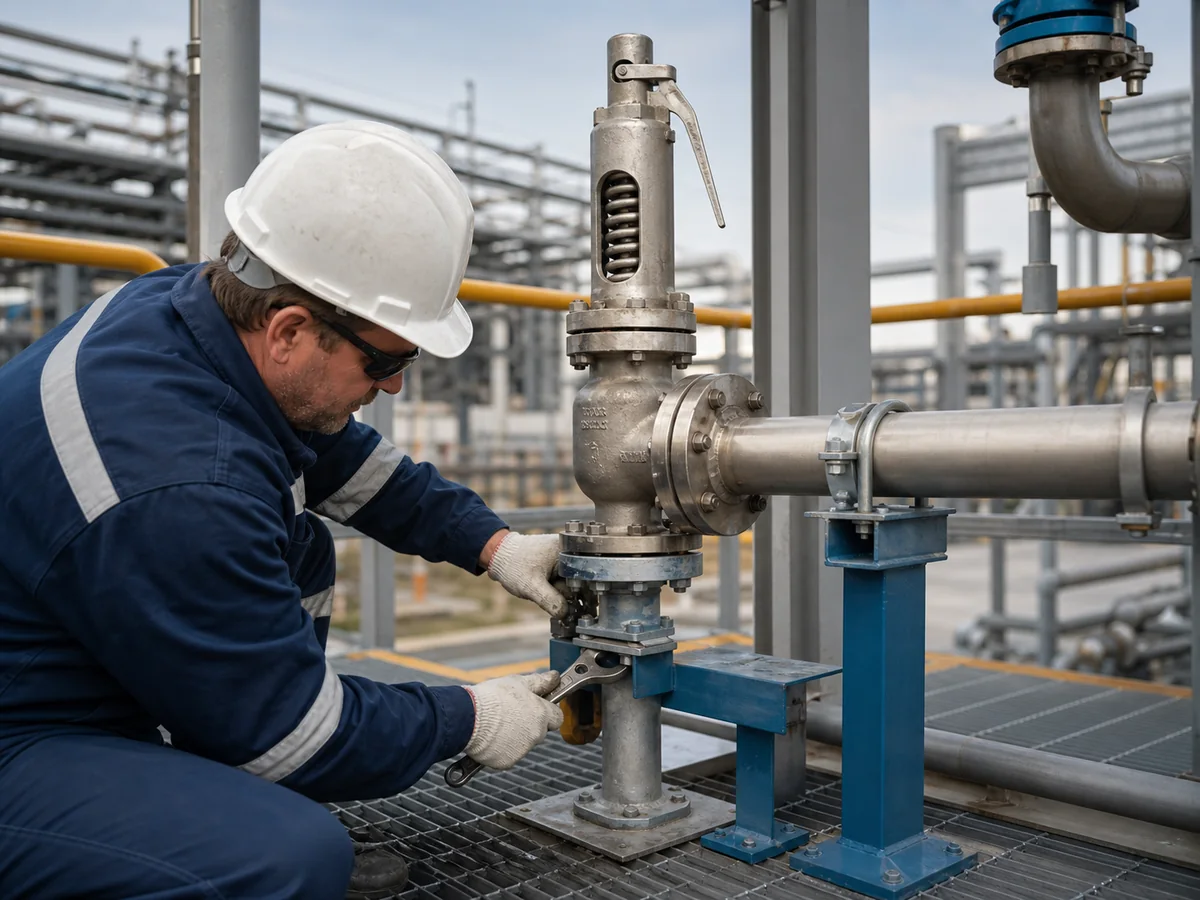
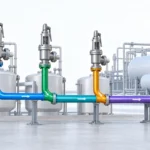
Imagen de ingeniería industrial para el contexto del artículo; la disposición final debe confirmarse mediante revisión de ingeniería cualificada.
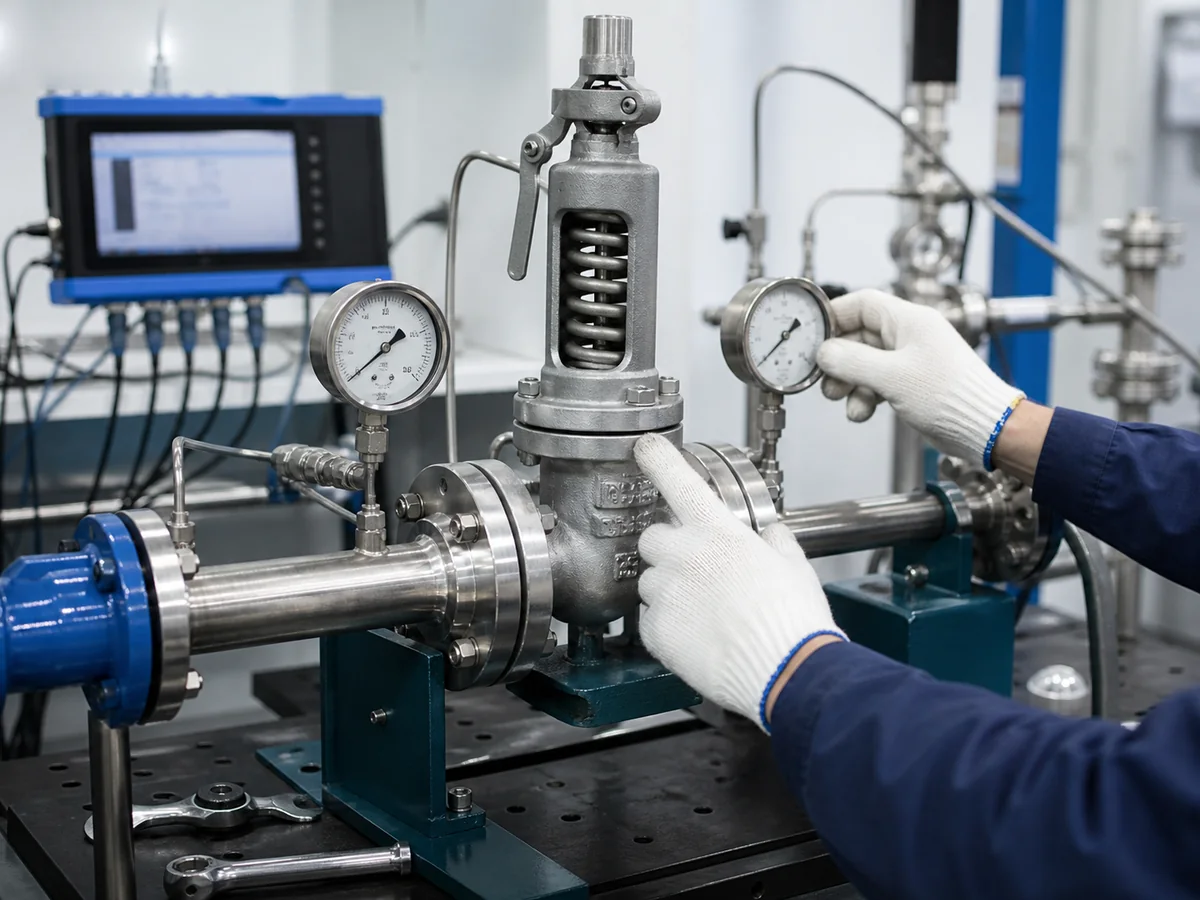
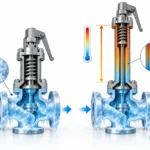
Imagen de ingeniería industrial para el contexto del artículo; no sustituye a un procedimiento formal de prueba.
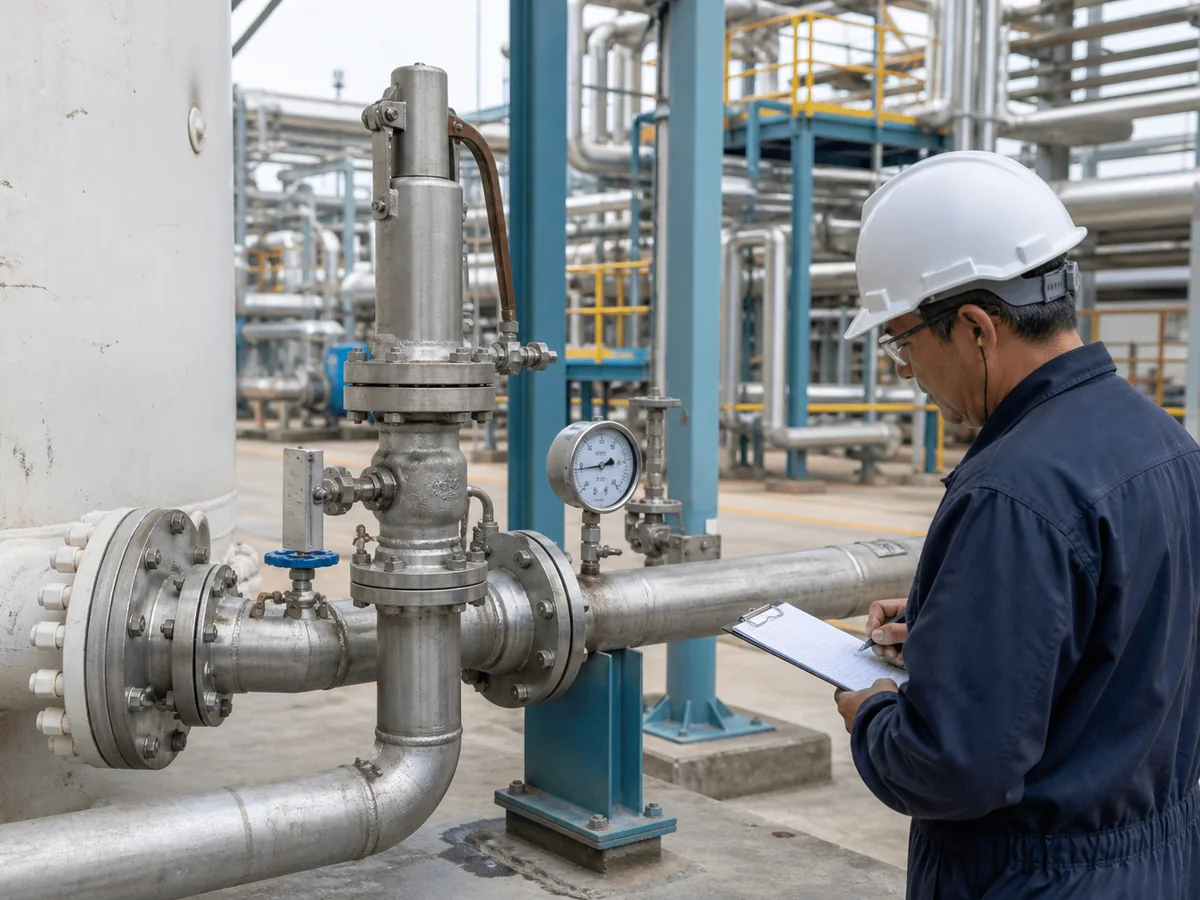
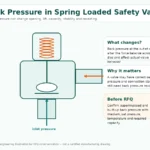
Imagen de ingeniería industrial para el contexto del artículo; las acciones correctivas finales deben seguir la revisión en sitio y las normas aplicables.
¿Qué es el aleteo de una válvula de seguridad accionada por muelle y qué debe comprobar primero?
Esta guía aborda el ciclo rápido e inestable en una válvula de seguridad de resorte en la que el disco vuelve repetidamente a contactar con el asiento. LESER resume la terminología pertinente de la ASME BPVC XIII/API 520, mientras que EPSC describe de forma independiente el aleteo como una apertura y cierre rápidos. La página respalda la investigación de un evento en una válvula instalada, no la dinámica genérica de las válvulas de alivio de presión ni una afirmación sobre el producto.
Respuesta rápida
El aleteo es un problema de movimiento rápido e inestable de la válvula. Recopile el registro del evento, el escenario de alivio, la identidad de la válvula y las pruebas de entrada/salida; luego correlacione la demanda con la capacidad a nivel de modelo, la instalación y el estado de la válvula. Mantenga abierta la conclusión cuando falten esos datos y derive cualquier corrección a través de una revisión de ingeniería cualificada.
El aleteo es un problema de movimiento rápido e inestable de la válvula. Recopile el registro del evento, el escenario de alivio, la identidad de la válvula y las pruebas de entrada/salida; luego correlacione la demanda con la capacidad a nivel de modelo, la instalación y el estado de la válvula. Mantenga abierta la conclusión cuando falten esos datos y derive cualquier corrección a través de una revisión de ingeniería cualificada.
Preserve el evento antes de intervenir: identifique el equipo protegido y el escenario de alivio, registre la presión de operación y los cambios de proceso, capture las tendencias de presión/tiempo cuando estén disponibles, y documente la placa de características de la válvula, la rama de entrada, la ruta de salida y las modificaciones recientes. El diagnóstico debe preceder al ajuste, reemplazo o cambio de tubería; una grabación de sonido por sí sola no puede establecer la causa.
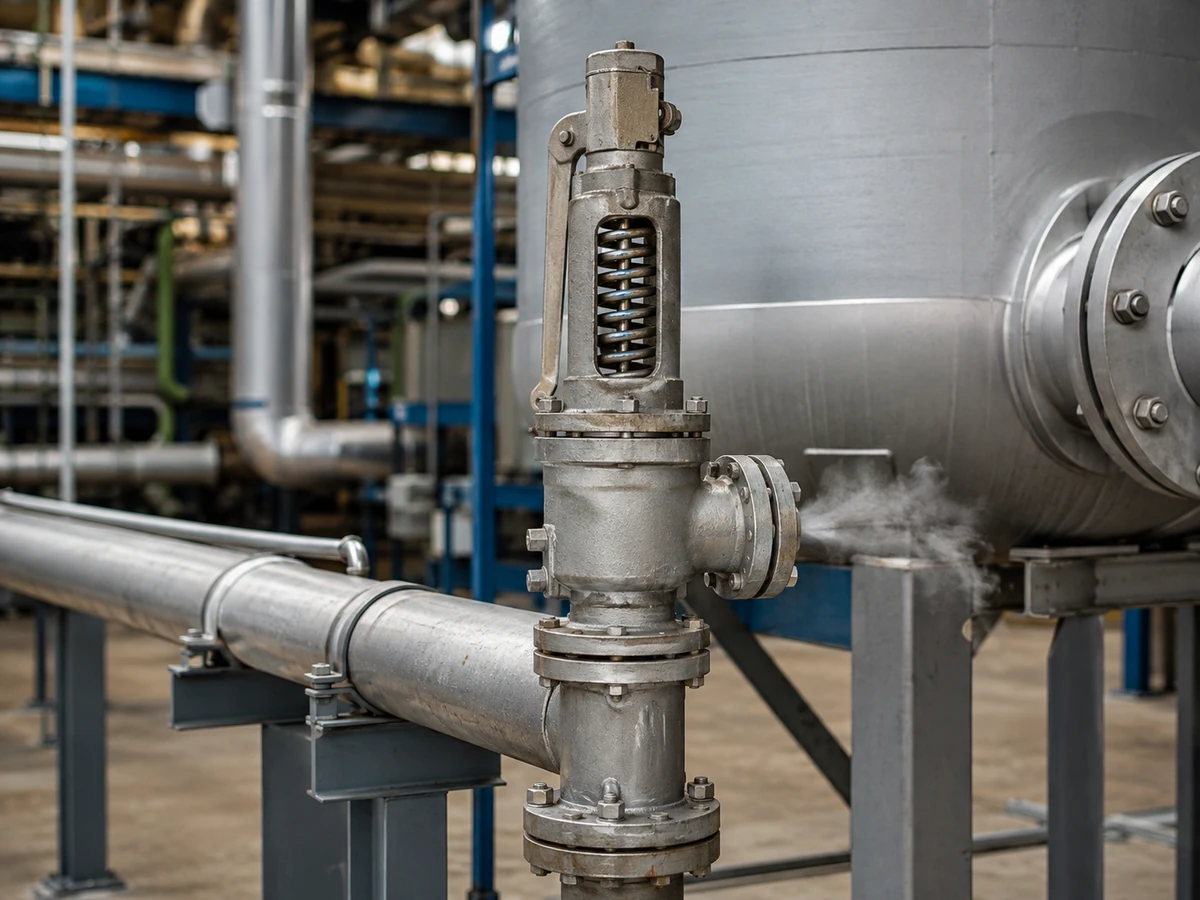
Imagen conceptual de ingeniería; no es un incidente documentado de un cliente ni un evento de campo medido.
Preguntas de reconocimiento rápido
- ¿El evento ocurrió durante una demanda de alivio, cerca de la región de apertura, o durante excursiones repetidas de presión del proceso?
- ¿El movimiento del disco fue una apertura estable seguida de un reasentamiento normal, o un movimiento inestable repetido?
- ¿El evento comenzó después de un cambio en la entrada, salida, proceso o válvula?
- ¿Qué observaciones se miden y cuáles son solo descripciones del operador?
Evidencia a preservar antes de la intervención
Conserve los datos de tendencia, observaciones del operador, registros de video o vibración cuando estén disponibles, identificación de la válvula, configuración, fotografías de instalación, historial de trabajo reciente y la documentación relevante del caso de alivio. Evite alterar la evidencia instalada antes de que el equipo de ingeniería o inspección responsable defina el método de revisión.
Antes de la resolución de problemas, confirme el dispositivo y el escenario de alivio
Una investigación de aleteo comienza con la base de protección, no con un ajuste del resorte. Los documentos de planta pueden usar válvula de seguridad, válvula de alivio, válvula de seguridad y alivio, PSV, SRV o PRV de manera diferente, así que primero confirme que el dispositivo instalado es el dispositivo de alivio de presión de resorte y reasentamiento que se está investigando e identifique su modelo, rango de resorte, base de capacidad nominal y documentación aplicable.
Confirme qué protege la válvula
Identifique la caldera, recipiente, descarga de compresor, intercambiador, tubería, sistema de tanques, reactor o skid protegido, y luego identifique el escenario de alivio que rige. La carga de alivio requerida, fase del fluido, presión de alivio y comportamiento de descarga dependen de ese escenario.
Separe los resultados de taller del comportamiento instalado
Una válvula puede cumplir con una prueba de presión de ajuste o fuga en taller y aun así ser inestable en servicio porque la prueba no reproduce la pérdida de entrada instalada, contrapresión de salida, flujo de proceso sostenible, pulsación del proceso o cargas de tubería. Por el contrario, una condición deficiente de la válvula encontrada puede contribuir incluso cuando la tubería es aceptable.
Principio de ingeniería: El aleteo es un síntoma de un evento instalado de válvula y sistema. La vía correctiva puede ser la estabilización del proceso, revisión de tubería, revisión de capacidad, reparación controlada, reconfiguración o reemplazo de la válvula; la evidencia debe determinar qué vía aplica.
Chatter frente a Simmer, Flutter, Reasentamiento Normal, Ciclado de Proceso y Fuga por el Asiento
Estos términos no deben intercambiarse. Las definiciones siguientes se limitan a las referencias técnicas identificadas en el registro de evidencia; la documentación aplicable de la válvula y la base del proyecto siguen rigiendo una instalación particular.
| Comportamiento observado | Lo que puede indicar | Cómo no debe denominarse automáticamente | Evidencia para confirmar | Siguiente paso de ingeniería |
|---|---|---|---|---|
| Ciclado rápido e inestable que lleva repetidamente el disco a contacto con el asiento | Chatter | Una única causa raíz comprobada | Registro de presión/tiempo, video/sonido/vibración, revisión de la válvula y la tubería | Seguir la ruta completa de diagnóstico |
| Fuga o escape de fluido compresible que comienza antes de la apertura total, por debajo del punto de apertura/ajuste correspondiente según la terminología adoptada | Simmer | Chatter solo por el sonido | Historial de presión de la región de apertura, documentación de la válvula y evidencia de inspección | Confirmar la terminología y la condición de operación |
| Movimiento rápido de la válvula que sigue un patrón de contacto diferente y no alcanza el tope superior, donde esa terminología aplica | Flutter | Chatter o simmer | Documentación de la válvula, evidencia del evento y fuente de terminología aplicable | Clasificar usando la definición técnica aplicable |
| Una apertura estable seguida de un reasentamiento normal consistente con el evento de alivio y la documentación de la válvula | Operación aislada normal | Traqueteo porque la válvula se abrió | Escenario de alivio, tendencia de presión e instrucciones de la válvula | Confirmar que el evento coincide con la base de operación aprobada |
| Excursiones repetidas de presión del proceso que provocan ciclos completos repetidos de la válvula | Ciclado inducido por el proceso | Traqueteo de la válvula sin evidencia de movimiento de la misma | Registros correlacionados de presión/tiempo del proceso y de la válvula | Revisar la dinámica del proceso y del evento de alivio |
| Flujo a través de una válvula que se espera que esté cerrada | Fuga del asiento | Chatter | Evidencia de estanqueidad del asiento/inspección bajo las condiciones indicadas | Utilice la ruta de inspección o mantenimiento |
Lo que los términos no demuestran
Ninguna de estas observaciones por sí sola demuestra que una válvula esté dimensionada incorrectamente o que un diseño particular resolverá el problema. La evidencia debe conectar el evento observado con el sistema instalado y el caso de alivio. LESER identifica la pérdida excesiva de presión en la entrada como capaz de causar aleteo, pero la instalación real aún requiere revisión.
Por qué el aleteo es importante para la válvula y el sistema instalado
EPSC informa que la vibración del aleteo puede causar desalineación, daño en el asiento, falla mecánica de los componentes internos de la válvula y daño en la tubería asociada. LESER también distingue el aleteo de los ciclos frecuentes de apertura completa, porque el aleteo o la vibración pueden reducir la capacidad de descarga. La consecuencia real en una instalación depende de la duración, el movimiento, la construcción de la válvula, las condiciones del proceso y la tubería; debe establecerse a partir de registros de eventos, hallazgos de inspección y revisión de ingeniería, en lugar de asumirse por el ruido.
Componentes internos de la válvula y condición del asiento
Inspeccione la condición encontrada cuando el equipo responsable determine que se requiere una inspección. El daño, la contaminación, la desalineación o la restricción del movimiento pueden ser un factor contribuyente, una consecuencia, o ambos. Una prueba limpia en taller o un registro de placa de identificación no reconstruye por sí solo el evento de campo original.
Estabilidad de alivio y tubería conectada
El movimiento inestable puede hacer que el comportamiento efectivo del sistema de alivio instalado sea incierto. La vibración, los soportes, el drenaje, el movimiento térmico y el enrutamiento de la descarga deben revisarse junto con la válvula. El artículo no asigna un umbral numérico de daño ni una probabilidad de falla.
Fuga posterior al evento e inspección
La fuga después de una inestabilidad repetida es una razón para enrutar la válvula a través del proceso de inspección y mantenimiento aplicable. Un prueba de estanqueidad del asiento aborda la fuga en sus condiciones declaradas; por sí sola no identifica el mecanismo original de la vibración ni demuestra la capacidad de alivio.
Arquitectura de causas de ingeniería para la vibración de válvulas accionadas por resorte
La siguiente matriz organiza hipótesis. Una fila no es un diagnóstico.
| Categoría de causa | Evidencia a verificar | Dirección de ingeniería |
|---|---|---|
| Pérdida de presión de entrada o interacción con la tubería | Configuración de entrada, historial de presión, geometría de la derivación, cambios recientes y criterios del proyecto | Revisión de ingeniería del sistema de entrada |
| Demanda de alivio real frente a capacidad nominal de la válvula | Escenario de alivio, base del fluido, carga requerida, datos de capacidad a nivel de modelo y tendencia del evento | Revisión de dimensionamiento y caso de alivio; no inferir a partir del tamaño de conexión |
| Demanda de alivio real frente a capacidad disponible/nominal, a veces descrita como sobredimensionamiento | Escenario de alivio, carga requerida, datos de capacidad a nivel de modelo, tendencia del evento y guía del fabricante; EPSC identifica una válvula de alivio sobredimensionada como una influencia, no como un diagnóstico independiente | Calificar la relación y revisar la válvula seleccionada frente al caso real; nunca usar una regla universal de sobredimensionamiento |
| Contrapresión de salida e interacción de descarga | Información de contrapresión superpuesta/acumulada, ruta de salida, soportes, venteos y drenajes | Revisión del sistema de descarga y configuración de la válvula |
| Comportamiento dinámico de blowdown/reasentamiento | Documentación específica de la válvula, tendencia de presión del evento y requisitos aplicables; LESER define blowdown como la diferencia entre la presión de ajuste y la de reasentamiento | Revisión dinámica y de proceso específica de la válvula; sin instrucciones de ajuste en campo aquí |
| Efectos de instalación o soporte mecánico | Alineación, soportes, movimiento térmico, bolsas de líquido, vibración y modificaciones recientes | Revisión de instalación |
| Dinámica de la presión del proceso | Cambios de presión y carga del proceso correlacionados en el tiempo | Revisión del proceso y de los eventos de alivio |
| Contribución del estado o mantenimiento de la válvula | Inspección inicial, contaminación, daños, historial de reparaciones e instrucciones del fabricante | Ruta de inspección/mantenimiento; distinguir la causa de la consecuencia |
La capacidad requerida, la capacidad nominal, el orificio y el tamaño de la conexión no son intercambiables
Una de las comprobaciones más útiles de la versión anterior de resolución de problemas es separar la carga de alivio del proceso de la capacidad documentada de la válvula y de sus conexiones físicas. Un reemplazo del mismo tamaño puede tener un orificio efectivo, característica de levantamiento, coeficiente o base de capacidad nominal diferente, por lo que el tamaño de la brida o de la rosca por sí solo no es una decisión de dimensionamiento o estabilidad.
| Elemento | Qué significa | Por qué es importante en una revisión de vibración (chatter) | Evidencia a obtener |
|---|---|---|---|
| Capacidad de alivio requerida | La carga de alivio necesaria para el escenario gobernante. | Una demanda baja, cambiante o definida incorrectamente puede no sostener el comportamiento estable de la válvula seleccionada; la relación sigue siendo específica del caso. | Carga calculada, unidades, medio/fase, condiciones de alivio y base del escenario. |
| Capacidad certificada o nominal de la válvula | Capacidad de descarga documentada para una configuración de válvula definida y una base de clasificación/certificación declarada. | Debe compararse con la carga requerida sobre una base compatible; un número de capacidad por sí solo no demuestra un comportamiento instalado estable. | Hoja de datos del fabricante, modelo, base de clasificación/certificación, base del fluido, presión y temperatura. |
| Tamaño de conexión | La interfaz mecánica de entrada y salida con la tubería. | No define el orificio efectivo, el diámetro real, el coeficiente, la elevación o la capacidad nominal. | Tamaño de entrada/salida, estándar de conexión y disposición de instalación. |
| Área de orificio efectivo | El área estandarizada o de cálculo utilizada en el método de capacidad aplicable. | Es fundamental para la comparación de capacidades y puede diferir del paso de flujo medido. | Designación/área del orificio y documentación de capacidad gobernante. |
| Diámetro interior real y trayectoria de elevación | La boquilla específica del modelo y la geometría interna del flujo a través de la cual alivia la válvula. | Dos válvulas con conexiones similares pueden tener diferente geometría interna y comportamiento dinámico. | Dibujo del modelo, datos de boquilla/diámetro interior, característica de elevación e instrucciones del fabricante. |
| Comportamiento real del evento de alivio | La respuesta de presión, caudal y contrapresión del sistema instalado durante un evento. | Puede revelar pérdida en la línea de entrada, contrapresión o dinámica del proceso que no son visibles únicamente con los datos de la placa de identificación. | Tendencia de presión/tiempo, historial de eventos, datos del proceso, vibración/video cuando estén disponibles y registros de mantenimiento. |
Regla de reemplazo: no reordene una válvula de seguridad solo por el tamaño de conexión o similitud visual. Compare el caso de alivio que rige con la capacidad documentada, el orificio, el rango de resorte y las características operativas del modelo seleccionado.
Diagnosticar primero: una ruta estructurada de investigación de aleteo
Use esta lista de verificación para organizar la evidencia, no como un procedimiento de reparación no autorizado.
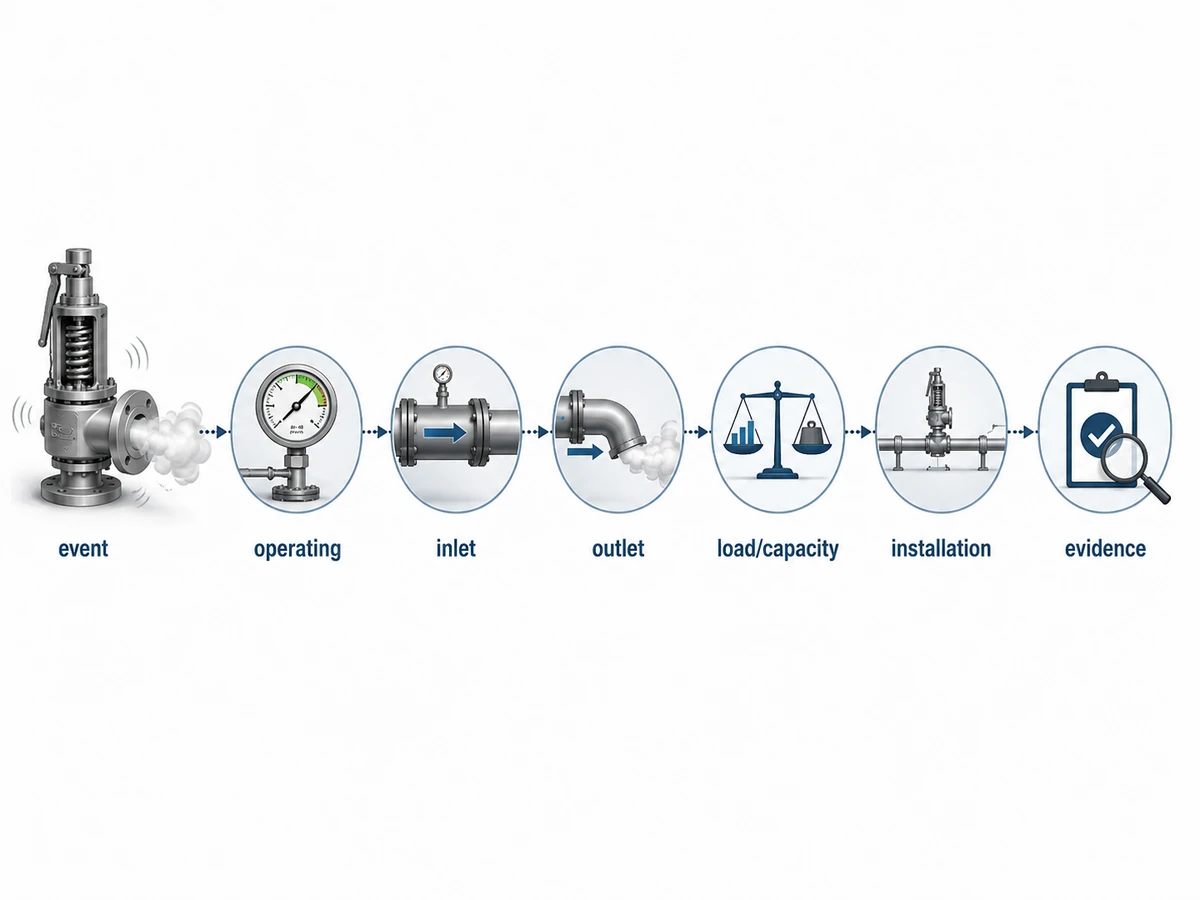
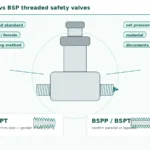
Visual de decisión simplificado; no es un procedimiento de reparación automatizado ni un diagrama de flujo de normas.
- Síntoma observado: Describa el movimiento, el sonido, la vibración, la fuga y el momento del evento sin asignar una causa.
- Condición de operación: Identifique el equipo protegido, el medio/fase, la presión y temperatura de operación, el estado del proceso y los cambios recientes.
- Disposición de entrada: Revise la tubería de entrada, la configuración de la derivación, los soportes y la evidencia de presión según la base del proyecto aplicable.
- Salida y contrapresión: Revise el trazado de descarga, la información de contrapresión superpuesta y acumulada, los soportes, drenajes y venteos cuando corresponda.
- Carga de alivio y capacidad de la válvula: Compare el escenario de alivio documentado y la carga requerida con los datos de capacidad nominal a nivel de modelo. El tamaño de la conexión por sí solo no determina la capacidad.
- Instalación y soporte: Verifique la alineación, el soporte mecánico, el movimiento térmico y cualquier modificación reciente.
- Condición de la válvula: Revise la identificación, configuración, condición encontrada, hallazgos de inspección, historial de reparaciones y documentación del fabricante.
- Registros de eventos: Correlacione las tendencias de presión/tiempo, los registros de proceso y cualquier evidencia de video, sonido o vibración.
- Conclusión: Indique qué categoría está respaldada, qué alternativas permanecen abiertas y qué revisión de ingeniería calificada se requiere antes de la corrección.
Cuando la evidencia aún no es suficiente
Una conclusión de vibración debe permanecer abierta cuando falta una entrada crítica para la decisión. La evidencia faltante es una condición de parada para la atribución, no un permiso para asumir una causa.
- Sin registro de eventos correlacionado: mantenga la clasificación de movimiento abierta hasta que se puedan comparar los registros de operación y de la válvula.
- Escenario de alivio no identificado: no infiera la demanda de alivio requerida ni el reasentamiento normal solo a partir del sonido.
- Identidad de la válvula o capacidad del modelo no confirmada: no infiera el dimensionamiento, el sobredimensionamiento o la capacidad a partir del tamaño de la conexión o la apariencia.
- Configuración de entrada o salida no documentada: mantener condicionales las hipótesis de pérdida de presión, recorrido y contrapresión.
- Cambio de proceso no correlacionado: no asignar el evento a ciclos de proceso sin evidencia de proceso vinculada en el tiempo.
- Evidencia de inspección no disponible: no tratar el daño del asiento o interno como prueba del mecanismo original.
Regla de decisión: cuando persista una de estas brechas, documente la entrada faltante, preserve la evidencia instalada y remita el caso a la revisión de ingeniería o inspección aplicable antes de seleccionar la acción correctiva.
Cuando el traqueteo de la válvula de seguridad requiere una revisión inmediata en sitio
Una vibración severa o repetida puede dejar incierta la condición de la válvula y del sistema de protección instalado. Siga los procedimientos operativos, de aislamiento y de emergencia del sitio e involucre al ingeniero, inspector o autoridad responsable; una descripción remota de síntomas no puede establecer que la operación continua sea segura.
Escalar rápidamente cuando
- los impactos del disco sean severos o repetidos;
- aparezca fuga después del evento;
- la válvula, la boquilla del equipo o la tubería conectada vibren visiblemente;
- la válvula opera repetidamente cerca de la presión normal de proceso;
- la salida entra en un colector con presión desconocida o variable;
- una válvula nueva, silenciador, cambio de tubería o modificación de proceso precedió al problema.
No utilice una solución rápida en campo
- no apriete ni altere el resorte como respuesta genérica;
- no cambie la presión de ajuste sin la base de protección aprobada;
- no bloquee una salida o venteo del bonete;
- no añada una restricción improvisada;
- no cambie la tubería de descarga sin revisión de ingeniería;
- no limpie ni repare la evidencia encontrada antes de que sea documentada.
Tres Escenarios de Ingeniería Compuestos para Capacitación
Escenario de ingeniería compuesto para capacitación
Escenario A: Arreglo de Entrada Restrictivo o Problemático
Indicio observado: El ciclo comienza durante un evento de alivio después de que cambia la disposición de la entrada.
Evidencia a conservar/verificar: Correlacione la presión del evento con la ruta de entrada instalada, la derivación, la conexión, los soportes, los trabajos recientes y la evidencia de presión disponible.
No asuma: Una pista de entrada demuestra que la válvula es defectuosa por sí sola; no se asume ningún valor de dimensión o caída de presión.
Dirección de ingeniería: Enrute la hipótesis respaldada a una revisión del sistema de entrada.
Escenario de ingeniería compuesto para capacitación
Escenario B: Desajuste entre la capacidad y la demanda real de alivio
Indicio observado: La válvula parece vibrar durante una demanda de alivio baja o variable.
Evidencia a conservar/verificar: Compare el escenario de alivio gobernante y la demanda real del proceso con la capacidad a nivel de modelo, la base de fluido y el comportamiento de elevación.
No asuma: El sobredimensionamiento es un diagnóstico; el tamaño de la conexión o la similitud visual no pueden cerrar la revisión.
Dirección de ingeniería: Si la evidencia respalda un desajuste, enrútelo a una revisión de dimensionamiento y del caso de alivio.
Escenario de ingeniería compuesto para capacitación
Escenario C: Interacción entre la descarga y la contrapresión
Indicio observado: El traqueteo comienza después de un cambio en la ruta de descarga o en el equipo conectado.
Evidencia a conservar/verificar: Revise la configuración de salida, la evidencia disponible de contrapresión, los soportes, las ventilaciones, los drenajes y la construcción de la válvula.
No asuma: La presencia de contrapresión establece que un fuelle u otro diseño resolverá el evento.
Dirección de ingeniería: Dirija la hipótesis respaldada a una revisión del sistema de descarga y la configuración de la válvula.
Ajustar la acción correctiva a la causa respaldada
La acción correctiva sigue la categoría de causa respaldada. No es una respuesta universal al sonido del traqueteo.
- Evidencia del lado de entrada respaldada: realizar una revisión de ingeniería del sistema de entrada.
- Evidencia de carga/capacidad respaldada: realizar una revisión de dimensionamiento y del caso de alivio utilizando datos del fabricante y del proyecto.
- Evidencia de contrapresión respaldada: realizar una revisión del sistema de descarga y la configuración de la válvula.
- Evidencia de instalación/soporte respaldada: realizar una revisión de la instalación.
- Evidencia de dinámica de proceso respaldada: realizar una revisión del proceso y del evento de alivio.
- Evidencia de condición de la válvula respaldada: utilizar la ruta de inspección y mantenimiento definida por la organización responsable y el fabricante.
No cambiar la presión de ajuste, el resorte, el tamaño de la válvula, la tobera/orificio, el fuelle o la tubería como solución genérica en campo. Cualquier modificación requiere revisión de ingeniería autorizada, requisitos aplicables del proyecto y verificación posterior al cambio.
Matriz de inspección, prueba y documentación para una investigación de vibración (chatter)
Un diagnóstico sólido conecta cuatro dominios de evidencia: el escenario de alivio, el sistema hidráulico instalado, la válvula seleccionada y la condición encontrada de la válvula. Una placa de identificación, un certificado de presión de ajuste o un resultado de fuga por sí solos no pueden cerrar la investigación.
| Evidencia | Lo que puede mostrar | Por qué es importante |
|---|---|---|
| Documentación de placa de identificación y modelo | Identificación, base de presión de ajuste, conexiones, rango de resorte y datos a nivel de modelo. | Admite la revisión de reemplazo y capacidad sin asumir que el tamaño por sí solo define el rendimiento. |
| Fotografías y dibujos de instalación | Disposición de entrada/salida, soportes, drenaje, restricciones visibles y modificaciones recientes. | Ayuda a evaluar hipótesis de pérdida de carga en la entrada, contrapresión/descarga y carga mecánica. |
| Tendencia de presión/tiempo o proceso | Presión de operación, momento del evento, excursiones repetidas y comportamiento de reasiento. | Ayuda a distinguir el aleteo de la ciclación completa inducida por el proceso. |
| Cálculo de alivio o hoja de datos | Escenario gobernante, carga de alivio requerida y base de capacidad seleccionada. | Apoya la comparación de capacidad/carga y revela una base de protección incompleta. |
| Registro de presión de ajuste/calibración | Ajuste de apertura y repetibilidad bajo las condiciones de prueba indicadas. | Muestra si el comportamiento en taller difiere del comportamiento en campo, pero no demuestra la estabilidad instalada. |
| Registro de estanqueidad o fugas | Comportamiento de sellado en las condiciones de ensayo indicadas. | Ayuda a evaluar el estado del asiento después del evento; no es una prueba de dimensionamiento ni de causa raíz. |
| Registro de estado encontrado/dejado y de mantenimiento | Condición de entrada, piezas cambiadas, contaminación, daños, ajuste y condición de prueba final. | Conserva la evidencia de causa frente a consecuencia y la trazabilidad de la reparación. |
| Datos del sistema de descarga y del colector | Resistencia de salida, contrapresión superpuesta/acumulada, drenaje y supuestos de eventos simultáneos. | Respaldan la rama del sistema de descarga del diagnóstico. |
| Registro de gestión del cambio | Cambios en el proceso, capacidad, presión de ajuste, tuberías, cabezal, silenciador, tipo de válvula o material. | Indica si la base de protección contra sobrepresión fue revalidada después de un cambio. |
Qué documentar antes de la reparación, sustitución o revisión de ingeniería
Prepare el paquete de evidencia disponible. La información requerida varía según el proyecto, la jurisdicción, el diseño de la válvula y el escenario de alivio.
Base de servicio y de alivio
- medio de servicio y fase;
- presión y temperatura de operación;
- presión de ajuste documentada y base de presión;
- equipo protegido y escenario de alivio;
- capacidad de alivio requerida cuando esté establecida;
- requisitos aplicables del proyecto, código y normativa.
Válvula y sistema instalado
- designación, placa de identificación y configuración de la válvula existente;
- configuración de la tubería de entrada;
- configuración de salida/descarga;
- información disponible de contrapresión;
- documentación del fabricante;
- hoja de datos, dibujos y fotografías existentes.
Evidencia del evento y condiciones
- registros de presión/tiempo del evento e historial del proceso;
- hallazgos de inspección e historial de reparaciones;
- cantidad y contexto de reemplazo cuando corresponda.
Esta lista prepara una revisión de ingeniería; no es una hoja de datos universal ni un sustituto de un cálculo de alivio formal.
Preguntas frecuentes sobre el castañeteo de la válvula de seguridad accionada por resorte
¿Qué causa que una válvula de seguridad de resorte produzca castañeteo?
Las categorías posibles incluyen interacción del sistema de admisión, desajuste de carga/capacidad, contrapresión de salida, comportamiento de purga/reasentamiento, efectos de instalación, dinámica del proceso y condición de la válvula. El síntoma observado no demuestra qué categoría aplica. Use la secuencia de diagnóstico y conserve la evidencia del evento.
¿Es el castañeteo lo mismo que hervir a fuego lento?
No. LESER distingue el goteo como fuga previa a la apertura o escape del área del asiento, mientras que el aleteo es un ciclo inestable repetido con contacto recurrente del asiento. La terminología exacta depende de la documentación de la válvula aplicable y de la base del proyecto, por lo que debe confirmarse antes de clasificar un evento.
¿Puede una válvula de seguridad sobredimensionada presentar golpeteo (chatter)?
Un desajuste de capacidad/carga puede contribuir a la inestabilidad en algunas instalaciones, y EPSC enumera una válvula de alivio sobredimensionada como una influencia, pero “válvula sobredimensionada equivale a castañeteo” no es una regla universal. Revise el escenario de alivio real, la demanda requerida, la capacidad a nivel de modelo, la guía del fabricante y la evidencia del evento.
¿Puede la pérdida de presión de entrada causar vibración?
Sí, una pérdida de presión excesiva en la entrada puede causar aleteo según el capítulo de instalación de LESER, que cita la Parte II de API 520 para la discusión sobre la pérdida en la entrada. Revise el sistema de entrada y las evidencias del evento en lugar de asumir que la válvula es la única fuente del problema.
¿Puede la contrapresión contribuir a la vibración?
Sí, pero es un factor del sistema de descarga que depende del contexto. LESER afirma que una contrapresión acumulada excesiva provoca aleteo y que la contrapresión influye en el funcionamiento de la válvula. Revise la válvula, la configuración de la salida, el caso de operación y la evidencia; no seleccione un diseño solo por su nombre.
¿Qué se debe comprobar antes de reemplazar la válvula?
Confirme el evento, la condición de operación, los sistemas de entrada y salida, el caso de alivio, la relación carga/capacidad, la instalación y la condición de la válvula. El reemplazo basado únicamente en la apariencia, el tamaño de conexión o la similitud de la placa de identificación no cierra el diagnóstico.
¿Puede un reemplazo del mismo tamaño seguir vibrando?
Sí. Los mismos tamaños de conexión de entrada y salida no garantizan el mismo orificio efectivo, rango de muelle, característica de elevación o capacidad nominal. Compare los datos del modelo antiguo y del nuevo con el escenario de alivio real y la evidencia del evento antes de tratar un reemplazo del mismo tamaño como equivalente.
¿Una prueba superada de presión de ajuste o de estanqueidad del asiento demuestra que la válvula instalada será estable?
No. Esas pruebas responden a preguntas diferentes bajo condiciones de prueba establecidas. No reproducen la pérdida de presión de entrada instalada, la contrapresión de salida, el flujo de proceso sostenible, las cargas de tuberías ni la dinámica del proceso, por lo que por sí solas no pueden demostrar un comportamiento de alivio instalado estable.
Revisión técnica, normas y limitaciones
Nota de Revisión Técnica
El diagnóstico final específico del caso depende de la documentación real de la válvula, las condiciones de servicio, el caso de alivio, los datos del fabricante, los requisitos del proyecto y la evidencia de inspección. No se afirma ningún revisor técnico nombrado ni credencial de revisor en esta página. Las conclusiones específicas del caso requieren la revisión de la evidencia real de la instalación por parte de la autoridad de ingeniería o inspección responsable.
Este artículo es una guía de ingeniería para la discusión de resolución de problemas. La selección, ajuste, reparación o reemplazo final de la válvula depende de las condiciones reales de servicio, el escenario de alivio, los datos del fabricante, las especificaciones aplicables del proyecto y los requisitos del código o reglamentarios. Los requisitos de la jurisdicción local pueden diferir. El artículo no reproduce una norma, no reemplaza un cálculo de alivio formal, no autoriza una modificación en campo ni establece certificación, compatibilidad o rendimiento para una válvula en particular.
Límites de normas y evidencia
Las normas y prácticas recomendadas definen los límites de dimensionamiento, instalación, producto, inspección y reparación; no diagnostican un evento de castañeteo individual sin datos del proyecto. Confirme la edición adoptada por el proyecto, la jurisdicción y el propietario-usuario antes de aplicar cualquier requisito.
| Referencia oficial | Estado público actual | Límite de uso en este artículo |
|---|---|---|
| API 520 Parte I | API identifies the 10th Edition as published. | Marco de dimensionamiento y selección; comparar la capacidad requerida y documentada de la válvula sobre la base correcta de fluido y presión. |
| API 520 Parte II | API identifies the 7th Edition as published and notes an engineering-analysis route for installation review. | Contexto de instalación de entrada/salida. No copie un único porcentaje de pérdida de presión en cada proyecto sin las condiciones completas y la edición adoptada. |
| API 527 | El catálogo digital actual de API enumera la Edición 5. | Estanqueidad del asiento bajo las condiciones de prueba indicadas; no es una prueba de dimensionamiento, capacidad ni causa raíz de vibración. |
| ASME BPVC Sección XIII | ASME lista la edición de 2025. | Reglas de protección contra sobrepresión y requisitos aplicables de diseño, ensayo, marcado, capacidad e instalación; no inferir la certificación del producto sin registros de modelo. |
| ISO 4126-1:2013 + Enmienda 1:2016 | ISO indica que la edición de 2013 fue revisada y confirmada en 2025 y sigue vigente. | Requisitos de producto para válvulas de seguridad cuando se adopten; ISO identifica explícitamente la Parte 1 como norma de producto, no como norma de aplicación. |
| NBIC 2025, Parte 4 | The National Board enumera la edición de 2025, incluida la Parte 4 para dispositivos de alivio de presión. | Contexto de inspección/reparación cuando corresponda. La autorización de reparación no sustituye el dimensionamiento del alivio ni la revisión del sistema instalado. |
Referencias Técnicas
- Centro Europeo de Seguridad de Procesos, PSV con aleteo, mayo de 2020 – apertura/cierre rápidos, influencias del sistema y posibles daños por vibración.
- LESER LID 1757.03, Terminología, sección 3.4 – contexto terminológico para aleteo, vibración, silbido, blowdown y reasentamiento.
- LESER LID 1757.06, Instalación y diseño de planta – relaciones de pérdida de presión en la entrada y contrapresión en el sistema instalado.
- American Petroleum Institute, API 520 Part I, 10th Edition — marco de dimensionamiento y selección para dispositivos de alivio de presión.
- American Petroleum Institute, API 520 Parte II, 7ª Edición — contexto de instalación y análisis de ingeniería.
- ASME BPVC Sección XIII, 2025 — reglas para la protección contra sobrepresión; la aplicabilidad depende del código de construcción y la base jurisdiccional aplicables.
- ISO 4126-1:2013 + Amd 1:2016 — norma de producto publicada para válvulas de seguridad; ISO indica que no es una norma de aplicación.
- NBIC 2025, Parte 4 — Dispositivos de alivio de presión — contexto de inspección y reparación cuando se adopta.
La terminología pública de esta página se parafrasea de las fuentes citadas. La documentación aplicable de la válvula, los requisitos del proyecto y los documentos de control rigen el caso instalado.
Preparar un Paquete de Revisión Técnica para una Válvula de Seguridad con Vibración (Chattering)
Proporcione los datos disponibles de servicio y de escenario de alivio, condiciones de operación, presión de ajuste documentada, placa de identificación y configuración de la válvula, disposición de entrada/salida, información de contrapresión, registros de eventos, hallazgos de inspección, documentos del fabricante y requisitos aplicables del proyecto. El ingeniero responsable, el propietario-usuario, el inspector o la autoridad determinan qué entradas se requieren para el caso específico.