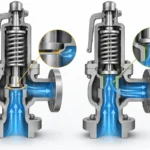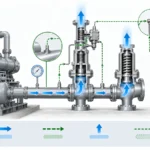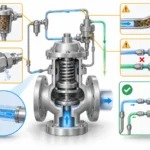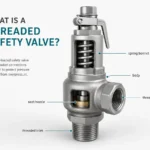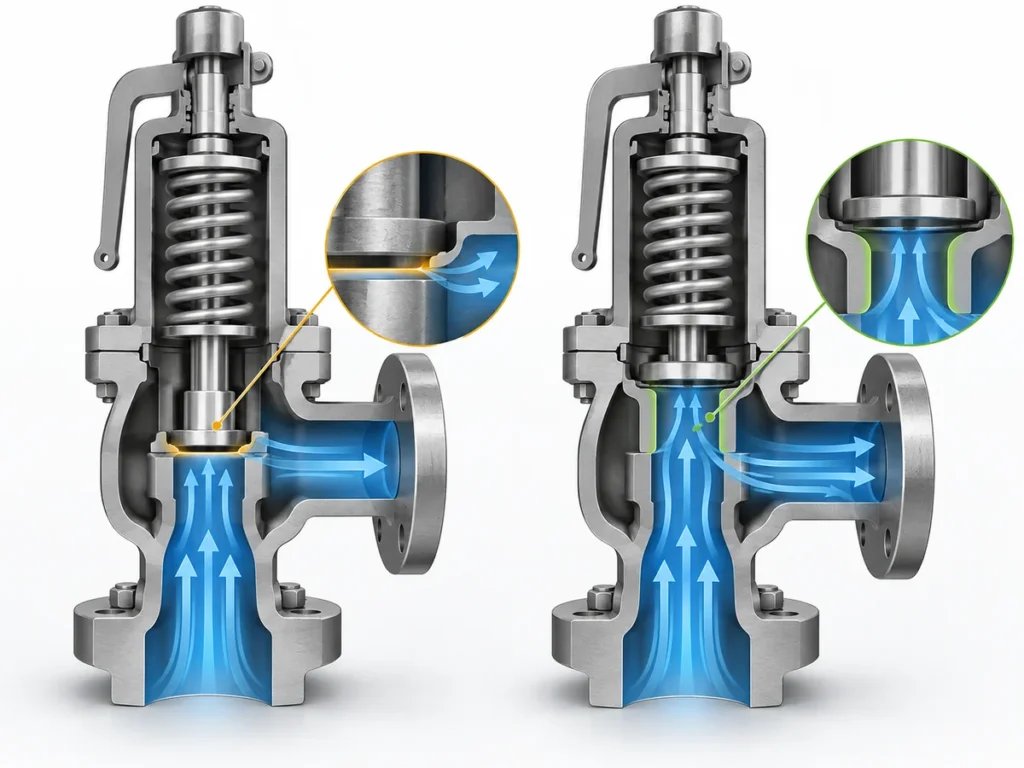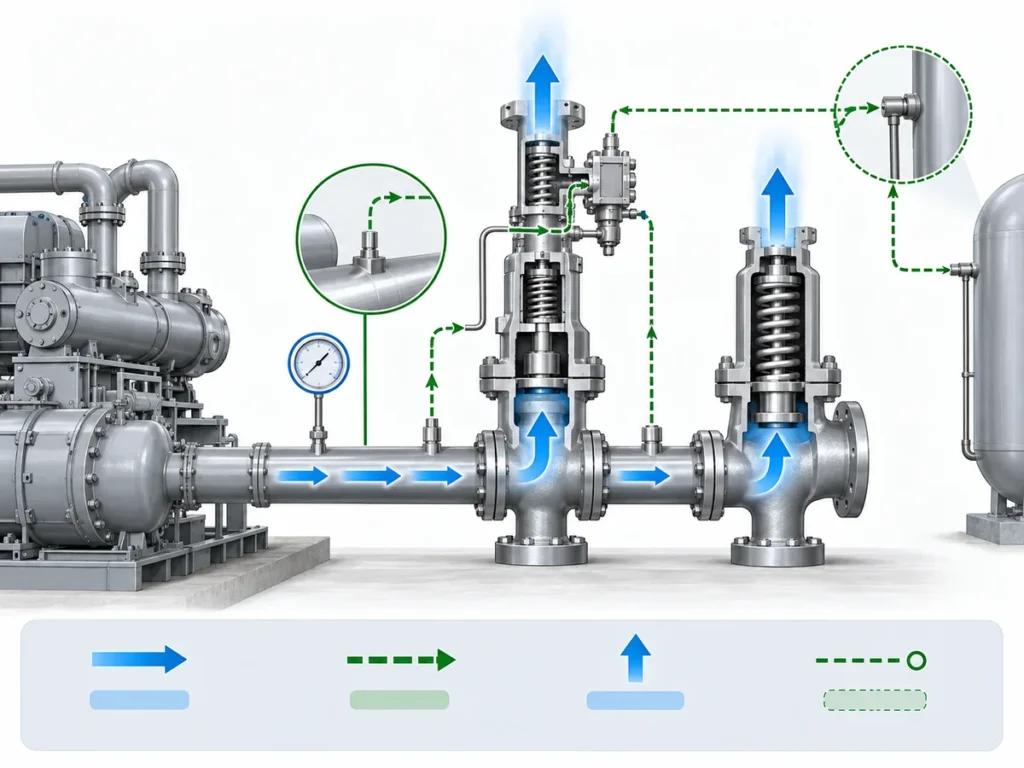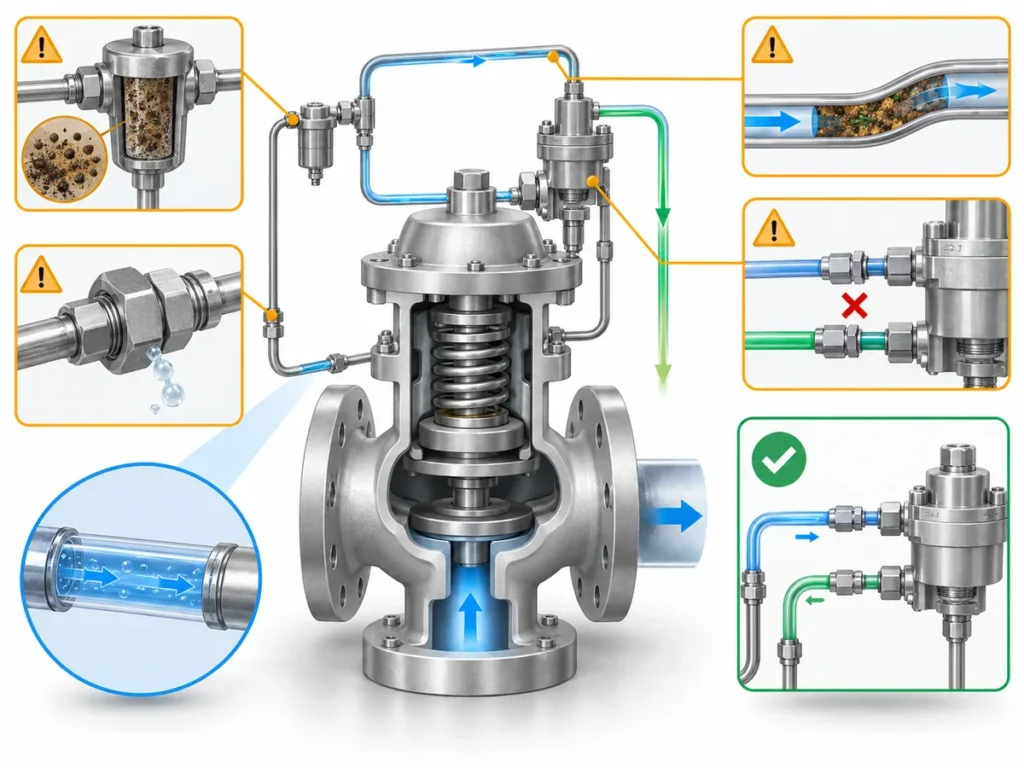
Comparación de roscas NPT vs BSP para válvulas de seguridad Roscas NPT vs BSP: Diferencias entre BSPP, BSPT y conexiones de válvulas de seguridad Las roscas NPT y BSP no son intercambiables. NPT utiliza la forma de rosca cónica ASME B1.20.1 con un ángulo de rosca de 60 grados. Las conexiones BSP utilizan una forma de rosca Whitworth de 55 grados: BSPP se refiere comúnmente a roscas paralelas ISO 228-1... que sellan en una cara separada, mientras que “BSPT” es una abreviatura comercial para disposiciones herméticas a la presión ISO 7-1 que utilizan la designación especificada R, Rc o Rp. El mismo tamaño nominal en pulgadas puede tener un paso, perfil, método de calibración y ubicación de sellado diferentes.

Comparación de roscas NPT vs BSP para válvulas de seguridad
Hilos NPT vs BSP: Diferencias entre BSPP, BSPT y conexiones de válvulas de seguridad
Las roscas NPT y BSP no son intercambiables. NPT utiliza la forma de rosca cónica ASME B1.20.1 con un ángulo de rosca de 60 grados. Las conexiones BSP utilizan una forma de rosca Whitworth de 55 grados: BSPP se refiere comúnmente a roscas paralelas ISO 228-1 que sellan en una cara separada, mientras que “BSPT” es una abreviatura comercial para disposiciones herméticas a la presión ISO 7-1 que utilizan la designación especificada R, Rc o Rp. El mismo tamaño nominal en pulgadas puede tener un paso, perfil, método de calibración y ubicación de sellado diferentes.
Para una válvula de seguridad roscada, primero identifique la conexión exacta de entrada y salida, y luego realice la revisión separada de protección de presión. Una válvula puede encajar en el puerto y aun así ser inadecuada si su presión de ajuste, capacidad de alivio requerida, base del medio, temperatura, materiales o disposición de descarga son incorrectos. Esta guía cubre NPT vs BSP, BSPP vs BSPT, identificación de roscas, sellado e intercambiabilidad; los cálculos detallados de dimensionamiento y de sistemas instalados requieren una revisión de ingeniería separada.
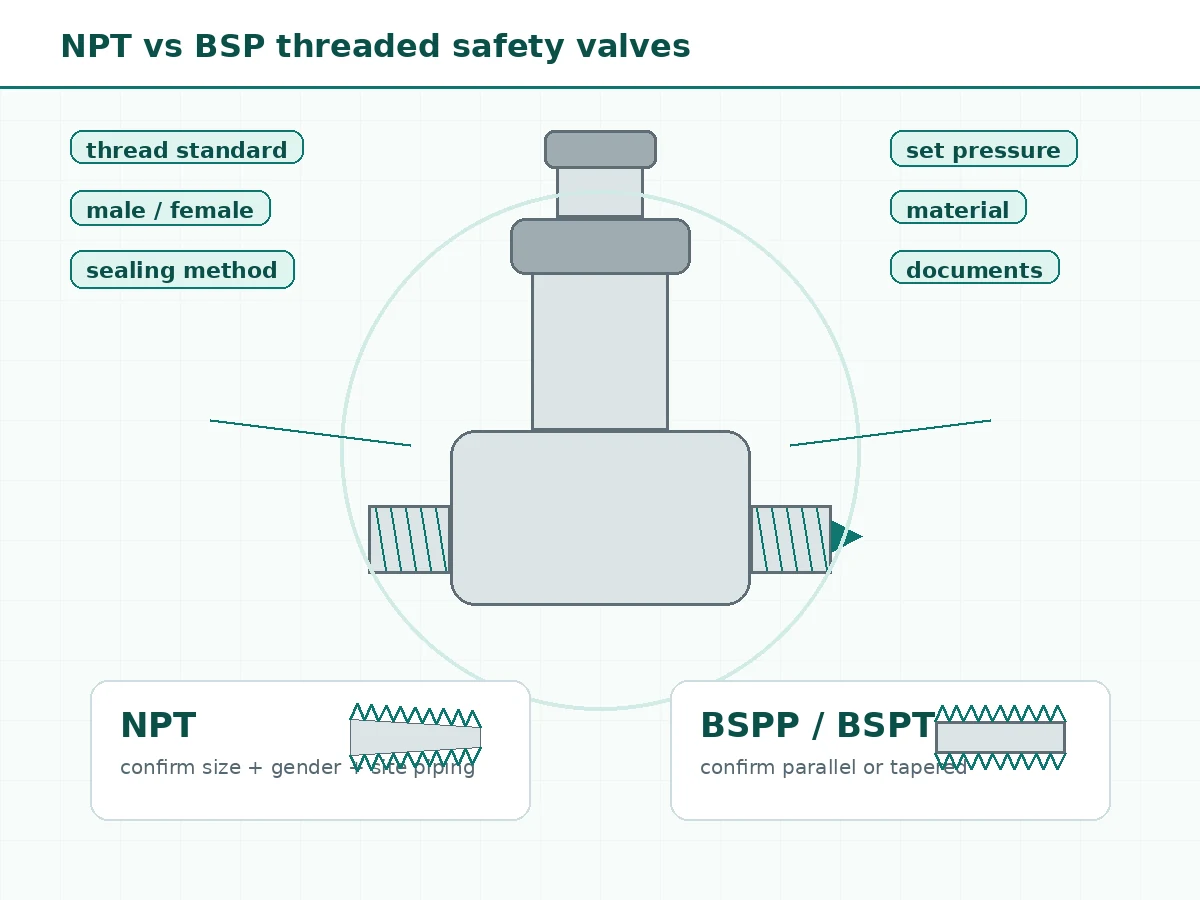
Respuesta rápida: ¿Cuál es la diferencia entre las roscas NPT y BSP?
Los sistemas de roscado NPT y BSP son diferentes y no deben conectarse directamente. NPT es cónico, utiliza una rosca de 60 grados y está identificado bajo ASME B1.20.1. BSP utiliza una rosca Whitworth de 55 grados. BSPP es paralelo y normalmente sella en una cara separada; los arreglos herméticos a presión ISO 7-1, comúnmente llamados BSPT, sellan a través de la combinación de roscas R/Rc o R/Rp especificada.
- NPT: rosca cónica; confirmar tamaño NPT, género, acoplamiento y práctica de sellado aprobada.
- BSPP: rosca G paralela; normalmente requiere una junta, sello adherido, junta tórica, arandela o sello de cara definido.
- BSPT / ISO 7-1: utilizar la designación formal R, Rc o Rp porque la rosca interna puede ser cónica o paralela dependiendo del arreglo de acoplamiento.
- No intercambiables: el tamaño nominal o las roscas por pulgada coincidentes no demuestran una geometría compatible o estanqueidad a la presión.
Para válvulas de seguridad, la identidad de la rosca solo demuestra la interfaz mecánica. La presión de tarado, la capacidad de alivio requerida, la capacidad nominal o certificada, el fluido, la temperatura, los materiales, la contrapresión y la ruta de descarga aún deben verificarse por separado.
NPT vs BSPP vs BSPT: Forma de rosca, sellado e identificación
Utilice esta tabla para identificar la familia de conexión probable y la evidencia que aún se necesita. No reemplaza un plano controlado, galgas de rosca adecuadas, datos de válvula específicos del modelo, dimensionamiento de alivio o una revisión del sistema instalado.

| Elemento a confirmar | NPT | BSPP / ISO 228-1 | Familia BSPT / ISO 7-1 | Por qué es importante para las válvulas de seguridad | Evidencia para confirmar |
|---|---|---|---|---|---|
| Referencia estándar principal | ASME B1.20.1 para roscas de tubería en pulgadas de uso general. | ISO 228-1 para roscas paralelas donde la estanqueidad a presión no se realiza en las roscas. | ISO 7-1 para conexiones de rosca de tubería donde la estanqueidad a presión se realiza en las roscas. | “NPT” o “BSP” por sí solos pueden omitir el requisito exacto de acoplamiento y sellado. | Especificación formal en plano y edición del estándar adoptado. |
| Designación comercial / formal | NPT más tamaño y género. | BSPP es un lenguaje comercial común; los planos suelen usar la designación G. | BSPT es un lenguaje comercial común; los planos pueden usar R, Rc o Rp según corresponda. | Las designaciones formales reducen la ambigüedad entre las formas externa, interna, cónica y paralela. | Indicación exacta de entrada y salida copiada del plano o la hoja de datos del OEM. |
| Cónico o paralelo | Cónico. | Paralelo. | Depende de la designación externa/interna formal ISO 7-1 y la combinación de acoplamiento. | El mecanismo de sellado y el método de medición difieren. | Designación de rosca, género y detalle del puerto de acoplamiento. |
| Forma de rosca / ángulo incluido | Forma de rosca de 60 grados con truncamiento plano en cresta/raíz. | Forma de rosca Whitworth de 55 grados con perfil redondeado en cresta/raíz. | Forma de rosca Whitworth de 55 grados; utilice la designación formal de acoplamiento ISO 7-1. | Las diferencias de ángulo y perfil impiden el contacto correcto de los flancos, incluso cuando el tamaño nominal o el paso parecen similares. | Plano controlado, galga de paso y galga de rosca apropiada; no identifique por el ángulo a simple vista. |
| Ejemplos de pasos comunes | 1/8-27, 1/4-18, 3/8-18, 1/2-14, 3/4-14 y 1-11.5 NPT. | Los pasos comunes de rosca G incluyen 1/8-28, 1/4-19, 3/8-19, 1/2-14, 3/4-14 y 1-11. | Los pasos ISO 7-1 comunes siguen las series BSP correspondientes; 1/2 y 3/4 también pueden ser 14 TPI. | El paso por sí solo no es suficiente. Las series de 1/2 pulgada y 3/4 de pulgada pueden tener el mismo TPI conservando un ángulo y perfil diferentes. | Calibrador de paso más verificación de la forma/calibre de la rosca y el dibujo del puerto de acoplamiento. |
| Ubicación del sellado a presión | Acoplamiento roscado más el método de sellado aprobado. | Normalmente fuera de las roscas en una cara de sellado con un obturador adecuado. | En la interfaz roscada para la disposición estanca especificada. | Usar la ubicación incorrecta del sello puede dejar una fuga persistente incluso cuando las piezas se ensamblan. | Dibujo de sección, especificación de junta/junta tórica o procedimiento de sellador. |
| Conexión macho / hembra | Debe indicarse para la entrada y la salida. | Debe indicarse para la entrada y la salida. | Debe indicarse junto con la designación formal. | El género por sí solo no demuestra la forma de la rosca o del sellado. | Fotos de primer plano y dibujo del puerto del equipo. |
| Tamaño nominal | El tamaño por sí solo es incompleto. | El tamaño por sí solo es incompleto. | El tamaño por sí solo es incompleto. | Una etiqueta nominal en pulgadas compartida no establece la intercambiabilidad. | Tamaño más estándar, designación, género y componente de acoplamiento. |
| Método de verificación | Dibujo de control, pedido antiguo, datos del fabricante o calibre adecuado. | Dibujo, detalle de la cara de sellado y calibre adecuado. | Dibujo, designación formal de acoplamiento y calibre adecuado. | La apariencia y el diámetro exterior por sí solos pueden no identificar la conexión de forma fiable. | Placa de identificación, registro de compra, fotos de roscas, planos y resultado de calibre donde estén disponibles. |
| Adaptador o reductor existente | Puede ocultar el puerto del equipo real o restringir la entrada. | Puede ocultar el sello facial requerido. | Puede ocultar la combinación de acoplamiento ISO 7-1 real. | Los adaptadores pueden cambiar la geometría, la orientación, la carga mecánica y el acceso de mantenimiento. | Fotos que muestren la pila de conexión completa y el diámetro interior. |
| Riesgo de pedido si falta | Tamaño o género NPT incorrecto; práctica de sellado no soportada. | Rosca paralela tratada como autocerrable; junta o sello facial faltante. | Designación de acoplamiento incorrecta o sustitución de NPT. | Instalación fallida, fugas, roscas dañadas o reemplazo incorrecto. | Lista de verificación completa de conexión, servicio y documentación. |
Nota de identificación: Los ejemplos de paso y la comparación de 60 grados frente a 55 grados son datos útiles de selección, no criterios de aceptación. El manual oficial de identificación de roscas de Parker y la guía oficial de identificación de roscas de Swagelok advierten que algunos tamaños son difíciles de distinguir sin una verificación controlada.
Por qué el mismo tamaño nominal no hace que NPT y BSP sean compatibles
Una etiqueta como “rosca de 1/2 pulgada” identifica solo un tamaño nominal de tubería. No establece el estándar de rosca, el ángulo, el paso, la forma cónica o paralela, la conexión macho o hembra, la ubicación del sellado, la base del calibre o la geometría del puerto de acoplamiento. Dos piezas pueden compartir el mismo tamaño nominal y aun así ser incompatibles.
Esto es especialmente importante para las conexiones de 1/2 pulgada y 3/4 de pulgada porque NPT y la serie BSP pueden compartir 14 hilos por pulgada. La coincidencia aparente del paso puede permitir un acoplamiento parcial, pero la forma NPT de 60 grados y la forma BSP de 55 grados no establecen un contacto correcto en los flancos. El ensamblaje parcial no es prueba de una junta a presión segura.
Por qué las roscas NPT y BSP de 1/2 pulgada pueden parecer similares
A 1/2 pulgada, las roscas NPT y BSP comunes pueden usar 14 TPI. Esto elimina una diferencia visual obvia, pero el ángulo de la rosca, el perfil de cresta/fondo, el diámetro estándar y los requisitos de calibración siguen siendo diferentes. Utilice el dibujo del OEM y los calibres adecuados; no acepte una conexión porque encaje varias vueltas.
Compare el ángulo, el paso, la conicidad y la ubicación del sellado juntos
NPT utiliza una forma cónica de 60 grados. BSPP utiliza una forma paralela de 55 grados y normalmente sella fuera de las roscas. ISO 7-1 utiliza una configuración estanca a la presión de 55 grados con la designación formal R, Rc o Rp. Un calibre y un calibrador de paso pueden reducir las posibilidades, pero los dibujos controlados y los calibres apropiados son la evidencia final de identificación.
Qué sucede cuando se fuerza la rosca incorrecta
En un escenario de ingeniería compuesto, se pidió una válvula de repuesto para un skid de compresor importado de 1/2 pulgada NPT porque el puerto antiguo solo se describía como “1/2 BSP”. La válvula entró varias vueltas pero falló la prueba de presión. La revisión del plano del OEM mostró un sistema de roscado diferente y un adaptador ocultaba el puerto real. La corrección fue restaurar la conexión y el arreglo de sellado especificados; el control preventivo fue exigir la designación de la rosca, una foto del puerto de acoplamiento y el registro de compra anterior antes de realizar el pedido.
No se debe usar sellador de roscas, cinta de PTFE o fuerza adicional de llave para compensar una rosca incompatible. Para una orientación más amplia, soporte y comprobaciones de carga de tuberías, consulte el guía de instalación de válvulas de seguridad.
Roscas NPT: Roscas de tubería cónicas de 60 grados
Las válvulas de seguridad con rosca NPT utilizan una entrada, salida o ambas NPT, dependiendo del diseño. ASME B1.20.1 cubre las dimensiones y la verificación para NPT y roscas de tubería de pulgada de propósito general relacionadas. La designación de la rosca identifica la geometría de la conexión; no define la presión de ajuste de la válvula, la capacidad, el material, la construcción del asiento ni el marcado según el código.
NPT es un estándar de conexión, no una clasificación de rendimiento de válvula
Una designación NPT no define la presión de ajuste, el rango del resorte, la capacidad certificada o nominal, el material del cuerpo, el diseño del asiento o el marcado según el código. Por lo tanto, un comprador debe evitar solicitudes como “NPT de 1 pulgada, 10 bar” a menos que esté claro si 10 bar es la presión de operación, la presión máxima de diseño (MAWP) / presión de diseño, la presión de ajuste u otra condición.
Cómo se sellan las conexiones NPT
NPT es un sistema de rosca cónica. La unión ensamblada puede requerir un producto de sellado aprobado por el proyecto y una práctica de instalación controlada. No existe una instrucción universal de que un sellador, cinta, par de apriete o número de vueltas sea correcto para cada válvula de seguridad. Las instrucciones del fabricante de la válvula, el medio, la temperatura, el requisito de limpieza y el procedimiento del sitio rigen el método aceptable.
Qué confirmar antes de pedir una válvula de seguridad NPT
- Designación NPT exacta y tamaño nominal para la entrada y la salida.
- Conexión macho o hembra en cada lado.
- Estándar del equipo o puerto de tubería de acoplamiento.
- Producto de sellado y procedimiento de instalación aprobados.
- Equipo protegido, escenario de alivio y medio/fase de gobierno.
- Presión de operación, MAWP/presión de diseño, presión de ajuste y capacidad de alivio requerida.
- Temperatura de alivio, materiales, tipo de asiento y requisitos de documentación.
Para los productos candidatos, utilice la válvulas de seguridad roscadas categoría solo como un paso de navegación. Confirme el plano del modelo exacto, la designación de la rosca, el rango de presión de ajuste, la evidencia de capacidad y los límites de servicio antes de realizar el pedido.
BSPP vs BSPT: Designaciones de rosca G, R, Rc y Rp
“BSP” es un lenguaje de adquisición incompleto. BSPP comúnmente significa la rosca paralela G definida por ISO 228-1. “BSPT” es una etiqueta comercial para arreglos estancos a la presión ISO 7-1, pero el plano debe identificar las formas externas e internas reales: R para una rosca cónica externa, Rc para una rosca cónica interna y Rp para una rosca paralela interna utilizada en la combinación estanca a la presión especificada.
Roscas paralelas BSPP / ISO 228-1
ISO 228-1 cubre roscas internas y externas paralelas donde la junta estanca no se realiza en las propias roscas. Por lo tanto, el sello de presión normalmente se crea en una interfaz externa, como una junta, sello de unión, junta tórica, arandela, tope o cara de sellado definida por el fabricante. La cinta de PTFE aplicada a la rosca no recrea una geometría de sellado de cara faltante o dañada.
Disposiciones de roscas estancas BSPT / ISO 7-1
ISO 7-1 cubre las roscas de tubería donde las juntas estancas se realizan en las roscas. En lenguaje de adquisiciones, estas a menudo se agrupan bajo BSPT, pero las designaciones externas e internas formales y la combinación de acoplamiento aún importan. No reduzca cada conexión ISO 7-1 a “BSPT macho” o “BSPT hembra” sin verificar el plano y la base de sellado.
Las roscas NPT e ISO para tuberías no son sustitutos
Ambos sistemas pueden describirse como roscas para tuberías y pueden compartir una designación nominal en pulgadas, pero eso no establece la compatibilidad. La geometría de la rosca, la serie de paso, la práctica de calibración y la expectativa de sellado deben coincidir con la conexión de acoplamiento. Un adaptador es un componente de ingeniería, no una corrección universal; puede afectar el acoplamiento, el diámetro de entrada, la orientación, la carga mecánica y el acceso de mantenimiento.
Qué confirmar antes de pedir una válvula de seguridad BSP
Antes de realizar el pedido, indique la designación formal de la rosca, el tamaño nominal, la forma macho/hembra, el puerto de acoplamiento, la ubicación del sellado, el material del sello y la configuración de entrada/salida. No traduzca cada designación G, R, Rc o Rp a la única palabra “BSP”.”
Cómo identificar conexiones NPT o BSP macho y hembra
El tipo de rosca es necesario pero no suficiente. Especifique la entrada y la salida por separado, junto con la designación formal, el tamaño nominal, la interfaz de sellado y el componente de acoplamiento según la norma. Una indicación de “hembra de 1/2 pulgada” aún puede describir varias conexiones no intercambiables.
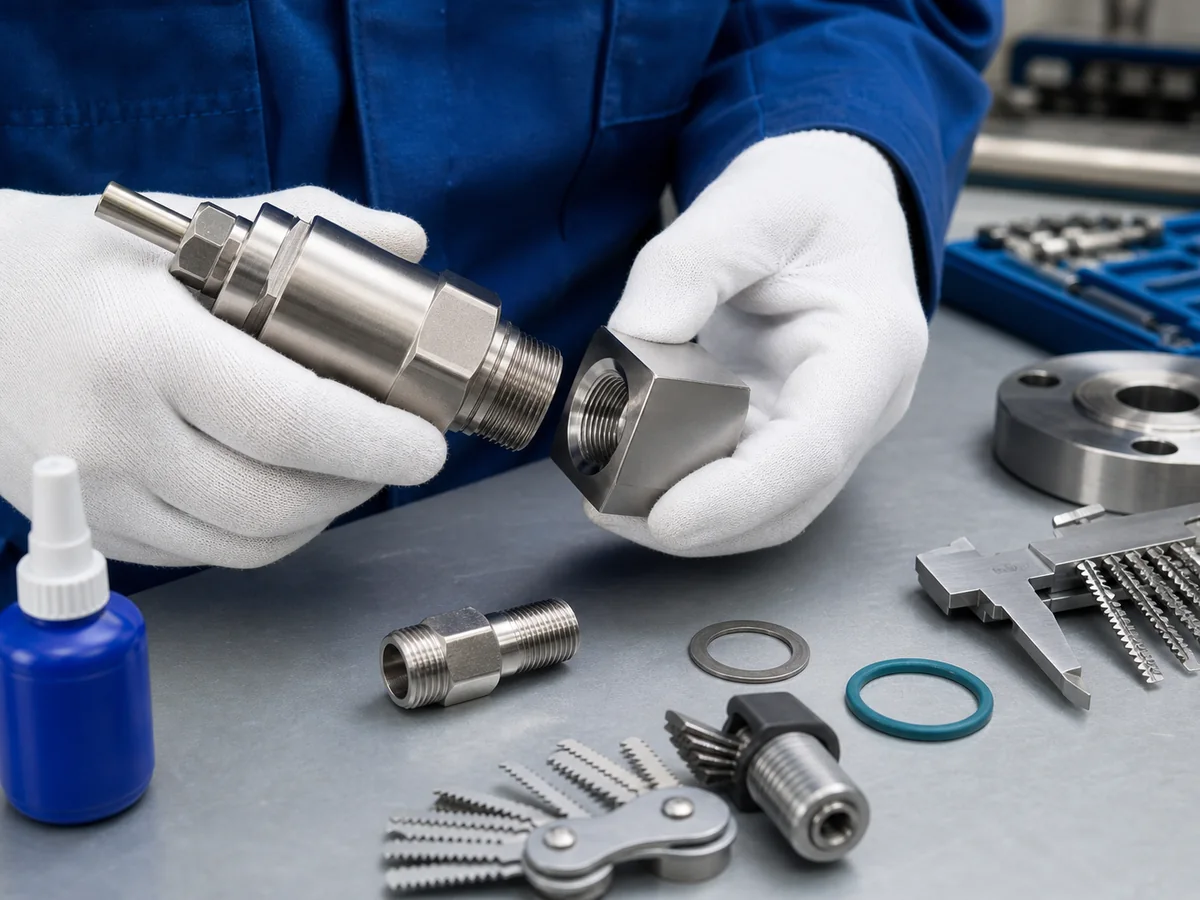
La identidad de la rosca de entrada es un problema del sistema de protección
La entrada conecta la válvula al equipo protegido. Un adaptador improvisado, un reductor o un accesorio largo pueden alterar el diámetro interno instalado, introducir pérdida de presión, añadir carga mecánica o crear un bolsillo para condensado y residuos. Por lo tanto, los cambios de conexión deben revisarse a través del proceso de gestión del cambio del proyecto en lugar de tratarse como un simple ajuste de fontanería.
La identidad de la rosca de salida afecta la descarga segura
La conexión de salida afecta la dirección de descarga, la tubería de ventilación y el soporte. Donde la salida está tuberizada, la revisión también debe considerar el drenaje, la carga mecánica y la contrapresión. Este artículo no cubre el cálculo detallado de la contrapresión; esas condiciones requieren los datos del fabricante de la válvula y una revisión dedicada del sistema instalado.
Por qué las fotos, los dibujos y los calibres sirven para diferentes propósitos
Las fotos revelan la pila de conexiones, adaptadores, daños y la cara de sellado. Los planos identifican la rosca prevista y el componente de acoplamiento. Los calibres verifican la forma y el tamaño de la rosca fabricada. Ninguno de estos por sí solo demuestra la capacidad de la válvula o la idoneidad según el código, por lo que el paquete de pedido debe combinar la evidencia de conexión con los datos de servicio y rendimiento.
Errores comunes de identificación de NPT, BSPP y BSPT
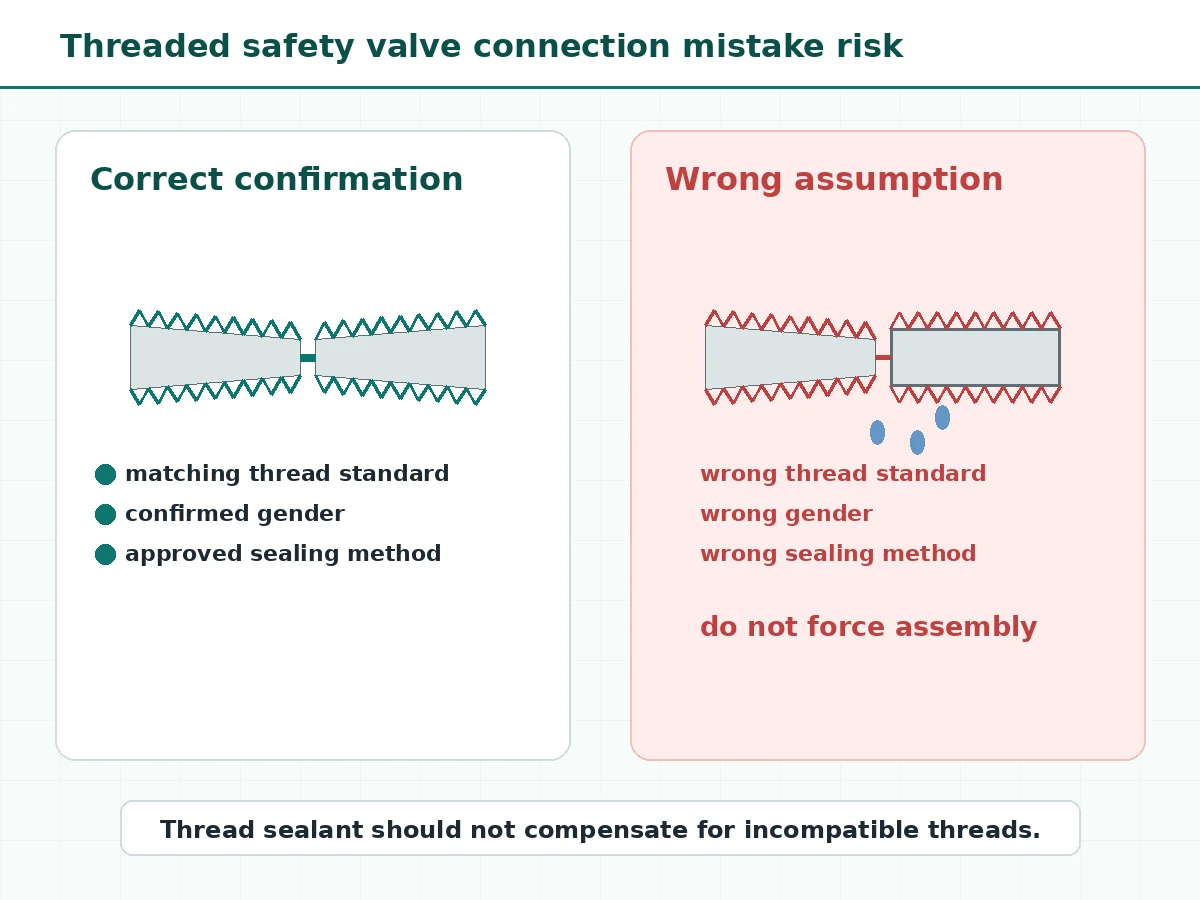
La mayoría de los fallos de conexión comienzan con una identificación incompleta, y luego escalan cuando se utilizan selladores, adaptadores o torque adicional para que las piezas parezcan compatibles. Separe el problema de ajuste observado del estándar de rosca, la forma de acoplamiento y la ubicación de sellado prevista.
| Error Común | Problema observado | Causa de ingeniería | Corrección y control preventivo |
|---|---|---|---|
| Pedido solo por “1/2 pulgada” | La válvula no se acopla correctamente o se detiene después de giros limitados. | El tamaño nominal se trató como la especificación completa de la conexión. | Confirme la designación formal estándar, el género, la interfaz de sellado y el puerto de acoplamiento antes de realizar el pedido. |
| Tratar cada conexión BSP como un solo tipo | La válvula que parece correcta gotea a pesar de apretarla repetidamente. | Se confundió una conexión de sellado facial paralelo con una disposición de rosca estanca a la presión. | Restaurar la junta/junta tórica/arandela correcta o el par de roscas especificado; registrar la llamada del plano formal. |
| Asumir que NPT y BSP son intercambiables. | Las roscas se atascan, muestran crestas dañadas o fallan la prueba de presión. | Se forzaron a unirse diferentes sistemas de roscas porque el tamaño nominal parecía similar. | Detener el montaje, inspeccionar ambos componentes y utilizar la rosca especificada o un adaptador revisado. |
| Uso de sellador para compensar desajustes | Sellado temporal seguido de fugas, contaminación o difícil extracción. | Se solicitó al sellador que corrigiera la geometría en lugar de sellar una junta aprobada. | Utilice únicamente un producto compatible con el medio y la temperatura en una conexión verificada bajo el procedimiento aprobado. |
| Reemplazo por apariencia y rosca solamente | La válvula encaja pero se abre a la presión incorrecta o no puede pasar la carga requerida. | No se verificaron la presión de tarado, el rango del resorte, la base de capacidad ni el medio. | Haga coincidir la placa de características y la hoja de datos, luego compare la capacidad requerida con los datos clasificados/certificados específicos del modelo. |
| Ignorar un adaptador existente | La orientación de reemplazo cambia o la ruta de entrada se restringe. | El adaptador se trató como parte de la válvula en lugar de parte del sistema instalado. | Documente la pila de conexión completa, el diámetro interior y las cargas; revise cualquier cambio a través de MOC. |
En un segundo escenario de ingeniería compuesto, un puerto de válvula roscado G se envolvió repetidamente con cinta de PTFE porque la junta tenía fugas. El defecto real fue la falta de una junta de sellado en el hombro; las roscas paralelas proporcionaron retención mecánica pero no eran la superficie de sellado prevista. El reemplazo de la junta especificada y la inspección de la cara resolvieron la fuga. El control preventivo fue incluir el dibujo de la sección y el número de pieza de la junta en el paquete de mantenimiento.
Sellado NPT vs BSP: Roscas, Juntas, Juntas tóricas y Sellos de cara
El método de sellado es la diferencia decisiva entre muchas conexiones NPT, ISO 228-1 e ISO 7-1. El paquete de pedido debe identificar dónde se forma el límite de presión, no simplemente enumerar un nombre de rosca.
Estanqueidad en la rosca frente a estanqueidad fuera de la rosca
Las roscas paralelas ISO 228-1 están diseñadas para el ensamblaje mecánico y requieren una junta adecuada entre las superficies de apriete cuando el ensamblaje debe ser estanco a la presión. Por el contrario, los arreglos estancos a la presión NPT e ISO 7-1 se basan en el acoplamiento de rosca especificado y una práctica de sellado aprobada. Estos sistemas no deben mezclarse de forma casual.
El material de la junta depende del medio, la temperatura y la limpieza
Un producto de sellado adecuado para aire limpio puede no serlo para vapor, servicio de oxígeno, productos químicos agresivos, alta temperatura, servicio de vacío o un proceso con controles de contaminación. Confirme el material de la junta, el lubricante o el sellador según las instrucciones del fabricante de la válvula seleccionada y el procedimiento del proyecto. No infiera la compatibilidad por el color, la familia de marcas o las afirmaciones generales de marketing.
No existe un par de apriete o número de vueltas universal
La condición de la rosca, el material, el recubrimiento, el sellador, el tamaño y el diseño de la conexión influyen en el ensamblaje. Una fuerza excesiva puede agrietar un componente hembra, deformar un cuerpo blando, dañar las primeras roscas o girar la válvula a una orientación de descarga insegura. Utilice las instrucciones de instalación específicas del modelo y el método de par de apriete o acoplamiento aprobado por el proyecto, si se proporcionan.
Compatibilidad de roscas frente a idoneidad de la válvula de seguridad
La compatibilidad de roscas responde a si la válvula se puede conectar correctamente. La idoneidad de la válvula de seguridad responde a si puede proteger el equipo. Estas son verificaciones separadas: una válvula puede tener la rosca correcta pero la presión de tarado, el rango del resorte, el orificio efectivo, la capacidad nominal, el material o la configuración de descarga incorrectos.
| Grupo de datos | Lo que confirma | Ejemplos | Riesgo si falta |
|---|---|---|---|
| Identidad de la conexión | Si la entrada y la salida pueden acoplarse físicamente sin forzar el montaje. | Designación formal estándar de la rosca, tamaño nominal, forma macho/hembra, disposición de entrada/salida y designación del puerto de acoplamiento. | Rosca incorrecta, daño en el acoplamiento, dependencia del adaptador, retraso en la instalación o fuga. |
| Identidad de sellado | Dónde y cómo se pretende que la barrera de presión selle. | Sellador de roscas, junta, junta tórica, sello adherido, arandela, cono/hombro u otro sello facial definido por el fabricante. | Fugas, extrusión del sello, contaminación, incompatibilidad de temperatura o falsa confianza por apriete excesivo. |
| Datos de servicio y alivio | Si la válvula puede proteger el equipo para el escenario de control. | Equipo protegido, escenario de alivio, medio y fase, presión de operación, MAWP/presión de diseño, presión de ajuste, capacidad de alivio requerida, presión y temperatura de alivio. | Ajuste correcto pero presión de ajuste incorrecta, capacidad inadecuada, operación inestable o materiales inadecuados. |
| Evidencia de verificación | Si la configuración cotizada y los registros de aceptación coinciden con el requisito del proyecto. | Dibujo OEM, antigua hoja de datos, resultado de manómetro, datos de capacidad específicos del modelo, registro de calibración, registros de materiales, alcance de inspección y edición de código aplicable. | Selección no verificable, registros faltantes, aprobación retrasada o reclamación de cumplimiento no admitida. |
Mantenga la decisión principal de esta página acotada: identifique primero la conexión NPT, BSPP o la conexión formal ISO 7-1. Luego, dirija las preguntas sobre capacidad, presión, material y sistema instalado a las revisiones de hoja de datos, dimensionamiento e instalación correspondientes.
Comprobaciones de la válvula de seguridad después de identificar la rosca
Una vez identificada la conexión, confirme por separado la función de protección de presión. La compatibilidad de la rosca no establece el límite del equipo protegido, el escenario de alivio que rige, la presión de tarado, la capacidad requerida, la construcción de la válvula o el comportamiento de descarga instalado.
Mantenga separadas la presión de operación, la MAWP / presión de diseño y la presión de tarado
La presión de operación describe las condiciones normales o esperadas del proceso. La MAWP o la presión de diseño pertenecen a la base del equipo protegido. La presión de tarado define la presión a la que se ajusta la válvula para que se abra bajo la base de prueba aplicable. La presión de alivio incluye la sobrepresión aplicable durante la descarga. Estos valores están relacionados pero no son intercambiables, y no se aplica un único porcentaje de margen operativo a cada válvula, fluido y código.
El tamaño de la conexión y la presión de tarado no demuestran la capacidad de alivio
La capacidad de alivio requerida proviene del escenario que rige. La capacidad nominal o certificada proviene del rendimiento documentado de la válvula seleccionada bajo condiciones definidas. El área del orificio efectivo, el coeficiente, la elevación, la base del fluido y la presión/temperatura de alivio son importantes; el tamaño de la conexión roscada solo demuestra la interfaz externa. Las bases de vapor, aire/gas, líquido y bifásicas no pueden sustituirse sin un cálculo válido.
Revisar más allá del material del cuerpo
El cribado de materiales debe cubrir el cuerpo/bonete, la boquilla o asiento, el disco, la guía, el vástago, el resorte, la junta, la junta tórica o el asiento blando y cualquier adaptador mojado. La corrosión, el agarrotamiento, el riesgo de corrosión bajo tensión, la temperatura, la compatibilidad del sello y el entorno del resorte pueden afectar la estanqueidad, la estabilidad de apertura y la vida útil de mantenimiento. Para límites más amplios, consulte la clasificaciones de presión-temperatura guía y la categoría de válvulas de seguridad accionadas por resorte.
Cómo identificar una rosca existente antes de reemplazar la válvula de seguridad
El trabajo de reemplazo debe comenzar con la identificación, no con la suposición. La válvula antigua puede contener un adaptador, reductor, unión, rosca dañada o sello no original que oculte el requisito del puerto del equipo. Una coincidencia visual idéntica puede perpetuar el error original.
Compruebe la placa de identificación, la hoja de datos y el registro de compras anterior
La placa de identificación puede identificar el modelo, la presión de ajuste, el tamaño y la marca del código, pero puede que no contenga la base completa de rosca o capacidad. Utilice la hoja de datos original, el dibujo, el registro de capacidad certificado/nominal, el historial de calibración y la descripción de compra cuando estén disponibles. Si los registros entran en conflicto, escale la discrepancia en lugar de elegir el valor más conveniente.
Mida con cuidado, pero no adivine el estándar
El diámetro exterior, la medición del paso y las fotografías son herramientas de cribado. No deben reemplazar el dibujo formal o los calibres adecuados donde la distinción sea incierta. Marque la información desconocida como “pendiente de confirmar”, aísle el equipo de forma segura y obtenga una verificación controlada antes de realizar el pedido.
Flujo de trabajo de verificación de reemplazo antes de realizar el pedido
| Paso | Acción del comprador | Por qué es importante |
|---|---|---|
| 1 | Fotografíe la válvula completa, la placa de identificación, la entrada, la salida, la pila de adaptadores, la cara de sellado y la tubería conectada. | Muestra si la rosca visible pertenece a la válvula, a un adaptador o al puerto del equipo. |
| 2 | Recupere la hoja de datos antigua, el dibujo del OEM, el registro de compra anterior y el historial de mantenimiento. | Proporciona la designación de rosca prevista, la presión de ajuste, los materiales y la base de rendimiento. |
| 3 | Confirme la rosca con el dibujo y el sistema de calibre adecuado cuando sea necesario. | Evita adivinar por el tamaño nominal, la conicidad aparente o el acoplamiento parcial. |
| 4 | Confirmar la interfaz de sellado y la pieza/material de sellado requerido. | Distingue una conexión de sellado de cara de una junta roscada estanca a la presión. |
| 5 | Confirmar el equipo protegido y el escenario de alivio aplicable. | Asegura que el reemplazo aún coincida con la función de protección real después de cambios en el proceso. |
| 6 | Separar la presión de operación, la MAWP/presión de diseño, la presión de tarado y las condiciones de alivio. | Evita una configuración de resorte incorrecta o una base de presión errónea. |
| 7 | Comparar la capacidad de alivio requerida con la capacidad documentada específica del modelo. | Evita un reemplazo mecánicamente compatible pero subdimensionado. |
| 8 | Revisar el medio, la temperatura, los materiales, la tubería de salida y los requisitos de documentación. | Cierra las brechas de compatibilidad, contrapresión, inspección y aceptación. |
| 9 | Registrar cualquier cambio de conexión o adaptador mediante la gestión del cambio. | Preserva la trazabilidad y desencadena la revisión del diámetro interno, las cargas, la orientación y el acceso de mantenimiento. |
Nota de pedido: Es más seguro no saber que adivinar. No infiera el estándar de rosca, la presión de tarado, la capacidad o la certificación por la apariencia. Indique “pendiente de confirmar” e identifique la evidencia necesaria para cerrar el punto.
Identificación de roscas y lista de verificación para pedidos de válvulas de seguridad
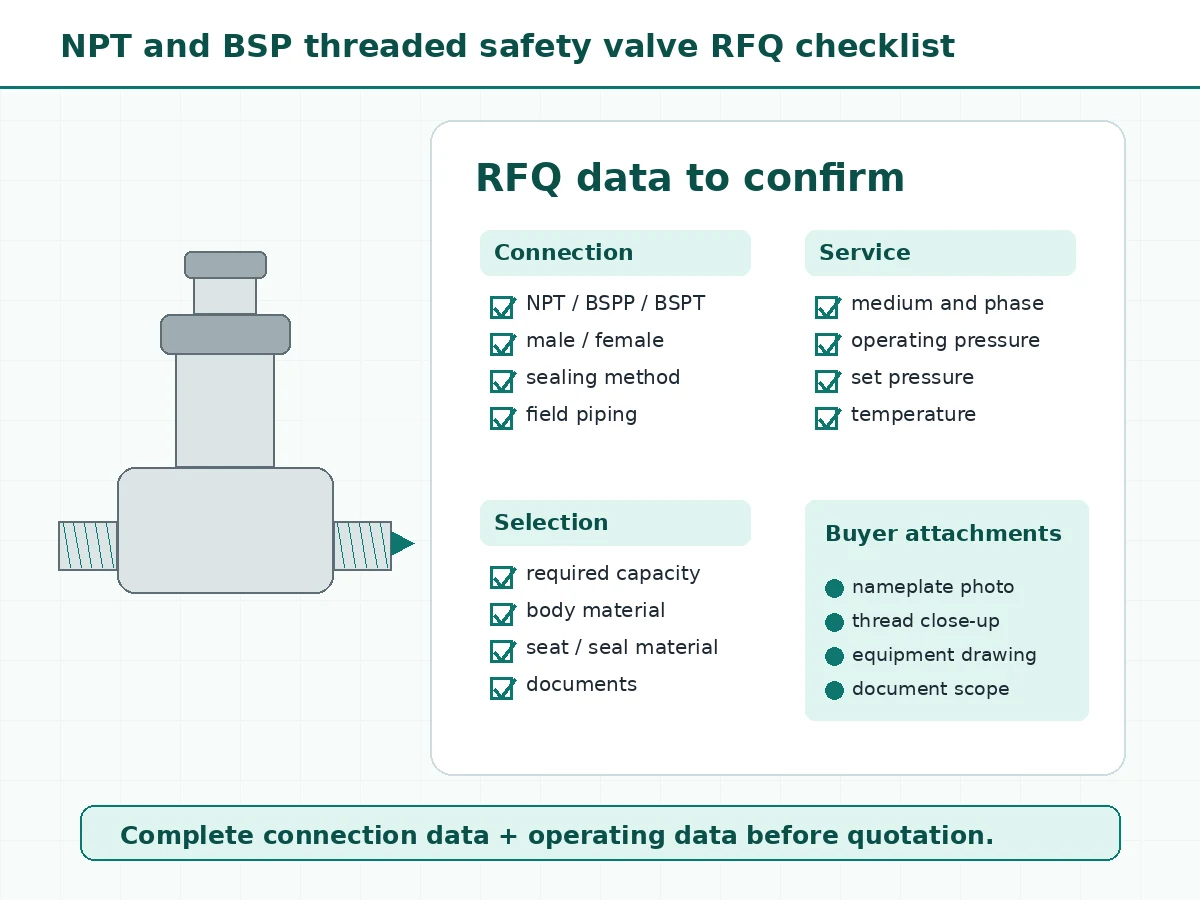
Un paquete de pedido útil combina la identidad de la conexión, la identidad del sellado, la evidencia de servicio y aceptación de la válvula de seguridad. Complete primero los campos de rosca; marque los elementos inciertos como “a confirmar” en lugar de convertir NPT, BSPP, BSPT, G, R, Rc o Rp por suposición.
| Parámetro | Qué proporcionar | Por qué es importante | Riesgo de datos faltantes |
|---|---|---|---|
| Equipo protegido | Recipiente, caldera, tanque, compresor, tubería, skid, intercambiador de calor u otro equipo. | Define el límite de protección contra sobrepresión. | Base de aplicación incorrecta. |
| Escenario de alivio principal | Salida bloqueada, expansión térmica, fallo del regulador, incendio, rotura de tubo, alteración del proceso o caso documentado. | Establece la carga de alivio y las condiciones requeridas. | Capacidad seleccionada para el escenario equivocado. |
| Medio y fase | Composición, base de vapor/gas/vapor/líquido/bifásico, limpieza y características corrosivas o peligrosas. | Afecta el método de dimensionamiento, los materiales, el sellado y la construcción de la válvula. | Capacidad o selección de material inválida. |
| Presión de operación | Presión operativa normal y máxima esperada con unidades. | Soporta la revisión del margen operativo y de fugas. | Servicio de burbujeo, fugas o inestable. |
| Presión Máxima de Trabajo Admisible / Presión de diseño | Base de presión del equipo protegido y código aplicable. | Soporta la revisión de la presión de tarado y la acumulación. | Límite de protección incorrecto. |
| Presión de tarado | Presión de tarado requerida, unidades y base de prueba si se especifica. | Define el punto de ajuste de la válvula. | Rango de resorte o ajuste incorrecto. |
| Capacidad de alivio requerida | Flujo másico o volumétrico, unidades, base de fluido y referencia de cálculo. | Permite la comparación con la capacidad nominal/certificada específica del modelo. | La conexión encaja pero la protección es inadecuada. |
| Presión y temperatura de alivio | Condiciones utilizadas para la verificación de capacidad principal. | Afecta la capacidad, el material y la idoneidad del sello. | Comparación de rendimiento no válida. |
| Estándar de rosca y designación formal | NPT, G, R, Rc, Rp u otra designación exacta del plano. | Identifica la geometría de referencia y la expectativa de acoplamiento. | Se suministró rosca incorrecta. |
| Tamaño nominal | Tamaño para entrada y salida por separado. | Completa la designación de rosca pero no demuestra la capacidad. | Conflicto de montaje o suposición incorrecta. |
| Forma macho / hembra | Género para entrada y salida por separado. | Define el acoplamiento físico. | La válvula no se puede conectar. |
| Conexión de acoplamiento | Dibujo y material del puerto de equipo, accesorio de tubería o adaptador. | Confirma la unión completa en lugar de solo la rosca de la válvula. | Desajuste oculto o adaptador no planificado. |
| Evidencia de verificación | Dibujo OEM, hoja de datos antigua, registro de compra, resultado de calibre adecuado y fotos de primer plano. | Reduce las conjeturas y apoya la trazabilidad. | Aclaración repetida o reemplazo incorrecto. |
| Interfaz de sellado | Sello de rosca, junta, junta tórica, sello adherido, arandela, hombro u otra interfaz definida. | Muestra dónde se crea la estanqueidad a la presión. | Fuga persistente. |
| Sellador / material de sellado | Producto o material de sellado aprobado por el proyecto y requisito de compatibilidad. | Afecta la temperatura, la química, la limpieza y el mantenimiento. | Degradación, contaminación o fallo del sello. |
| Materiales del cuerpo y bonete | Grados requeridos y base de corrosión/temperatura. | Soporta el límite de presión y la idoneidad ambiental. | Incompatibilidad de materiales. |
| Tobera, disco, guía, vástago y resorte | Materiales de trim y resorte requeridos donde se especifique. | Afecta la corrosión, el agarrotamiento, la estabilidad y la vida útil. | Atascamiento interno, fugas o corta vida útil de mantenimiento. |
| Asiento / junta tórica / empaque | Preferencia de asiento metálico o blando, requisito de fuga y compatibilidad del elastómero. | Afecta la estanqueidad y los límites de temperatura/medio. | Expectativa de fuga no soportada o daño del sello. |
| Disposición de salida y descarga | Descarga abierta, salida roscada, tubería de ventilación, colector, orientación, soporte y drenaje. | Identifica el ajuste de la salida y si se necesita revisión de contrapresión. | Descarga insegura u operación inestable. |
| Espacio de instalación | Espacio, orientación, acceso para llave, ruta de extracción y cargas cercanas. | Evita modificaciones en campo y carga del cuerpo. | Instalación retrasada o junta dañada. |
| Edición del estándar / código aplicable | Requisito ASME, API, ISO, EN, GB o local adoptado por el proyecto. | Define el marco de aceptación aplicable. | Marcado, pruebas o registros incorrectos. |
| Documentación e inspección | Ficha técnica, evidencia de capacidad, calibración, prueba de estanqueidad del asiento, registros de materiales, puntos de inspección y trazabilidad. | Define el alcance de la revisión y aceptación del pedido. | Documentación faltante o reclamación de cumplimiento no admitida. |
El dimensionamiento de alivio sigue siendo una tarea de ingeniería separada. Donde la práctica de refinería API sea aplicable, utilice las [herramientas/guías/software] de ZOBAI Dimensionamiento de válvulas de seguridad API 520 página como ayuda de navegación y verificar la edición adoptada contra la publicación oficial de la API.
Cómo usar una página de producto de válvula de seguridad roscada
Una página de categoría de producto puede ayudar a establecer qué familias de conexión, materiales y construcciones de válvulas pueden estar disponibles. No puede probar que cada modelo mostrado se ofrezca con cada conexión NPT, G, R, Rc o Rp, cada rango de presión o cada marcado según código.
Utilice los datos del producto para identificar modelos candidatos
Utilice la página de categoría para identificar modelos candidatos y las hojas de datos requeridas. Luego, compare el dibujo de rosca real, el rango de presión de tarado, la capacidad nominal/certificada, los materiales, la construcción del asiento, los límites de temperatura y el alcance de la documentación con los requisitos del proyecto.
No convierta el rango de marketing en una reclamación de cumplimiento
Las declaraciones generales como “NPT/BSP disponible”, “para vapor y gas” o “alta presión” no establecen la idoneidad específica del modelo. La certificación, los registros de pruebas y el cumplimiento de las normas deben confirmarse para el fabricante, modelo, tamaño, configuración y alcance del pedido exactos.
Cuándo es esencial una revisión de ingeniería
Escalar la consulta cuando el hilo antiguo es incierto, hay un adaptador, el equipo es importado, la ubicación del sello no está clara, el medio es corrosivo o peligroso, la salida está tuberizada, faltan datos de capacidad o el proyecto requiere marcado específico y registros de inspección.
Normas oficiales de NPT, BSP y válvulas de seguridad para confirmar
Las normas de roscado rigen la geometría de conexión y la verificación. Las normas de válvulas de seguridad y los códigos de equipos rigen asuntos separados como el diseño, las pruebas, la documentación de capacidad, el marcado, la instalación y la aplicación. Por lo tanto, un estándar de roscado correcto no puede usarse como evidencia de una selección completa de válvula de seguridad.
| Referencia Oficial | Estado público actual verificado el 19 de julio de 2026 | Qué soporta | Qué No Demuestra |
|---|---|---|---|
| ASME B1.20.1 — Roscas de tubería, uso general, pulgada | ASME enumera la edición de 2013, reafirmada en 2018. | Dimensiones y calibres para NPT y familias relacionadas de roscas de tubería en pulgadas. | Presión de ajuste de la válvula de seguridad, capacidad, materiales o idoneidad de la aplicación. |
| ISO 228-1:2000 | Publicada, Edición 4, confirmada. | Roscas de tubería paralelas donde la estanqueidad a la presión no se realiza en las roscas; el sellado se proporciona fuera de la rosca cuando sea necesario. | El diseño específico de la junta/junta tórica, la clasificación de presión de la válvula o la función de alivio. |
| ISO 7-1:1994 y Cor 1:2007 | Publicado, Edición 3, con Cor 1:2007; ISO muestra actualmente la norma como confirmada. | Dimensiones, tolerancias y designación para roscas de tubería donde se realizan uniones estancas a presión en las roscas. | Intercambiabilidad con NPT o idoneidad completa de la válvula de seguridad. |
| ASME BPVC Sección XIII | ASME lista la edición de 2025. | Normas de protección contra sobrepresión que incluyen dispositivos de alivio de presión, certificación de capacidad, pruebas, marcado e instalación dentro de su alcance. | Aplicabilidad automática a cada jurisdicción o prueba de que una válvula específica tiene una autorización ASME. |
| API 520 Parte I, 10ª Edición y API 520 Parte II, 7ª Edición | API identifica las ediciones publicadas de dimensionamiento/selección e instalación; el plan de estándares de API también muestra trabajos de revisión futuros. | Dimensionamiento/selección e instalación de dispositivos de alivio de presión de refinería dentro del alcance de API. | Una regla universal para cada industria, jurisdicción o configuración de válvula. |
| ISO 4126-1:2013 con Amd 1:2016 | Estándar de producto publicado con enmienda. | Requisitos generales del producto para válvulas de seguridad dentro de su alcance declarado. | Diseño de aplicación: ISO identifica explícitamente la Parte 1 como una norma de producto, no como una norma de aplicación. |
| Manual de identificación de roscas Parker | Manual técnico oficial del fabricante; verificado el 22 de julio de 2026. | Comparación práctica de la forma de rosca, el ángulo y los datos de paso comunes de NPT, BSPP y BSPT. | Aceptación de la conexión de una válvula de seguridad, cumplimiento de la norma del proyecto o idoneidad del modelo. |
Verificar la edición adoptada por el proyecto
La lista más reciente del editor no es automáticamente la edición adoptada por un contrato, una regulación local, una especificación del propietario o el sello de un código de equipo existente. Indique la edición requerida en la RFQ y resuelva los conflictos antes de la cotización.
Solicitar documentos por propósito
No solicite genéricamente “todos los certificados”. Identifique lo que se debe demostrar: conformidad de rosca, trazabilidad de material, calibración de presión de tarado, prueba de estanqueidad del asiento, capacidad nominal/certificada, inspección dimensional, marcado de código o testigo de terceros. Estos registros tienen diferentes propósitos y uno no reemplaza a otro. Para la navegación en el sitio, consulte el normas de válvulas de seguridad página.
Solicitar a ZOBAI la revisión de los datos de la rosca y la válvula de seguridad
Envíe la evidencia de conexión y la base de servicio juntas para que la rosca pueda ser identificada sin convertir la página en un sustituto del dimensionamiento de la válvula o la aprobación del proyecto.
- Designación exacta de rosca de entrada y salida, tamaño y género.
- Dibujo del puerto de acoplamiento, detalles del adaptador existente y fotografías de primer plano.
- Ubicación del sellado, pieza/material del sello y procedimiento de sellador aprobado.
- Equipo protegido y escenario de alivio principal.
- Medio, fase y propiedades relevantes del proceso.
- Presión de operación, MAWP/presión de diseño, presión de tarado y condiciones de alivio.
- Capacidad de alivio requerida y base de cálculo.
- Requisitos de cuerpo, internos, resorte, asiento, junta y junta tórica.
- Tubería de salida, orientación, soporte, drenaje e información de contrapresión, cuando sea aplicable.
- Edición del código/norma aplicable, requisitos de prueba, marcado y documentación.
ZOBAI puede revisar si el conjunto de parámetros enviado es lo suficientemente completo para la cotización. La selección final debe confirmarse con el cálculo de alivio del ingeniero responsable, los datos del fabricante/modelo seleccionado, el sistema instalado y los requisitos adoptados por el proyecto.
Preguntas frecuentes sobre roscas NPT vs BSP para válvulas de seguridad
¿Cuál es la diferencia entre las roscas NPT y BSP?
La NPT es un sistema de rosca cónica para tuberías ASME B1.20.1 con una forma de rosca de 60 grados. La BSP utiliza una forma Whitworth de 55 grados. La BSPP es paralela y normalmente sella en una cara separada, mientras que las configuraciones herméticas a presión ISO 7-1, comúnmente llamadas BSPT, utilizan la designación de acoplamiento especificada R, Rc o Rp.
¿Son intercambiables las roscas NPT y BSP?
El tamaño nominal no coincidente o el acoplamiento parcial no demuestran compatibilidad. NPT y BSP difieren en el ángulo de la rosca, el perfil, la serie de paso, el calibrado y el método de sellado. Utilice la conexión correcta o un adaptador revisado; no fuerce el ensamblaje ni utilice sellador para compensar.
¿Cuál es la diferencia entre BSPP y BSPT?
BSPP se refiere comúnmente a las roscas G paralelas ISO 228-1, que normalmente sellan con una junta, junta tórica, arandela bonded u otro sello de cara externo. BSPT es una abreviatura comercial para las configuraciones herméticas a la presión ISO 7-1 que utilizan la designación formal R, Rc o Rp.
¿Es 1/2 pulgada NPT lo mismo que 1/2 pulgada BSP?
No. Ambos pueden usar 14 hilos por pulgada, lo que dificulta la identificación visual, pero la NPT utiliza una forma de rosca de 60 grados y la BSP utiliza una de 55 grados con requisitos de perfil y calibración diferentes. Verifique el dibujo y utilice los calibres adecuados.
¿Cuál es la diferencia en el ángulo de la rosca entre NPT y BSP?
La rosca NPT utiliza un ángulo de rosca incluido de 60 grados. Las roscas de tubería BSPP e ISO 7-1 utilizan una forma Whitworth de 55 grados. El ángulo es solo una característica de identificación; también se deben verificar el paso, la conicidad, la designación, el diámetro y la ubicación del sellado.
¿Debería una válvula de seguridad roscada tener una entrada macho o hembra?
Haga coincidir el puerto del equipo verificado con el diseño de válvula seleccionado. Especifique la entrada y la salida por separado con la designación estándar y formal, el tamaño nominal, el género y la interfaz de sellado. Se debe revisar un adaptador en cuanto a calibre, cargas, materiales, orientación y pérdida de presión de entrada.
¿Cómo sellan las conexiones NPT y BSP en las válvulas de seguridad?
Las configuraciones herméticas a la presión NPT e ISO 7-1 utilizan el acoplamiento roscado especificado y la práctica de sellado aprobada. Las roscas ISO 228-1 BSPP/G normalmente requieren una cara de sellado externa con una junta, O-ring, sello adherido o arandela. Siga el modelo y el procedimiento del proyecto.
¿Puede el sellador de roscas solucionar una incompatibilidad entre NPT y BSP?
El sellador no puede corregir una geometría de rosca incompatible ni reemplazar una junta de cara BSPP faltante. Detenga el ensamblaje, identifique ambas partes de acoplamiento y restaure la conexión especificada. El producto de sellado también debe ser adecuado para los requisitos de medio, temperatura y limpieza.
¿Se puede identificar el tipo de rosca NPT o BSP a partir de una foto?
Una foto puede mostrar el cono, el género, los adaptadores, los daños y la cara de sellado, pero rara vez demuestra la norma por sí sola. Combine la foto con el dibujo del OEM, el registro de compra anterior, la medición del paso y los calibres de rosca adecuados.
¿Qué se debe confirmar antes de pedir una válvula de seguridad roscada?
Confirme la designación de rosca de entrada y salida, tamaño, género, puerto de acoplamiento y ubicación del sello. Luego, confirme por separado el equipo protegido, el escenario de alivio, la presión de operación, la MAWP o presión de diseño, la presión de tarado, la capacidad requerida, las condiciones de alivio, los materiales, la disposición de salida y los documentos.
Nota de ingeniería
Fecha de revisión técnica: 22 de julio de 2026. Este artículo apoya la comparación NPT vs BSP, la identificación de roscas y la preparación para el pedido de válvulas de seguridad roscadas. No reemplaza la calibración controlada de roscas, el dimensionamiento de alivio, la verificación de la hoja de datos del fabricante, el análisis del sistema instalado, la aprobación de inspección o los requisitos regulatorios locales. Los escenarios compuestos son casos de capacitación ilustrativos, no afirmaciones sobre un cliente o proyecto con nombre.