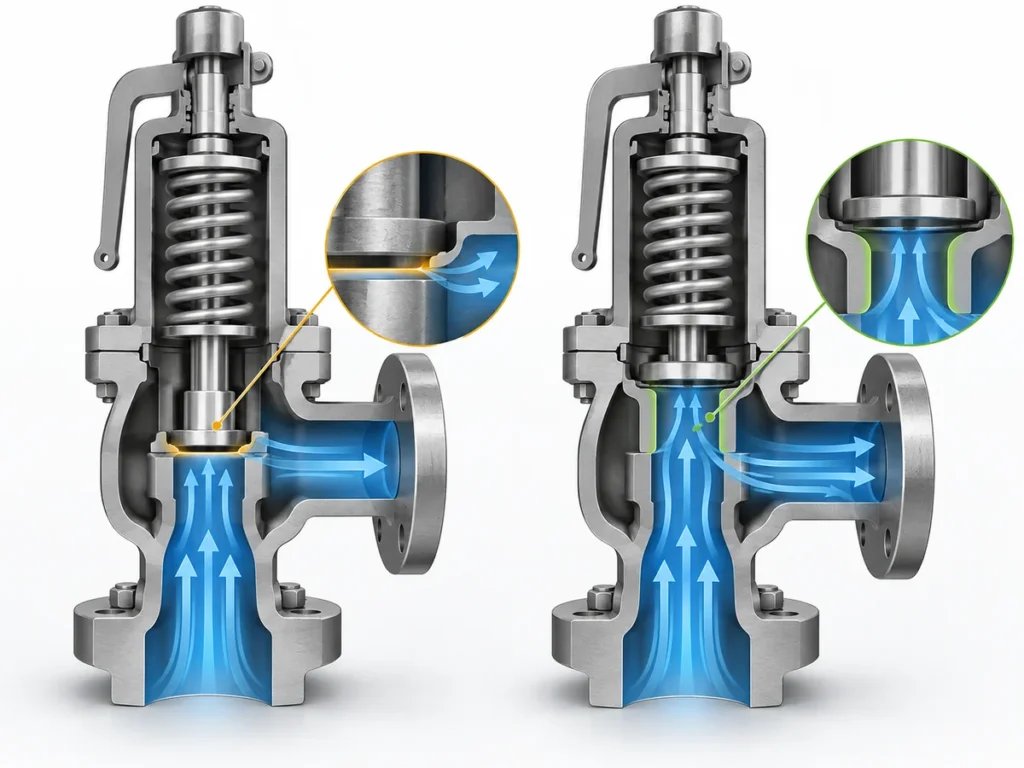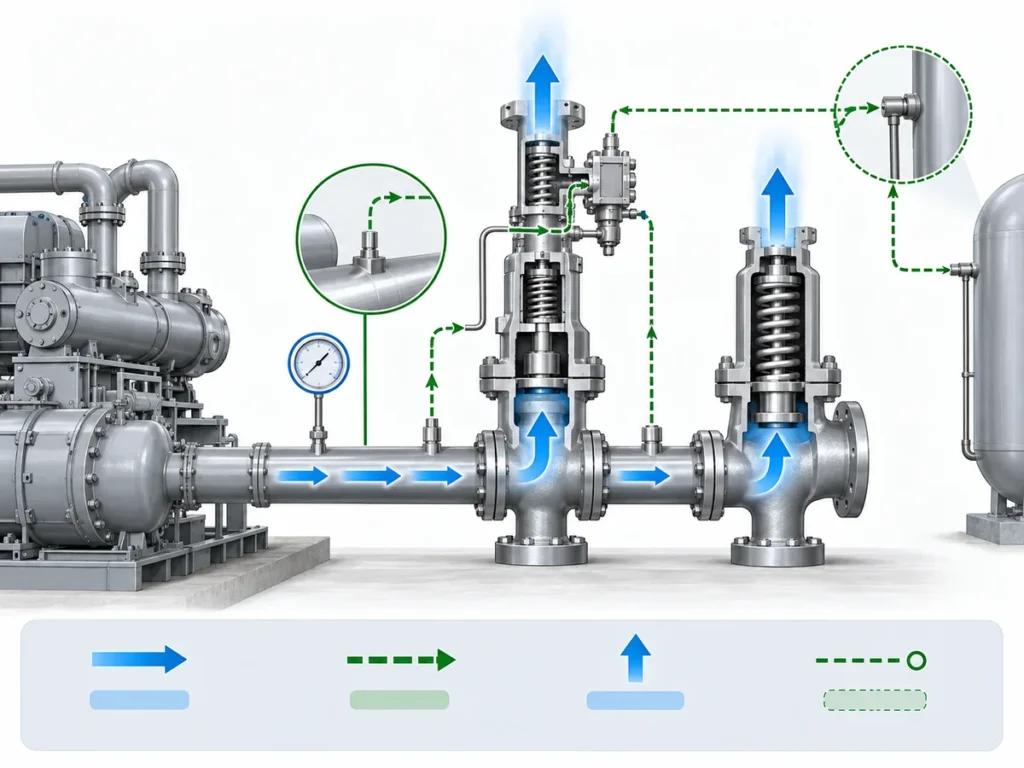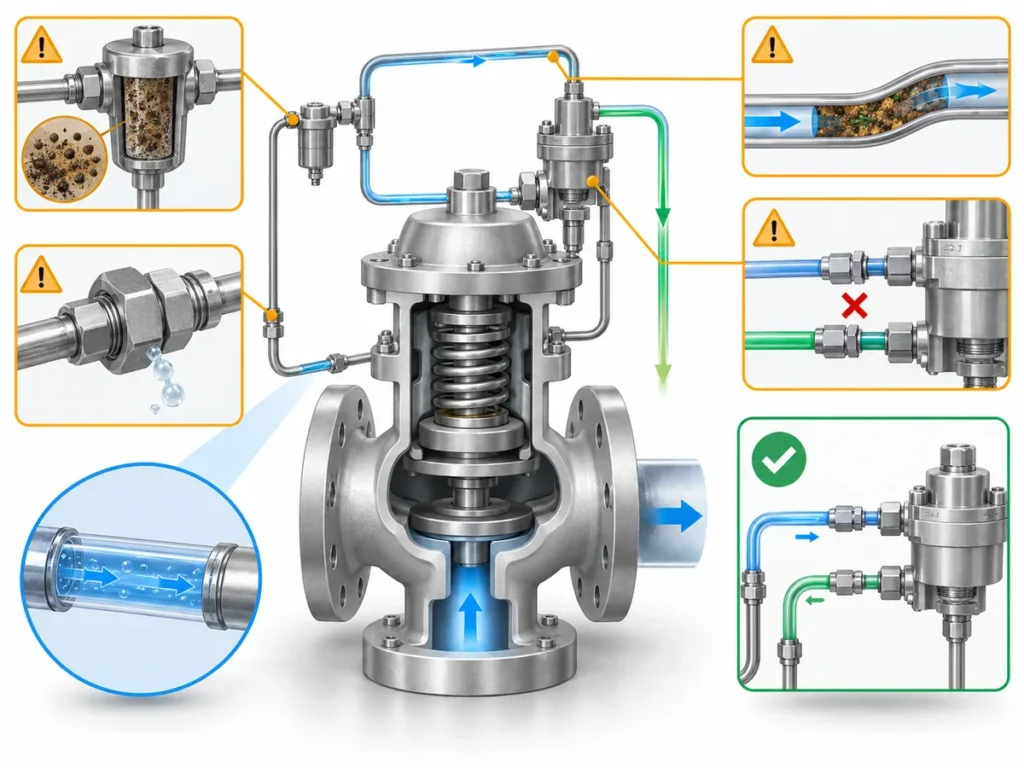
了解如何评估先导式安全阀在整定压力附近的密封性,解读 API 527,并核实产品特定的泄漏限值。.

在某些设计中,先导式安全阀可在工作压力相对接近整定压力时仍保持严密关闭。这一点 不 并不意味着每台先导式安全阀都具有相同的允许工作裕度,API 527 的密封性试验结果本身也不能界定已安装系统通常应在多接近整定压力的情况下运行。.
需要区分三个问题:
- 阀门是否满足规定的 阀座密封性试验?
- 是否 特定阀门设计 用于在实际工作压力与整定压力的关系下运行?
- 运行中观察到的泄漏是否表明阀门问题、先导/控制回路问题、其他密封路径问题,还是仍需定位的观察现象?
这一区分比找到单一的 95%、97% 或 98% 编号更为重要。.
进行工程审查时,应首先确认实际整定压力、正常工作压力、阀门与先导配置、观察到的泄漏位置,以及适用的试验或验收依据。.
“整定压力附近的密封性”到底指什么?
“整定压力附近的密封性”并不是一种工程工况。.
整定压力 用于确定与阀门规定开启或动作特性相关的压力设定值。. 正常工作压力 是运行期间的工艺压力。 密封性试验压力 是在规定试验程序中评估泄漏时所采用的控制压力。.
这些压力可能相互关联,但它们回答的是不同的问题。.
台架密封性试验合格本身并不能确定已安装系统的最大正常工作压力。同样,制造商声称某台先导式安全阀可在接近整定压力下运行,也并不自动定义 API 527 试验的验收准则。.
密封性试验与安装后运行是两个不同的问题
密封性试验要问的是:
在规定试验条件下,泄漏是否满足适用的验收依据?
安装运行评审会提出:
该阀门配置的实际运行工况是否在其文件规定的应用和运行基准范围内?
第二个问题需要的不仅仅是一份泄漏测试报告。工程师还需要阀门设计、工作压力、整定压力、先导阀配置以及相关系统工况。.
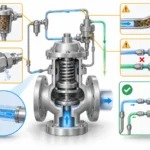
首先确定正在讨论的是哪条泄漏路径
“阀门泄漏”这一说法过于宽泛,无法用于有效诊断。.
| 观察现象 | 可能表明的问题 | 其本身不能证明什么 |
|---|---|---|
| 主出口处观察到的流量 | 通过主阀密封路径的内部流量 | 仅主阀座损坏 |
| 先导阀排放口/控制路径处的流量或泄漏 | 先导阀动作或先导阀/控制泄漏,具体取决于设计和状态 | 主阀座泄漏 |
| 管路、管件或外部连接处泄漏 | 外部连接或密封问题 | 内部主密封面失效 |
| 无法确定泄漏位置 | 诊断信息不完整 | 任何具体的阀门缺陷 |
在讨论维修、报废或运行裕度之前,应先作出这一区分。.
为什么先导式阀门在压力接近整定压力时仍能保持密封?
答案在于具体先导式结构的关闭力配置。.
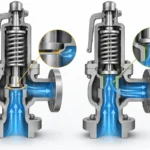
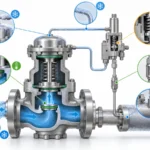
在常见的活塞式结构中,系统压力被引至主活塞上方的膜室或控制腔。当压力作用在较大的有效关闭面积上,而该面积大于阀座处产生开启力的面积时,由此形成的力平衡可使主阀保持关闭。.
对于这种结构,当先导阀维持所需的膜室压力时,入口压力的升高可继续对净密封力作出贡献。.
例如,LESER 采用这种差压面积原理来说明其先导式设计,并将关闭力的增大与接近整定压力时的运行联系起来。该机理有助于理解为何接近整定压力时仍可能保持密封,但其确切的压力限值仍因产品而异。. LESER 高效先导式安全阀技术信息.
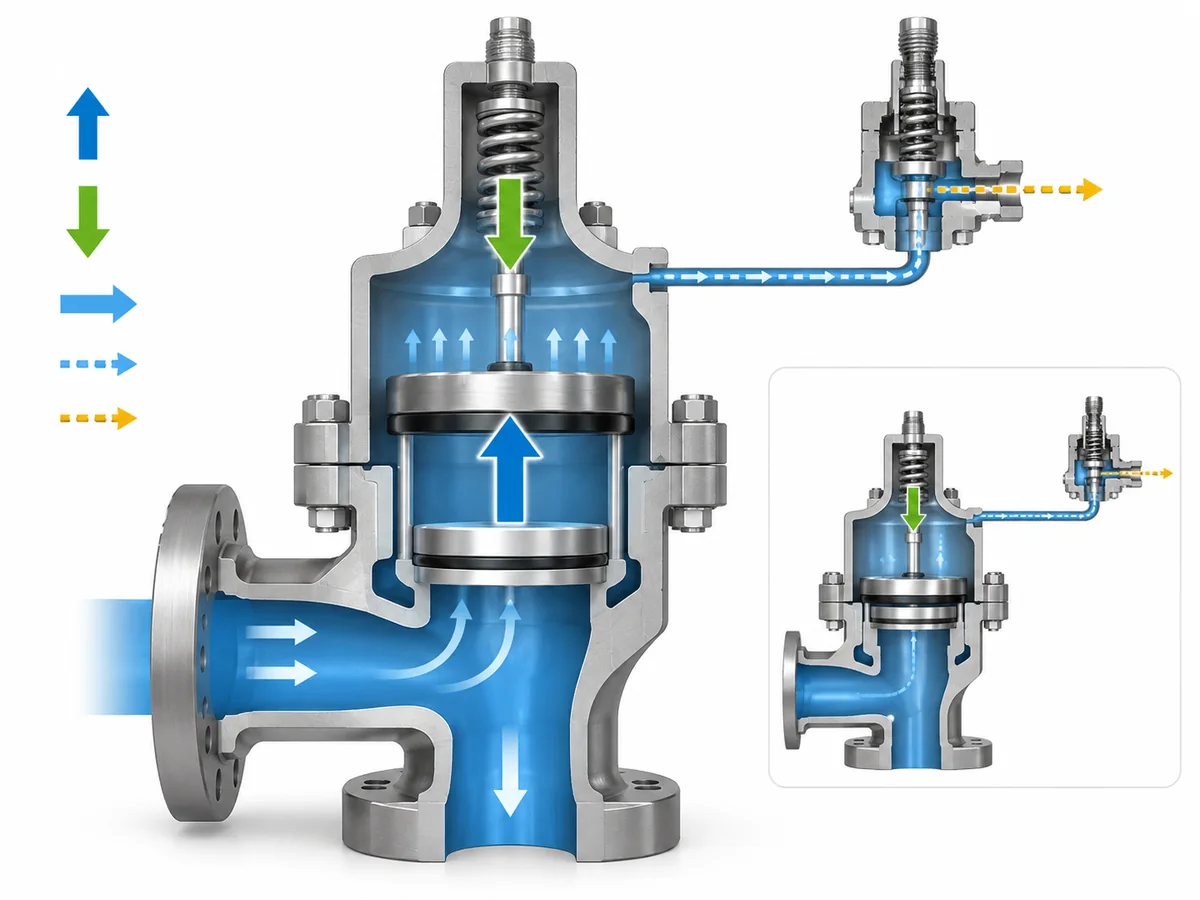
如需了解完整动作过程的更多细节,而不仅是密封面密封机制,请参见 先导式安全阀的工作原理.
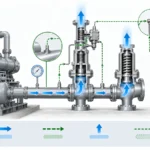
先导阀动作与主阀开启并不总是同一事件
先导式设计在系统接近整定压力时对压力的控制方式各不相同。.
调制型先导阀可能在主阀达到完全泄放状态之前就开始改变控制压力。其他先导阀配置可能遵循不同的动作顺序。.
因此,先导阀动作、先导阀排放流量和主阀密封面泄漏不应视为同义词。.
应以实际先导阀和主阀配置的已记录动作特性为准,而不要对所有先导式阀门作通用假设。.
95% 或 98% 整定压力是否为通用阀座密封规则?
不是。95%、97% 或 98% 数值并非通用的先导式安全阀规则。.
各原始制造商资料中的差异说明了原因。Emerson 的 Anderson Greenwood 200 系列规定阀门整体密封至少达到 整定压力的 95% (针对该系列);LESER 列出的工作压力最高可达 整定压力的 97% for its High Efficiency pilot-operated product group; and Baker Hughes states main-valve and pilot-seat tightness up to 98% of set pressure for its Consolidated pilot-operated valves. Each figure belongs to the product and claim in which it is published—not to the entire POSRV category.
Sources: Emerson Anderson Greenwood Series 200, LESER High Efficiency POSV, 以及 Baker Hughes Consolidated POSRV.
Four questions to ask before using any percentage
- Who owns the number? Is it the valve manufacturer, a project specification, a test procedure or another source?
- What does the percentage describe? Normal operating pressure, seat-tightness performance, test pressure, pilot cracking behavior and blowdown are different parameters.
- Which valve configuration does it apply to? Confirm the series, pilot type, seat arrangement and relevant options.
- Under what condition does it apply? A bench test, product performance statement and installed operating recommendation are not automatically equivalent.
This prevents a common sourcing mistake: finding the highest percentage published by one supplier and using it to evaluate a different valve.
Do not turn a product capability into an industry rule
A statement such as “tight to 98% of set pressure” may be meaningful when it belongs to the exact valve family being evaluated.
It becomes technically unreliable when rewritten as:
All pilot-operated safety valves can operate at 98% of set pressure without leakage.
The evidence does not support that generalization.
For ZOBAI’s ZBXD series, the supplied product catalog identifies a pilot-operated pressure-relief-valve family and references API 527 for tightness, but it does not provide a verified 95%, 97% or 98% near-set operating claim. That boundary should remain explicit.
API 527 Seat-Tightness Testing vs Actual Operation Near Set Pressure
API Standard 527 is specifically titled Seat Tightness of Pressure Relief Valves. API’s standards catalog lists Standard 527 as the fifth edition issued in 2020. API Standards Plan.
The current API 527 scope listing describes methods for determining seat tightness of metal- and soft-seated pressure-relief valves and explicitly includes pilot-operated designs. API STD 527 current scope listing.
That makes API 527 directly relevant to this article—but only for the job it actually performs.
What API 527 evidence can establish
An applicable API 527 test can provide evidence that the valve met the relevant seat-tightness acceptance basis under the prescribed test conditions.
For procurement and QA, that is useful because it gives the buyer and supplier a defined basis for discussing leakage acceptance.
For a deeper treatment of the test itself, see ZOBAI’s API 527 seat-tightness test guide.
其本身不能确定的内容
An API 527 result does 不, by itself, establish:
- the maximum normal operating pressure for the installed process;
- a universal 95%, 97% or 98% operating limit;
- guaranteed zero field leakage under every service condition;
- that pilot, sensing, external seals or downstream conditions cannot contribute to a leakage problem;
- that every pilot-operated valve referencing API 527 has the same operating margin.
ISO 4126-4 reinforces the need to separate product requirements from application decisions. ISO describes Part 4 as a product standard for pilot-operated safety valves and states that it is not an application standard. ISO 4126-4.
Avoid turning a test reference into a certification claim
If a catalog or test document states that tightness conforms to, or is tested using, API 527, retain that exact scope.
Do not silently rewrite it as:
The valve is API 527 certified.
A test-standard reference, product capability statement, code stamp and project approval are different forms of evidence.
If Leakage Appears Near Set Pressure, Identify the Leak Path Before Diagnosing the Valve
Leakage near set pressure is a symptom, not a root-cause diagnosis.
The first useful question is:
Where is leakage actually being observed, and what was the pressure and operating state when it appeared?
Only after that observation is clear should the engineer begin narrowing the possible cause.
Start with the observation, not the repair
| 您观察到的现象 | What to verify next | 原因 |
|---|---|---|
| Leakage at the main outlet | Actual pressure, set pressure, applicable tightness basis and valve condition | Outlet flow alone does not identify the exact internal sealing path |
| Flow at a pilot vent/control path | Pilot type, operating state and documented pilot behavior | Pilot activity does not automatically prove main-seat leakage |
| Leakage at an external fitting or tubing joint | Connection and external sealing condition | It is a different path from main-seat leakage |
| Leakage appears only close to set pressure | Actual operating/set-pressure relationship and product-specific operating basis | The valve’s documented operating margin may matter |
| Leakage appears after a lift or maintenance event | Event history and applicable OEM inspection basis | The relevant checks may change after a relief or service event |
| Leak path remains unknown | Improve the observation or escalate the review | Diagnosis without knowing the path is speculation |
Then separate system conditions from valve conditions
Possible system or operating variables include:
- actual pressure relative to set pressure;
- steady versus transient pressure;
- downstream or back pressure where relevant;
- sensing arrangement;
- dirty or contaminated service conditions.
Possible valve/configuration variables include:
- pilot type;
- main-seat or seal condition;
- pilot/control-path condition;
- filter or sensing components where fitted;
- relevant internal seals.
These are investigation categories, not automatic root causes.
A high operating pressure does not prove the valve is defective. Contaminated service does not prove contamination caused the leakage. A pilot vent does not prove the main seat is leaking.
Stop before generic troubleshooting becomes unsafe adjustment advice
A general article should not instruct a reader to change:
- set pressure;
- pilot adjustment;
- blowdown;
- internal spring or seal settings;
- sensing configuration.
Those actions require the correct valve procedure and qualified review because they can affect the protection function.
If the observed behavior conflicts with the applicable OEM or test basis, or the leak path cannot be established safely, move to product-specific engineering or service review rather than continuing by assumption.
What Should Be Verified Before Accepting, Rejecting or Escalating the Valve?
A technically useful supplier inquiry should allow the engineer to reconstruct the condition in which the leakage was observed.
Sending only:
Pilot safety valve leaks near set pressure—please advise.
leaves too many variables unresolved.
1. Pressure condition
Provide:
- specified set pressure;
- actual normal operating pressure;
- pressure at which leakage appears;
- whether pressure is steady, rising, falling or cycling;
- outlet/back pressure where relevant.
The pressure ratio only becomes useful when compared against documentation for the actual valve.
2. Exact valve and pilot configuration
需明确:
- manufacturer;
- valve series/model;
- pilot type;
- pop-action or modulating arrangement where applicable;
- seat/seal construction if relevant;
- pressure-sensing arrangement;
- relevant options or accessories.
ZOBAI’s own ZBXD catalog demonstrates why configuration should be captured: the series includes multiple pilot and configuration options rather than one universal arrangement. That is a product-configuration fact, not evidence for an unlisted near-set tightness percentage.
If the task has moved from diagnosis to product selection, see ZOBAI pilot-operated safety valves.
3. Service and test context
Clarify whether the observation occurred during:
- a bench seat-tightness test;
- field verification;
- normal plant operation;
- startup or another transient;
- a condition after the valve lifted.
Include the medium, relevant phase/state, temperature and contamination information where those variables matter to the applicable valve.
4. Describe the leakage itself
Record:
- where it was observed;
- how it was observed;
- whether it is continuous or intermittent;
- the pressure at which it begins or stops, if known.
“Leakage at the main outlet at a known operating pressure” is much more actionable than “the valve leaks.”
5. Identify the acceptance basis
Provide the applicable:
- project tightness requirement;
- API 527 basis where used;
- OEM test procedure;
- purchaser specification;
- available supplier test report.
Without an acceptance basis, an observation cannot be converted reliably into “pass” or “fail” merely from a generic online percentage.
A practical engineering screening decision
Continue the evaluation when the valve identity, pressure state, leakage path and applicable acceptance basis are known.
Hold the judgment when a critical input is still unknown.
Escalate for product-specific review when the observed behavior conflicts with documented valve or test requirements, or when diagnosis would require OEM-specific inspection or adjustment.
These are article-level engineering screening labels, not API, ISO or regulatory classifications.