Pruebas, mantenimiento y resolución de problemas El fallo del fuelle en una válvula de seguridad equilibrada significa que ya no se puede confiar en el fuelle para realizar su función prevista de aislamiento o equilibrio de presión, pero no debe diagnosticarse basándose únicamente en un síntoma. La descarga por el respiradero, un comportamiento alterado de la válvula o la contaminación de la zona del bonete pueden justificar una investigación, mientras que la confirmación depende de una inspección física…

Pruebas, mantenimiento y resolución de problemas
El fallo del fuelle en una válvula de seguridad equilibrada significa que ya no se puede confiar en el fuelle para realizar su función prevista de
aislamiento o equilibrio de presión, pero no debe diagnosticarse basándose únicamente en un síntoma. La descarga por el respiradero,
un comportamiento alterado de la válvula o la contaminación de la zona del bonete pueden justificar una investigación, mientras que la confirmación depende de
una inspección física más las condiciones reales de servicio. Antes de decidir entre reparación o reemplazo, confirme el
equipo protegido y el escenario de alivio, el medio y la fase, la presión de operación, la MAWP/presión de diseño, la presión de ajuste,
la capacidad de alivio requerida, la temperatura de alivio, la contrapresión superpuesta y acumulada, la disposición del respiradero,
el material del fuelle y el historial de servicio reciente. Si esos datos están incompletos, trate el diagnóstico como provisional
y envíe la placa de identificación disponible, las fotos de inspección y los datos de servicio para revisión de ingeniería.
Respuesta rápida: qué significa la falla de un fuelle en una válvula de seguridad
La falla del fuelle significa que ya no se puede asumir que el fuelle metálico cumple su función prevista de aislamiento
y de compensación de presión. Según la construcción de la válvula y las condiciones de servicio, el daño físico
puede alterar la comunicación de presión y el equilibrio de fuerzas que el fuelle intacto debía soportar.
Un síntoma no es lo mismo que una falla confirmada. Fluido de proceso en el respiradero del bonete, comportamiento inusual de la válvula,
corrosión o un resultado de prueba modificado pueden ser evidencia importante, pero la investigación debe verificar la
configuración de la válvula, la ruta del respiradero, las condiciones reales de servicio y el estado físico del fuelle antes de
asignar una causa raíz.
Síntoma ≠ falla de fuelle confirmada
PASO de presión de ajuste ≠ prueba de integridad del fuelle
Fuga del asiento ≠ diagnóstico automático de fuelle
Daño físico ≠ causa raíz confirmada
Entradas de diagnóstico preliminar antes de declarar falla de fuelle
Equipo protegido y escenario de alivioConfirme qué equipo está protegido y si el escenario de alivio predominante o la configuración del proceso han cambiado.
Medio, fase y temperaturaRegistre el fluido real, la fase, los contaminantes, la temperatura de operación y la temperatura de alivio relevantes para la corrosión o los depósitos.
Base de presiónMantenga separadas la presión de operación, la MAWP/presión de diseño y la presión de ajuste. Una desviación en una de ellas no identifica automáticamente daño en el fuelle.
Capacidad requeridaMantenga separada la carga de alivio requerida del tamaño de la conexión y de la base de capacidad certificada o documentada de la válvula.
Contrapresión y tuberíaCompruebe la contrapresión superpuesta, la contrapresión acumulada, los cambios en el colector de descarga, la pérdida de entrada, los soportes y el historial de vibraciones.
Construcción de la válvula y registrosConfirme el material/configuración del fuelle, el trazado del venteo del bonete, la información del asiento/resorte/trim, las reparaciones anteriores y la condición de inspección tal como se encontró.
Regla de escalado: si los datos de servicio y la evidencia física apuntan en direcciones diferentes,
no fuerce una conclusión de causa raíz. Preserve la condición tal como se encontró y escale a una inspección interna controlada,
revisión del fabricante/centro de reparación autorizado o revisión más amplia del sistema de alivio, según corresponda.
no fuerce una conclusión de causa raíz. Preserve la condición tal como se encontró y escale a una inspección interna controlada,
revisión del fabricante/centro de reparación autorizado o revisión más amplia del sistema de alivio, según corresponda.
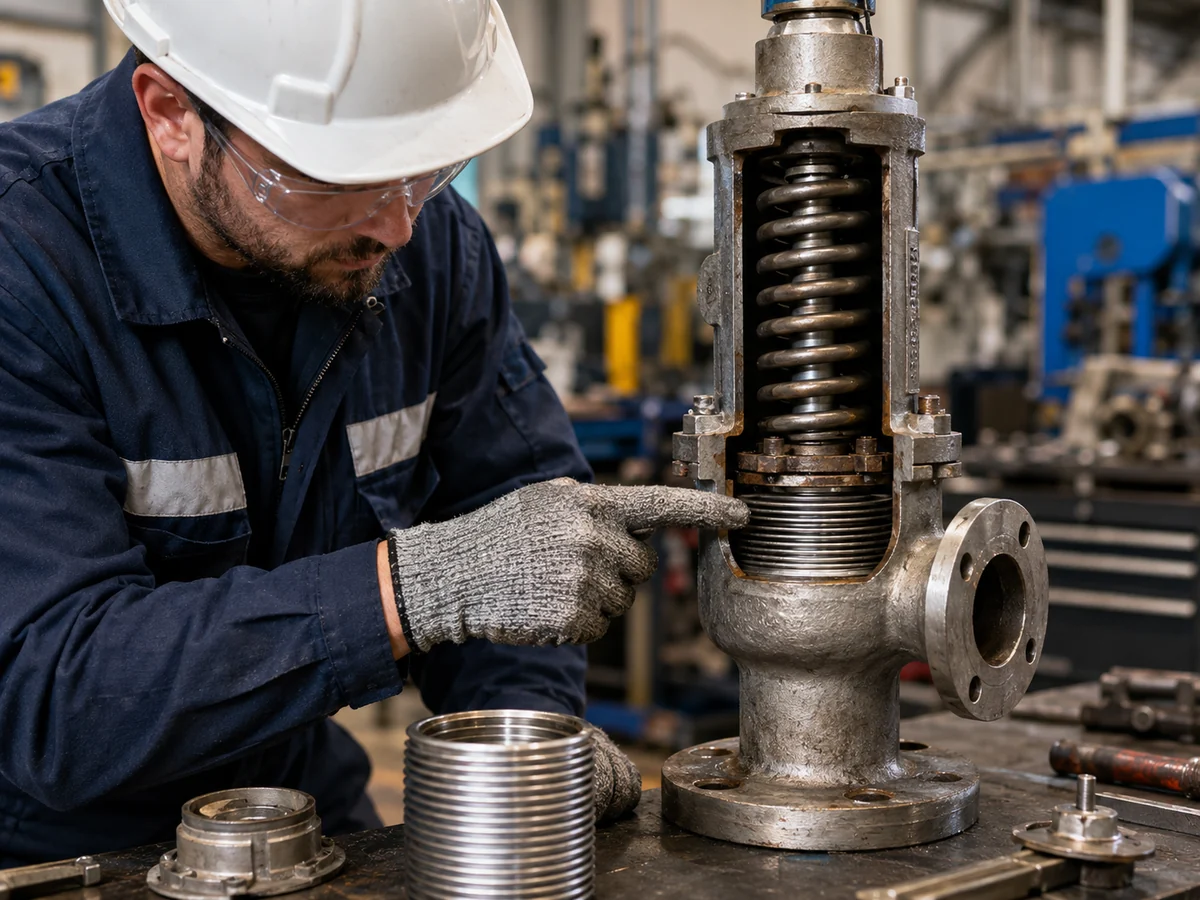
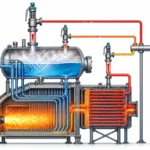
Ilustración industrial conceptual; no es un registro de inspección del cliente ni una imagen de certificación de producto.
Qué se pretende que haga el fuelle
A válvula de seguridad equilibrada por fuelle
utiliza un fuelle metálico como parte de su disposición de equilibrio de presión y aislamiento. El fuelle no es un
componente decorativo y no debe tratarse como intercambiable con el resorte principal.
Aislamiento de presión y equilibrio de fuerza
En una disposición típica de fuelle equilibrado, el fuelle ayuda a reducir las fuerzas seleccionadas de presión de salida que actúan
sobre el conjunto móvil. El área efectiva exacta, la contrapresión admisible, el material y los límites mecánicos
dependen del diseño de la válvula seleccionada y de los datos del fabricante.
Por qué es importante la integridad del fuelle
Si el fuelle está dañado, las suposiciones originales de aislamiento de presión y equilibrio pueden dejar de ser válidas.
Eso no significa automáticamente que la válvula haya perdido toda su capacidad de alivio de presión, pero sí significa que
las suposiciones de rendimiento instaladas deben revisarse en lugar de aceptarse únicamente según la especificación original.
Consecuencia de fallo específica del diseño: algunos diseños de válvulas con fuelle equilibrado utilizan un pistón auxiliar
o de respaldo. En esos diseños, el efecto de la rotura del fuelle sobre el equilibrio de presión puede diferir
de un diseño sin esa característica. No asuma que todo fuelle fallado produce la misma respuesta operativa;
confirme la construcción de la válvula seleccionada y los datos del fabricante antes de asignar la consecuencia de rendimiento.
o de respaldo. En esos diseños, el efecto de la rotura del fuelle sobre el equilibrio de presión puede diferir
de un diseño sin esa característica. No asuma que todo fuelle fallado produce la misma respuesta operativa;
confirme la construcción de la válvula seleccionada y los datos del fabricante antes de asignar la consecuencia de rendimiento.
Para un contexto más amplio de equilibrio de fuerza y presión de salida, revise
Contrapresión y fuelle.
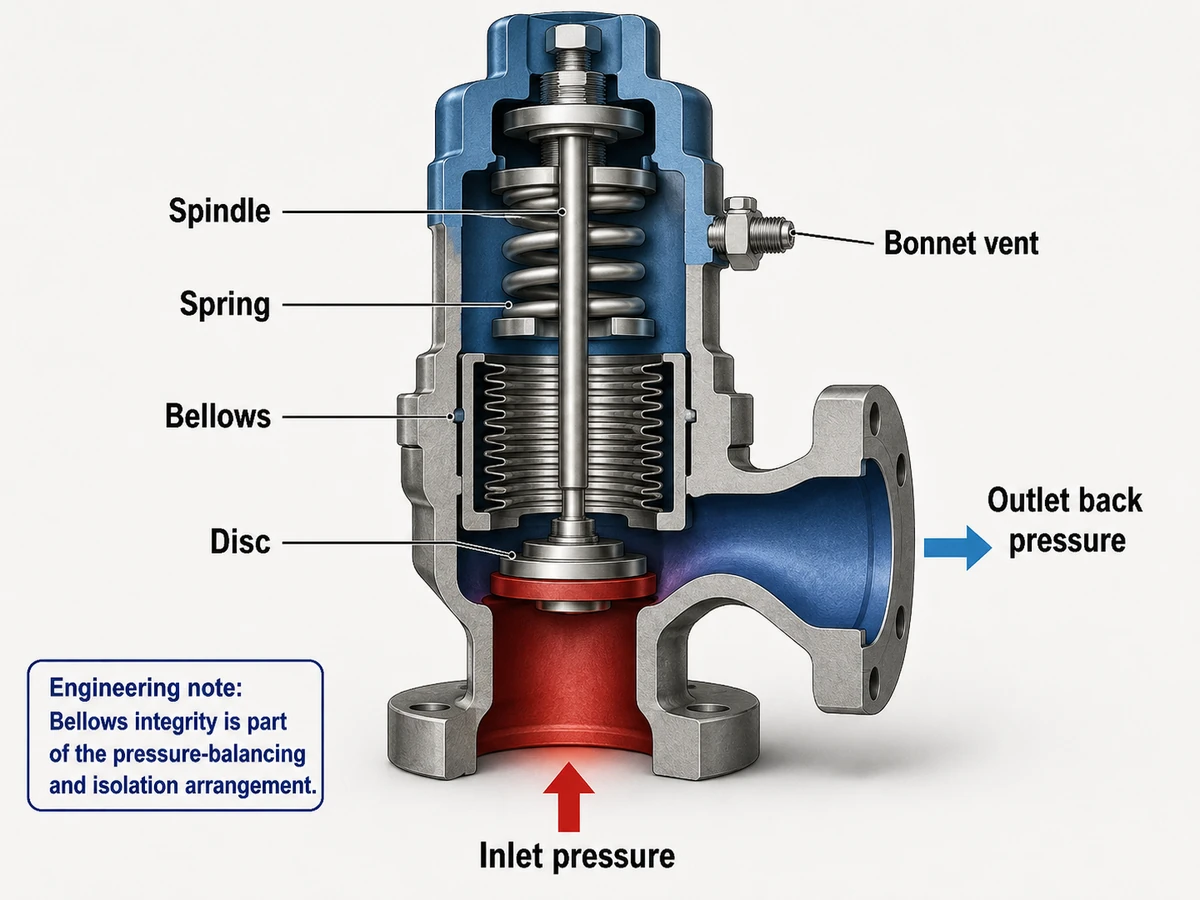
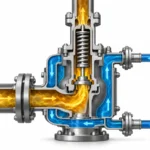
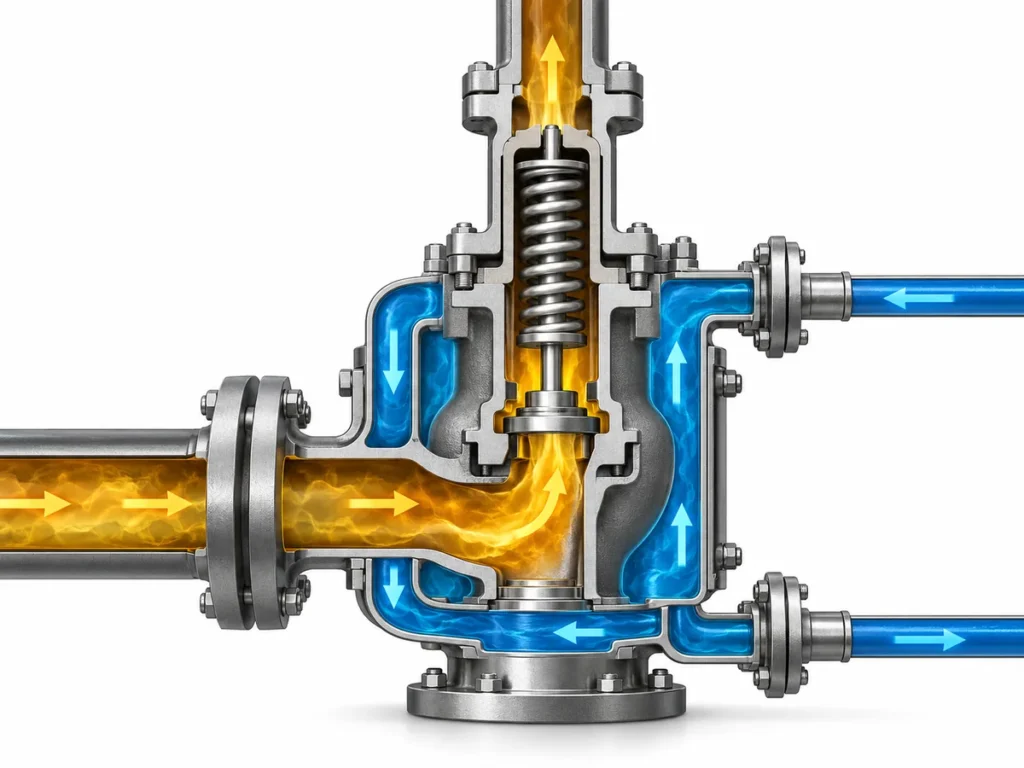
Ilustración técnica simplificada; verifique el diseño del fabricante seleccionado antes de aplicar detalles a una válvula específica.
Causas comunes de fallo del fuelle
Un fuelle dañado no debe atribuirse a una sola causa raíz basándose únicamente en su apariencia. La evidencia física necesita
debe correlacionarse con el medio real, la fase, la temperatura de operación, la temperatura de alivio y la presión
ciclos, contrapresión, vibración e historial de instalación y mantenimiento.
Fatiga y ciclos repetidos
Los fuelles se flexionan repetidamente a medida que opera el conjunto móvil. Los eventos de alivio frecuentes, la operación inestable u otro
movimiento mecánico repetido pueden contribuir al daño cíclico. La posición de la grieta, los patrones de deformación repetida
y el historial de servicio deben revisarse en conjunto antes de aceptar la fatiga como causa raíz.
Corrosión y ataque químico
El fuelle es un componente metálico delgado, por lo que la corrosión, las picaduras o la pérdida local de espesor pueden ser significativas
incluso cuando los componentes más pesados de la válvula parecen aceptables. El grado del material por sí solo no demuestra la idoneidad:
la composición del medio, los contaminantes, la concentración, la fase y la temperatura son todos factores relevantes.
Daño mecánico, desalineación y vibración
El roce, el desgaste por fricción, la deformación lateral o los accesorios dañados pueden indicar que el movimiento no se estaba produciendo
según lo previsto. En ese caso, la investigación debe incluir el vástago, la guía, las piezas adyacentes, el estado del
conjunto y las posibles cargas de tubería, en lugar de reemplazar el fuelle de forma aislada.
Temperatura y condiciones de presión anormales
La presión nominal del cuerpo y los límites del fuelle son cuestiones de ingeniería diferentes. La temperatura real del fuelle, la,
presión diferencial y la exposición a la contrapresión deben verificarse contra la válvula seleccionada y la
base de diseño específica del fabricante.
Depósitos y contaminación
Los depósitos pueden retener material corrosivo contra superficies delgadas, restringir el movimiento libre, ocultar picaduras y aumentar
carga mecánica desigual. Por lo tanto, un servicio sucio, polimerizante o que forme depósitos requiere la inspección de
el fuelle junto con la guía circundante, el vástago, el bonete y el paso de ventilación.
| Mecanismo de fallo | Evidencia física típica | Factores de servicio a verificar | Qué No Demuestra |
|---|---|---|---|
| Fatiga cíclica | Agrietamiento en zonas sometidas a flexión repetida, patrón de deformación | Frecuencia de eventos de alivio, ciclado, inestabilidad, vibración | La causa raíz del sistema |
| Corrosión | Picaduras, adelgazamiento, decoloración, productos de corrosión | Medio, contaminantes, fase, temperatura, depósitos | Si ya se ha producido una fuga |
| Contacto mecánico | Rozamiento, fricción, deformación localizada | Alineación, estado de la guía, carga de tubería, vibración | Si el fuelle por sí solo es la causa raíz |
| Presión/temperatura anormales | Distorsión, degradación acelerada, daño en las fijaciones | Presión diferencial real, contrapresión, temperatura | Aceptabilidad del proyecto sin datos del fabricante |
| Depósitos/contaminación | Depósitos en las convoluciones, ataque localizado o movimiento restringido | Limpieza del servicio, química, historial de mantenimiento | Si el fuelle está perforado |
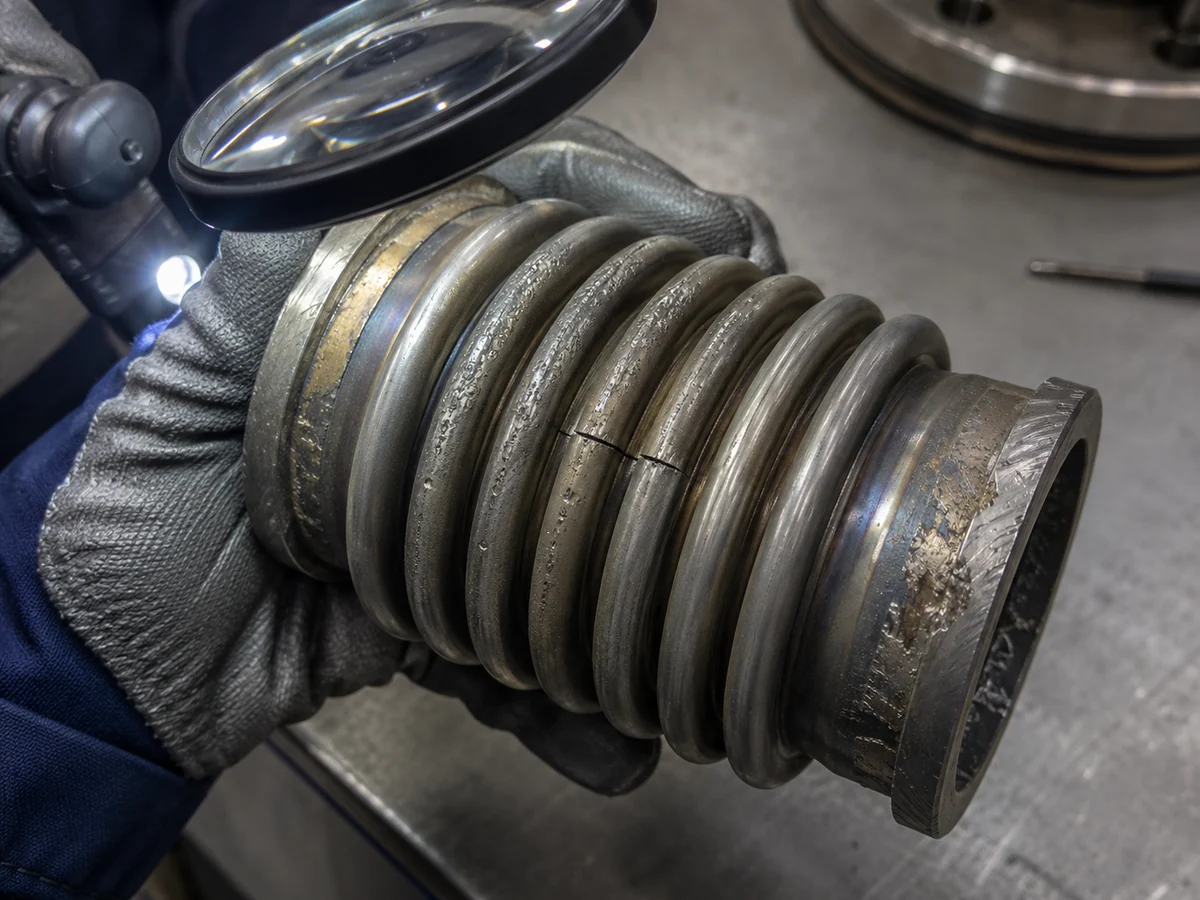
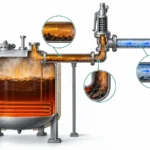
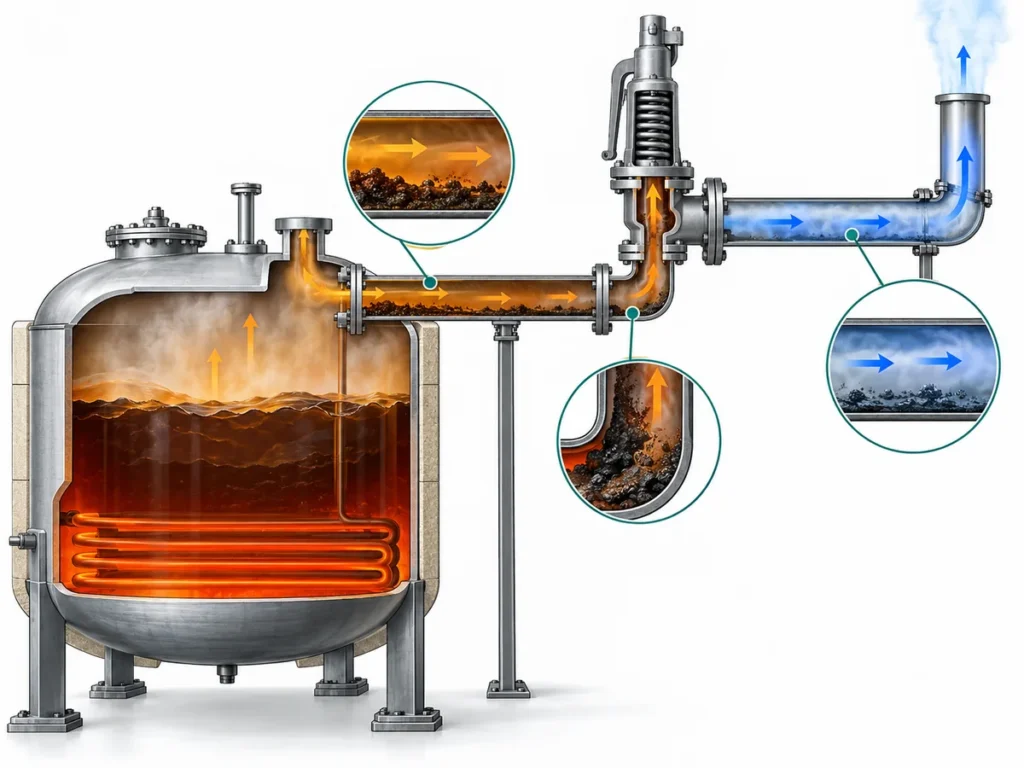
Ilustración conceptual de inspección; no es evidencia de una falla real de un cliente.
Síntomas que pueden sugerir falla del fuelle
Los síntomas son útiles porque indican al equipo de mantenimiento qué investigar a continuación. No deben
tratarse como un diagnóstico completo sin verificar la construcción de la válvula y el estado físico del fuelle.
Evidencia en el venteo del bonete
La presencia inesperada de fluido de proceso, vapor, condensado, manchas o residuos recurrentes en el venteo del bonete puede ser una
señal de advertencia importante. Antes de concluir que el fuelle ha fallado, confirme que la abertura sea realmente
el venteo del fuelle/bonete, comprenda hacia dónde está dirigido y excluya contaminación externa obvia u otra fuente de fuga.
Cambios en el comportamiento de la válvula
Un historial modificado de apertura, reasentamiento, estabilidad o fugas puede justificar una investigación, especialmente después de cambios
en el colector de descarga o en el sistema de salida. Sin embargo, la pérdida de presión de entrada, la contrapresión excesiva, el estado del resorte o de la guía,
los problemas del asiento y las cargas de la tubería pueden producir síntomas superpuestos.
Corrosión externa, residuos o contaminación
La corrosión concentrada alrededor del bonete o del venteo, o la contaminación inesperada por encima del límite de aislamiento
previsto, aumenta la necesidad de una inspección interna. La apariencia externa por sí sola aún puede no mostrar si el
fuelle tiene un poro, una fisura, una unión agrietada u otro defecto.
Límite de diagnóstico: preguntar “¿Qué debería inspeccionarse a continuación ante este síntoma?” en lugar de
“¿Qué componente ha fallado definitivamente?”
“¿Qué componente ha fallado definitivamente?”
Matriz de resolución de problemas de síntoma a verificación
El mismo síntoma visible puede provenir de daños en el fuelle, de otro componente de la válvula o del sistema instalado.
Utilice el síntoma para elegir la siguiente verificación en lugar de cerrar el diagnóstico.
| Síntoma observado | Posibilidad relacionada con el fuelle | Causa competidora a excluir | Siguiente comprobación |
|---|---|---|---|
| Medio de proceso o residuo en el respiradero del bonete | La pérdida de integridad de los fuelles puede permitir que la presión o el fluido ingresen a la zona del bonete | Contaminación externa, condensación, fugas de la junta o adyacentes, identificación incorrecta del respiradero | Confirme la construcción de la válvula y la ruta del respiradero, conserve la evidencia del residuo y luego inspeccione los fuelles y las interfaces de sellado adyacentes |
| Comportamiento de apertura o reasentamiento modificado | La pérdida del equilibrio/aislamiento previsto puede cambiar el comportamiento instalado | Ajuste de la presión de ajuste, fricción de la guía, condición del asiento, pérdida de entrada, contrapresión excesiva o inestabilidad | Revise los datos de prueba tal como se encontraron, las tuberías de entrada/salida y las piezas móviles internas antes de atribuir el cambio a los fuelles |
| Corrosión o depósitos en el área del bonete | La exposición del proceso a través de fuelles dañados es plausible | Entorno externo, lavado, condensación u otra fuente de fugas | Identifique el depósito/origen e inspeccione los fuelles, el paso de ventilación y el interior del bonete |
| Agrietamiento o deformación repetidos de los fuelles | Fatiga, presión diferencial anormal o daño por contacto | Desalineación, vibración, carga de tuberías, operación inestable o sistema de descarga modificado | Correlacione el daño físico con el historial de ciclos, vibración, contrapresión y montaje antes de especificar un reemplazo |
| La prueba de presión de ajuste pasa | El daño a los fuelles puede seguir existiendo | Ninguno: se trata de un problema de límite de evidencia | Utilice evidencia separada de inspección/integridad de los fuelles en lugar de tratar la aceptación de la presión de ajuste como prueba |
Matriz de evidencia de inspección de fallas de fuelles
| Observación | Lo que puede indicar | Fuerza de la evidencia | Qué No Demuestra | Siguiente verificación recomendada |
|---|---|---|---|---|
| Residuo o fluido en el respiradero del bonete | Posible pérdida de integridad de los fuelles | De moderada a fuerte, según la construcción | Ubicación exacta del defecto o causa raíz | Verifique la configuración de la válvula/respiradero e inspeccione los fuelles |
| Corrosión en el área del bonete | Exposición al proceso o ataque ambiental | De baja a moderada | Rotura del fuelle | Inspeccione el respiradero, el interior del bonete y los fuelles |
| Comportamiento de apertura/reasentamiento modificado | Contrapresión, fricción o cambio mecánico | Baja | Fallo específico del fuelle | Revise los datos de prueba, la tubería y la condición interna |
| Depósitos en los fuelles retirados | Contaminación del servicio | Moderado | Si el fuelle está perforado | Limpie e inspeccione según el procedimiento aprobado |
| Picaduras o adelgazamiento | Degradación por corrosión | Evidencia física sólida de daño | Vida útil restante permitida o causa raíz | Revisión de material/servicio y decisión de reparación |
| Convoluciones distorsionadas | Sobrecarga mecánica o movimiento anormal | Fuerte | Mecanismo iniciador exacto | Verifique la alineación, la vibración y el historial de presión |
| Marcas de roce/frotamiento | Contacto o desalineación | Fuerte | Si existe fuga | Inspeccione la guía, el husillo y las piezas adyacentes |
| Grieta, agujero o hendidura | Pérdida de integridad física | Daño muy fuerte / confirmado | Causa raíz | Reparación/sustitución y revisión de la causa raíz |
| Daño en soldadura o fijación | Problema mecánico o de reparación/fabricación | Muy fuerte | Causa sin historial de respaldo | Revisar los requisitos del fabricante/reparación |
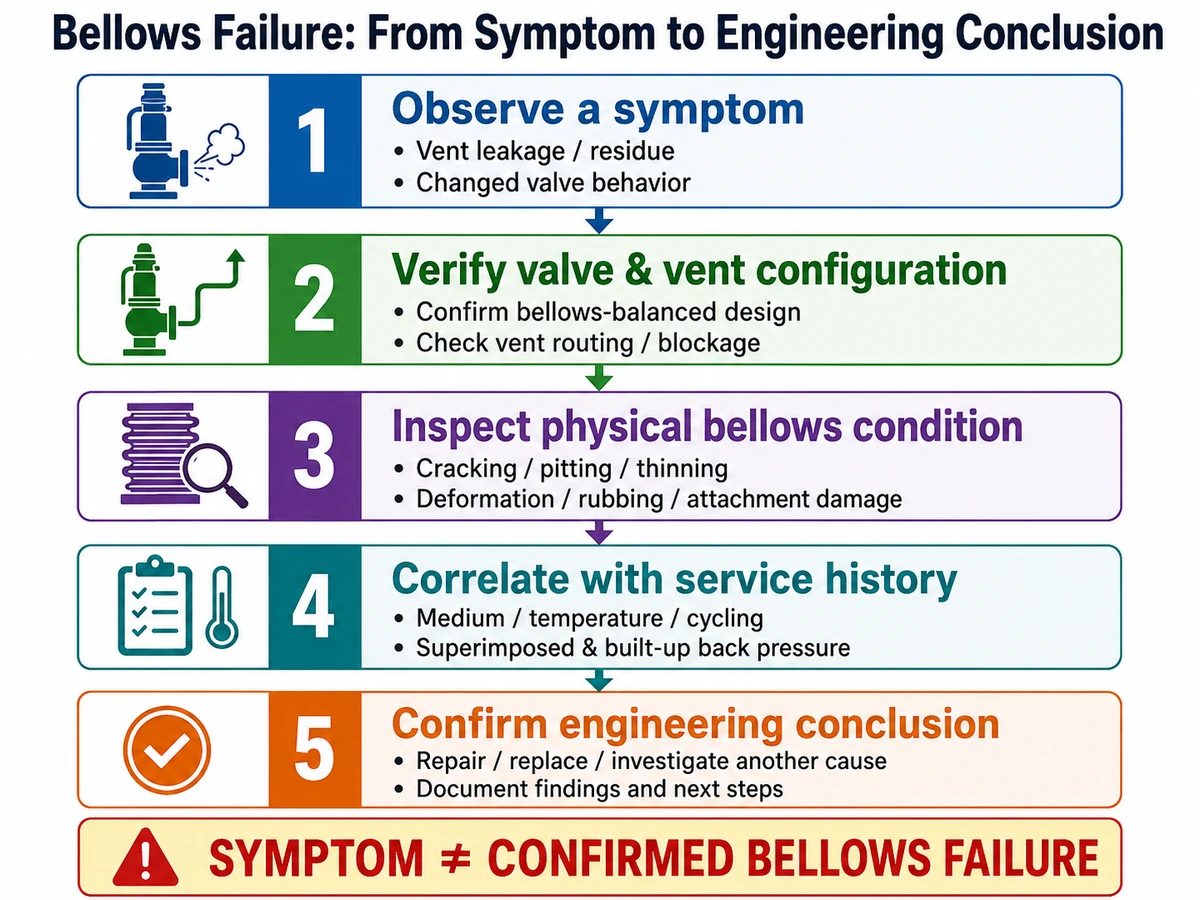
Flujo de trabajo de ingeniería simplificado para la revisión de diagnóstico.
Lo que la evidencia del venteo del bonete puede y no puede decirle
En una construcción de válvula donde un fuelle intacto aísla el bonete de la región de presión correspondiente,
la descarga anormal de medio de proceso desde el venteo puede ser una evidencia sólida de que el aislamiento previsto se ha
perdido. Aun así, no identifica si el defecto es un orificio pequeño, grieta, hendidura o fallo de fijación,
y no establece la causa raíz.
Venteo bloqueado, restringido o incorrecto
Una ventilación bloqueada, restringida o con un recorrido incorrecto crea un problema de ingeniería aparte porque
la presión puede acumularse donde el diseño supone una condición ventilada. No tape una fuga de ventilación inexplicada
simplemente para detener el síntoma visible.
La tubería de salida, la resistencia de descarga, el drenaje y el soporte mecánico también deben revisarse cuando el comportamiento de la válvula
es anormal. El
guía de instalación de válvulas de seguridad
cubre el límite más amplio del sistema instalado.
Qué inspeccionar después de retirar la válvula
Superficie y fuelle del fuelle
- grietas, orificios y hendiduras;
- picaduras localizadas o pérdida general de pared;
- productos de corrosión y depósitos;
- fuelle aplanado, estirado o con ondulaciones irregulares;
- marcas de roce o desgaste por fricción;
- evidencia de exposición a temperatura anormal.
Soldaduras, fijaciones y conexiones de extremo
Inspeccione las áreas de fijación, los anillos de extremo y los puntos de conexión para detectar grietas, dobleces, deformaciones o indicios de reparaciones
previas. No invente un límite de aceptación universal: utilice el fabricante de la válvula seleccionada,
el procedimiento de reparación autorizado, los requisitos aplicables del proyecto y la base del código adoptado.
Componentes adyacentes
Compruebe el husillo, la guía, el muelle, el disco/soporte, los internos del bonete, el paso de ventilación y los componentes cercanos para
evidencia que explica por qué se dañó el fuelle. Reemplazar un fuelle sin corregir el problema subyacente de
alineación, vibración o carga de tuberías puede repetir el mecanismo de falla.
Para la secuencia de inspección más amplia, los registros de mantenimiento y los límites de escalamiento, revise la
guía de mantenimiento e inspección de válvulas de seguridad.
Lo que las pruebas de presión de ajuste y estanqueidad del asiento no pueden demostrar sobre la integridad del fuelle
Prueba de presión de ajuste
Una prueba de presión de ajuste verifica la respuesta de presión definida bajo la condición de prueba aplicable. No
demuestra automáticamente que el fuelle esté físicamente intacto, libre de corrosión o sea adecuado para la condición de
contrapresión instalada.
Prueba de estanqueidad del asiento
La prueba de estanqueidad del asiento aborda las fugas a través del asiento cerrado. No debe tratarse como una prueba de fuelle
prueba de integridad. Cuando la cuestión sea la fuga del asiento, utilice la
Prueba de estanqueidad de asiento API 527
orientación como categoría de evidencia separada.
Evidencia de capacidad
La capacidad de alivio requerida proviene del equipo protegido y del escenario de alivio que rige. La válvula
seleccionada necesita entonces una base de capacidad certificada o documentada adecuada para el medio y las condiciones
de alivio. El daño del fuelle no demuestra por sí solo que la capacidad certificada sea inadecuada, pero puede hacer
que los supuestos de rendimiento instalado no sean fiables hasta que se resuelvan el defecto y las condiciones del sistema.
Selección de material y servicio antes de reutilizar la especificación anterior del fuelle
Cuando se encuentren corrosión, depósitos o daños relacionados con la temperatura, no asuma que el material del fuelle anterior debe repetirse.
La revisión de reemplazo necesita el entorno de servicio real; una etiqueta de material por sí sola no es una evaluación de compatibilidad.
Utilice la guía de selección de materiales para válvulas de seguridad
para la revisión más amplia del cuerpo, los internos, el fuelle, el resorte, el asiento y la compatibilidad del servicio.
| Entrada de selección | Por qué es importante | Decisión requerida |
|---|---|---|
| Medio, fase y contaminantes | Pueden cambiar la corrosión, los depósitos y el mecanismo de ataque | Confirme la compatibilidad utilizando la guía de materiales del fabricante/proyecto para el servicio real |
| Temperatura de operación y alivio | Puede afectar la resistencia del material, la velocidad de corrosión y el comportamiento mecánico del fuelle | Confirme que el fuelle seleccionado y los internos adyacentes son adecuados a las temperaturas relevantes |
| Historial de limpieza, vaporizado o perturbaciones del proceso | La exposición de corta duración puede diferir de la operación normal | Incluir una exposición creíble de alteración/limpieza en la base de reemplazo cuando corresponda |
| Depósitos y sólidos | Pueden atrapar especies corrosivas o restringir el movimiento del fuelle | Aborde tanto la compatibilidad del material como la fuente de los depósitos, no solo el material |
| Material de reparación/reemplazo anterior | Las sustituciones pasadas pueden no coincidir con la configuración aprobada original | Verifique la trazabilidad y los requisitos del fabricante/reparación autorizada antes de la reutilización |
Cómo el historial de servicio ayuda a identificar el mecanismo de falla probable
La inspección física le dice qué le sucedió al fuelle. El historial de servicio ayuda a explicar por qué pudo haber sucedido.
La conclusión de causa raíz más sólida normalmente combina evidencia física, historial operativo e información de diseño.
| Datos de servicio | Por qué es importante |
|---|---|
| Medio y fase | Contexto de corrosión, contaminación y servicio mecánico |
| Presión de operación | Historial de presión normal |
| Presión Máxima de Trabajo Admisible / Presión de diseño | Base de presión del equipo protegido, no la condición del fuelle por sí sola |
| Presión de tarado | Punto de operación de la válvula y contexto de prueba |
| Temperatura de alivio | Material del fuelle y condición mecánica |
| Contrapresión superpuesta | Presión de salida que puede existir antes de la apertura |
| Contrapresión acumulada | Presión de salida creada durante el flujo de alivio |
| Frecuencia de eventos de alivio | Investigación de ciclos/fatiga |
| Historial de vibraciones | Investigación de fatiga mecánica o fricción |
| Cambios en el colector de descarga | Posible cambio en las condiciones de contrapresión |
| Material/configuración del fuelle | Revisión de compatibilidad y diseño |
| Hallazgos de inspección/reparación anteriores | Tendencia de degradación y mecanismo recurrente |
Escenarios de ingeniería compuestos para formación
Escenario de ingeniería compuesto para capacitación
Residuo en el respiradero sin rotura confirmada del fuelle
Problema observado: se encuentra residuo recurrente alrededor del respiradero identificado del bonete.
Causas plausibles: la fuga del fuelle es creíble, pero aún no se han descartado condensación, contaminación externa, fuga de una junta cercana o identificación incorrecta del respiradero.
Acción correctiva: verificar la construcción de la válvula y la ruta del respiradero, preservar la condición encontrada, identificar el residuo cuando sea práctico y luego inspeccionar el fuelle y las interfaces de sellado adyacentes según el procedimiento de mantenimiento aprobado.
Prevención / seguimiento: documentar la ruta y condición del respiradero en inspecciones futuras, y corregir cualquier disposición del respiradero bloqueada, mal dirigida o insegura en lugar de enmascarar el síntoma visible.
Escenario de ingeniería compuesto para capacitación
Fuelle corroído después de la extracción
Problema observado: se observan picaduras localizadas y depósitos en varias convoluciones del fuelle después de la extracción.
Causas plausibles: son posibles contaminantes corrosivos, ataque asistido por depósitos, exposición a temperatura o una discrepancia material/servicio; la fatiga también puede haber contribuido si hay agrietamiento.
Acción correctiva: documentar el patrón de daño, revisar el medio/fase/contaminantes y la temperatura real, inspeccionar los componentes adyacentes y luego reevaluar el material y la configuración del fuelle antes de aprobar el reemplazo.
Prevención / seguimiento: actualizar la solicitud de cotización y el registro de mantenimiento con la química y temperatura reales del servicio en lugar de repetir la especificación de material anterior sin revisión.
Escenario de ingeniería compuesto para capacitación
La presión de ajuste se supera pero se detecta daño en el fuelle
Problema observado: la válvula demuestra la respuesta de presión requerida durante la prueba de banco aplicable, pero la inspección interna posterior identifica daño físico en el fuelle.
Causa plausible: el resultado no es contradictorio; la verificación de la presión de ajuste y la verificación de la integridad del fuelle responden a diferentes preguntas de ingeniería.
Acción correctiva: resolver el daño del fuelle, investigar el mecanismo de fallo y reconfirmar la contrapresión real, la ventilación y los requisitos de reemplazo antes de volver a ponerlo en servicio.
Prevención / seguimiento: mantener registros de aceptación separados para la presión de ajuste, la estanqueidad del asiento, la integridad del fuelle y las condiciones del sistema instalado, en lugar de reducirlos a un único estado genérico de APTO.
¿Reparar o reemplazar? El límite de la decisión de ingeniería
Cuándo la inspección debe derivar en una revisión de reparación
Las grietas, agujeros, roturas, corrosión o adelgazamiento significativos, deformación, rozamiento, daños en los accesorios o
la exposición confirmada al proceso en la zona del bonete deben elevar la investigación. La capacidad de reparación depende de
el diseño real de la válvula, los requisitos del fabricante o de reparación autorizada, la especificación del proyecto y
la jurisdicción aplicable.
Escalamiento crítico para la seguridad: cuando se sospeche daño en el fuelle acompañado de una liberación
no controlada del proceso, pérdida confirmada de contención o incertidumbre sobre si la válvula aún puede cumplir la función
de alivio de presión requerida del equipo protegido, siga el procedimiento aprobado de parada, aislamiento o
retirada de servicio del propietario-usuario. No continúe la operación únicamente para recopilar más evidencia, y no aísle
una vía de alivio requerida a menos que la protección contra sobrepresión se mantenga mediante una alternativa aprobada o un plan de parada.
no controlada del proceso, pérdida confirmada de contención o incertidumbre sobre si la válvula aún puede cumplir la función
de alivio de presión requerida del equipo protegido, siga el procedimiento aprobado de parada, aislamiento o
retirada de servicio del propietario-usuario. No continúe la operación únicamente para recopilar más evidencia, y no aísle
una vía de alivio requerida a menos que la protección contra sobrepresión se mantenga mediante una alternativa aprobada o un plan de parada.
Cuándo el reemplazo requiere una nueva verificación de ingeniería
Un reemplazo no debe aprobarse simplemente porque tenga el mismo tamaño de conexión o presión de ajuste. Confirme
el equipo protegido, el escenario de alivio que rige, el medio y la fase, la presión de operación, la MAWP/presión de diseño,
la capacidad de alivio requerida, la temperatura de alivio, la contrapresión superpuesta y acumulada, el material del fuelle,
el asiento/sello, el resorte/trim, las clasificaciones de entrada/salida, la disposición de ventilación y los documentos requeridos.
El tamaño de la conexión ≠ capacidad de alivio. Si el fuelle se dañó porque el servicio real
cambiado, instalar otra válvula con la especificación anterior puede reproducir el mismo problema.
cambiado, instalar otra válvula con la especificación anterior puede reproducir el mismo problema.
Si el escenario de alivio gobernante o la carga requerida ha cambiado, vuelva a confirmar la base de dimensionamiento utilizando el
dimensionamiento de válvulas de seguridad y capacidad de alivio certificada
flujo de trabajo en lugar de asumir que el tamaño de conexión o el modelo de válvula anterior sigue siendo adecuado.
Flujo de trabajo de verificación de reemplazo
- Conserve la evidencia de la falla: registre el fuelle, la ventilación, los depósitos, la ubicación del daño y la condición de los componentes adyacentes tal como se encontraron antes de que la limpieza destruya evidencia útil.
- Valide nuevamente la base del servicio: confirme el equipo protegido, el escenario de alivio, el medio/fase, las presiones, la temperatura de alivio y las condiciones actuales del sistema de descarga.
- Recalcule o vuelva a confirmar la capacidad requerida cuando el escenario de alivio haya cambiado: no utilice el tamaño de conexión o el modelo de válvula anterior como cálculo de capacidad.
- Evalúe la configuración de la válvula: confirmar si un diseño equilibrado con fuelle sigue siendo adecuado para la contrapresión real superpuesta/acumulada, la disposición de la ventilación y el entorno del proceso.
- Verificar los materiales y los detalles mecánicos: el fuelle, el cuerpo/trim, el asiento/sello, el resorte y los accesorios relevantes deben coincidir con el servicio real y los requisitos del fabricante/proyecto.
- Verificar las interfaces de instalación: las clasificaciones de entrada/salida, las cargas de tubería, la pérdida de entrada, el soporte de descarga, el drenaje y el enrutamiento de la ventilación no deben recrear el mecanismo de falla sospechado.
- Cerrar la brecha documental: definir la hoja de datos requerida, la evidencia de capacidad, los registros de prueba/reparación, la trazabilidad y los documentos del proyecto/código antes de la liberación.
Información a registrar antes de la reparación, el reemplazo o la solicitud de cotización (RFQ)
Las entradas de ingeniería faltantes deben marcarse como por confirmar, no inferirse del
tamaño de conexión, la apariencia externa o un solo resultado de prueba.
- Equipo protegido
- Escenario de alivio principal
- Medio y fase
- Presión de operación
- Presión Máxima de Trabajo Admisible / Presión de diseño
- Presión de tarado
- Capacidad de alivio requerida y base
- Temperatura de alivio
- Contrapresión superpuesta
- Contrapresión acumulada
- Conexiones de entrada/salida
- Modelo/placa de identificación de la válvula existente
- Material del fuelle
- Cuerpo / trim / asiento / resorte
- Enrutamiento de la ventilación del bonete
- Fotografías de daños
- Informe de inspección de estado encontrado
- Historial de reparaciones previas
- Código/norma de proyecto aplicable
- Documentos de inspección/certificación requeridos
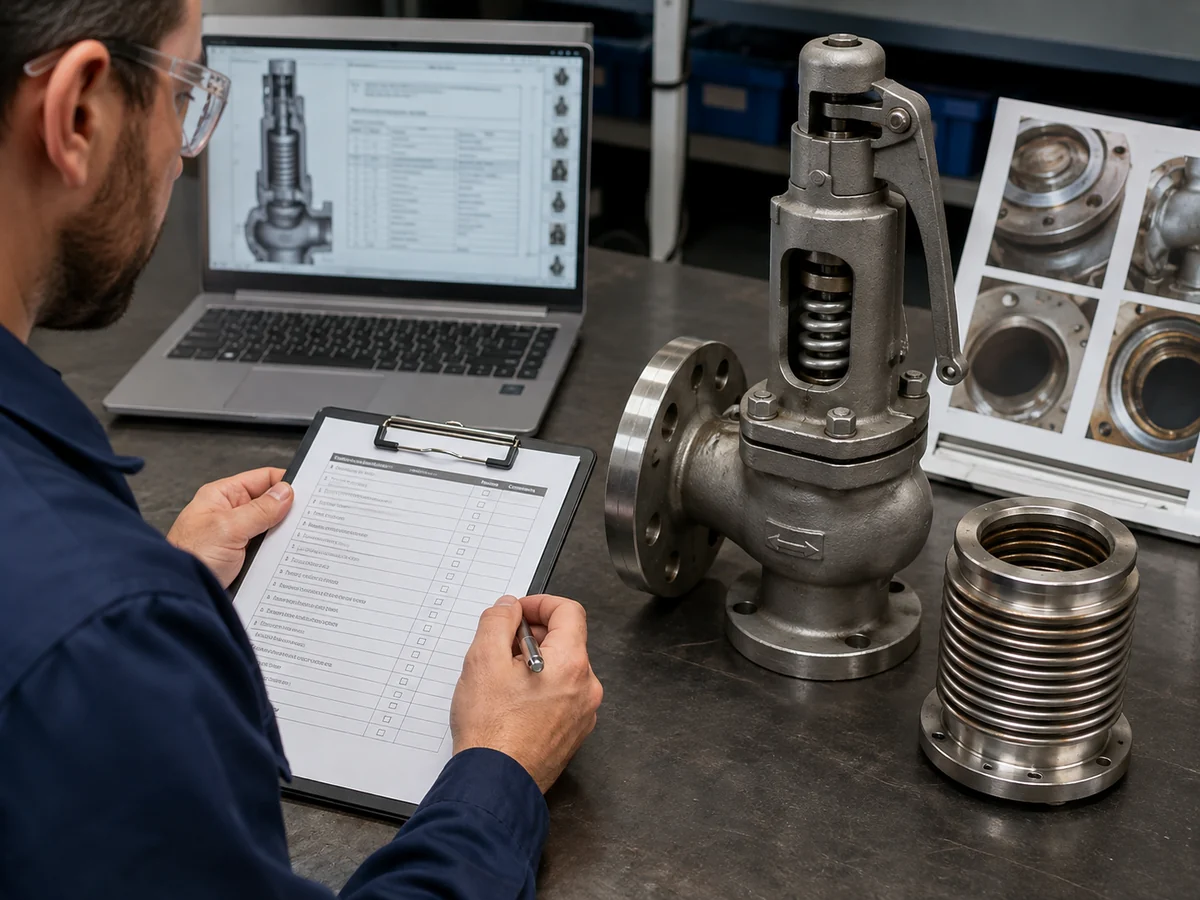
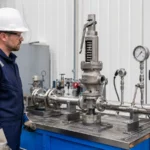
Escena conceptual de revisión de ingeniería; el papeleo y el equipo mostrados son ilustrativos y no son registros reales de clientes.
Preguntas Frecuentes
¿Cuáles son los signos más comunes de fallo del fuelle en una válvula de seguridad?
Las posibles señales de advertencia incluyen descarga o residuos anormales en la ventilación del bonete, cambio en el comportamiento de la válvula,
contaminación en el área del bonete o evidencia interna directa de daño en el fuelle. Estas señales tienen diferente
fuerza de evidencia. Una grieta, agujero, rotura o fuga de integridad confirmada es evidencia mucho más fuerte que un
síntoma operativo por sí solo.
¿El fluido de proceso en el respiradero del bonete demuestra que el fuelle se ha roto?
Cuando la construcción real de la válvula utiliza un fuelle intacto para aislar el bonete de la región de
presión relevante, la fuga en la ventilación puede ser evidencia sólida de pérdida de integridad del fuelle. La construcción de la válvula,
la ruta de ventilación y las posibles fuentes alternativas de fuga deben verificarse antes de asignar el defecto
físico o la causa raíz.
¿Puede una válvula de seguridad pasar una prueba de presión de ajuste con un fuelle dañado?
Potencialmente, sí. Una prueba de presión de ajuste y una inspección de integridad del fuelle responden a diferentes preguntas de
ingeniería. Un resultado exitoso de presión de ajuste no debe usarse automáticamente como evidencia de que el fuelle
está físicamente intacto.
¿Puede la fuga del asiento ser causada por una falla del fuelle?
El daño del fuelle puede alterar las condiciones de la válvula, pero la fuga por el asiento puede tener varias causas posibles, entre ellas
contaminación, daño del asiento, desalineación y problemas de guía. La fuga por el asiento no debe atribuirse al
fuelle sin evidencia que lo respalde.
¿Qué se debe inspeccionar después de retirar una válvula de seguridad equilibrada con fuelle?
Inspeccione las convoluciones del fuelle, grietas o agujeros, picaduras, adelgazamiento, deformación, rozamiento, depósitos,
soldaduras y fijaciones. También inspeccione el husillo, la guía, el paso de venteo, la cámara de resorte y los componentes
adyacentes para buscar evidencia que explique el daño del fuelle.
¿Se puede reparar un fuelle dañado o debe reemplazarse la válvula?
No existe una respuesta universal. La reparabilidad depende del diseño específico de la válvula, el fabricante o los
requisitos de reparación autorizada, el tipo de daño, los materiales, la base del código y los requisitos del proyecto. El daño grave o
no reparable puede requerir reemplazo, pero el reemplazo aún requiere revisión de ingeniería.
¿Qué información se necesita para seleccionar una válvula de seguridad equilibrada con fuelle de repuesto?
Confirme el equipo protegido, el escenario de alivio, el medio y la fase, la presión de operación, la MAWP/diseño
presión, presión de ajuste, capacidad de alivio requerida, temperatura de alivio, contrapresión superpuesta y acumulada
presión, conexiones, materiales del fuelle y del asiento, disposición de venteo, normas aplicables y documentación requerida.
Referencias Técnicas Oficiales
Las siguientes fuentes actuales de primera parte respaldan el marco de inspección, protección contra sobrepresión e ingeniería de fuelles
utilizado en este artículo. Son puntos de referencia, no prueba de que una válvula ZOBAI específica tenga una
certificación particular o de que una edición se aplique a todos los proyectos. Verifique siempre la edición adoptada por
la especificación del propietario-usuario, el código del equipo protegido y la jurisdicción.
-
API RP 576 — Inspección de dispositivos de alivio de presión, 5.ª edición (septiembre 2024)
— La hoja de publicaciones de recertificación actual de API enumera esta edición para la inspección de dispositivos de alivio de presión. -
ASME BPVC Sección XIII — Reglas para protección contra sobrepresión (2025)
— La Sección XIII actual de ASME cubre los requisitos de protección contra sobrepresión para equipos presurizados y dispositivos de alivio de presión. -
ISO 4126-1:2013 — Válvulas de Seguridad
— ISO enumera esta norma de producto como vigente tras su revisión de 2025; no es una norma de aplicación. -
Spirax Sarco — Tipos de válvula de seguridad / Diseño de fuelle equilibrado
— referencia de ingeniería del fabricante de primera parte para el equilibrio del fuelle, venteo del bonete y el límite del pistón auxiliar específico del diseño.
Las normas y referencias del fabricante respaldan la interpretación de ingeniería; no reemplazan el alivio real
escenario, datos de la válvula seleccionada, hallazgos de inspección, procedimiento de reparación o requisitos jurisdiccionales.
Normas y limitaciones de ingeniería
Los requisitos de inspección, reparación y reemplazo de válvulas de seguridad dependen del equipo protegido, la construcción de la válvula,
la jurisdicción, la edición del código adoptado, el procedimiento del propietario-usuario, los requisitos del fabricante y la
especificación del proyecto.
Los nombres de las normas explican únicamente el alcance de la ingeniería. No establecen que cada válvula ZOBAI automáticamente
cuente con todas las aprobaciones, ni reemplazan los requisitos de inspección o reparación específicos del fabricante. La
aceptación final debe basarse en la publicación/edición oficial adoptada, los datos del fabricante de la válvula seleccionada, el
procedimiento del propietario-usuario/proyecto y la jurisdicción aplicable, en lugar de un resumen secundario.
¿Necesita ayuda para revisar una sospecha de falla de fuelle?
Envíe el equipo protegido, el escenario de alivio, el medio y la fase, la presión de operación, la MAWP/presión de diseño,
presión de ajuste, capacidad de alivio requerida, temperatura de alivio, contrapresión superpuesta y acumulada,
conexiones de entrada/salida, material del fuelle, placa de identificación de la válvula, disposición de la ventilación, fotos de inspección y
registros de reparaciones anteriores para revisión de ingeniería.