Testes, Manutenção e Resolução de Problemas A falha do fole em uma válvula de segurança balanceada significa que o fole não pode mais ser considerado confiável para desempenhar sua função pretendida de isolamento ou balanceamento de pressão, mas não deve ser diagnosticada com base em um único sintoma. Descarga pelo respiro, mudança no comportamento da válvula ou contaminação na área do castelo podem justificar investigação, enquanto a confirmação depende de inspeção física…

Testes, Manutenção e Resolução de Problemas
A falha do fole em uma válvula de segurança balanceada significa que o fole não pode mais ser considerado confiável para desempenhar sua função pretendida de
isolamento ou balanceamento de pressão, mas não deve ser diagnosticada com base em um único sintoma. Descarga pelo respiro,
mudança no comportamento da válvula ou contaminação na área do castelo podem justificar investigação, enquanto a confirmação depende de
inspeção física mais as condições reais de serviço. Antes de decidir entre reparo ou substituição, confirme o
equipamento protegido e o cenário de alívio, o meio e a fase, a pressão de operação, a PMTA/pressão de projeto, a pressão de ajuste,
a capacidade de alívio necessária, a temperatura de alívio, a contrapressão superimposta e a contrapressão acumulada, o arranjo do respiro,
o material do fole e o histórico recente de serviço. Se essas informações estiverem incompletas, trate o diagnóstico como provisório
e envie a plaqueta de identificação disponível, fotos de inspeção e dados de serviço para revisão de engenharia.
Resposta rápida: o que significa falha do fole em uma válvula de segurança
Falha do fole significa que não se pode mais presumir que o fole metálico desempenhe sua função de isolamento
e balanceamento de pressão. Dependendo da construção da válvula e das condições de serviço, danos físicos
podem alterar a comunicação de pressão e o equilíbrio de forças que o fole intacto deveria suportar.
Um sintoma não é o mesmo que falha confirmada. Fluido de processo em um respiro do bonete, comportamento incomum da válvula,
corrosão ou um resultado de teste alterado podem ser evidências importantes, mas a investigação deve verificar a
configuração da válvula, o caminho do respiro, as condições reais de serviço e a condição física do fole antes de
atribuir uma causa raiz.
Sintoma ≠ falha de fole confirmada
Teste de pressão de ajuste aprovado ≠ prova de integridade do fole
Vazamento no assento ≠ diagnóstico automático de fole
Dano físico ≠ causa raiz confirmada
Entradas para diagnóstico preliminar antes de declarar falha do fole
Equipamento protegido e cenário de alívioConfirme qual equipamento está protegido e se o cenário de alívio governante ou a configuração do processo mudou.
Meio, fase e temperaturaRegistre o fluido real, fase, contaminantes, temperatura de operação e temperatura de alívio relevantes para corrosão ou depósitos.
Base de pressãoMantenha a pressão de operação, a PMTA/pressão de projeto e a pressão de ajuste separadas. Um desvio em uma delas não identifica automaticamente dano ao fole.
Capacidade requeridaMantenha a carga de alívio necessária separada do tamanho da conexão e da base de capacidade certificada ou documentada da válvula.
Contrapressão e tubulaçãoVerifique a contrapressão sobreposta, a contrapressão acumulada, as alterações no coletor de descarga, a perda de carga na entrada, os suportes e o histórico de vibração.
Construção da válvula e registrosConfirme o material/configuração do fole, o roteamento da ventilação do boné, as informações do assento/mola/trim, os reparos anteriores e a condição de inspeção como encontrada.
Regra de escalonamento: se os dados de serviço e as evidências físicas apontarem em direções diferentes,
não force uma conclusão de causa raiz. Preserve a condição como encontrada e escale para uma inspeção interna controlada,
revisão pelo fabricante/centro de reparo autorizado ou revisão mais ampla do sistema de alívio, conforme aplicável.
não force uma conclusão de causa raiz. Preserve a condição como encontrada e escale para uma inspeção interna controlada,
revisão pelo fabricante/centro de reparo autorizado ou revisão mais ampla do sistema de alívio, conforme aplicável.
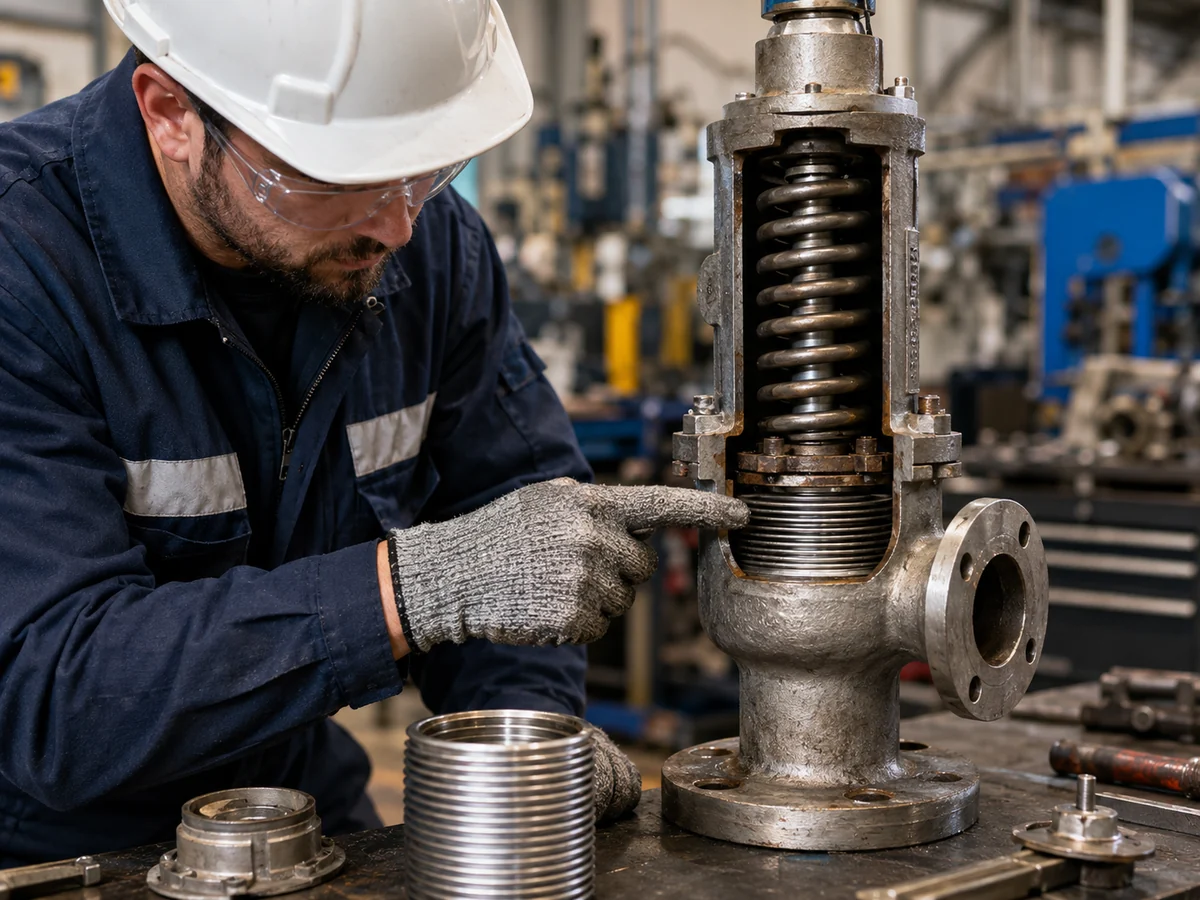
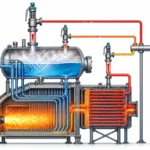
Ilustração industrial conceitual; não é um registro de inspeção do cliente nem uma imagem de certificação de produto.
O que o Fole se Destina a Fazer
A válvula de segurança balanceada por fole
utiliza um fole metálico como parte do seu arranjo de balanceamento de pressão e isolamento. O fole não é um
componente decorativo e não deve ser tratado como intercambiável com a mola principal.
Isolamento de Pressão e Balanceamento de Força
Em um arranjo típico de fole balanceado, o fole ajuda a reduzir forças selecionadas de pressão de saída que atuam
no conjunto móvel. A área efetiva exata, a contrapressão admissível, o material e os limites mecânicos
dependem do projeto da válvula selecionada e dos dados do fabricante.
Por que a Integridade do Fole é Importante
Se o fole for danificado, as premissas originais de isolamento de pressão e balanceamento podem não ser mais válidas.
Isso não significa automaticamente que a válvula perdeu toda a capacidade de alívio de pressão, mas significa que as
premissas de desempenho instaladas devem ser revisadas em vez de aceitas apenas com base na especificação original.
Consequência de falha específica do projeto: alguns projetos de válvulas com fole balanceado usam um arranjo auxiliar
ou de pistão de reserva. Nesses projetos, o efeito da ruptura do fole no balanceamento de pressão pode diferir
de um projeto sem esse recurso. Não presuma que todo fole com falha produz a mesma resposta operacional;
confirme a construção da válvula selecionada e os dados do fabricante antes de atribuir a consequência de desempenho.
ou de pistão de reserva. Nesses projetos, o efeito da ruptura do fole no balanceamento de pressão pode diferir
de um projeto sem esse recurso. Não presuma que todo fole com falha produz a mesma resposta operacional;
confirme a construção da válvula selecionada e os dados do fabricante antes de atribuir a consequência de desempenho.
Para o contexto mais amplo de balanceamento de força e pressão de saída, revise
Contrapressão e fole.
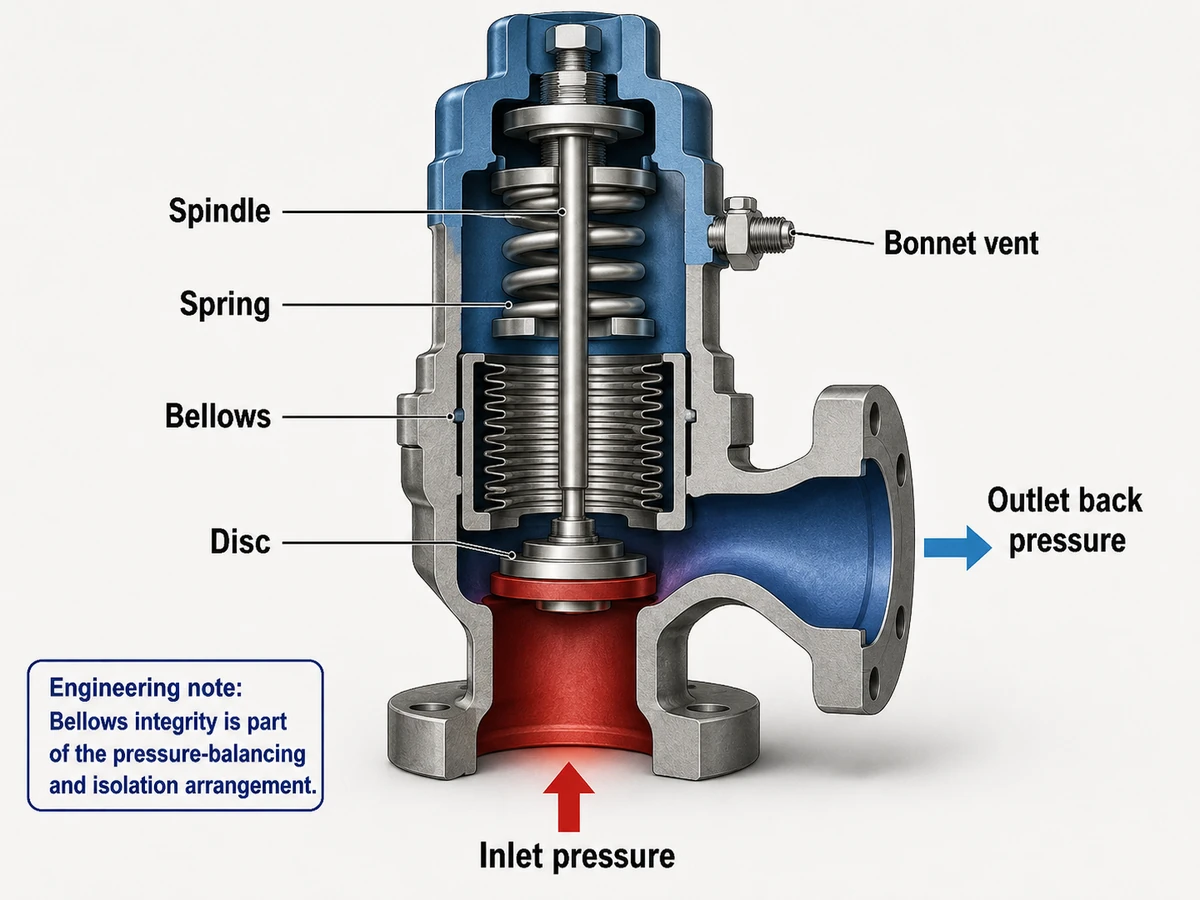
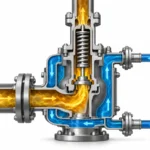
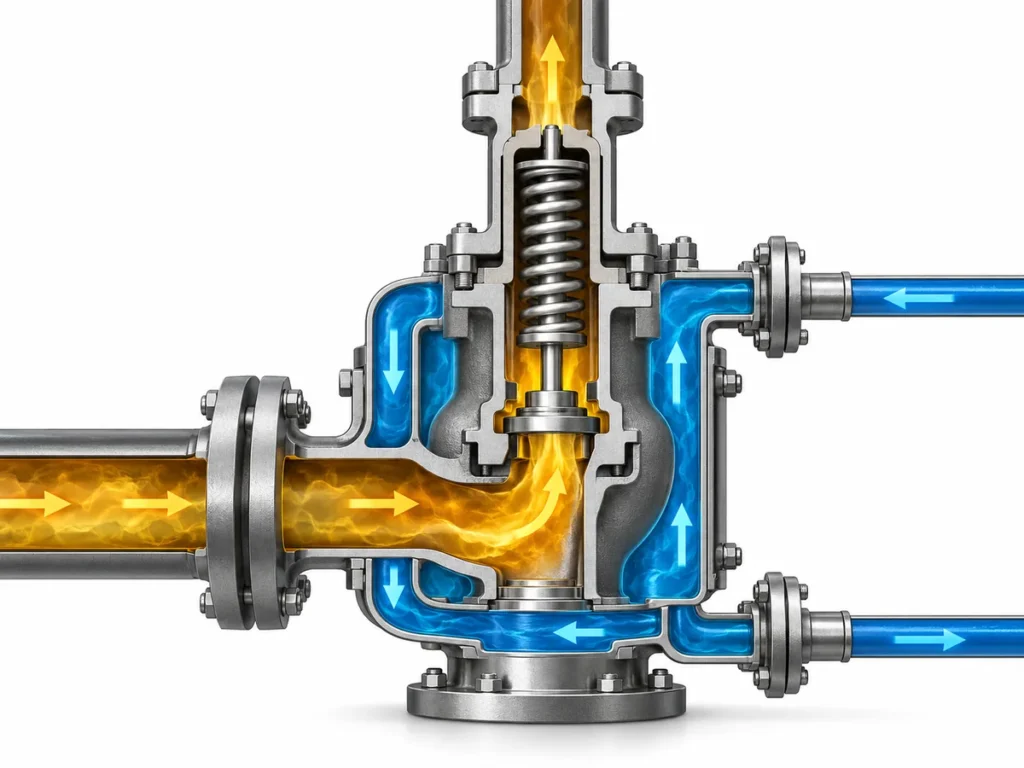
Ilustração técnica simplificada; verifique o projeto do fabricante selecionado antes de aplicar detalhes a uma válvula específica.
Causas Comuns de Falha do Fole
Um fole danificado não deve ter uma única causa raiz atribuída apenas pela aparência. As evidências físicas precisam
deve ser correlacionado com o meio real, fase, temperatura de operação, temperatura de alívio, pressão
ciclagem, contrapressão, vibração e histórico de instalação e manutenção.
Fadiga e Ciclagem Repetida
O fole flexiona repetidamente conforme o conjunto móvel opera. Eventos de alívio frequentes, operação instável ou outro
movimento mecânico repetido podem contribuir para danos cíclicos. A posição da trinca, os padrões de deformação repetida
e o histórico de serviço devem ser revisados em conjunto antes que a fadiga seja aceita como causa raiz.
Corrosão e Ataque Químico
O fole é um componente metálico fino, portanto corrosão, pites ou perda local de espessura podem se tornar significativos
mesmo quando componentes mais pesados da válvula parecem aceitáveis. A classe do material sozinha não prova adequação:
composição do meio, contaminantes, concentração, fase e temperatura são todos relevantes.
Danos Mecânicos, Desalinhamento e Vibração
Atrito, fretting, deformação lateral ou acessórios danificados podem indicar que o movimento não estava ocorrendo
como pretendido. Nesse caso, a investigação deve incluir o fuso, a guia, as peças adjacentes, a condição de montagem
e possíveis cargas de tubulação, em vez de substituir o fole isoladamente.
Temperatura e Condições Anormais de Pressão
A classe de pressão do corpo e os limites do fole são questões de engenharia diferentes. A temperatura real do fole,
a pressão diferencial e a exposição à contrapressão devem ser verificadas contra a válvula selecionada e a
base de projeto específica do fabricante.
Depósitos e Contaminação
Depósitos podem reter material corrosivo contra superfícies finas, restringir o movimento livre, esconder pites e aumentar
carga mecânica irregular. Serviço sujo, polimerizante ou com formação de depósitos exige, portanto, inspeção de
o fole juntamente com a guia circundante, haste, tampa e passagem de ventilação.
| Mecanismo de Falha | Evidência Física Típica | Fatores de Serviço a Verificar | O que Não Comprova |
|---|---|---|---|
| Fadiga cíclica | Trincas em regiões flexionadas repetidamente, padrão de deformação | Frequência de eventos de alívio, ciclagem, instabilidade, vibração | A causa sistêmica iniciadora |
| Corrosão | Corrosão por pites, afinamento, descoloração, produtos de corrosão | Meio, contaminantes, fase, temperatura, depósitos | Se já ocorreu vazamento |
| Contato mecânico | Atrito, fretting, deformação localizada | Alinhamento, condição da guia, carga da tubulação, vibração | Se o fole sozinho é a causa raiz |
| Pressão/temperatura anormais | Distorção, degradação acelerada, dano aos acessórios | Pressão diferencial real, contrapressão, temperatura | Aceitabilidade do projeto sem dados do fabricante |
| Depósitos/contaminação | Depósitos nas convoluções, ataque localizado ou movimento restrito | Limpeza do serviço, química, histórico de manutenção | Se o fole está perfurado |
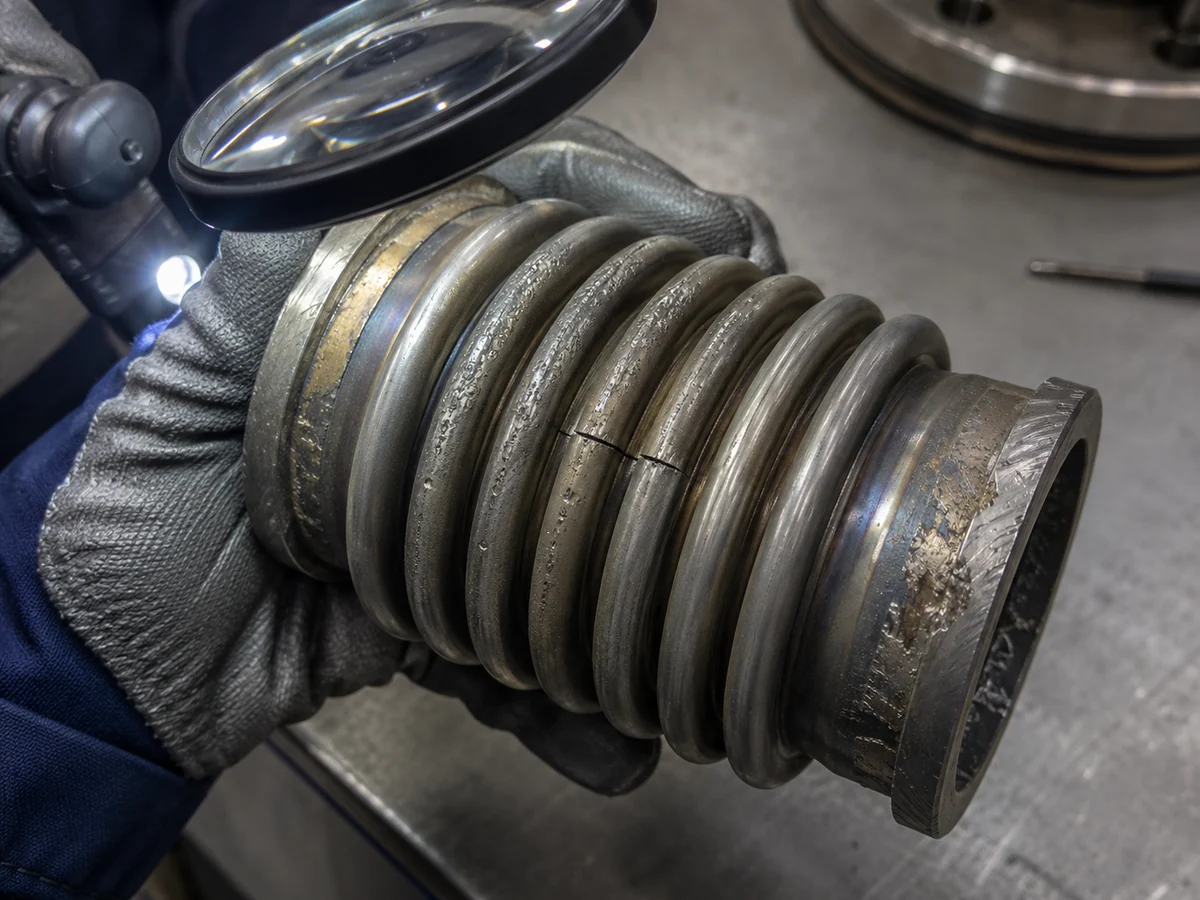
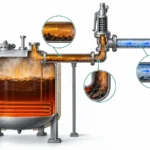
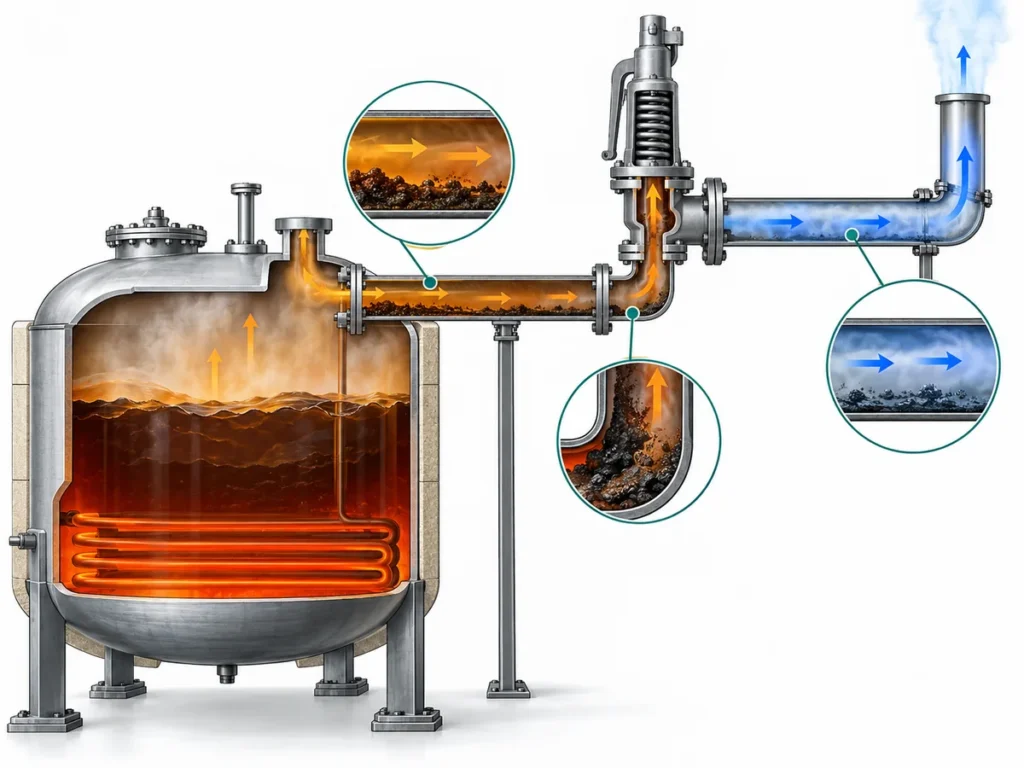
Ilustração conceitual de inspeção; não é evidência de uma falha real de cliente.
Sintomas que podem sugerir falha do fole
Os sintomas são úteis porque indicam à equipe de manutenção o que investigar em seguida. Eles não devem ser
tratados como um diagnóstico completo sem verificar a construção da válvula e a condição física do fole.
Evidência do Respiro do Castelo
Fluido de processo inesperado, vapor, condensado, manchas ou resíduos recorrentes na ventilação do castelo (bonnet vent) podem ser um
importante sinal de alerta. Antes de concluir que o fole falhou, confirme que a abertura é realmente
a ventilação do fole/castelo, entenda para onde ela é direcionada e exclua contaminação externa óbvia ou outra fonte de vazamento.
Mudanças no Comportamento da Válvula
Alterações no histórico de abertura, reassentamento, estabilidade ou vazamento podem justificar investigação, especialmente após mudanças
no coletor de descarga ou no sistema de saída. No entanto, perda de pressão de entrada, contrapressão excessiva, condição da mola ou da guia,
problemas no assento e cargas de tubulação podem produzir sintomas sobrepostos.
Corrosão Externa, Resíduos ou Contaminação
Corrosão concentrada ao redor do castelo ou da ventilação, ou contaminação inesperada acima do limite de isolamento
previsto, aumenta a necessidade de inspeção interna. A aparência externa sozinha ainda pode não revelar se o
fole tem um furo de agulha, rasgo, fixação rachada ou outro defeito.
Limite de diagnóstico: pergunte “O que esse sintoma deve nos levar a inspecionar em seguida?” em vez de
“Qual componente definitivamente falhou?”
“Qual componente definitivamente falhou?”
Matriz de Solução de Problemas Sintoma-para-Verificação
O mesmo sintoma visível pode vir de danos no fole, de outro componente da válvula ou do sistema instalado.
Use o sintoma para escolher a próxima verificação, em vez de fechar o diagnóstico.
| Sintoma Observado | Possibilidade Relacionada ao Fole | Causa Concorrente a Excluir | Próxima Verificação |
|---|---|---|---|
| Meio de processo ou resíduo na ventilação do boné | A perda de integridade do fole pode permitir a entrada de pressão ou fluido na região do boné | Contaminação externa, condensação, vazamento de junta/vizinhança, identificação incorreta da ventilação | Confirme a construção da válvula e o caminho da ventilação, preserve evidências de resíduos e, em seguida, inspecione o fole e as interfaces de vedação adjacentes |
| Mudança no comportamento de abertura ou re-assentamento | A perda do balanceamento/isolamento pretendido pode alterar o comportamento instalado | Ajuste da pressão de ajuste, atrito da guia, condição do assento, perda na entrada, contrapressão excessiva ou instabilidade | Revise os dados de teste como encontrado, tubulação de entrada/saída e peças móveis internas antes de atribuir a mudança ao fole |
| Corrosão ou depósitos na área do boné | A exposição ao processo através de fole danificado é plausível | Ambiente externo, lavagem, condensação ou outra fonte de vazamento | Identifique o depósito/fonte e inspecione o fole, o canal de ventilação e o interior do boné |
| Rachaduras ou deformação repetidas do fole | Fadiga, pressão diferencial anormal ou dano por contato | Desalinhamento, vibração, carga de tubulação, operação instável ou sistema de descarga alterado | Correlacione o dano físico com ciclos, vibração, contrapressão e histórico de montagem antes de especificar uma substituição |
| Teste de pressão de ajuste aprovado | O dano ao fole pode ainda existir | Nenhum — esta é uma questão de limite de evidência | Use evidências separadas de inspeção/integridade do fole em vez de tratar a aceitação da pressão de ajuste como prova |
Matriz de Evidências de Inspeção de Falha do Fole
| Observação | O Que Pode Indicar | Força da Evidência | O que Não Comprova | Próxima Verificação Recomendada |
|---|---|---|---|---|
| Resíduo ou fluido no respiro do boné | Possível perda de integridade do fole | Moderada a forte, dependendo da construção | Localização exata do defeito ou causa raiz | Verifique a configuração da válvula/respiro e inspecione o fole |
| Corrosão na área do boné | Exposição ao processo ou ataque ambiental | Baixa a moderada | Ruptura do fole | Inspecionar o respiro, o interior do capô e o fole |
| Alteração do comportamento de abertura/reassentamento | Contrapressão, atrito ou alteração mecânica | Baixa | Falha específica do fole | Revisar dados de teste, tubulação e condição interna |
| Depósitos no fole removido | Contaminação do serviço | Moderado | Se o fole está perfurado | Limpar e inspecionar conforme o procedimento aprovado |
| Pitagem ou afinamento | Degradação por corrosão | Evidência física forte de dano | Vida útil restante permitida ou causa raiz | Revisão de material/serviço e decisão de reparo |
| Convoluções distorcidas | Sobrecarga mecânica ou movimento anormal | Forte | Mecanismo exato de iniciação | Verifique o histórico de alinhamento, vibração e pressão |
| Marcas de atrito/desgaste por fricção | Contato ou desalinhamento | Forte | Se existe vazamento | Inspecione a guia, o fuso e as peças adjacentes |
| Trinca, furo ou fenda | Perda de integridade física | Muito forte / dano confirmado | Causa raiz | Reparo/substituição e revisão da causa raiz |
| Danos por soldadura ou fixação | Problema mecânico ou de reparação/fabricação | Muito forte | Causa sem histórico de suporte | Rever requisitos do fabricante/reparação |
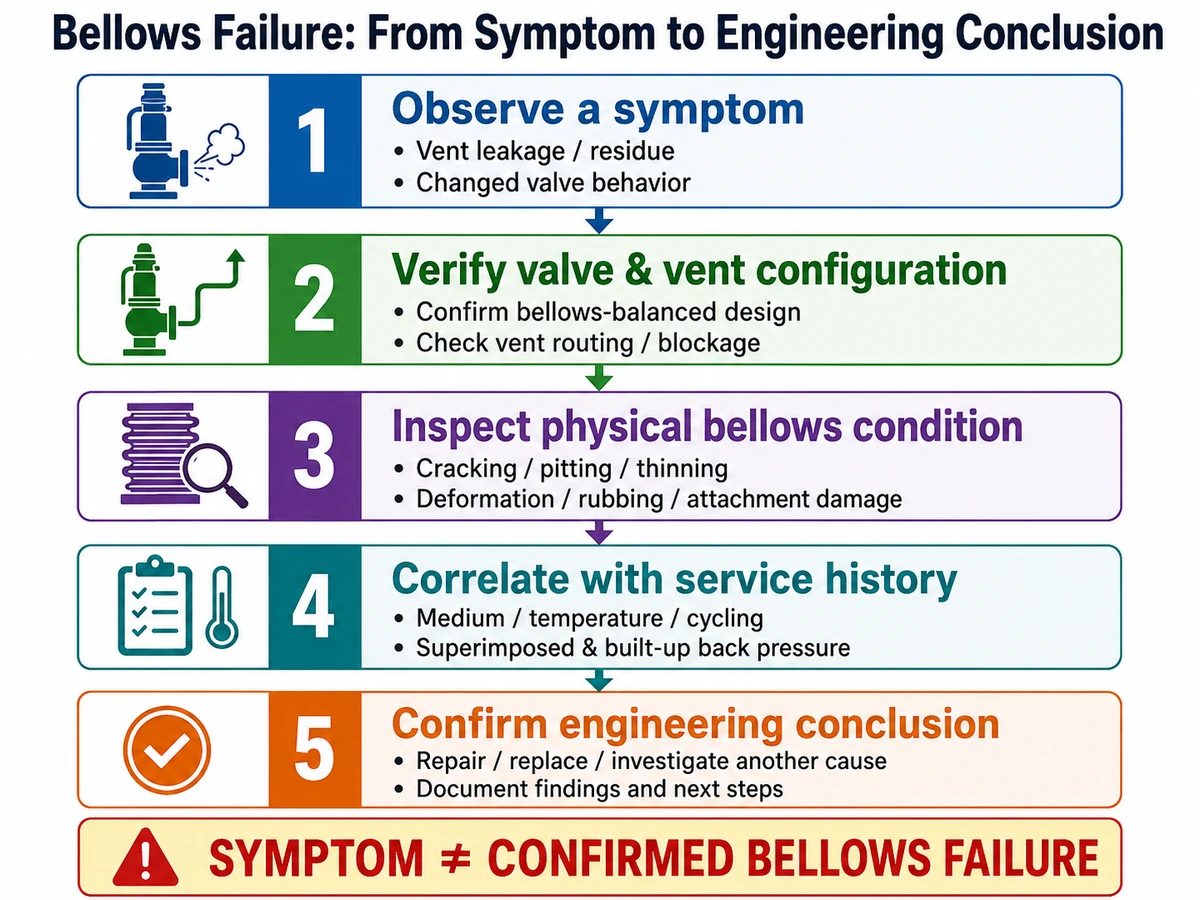
Fluxo de trabalho de engenharia simplificado para revisão diagnóstica.
O que a Evidência do Respiro do Boné Pode e Não Pode Dizer
Numa construção de válvula onde um fole intacto isola o boné da região de pressão relevante,
a descarga anormal do meio de processo pelo respiro pode ser uma forte evidência de que o isolamento pretendido
foi perdido. Ainda assim, não identifica se o defeito é um furo, fissura, rasgo ou falha de fixação,
e não estabelece a causa raiz.
Respiro Bloqueado, Restringido ou Incorrectamente Roteado
Um respiro bloqueado, restringido ou roteado incorretamente cria um problema de engenharia separado porque
a pressão pode acumular-se onde o projeto assume uma condição ventilada. Não tape uma fuga de respiro inexplicada
simplesmente para parar o sintoma visível.
A tubagem de saída, resistência de descarga, drenagem e suporte mecânico também devem ser revistos quando o comportamento
da válvula é anormal. O
guia de instalação de válvulas de segurança
cobre o limite mais amplo do sistema instalado.
O que Inspecionar Após a Remoção da Válvula
Superfície e Convoluções do Fole
- fissuras, furos de agulha e rasgos;
- corrosão localizada ou perda geral de espessura de parede;
- produtos de corrosão e depósitos;
- convoluções achatadas, esticadas ou irregulares;
- marcas de atrito ou fretting;
- evidências de exposição a temperaturas anormais.
Soldas, Fixações e Conexões de Extremidade
Inspecione as áreas de fixação, anéis de extremidade e pontos de conexão quanto a fissuras, dobramento, distorção ou indicações de
reparos anteriores. Não invente um limite de aceitação universal: utilize o fabricante da válvula selecionada, o,
procedimento de reparo autorizado, os requisitos aplicáveis do projeto e a base de código adotada.
Componentes Adjacentes
Verifique o fuso, guia, mola, disco/porta-disco, internos do castelo, passagem de ventilação e componentes próximos quanto a
evidências que expliquem por que o fole foi danificado. Substituir um fole sem corrigir o problema subjacente de
alinhamento, vibração ou carga na tubulação pode repetir o mecanismo de falha.
Para a sequência de inspeção mais ampla, registros de manutenção e limites de escalonamento, revise o
Guia de manutenção e inspeção de válvulas de segurança.
O que os Testes de Pressão de Ajuste e de Estanqueidade do Assento Não Podem Provar sobre a Integridade do Fole
Teste de Pressão de Ajuste
Um teste de pressão de ajuste verifica a resposta de pressão definida sob a condição de teste aplicável. Ele não
prova automaticamente que o fole está fisicamente intacto, livre de corrosão ou adequado para a instalação
condição de contrapressão.
Teste de Estanqueidade do Assento
O teste de estanqueidade do assento aborda vazamentos através do assento fechado. Ele não deve ser tratado como um teste de integridade do fole.
teste de integridade. Quando a questão for o vazamento no assento em si, use a
Teste de estanqueidade de sede API 527
orientação como categoria de evidência separada.
Evidência de Capacidade
A capacidade de alívio necessária provém do equipamento protegido e do cenário de alívio governante. A válvula selecionada
então precisa de uma base de capacidade certificada ou documentada adequada para o meio e as condições de alívio.
Danos ao fole não provam por si só que a capacidade certificada é inadequada, mas podem tornar
as premissas de desempenho instaladas não confiáveis até que o defeito e as condições do sistema sejam resolvidos.
Triagem de Material e Serviço Antes de Reutilizar a Especificação Antiga do Fole
Quando forem encontrados corrosão, depósitos ou danos relacionados à temperatura, não presuma que o material do fole antigo deva ser repetido.
A revisão da substituição precisa do ambiente real de serviço; uma etiqueta de material por si só não é uma avaliação de compatibilidade.
Use o guia de seleção de materiais para válvulas de segurança
para a revisão mais ampla do corpo, guarnições, fole, mola, sede e compatibilidade com o serviço.
| Entrada de Triagem | Por que Importa | Decisão Necessária |
|---|---|---|
| Meio, fase e contaminantes | Pode alterar corrosão, depósitos e mecanismo de ataque | Confirme a compatibilidade usando as diretrizes de material do fabricante/projeto para o serviço real |
| Temperatura de operação e de alívio | Pode afetar a resistência do material, taxa de corrosão e comportamento mecânico do fole | Confirme se o fole selecionado e as guarnições adjacentes são adequados nas temperaturas relevantes |
| Histórico de limpeza, vaporização ou perturbações de processo | Exposição de curta duração pode diferir da operação normal | Inclua exposição plausível a perturbações/limpeza na base da substituição, quando aplicável |
| Depósitos e sólidos | Podem reter espécies corrosivas ou restringir o movimento do fole | Aborde tanto a compatibilidade do material quanto a fonte dos depósitos, não apenas o material |
| Material de reparo/substituição anterior | Substituições passadas podem não corresponder à configuração aprovada original | Verifique a rastreabilidade e os requisitos do fabricante/reparo autorizado antes da reutilização |
Como o Histórico de Serviço Ajuda a Identificar o Mecanismo Provável de Falha
A inspeção física indica o que aconteceu com o fole. O histórico de serviço ajuda a explicar por que isso pode ter ocorrido.
A conclusão mais sólida sobre a causa raiz normalmente combina evidências físicas, histórico operacional e informações de projeto.
| Dados de Serviço | Por que Importa |
|---|---|
| Meio e fase | Contexto de corrosão, contaminação e serviço mecânico |
| Pressão de operação | Histórico de pressão normal |
| Pressão Máxima de Trabalho / Pressão de projeto | Base de pressão do equipamento protegido, não a condição do fole por si só |
| Pressão de ajuste | Ponto de operação da válvula e contexto de teste |
| Temperatura de alívio | Material e condição mecânica do fole |
| Contrapressão sobreposta | Pressão de saída que pode existir antes da abertura |
| Contrapressão acumulada | Pressão de saída criada durante o fluxo de alívio |
| Frequência de eventos de alívio | Investigação de ciclagem/fadiga |
| Histórico de vibração | Investigação de fadiga mecânica ou atrito |
| Alterações no coletor de descarga | Possível mudança nas condições de contrapressão |
| Material/configuração do fole | Revisão de compatibilidade e projeto |
| Resultados de inspeção/reparo anteriores | Tendência de degradação e mecanismo recorrente |
Cenários de Engenharia Compostos para Treinamento
Cenário de engenharia composto para treinamento
Resíduo na Ventilação Sem Ruptura Confirmada do Fole
Problema observado: resíduo recorrente é encontrado ao redor da ventilação identificada do castelo.
Causas plausíveis: vazamento do fole é plausível, mas condensação, contaminação externa, vazamento de junta próximo ou identificação incorreta da ventilação ainda não foram excluídos.
Ação corretiva: verifique a construção da válvula e o caminho da ventilação, preserve a condição como encontrada, identifique o resíduo quando prático e, em seguida, inspecione o fole e as interfaces de vedação adjacentes conforme o procedimento de manutenção aprovado.
Prevenção / acompanhamento: documente o roteamento e a condição da ventilação em inspeções futuras e corrija qualquer arranjo de ventilação bloqueado, mal roteado ou inseguro, em vez de mascarar o sintoma visível.
Cenário de engenharia composto para treinamento
Fole Corroído Após Remoção
Problema observado: corrosão localizada e depósitos são visíveis em várias convoluções do fole após a remoção.
Causas plausíveis: contaminantes corrosivos, ataque assistido por depósitos, exposição à temperatura ou incompatibilidade de material/serviço são possíveis; a fadiga também pode ter contribuído se houver trincas presentes.
Ação corretiva: documente o padrão de dano, revise o meio/fase/contaminantes e a temperatura real, inspecione os componentes adjacentes e, em seguida, reavalie o material e a configuração do fole antes da aprovação da substituição.
Prevenção / acompanhamento: atualize o RFQ e o registro de manutenção com a química e a temperatura reais de serviço, em vez de repetir a especificação antiga do material sem revisão.
Cenário de engenharia composto para treinamento
Teste de Pressão Aprovado, mas Danos no Fole São Encontrados
Problema observado: a válvula demonstra a resposta de pressão exigida durante o teste de bancada aplicável, mas a inspeção interna posterior identifica danos físicos no fole.
Causa plausível: o resultado não é contraditório; a verificação da pressão de ajuste e a verificação da integridade do fole respondem a diferentes questões de engenharia.
Ação corretiva: resolva os danos no fole, investigue o mecanismo de falha e reconfirme a contrapressão real, a ventilação e os requisitos de substituição antes do retorno ao serviço.
Prevenção / acompanhamento: mantenha registros de aceitação separados para pressão de ajuste, estanqueidade do assento, integridade do fole e condições do sistema instalado, em vez de reduzi-los a um único status genérico de APROVADO.
Reparar ou Substituir? O Limite da Decisão de Engenharia
Quando a Inspeção Deve Escalar para Revisão de Reparo
Trincas, furos, rasgos, corrosão ou afinamento significativos, deformação, atrito, fixações danificadas ou
exposição confirmada ao processo na área do boné devem escalar a investigação. A capacidade de reparo depende
do projeto real da válvula, dos requisitos do fabricante ou de reparo autorizado, da especificação do projeto e da
jurisdição aplicável.
Escalonamento crítico de segurança: quando os danos suspeitos no fole são acompanhados por liberação
não controlada do processo, perda confirmada de contenção ou incerteza de que a válvula ainda pode atender à função
de alívio de pressão exigida do equipamento protegido, siga o procedimento aprovado de desligamento, isolamento ou
remoção de serviço do proprietário-usuário. Não continue a operação apenas para coletar mais evidências e não isole
um caminho de alívio necessário, a menos que a proteção contra sobrepressão seja mantida por um plano alternativo aprovado ou de desligamento.
não controlada do processo, perda confirmada de contenção ou incerteza de que a válvula ainda pode atender à função
de alívio de pressão exigida do equipamento protegido, siga o procedimento aprovado de desligamento, isolamento ou
remoção de serviço do proprietário-usuário. Não continue a operação apenas para coletar mais evidências e não isole
um caminho de alívio necessário, a menos que a proteção contra sobrepressão seja mantida por um plano alternativo aprovado ou de desligamento.
Quando a substituição exige uma nova verificação de engenharia
Uma substituição não deve ser aprovada apenas porque tem o mesmo tamanho de conexão ou pressão de ajuste. Confirme
o equipamento protegido, o cenário de alívio governante, o meio e a fase, a pressão de operação, a pressão de projeto/MAWP,
a capacidade de alívio requerida, a temperatura de alívio, a contrapressão sobreposta e acumulada, o material do fole,
a sede/vedação, a mola/internos, as classificações de entrada/saída, o arranjo de ventilação e os documentos necessários.
Tamanho da conexão ≠ capacidade de alívio. Se o fole foi danificado porque o serviço real
mudou, instalar outra válvula conforme a especificação antiga pode reproduzir o mesmo problema.
mudou, instalar outra válvula conforme a especificação antiga pode reproduzir o mesmo problema.
Se o cenário de alívio governante ou a carga requerida mudou, reconfirme a base de dimensionamento usando o
dimensionamento de válvulas de segurança e capacidade de alívio certificada
fluxo de trabalho em vez de assumir que o tamanho de conexão anterior ou o modelo de válvula permanece adequado.
Fluxo de trabalho de verificação de substituição
- Preserve as evidências da falha: registre o fole como encontrado, a ventilação, os depósitos, o local do dano e a condição dos componentes adjacentes antes que a limpeza destrua evidências úteis.
- Revalide a base de serviço: confirme o equipamento protegido, o cenário de alívio, o meio/fase, as pressões, a temperatura de alívio e as condições atuais do sistema de descarga.
- Recalcule ou reconfirme a capacidade requerida onde o cenário de alívio mudou: não use o tamanho da conexão ou o modelo de válvula anterior como cálculo de capacidade.
- Avalie a configuração da válvula: confirme se um projeto balanceado por fole permanece apropriado para a contrapressão sobreposta/acumulada real, o arranjo de ventilação e o ambiente do processo.
- Verifique os materiais e detalhes mecânicos: fole, corpo/internos, sede/vedação, mola e acessórios relevantes devem corresponder ao serviço real e aos requisitos do fabricante/projeto.
- Verifique as interfaces de instalação: as classificações de entrada/saída, cargas nas tubulações, perda de carga na entrada, suporte de descarga, drenagem e roteamento de ventilação não devem recriar o mecanismo de falha suspeito.
- Feche a lacuna documental: defina a folha de dados necessária, evidência de capacidade, registros de teste/reparo, rastreabilidade e documentos de projeto/código antes da liberação.
Informações a registrar antes de reparo, substituição ou RFQ
Entradas de engenharia ausentes devem ser marcadas a confirmar, não inferidas a partir do antigo
tamanho da conexão, aparência externa ou um único resultado de teste.
- Equipamento protegido
- Cenário de alívio governante
- Meio e fase
- Pressão de operação
- Pressão Máxima de Trabalho / Pressão de projeto
- Pressão de ajuste
- Capacidade de alívio requerida e base
- Temperatura de alívio
- Contrapressão sobreposta
- Contrapressão acumulada
- Conexões de entrada/saída
- Modelo/placa de identificação da válvula existente
- Material do fole
- Corpo / guarnição / sede / mola
- Encaminhamento do respiro do castelo
- Fotografias de danos
- Relatório de inspeção de recebimento
- Histórico de reparos anteriores
- Código/norma de projeto aplicável
- Documentos de inspeção/certificação exigidos
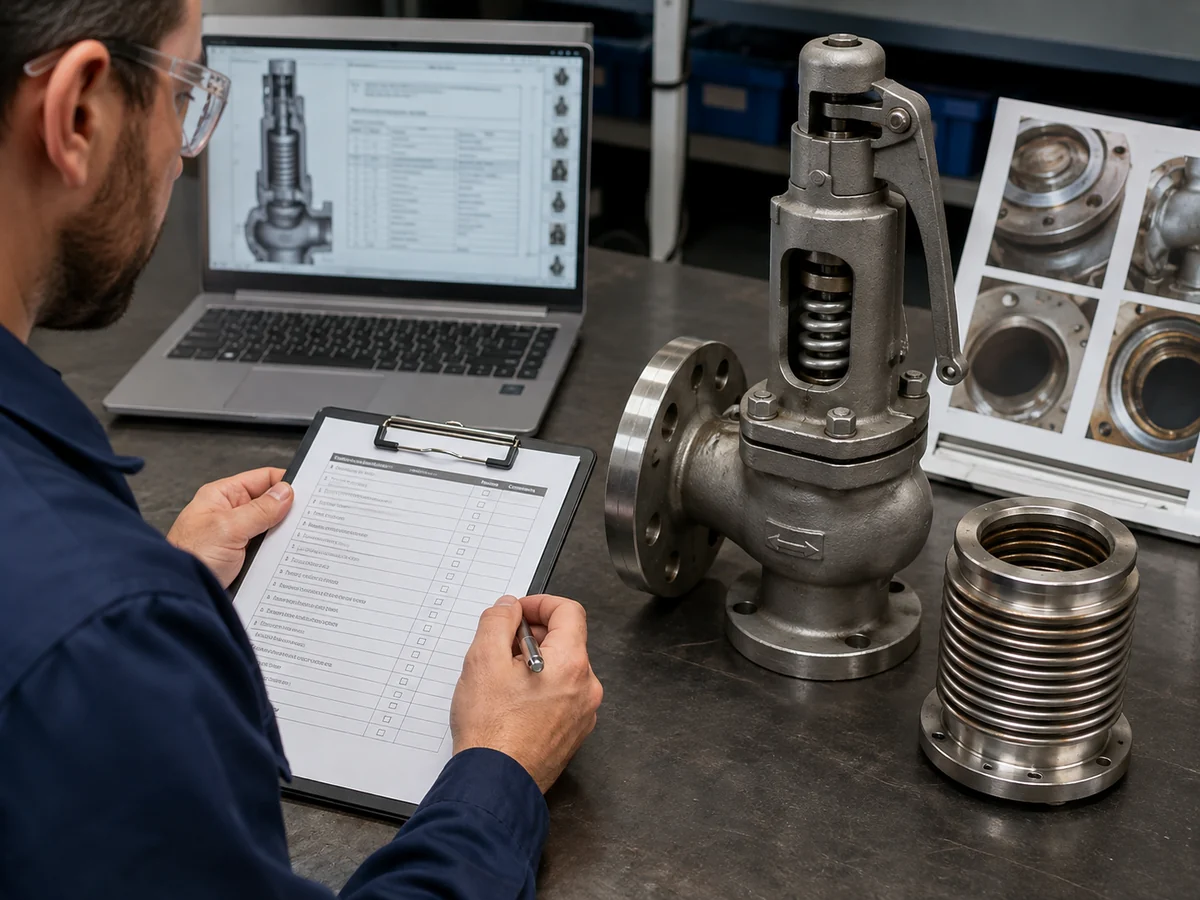
Cena conceitual de revisão de engenharia; a documentação e os equipamentos exibidos são ilustrativos e não são registros reais de clientes.
Perguntas Frequentes
Quais são os sinais mais comuns de falha do fole em uma válvula de segurança?
Possíveis sinais de alerta incluem descarga ou resíduo anormal no respiro do castelo, mudança no comportamento da válvula,
contaminação na área do castelo ou evidência interna direta de dano no fole. Esses sinais têm diferentes
forças de evidência. Uma trinca, furo, rasgo ou vazamento de integridade confirmado é uma evidência muito mais forte do que um
sintoma operacional isolado.
O fluido de processo no respiro do capô prova que o fole rompeu?
Quando a construção real da válvula utiliza um fole intacto para isolar o castelo da região de
pressão relevante, o vazamento no respiro pode ser uma forte evidência de perda de integridade do fole. A construção da válvula,
o caminho do respiro e possíveis fontes alternativas de vazamento ainda devem ser verificados antes de atribuir o
defeito físico ou a causa raiz.
Uma válvula de segurança pode passar no teste de pressão de ajuste com um fole danificado?
Potencialmente, sim. Um teste de pressão de ajuste e uma inspeção de integridade do fole respondem a diferentes questões
de engenharia. Um resultado bem-sucedido de pressão de ajuste não deve ser automaticamente usado como evidência de que o fole
está fisicamente intacto.
A fuga no assento pode ser causada por falha do fole?
Danos no fole podem alterar as condições da válvula, mas o vazamento na sede tem várias causas possíveis, incluindo
contaminação, danos na sede, desalinhamento e problemas na guia. O vazamento na sede não deve ser atribuído ao
fole sem evidências de suporte.
O que deve ser inspecionado após a remoção de uma válvula de segurança balanceada por fole?
Inspecione as convoluções do fole, rachaduras ou furos, corrosão por pites, afinamento, deformação, atrito, depósitos,
soldas e fixações. Inspecione também o fuso, a guia, a passagem de ventilação, a câmara da mola e os componentes
adjacentes em busca de evidências que expliquem os danos no fole.
Um fole danificado pode ser reparado ou a válvula deve ser substituída?
Não há resposta universal. A reparabilidade depende do projeto específico da válvula, do fabricante ou dos
requisitos de reparo autorizado, do tipo de dano, dos materiais, da base do código e dos requisitos do projeto. Danos severos ou
não reparáveis podem exigir substituição, mas a substituição ainda requer revisão de engenharia.
Que informações são necessárias para selecionar uma válvula de segurança balanceada por fole de substituição?
Confirme o equipamento protegido, o cenário de alívio, o meio e a fase, a pressão de operação, a pressão de projeto/MAWP,
a pressão de ajuste, a capacidade de alívio requerida, a temperatura de alívio, a contrapressão superposta e acumulada,
as conexões, os materiais do fole e do trim, o arranjo de ventilação, as normas aplicáveis e a documentação exigida.
Referências Técnicas Oficiais
As seguintes fontes primárias atuais apoiam a estrutura de inspeção, proteção contra sobrepressão e engenharia de foles
usada neste artigo. Elas são pontos de referência, não prova de que uma válvula ZOBAI específica possui uma
certificação particular ou de que uma edição se aplica a todos os projetos. Sempre verifique a edição adotada pela
especificação do proprietário-usuário, pelo código do equipamento protegido e pela jurisdição.
-
API RP 576 — Inspeção de Dispositivos de Alívio de Pressão, 5ª Edição (Setembro 2024)
— A folha de publicações de recertificação atual da API lista esta edição para inspeção de dispositivos de alívio de pressão. -
ASME BPVC Seção XIII — Regras para Proteção contra Sobrepressão (2025)
— A Seção XIII atual da ASME cobre os requisitos de proteção contra sobrepressão para equipamentos pressurizados e dispositivos de alívio de pressão. -
ISO 4126-1:2013 — Válvulas de segurança
— ISO lista este produto padrão como atual após sua revisão 2025; não é um padrão de aplicação. -
Spirax Sarco — Tipos de Válvula de Segurança / Projeto de Fole Balanceado
— referência de engenharia do fabricante de primeira parte para balanceamento de fole, ventilação do boné e o limite auxiliar do pistão específico do projeto.
Padrões e referências de fabricantes apoiam a interpretação de engenharia; eles não substituem o alívio real
cenário, dados da válvula selecionada, achados de inspeção, procedimento de reparo ou requisitos jurisdicionais.
Normas e Limitações de Engenharia
Os requisitos de inspeção, reparo e substituição de válvulas de segurança dependem do equipamento protegido, da construção da válvula,
da jurisdição, da edição do código adotada, do procedimento do proprietário-usuário, dos requisitos do fabricante e
da especificação do projeto.
Os nomes das normas explicam apenas o escopo de engenharia. Eles não estabelecem que toda válvula ZOBAI possui automaticamente
todas as aprovações, nem substituem os requisitos de inspeção ou reparo específicos do fabricante. A aceitação final
deve usar a publicação/edição oficial adotada, os dados do fabricante da válvula selecionada, o
procedimento do proprietário-usuário/projeto e a jurisdição aplicável, em vez de um resumo secundário.
Precisa de ajuda para revisar uma suspeita de falha no fole?
Envie o equipamento protegido, o cenário de alívio, o meio e a fase, a pressão de operação, a MAWP/pressão de projeto,
a pressão de ajuste, a capacidade de alívio necessária, a temperatura de alívio, a contrapressão superimposta e acumulada,
as conexões de entrada/saída, o material do fole, a placa de identificação da válvula, o arranjo de ventilação, as fotos de inspeção e
os registros de reparo anteriores para revisão de engenharia.