Guía de selección de conexión de válvula de seguridad ¿Válvula de seguridad roscada o bridada? Confirme la conexión antes de solicitar presupuesto Una válvula de seguridad roscada utiliza una conexión roscada en la entrada, salida o ambos lados. Una válvula de seguridad bridada utiliza una conexión de brida atornillada con junta, cara de brida y disposición de pernos. La elección no es solo una cuestión de...

Guía de selección de conexión de válvula de seguridad
¿Válvula de seguridad roscada o bridada? Confirme la conexión antes de solicitar presupuesto
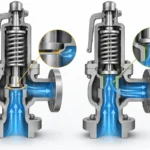
Una válvula de seguridad roscada utiliza una conexión roscada en la entrada, salida o ambos lados. Una válvula de seguridad bridada utiliza una conexión de brida atornillada con junta, cara de brida y disposición de pernos. La elección no es solo una cuestión de tamaño o apariencia. Los compradores deben confirmar si la válvula puede conectarse físicamente, sellar correctamente, encajar en el espacio de instalación, cumplir con las condiciones de presión-temperatura y satisfacer la especificación del proyecto.
Esta guía ayuda a ingenieros, equipos de compras y usuarios de mantenimiento a comparar los requisitos de conexión de válvulas roscadas y bridadas antes de solicitar una cotización a ZOBAI. Debe utilizarse junto con el equipo protegido real, el escenario de alivio, el medio, la presión de operación, la presión máxima de diseño (MAWP) o presión de diseño, la presión de tarado, la capacidad de alivio requerida, la temperatura de alivio, el material, el espacio de instalación y los requisitos de documentación.
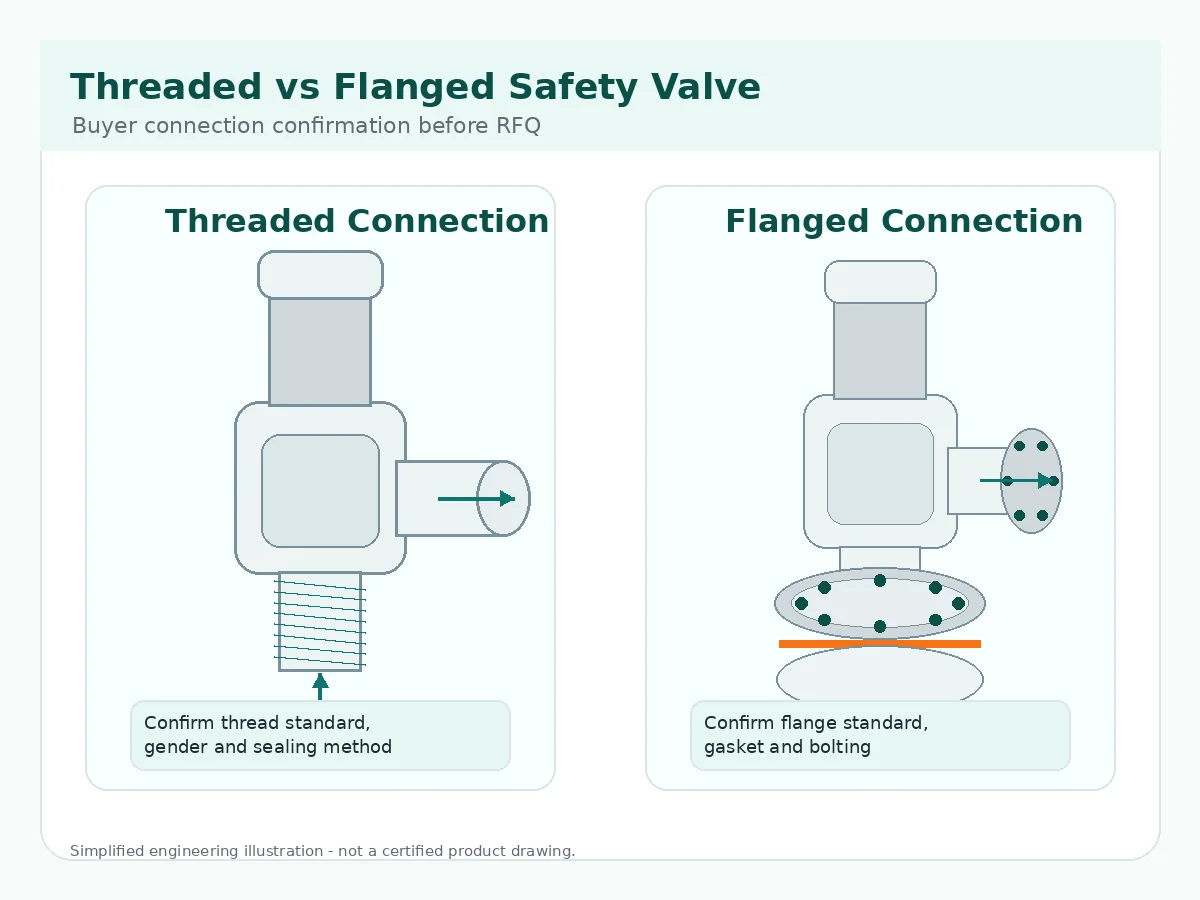
Respuesta rápida: Válvulas de seguridad roscadas vs. bridadas
Una válvula de seguridad roscada puede considerarse cuando la conexión del equipo o de la tubería es roscada y las condiciones de servicio, el espacio de instalación y los requisitos del proyecto lo permiten. Una válvula de seguridad bridada puede ser necesaria cuando la tubería del sitio utiliza bridas, la especificación del proyecto requiere un estándar de brida, o el comprador necesita un ensamblaje atornillado, control de juntas y un acceso de mantenimiento más claro.
El tipo de conexión por sí solo no es una especificación completa de la válvula de seguridad. Un comprador aún necesita confirmar el equipo protegido, el escenario de alivio, el medio y la fase, la presión de operación, la MAWP o la presión de diseño, la presión de ajuste, la capacidad de alivio requerida, la temperatura de alivio, el material, la disposición de entrada y salida, el riesgo de pérdida de presión de entrada, la tubería de salida, la contrapresión si es aplicable y los documentos requeridos.
Para contexto de familia de productos, revise ZOBAI válvulas de seguridad, válvulas de seguridad roscadas y válvulas de seguridad bridadas.
Por qué los compradores no pueden seleccionar solo por el nombre del tipo de conexión
Un problema común en las solicitudes de cotización (RFQ) es que los compradores describen únicamente el estilo de conexión. Pueden escribir “válvula de seguridad roscada” o “válvula de seguridad bridada” sin proporcionar el estándar de conexión real, la clasificación, el método de sellado o el diseño de instalación. Esto crea incertidumbre en la cotización y puede llevar a piezas incorrectas, aclaraciones repetidas, retrasos en la instalación o fugas durante la prueba de presión.
Una conexión de válvula de seguridad debe tratarse como parte del sistema completo de protección contra sobrepresión. La conexión debe adaptarse al equipo o a la tubería, pero la válvula también debe cumplir con la función de seguridad requerida. Una válvula que encaja mecánicamente aún puede ser incorrecta si la presión de ajuste, la capacidad requerida, el medio, la temperatura o el material son incorrectos.
El nombre de la conexión no define el estándar
“Roscada” no indica al proveedor si la conexión utiliza un estándar de rosca específico, tamaño, género o método de sellado. “Bridada” no indica al proveedor si la brida sigue el estándar ASME, EN, DIN, JIS u otro estándar del proyecto. Tampoco confirma la clase de presión, la clasificación PN, el tipo de cara, el patrón de pernos, los requisitos de junta o de fijación.
El tamaño de la conexión no garantiza la capacidad de alivio
El tamaño de la conexión no es lo mismo que la capacidad de alivio requerida. Una válvula de seguridad con una conexión más grande no proporciona automáticamente la capacidad correcta, y una válvula con el mismo tamaño nominal de entrada no tiene automáticamente el mismo rendimiento de flujo. La selección de la capacidad depende del escenario de alivio, las propiedades del fluido, la presión de alivio, la temperatura de alivio, el diseño de válvula seleccionado y los datos del fabricante.
El espacio de instalación y el acceso de mantenimiento pueden cambiar la decisión
Una conexión roscada puede parecer compacta, pero aún necesita acceso para la llave, espacio para el enrosque, orientación de salida y enrutamiento seguro de la descarga. Una conexión bridada puede requerir un espacio de instalación mayor, pero puede proporcionar un acceso claro para la fijación, el reemplazo de juntas y el desmontaje. Para problemas más amplios de adaptación al sitio, consulte la Guía de selección de válvulas de seguridad.
Matriz preliminar de decisión de conexión
La siguiente matriz es una herramienta de selección para el comprador. No reemplaza la revisión de ingeniería del proyecto. Ayuda a identificar qué dirección de conexión puede ser más práctica antes de finalizar la RFQ.
| Condición del comprador | La válvula de seguridad roscada puede considerarse cuando | La válvula de seguridad bridada puede considerarse cuando | Datos aún requeridos antes de la selección |
|---|---|---|---|
| Conexión existente en el sitio | El equipo o la tubería protegida tiene un puerto roscado confirmado. | La especificación de la tubería utiliza bridas de acoplamiento. | Fotos, planos, estándar de conexión, detalles de entrada/salida. |
| Espacio de instalación | Hay espacio compacto disponible pero el acceso con llave y el acoplamiento de rosca aún son posibles. | Existe suficiente espacio para el diámetro de la brida, pernos, tuercas, junta y herramientas de mantenimiento. | Diseño de instalación, equipos circundantes, dirección de descarga. |
| Enfoque de mantenimiento | El reemplazo es infrecuente y el riesgo de daño de la rosca se puede gestionar. | Se prefiere la extracción atornillada, la sustitución de juntas o un desmontaje más sencillo. | Acceso para mantenimiento, plan de elevación/soporte, requisitos de juntas/atornillado de repuesto. |
| Sellado de conexión | Se confirma el estándar de rosca y el método de sellado, y son adecuados para el medio. | La junta, el acabado y el método de atornillado se definen según el proyecto. | Material de sellado, material de junta, compatibilidad de temperatura y medio. |
| Documentación del proyecto | El proyecto acepta la conexión roscada y su alcance de inspección. | El proyecto requiere un estándar de brida definido, clasificación/clase y paquete de documentación. | Estándar aplicable, registros de pruebas, certificados de materiales, alcance de inspección. |
Límite de selección: Esta matriz solo admite la dirección preliminar de RFQ. La selección final de la válvula dependerá del equipo protegido real, el escenario de alivio, el medio, la presión de operación, la MAWP/presión de diseño, la presión de ajuste, la capacidad de alivio requerida, la temperatura de alivio, los materiales, los datos del fabricante, la versión del estándar aplicable, las especificaciones del proyecto y los requisitos regulatorios locales.
¿Qué es una válvula de seguridad roscada?
Una válvula de seguridad roscada es una válvula de seguridad suministrada con conexiones de entrada roscada, salida roscada o entrada y salida roscadas. Se selecciona cuando el equipo protegido, la tubería o la conexión del skid requieren una interfaz roscada. El problema clave para el comprador no es solo si la válvula es roscada, sino qué estándar de rosca, tamaño, género y método de sellado se requieren.
Estándar de rosca, tamaño y conexión macho/hembra
Una RFQ completa de válvula de seguridad roscada debe especificar el estándar de rosca, el tamaño nominal de la rosca y la conexión macho o hembra. La entrada y la salida deben confirmarse por separado. La conexión de entrada es especialmente importante porque conecta la válvula al equipo protegido o a la fuente de presión.
Sellador de roscas, cinta, junta o junta tórica?
Las conexiones roscadas pueden sellar de diferentes maneras según el tipo de rosca y el diseño. Algunas conexiones roscadas pueden utilizar un sellador de roscas o cinta aprobado por el proyecto. Otras pueden requerir una junta, junta tórica, arandela, sello adherido o cara de sellado. El material de sellado debe ser compatible con el medio, la presión, la temperatura y la especificación del proyecto.
Cuando las válvulas de seguridad roscadas necesitan verificación adicional
Se necesita verificación adicional cuando la válvula existente no tiene una hoja de datos clara, la conexión de campo es antigua o modificada, la válvula se instala con adaptadores, el estándar de rosca no se muestra en la placa de identificación o el proyecto requiere documentos o registros de inspección específicos.
¿Qué es una válvula de seguridad bridada?
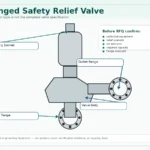
Una válvula de seguridad bridada es una válvula de seguridad suministrada con conexiones de entrada bridada, salida bridada o entrada y salida bridada. La válvula se conecta al sistema de tuberías a través de una unión de brida atornillada, que normalmente incluye una brida de acoplamiento, una junta, tornillería y una cara de brida definida.
Estándar de brida, tamaño y clase de presión
Una solicitud de cotización (RFQ) de válvula de seguridad bridada debe especificar el estándar de brida, el tamaño nominal, la clase de presión o la clasificación PN y el requisito de brida de acoplamiento. Un comprador no solo debe decir “válvula bridada DN50” o “brida de 2 pulgadas”. El proveedor necesita conocer el estándar y la base de clasificación utilizados por el proyecto. Para el contexto de RFQ de válvulas de alivio de presión bridada, consulte ZOBAI Válvulas de seguridad bridada API 526 guía.
La junta, la cara y la tornillería forman parte de la conexión
Una conexión bridada es un sistema de sellado, no solo una brida metálica. El tipo de junta, el material de la junta, la cara de la brida y los requisitos de tornillería afectan si la unión puede sellar correctamente. El comprador debe confirmar si el proyecto requiere una cara elevada, cara plana, junta anular u otro tipo de cara, dependiendo de la especificación de la tubería y la condición de servicio.
Por qué las válvulas de seguridad bridadas suelen necesitar más espacio
Una válvula de seguridad bridada suele requerir más espacio de instalación que una válvula roscada porque se debe considerar el diámetro de la brida, los pernos, las tuercas, la alineación de la junta y el espacio libre para herramientas. Los equipos de mantenimiento también necesitan espacio para quitar los pernos, reemplazar las juntas y levantar o soportar la válvula de forma segura.
Comparación de válvulas de seguridad roscadas vs. válvulas de seguridad bridadas
La siguiente tabla ofrece una comparación desde el punto de vista del comprador. No es una regla de selección final. Ayuda a aclarar qué información debe confirmarse antes de que ZOBAI pueda revisar la solicitud de cotización (RFQ).
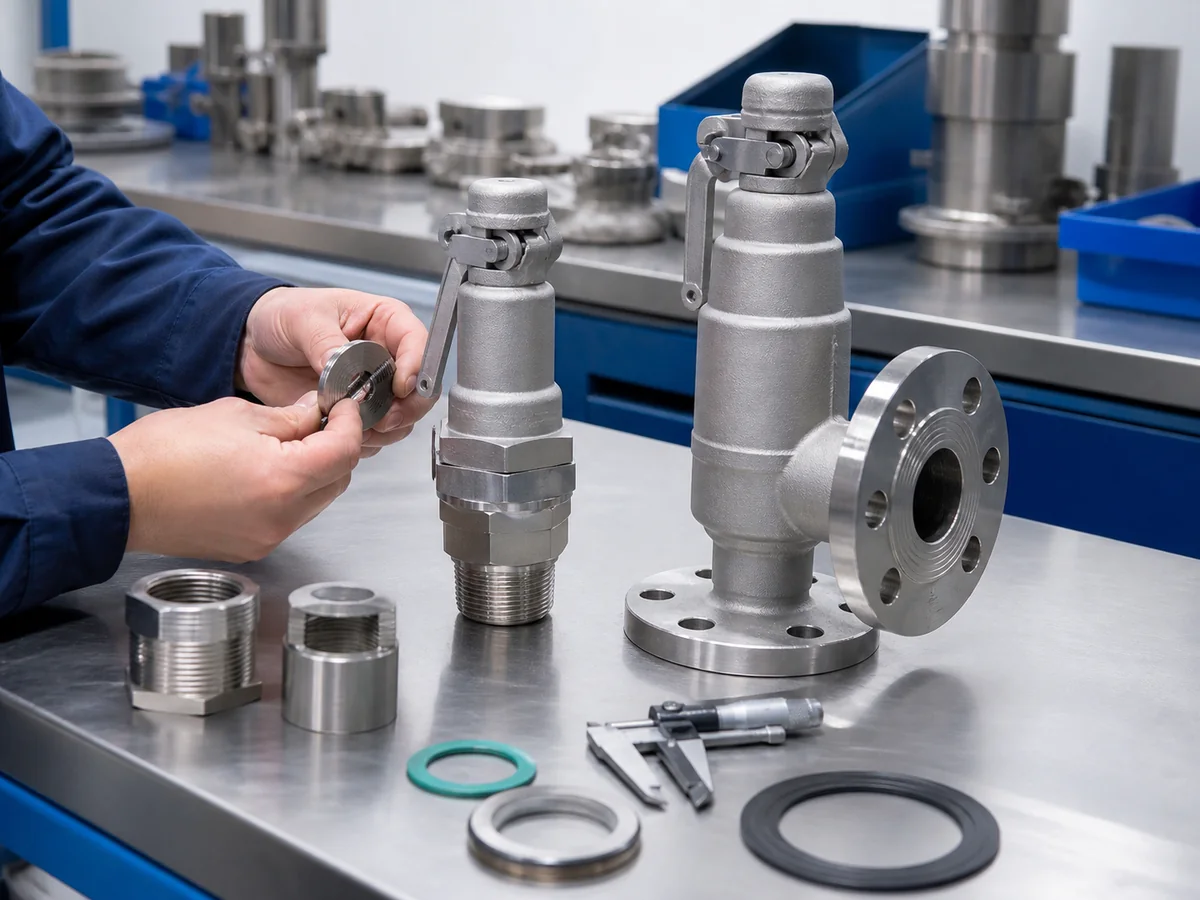
| Elemento de comparación | Válvula de seguridad roscada | Válvula de seguridad bridada | El comprador debe confirmar | Riesgo si falta |
|---|---|---|---|---|
| Tipo de conexión | Entrada, salida o ambas roscadas | Entrada, salida o ambas bridadas | Si el sitio requiere conexión roscada o bridada | Interfaz física incorrecta |
| Detalles de conexión | Estándar de rosca, tamaño, macho/hembra, entrada/salida | Estándar de brida, tamaño, clase/PN, cara, patrón de pernos | Especificación completa de la conexión | No ajuste, fugas o aclaración repetida |
| Método de sellado | Sellador de roscas, cinta, junta, O-ring o método de proyecto según el diseño | Disposición de junta, cara y apriete de pernos | Método de sellado y compatibilidad de materiales | Fugas durante la instalación o prueba de presión |
| Espacio de instalación | A menudo compacto, pero necesita acceso con llave y acoplamiento de rosca | Mayor tamaño, necesita acceso a pernos y alineación de bridas | Espacio de instalación, orientación y acceso | No se puede instalar o mantener de forma segura |
| Riesgo de reemplazo | Rosca/género incorrecto puede impedir la instalación | Norma/clase/cara/patrón de pernos de brida incorrectos pueden impedir el montaje | Placa de identificación, planos, fotos y registro de compra anterior | Válvula de reemplazo incorrecta |
| Clasificación de presión-temperatura | Debe verificarse según el diseño, material y servicio de la válvula | Debe verificarse según la clasificación, material y servicio de la brida | Presión de operación, temperatura, material del cuerpo, base de clasificación | Selección de presión-temperatura inadecuada |
| Capacidad y función de seguridad | El tamaño de conexión no demuestra la capacidad | El tamaño de la brida no demuestra la capacidad | Capacidad de alivio requerida y base | La válvula puede encajar pero no proteger el equipo |
Errores comunes de conexión y consecuencias
La mayoría de los errores en las solicitudes de cotización relacionados con la conexión provienen de tratar una característica de conexión visible como una especificación completa de la válvula. La tabla a continuación muestra errores comunes y lo que los compradores deben confirmar en su lugar.
| Error Común | Posible Consecuencia | Confirmación correcta por parte del comprador | Disparador de revisión de ZOBAI |
|---|---|---|---|
| Solicitar solo “válvula de seguridad roscada” | Estándar de rosca incorrecto, género o método de sellado incorrecto | Estándar de rosca, tamaño, macho/hembra, entrada/salida y método de sellado | Rosca desconocida o reemplazo sin hoja de datos |
| Solicitud de “válvula de seguridad bridada” solamente | Estándar de brida incorrecto, clase de presión, cara o patrón de pernos | Estándar de brida, tamaño, clase/PN, cara, junta y pernos | Brida de acoplamiento desconocida o especificación de tubería de proyecto estricta |
| Uso del tamaño de conexión como prueba de capacidad | La válvula puede encajar físicamente pero no cumplir con la función de alivio requerida | Capacidad de alivio requerida y base de capacidad | Capacidad faltante o escenario de alivio no definido |
| Ignorar el envolvente de instalación | La válvula no se puede apretar, atornillar, quitar o descargar de forma segura | Dibujo de disposición, fotos, espacio de acceso y ruta de descarga | Skid, paquete compacto o reemplazo con espacio limitado |
| Asumiendo que el estándar de conexión demuestra la certificación | El paquete de documentos puede no cumplir con los requisitos de aprobación del proyecto | Estándar de válvula aplicable, alcance de inspección y lista de documentos | El proyecto requiere certificados, informes de prueba o inspección con testigo |
Datos de conexión frente a datos de selección de válvulas de seguridad
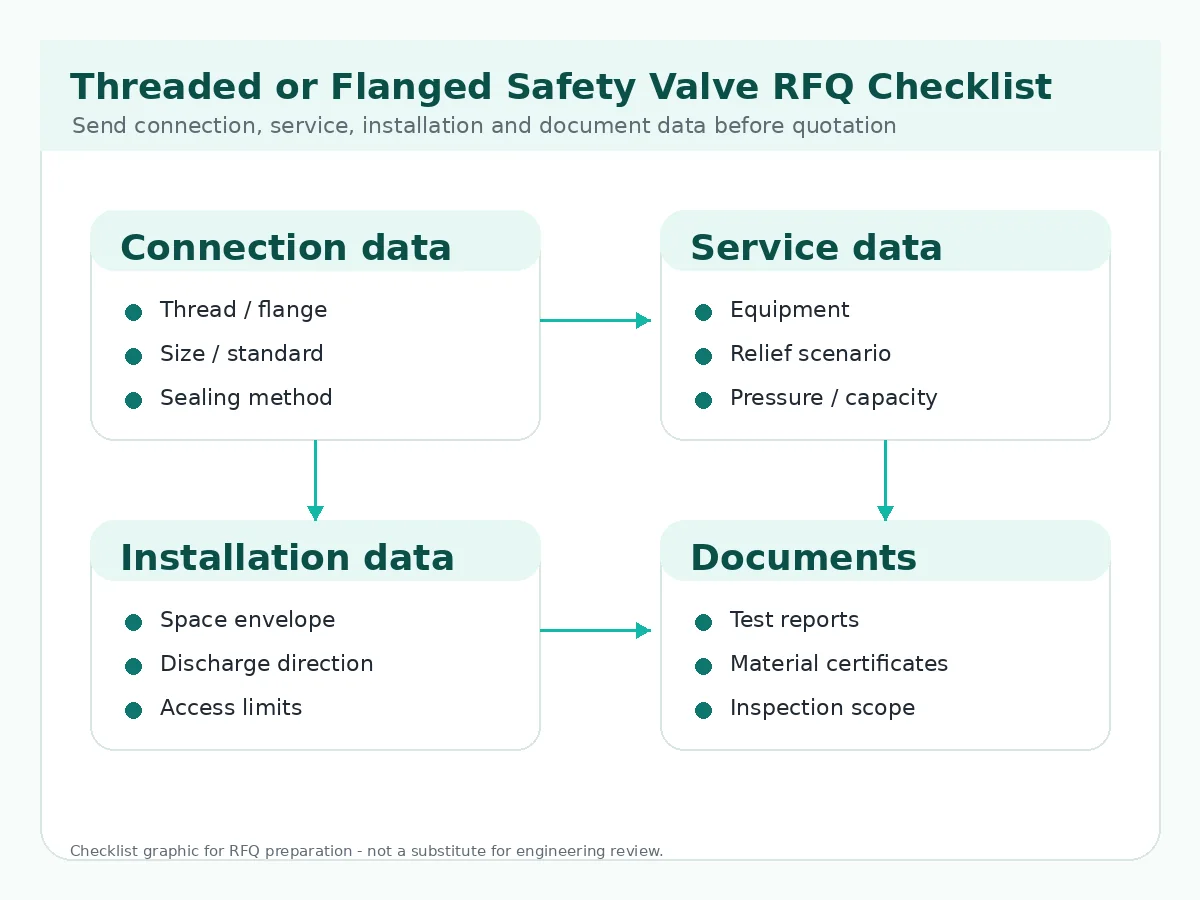
Roscada vs. bridada es una decisión de conexión, pero la selección de la válvula de seguridad es una decisión de protección de presión. Los compradores deben separar la solicitud de cotización (RFQ) en tres grupos: datos de conexión, datos de servicio y datos de documentación.
Los datos de conexión confirman el ajuste y el sellado
Los datos de conexión confirman si la válvula se puede instalar y sellar físicamente. Para las válvulas roscadas, esto incluye el estándar de rosca, el tamaño de la rosca, la conexión macho o hembra, la disposición de entrada/salida y el método de sellado. Para las válvulas bridadas, esto incluye el estándar de brida, el tamaño, la clase o el rating PN, el acabado, el patrón de pernos, la junta y la tornillería.
Los datos de servicio confirman la función de protección de presión
Los datos de servicio confirman si la válvula puede proteger el equipo. Esto incluye el equipo protegido, el escenario de alivio, el medio y la fase, la presión de operación, la presión máxima de diseño (MAWP) o presión de diseño, la presión de ajuste, la capacidad de alivio requerida, la temperatura de alivio, el riesgo de pérdida de presión en la entrada, la tubería de salida y la contrapresión si corresponde, y los requisitos de material.
Los datos de documentación confirman los requisitos de aprobación del proyecto
Los datos del documento confirman lo que el comprador necesita para la aprobación del proyecto, inspección y mantenimiento de registros. Esto puede incluir certificados de materiales, registros de calibración de presión de tarado, informes de prueba de presión, informes de prueba de estanqueidad del asiento, documentos de liberación de inspección y declaraciones de conformidad cuando corresponda.
Confirmación de conexión roscada: Rosca, Género y Método de sellado
Las solicitudes de cotización (RFQ) de válvulas de seguridad roscadas requieren detalles precisos de la conexión. La conexión no se puede confirmar solo con la palabra “roscada”.
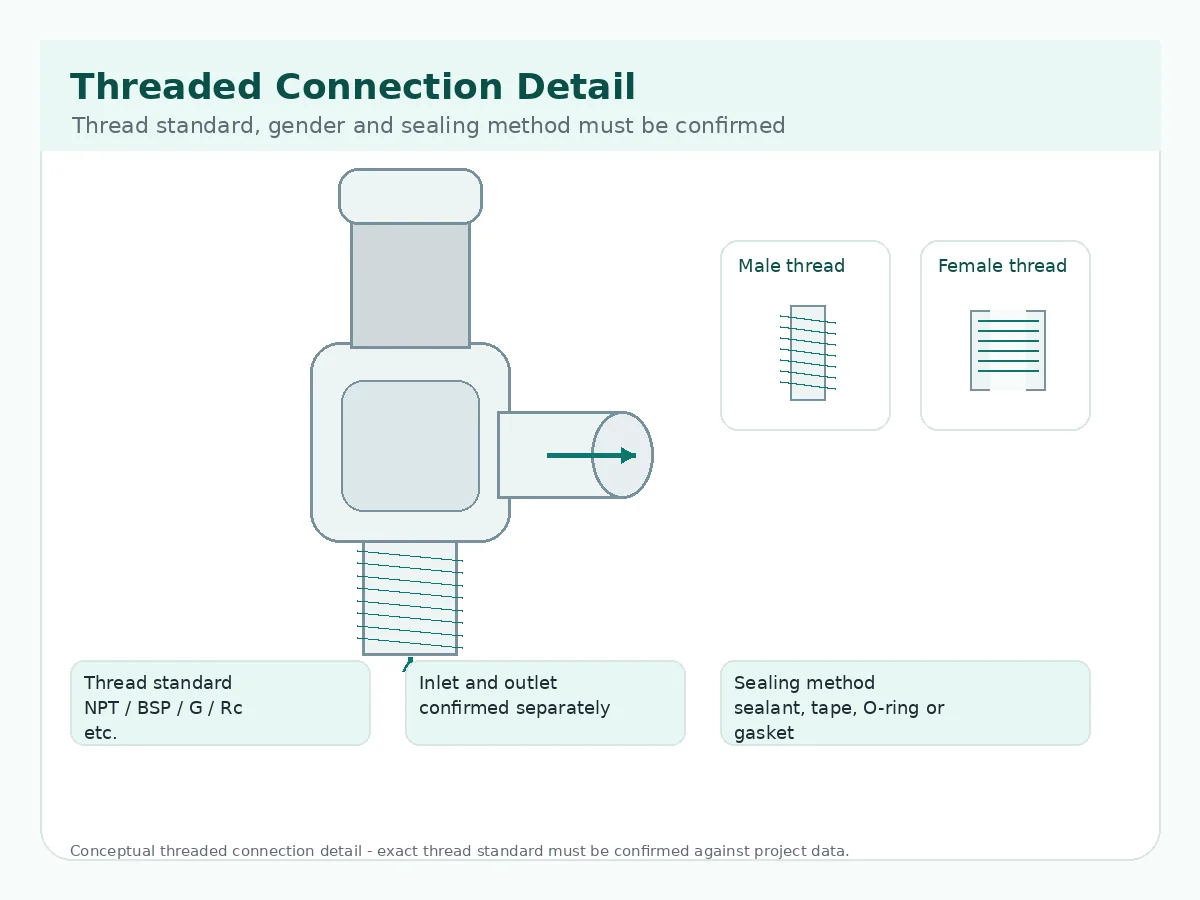
Rosca Macho vs. Rosca Hembra
Las roscas macho y hembra no son intercambiables. El comprador debe especificar si la entrada y la salida son macho o hembra. Para reemplazo, las fotos deben mostrar tanto la conexión de la válvula como la conexión del equipo o tubería correspondiente.
Rosca de Entrada vs. Rosca de Salida
La entrada y la salida pueden tener diferentes requisitos de conexión. La entrada forma parte de la trayectoria de contención de presión desde el equipo protegido. La salida puede conectarse a tuberías de descarga, venteo, un silenciador, una ubicación de descarga segura o una disposición de descarga abierta, según la aplicación.
El sellador no puede compensar una conexión incorrecta
El uso de sellador adicional, cinta o fuerza no es una solución segura para una rosca incorrecta. Si el estándar de rosca o el género son incorrectos, la conexión debe corregirse. Para el diseño del sitio y el contexto de la tubería, consulte el guía de instalación de válvulas de seguridad.
Confirmación de conexión bridada: Estándar, Junta y Pernos
Las solicitudes de cotización (RFQ) de válvulas de seguridad bridadas requieren información completa de la brida. Una conexión bridada puede no coincidir, incluso cuando el tamaño nominal parece correcto.
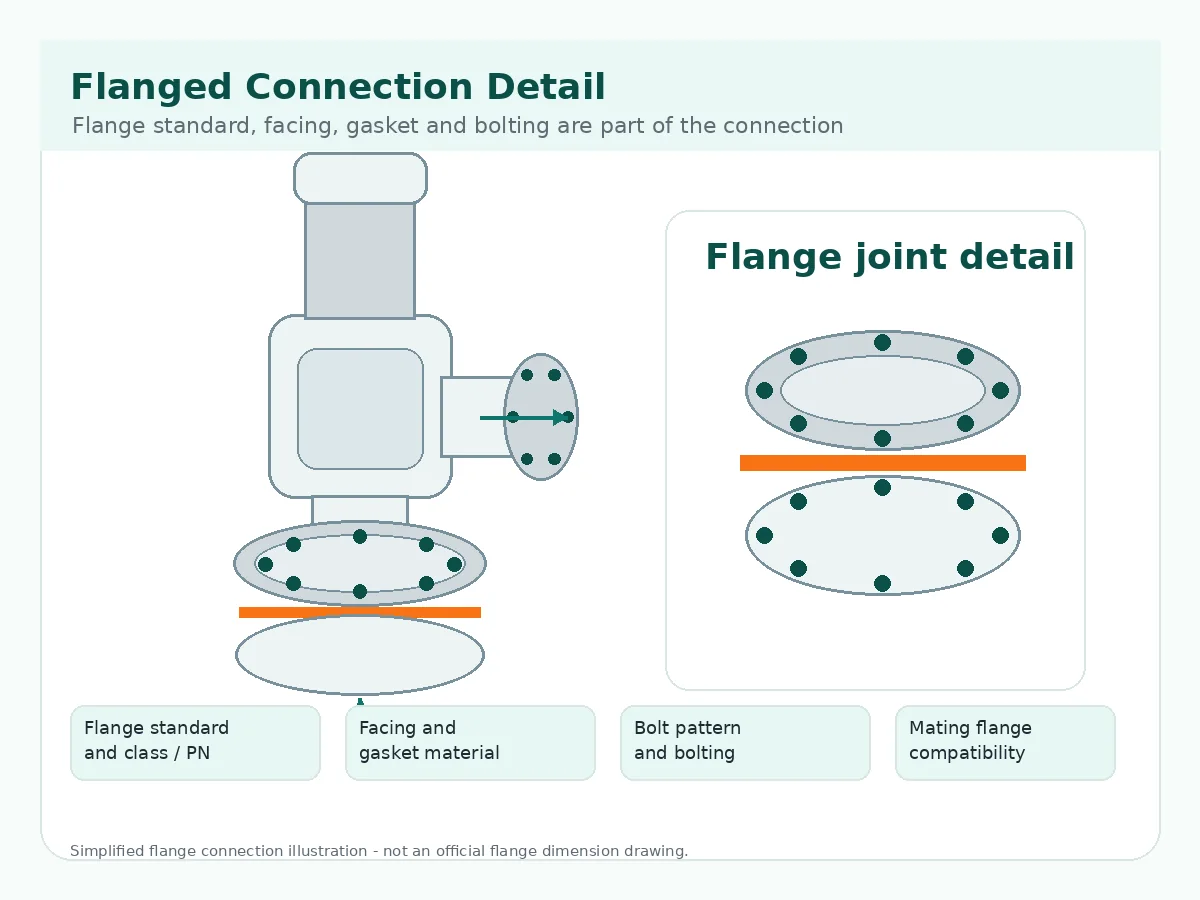
Estándar de Brida y Clase de Presión
La solicitud de cotización (RFQ) debe identificar la norma de brida y la clase de presión o clasificación PN. La brida de acoplamiento y la brida de la válvula deben ser compatibles. Si la norma de brida es desconocida, el comprador debe enviar la especificación de la tubería, el dibujo del equipo o fotos claras de la válvula y brida existentes.
Cara, Junta y Patrón de Pernos
La cara de la brida, el tipo de junta y el patrón de pernos deben coincidir con la conexión de acoplamiento. Una desalineación puede impedir el montaje o causar fugas. La selección de la junta también depende del medio, la temperatura, la presión y la especificación del proyecto. Para el contexto de las dimensiones de la brida, consulte Dimensiones de bridas ASME B16.5.
Por qué “Brida DN50” No Es Suficiente
“Brida DN50” o “brida de 2 pulgadas” solo identifica un tamaño nominal. No identifica la norma de brida, la clasificación/clase, la cara, el patrón de pernos, el tipo de junta o el requisito de pernos. Tampoco demuestra la capacidad de la válvula.
Espacio de Instalación, Acceso de Mantenimiento y Riesgo de Reemplazo
El tipo de conexión afecta la instalación y el mantenimiento. El comprador debe revisar la disposición del sitio antes de decidir si una válvula de seguridad roscada o bridada es apropiada.
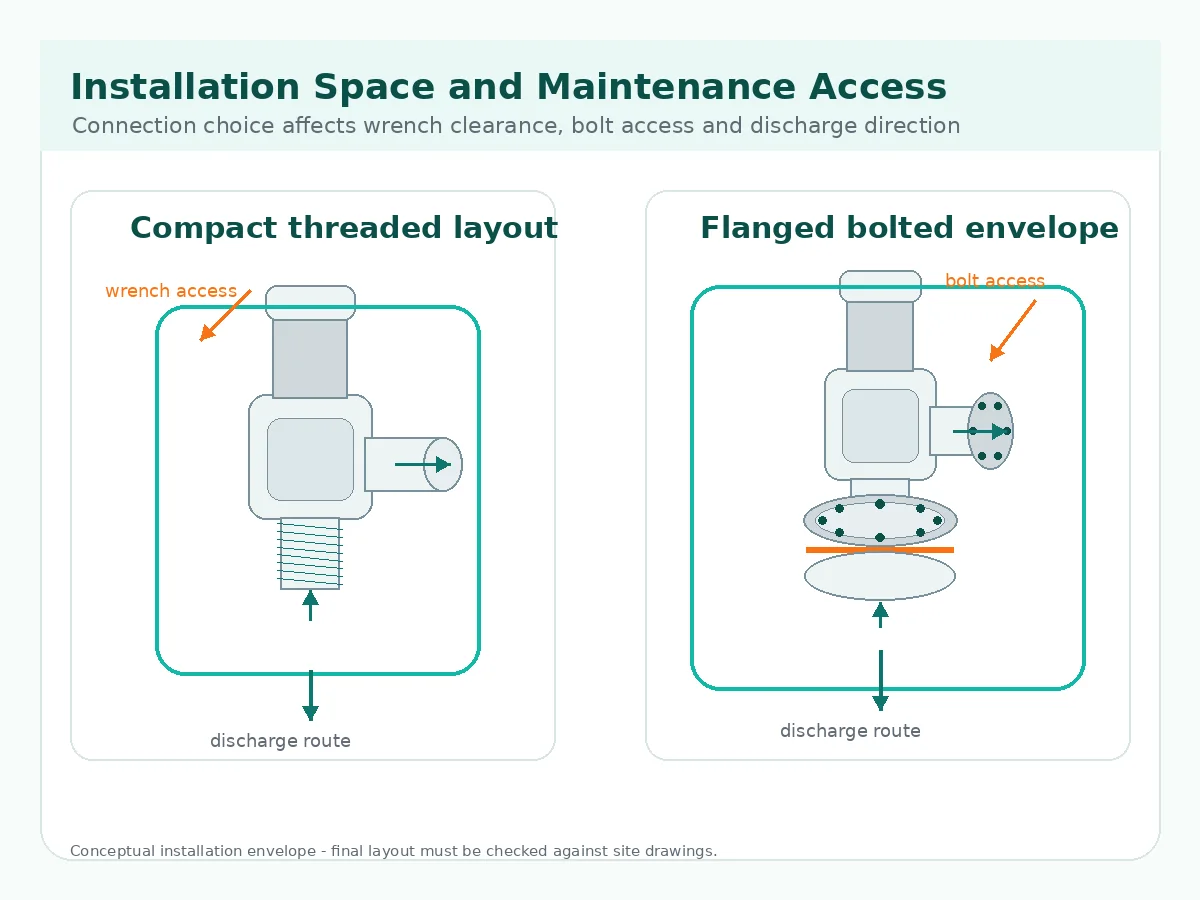
Compacto No Siempre Significa Más Fácil
Las válvulas roscadas pueden ser compactas, pero aún necesitan espacio para el acceso de la llave, el acoplamiento correcto de la rosca, la aplicación de sellador si es necesario y una orientación segura. Una conexión compacta aún puede ser difícil si la válvula está cerca de una pared, el bastidor de un skid, la tubería de instrumentación o la tubería de descarga.
Acceso a Pernos y Reemplazo de Juntas
Las conexiones bridada requieren suficiente espacio libre para pernos, tuercas, herramientas y el reemplazo de juntas. Si la válvula está cerca de otro componente, puede ser difícil alinear la brida, insertar los pernos o retirar la válvula durante el mantenimiento.
Revisión de tuberías de salida, soporte y contrapresión
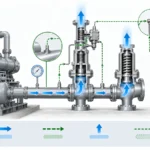
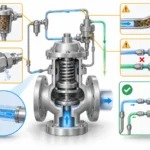
Si la salida está tuberizada, distribuida, dirigida a un colector o conectada a una línea de descarga larga, la disposición de la salida puede requerir una revisión adicional. Las tuberías de salida pesadas no deben dejarse sin soporte por el cuerpo de la válvula. La dirección de descarga, el drenaje, la fuerza de reacción, la ventilación segura y la contrapresión superpuesta o acumulada pueden afectar la configuración de la válvula y los requisitos de instalación. Si la tubería de salida está conectada a un colector o cabezal, puede ser necesaria una revisión de la contrapresión antes de la configuración final de la válvula.
Las fotos de válvulas existentes reducen el riesgo de RFQ
Para reemplazo, los compradores deben enviar fotos del cuerpo completo de la válvula, placa de identificación, conexión de entrada, conexión de salida, conexión de tubería o equipo a juego, espacio de instalación circundante, tubería de descarga, adaptadores, reductores y soportes si están presentes.
Presión, Temperatura, Medio y Material Siguen Controlando la Selección Final
La elección final entre válvulas de seguridad roscadas y bridadas no puede basarse únicamente en el tipo de conexión. La válvula debe coincidir con la función de alivio de presión y el entorno de servicio.
La Presión de Ajuste No Es lo Mismo que la Clasificación de la Conexión
La presión de ajuste es la presión a la que se ajusta la válvula de seguridad para que se abra. La clase de brida, la clasificación PN o la clasificación de la conexión roscada no definen automáticamente la presión de ajuste. Los compradores deben proporcionar la presión de operación, MAWP o presión de diseño y la presión de ajuste requerida por separado.
La Capacidad de Alivio Requerida No se Demuestra por el Tamaño de la Conexión
La capacidad de alivio requerida depende del escenario de alivio que rige, el medio, la presión de alivio, la temperatura de alivio y el diseño de válvula seleccionado. El tamaño de la conexión por sí solo no puede demostrar la capacidad. Una válvula con una cierta conexión roscada o bridada aún necesita una revisión de capacidad contra los datos del fabricante. Para contexto de dimensionamiento, consulte la guía de ZOBAI Dimensionamiento de válvulas de seguridad API 520 guía.
El Medio y la Temperatura Afectan la Selección de Material, Asiento y Junta
El medio y la temperatura afectan el material del cuerpo, el material del asiento, el material del sello, el material de la junta, el material del resorte y la selección del trim. El vapor, el gas, el líquido, el servicio corrosivo, el servicio a alta temperatura y el servicio con suciedad pueden requerir diferentes detalles de construcción. Para un contexto de clasificación más amplio, revise la guía de ZOBAI clasificaciones de presión-temperatura guía.
Flujo de trabajo de reemplazo antes de la solicitud de cotización
Los compradores que reemplazan a menudo comienzan con una válvula antigua y una solicitud corta como “igual que la existente”. Esto no es suficiente para un reemplazo de válvula de seguridad. La válvula existente puede no haber sido seleccionada correctamente, las condiciones de servicio pueden haber cambiado o la documentación original puede faltar.
Verificar la placa de identificación y la hoja de datos existente
La placa de identificación puede mostrar el tamaño, la presión de ajuste, el material, la referencia del modelo o la información del fabricante. La hoja de datos antigua o la orden de compra pueden mostrar el tipo de conexión, el estándar de brida, el estándar de rosca, el material, los requisitos de prueba y el alcance de la documentación.
Fotografiar la conexión y el espacio de instalación
Las fotos deben mostrar la válvula desde múltiples ángulos. Para válvulas roscadas, incluya la conexión roscada y la conexión de acoplamiento. Para válvulas bridadas, incluya la brida, los pernos, el área de la junta, la brida de acoplamiento y el espacio circundante.
Marcar los elementos desconocidos como “Por confirmar”
Los datos desconocidos no deben adivinarse. Si el comprador no conoce el estándar de brida, el estándar de rosca, la presión de ajuste, la capacidad requerida, el material o el requisito de documentación, debe marcarse como “por confirmar”.”
Lista de verificación de parámetros de solicitud de cotización / selección para válvulas de seguridad roscadas o bridadas
Una solicitud de cotización completa debe incluir datos de conexión, datos de servicio y datos de documentación. La siguiente lista de verificación se puede utilizar antes de enviar una solicitud a ZOBAI.
| Parámetro | Qué proporcionar | Por qué es importante | Riesgo de datos faltantes |
|---|---|---|---|
| Equipo protegido | Salida de equipo o tubería, depósito, compresor, tubería, skid, salida de bomba u otro equipo | Define qué protege la válvula | Base de protección incorrecta |
| Escenario de alivio | Expansión térmica, salida bloqueada, fallo del regulador, caso de incendio, alteración del proceso o escenario definido por el proyecto | Soporta la revisión de la función de seguridad y la capacidad | Suposición de selección incorrecta |
| Medio y fase | Servicio de gas, vapor, vapor, líquido, bifásico, corrosivo, sucio o especial | Afecta al dimensionamiento, materiales, asiento/sello y descarga | Material o configuración de válvula incorrectos |
| Datos de presión | Presión de operación, MAWP/presión de diseño y presión de tarado | Separa la presión de servicio, la base del equipo y la presión de apertura de la válvula | Resorte, tarado o base de presión incorrectos |
| Capacidad de alivio requerida | Caudal y base de cálculo si está disponible | Necesario para el dimensionamiento final y la selección de la válvula | La válvula puede encajar pero fallar en su función de seguridad |
| Temperatura de alivio | Temperatura durante la condición de alivio | Afecta la idoneidad del material, sello, junta y temperatura-presión | Suposición incorrecta de material o clasificación |
| Datos de conexión roscada | Estándar de rosca, tamaño, macho/hembra, entrada/salida y método de sellado | Confirma el ajuste y sellado roscado | Rosca incorrecta, fuga o no ajuste |
| Datos de conexión bridada | Norma de brida, tamaño, clase/PN, cara, patrón de pernos, junta y pernos | Confirma el ajuste y sellado bridado | Desajuste de pernos, problema de junta o fuga |
| Datos de instalación | Límites de espacio, orientación, dirección de descarga, acceso de mantenimiento y tubería de salida | Confirma el ajuste en sitio y la ruta de descarga segura | No se puede instalar o mantener de forma segura |
| Contrapresión / tubería de salida | Indique si la salida está abierta, tuberizada, en manifold o sujeta a presión superpuesta | Puede afectar la configuración, la estabilidad y la revisión de la descarga | Disposición de salida incorrecta o contrapresión no revisada |
| Materiales | Requisitos de cuerpo, bonete, asiento, sello, resorte, trim y junta | Afecta la compatibilidad del servicio | Corrosión, fuga o servicio inadecuado |
| Documentos | Informe de prueba, certificado de material, registro de presión de tarado, alcance de inspección y requisito de norma | Define los documentos de aprobación y entrega | Documentos faltantes o retraso en la aprobación |
Normas y documentación que los compradores pueden necesitar confirmar
Las normas de conexión, las normas de válvulas de seguridad y las especificaciones del proyecto están relacionadas pero no son lo mismo. Un comprador no debe asumir que la designación de una norma de brida o un tipo de rosca completa la especificación de la válvula de seguridad.
La norma de conexión no es lo mismo que la norma de válvula de seguridad
Una norma de rosca o brida define la interfaz de conexión. Una norma de válvula de seguridad o una especificación de proyecto pueden definir otros requisitos, como la presión de tarado, la documentación de la capacidad, las pruebas, los registros de materiales, el alcance de la inspección y el marcado.
La norma de brida no prueba la certificación de la válvula
Una válvula bridada puede utilizar una determinada norma de brida, pero eso no demuestra automáticamente que la válvula tenga una certificación o aprobación específica para cada proyecto. El cumplimiento y la certificación dependen del modelo seleccionado, el alcance de la fabricación, las pruebas, la documentación y los requisitos del proyecto.
Solicite claramente los documentos en la fase de RFQ
Los requisitos de documentación deben indicarse antes de la cotización. Estos pueden incluir el certificado de material, el informe de prueba hidrostática o de carcasa, el registro de calibración de la presión de tarado, el informe de estanqueidad del asiento si es necesario, la nota de liberación de inspección, la hoja de datos y la información de la placa de características. Para la navegación de normas, consulte las normas de válvulas de seguridad página.
Pida a ZOBAI que revise sus parámetros de conexión y operación
Antes de elegir una válvula de seguridad roscada o bridada, envíe a ZOBAI tanto los detalles de la conexión como las condiciones de operación. Una RFQ completa ayuda al equipo de ingeniería a verificar si la consulta es lo suficientemente clara para la cotización y si se requieren datos adicionales antes de la selección.
- Tipo de conexión: roscada o bridada.
- Norma de rosca, tamaño, conexión macho/hembra y método de sellado si es roscada.
- Norma de brida, tamaño, clase/clasificación, cara, junta y pernos si es bridada.
- Equipo protegido y escenario de alivio.
- Medio y fase.
- Presión de operación, MAWP/presión de diseño y presión de ajuste.
- Capacidad de alivio requerida y base de capacidad si está disponible.
- Temperatura de alivio, requisitos de material y documentación.
- Envolvente de instalación, dirección de descarga, tubería de salida y condición de contrapresión si corresponde.
- Fotos de la válvula existente, placa de características, hoja de datos o dibujo para reemplazo.
ZOBAI puede revisar el conjunto de parámetros enviado antes de la cotización. La selección final de la válvula de seguridad depende de las condiciones operativas reales, el escenario de alivio, los datos del fabricante, la versión de la norma aplicable, la especificación del proyecto y los requisitos regulatorios locales.
Preguntas frecuentes sobre válvulas de seguridad roscadas vs. bridadas
¿Cuál es la diferencia entre una válvula de seguridad roscada y una válvula de seguridad bridada?
Una válvula de seguridad roscada utiliza conexiones roscadas, mientras que una válvula de seguridad bridada utiliza conexiones de brida atornilladas con requisitos de junta y tornillería. El comprador debe confirmar el estándar de conexión, tamaño, método de sellado, espacio de instalación, clasificación de presión-temperatura, medio, material y documentación.
¿Cuándo deben los compradores elegir una válvula de seguridad roscada?
Una válvula de seguridad roscada puede considerarse cuando la conexión del equipo o la tubería es roscada y las condiciones de servicio, la especificación del proyecto, el espacio de instalación y los requisitos de documentación lo permiten. Los compradores aún deben confirmar el estándar de rosca, el tamaño, la conexión macho/hembra, el método de sellado y los datos de servicio antes de la cotización.
¿Cuándo deben los compradores elegir una válvula de seguridad bridada?
Una válvula de seguridad bridada puede ser necesaria cuando la especificación de la tubería requiere conexiones bridadas, cuando el acceso de mantenimiento favorece el desmontaje atornillado, o cuando el proyecto requiere un estándar de brida, cara, junta y disposición de pernos definidos.
¿Es una válvula de seguridad roscada adecuada para servicio de alta presión?
Depende del diseño de válvula seleccionado, el detalle de conexión, el material, la temperatura de servicio, la norma aplicable y la especificación del proyecto. El tipo de conexión roscada por sí solo no demuestra la idoneidad de presión.
¿El tamaño de la brida demuestra la capacidad de la válvula de seguridad?
El tamaño de la brida no demuestra la capacidad de la válvula de seguridad. La capacidad depende de la carga de alivio requerida, el escenario de alivio, las propiedades del fluido, la presión de alivio, la temperatura de alivio, el diseño de la válvula y los datos del fabricante.
¿Qué información de brida debo enviar para una solicitud de cotización de válvula de seguridad bridada?
Envíe la norma de brida, el tamaño nominal, la clase de presión o el índice PN, el tipo de cara, el patrón de pernos, el requisito de junta, el requisito de pernos, los detalles de la brida de acoplamiento y la especificación de tubería del proyecto si están disponibles.
¿Qué información de rosca debo enviar para una solicitud de cotización de válvula de seguridad roscada?
Envíe el estándar de rosca, el tamaño nominal de la rosca, la conexión macho o hembra, los detalles de la rosca de entrada y salida, el método de sellado, la conexión de tubería de campo y las fotos de la válvula existente si se trata de un reemplazo.
¿Por qué ZOBAI necesita información sobre juntas y tornillería?
Para conexiones bridadas, la junta, el asiento de la brida y la tornillería forman parte del sistema de sellado. Si faltan los requisitos de la junta o la tornillería, la cotización podría no coincidir con la especificación del proyecto o la válvula podría no ser instalable como se espera.
¿Puedo reemplazar una válvula roscada por una válvula bridada?
Posiblemente, pero no solo por el nombre de la conexión. Reemplazar una válvula roscada por una bridada puede requerir modificación de tuberías, revisión del espacio, nueva brida de acoplamiento, junta, pernos, disposición de descarga y aprobación de ingeniería.
¿Qué documentos debo solicitar antes de pedir una válvula de seguridad?
Los requisitos de documentación pueden incluir ficha técnica, certificado de material, registro de calibración de presión de tarado, informe de pruebas, registro de inspección, informe de estanqueidad de asiento si se requiere y declaración de norma aplicable cuando se confirme. El paquete de documentos exacto debe indicarse en la fase de RFQ.
Enfoque de revisión técnica
El enfoque de la revisión técnica para esta página es la comunicación de RFQ en torno a la selección de la conexión de válvulas de seguridad roscadas y bridadas. Los límites de ingeniería revisados incluyen el tipo de conexión, datos de rosca o brida, método de sellado, presión de ajuste frente a MAWP/presión de diseño, tamaño de conexión frente a capacidad de alivio requerida, envolvente de instalación, tubería de salida, disparador de revisión de contrapresión, entradas de material y requisitos de documentación.
Esta página no verifica un modelo de válvula específico, el alcance de la certificación, la capacidad de alivio certificada o la aprobación del proyecto. Estos elementos deben confirmarse con el modelo de válvula seleccionado, los datos del fabricante, la versión de la norma aplicable, la especificación del proyecto y los requisitos regulatorios locales.
Nota de ingeniería
Este artículo apoya la comunicación del comprador y la preparación de RFQ. No reemplaza la revisión de ingeniería del proyecto, la verificación de la hoja de datos del fabricante, el cálculo formal de alivio, la revisión de códigos o la aprobación regulatoria local. La selección final depende de las condiciones operativas reales, el escenario de alivio, los datos del fabricante, la versión de la norma aplicable, la especificación del proyecto y los requisitos regulatorios locales.