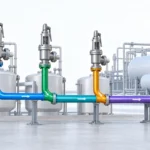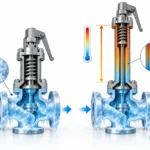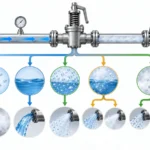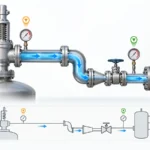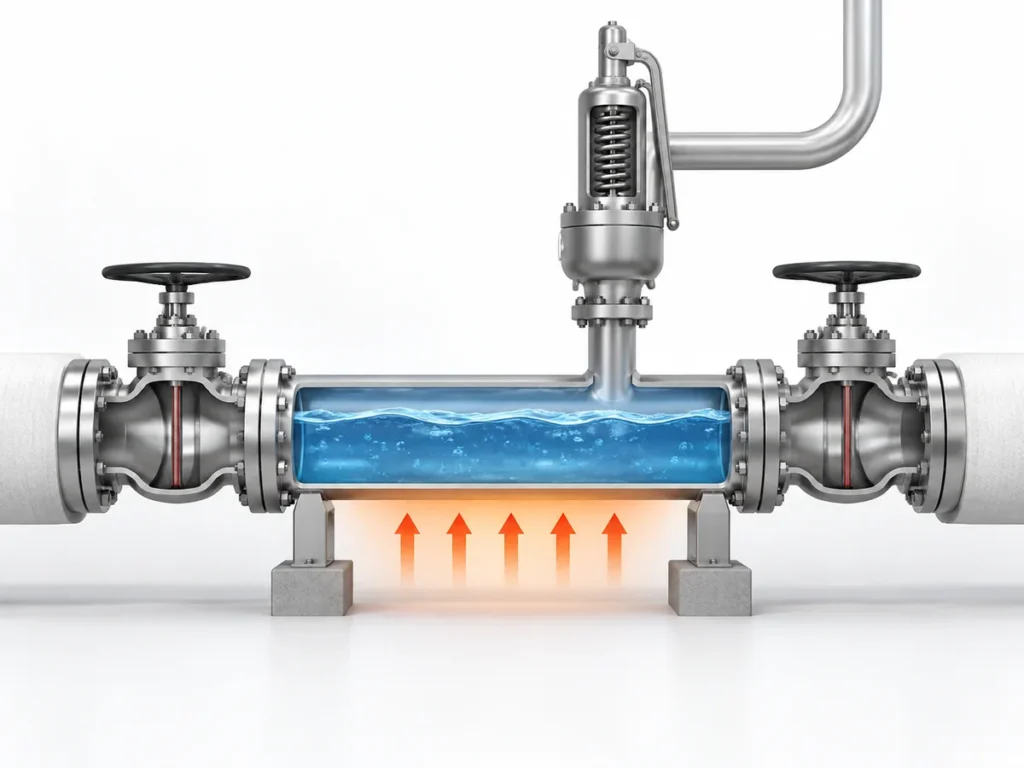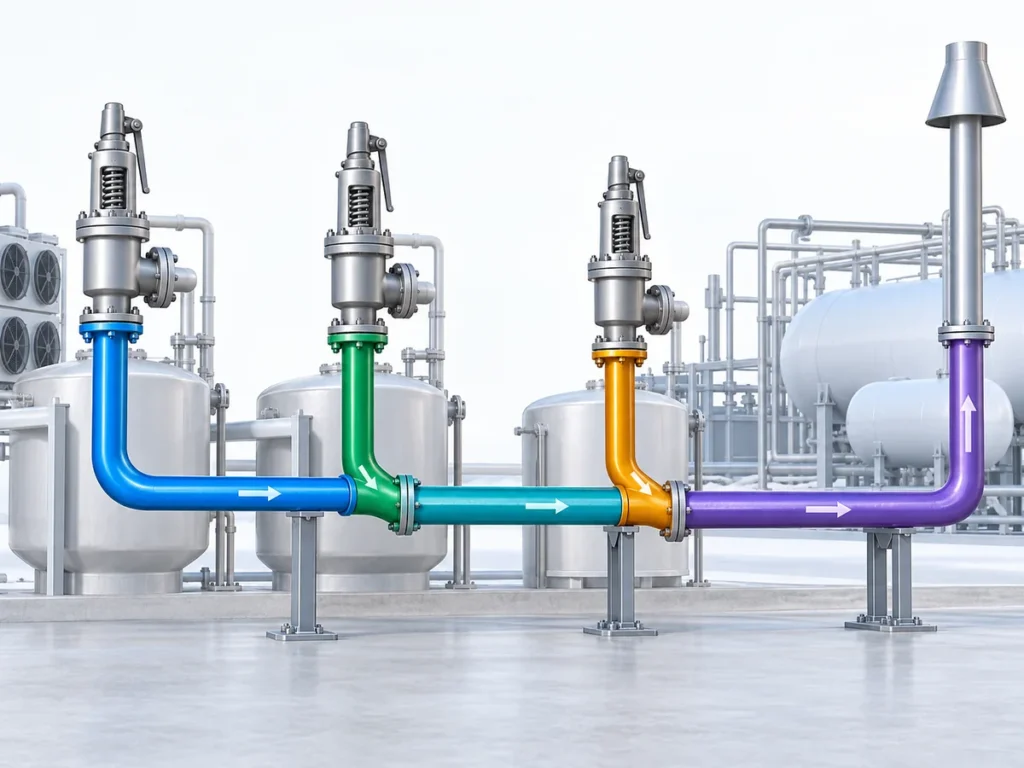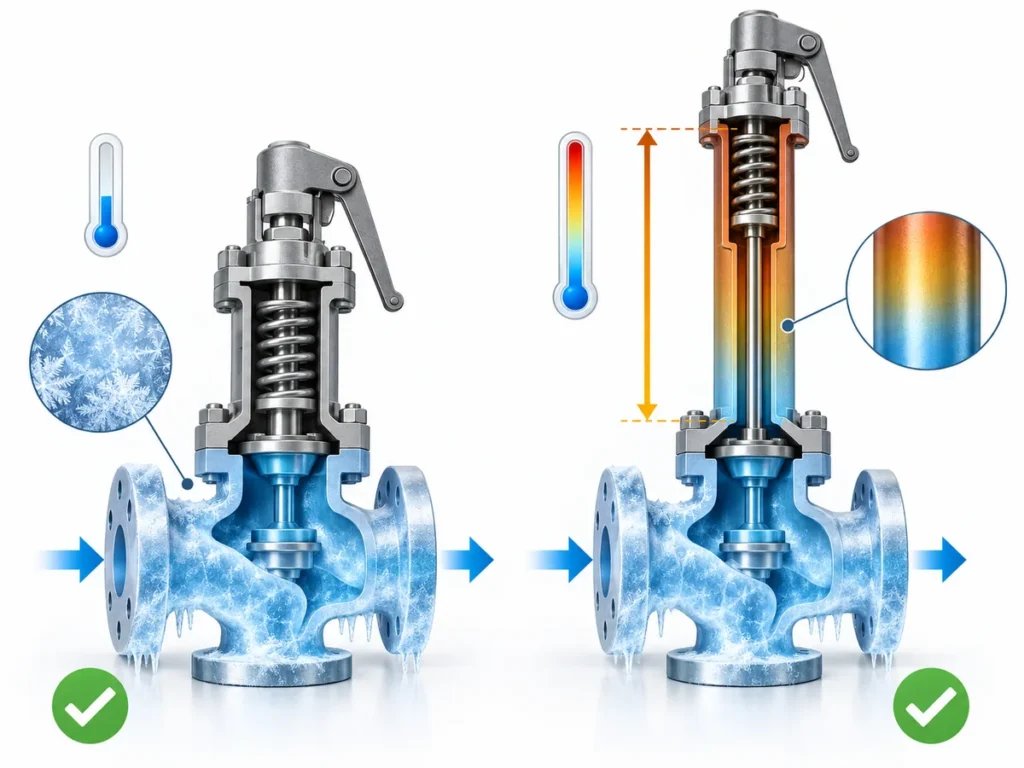
تعرّف على الفرق بين اهتزاز صمام الأمان والرفرفة والفوَران، وما الأدلة التي تميّز بينها، والحالات المشابهة الشائعة، ومتى تظل الحاجة قائمة إلى تحليل السبب الجذري.

A noisy or vibrating safety valve is not automatically chattering. The first job is to identify
what the valve is doing before deciding why it is doing it. Chatter and flutter are rapid valve-motion conditions;
simmer is a pre-opening fluid-escape condition. The most useful separator between chatter and flutter is whether the
disc repeatedly returns to the seat.
That gives maintenance and reliability teams a better starting point than diagnosing from sound alone. A recording
can document that an event was noisy; it cannot, by itself, prove disc-to-seat impact, inlet starvation, excessive
back pressure, oversizing, a ring-setting problem, or any other root cause.
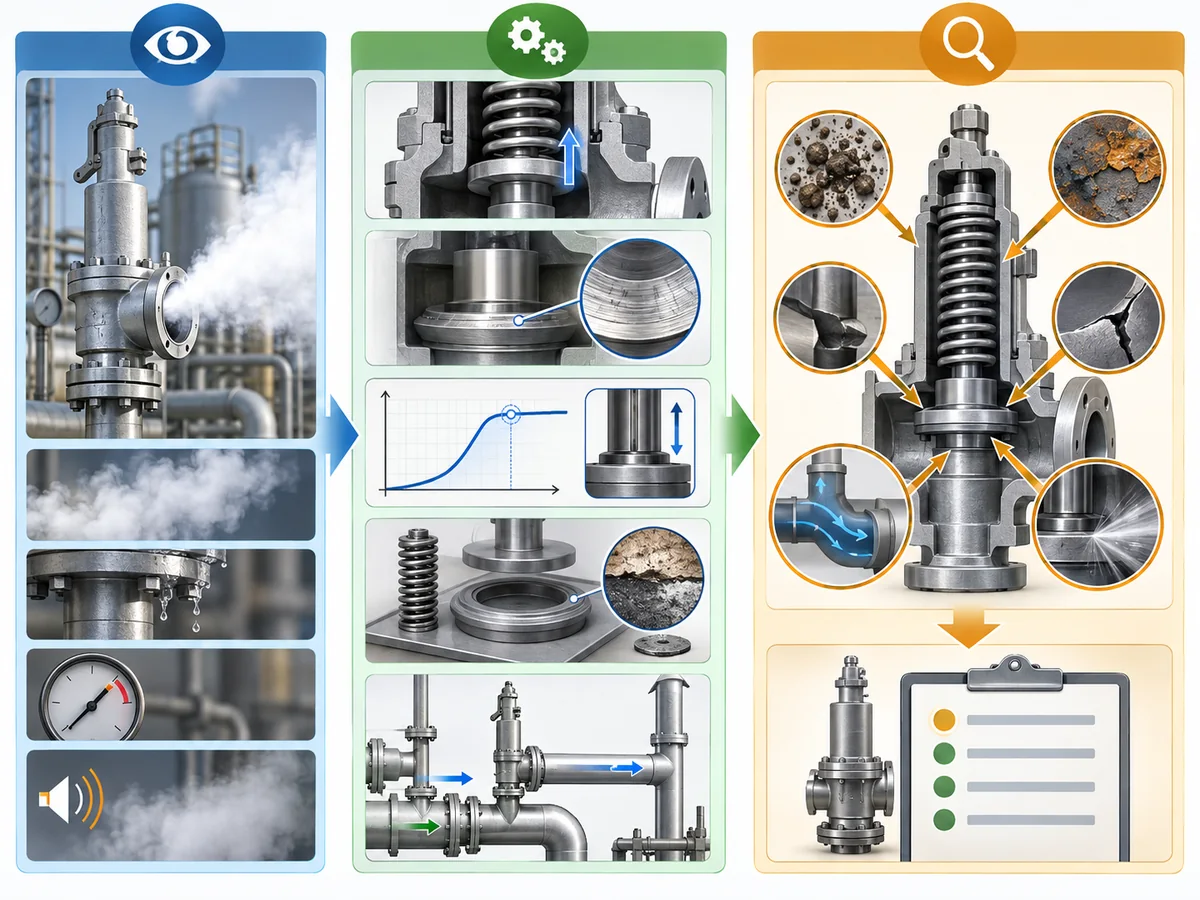
The practical workflow is:
observe the event → classify the behavior → collect dynamic evidence → test possible contributors → inspect
the valve and installed system → decide corrective action.
الخبط مقابل الرفرفة مقابل الغليان البطيء: ما الفرق الجوهري؟
In API 520 Part I terminology, chatter, flutter and simmer are separated by the physical behavior of the
pressure-relief valve rather than by how alarming the event sounds. API’s current standards program identifies
API 520 Part I as the sizing and selection document and API 520 Part II as the installation document; manufacturer
engineering references use those terms consistently when describing instability.
API 520 الجزء الأول
is the primary standards reference for the terminology and sizing/selection context. A public
LESER engineering manual
explicitly reproduces the API distinction between chatter and flutter and is useful for explaining the physical
boundary without treating a field sound description as a diagnosis.
| السلوك | ما الذي يحدث | علاقته بالتلامس مع المقعد | ما يمكن أن يثبته الملاحظة |
|---|---|---|---|
| ارتجاج | The moving assembly reciprocates rapidly and the disc repeatedly returns to the seat. | Repeated disc-to-seat contact is the defining separator from flutter. | Supports chatter only when rapid motion and repeated seating can be established from credible evidence. |
| رفرفة | The moving assembly reciprocates rapidly during an unstable open condition. | The disc does not repeatedly contact the seat during the rapid motion. | Supports flutter when rapid motion is established without repeated seating. |
| همهمة | In compressible-fluid service, fluid escapes across the seating surfaces before the valve fully opens. | الفتح والإغلاق المتكرر عالي التردد ليس السمة المميزة. | Supports a pre-opening escape condition; it is not a severity grade of chatter or flutter. |
These terms do not form a mild-to-severe scale. Chatter and flutter describe unstable motion. Simmer describes a
different point in the opening sequence: compressible fluid escaping at the seating surfaces below set pressure
before full opening.
The distinction matters because the next diagnostic question changes with the behavior. Chatter directs attention
to rapid recontact and impact as well as the instability itself. Flutter keeps the investigation on unstable motion
without repeated seating. Simmer directs the review toward pre-opening tightness, seating condition, adjusting-ring
behavior where applicable, operating margin and the valve’s specific test/service context.
Repeated opening, seat leakage and a loud relief event should not automatically be assigned one of these labels.
Sequence, valve motion and pressure context matter more than the sound descriptor.
كيف تميز بين الاهتزاز والرفرفة؟
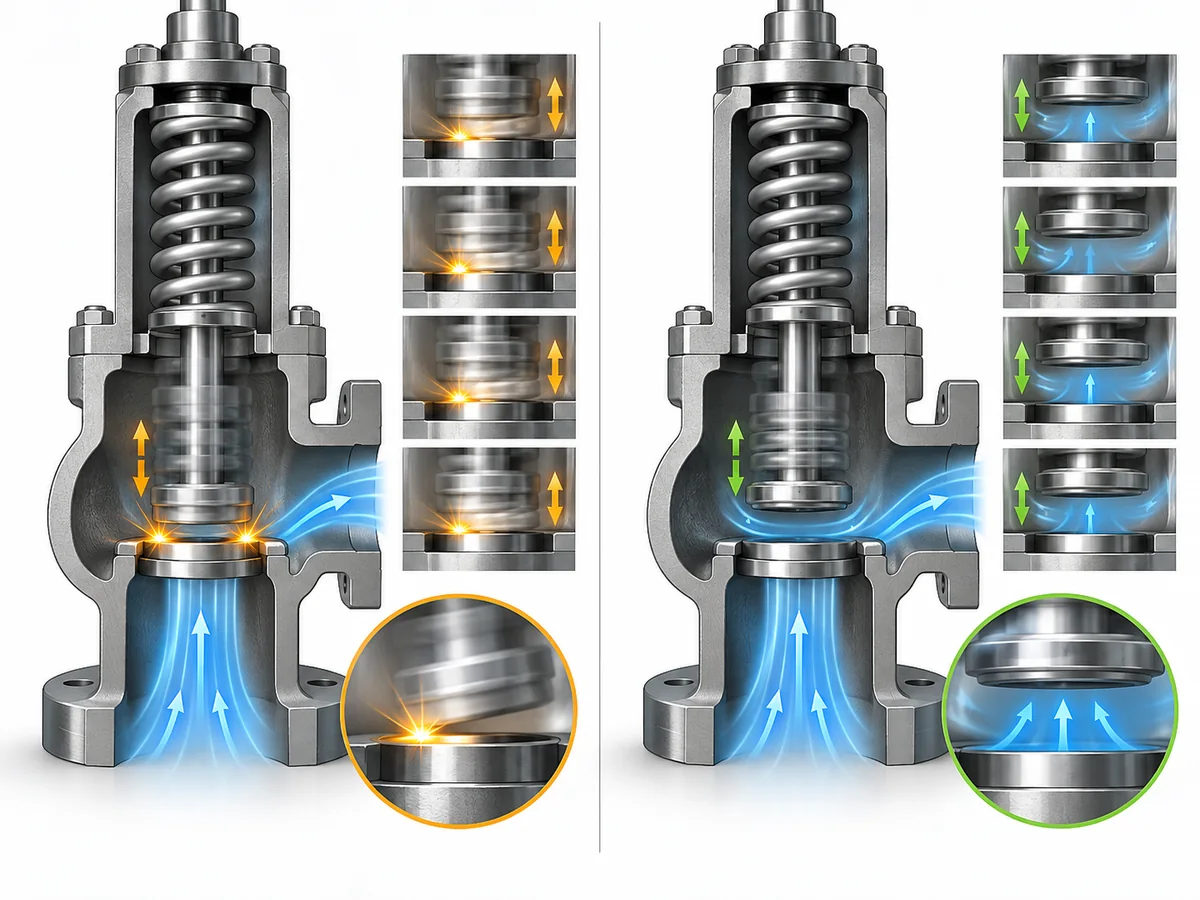
To separate chatter from flutter, look for repeated disc-to-seat contact during rapid reciprocating motion.
The classification is mechanical, not acoustic.
During chatter, rapid opening and closing repeatedly brings the disc back against the seat. During flutter, the
valve’s moving assembly also reciprocates rapidly, but the disc does not repeatedly return to the seat. LESER’s
engineering manual uses this same API-based distinction and treats both conditions as instability that deserves
investigation.
Noise may be the first clue that something is wrong, but it is not deciding evidence. Operators may report rattling,
buzzing, hammering, vibration or a rapid metallic sound. Piping, supports and connected equipment can transmit or
amplify the event, so the recorded sound cannot show by itself whether the disc is striking the seat.
Rapid reciprocating motion with repeated seat contact supports chatter. Rapid reciprocating motion without
repeated seat contact supports flutter.
If the evidence establishes only noise, vibration or a fluctuating process signal, keep the classification provisional.
“Valve instability observed” is more defensible than calling an event chatter or flutter without motion evidence.
The distinction also matters mechanically. Flutter can interfere with expected lift and capacity and can produce wear.
Chatter adds repeated seat-impact loading. The condition of a particular installed valve still cannot be determined
from the behavior label alone; inspection and test evidence are required.
لماذا يختلف السَّمَر (simmer) عن الاهتزاز التصادمي والرفرفة؟
Simmer sits in a different part of the valve’s operating sequence. In API terminology, it is a pre-opening
compressible-fluid escape condition at the seating surfaces. Rapid reciprocating motion is not the defining feature.
Calling simmer “mild chatter” therefore creates the wrong mental model. Chatter involves rapid unstable motion with
repeated seating; simmer concerns fluid escape before full opening.
Simmer is also not a generic label for every seat leak. Seat leakage can occur at other pressures or after other
events and can be caused by damaged seating surfaces, debris, misalignment, piping strain or repair/adjustment
problems. Baker Hughes troubleshooting guidance treats simmer, seat leakage and chatter as separate malfunctions
with different possible causes.
Baker Hughes safety-valve troubleshooting documentation
separates simmer from chatter and seat leakage rather than treating them as one failure mode. National Board
guidance on adjusting-ring behavior likewise shows that poor adjustment can change opening/reclosing behavior and
can contribute to simmer, flutter or chatter in applicable spring-loaded designs.
A useful field description is therefore more specific than “the valve was leaking.” Record whether escape occurred
before full opening, the service phase, the pressure trend, whether rapid motion was present, and whether leakage
remained after the event.
ما الذي قد يُخطئ البعض في اعتباره اهتزازًا تصادميًا أو رفرفة أو سَمَرًا؟
A valve can open, reseat, cycle or leak without the event necessarily being chatter, flutter or simmer. The diagnostic
mistake to avoid is turning a symptom label into a cause before the sequence has been reconstructed.
الفتح أو العودة للجلوس على المقعد بشكل طبيعي
A safety valve opening to relieve pressure and then reseating is not, by itself, evidence of instability. The
relevant distinction is whether the valve completed an ordinary opening-and-reclosing event or entered abnormal rapid
reciprocating motion. A forceful pop, discharge noise or pipe reaction does not become chatter simply because it was
mechanically noticeable.
التدوير الناتج عن العملية
API terminology distinguishes cycling from chatter by frequency and operating sequence. A valve can complete repeated
opening and reseating cycles as process pressure rises and falls without undergoing the rapid seat impacts that define
chatter.
Repeated opening proves repeated opening occurred; it does not prove the valve itself generated the oscillation. The
process can be driving the event. Installed relieving capacity that is poorly matched to the actual demand can be a
contributor in some systems, but that remains a hypothesis until the required relief load, valve capacity and process
dynamics are checked together.
تسرب المقعد
Seat leakage can resemble simmer because both may involve fluid crossing the seating surfaces, but the terms are not
interchangeable. Simmer has a specific pre-opening compressible-fluid context, whereas leakage can persist at other
points in the operating cycle.
A report such as “the valve was hissing after the event” is therefore not enough to label simmer. Post-event seat
leakage may instead point toward seat damage, debris, misalignment or impact damage from an instability event. Preserve
the time sequence so pre-opening simmer is not confused with leakage created by what happened during relief.
ما الأدلة التي يجب جمعها قبل تصنيف السلوك؟
Record what actually happened first, then collect evidence that can confirm or eliminate a classification. The goal is
to separate what was observed from what is inferred.
ابدأ بالحدث المرصود
وثق التسلسل بدلاً من البدء بالتشخيص. تشمل الملاحظات المفيدة ما إذا كان الصمام:
- فتح مرة واحدة أو بشكل متكرر؛;
- بدا أنه يتحرك بسرعة؛;
- تسرب أو صرف قبل حدوث فتح كامل؛;
- continued to vibrate before, during or after the pressure event;
- showed intermittent or sustained abnormal behavior;
- had post-event seat leakage or visible mechanical damage.
Sound and vibration descriptions are worth preserving because they help reconstruct the event, but they should remain
observations rather than final diagnoses.
أضف دليل حركة الصمام والضغط
For chatter versus flutter, the classification question is whether rapid motion included repeated disc-to-seat
contact. Pressure history, lift/stem indication where available, synchronized high-speed or ordinary video, and
appropriately interpreted vibration data can help distinguish rapid instability from separate opening-and-reseating
cycles.
The measurement system also matters. A slow pressure trend can miss a fast transient; a single accelerometer on a
connected pipe can show vibration without proving disc impact. Record instrument locations, time synchronization and
sampling capability so the evidence is not stronger on paper than it was in the field.
سجّل سياق النظام المركّب
Once the behavior has been described, collect the information needed for cause analysis. Depending on the installation:
- valve type, model and relevant configuration;
- process medium and whether the service is gas, vapor, steam or liquid;
- operating, set-pressure and blowdown context where applicable;
- available upstream pressure and valve-lift history;
- required relieving duty and the installed valve’s certified-capacity basis;
- inlet geometry, isolation status and available pressure-loss information;
- outlet geometry, discharge destination and back-pressure conditions;
- recent inspection, testing, repair, adjustment or seal history;
- any process-control action that occurred at the same time.
These inputs do not define chatter, flutter or simmer. They matter because they let the investigation test plausible
contributors instead of treating the behavior label as a cause.
أبقِ التصنيف غير محسوم عندما لا تكون الأدلة كافية
A noisy valve is not automatically chatter. A vibrating valve is not automatically flutter. An unexplained seat leak
is not automatically simmer.
If the available evidence cannot establish the relevant motion, seat-contact behavior or pre-opening escape condition,
keep the classification provisional. Assigning a precise term without evidence does not improve the diagnosis.
هل يخبرك تحديد الاهتزاز المتقطع أو الرفرفة أو الغليان بالسبب الجذري؟
لا. تحديد السلوك يضيّق نطاق التحقيق؛ لكنه لا يثبت سبب حدوثه.
تسلسل مفيد لاستكشاف الأعطال هو
observation → behavior classification → possible contributors → evidence test → root-cause determination →
corrective action → verification after the work.
Skipping directly from the observation to a corrective action can create a second problem while leaving the first
cause untouched.
API 520 الجزء الثاني
treats pressure-relieving-device installation as its own engineering subject and includes an Engineering Analysis
route for installation review. API training material based on API 520/521 highlights inlet pressure drop and the
effect of back pressure on PRD stability and performance. Those are important contributors to investigate, not
automatic explanations for every chatter or flutter event.
Manufacturer troubleshooting tables reinforce that distinction. Baker Hughes lists improper installation or sizing,
inlet restrictions, built-up back pressure and ring-setting problems among possible chatter contributors for specific
spring-loaded products. LESER similarly lists inlet pressure loss, built-up back pressure and capacity mismatch among
causes to investigate. None of those lists allows an engineer to diagnose the cause from sound alone.
Excessive inlet pressure loss, for example, can create a feedback mechanism in which valve opening reduces pressure
at the inlet, the valve begins to reclose, and system pressure again drives it open. Emerson’s
Pressure Relief Valve Engineering Handbook
illustrates that mechanism. The article intentionally does not copy a universal numerical threshold because the
applicable code, valve type and engineering-analysis basis must be checked for the actual installation.
Built-up back pressure can also destabilize some spring-loaded valve installations, but an observed flutter event is
not proof that back pressure caused it. Check the outlet system and the selected valve configuration against the
measured or calculated downstream-pressure conditions.
The same caution applies to valve sizing. A mismatch between installed relieving capacity and the actual demand can
contribute to cycling or instability, but the remedy is not automatically “install a smaller valve.” Reconfirm the
credible relief case, required relieving capacity, certified capacity, inlet/outlet system and any approved
capacity-control method before changing hardware.
Inspection and repair responsibility comes after the system diagnosis
Root-cause work and valve repair have different owners. The owner/operator or responsible engineering team defines
the process event, relief duty and installed-system conditions. The valve manufacturer or qualified service
organization provides configuration-specific limits, inspection criteria and repair instructions. The applicable
code, jurisdiction and owner quality program determine what testing, adjustment, sealing, documentation or authorized
repair organization is required before return to service.
API RP 576، الطبعة الخامسة
is the current API recommended practice for inspection and repair of pressure-relieving devices in the oil, gas and
petrochemical industries. For repair organizations operating under the National Board program,
the National Board VR program
requires an accredited quality system and testing appropriate to the applicable code and repair scope.
National Board accreditation documentation is also explicit that repaired demonstration valves must satisfy
seat-tightness, set-pressure, stable operation without chatter and reclosing requirements within the applicable
basis. That makes a useful boundary for maintenance decisions: replacing or adjusting parts is not the end of the
job; the repaired valve has to be tested and documented under the applicable repair program.
If a field event may have caused repeated seat impact, guide wear or other internal damage, do not close the
investigation simply because the noise stopped. The return-to-service decision should account for inspection
findings, required repair, set-pressure verification, seat tightness, blowdown where required, seals/nameplates and
the rules applicable to that valve and jurisdiction.
بالنسبة لحدث اهتزاز مؤكد أو مشتبه به بقوة في صمام أمان محمل بنابض، تابع مع
اهتزاز صمام الأمان المحمّل بنابض: الأسباب والتشخيص والإجراءات التصحيحية,
which covers the deeper cause and corrective-review task.
A Practical Event Record for Chatter, Flutter or Simmer
A reliable diagnosis needs a time-aligned event record. A short phone recording or a statement that the valve was
“noisy” rarely separates valve motion from process cycling, acoustic vibration, piping movement or leakage. The most
useful evidence shows what upstream pressure, valve motion and downstream conditions did before, during and after the
event.
| دليل | What to record | Diagnostic value |
|---|---|---|
| Upstream pressure | Trend around the event with enough time resolution for the transient being investigated | Shows whether repeated opening follows process-pressure oscillation or appears after valve lift. |
| Valve movement | Stem/lift indication where available, synchronized video or validated vibration evidence | Helps distinguish rapid unstable motion from separate complete operating cycles. |
| Downstream pressure | Superimposed condition and pressure rise during discharge when measurable or calculable | Tests whether the outlet system is a credible contributor without assuming causation. |
| Process sequence | Trips, control-valve movement, compressor stages, heat input and other events affecting relief demand | Separates valve instability from repeated process-driven overpressure demand. |
| تحديد الصمام | Manufacturer, model, serial/nameplate data, set pressure, service and documented capacity basis | Lets the reviewer use the correct configuration-specific limits and instructions. |
| Post-event condition | Seat leakage, test results, guide/disc/spindle condition, adjusting-ring position where applicable, supports and damage photographs | Connects the observed event to physical evidence and repair scope. |
Use an evidence ladder rather than a sound-based diagnosis
- الملاحظة: preserve what operators saw, heard and recorded.
- Classification: decide whether the evidence supports chatter, flutter, simmer, cycling, leakage or unresolved instability.
- System checks: compare relief duty, inlet loss, outlet/back pressure and process dynamics with the actual valve configuration.
- Valve checks: inspect seating surfaces, guides, spindle/moving parts, spring and adjustment features that apply to the model.
- الإجراء التصحيحي: correct the confirmed system or valve problem rather than the loudest symptom.
- Verification: test and document the repaired/modified system under the applicable manufacturer, code, owner and jurisdictional requirements.
Do not force the event into a label when the signals disagree. Preserve the raw trends, document sensor locations
and timing, and test the likely causes against the complete inlet and outlet system. The next engineering step is
covered in
safety-valve chatter causes, diagnosis and corrective actions.
FAQ: Safety Valve Chatter, Flutter and Simmer
Can you identify safety valve chatter from the sound alone?
No. Sound can confirm that an abnormal event was audible, but chatter is defined by rapid valve motion with repeated
disc-to-seat contact. Use pressure, motion and event-timing evidence before assigning the chatter label.
What is the practical difference between chatter and flutter?
Both involve rapid unstable motion. Chatter includes repeated contact between the disc and seat; flutter does not.
If seat contact cannot be established, keep the classification provisional rather than inferring it from noise or
piping vibration.
Is simmer the same as seat leakage?
No. Simmer is a pre-opening escape condition associated with compressible-fluid service. Seat leakage can occur
outside that opening sequence, including after damage, debris, misalignment or an instability event.
Does chatter prove that inlet pressure loss is excessive?
No. Excessive inlet loss is a recognized possible contributor, but chatter can also involve outlet back pressure,
capacity mismatch, process dynamics, installation problems, adjustment issues or valve condition. Diagnose the
installed system before choosing a corrective action.
هل يمكن لصمام الأمان ذي المقاس الزائد أن يحدث به اهتزاز؟
Capacity mismatch is a recognized contributor in manufacturer troubleshooting guidance, but the observation of
chatter does not prove oversizing. Reconfirm the required relieving duty, certified capacity and inlet/outlet
system before changing valve size or restricting lift.
What should be checked after a chatter event?
Preserve the event data, investigate the process and inlet/outlet system, and inspect the valve for seat, guide,
spindle or other internal damage as appropriate to the model. Any repair, adjustment, testing, sealing and return
to service should follow the manufacturer instructions and the applicable code, owner program and jurisdictional
repair requirements.