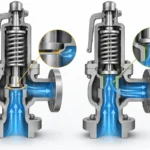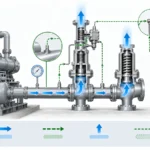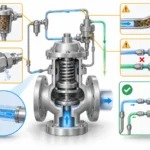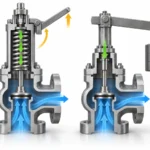
了解何时需要带填料杠杆,它与开放式杠杆或封闭盖有何区别,组件包含哪些部件,以及在询价前需要确认哪些事项。.

A 杠杆式安全阀 采用手动提升机构,其阀杆或操作穿入处在上部阀组件穿过位置设有密封。该词 填料密封 描述的是该密封结构;并不意味着主阀阀座、阀盖或整个阀门为“填料密封”。”
关键区别在于 需要提升装置 和 要求该提升装置采用填料密封. 这些属于相互独立的工程决策。规范或项目技术规格书可能要求具备手动提升阀门的方式,而是否需要填料密封结构则取决于适用要求、拟采用的阀门设计、工况条件,以及提升机构穿出处是否允许泄漏。.
在编制技术规格书和询价(RFQ)时,建议按以下顺序进行: 主导要求 → 提升装置要求 → 密封杠杆结构需求 → 供应商图纸及文件资料。.
什么是填料密封杠杆式安全阀?
带填料杠杆是一种提升装置,其轴或操作机构穿过阀门上盖组件处设有密封。.
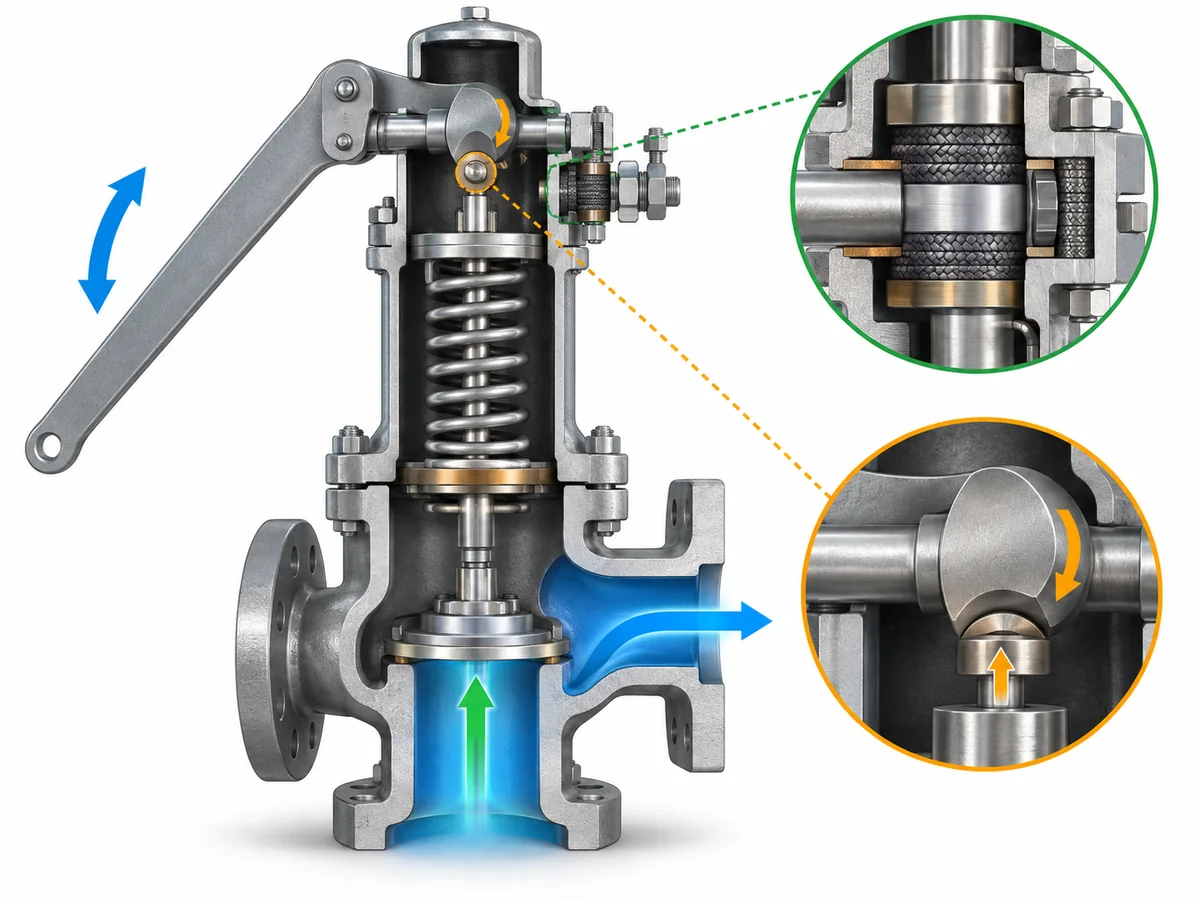
外部杠杆仍执行手动提升功能。在组件内部,杠杆轴、凸轮轴或等效机构将该运动传递至阀门的提升部件。填料、O 形圈、压盖或其他针对特定设计的密封件控制该机构穿过阀盖处的泄漏。.
实际应用中需关注三个界限。.
带填料杠杆并不意味着主密封座带填料。. 喷嘴与阀瓣之间的主密封界面是独立的密封界限。杠杆填料并不能保证主密封座的密封性。.
带填料杠杆并不意味着封闭式阀盖。. 阀盖用于容纳弹簧及相关内部部件。制造商文件可将阀门描述为具有封闭式阀盖,同时单独提供普通杠杆、带填料杠杆或阀帽配置。现行 Crosby J 系列技术数据 将这些视为独立的构造选项。.
“带杠杆”并不能证明是“带填料杠杆”。” 阀门可以配有外部提升杠杆,但不具备带填料结构所隐含的密封轴配置。.
该定义让买方可以在供应商图纸上核实具体结构。关于更广泛的产品系列背景,请参见 ZOBAI 的 杠杆式安全阀 页面。.
何时真正需要带填料杠杆?
简要回答: 并非只要需要提升装置就自动需要带填料杠杆。首先应确定适用规范或项目基础是否要求设置提升装置。然后单独确定在所指定的阀门结构中,杠杆轴或操作机构穿出处是否需要密封。.
首先确定是否需要提升装置
答案取决于适用规范、设备范围、工况及项目要求。.
当前应用 ASME 要求的制造商文件针对规定的蒸汽、空气和水应用明确了提升装置要求。这并不 不 构成适用于每台泄压阀、每种介质或每个司法管辖区的通用规则。. ASME BPVC 第 XIII 卷 是当前 ASME 中涵盖泄压装置超压保护要求的章节,包括设计、装配、试验、标记及相关要求。.
当项目依据某项省略、例外或替代方案时,应核实适用的规范版本和司法管辖区,而不是将旧数据表或其他市场的要求直接套用到项目中。ZOBAI 更广泛的 ASME 安全阀标准指南 涉及更广泛的标准问题。.
然后确定提升装置是否需要采用填料密封结构
并非自动如此。.
当前 Crosby 和 Baker Hughes Consolidated 技术资料 将提升装置要求与普通/简易杠杆和填料密封提升杠杆结构之间的选择区分开来。例如,Baker Hughes 将其简易杠杆描述为非压力密封型,并区分了在杠杆组件周围泄漏必须受控的情况下采用的填料密封结构。.
- 确认适用依据。. 确定适用的规范、项目规格书和管辖区域。.
- 确定阀门是否必须配备提升装置。. 不要仅根据流体名称推断这一点。.
- 检查是否适用可接受的省略或替代方案。. 请将此视为项目/代码问题,而非供应商假设。.
- 如果需要或选用提升装置,应确定其轴或上部机构处的泄漏是否可接受。.
- 如果该穿通部位必须密封,应结合实际阀门结构评估带填料密封的提升杠杆配置。.
不要将判断简化为介质名称
诸如 “液体工况一律需要带填料密封杠杆” 之类的规则过于宽泛。制造商的指导可能因阀门系列和应用场合而异。判断应依据适用要求、实际工况以及所提供阀门的结构。.
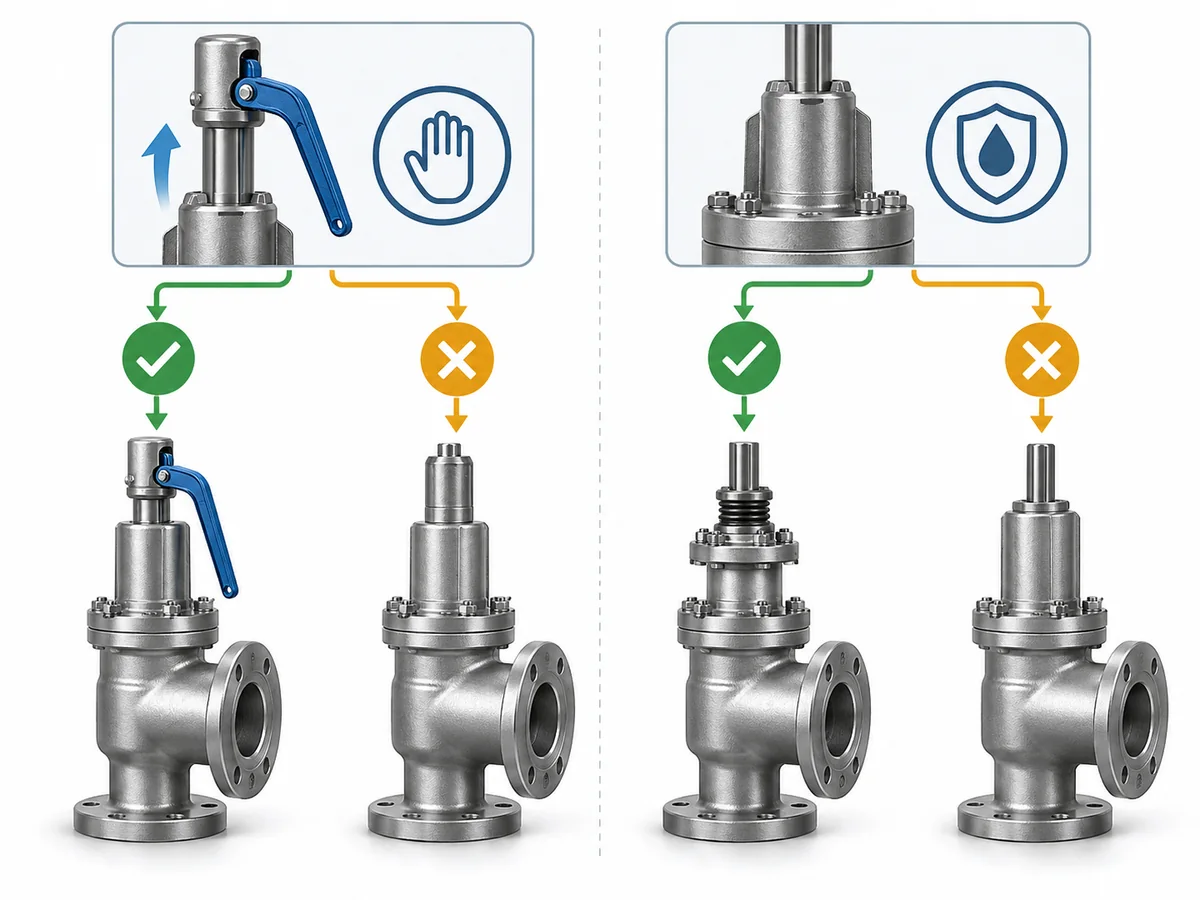
敞开式杠杆、带填料密封杠杆还是封闭式阀帽:有何区别?
这些术语描述的是不同的上部结构,询价单中不应将它们混用。.
| 结构 | 手动提升 | 杠杆穿通部位 | 填料密封式杠杆穿入结构 | 主要规格要点 |
|---|---|---|---|---|
| 开放式/普通/常规杠杆 | 是 | 有 | 否,在所述设计中 | 可进行手动提升,但杠杆机构不具备压力密封。. |
| 填料密封式杠杆 | 是 | 有 | 是,因设计而异 | 在轴穿入处密封的同时保留手动提升功能。. |
| 封闭帽式结构 | 在所述结构中无外露提升杠杆 | 无外部杠杆穿入结构 | 不适用于杠杆穿通结构 | 用于所选上部结构不含杠杆的场合。. |
决策变量为 手动提升通道 和 提升机构穿通处的密封. 阀盖结构是独立变量:封闭式阀盖不应作为填料杠杆或封闭盖的另一种名称。.
关于更广泛的选型问题,请参见 带杠杆安全阀与封闭阀盖安全阀.
典型填料杠杆组件包含哪些部件?
没有通用的填料杠杆物料清单。各制造商的图纸显示不同的轴几何形状、填料方式和固定结构。在不同设计中仍然有用的是 功能链.
| 功能组 | 代表性部件 | 功能 |
|---|---|---|
| 手动执行机构 | 提升杠杆、试验杠杆 | 提供外部手动输入。. |
| 运动传递 | 杠杆轴、凸轮轴、凸轮、提升叉 | 将杠杆运动传递至阀门的提升部件。. |
| 轴密封 | 填料环、填料、O 形圈 | 密封运动轴或穿入处周围。. |
| 密封保持 | 压盖、填料螺母、衬套、保持元件 | 固定或压紧密封元件。. |
| 上部壳体 | 阀帽/填料压盖组件 | 用于安装并支撑提升机构。. |
| 阀门接口 | 阀杆、释放螺母、试验螺母或同等部件 | 将运动传递至阀门内部机构。. |
| 二次密封/固定 | 垫片、垫圈、衬套、螺母 | 按设计要求提供密封和机械固定支撑。. |
OEM 手册说明,这些应视为功能组,而非强制通用的零件清单。. Farris 2600 维护文档 显示与凸轮轴相关的填料环和填料压盖,而 Consolidated 文档采用其他填料压盖和轴密封结构。具体硬件取决于阀门设计。.
带填料杠杆不应被假定具有哪些功能?
该结构解决的是特定的结构问题,不应将其作为无关阀门特性的依据。.
它不能证明整个阀门无泄漏
杠杆填料控制的是提升机构周围的泄漏路径,不能证明主阀座、阀体连接处、法兰或其他压力边界零泄漏。.
带填料杠杆 ≠ 无泄漏阀门。.
它不会使阀门成为平衡式结构
背压可能使未密封的杠杆穿入处变得不可取,因为工艺介质可能通过上部提升机构逸出。填料可以处理该局部密封路径。.
这与补偿背压对阀门行为的影响不同。平衡式波纹管、平衡活塞或其他合适的阀门结构用于应对背压的相关性能影响。因此,带填料杠杆结构与平衡式结构解决的是不同的工程问题。.
- 带填料杠杆: upper lifting-mechanism sealing.
- Balanced design: management of specified back-pressure effects on valve performance.
A manual lever check does not prove set pressure
A try-lever check can provide evidence that the lifting mechanism is free to move under the applicable test conditions. It does not establish the actual set pressure. 2025 National Board committee material maintains that distinction between freedom of operation and actual set-pressure information.
For boiler-specific lever context, see ZOBAI’s lever safety valve in boiler applications 指南。.
It does not prove relieving capacity or certification
Formal capacity, testing, marking, and conformity evidence are separate from manual operation. A successful lever movement should not be treated as a substitute for those records.
| Evidence | What it may support | 其未确立的内容 |
|---|---|---|
| Lever operates under the applicable test condition | Freedom of mechanical movement | 整定压力 |
| Packed construction shown on drawing | Sealed lifting-mechanism configuration | Whole-valve zero leakage |
| Balanced construction documented | Defined back-pressure design feature | Packed-lever construction |
| Capacity / conformity documentation | Formal evidence within its stated scope | Suitability for every installation |
Manual lifting should also not be turned into a generic operating procedure. The manufacturer instructions, plant procedure, operating condition, and applicable safety controls remain part of any actual test.
What Should Engineers and Buyers Verify Before Specifying a Packed Lever?
An RFQ should not stop at “safety valve with packed lever.” That leaves both the reason for the feature and the proposed construction unclear.
| Buyer / project should define | Supplier should confirm for the offered valve |
|---|---|
| Protected equipment and relief-duty context | Exact valve and upper configuration |
| Governing code and project specification | Whether the mechanism is open, packed, or another approved construction |
| Applicable jurisdiction where relevant | Actual lever / shaft / cam / cap arrangement |
| Service medium | Actual sealing method around the lifting-mechanism penetration |
| Relevant pressure and temperature basis | Packing/sealing material where project compatibility requires confirmation |
| Whether a lifting device is required | Permitted service limits for the offered configuration |
| Why packed construction is requested | Drawing showing the supplied top construction |
| Relevant discharge-side / back-pressure condition affecting containment | Applicable certification, marking, and test documentation |
| Any restrictions on manual lifting | Manufacturer instructions for manual operation or inspection |
| Required document package | Any deviation from the project specification |
The key RFQ sequence is: code / project basis → service → lifting-device requirement → reason for packed construction → exact supplier configuration → sealing evidence → drawing and documentation.
This also protects against a product-name shortcut. ZOBAI’s catalog includes valves described as “with Spanner” 和 “Enclosed … with Spanner.” Those descriptions alone do not establish that the particular construction is a packed lifting lever. The offered model drawing and technical documentation should confirm that point before the term is used as a product claim.
A packed lever is therefore best treated as a specific lifting-device construction, not as a generic sign that a safety valve is tighter, safer, or suitable for a particular service.
工程顺序: establish the requirement → determine whether the lever penetration needs sealing → verify the actual construction → verify the offered valve against the project.