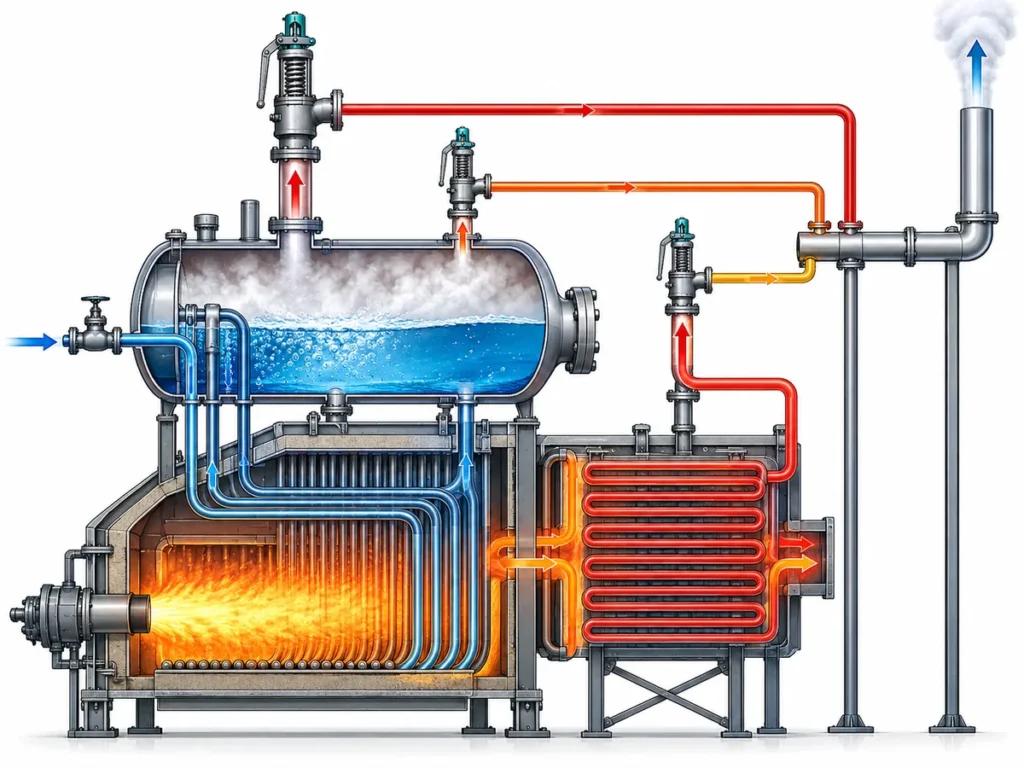
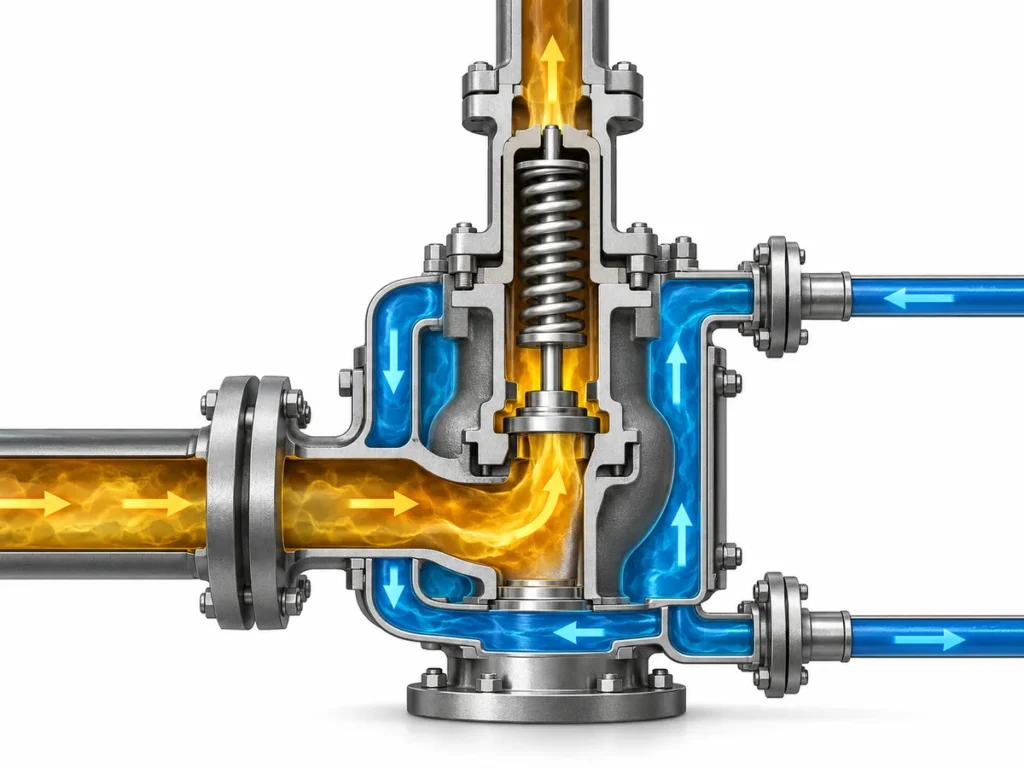
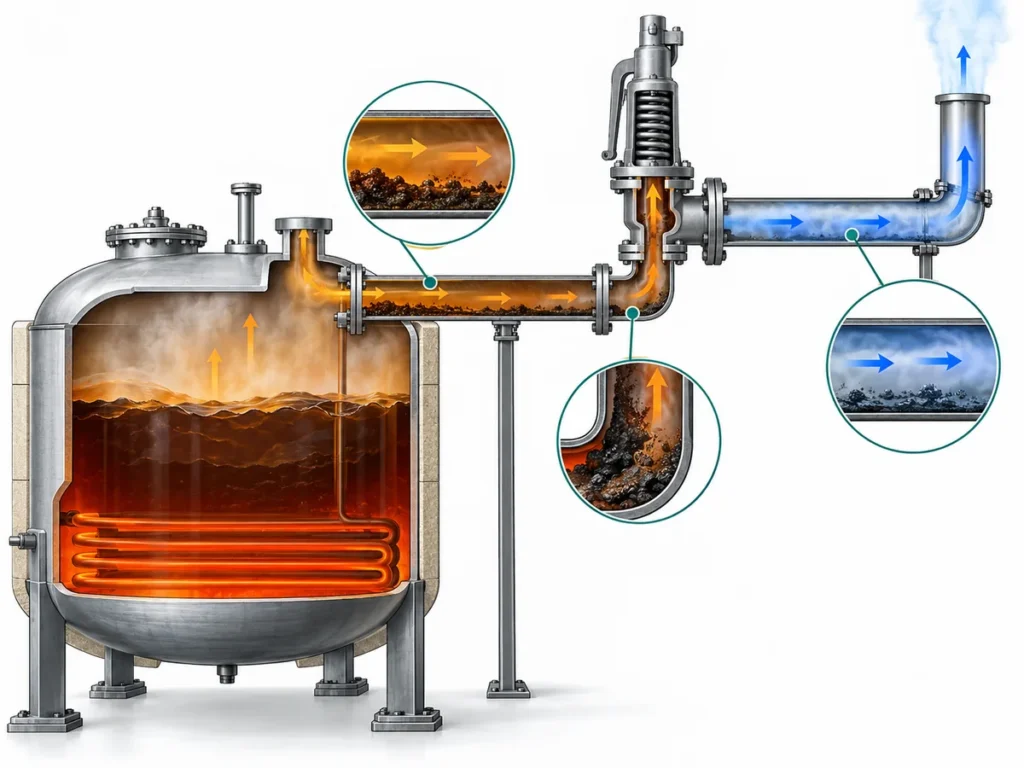
选择弹簧式安全阀应从起决定作用的超压工况入手,而不是从连接尺寸、压力等级或旧阀铭牌开始。工程师必须先确认:被保护设备可能因何种原因超压、需要泄放的质量流量或体积流量、泄放条件下的流体相态、整定压力基准、允许超压或压力积聚、预期背压、工作温度、材料相容性以及已安装的进出口管道。弹簧式安全阀结构简单,但其现场性能取决于整个泄放系统。


选择弹簧式安全阀应从起决定作用的超压工况入手,而不是从连接尺寸、压力等级或旧阀铭牌开始。 工程师必须先确认:被保护设备可能因何种原因超压、需要泄放的质量流量或体积流量、泄放条件下的流体相态、整定压力基准、允许超压或压力积聚、预期背压、工作温度、材料相容性以及已安装的进出口管道。弹簧式安全阀结构简单,但其现场性能取决于整个泄放系统。
对于许多蒸汽、气体、蒸气、空气和液体工况,只要使用条件与其设计限值相容,常规弹簧式安全阀可以是可靠的选择。问题通常出现在用户将阀门视为孤立的目录产品时。阀门在台架试验中可能在正确的整定压力下开启,但仍会因进口压力损失过大而颤振,因出口背压而丧失有效排量,因正常工作压力过于接近整定压力而泄漏,或因喷嘴、阀瓣、导向件、弹簧环境、垫片或软密封与介质不相容而早期失效。
因此,应将用户常见关切转化为工程核查项:
弹簧式安全阀仍是一种经验证的超压保护形式,但前提是将选型、安装、文件资料和维护视为一个统一的工程过程。关于基本结构原理,参见 弹簧式安全阀的工作原理.
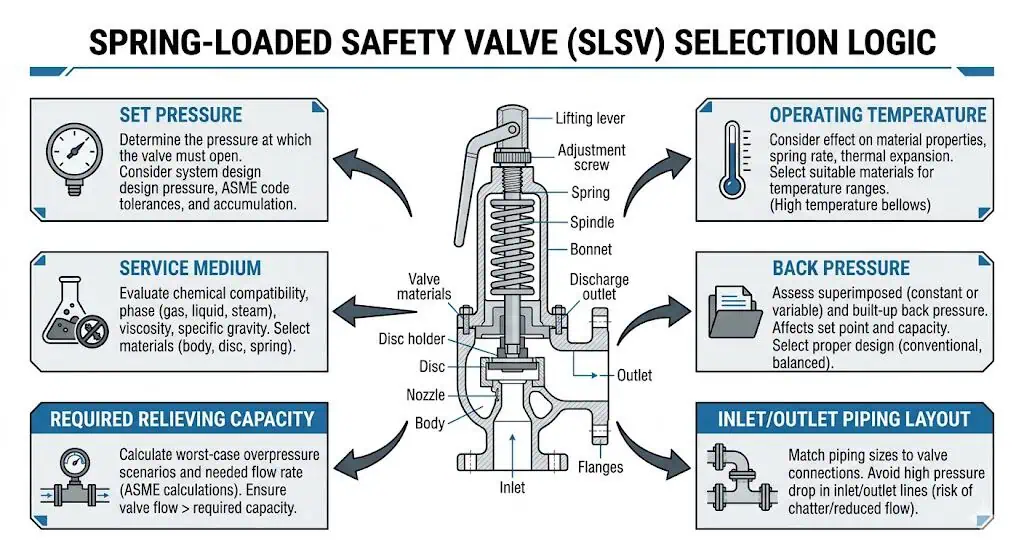
在选择阀门之前,应确认正常工作压力、最大可信工作波动、被保护设备的最大允许工作压力(MAWP)或其他允许压力限值、整定压力、泄放压力以及泄放温度。 这些参数决定了阀门何时开始开启、泄放期间允许的压力升高幅度、弹簧范围、压力-温度额定值、所需孔径面积,以及阀体、内件、垫片、波纹管和阀座材料的适用性。
工作裕量是正常工作压力与阀门开启区域之间的间隔,并非通用的固定百分比。可接受的裕量取决于阀门设计、介质清洁度、压力脉动、阀座型式、温度、所需密封性、启闭压差特性、制造商数据以及适用的项目标准。压力稳定的洁净气体系统与湿蒸汽、往复式压缩机出口、含污烃类工况或压力频繁波动的系统相比,可接受的裕量可能不同。
工程说明: 平衡波纹管设计可减小出口背压的影响,但并不能自动解决工作裕量不足、入口压力损失、选型不当、介质含污或材料不兼容等问题。每个问题均需单独评估。
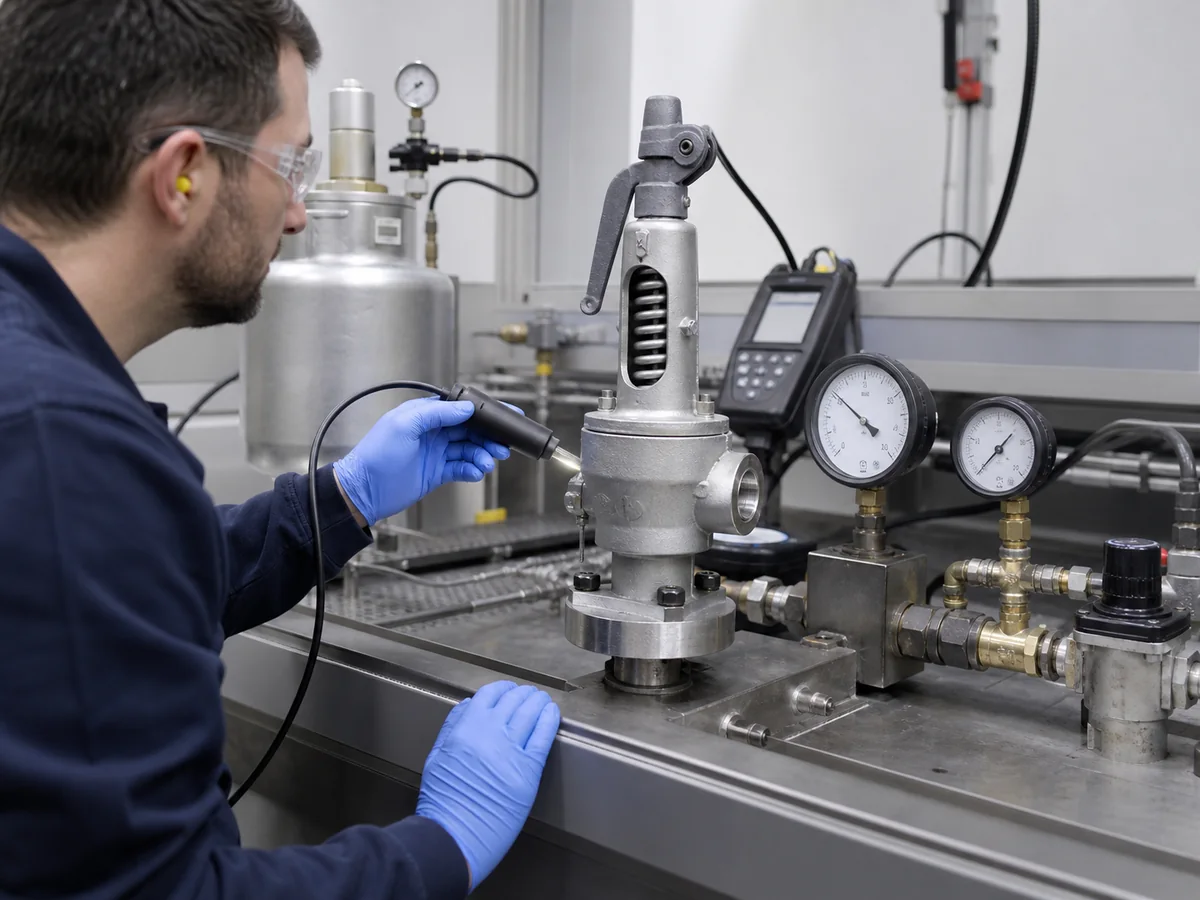
以下参数应作为独立数据字段分别确认,而不应合并为单一的“设计压力”条目:
| 参数 | 控制内容 | 缺失时的选型风险 |
|---|---|---|
| 正常工作压力与最大工作压力 | 工作裕量、颤振风险及阀座密封性要求。 | 过早泄漏、频繁启闭或误动作起跳。 |
| MAWP 或被保护设备压力限值 | 与适用规范和整定压力配置配合使用的压力上限。 | 整定压力不正确或保护基准不符合要求。 |
| 整定压力 | 阀门开始规定开启响应时的调整压力。 | 保护启动过晚或阀门在正常运行期间开启。 |
| 泄放压力与允许累积压力 | 用于排量计算的可用压力以及事件期间系统允许的最大临时压力。 | 选型不正确或超压不可接受。 |
| 泄放温度 | 流体特性、材料强度、弹簧性能、垫片与阀座适用性。 | 排量计算错误或材料损坏。 |
| 背压 | 开启稳定性、有效排量、启闭压差与回座。 | 颤振、排量降低或泄放后泄漏。 |
复合工程工况: 某气体储罐安全阀因阀座泄漏被反复维修。车间试验结果合格,但储罐长期在略低于整定压力的工况下运行,并承受压缩机脉动。阀座并非根本原因。运行裕量不足与压力循环共同导致阀瓣微启和阀座渐进损坏。纠正措施是审查运行范围、压力控制策略、阀座结构及整定压力基准,而非反复研磨同一阀座。
确认泄放工况下的流体相态和物性,而不仅仅是正常工艺描述。 气体、蒸汽、水蒸气、液体、闪蒸液体和两相流需要不同的定径假设,并可能产生不同的开启和泄放行为。密度、分子量、压缩性、黏度、比热比、饱和状态和泄放温度均可能影响所需孔径面积。
介质洁净度也会改变阀门选型边界。沉积物、焦炭、蜡、聚合物、腐蚀产物、冰、水垢或黏性液体可能损坏密封面、限制入口、增大导向摩擦或阻碍全开。户外防护应能防止天气和污染影响,同时不得堵塞阀盖通气孔、排放口或所需的泄放开口。
所需泄放量是由主导超压工况确定的流量需求。认证或项目认可的泄放量是所选阀门、孔径、整定压力、流体和配置的书面性能。只有当书面泄放量在批准的定径依据下达到或超过所需泄放量时,该阀门才可接受。
| 审查步骤 | 工程目的 | 常见错误 |
|---|---|---|
| 确定超压工况 | 确定所需泄放负荷。 | 采用正常流量而非出口堵塞、火灾、管束破裂、调节阀失效、热膨胀或其他控制工况。 |
| 确定泄放流体物性 | 确保选用正确的定径方法。 | 采用正常工况密度或忽略闪蒸/两相行为。 |
| 计算所需泄放能力 | 确定最小保护流量。 | 按管道尺寸或旧阀接口选型。 |
| 选择所需孔径面积 | 将泄放负荷换算为最小流通面积。 | 将进口法兰尺寸与有效孔径混淆。 |
| 核实认证排量或认可排量 | 确认所选阀门能够满足该工况要求。. | 仅凭产品目录型号选型,未提供排量计算文件。. |
| 应用背压及组合装置修正 | 在适用情况下考虑排放系统及爆破片的影响。. | 对封闭排放总管安装工况采用自由排放能力。. |
如需进一步了解这一区别,请参阅 认证泄放能力与连接尺寸的对比.
整定压力必须依据被保护设备的允许压力限值及适用规范的规定确定,而不能采用“MAWP 的 110%”这一通用规则。. 对于许多压力容器应用,除适用规范明确规定多阀或补充装置的情形外,安全阀整定压力不得超过 MAWP。锅炉、压力容器、管道及当地法规要求不应混用。.
实用的校核顺序为:
重要提示: Do not use a fixed “15–20% above maximum operating pressure” rule as a substitute for code review and manufacturer data. Operating margin is service- and design-dependent.
For terminology and pressure relationships, see set pressure, overpressure, accumulation, and blowdown.
Overpressure, accumulation, and blowdown describe different parts of the relieving event and should not be used as synonyms. Their exact allowable values depend on the governing code, protected equipment, number and type of devices, and overpressure scenario.
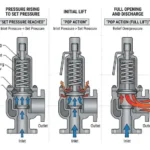
The spring provides the closing force, but full-lift and reseating behavior also depend on nozzle and disc geometry, huddling-chamber action, adjusting rings where fitted, fluid compressibility, inlet loss, outlet back pressure, and the selected orifice relative to the actual load. A valve can have the correct set pressure but poor blowdown or unstable lift because the installed system does not match the test conditions.
| 术语 | 工程含义 | 重要性 |
|---|---|---|
| 整定压力 | Adjusted opening reference for the valve. | Determines when protective action begins. |
| 超压 | Pressure above set pressure while relieving. | Provides the pressure differential used to achieve rated flow. |
| 压力积聚 | Pressure above the protected equipment limit during the event. | Determines whether the equipment remains within the permitted temporary pressure boundary. |
| 启闭压差 | Difference between opening and reseating pressure. | Affects process recovery, cycling, product loss, and seat condition. |
复合工程工况: A steam safety valve opened at the specified set pressure but remained open longer than the operating team expected and leaked after reseating. Inspection found seat damage, while review showed that condensate drainage and discharge piping support were poor and the blowdown setting had been altered during an earlier repair. The prevention was to restore the approved adjustment, improve outlet drainage and support, complete a seat-tightness test, and reseal the valve after recalibration.
A spring-loaded safety valve does not require an external controller, but it still depends on correct mechanical adjustment, stable inlet conditions, acceptable outlet pressure, suitable materials, and controlled post-repair testing.
Start with the required relieving capacity, calculate the minimum required area, then select a valve with documented capacity that satisfies the case. The required capacity comes from the overpressure scenario. The required area comes from the applicable sizing method. The final selected orifice and valve capacity come from certified or manufacturer-supported data.
An undersized valve may open yet allow pressure to continue rising beyond the permitted accumulation. An excessively oversized valve may cycle, chatter, or suffer rapid seat damage when the actual relief load cannot sustain stable lift. Oversizing is not automatically conservative.
| Method or Standard | Correct Role | 选型边界 |
|---|---|---|
| API 520 第 I 部分 | Sizing and selection procedures for pressure-relieving devices in refinery, chemical, and related service. | Provides sizing methods; it does not replace relief-scenario definition or installation review. |
| API 521 | Pressure-relieving and depressuring-system guidance and relief-scenario context. | Supports system analysis; the applicable project basis still controls. |
| API 526 | Standardized dimensions and letter-designated effective orifice areas for flanged steel pressure relief valves. | Does not perform the relief-load calculation. |
| ISO 4126-1 | 安全阀通用产品要求。 | It is a product standard and does not replace application-specific system analysis. |
| Manufacturer sizing software | Applies product data, coefficients, correction factors, and available models. | Results are only as reliable as the input data and selected calculation basis. |
The original article’s unsupported numerical sizing example has been removed. A capacity example is only trustworthy when the fluid, phase, molecular weight or density, relieving pressure, temperature, back pressure, coefficient basis, and selected standard are all stated. Without those inputs, a quoted area cannot be independently checked.
For a project-focused workflow, use the 安全阀定径与认证排量指南 以及 API 520 sizing overview.
Manufacturer sizing tools are useful for product selection, but they do not define the relief scenario or approve the complete installation. A tool can calculate required area and propose a model only after the engineer supplies correct process and code data.
工程规则: Sizing software does not correct an undefined relief case, inaccurate fluid data, wrong code basis, or unsuitable piping layout.
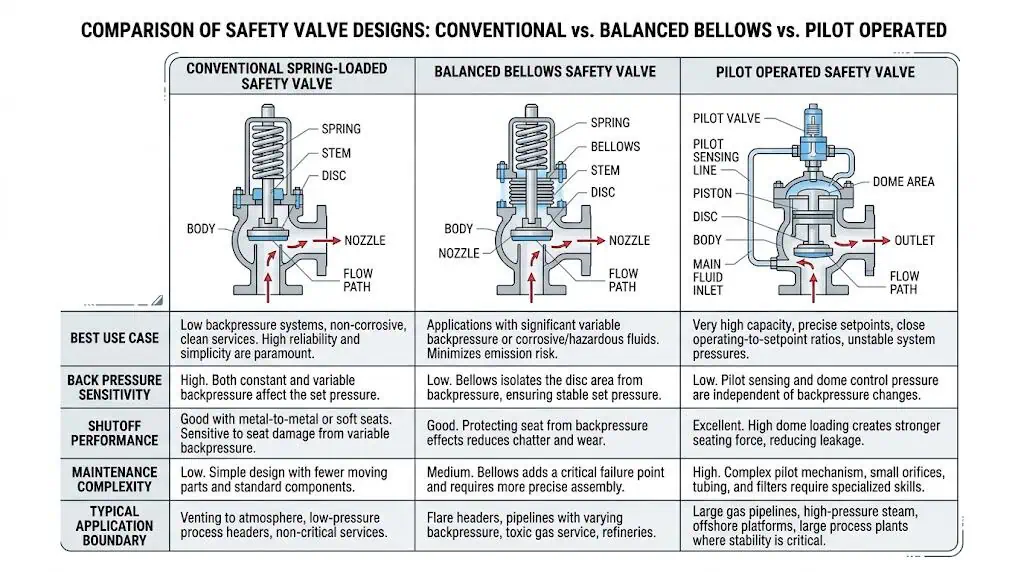
A conventional spring-loaded safety valve is often appropriate where the service is compatible, the relief load is defined, inlet loss is controlled, and outlet back pressure remains within the selected design’s allowable range. It provides automatic mechanical operation without an external power source or control system.
The term “spring loaded safety valve” should not be used to blur the difference between safety valves, relief valves, safety relief valves, and PSV terminology. Steam or gas pop-action duty is not the same as proportional liquid-relief duty. The datasheet should define the actual service and certification basis. See PRV与PSV、安全阀与泄压阀的区别.
Review a balanced bellows or pilot-operated design when the limitations of a conventional spring-loaded valve are relevant to the actual service. High inlet pressure loss is not, by itself, a reason to select a pilot-operated valve; the inlet system still requires engineering correction or analysis. Likewise, steam service does not automatically require a balanced or pilot-operated design.
| 状态 | 常规弹簧式 | 平衡波纹管 | 先导式 |
|---|---|---|---|
| 背压低且可预测 | 通常在制造商限定范围内适用。 | 可能不必要。 | May be unnecessary unless other requirements apply. |
| Variable or significant outlet back pressure | May become unsuitable depending on design. | 通常考虑用于降低背压影响。 | May be reviewed if service cleanliness and project acceptance are suitable. |
| Corrosive discharge media | Spring chamber exposure must be reviewed. | Bellows may isolate components, but bellows material and bonnet venting become critical. | Pilot materials and sensing passages require review. |
| 工作压力接近整定压力 | Seat leakage or simmer may be a concern. | Back-pressure balancing does not automatically improve seat tightness. | May provide tighter shutoff in suitable clean service. |
| Dirty, waxy, polymerizing, or freezing service | May be more tolerant, depending on trim and inlet condition. | Bellows and guides still require contamination review. | Pilot passages and sensing lines may plug or freeze. |
| Maintenance capability | 通常更简单。 | Adds bellows inspection and vent requirements. | Adds pilot, tubing, filter, and sensing-system maintenance. |
For variable back pressure, review 背压平衡式安全阀. For pilot selection, review 先导式安全阀.
复合工程工况: A pilot-operated valve was installed on a dirty hydrocarbon service because the operating pressure was close to set pressure. The main valve remained tight initially, but condensate and solids entered the sensing system and caused unstable pilot behavior. The corrective action included cleaning and redesigning the sensing arrangement, but the long-term review also considered whether a spring-loaded or balanced-bellows design was more tolerant of the actual medium.
Material selection must cover every pressure-retaining, wetted, guiding, sealing, and force-producing component—not only the valve body. A carbon-steel body may be acceptable while stainless trim fails from chloride stress corrosion, a spring corrodes through bonnet exposure, a soft seat swells in the process fluid, or a guide sticks because deposits attack its clearance.
| 部件 | Engineering Function | 材料审查 |
|---|---|---|
| 阀体与阀盖 | Contain pressure and support the internal assembly. | Pressure-temperature rating, external atmosphere, corrosion allowance, brittle-fracture risk, and code material acceptance. |
| 阀座与阀瓣密封面 | Form the primary flow entrance and sealing surface. | Erosion, corrosion, galling, hardness pairing, deposit formation, and seat-tightness requirement. |
| 阀瓣与阀瓣座 | Open, modulate or pop, and reseat against the nozzle. | Impact, erosion, corrosion, thermal distortion, and compatibility with the seat. |
| 导向套与阀杆 | Maintain alignment of moving components. | Friction, galling, fouling, corrosion products, and clearance at temperature. |
| 弹簧 | Provides the calibrated closing force. | Temperature exposure, corrosion, relaxation, fatigue, coating, and environment inside the bonnet. |
| Bellows, if fitted | Reduces outlet-pressure influence and may isolate the spring chamber. | Pressure limit, fatigue, corrosion, temperature, material compatibility, and vent arrangement. |
| Soft seat, O-rings, and gaskets | Improve sealing or contain internal leakage paths. | Chemical compatibility, temperature, decompression damage, ageing, swelling, and fire-service limitations. |
Material designations such as WCC, LCC, CF8M, duplex, Monel, Inconel, or Hastelloy do not prove suitability by name alone. The actual ASTM/ASME grade, pressure-temperature rating, heat treatment, trim specification, fluid composition, temperature, chloride content, H2S exposure, and owner requirements must be checked. Sour service may require NACE MR0175 / ISO 15156 review where specified.
复合工程工况: A valve with a stainless-steel body was approved for chloride-bearing condensate, but the nozzle and guide materials were not reviewed separately. After one service cycle, the valve developed seat leakage and guide drag. Inspection found localized corrosion on the trim while the body remained visually sound. The corrective action was to specify the complete wetted trim and guide materials rather than using body material as a shortcut.
For a component-by-component review, use the 安全阀材质选择指南.
Connection type must satisfy pressure, temperature, maintenance, leakage, and project-standard requirements, but it does not determine relieving capacity by itself. Flanged connections support standardized project interfaces and easier removal. Threaded valves may suit smaller, lower-inventory or utility applications when permitted. Welded connections reduce external leakage paths but make removal and repair more difficult.
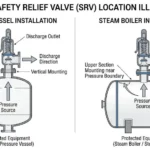
Most direct spring-loaded safety valves should be installed upright with the spindle vertical unless the manufacturer specifically approves another orientation. Vertical installation supports predictable spring, guide, disc, drainage, and reseating behavior.
Inlet and outlet piping must be reviewed as part of the valve selection:
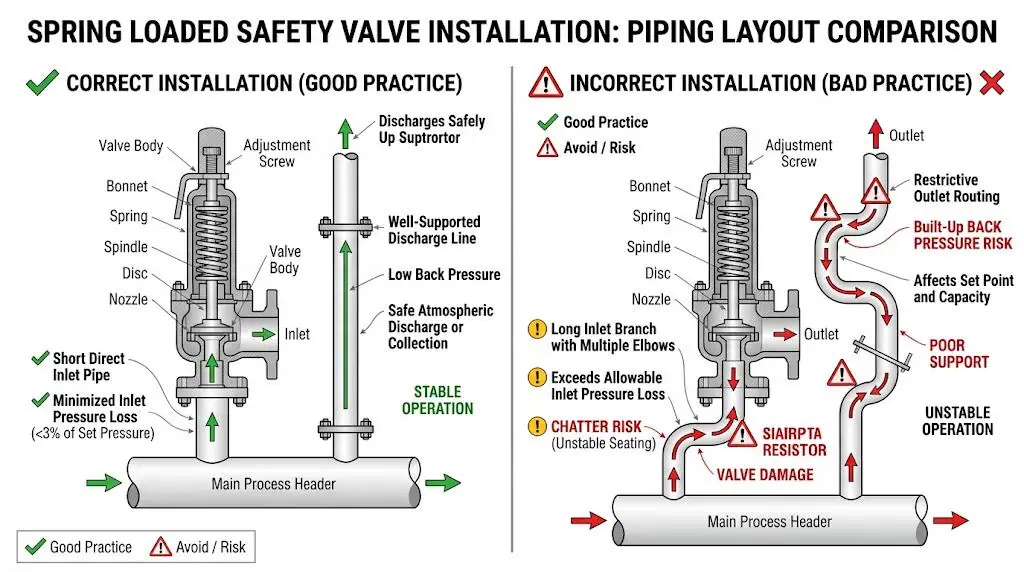
| Piping Factor | 潜在影响 | 所需审查 |
|---|---|---|
| Restrictive inlet branch | Pressure collapse at the valve inlet, chatter, reduced lift, and seat damage. | Relieving-flow pressure-loss and dynamic-stability review. |
| Long or undersized outlet line | Built-up back pressure, noise, vibration, and reduced effective performance. | 出口水力计算与阀门背压限值。 |
| 共用排放总管 | Variable superimposed pressure and simultaneous-relief interaction. | Header analysis using credible relief combinations. |
| Unsupported discharge elbow | Excessive mechanical load on the valve and equipment nozzle. | Piping support, reaction-force, and thermal-expansion analysis. |
| Horizontal installation without approval | Guide friction, uneven wear, poor drainage, and leakage. | Manufacturer approval or redesign for upright mounting. |
For a detailed installation review, see the 安全阀安装指南. API 520 Part II’s current edition specifically includes an engineering-analysis route for installations that require more than a simple screening check.
The applicable standard depends on the protected equipment, service, market, and project specification. Listing many standards does not prove compliance. Each document has a different scope and should be used for the question it actually addresses.
| Region or Application | 规范/标准 | Relevant Scope |
|---|---|---|
| Power boilers | ASME BPVC 第 I 卷 | Rules for construction of power boilers and the applicable boiler safety-valve certification route. |
| Heating boilers | ASME BPVC Section IV | Rules for construction of heating boilers. |
| Pressure vessels | ASME BPVC 第 VIII 卷 第 1 分册 | 压力容器设计、制造、检验、试验、认证及超压保护的相关规范要求。 |
| Refinery and related process service | API 520 第 I 部分 / Part II | Part I covers sizing and selection; Part II covers installation. |
| Relief-system analysis | API 521 | Pressure-relieving and depressuring-system guidance. |
| Flanged steel PRVs | API 526 | Standard dimensions, center-to-face dimensions, and letter-designated effective orifices. |
| 密封性 | API 527 | 适用压力泄放阀的密封性试验方法及验收准则。 |
| 检查 | API RP 576 | 压力泄放装置的检验规程。 |
| International product requirements | ISO 4126-1 | General safety-valve product requirements; not a replacement for application analysis. |
| European market | PED 2014/68/EU | Design, manufacture, and conformity assessment of stationary pressure equipment and safety accessories within its scope. |
The former PED 97/23/EC reference has been removed because the applicable recast directive is PED 2014/68/EU. “EN4126” has also been corrected to the relevant ISO 4126 family or applicable harmonized EN ISO adoption used by the project.
A procurement package should define the required documents rather than rely on a generic statement such as “ASME compliant.” Typical records include:
| 所需记录 | 可核实的内容 |
|---|---|
| Approved datasheet and relief calculation | Protected equipment, scenario, pressure basis, required capacity, selected valve, and orifice. |
| Nameplate and certification-mark details | Identity, set pressure, model, size, capacity marking, and certification route. |
| 经认证或认可的排量数据 | That the selected valve and configuration satisfy the required relief load. |
| 材质证明 | Traceability of body, bonnet, nozzle, disc, spring, bellows, and other specified components. |
| Set-pressure and seat-tightness test records | Adjustment and leakage performance under the specified test method. |
| Pressure test and NDE records | Product integrity where required by the code or purchase specification. |
| Manufacturer installation and maintenance manual | Product-specific orientation, back-pressure, venting, handling, and maintenance requirements. |
| Repair and recalibration history | Who changed the valve, what was replaced, test results, seal status, and return-to-service basis. |
Where the owner, jurisdiction, or applicable ASME/NBIC route requires recognized pressure-relief-valve repair authorization, verify the repair organization’s National Board VR authorization.
Additional features should be specified only when the service and operating procedure justify them. A lifting lever, test gag, open or closed bonnet, balanced bellows, soft seat, heating jacket, or special coating can be useful, but each also creates operating, inspection, or maintenance requirements.
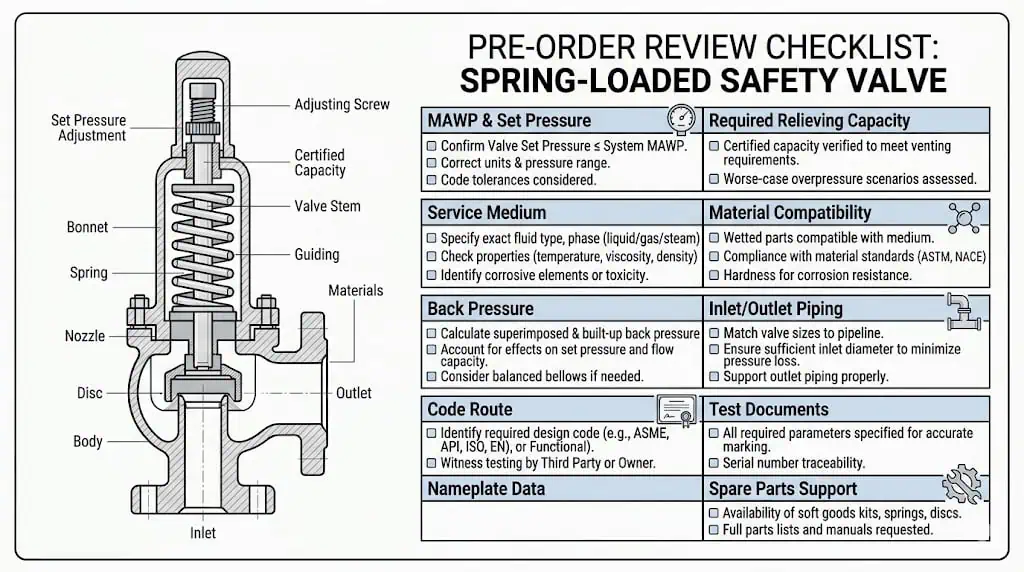
一份受控的 安全阀数据表用于询价(RFQ) reduces the risk of receiving quotations that match only size and set pressure while missing the actual protective duty.
A complete technical offer should explain what the valve is selected to protect, which relief case controls, what capacity is supported, what back pressure is allowed, what materials are supplied, and which documents will be delivered.
Mistake: Selecting a spring-loaded safety valve because its inlet flange, outlet flange, pressure class, and set pressure resemble the existing valve.
Pressure class confirms the pressure-temperature capability of the connection and body within the applicable material rating. Connection size confirms physical fit. Neither proves required relieving capacity, certified capacity, fluid suitability, blowdown performance, or back-pressure tolerance.
复合工程工况: A plant purchased a same-size replacement after a debottlenecking project. The valve fit the nozzle and was set correctly, but the new process throughput increased the blocked-outlet relief load. The selected model had a smaller effective orifice and insufficient documented capacity. The correction required a new sizing review and a different valve rather than a simple dimensional replacement.
Prevention requires checking the current relief scenario, required capacity, selected orifice, certified capacity, fluid, temperature, back pressure, and installation. Physical interchangeability is not engineering equivalence.
Mistake: Assuming that a correct set pressure guarantees stable field operation.
| Key Factor | Effect on Spring-Loaded Safety Valves | 正确的复核 |
|---|---|---|
| 入口压力损失 | Can cause pressure collapse at the inlet, chatter, reduced lift, and seat damage. | Evaluate at relieving flow using the applicable installation standard and engineering analysis. |
| 叠加背压 | May change the force balance before opening. | Confirm whether it is constant or variable and compare with valve design limits. |
| 积聚背压 | 可能影响阀瓣升程、有效排量、启闭压差和回座。 | Calculate the outlet system at credible relief flow and header conditions. |
| 工作压力裕量 | Insufficient margin can cause simmer, leakage, and premature wear. | Use manufacturer data, service stability, seat type, and project requirements—not a universal percentage. |
| Oversized orifice | May create unstable lift when the actual flow cannot sustain the valve. | Select the smallest certified orifice that safely satisfies the required load, subject to the applicable basis. |
When plant conditions change, the relief system should be revalidated. A new compressor, higher throughput, modified control valve, longer discharge line, silencer, flare-header tie-in, or changed operating pressure can invalidate the original selection even when the valve itself has not changed.
Mistake: Selecting a valve without considering inspection access, spare parts, test capability, repair authorization, and the consequences of repeated leakage or chatter.
A valve that repeatedly leaks may be showing an operating-margin, piping, material, contamination, or back-pressure problem. Re-lapping the seat without correcting the system cause can return the valve to the same failure mode.
Start every spring loaded safety valve selection with the governing relief scenario, required relieving capacity, protected-equipment pressure limit, fluid phase, relieving temperature, and installed piping. Then confirm set pressure, allowable overpressure or accumulation, blowdown, certified capacity, back pressure, material compatibility, orientation, seat tightness, documentation, and maintenance pathway.
Reliable protection depends on the complete pressure-relief system. The valve body, inlet line, outlet system, process conditions, test records, and repair controls must support the same engineering basis.
A final engineering and procurement checklist should include:
| 优势 | How It Is Achieved |
|---|---|
| Reliable overpressure protection | Match required capacity, set pressure, valve type, and installation to the governing relief case. |
| Longer service life | Control simmer, chatter, corrosion, contamination, thermal exposure, and piping loads. |
| Stronger compliance | Use the correct code route, certified data, inspection records, and authorized repair process. |
| Lower lifecycle cost | Prevent wrong purchases, repeated leakage repairs, unstable operation, and shutdown rework. |
A checklist-based review before ordering, installing, or replacing a valve is more reliable than trying to correct selection mistakes after commissioning.
Its main advantage is direct, self-actuated mechanical pressure relief without an external control or power source.
A properly selected spring-loaded safety valve can provide reliable overpressure protection in many steam, gas, vapor, air, and liquid services. Its simplicity does not remove the need for correct sizing, stable inlet piping, acceptable back pressure, compatible materials, and controlled maintenance.
Back pressure can affect opening force balance, lift, effective relieving capacity, blowdown, and reseating.
Superimposed back pressure exists before opening, while built-up back pressure develops during flow through the outlet system. The allowable effect depends on whether the valve is conventional, balanced bellows, or another design and must be checked against manufacturer and project data.
Review a balanced bellows valve when variable or significant outlet back pressure makes a conventional spring-loaded valve unsuitable.
Review a pilot-operated valve when tight shutoff, high operating-pressure ratio, capacity, or specific back-pressure behavior justifies it and the service is clean enough for reliable pilot operation. Neither alternative corrects an undefined relief case or poor inlet piping.
Maintenance should include inspection, cleaning, dimensional and condition checks, set-pressure testing, seat-tightness testing, approved replacement of damaged components, documentation, and resealing.
The interval depends on code requirements, service severity, corrosion, contamination, cycling history, failure consequences, and previous test results.
Set pressure must be established within the limits of the governing code for the protected equipment.
Do not apply a universal rule allowing set pressure to exceed MAWP. Boiler, pressure-vessel, multiple-device, supplemental, and local regulatory arrangements can differ. The responsible engineer should confirm the exact code provision and owner specification.
There is no universal percentage suitable for every spring-loaded safety valve.
The required margin depends on valve design, seat type, process stability, pressure pulsation, temperature, service cleanliness, blowdown, required tightness, manufacturer guidance, and the applicable project standard.
Connection size confirms physical fit, while certified relieving capacity confirms whether the valve can pass the required relief load.
Two valves with the same inlet and outlet sizes can have different effective orifices, lift, coefficients, certified capacities, and permitted service conditions.
Material selection depends on the exact medium, concentration, contaminants, temperature, pressure, phase, velocity, and applicable material standard.
The review must cover body, nozzle, disc, guide, spindle, spring environment, bellows, gaskets, and soft seats. Stainless steel alone is not proof of compatibility; duplex, nickel alloys, Monel, Hastelloy, or other materials may be required for specific services.
安装后泄漏可能由污物、密封面损伤、管道应力、搬运不当、工作压力过于接近整定压力、振动、热变形、腐蚀、出口背压或维修调整不当引起。
Troubleshooting should compare shop test records with installed conditions and examine the complete inlet, outlet, process, material, and maintenance history.
No. The familiar 3% criterion is an important screening concept in conventional PRV installation practice, but it should not be applied blindly to every valve, fluid, or dynamic system.
The current API 520 Part II framework includes an engineering-analysis route. The applicable edition, valve type, fluid behavior, acoustics, piping geometry, and manufacturer limits must be considered.