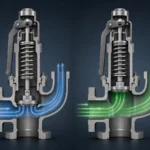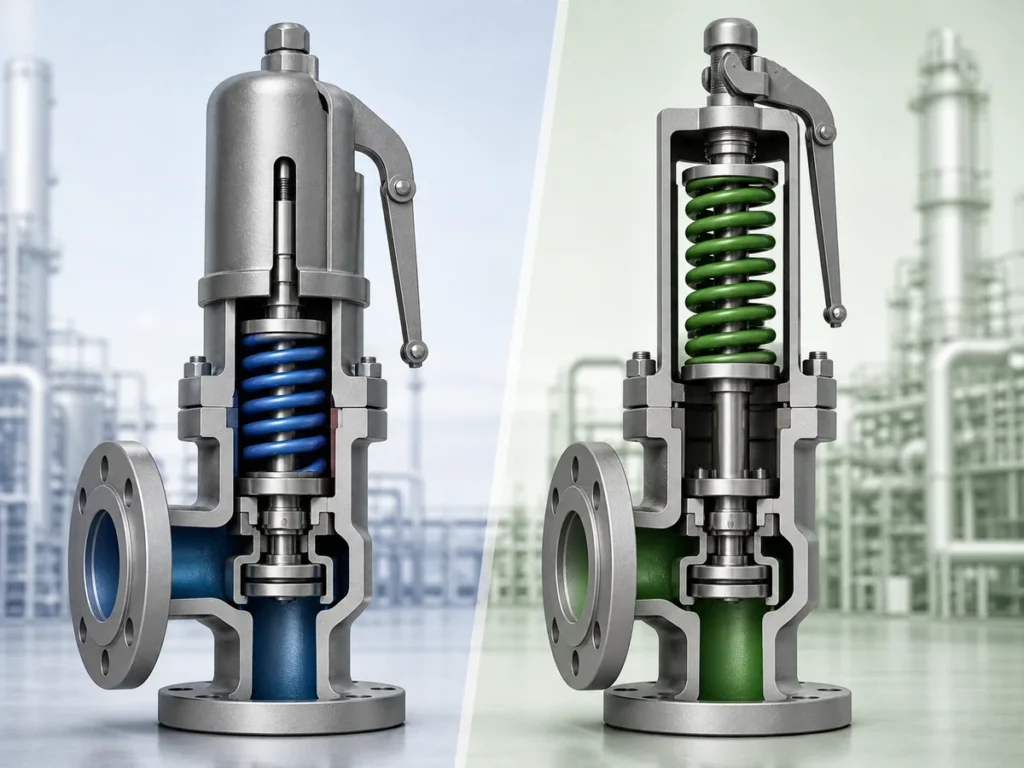
A closed cap and a closed bonnet do not describe the same part of a safety valve. They are separate upper-valve configuration fields, and knowing one does not define the other. The cap, lever, or related adjustment-cover arrangement concerns the top of the valve and, depending on the documented design, how the adjustment area is …

A closed cap and a closed bonnet do not describe the same part of a safety valve.
They are separate upper-valve configuration fields, and knowing one does not define the other.
The cap, lever, or related adjustment-cover arrangement concerns the top of the valve and, depending on the
documented design, how the adjustment area is covered and whether a lifting device is provided. The bonnet concerns
the spring chamber and how the spring-side components are enclosed or exposed.
For a buyer, the practical problem is the repeated word “closed.” A replacement request or RFQ
that says only “closed type” can leave unclear whether the requirement refers to the cap or
lifting arrangement, the bonnet construction, or both.
Closed Cap and Closed Bonnet Are Different Specification Fields
The most reliable way to read these terms is as two independent specification axes.
The Two Independent Configuration Axes
The first axis describes the cap, lifting device, and adjustment-cover arrangement.
The second describes the bonnet and spring-chamber construction.
LESER’s engineering guidance treats closed/open bonnet construction and lifting devices as separate design topics.
Spirax Sarco documentation likewise shows closed-bonnet configurations paired with different top arrangements,
supporting the need to specify the two fields independently.
For the first axis, the buyer identifies what the technical records say is fitted at the upper end of the valve:
a manufacturer-defined cap arrangement, a lifting arrangement, or another documented top configuration.
For the second axis, the buyer identifies the bonnet construction around the spring-side components.
A sectional drawing, parts list, datasheet, or quotation should therefore be read for both fields separately.
A closed bonnet does not, by itself, tell the buyer whether a lifting lever is present. A
closed cap does not tell the buyer whether the bonnet is open or closed.
What One Term Cannot Tell You About the Other
In closed cap, “closed” qualifies the cap or upper adjustment-cover arrangement.
In closed bonnet, it qualifies the bonnet construction around the spring chamber.
The wording is similar, but the engineering subject is different. As a decision rule, if a document uses
“closed” without identifying the component it modifies, keep that part of the description open
until the drawing or manufacturer terminology identifies the intended field.
A request such as “same closed safety valve” is therefore not enough to define the upper configuration.
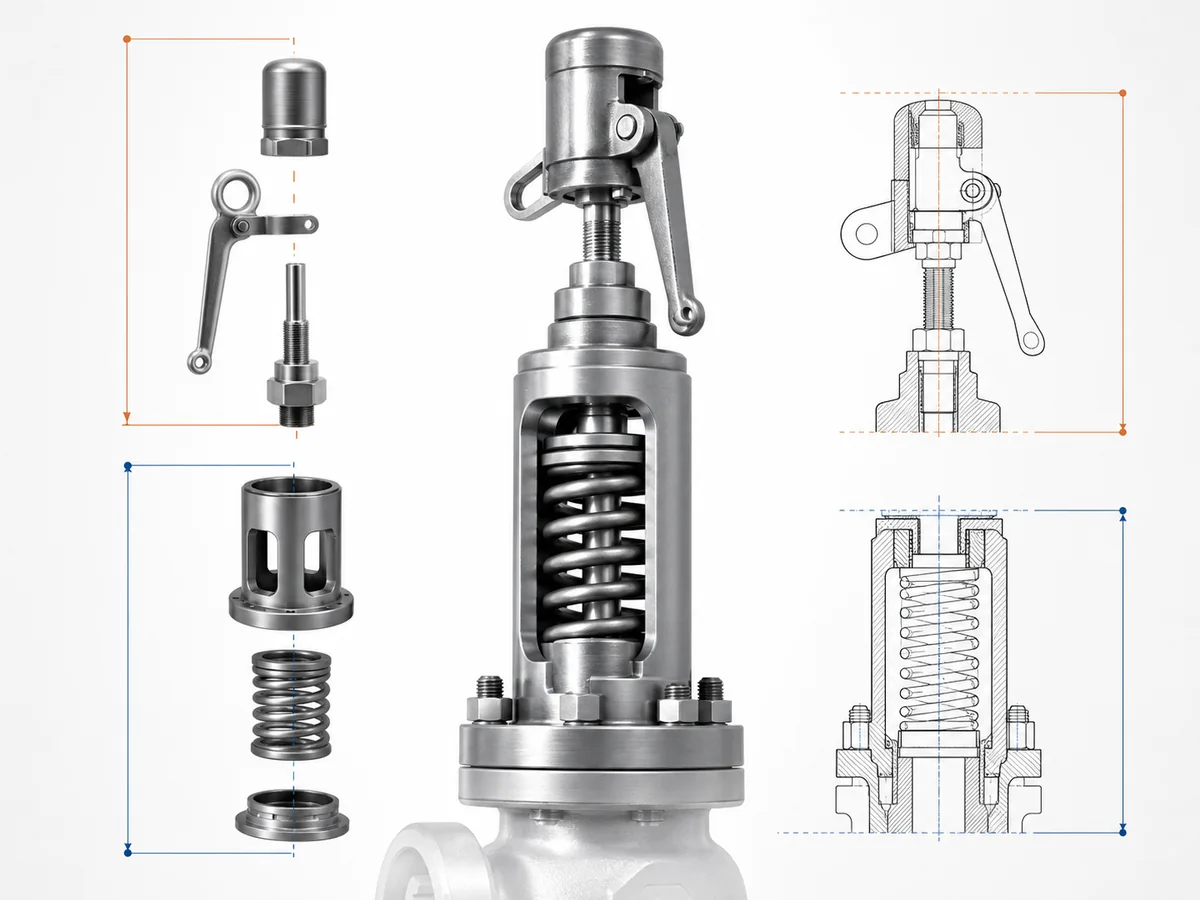
Read the Cap, Lever and Adjustment-Cover Arrangement Separately
When a drawing or specification mentions a cap or lifting device, treat that information as part of the
top and adjustment-cover configuration, not as a substitute description for the bonnet.
What to Identify at the Top of the Valve
Do not begin with the question, “Is it closed?” Begin with the documented component name and configuration.
Useful evidence can include:
- the sectional drawing;
- the parts list;
- the manufacturer’s terminology for the cap or top cover;
- whether a lifting device is shown or specified;
- whether the documentation identifies a separate packing or sealing feature.
The last item is important because a component name is not automatically a performance classification.
A generic term such as closed cap should not be silently upgraded to a stronger description
such as gas-tight unless the manufacturer documentation or project requirement supports that wording.
Visual similarity is also insufficient. Two valves may both have a covered upper section while using different
manufacturer-defined arrangements.
Where Lifting-Device Information Belongs
A lifting lever, when present, belongs to the top/lifting configuration question.
The buyer should record that arrangement independently from the bonnet construction.
If the documentation identifies a lifting arrangement, that fact does not define how the spring chamber is
enclosed. The bonnet still needs its own identification.
The reverse is equally important: the absence of a visible lever does not identify a particular bonnet style.
This page does not decide whether a lever or cap is preferable for a service. Its task is narrower:
identify the top arrangement correctly before using it in a replacement comparison or RFQ.
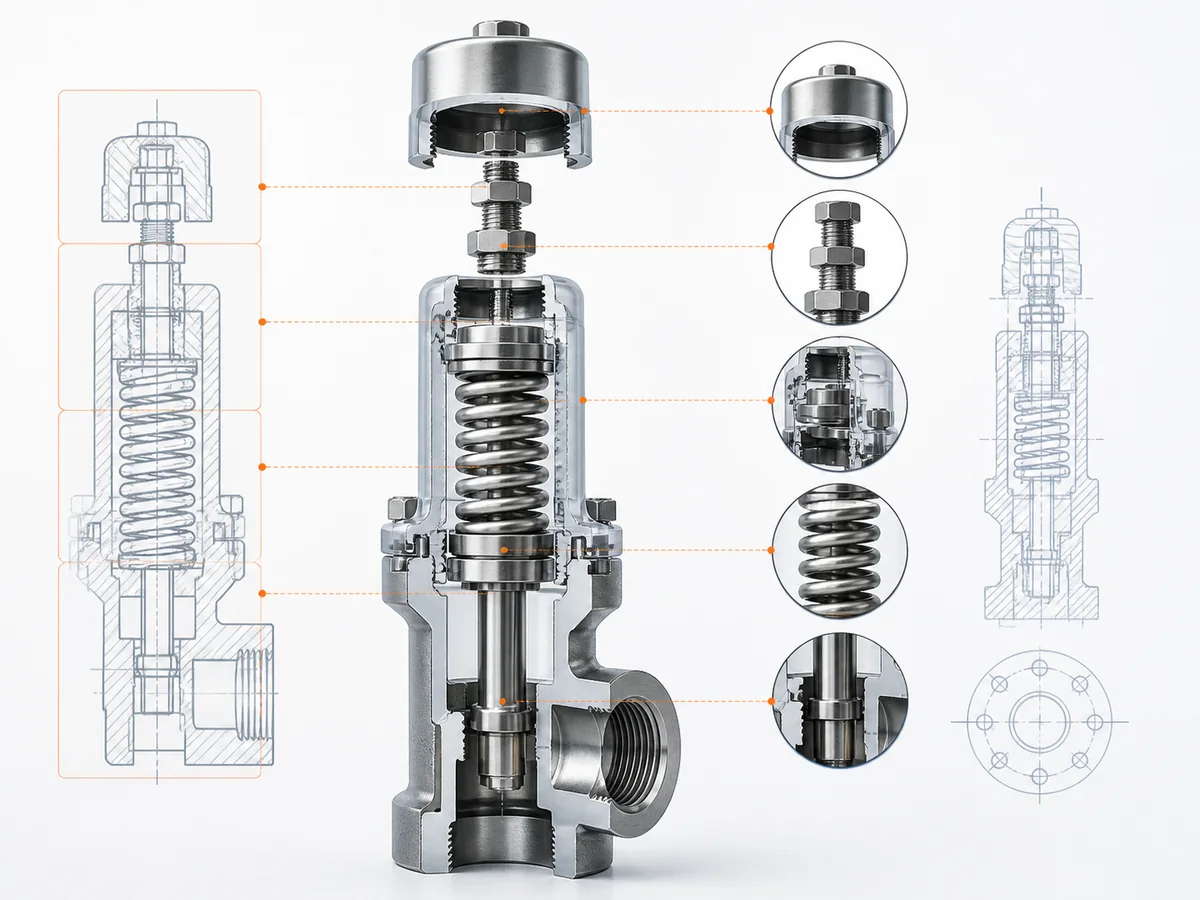
Read the Bonnet and Spring-Chamber Construction Separately
The bonnet answers a different question. It concerns the construction around the
spring chamber and related upper guiding components.
What Bonnet Construction Tells the Buyer
Bonnet construction describes how the spring-side portion of the valve is enclosed or exposed in the documented
design. That is a different functional region from the adjustment cap or lifting device.
Spring-side environmental exposure, protection, or manufacturer-defined venting details may therefore be relevant
to bonnet construction without defining the cap or lifting arrangement above it.
Do not use the cap description as a substitute for the bonnet description, and do not use the bonnet description
as a substitute for the cap or lifting-device description.
Which bonnet construction is appropriate for a particular service is outside this article’s scope and depends on
the valve design and project conditions.
Why “Closed Bonnet” Does Not Define Every Venting Detail
A closed bonnet should not automatically be interpreted as meaning:
- the spring chamber has no vent;
- every upper connection may be plugged;
- the bonnet is hermetically sealed;
- the bonnet description alone establishes process containment.
Emerson Crosby J-Series documentation provides a manufacturer-specific example in which an enclosed/closed-bonnet
construction still has a defined bonnet-vent requirement. That example supports the narrower caution here:
“closed bonnet” alone does not mean “unvented.”
Venting and containment details depend on the actual design and its technical documentation.
If a drawing or manual identifies a bonnet vent or another upper connection, verify its documented function and
required condition before treating the proposed replacement as equivalent in that respect. Do not infer from the
word “closed” that the connection is unnecessary or interchangeable.
Why “Closed Type” Creates Replacement and Service Errors
“Closed type” is not precise enough when more than one upper-valve feature can legitimately be described
as closed. The phrase does not identify which component the buyer intends to specify.
One Adjective Can Refer to Two Different Fields
Separate the description into two questions:
- What is the cap or lifting arrangement?
- What is the bonnet or spring-chamber construction?
The answer to either question may contain the word closed, but the answers are not interchangeable.
If a purchase record says only “closed type,” the correct status is not “matched.” It is
configuration still to be resolved until the cap/lifting and bonnet fields can be identified.
The same caution applies to informal descriptions such as:
- closed design;
- sealed top;
- covered type;
- no lever;
- enclosed spring.
These phrases can help locate what needs checking, but they should not replace manufacturer-defined component
terminology in a technical replacement comparison.
Why Apparent Similarity Is Not Enough for Replacement Equivalence
A proposed replacement can look similar to the installed valve while differing in an upper configuration detail.
Cap and bonnet checks are therefore necessary upper-construction checks, not a complete replacement
equivalence test. Other engineering requirements may still need to be evaluated outside this page.
Within this article’s boundary, the decision rule is straightforward: if the existing records identify
both a top/lifting arrangement and a bonnet construction, compare both. A match in one field does not prove
a match in the other.
This is particularly useful when an internal purchasing description has become shorter than the original technical
records. The purchasing label can help locate the record, but the underlying drawing or manufacturer
description should control the technical interpretation.
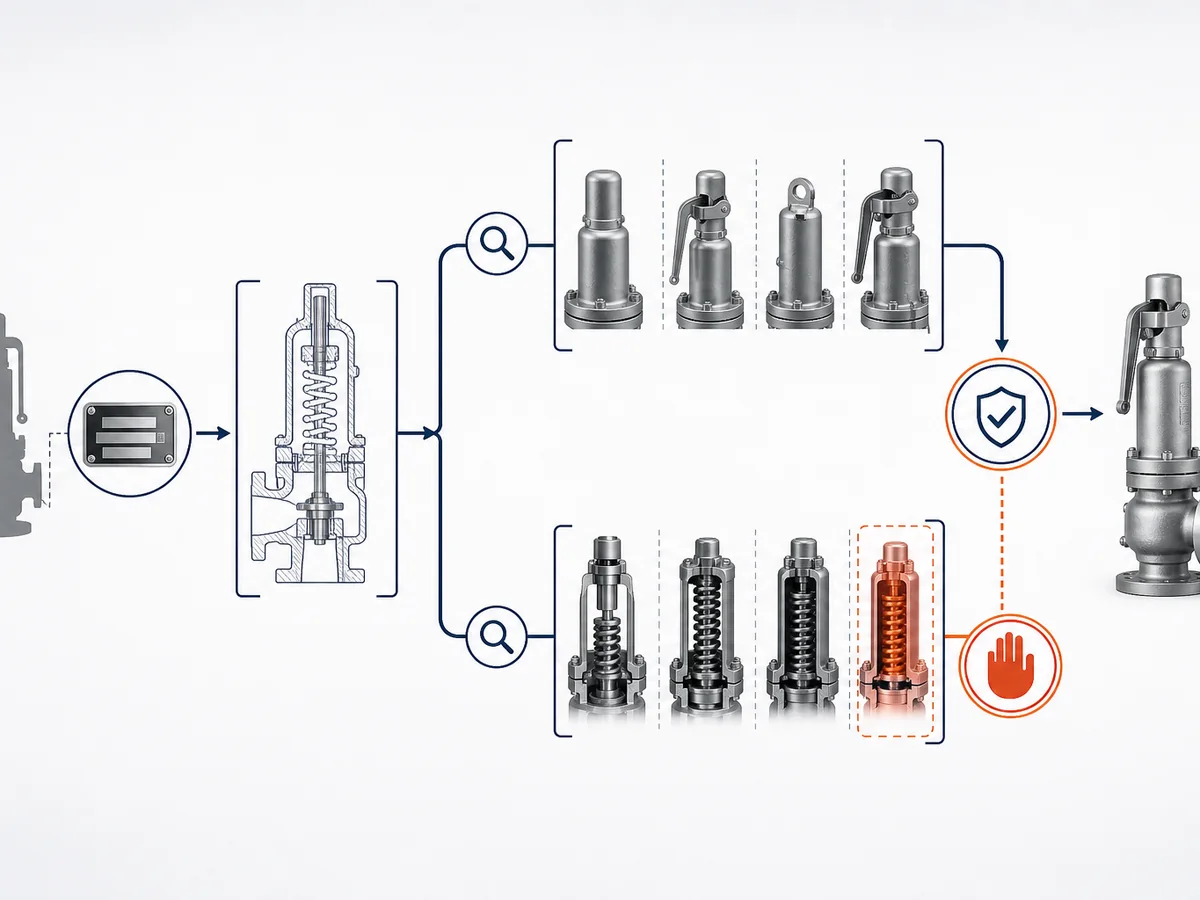
Verify the Existing Valve Before Calling the Replacement Equivalent
When existing records use ambiguous terminology, do not choose whichever meaning of “closed” seems most likely.
Reconstruct the upper configuration from the strongest available technical evidence.
Use the Sectional Drawing and Manufacturer-Defined Terminology
Start with records that identify the actual existing valve and preserve the terminology used for its components.
Useful sources can include:
- manufacturer and model identification;
- sectional or assembly drawing;
- parts list;
- datasheet or instruction document defining the relevant upper components;
- project documentation that clearly describes the installed arrangement.
The objective is identification, not reinterpretation. If one source calls a component a cap, bonnet, lifting
device, vent, or packing arrangement, preserve that term until the technical records show that a
different term means the same thing.
A photograph can help locate a component, but appearance alone may not reveal internal construction or the
documented function of an upper connection.
Check Cap/Lifting and Bonnet Details Independently
The upper-construction review should answer separate questions for the two axes.
Top / lifting arrangement
Confirm what the existing records say about the cap or upper cover and whether a lifting device forms part
of the configuration.
Bonnet / spring-chamber construction
Confirm how the bonnet is identified and whether the technical records show additional spring-chamber
details that matter to the comparison.
Do not collapse those answers into one field called “closed.”
| Verification field | Existing valve | Proposed replacement |
|---|---|---|
| Cap / top arrangement | Confirm from technical records | Confirm independently |
| Lifting-device arrangement | Confirm from technical records | Confirm independently |
| Bonnet construction | Confirm from technical records | Confirm independently |
| Relevant manufacturer-defined vent or sealing detail | Confirm where needed | Confirm where needed |
This comparison deliberately stops at the upper configuration. It does not establish complete valve replacement
suitability, which may require additional engineering information outside this page’s sovereignty.
Stop Where Venting, Sealing or Project Requirements Remain Unresolved
Generic photographs or the phrases closed cap 和 closed bonnet cannot resolve
every upper-construction detail.
Keep the configuration open when any of the following remains uncertain:
- what the manufacturer means by the cap designation;
- whether the top arrangement includes a lifting device;
- whether a stated packing or sealing feature is actually part of the requirement;
- how the bonnet is constructed;
- whether an upper connection has a documented venting function;
- whether project documentation adds another relevant requirement.
The decision boundary is simple: an unresolved field stays unresolved. Do not turn the missing
information into a technical assumption merely to complete the comparison.
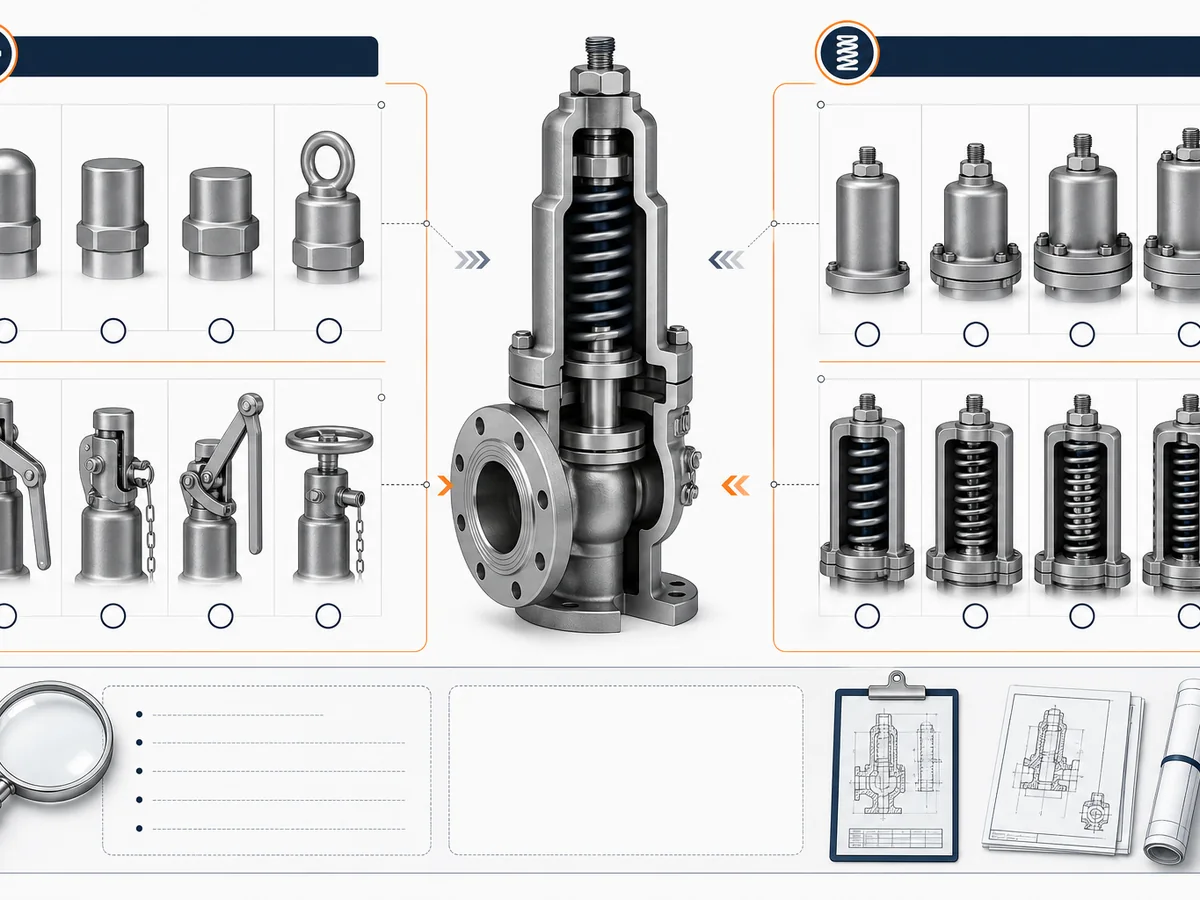
Write the RFQ So Cap and Bonnet Cannot Be Misread
The clearest RFQ treatment is to give the cap/lifting arrangement 和
bonnet construction separate fields rather than asking a supplier to interpret “closed type.”
State the Top / Lifting Arrangement Explicitly
State what is actually known about the upper arrangement using the manufacturer or project terminology.
Where relevant and documented, keep separate entries for:
- cap or top-cover arrangement;
- lifting-device arrangement;
- manufacturer-defined packing or sealing detail.
If a field is not known, mark it for confirmation instead of selecting a stronger or more specific term without
evidence.
In particular, closed cap should not be silently rewritten as gas-tight cap
unless the technical records establish that requirement.
State the Bonnet / Spring-Chamber Construction Explicitly
The bonnet belongs in its own RFQ field. Record the documented bonnet construction and, where relevant,
a manufacturer-defined venting, sealing, or environmental detail that must be preserved.
The purpose is not to redesign the valve in the RFQ. It is to stop one ambiguous descriptor from standing in for
two different construction fields.
| RFQ field | What the buyer should provide |
|---|---|
| Cap / top arrangement | Manufacturer-defined description or clearly documented project requirement |
| Lifting-device arrangement | Existing documented configuration or project requirement |
| Bonnet / spring-chamber construction | Manufacturer-defined description or project requirement |
| Relevant upper-construction vent / sealing detail | State only where relevant and documented |
| Unresolved configuration point | Mark for confirmation rather than guessing |
Route Broader Sizing and Selection Data to the Correct Owner
Separating cap and bonnet terminology does not complete a safety-valve selection or replacement review.
Other process, mechanical, material, installation, capacity, and documentation questions may still need their own
engineering review outside this article.
The rule this page owns is narrower:
Do not use one field called “closed type.” Identify the cap/lifting arrangement and the
bonnet/spring-chamber construction independently, and keep any model-specific venting or sealing detail open
until the technical records establish it.
That resolves the terminology problem without implying that cap and bonnet identification alone completes the
valve selection.