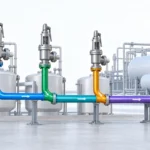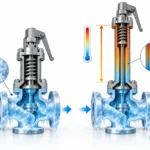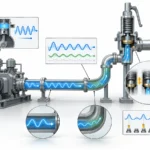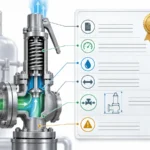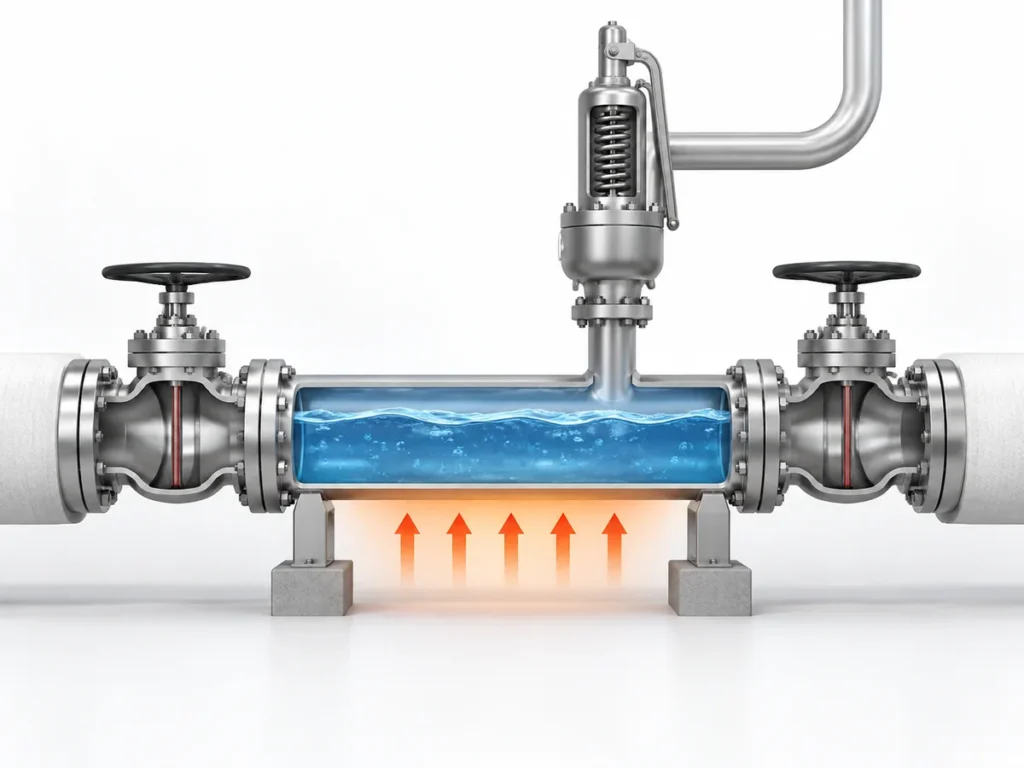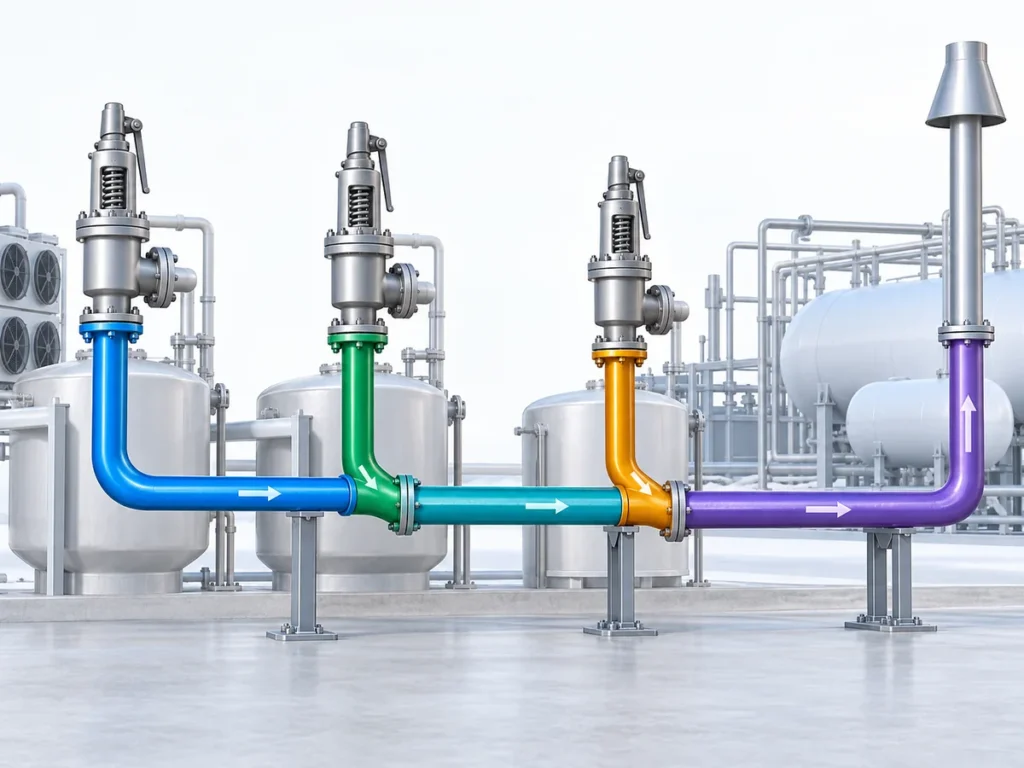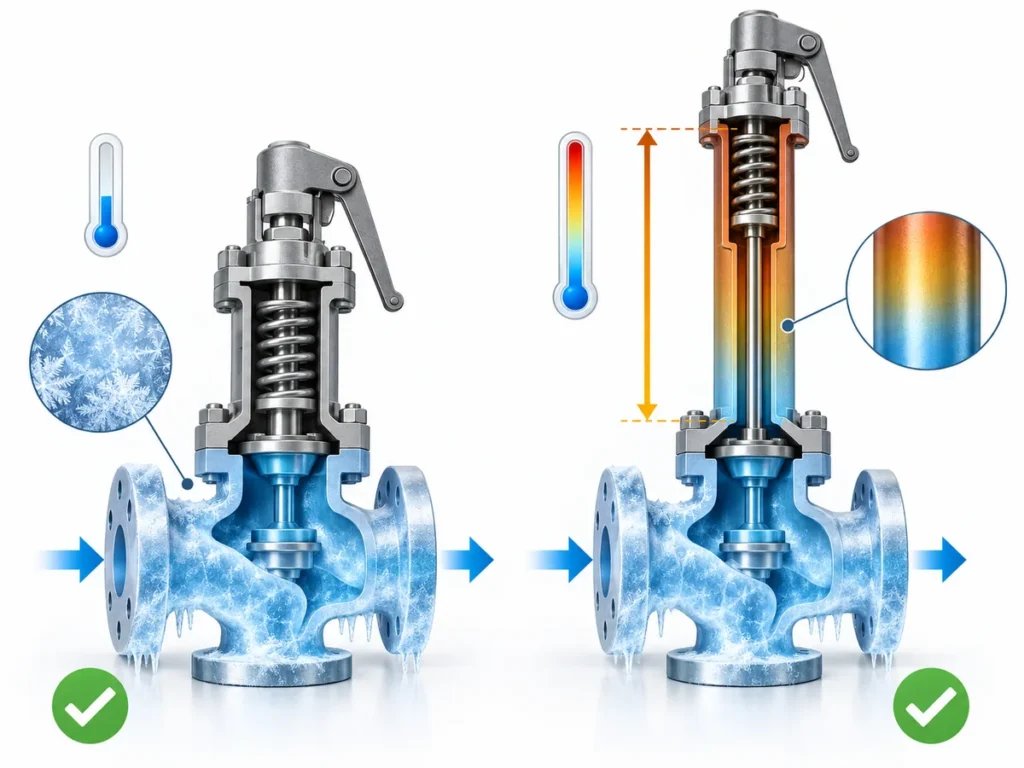
型号、规格和整定压力一致,并不能证明替换安全阀与原阀等效。还需核对排量、工况、背压、接口及技术依据。.

更换安全阀时,仅凭型号、公称尺寸和整定压力与在装阀门看似一致,并不能证明其等效。这三项是有用的初始数据,但无法确定完整的泄放工况、候选阀排量、适用性、在装系统行为或项目文件依据。.
这一区分与泄压设备的实际选型方式一致。在其适用范围内,, API 526 将孔径代号及面积、进口和出口尺寸及压力等级、材质、压力-温度限值以及中心至端面尺寸视为独立的选型项目。. ASME Section XIII 同样涵盖更广泛的主题,包括设计、材料、试验、标志、排量认证和安装。.
对于维护和更换工作而言,更有用的问题并不只是:
“新阀看起来是否和旧阀一样?”
而是:
“是否有证据表明该候选阀满足当前保护工况和在装应用的相关要求?”
当原阀已淘汰、供应商提供替代对照、停车造成快速采购更换阀门的压力,或原始工程记录不完整时,这一点尤为重要。.
在本文中,, 等效更换 是一个工程术语,指候选阀的相关要求已针对既定工况得到充分验证。它并非 ASME、API 或法规分类。.
为什么型号、公称尺寸和整定压力只是起点
型号标识的是制造商自有命名体系中的产品。公称尺寸描述的是连接接口的一部分。整定压力定义的是泄压装置的一项特定运行特性。.
这些字段固然重要,但它们只能回答更换问题的一部分。.
拟选安全阀即使三项全部匹配,仍可能无法确定以下问题:
- 候选阀是否具备适用于所需工况的泄放能力证明;;
- 其阀门结构型式是否适合该应用;;
- 其材料和密封配置是否适用于该工况;;
- 温度或工艺条件是否落在相关应用依据范围内;;
- 现有进口和出口系统会如何影响阀门性能;;
- 所需的合规性或项目文件是否已实际得到证明。.
反过来也同样重要。更换阀不会仅仅因为每个细节都与旧阀不完全相同就自动判定为不合格。差异必须根据该特定特征所满足的要求来评估。.
不要仅为了相同性而比较规格。要将要求与证据进行对比。.
供应商的交叉参考有助于识别候选阀。但不应让它把其余所有工程问题都归结为“等效”一词。”
连接尺寸与泄放能力应分开考虑
常见的简化做法是把连接尺寸当作泄放能力的描述。但事实并非如此。.
API 526 将阀门进/出口尺寸和压力等级与孔径代号及面积分开规定。美国国家锅炉与压力容器检验师协会(National Board)认证信息同样将装置尺寸与流通面积、孔径信息、整定压力范围及与排量相关的认证数据分别记录。.
公称连接尺寸能说明什么
公称尺寸有助于回答机械接口方面的问题:
候选阀门能否与所需管道布置连接?
该检查可包括进口和出口尺寸、连接型式、压力等级,以及相关情况下的安装尺寸。.
它不能回答:
候选阀门能否在适用工况下泄放所需负荷?
| 信息 | 其所回答的主要问题 | 其本身不能证明什么 |
|---|---|---|
| 公称进口/出口尺寸 | Does the connection interface correspond to the piping requirement? | Relieving-capacity adequacy |
| Orifice / flow-area information | What flow-path characteristic is documented? | Suitability for an undefined duty |
| 所需泄放量 | What flow must the protection system handle? | That this candidate can handle it |
| Rated or certified capacity evidence | What performance is supported under the applicable basis? | Suitability when the comparison conditions are not applicable |
What Capacity Evidence Must Answer
Capacity has to be compared against the required relief duty, not against the nominal valve size.
National Board NB-18 guidance cautions that certified capacity values are tied to the conditions under which they were obtained; installation, operating conditions and manufacturer recommendations remain relevant when selecting a pressure-relief device for service.
A catalogue capacity value should therefore not be treated as a standalone “bigger is better” number. The relevant medium, conditions and capacity basis still have to line up with the duty being reviewed.
The same caution applies to orifice letters or designations. They can be useful within a defined standard or manufacturer system, but an orifice identifier should not be treated as a universal cross-brand equivalence code without supporting documentation.
For the deeper distinction between connection size, flow area and certified relieving capacity, see 安全阀排量与连接尺寸:实际决定流量的因素是什么?
Verify the Protection Duty Behind the Set Pressure
Set pressure matters because it identifies the pressure at which the device is intended to exhibit its specified opening behavior. But it does not define the complete protection duty.
National Board certification documentation records set pressure as a separate characteristic from flow area, orifice data, certified medium and capacity-related information.
Set Pressure Is One Part of the Protection Basis
A replacement review needs to keep two questions separate:
At what pressure is the device intended to respond?
和
What must the device actually relieve when that protection is demanded?
The first question involves set pressure. The second involves the required relief duty and the conditions under which that duty occurs.
That is why copying an old set-pressure value does not, by itself, reconstruct the complete engineering basis for the installed valve.
Temperature illustrates the point. National Board technical guidance treats proper set-pressure selection and temperature application as separate considerations, noting that valve design limits, materials, operation and capacity can also be temperature-dependent.
Recheck the Duty if the Process or Protected System Has Changed
The existing valve nameplate and original datasheet are valuable starting evidence. They should not be discarded merely because the valve is old.
But if the process, protected equipment or relief-system basis has materially changed, the reviewer should not assume that reproducing the old set pressure automatically proves the original required relief duty is still valid.
API’s pressure-relief framework separates the determination of overpressure causes and relieving rates from device sizing and selection. The implication for replacement work is straightforward: where the underlying protection basis has changed, the replacement should be checked against the current duty rather than inferred from the candidate model alone.
This does 不 mean every routine valve replacement requires a complete new relief-system study. It means an old value should not be treated as proof of an unchanged duty when there is evidence that the basis behind it has changed.
Match the Valve Design to the Actual Service
Pressure, size and capacity do not describe every characteristic that can matter to service suitability.
Two candidates may differ in operating architecture, medium qualification, temperature limits, materials or sealing configuration. Those differences need interpretation rather than a simple same/different test.
Valve Architecture and Operating Configuration
Within their respective scopes, API pressure-relief-device publications distinguish conventional, bellows and pilot-operated configurations rather than treating them as one interchangeable design category. For example, API 527 separately recognizes these designs within its seat-tightness testing scope. That distinction does not itself define replacement equivalence, but it confirms that configuration is a real engineering characteristic that should not be reduced to model-name similarity.
A change in architecture can matter when the application or installed system interacts differently with the candidate design.
The replacement question is not whether a different architecture is always unacceptable or automatically better. It is whether the candidate configuration remains suitable for the defined duty and installed conditions.
Fluid, Phase, Temperature and Materials
Service compatibility also needs its own evidence.
Depending on the application, relevant information can include:
- fluid or service medium;
- phase or state used in the applicable sizing/application basis;
- relieving or service temperature;
- body and trim materials;
- seat or sealing configuration;
- soft goods or other service-exposed components where relevant.
National Board technical guidance on temperature considerations treats set pressure, temperature limits, materials, operation and capacity as related but distinct application considerations. Its specific scope should not be read as a universal replacement rule; the useful point here is that correct set pressure alone does not resolve temperature or material suitability.
Material comparison deserves similar care. Requiring every replacement component to be literally identical to the old valve is not a universal definition of equivalence. What has to be demonstrated is that the candidate’s materials and configuration satisfy the applicable service and project requirements.
Different does not automatically mean unacceptable. Unresolved suitability is not the same as demonstrated equivalence.
For the detailed material-selection task, see the 安全阀材料选用指南.
Check the Installed-System Interface and Back Pressure
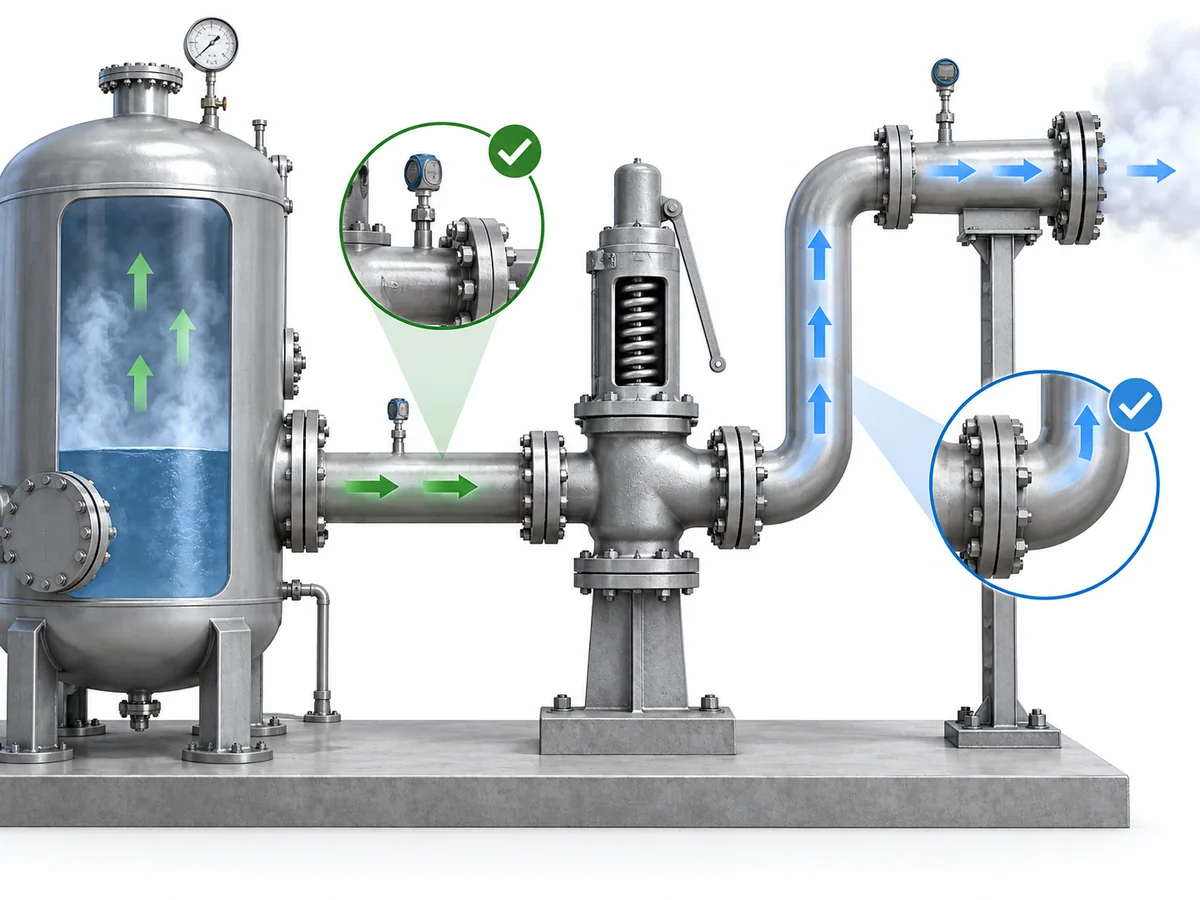
A pressure-relief valve works as part of a system. A catalogue match cannot fully represent what happens between the protected equipment, the valve inlet and the discharge path.
API 520 第 II 部分 treats pressure-relief-device installation as a separate engineering subject. Within its stated industry scope, API 521 also addresses the wider relieving and disposal system, including associated piping and discharge-system components. These sources should be applied according to the governing project basis rather than treated as universal legal requirements for every installation.
Mechanical Interface
First ask whether the candidate can physically connect.
Relevant project checks may include:
- inlet and outlet connection;
- pressure rating or class;
- connection standard;
- orientation and dimensions where installation geometry matters.
But physical fit is only the first layer.
A valve can fit the piping and still require further functional review.
This is why “drop-in replacement” should be used carefully. Mechanical interchangeability and complete functional equivalence are not the same claim.
Outlet Conditions and Back Pressure
The outlet side can affect the replacement decision as well.
美国国家锅炉与压力容器检验师协会 NB-18 notes that listed capacity values established under atmospheric discharge conditions may not remain applicable when discharge back pressure exists, and directs users to consider installation and operating conditions when selecting a pressure-relief device for service.
The practical review path is therefore:
protected equipment → inlet path → relief valve → outlet/discharge path
For each part of that path, ask a separate question:
- Does the candidate physically connect?
- Are the relevant inlet conditions compatible with its application basis?
- Are the outlet and discharge conditions compatible?
- Is back pressure material to the candidate configuration?
- Is the available performance evidence applicable to those conditions?
Those questions are more useful than applying a universal rule such as “any back pressure requires a balanced valve.”
For a deeper treatment of outlet pressure and bellows configurations, see Back Pressure and Bellows in Safety Valves.
Compare Original Requirements with Candidate Evidence
A practical way to organize a replacement review is to stop thinking in terms of a “matching model” and start thinking in terms of an evidence comparison.
Start with the Original or Required Basis
Gather the best available definition of what the existing protection function actually requires.
Depending on the project, that may include the original nameplate, datasheet, sizing information, current process conditions, piping information and applicable project documentation.
Then compare each relevant requirement with evidence for the proposed replacement.
| Original or required basis | Candidate evidence to review | 若未解决 |
|---|---|---|
| Device/application classification | Manufacturer’s documented valve type or configuration | Clarify device function before claiming equivalence |
| 整定压力基准 | Candidate set-pressure data | Resolve the difference against the protection requirement |
| Required relieving duty | Applicable capacity evidence | Do not infer adequacy from nominal size |
| Fluid / service medium / phase | Application or certification information | Confirm suitability |
| 温度 | Published candidate limits and relevant material information | Resolve compatibility |
| Valve architecture | Documented configuration | Determine whether the difference affects the duty |
| Inlet/outlet interface | Drawing, connection, rating and dimensions | Resolve mechanical mismatch |
| Installed back pressure where relevant | Applicable candidate performance or limit information | Verify installed-system suitability |
| Materials / sealing configuration | Candidate material/configuration documentation | Resolve service or project requirements |
| Applicable conformity documentation | Relevant certificate, designator or project-required evidence | Keep acceptance unresolved until scope is confirmed |
| Known deviation from original | Technical disposition or project review | Do not silently treat the deviation as equivalent |
This matrix is a replacement-review framework, not a universal regulatory checklist. The exact required evidence still depends on the application, governing requirements and project.
Ask for Candidate Evidence, Not Just a Cross-Reference
“Equivalent to Model XYZ” is a useful commercial statement only if the evidence behind it can be reviewed.
Depending on the issue being checked, meaningful candidate evidence may include:
- a current datasheet;
- a general arrangement or dimensional drawing;
- documented valve configuration;
- applicable capacity evidence;
- material and sealing information;
- conformity or certification documents within their actual scope.
该 National Board certification system illustrates why scope matters: device design, certification data and other identifying information are maintained as distinct records rather than collapsed into a generic one-line approval.
A supplier cross-reference is therefore a candidate identification tool, not a substitute for every engineering and project comparison that follows.
If the original data are incomplete, keep the unknown visible. Do not fill an original-duty gap merely because the proposed replacement has a detailed catalogue.
For broader purchasing inputs outside this replacement-specific comparison, see the Safety Valve Procurement Checklist.
When an “Equivalent Replacement” Claim Should Proceed, Hold or Be Rejected
After the technical comparison, the reviewer still needs a practical way to deal with three different situations: adequate evidence, missing evidence and a confirmed mismatch.
| Screening status | 含义说明 | Next action |
|---|---|---|
| 通过 | Relevant evidence is available and no critical mismatch has been identified at this screening stage. | Continue through the project’s engineering, procurement and approval process. |
| 暂缓 | A critical comparison cannot be completed because required information is missing, conflicting or outside the evidence provided. | Obtain or verify the missing information before making an equivalence claim. |
| 拒绝 | Available evidence shows that a confirmed requirement is not satisfied by the candidate. | Do not treat that candidate as equivalent for the defined basis. |
The distinction between 暂缓 和 拒绝 prevents uncertainty from being converted into a false technical conclusion.
A missing capacity document does not prove inadequate capacity.
Unknown back-pressure conditions do not prove the valve is unsuitable.
An unresolved material requirement is not yet the same as a confirmed incompatible material.
Those are HOLD situations until the relevant evidence is established.
REJECT is different. It applies when the review already shows that a requirement the candidate must satisfy is not met.
PROCEED also needs a strict boundary. It does 不 mean:
- approved for installation;
- code accepted;
- project approved;
- guaranteed safe;
- universally interchangeable.
It means only that the candidate has passed this preliminary evidence screen far enough to continue to the actual project review.
A parameter difference should therefore neither be ignored nor rejected automatically. Ask what requirement the difference affects. If the requirement remains satisfied and the difference is acceptable under the project basis, literal identity may not be necessary. If the requirement is not met, the candidate is not equivalent for that duty.
A more useful replacement RFQ is not simply a legacy model number followed by “please quote equivalent.” It includes the best available original-valve information, current protection-duty basis, service conditions, inlet/outlet and discharge information, plus the documentation for the proposed candidate.
Reviewing a replacement safety valve?
Prepare the original nameplate or datasheet, current service and relief-duty information, inlet/outlet and discharge conditions, and the proposed candidate documentation. ZOBAI can then review the candidate information as part of an engineering/RFQ discussion; final suitability remains subject to the applicable project and approval basis.