了解 API 527 密封性证据对 LPG 安全阀能证明什么、不能证明什么,以及验收前需要核实哪些内容。

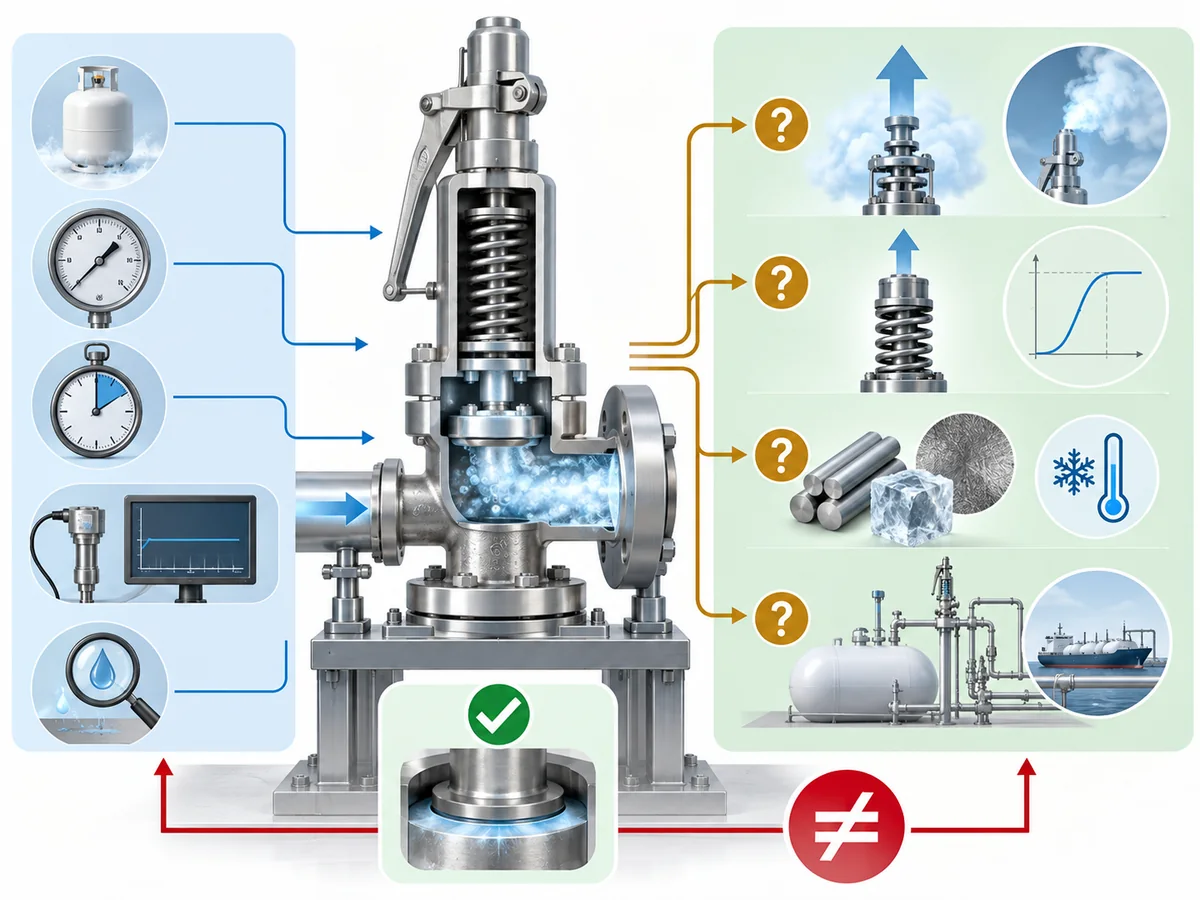
API 527 证明了一个范围有限但重要的结论:在规定的试验条件下,受试泄压阀满足适用的阀座密封性验收准则。 它本身并不能证明在 LPG 工况下零泄漏、具有足够的泄放能力、具备完整的压力性能表现、材料相容性,或已安装泄放系统的验收合格。
这一界限与 API 自身的标准体系架构是一致的。 API 炼油标准目录 将 Standard 527 描述为针对泄压阀阀座密封性的标准,而 API 520 Part I 针对选型与尺寸计算,API 520 Part II 针对安装,API 526 则单独规定阀门规格要求。因此,阀座密封性结果应属于证据链中的一环,而不能替代保护设计的其余部分。
对于工程师或技术采购人员而言,真正有用的问题并不是简单地 “证书上是否写明 API 527?” 而是该试验结果在适用试验依据下,是否能够支持针对该阀门所要求的结论。在 LPG 工况中,这一区分尤为重要,因为技术上可接受的台架阀座试验,并不能回答有关所需泄放量、使用温度、密封材料相容性、背压、排放系统行为或项目特定验收依据等问题。
有关详细的试验方法和泄漏限值信息,请参阅 ZOBAI 的 API 527 阀座密封性试验指南. 本文重点在于为 LPG 安全阀决策解读相关证据。
API 527 阀座密封性结果实际证明了什么
API 527 合格判定应理解为三部分内容:
该受试阀门 + 该适用验收准则 + 该有据可查的试验依据。
当这些要素相互对应时,结果即可支持该阀门满足适用 密封性要求 的结论。API 对 Standard 527 的公开说明涵盖金属密封和软密封泄压阀,包括常规式、波纹管式和先导式结构。该说明还指出,试验介质是试验依据的组成部分,且买方可在采购订单中规定更高的密封性要求。 API 公布的 Standard 527 适用范围 是上述区分的权威依据。
该证据虽有用,但其范围有意窄于以下说法:
- 该阀门适用于完整的 LPG 工况;;
- 该阀门具有足够的泄放能力;;
- 所有材料和密封元件均相容;或
- 已安装的泄放系统可接受。
这些属于不同的工程问题。密封性试验评估的是在规定试验基准下关闭状态阀门的泄漏情况;它不计算所需泄放量,不确认所选孔径面积,不证明额定泄放能力,也不评估已安装的排放系统。
可辩护的表述为:在记录的试验条件下,受试阀门满足适用的 API 527 密封性验收基准。
这种表述使试验结果保持有用,而无需让它证明该试验并未考察的内容。它还能避免常见的文件编制错误,即把一次通过的试验变成声称整台阀门或 LPG 装置“通过 API 认证”的笼统结论。”
为什么“API 527 通过”缺少试验背景就不完整
仅写 API 527 PASS 其决策价值低于能够与实际阀门、试验条件和验收基准相关联的结果。审核人员需要足够的信息来回答两个问题: 试验的是正确的阀门吗? 和 结果是按正确的准则判定的吗?
以下输入项很重要,因为它们可能改变对密封性证据的解读方式。
| 试验背景 | 重要性 | 如果缺失 |
|---|---|---|
| 阀门标识 | 确认该记录属于受审查的阀门。 | 结果可能无法追溯到该阀门。 |
| 阀座/密封结构 | 验收判定可能因密封设计不同而有所差异。 | 泄漏判定标准可能被误用。 |
| 整定压力或适用的压力基准 | 为阀座试验提供压力背景。 | 记录的压力试验值难以判断。 |
| 记录的压力试验值 | 显示评定阀座密封性时所依据的压力。 | PASS 缺少明确的试验点。 |
| 试验介质 | 介质属于适用试验依据的一部分。 | 试验条件不完整。 |
| 观察或测量结果 | 显示试验实际发现的结果。 | 标准引用可能被误认为证据。 |
| 验收依据 | 确定用于判定结果的准则。 | “PASS”无法独立解读。 |
| 采购方/项目要求 | 采购方可能要求比基准准则更严格的密封性能。 | 标准层面的 PASS 可能无法满足合同要求。 |
这并 不 意味着 API 527 普遍要求每份试验证书都包含相同的管理字段。序列号、客户位号、见证人签名、校准参考或工单号可能由特定质量计划要求,但若无适用项目依据,不应将这些项目描述为 API 527 的普遍要求。
实际评审问题在于:是否有足够的阀门标识、试验条件和验收信息,以证明该结果确实支持所评审的候选阀门。
如果缺少这些信息,通常应得出的结论是:对于所请求的判定而言证据不完整,而不是自动认定阀门不合格。文件暂缓与试验失败不同:前者意味着证据包尚不充分;后者意味着记录结果未满足适用准则。
API 527 合格是否意味着 LPG 安全阀零泄漏?
不是。API 527 PASS 不应被解读为“LPG 工况下零泄漏”的通用声明。”
对于适用的金属密封阀门,在试验基准下一定量的阀座泄漏是可以接受的。已发布的制造商程序说明了这一区别:金属密封试验可采用允许泄漏率,而某些 O 形圈或软密封结构在规定的台架试验条件下采用无泄漏准则。例如参见, Baker Hughes 的 Consolidated 1900 / 1900 DM 技术手册.
因此,允许阀座泄漏并不等同于普遍意义上的零泄漏。 金属密封阀门可能满足其适用的验收准则,而并未达到字面意义上的零泄漏读数。反之,特定软密封结构的无泄漏结果仍受已记录的台架试验压力、介质、结构和安装条件限制。它不会成为完整阀门组件在安装后永不出现泄漏的终身保证。
示例工程场景: 某台金属密封 LPG 阀门满足适用的 API 527 泄漏准则,但业主期望在正常运行期间“无可检测泄漏”。问题不一定在于 API 527 试验失败;可能是基线试验验收与业主更严格的操作或采购要求之间存在不匹配。预防措施是在 RFQ 或采购订单中明确更严格的阀座密封性要求,并依据该要求核对所供试验记录。
API 527 阀座结果也不应被用作组件上所有可能泄漏路径的证据。制造商试验框架将阀座密封性与压力边界及向外/反密封性检查分别区分;LESER 已发布的质量文件就是这种区分的一个示例。 LESER 质量与试验文件.
对于 LPG 应用,诸如以下措辞 “在适用的密封性试验判定标准下未观察到泄漏” 在实际记录支持的情况下,可能是合适的。
相比之下, “零泄漏 LPG 安全阀” 所暗示的内容远超仅凭 API 527 密封性试验结果所能证明的范围。
API 527 不能证明 LPG 安全阀的哪些方面
密封性试验合格只回答了一个技术问题,并不能完成整个 LPG 安全阀的审查。API 自身的标准体系将密封性、定径/选型、安装和阀门规格作为相互独立的工程主题;这种划分方式同样可作为采购审查的有用参考。
排量与所需泄放工况
API 527 并不能证明所选阀门能够通过所需的泄放流量。 API 520 第 I 部分 涉及压力泄放装置的定径与选型,而 API 527 涉及密封性。
密封性检验关注关闭状态下的阀座是否满足适用的泄漏标准。排量校核则关注阀门开启时能否泄放所需的工况负荷。 所需泄放量来自起控制作用的超压工况;随后所选阀门需要具备合适的孔径/排量依据以及有文件记录的泄放能力。仅凭进口和出口连接尺寸并不能确立该能力。
因此,API 527 PASS 不能替代所需的定径与排量证据。
示例工程场景: 更换阀门的进口和出口连接尺寸相同,整定压力也正确,但其有文件记录的泄放能力不足以满足已批准的 LPG 泄放工况。原因是按连接尺寸而非按所需工况负荷和排量证据进行选型。预防措施是在采购放行前,将已批准的所需泄放负荷与所选阀门有文件记录的排量依据进行比对。
关于该独立任务,请参见 ZOBAI 的 API 520 安全阀定径指南.
整定压力、启闭压差与运行性能
密封性检验并不能完全证明阀门的压力性能行为。这些术语回答的是不同的问题: 整定压力 在适用依据下决定预期的开启点;; 超压与压力积聚 以不同的参考点描述泄放事件期间的压力升高;以及 启闭压差 描述开启与回座行为之间的差值。适用的限值和定义取决于起控制作用的规范和项目依据。
Set-pressure verification, reseating or blowdown behavior, and seat leakage are distinct checks. Passing one should not be used to imply that the others have also been demonstrated.
ZOBAI 的 set pressure, overpressure and blowdown guide owns the detailed pressure-performance terminology.
Materials and LPG-Service Compatibility
A seat-tightness result does not establish that the body, trim, seat or sealing materials are suitable for the actual LPG duty. API 526 treats materials and pressure-temperature limits as separate purchase-specification items for applicable flanged pressure-relief valves; that is another reason not to infer material suitability from a seat-leakage result. API 炼油标准目录 summarizes the distinct API 526 and API 527 scopes.
Material review should consider the components that actually see the service or control valve function—not only the body grade. Nozzle and disc surfaces affect the seating interface; guides can affect freedom of movement; springs and bellows may have their own environment and temperature limits; gaskets, O-rings and soft seats may determine sealing compatibility. Passing a leakage test does not replace that component-level review.
For deeper material-selection context, see ZOBAI’s safety-valve material selection guide.
Installed-System and Project Acceptance
A factory seat test does not demonstrate that the installed relief system is acceptable. API 520 第 II 部分 treats installation as a separate engineering subject.
Depending on the installation, the review may still need to address inlet pressure loss, outlet-system resistance, superimposed and built-up back pressure, discharge reaction, drainage and the way the valve is connected to a shared header or disposal system. Those factors can affect stable opening, available capacity and reseating behavior even though the valve passed a bench seat-tightness test.
Valve architecture also matters. A conventional spring-loaded valve, a balanced-bellows design and a pilot-operated valve do not respond identically to back pressure and installed piping conditions. API 527 does not select among those architectures; the installed duty does. For a deeper review, use ZOBAI’s 背压与波纹管工程指南.
示例工程场景: an LPG safety valve passes its shop seat-tightness test, then the outlet is connected to a modified common discharge header with greater resistance. The later stability or reseating problem is not evidence that API 527 was performed incorrectly; the engineering issue is that the installed back-pressure condition changed. The prevention is to recheck the valve type, back-pressure basis and outlet system whenever the discharge network is modified.
The same applies at project level: an API 527 result may satisfy one required documentation item without establishing that every owner, EPC, jurisdictional or project requirement has been met.
A valid API 527 result that also satisfies the applicable purchaser or project seat-tightness basis can close that seat-tightness question. It does not close every other question attached to the valve.
How to Review a Supplier’s API 527 Test Record
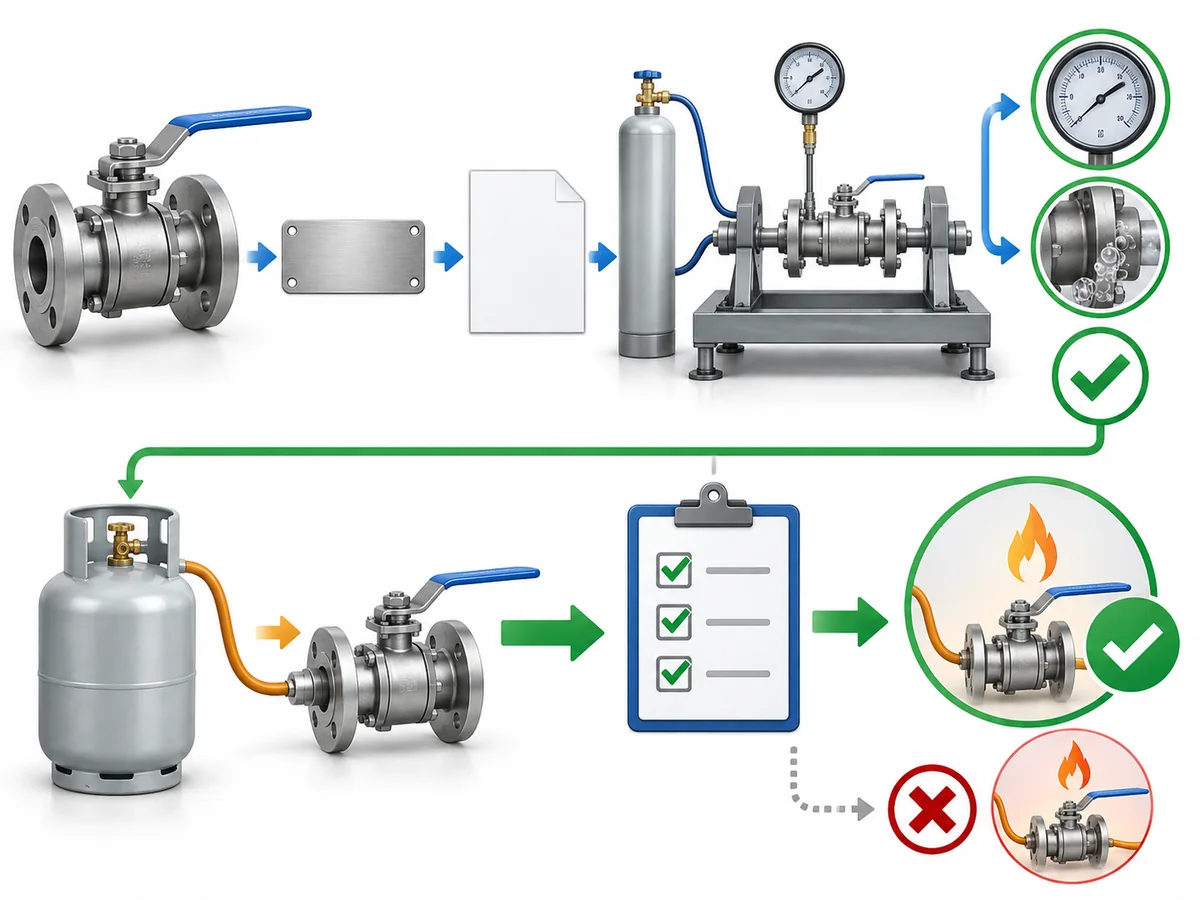
Review the document as evidence for a specific candidate rather than scanning only for the words “API 527.” A useful review starts with traceability, then moves to the test basis, the recorded result and the applicable acceptance criterion.
-
Match the record to the valve.
Confirm that the identification accepted by the project ties the record to the candidate. A test on another valve or configuration is not evidence for this one merely because both reference API 527.
-
Confirm the seat or sealing configuration.
Make sure the configuration represented by the record matches the valve being supplied.
-
Check the pressure basis.
Compare the stated pressure basis with the recorded seat-test pressure so that the result can be placed in the correct test context.
-
Check the test medium.
Confirm that the documented medium is consistent with the applicable test basis. API’s public description of Standard 527 states that the seat-tightness test medium is tied to the medium used for the set-pressure determination, with a separate rule for dual-service valves.
-
Check the result and acceptance basis together.
Do not stop at
PASS. Review the relationship between the observed or measured result, the applicable criterion and the final acceptance decision. -
Check the purchase or project requirement.
A project may require tighter seat performance than the baseline standard criterion, so the contractual acceptance basis still needs to be checked.
What to Verify Beyond API 527 Before Accepting the Valve for LPG Service
Once the seat-tightness evidence is satisfactory, confirm that the other engineering questions have their own evidence rather than borrowing credibility from API 527.
| Open question | Evidence or input to request | Why it remains separate |
|---|---|---|
| What relieving duty must be handled? | Relief scenario and required capacity basis | Seat tightness does not determine relieving capacity. |
| What pressure performance is required? | Set pressure and other applicable performance requirements | These are separate from seat leakage. |
| What is the actual LPG service? | Medium/state, relevant composition and temperature | Service conditions affect candidate selection. |
| Are the materials and seals suitable? | Body, trim, seat and seal materials plus the compatibility basis | A seat test does not demonstrate compatibility. |
| Which valve configuration is proposed? | Conventional, bellows, pilot-operated or other applicable configuration | Configuration can affect the wider selection review. |
| What does the installed system impose? | Back-pressure and discharge-system inputs where relevant | Installation and system behavior are separate from seat tightness. |
| What project basis applies? | Applicable project specification, code basis and purchaser requirements | Project acceptance covers more than one test. |
| Does the evidence belong to this candidate? | Traceable candidate-specific test documentation | Generic product statements are weaker than candidate evidence. |
| Has the valve been repaired, reset or relapped? | Repair scope, as-left setting/test records and the applicable repair authorization or quality-system evidence | A pre-repair seat result does not prove post-repair condition. |
If the valve has been repaired, reset or relapped
Do not treat an old seat-tightness result as automatically representative after work that can affect the pressure-relief valve’s functional or sealing condition. API RP 576 is specifically an inspection-and-repair practice for self-actuated pressure-relieving devices, including spring-loaded and pilot-operated valves. API’s catalog description of RP 576 identifies inspection and repair as a separate lifecycle activity from new-valve seat testing.
Where the project, jurisdiction or construction code requires recognized valve-repair authorization, verify that route rather than assuming any workshop adjustment is equivalent. The National Board states that its VR Certificate of Authorization and VR Stamp are for the repair of pressure-relief valves under the applicable NBIC program. This is a jurisdiction- and project-dependent requirement, not a universal statement that every LPG valve everywhere must carry a VR repair stamp.
示例工程场景: a valve had an acceptable seat-tightness record when new, then the seat and disc were relapped during overhaul. Reusing the original certificate as the only acceptance evidence would miss the fact that the sealing surfaces and as-left condition changed. The preventive action is to review the repair scope, as-left setting and post-work test documentation required by the applicable repair program before return to service.
The decision path is: verify API 527 seat tightness → identify what remains unproven → request the evidence that answers those remaining questions.
For broader product context, see ZOBAI’s LPG safety-valve page. For a broader purchase package, use the safety-valve RFQ checklist; for in-service planning, see the safety-valve maintenance and inspection guide.
Worked Document Review: Is This API 527 Record Usable?
Assume a supplier submits a one-page certificate stating only that an LPG safety valve “passed API 527.” This is an illustrative document-review scenario, not a claim about a ZOBAI customer or project. The statement alone is not enough to connect the result to the valve being purchased. A usable record should let the reviewer identify the tested item, understand the applicable test conditions and compare the result with the acceptance basis used for that purchase.
| Record field | Usable evidence | Ambiguity that requires clarification |
|---|---|---|
| 阀门标识 | Tag, serial number, model, size, orifice, set pressure and relevant trim details where required by the project traceability plan | A generic model certificate with no link to the supplied valve. |
| Test basis | Referenced edition/procedure, test medium, pressure, and other method details needed by the governing procedure or project QA plan | “Tested to API” without enough information to identify the actual test basis. |
| Observed result | Measured leakage or clearly recorded observation in the units or form used by the applicable procedure | A pass box with no result that can be reconciled with the acceptance basis. |
| Acceptance comparison | The applicable criterion and a clear comparison with the recorded result | No explanation of which acceptance basis applied. |
| 可追溯性 | Date, controlled test-equipment identification or calibration status, witness/approval and revision control where required by the project quality system | An uncontrolled worksheet that cannot be linked to the accepted test process. |
Even a complete seat-tightness record remains one document in the acceptance package. Confirm capacity, set pressure, materials, LPG service conditions and installed back pressure separately. Use the safety-valve RFQ checklist to keep those decisions traceable.
FAQ About API 527 Seat Tightness for LPG Safety Valves
Does passing API 527 mean an LPG safety valve will have zero leakage in service?
No. API 527 is a seat-tightness test under defined conditions. Applicable metal-seat acceptance can permit measurable leakage, while a no-leak result on a particular soft-seat configuration is still limited to the documented test basis. It should not be turned into a lifetime guarantee that the complete installed valve will never leak.
What should I check on an API 527 test record?
Confirm that the record can be tied to the candidate valve, then review the seat configuration, pressure basis, test pressure, test medium, observed or measured result, acceptance criterion and any tighter purchaser or project requirement. Administrative traceability fields should follow the applicable quality plan rather than being presented as universal API 527 certificate requirements.
Does API 527 prove the valve has enough relieving capacity?
No. Seat tightness and relieving capacity are separate engineering questions. Required relieving capacity comes from the governing relief scenario, and the selected valve needs documented capacity evidence for that duty. Connection size alone is not proof of capacity.
How can back pressure matter if the valve already passed API 527?
API 527 evaluates seat tightness on the test basis; back pressure is an installed-system condition. Depending on valve design and the discharge network, back pressure can affect selection, stable operation, available capacity and reseating behavior. A satisfactory bench seat test therefore does not eliminate the need for an outlet-system review.
Is an old API 527 record enough after a valve has been repaired or relapped?
Not by itself. Work on the seat, disc, setting or other functional parts can change the as-left condition. Review the repair scope and the post-work setting and test documentation required by the applicable owner, project, code or jurisdictional repair program.
Which standards belong in the same review as API 527?
Only those that answer a real project question. API 520 Part I is relevant to sizing and selection, API 520 Part II to installation, API 526 to applicable valve specification items, and API RP 576 to in-service inspection and repair practices. The governing construction code, owner specification and jurisdiction determine which requirements actually apply to a specific LPG installation.