获取安全阀报价

请提供您的介质、整定压力、温度、口径、标准或数据表,我们的团队将审核您的需求并回复相应的后续步骤。.

全启式与微启式安全阀:排量、升程及应用限制

按排放面积控制、排量影响、应用限制及选型前需核实的数据,比较全启式与微启式安全阀。.

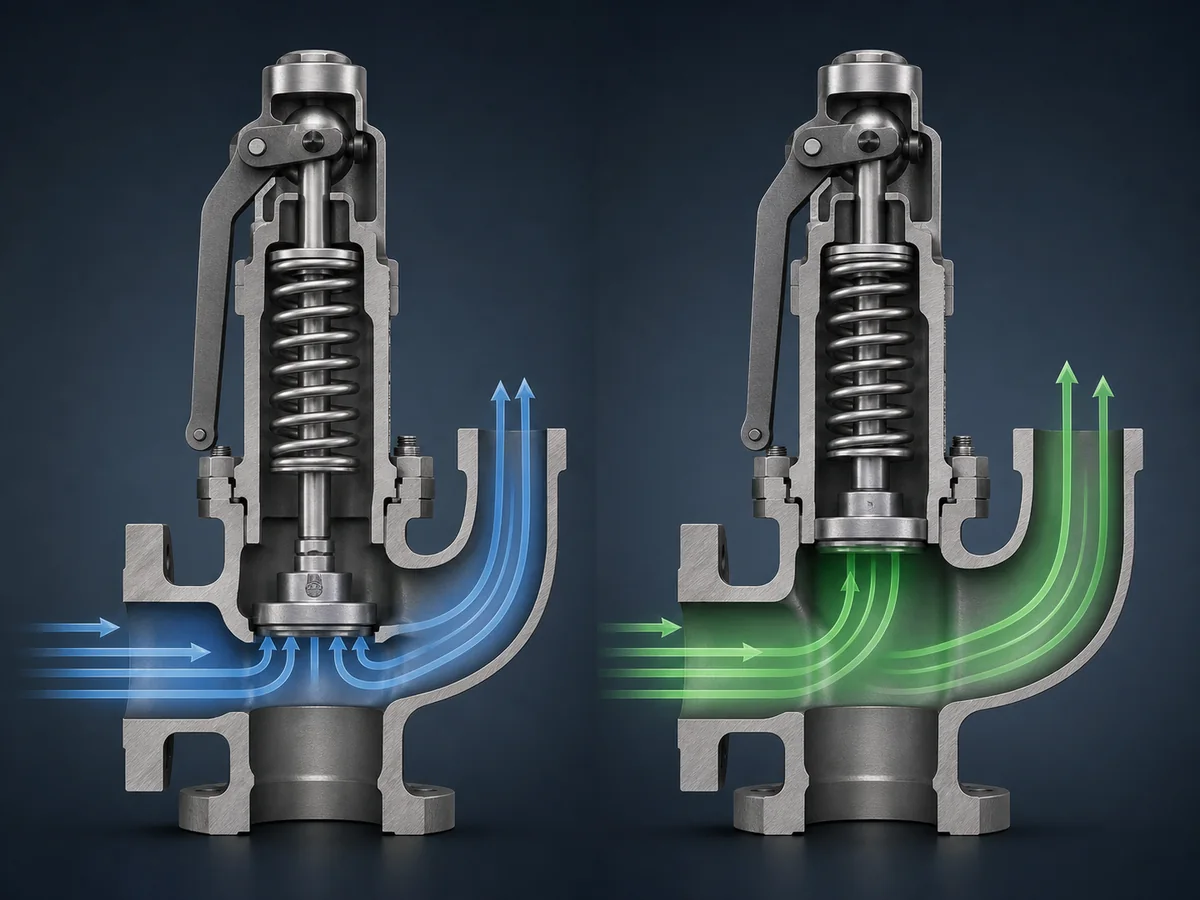
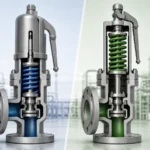
安全阀中微启式帘面积控制与全启式内部流通面积控制的概念对比。.

全启式安全阀与微启式安全阀的最佳比较方式,在于观察阀瓣离开阀座时,是什么控制了可用的排放面积。在微启状态下,阀瓣位置及由此产生的帘面积对可用流通开口仍具重要意义。在全启状态下,帘面积已增大到一定程度,使得另一内部流通面积成为控制性节流部位。.

这一区别会影响排放能力潜力,但并不能证明某一特定阀门能够泄放特定系统所需的泄放量。一个站得住脚的全启式与微启式选型决策,仍必须将所需泄放工况与适当的阀门排量数据、适用的项目要求以及所考虑阀门的自身限制联系起来。.

究竟是什么让安全阀成为全启式或微启式?

有用的区别并不仅仅在于一个阀门比另一个“开启得更大”。升程描述的是阀瓣离开阀座的移动,但工程问题在于,这种移动是否仍在控制流体实际可用的排放面积。.

升程、帘面积与流通控制面积

当阀瓣从阀座升起时,会在阀座区域周围形成一个开口。该开口通常用帘面积来描述。当帘面积是控制泄放面积时,改变阀瓣位置会改变可用的流通开口。.

这是微启式工况的重要特征:可用泄放面积仍取决于阀瓣位置。该词 因此不应将其简化为无依据的通用升程百分比。这里关键在于阀瓣行程与
实际控制泄放的区域。.

在全启式状态下,阀瓣已移动至足够位置,帘面积不再是控制性限制。此时,阀体流道或其他内部流道决定控制性泄放面积。这一基于面积的区分已反映在既定的泄压工程术语和排量计算方法中。.
工程术语参考

美国国家锅炉压力容器检验师协会排量计算方法参考.

为什么全启式不等于全通径

全启式和全通径描述的是不同的特性。. 全启式涉及阀瓣行程与控制性泄放面积之间的关系。全通径涉及内部流道或通径的配置。.

因此,规格书、产品描述或工程讨论不应将这两个术语视为同义词。这样做可能使设计分类看似证明了实际尚未确定的流道特性。.

“高启式”在术语中的位置

在某些安全阀术语中,高启式是一个独立的分类术语。除非适用的技术文件如此定义,否则不应将其视为全启式的另一种说法。.

在选型工作中,请保留 高启式, 全启式全通径 明确并确认相关阀门文件实际使用的分类。.

安全阀中微启式帘面积控制与全启式内部流通面积控制的概念对比。.
该图示展示了控制泄放面积的区别,但并未确定特定阀门的排量。.

升程如何改变可用泄放面积和排量潜力

升程之所以重要,是因为它改变了开启的几何形状,而帘面积仍控制着泄放路径。这在阀瓣行程与通过阀门该部分可用的流通面积之间建立了直接的工程联系。.

重要的限定条件是 排量潜力. 。几何形状有助于解释设计为何能提供不同的流通面积,但仅凭几何形状并不能确定特定阀门的额定或认证泄放能力。.

当阀瓣升程仍限制可用流通面积时

当帘面积是控制性限制时,额外的阀瓣移动会增加阀座周围可用的开启面积。在这种情况下,阀瓣位置与实际泄放面积直接相关。.

因此,微启式设计可能受到阀瓣行程与帘面积之间关系的限制。该限制是否对项目产生影响,取决于泄放工况以及特定阀门在相关基准和条件下确定的排量。.

当进一步升程不再控制有效排放面积时会发生什么变化

全启条件改变了控制几何形状。一旦帘面积不再是控制流通面积,内部通道将决定可用的排放面积。
内部通道将决定可用的排放面积。.

因此,若认为阀瓣行程的进一步增加必然带来实际排放面积的相应增加,则会产生误导。一旦其他通道控制了流动路径,升程便不再是唯一相关的几何限制。.

为何公称连接尺寸无法回答此问题

公称进口或出口尺寸描述的是连接。它本身并不能确定控制排放的内部面积,也不能确定泄放能力。.

连接尺寸是安装和规格方面的有用信息,但不能替代适用的内部流通面积或阀门排量数据,当需要校核所需泄放工况时。.

为什么全启式安全阀并不自动意味着尺寸足够

全启式是一种设计分类,并不能证明阀门能够泄放特定的超压工况。. 足够的尺寸需要单独比较受保护系统需要泄放的量以及阀门在要求基础上已确认能通过的流量。.

泄压装置定径与选型、泄放能力确定以及升程术语回答的是不同的工程问题。API将定径与选型视为一项独立的工程任务,而国家锅炉压力容器检验局则单独维护经认证的泄放能力信息。.
API定径与选型背景

国家锅炉与压力容器检验委员会认证排量相关说明.

所需泄放量与阀门能力对比

The required relieving duty belongs to the protected system and the relief case being evaluated. It answers the question: what must be discharged for the applicable scenario?

Valve capability answers a different question: what can this valve be shown or rated to discharge under the stated basis and conditions?

The two must be compared before the valve can be treated as adequately sized.

Rated or certified capacity versus the words “full lift”

Capacity information connects a valve with an established performance basis. Which rated or certified capacity information is required depends on the applicable code, project requirements and the valve being considered.

Lift classification remains relevant because it describes part of the valve’s discharge geometry. It does not replace the capacity evidence required for the relief case.

Why capacity comparisons need a compatible basis

A capacity value is useful only when its basis and stated conditions are understood. Two figures should not be treated as directly comparable merely because they use the same unit or are associated with valves having the same nominal connection size.

Before using capacity information to prefer a full-lift or low-lift design, confirm that the data are appropriate to the service and comparison being made. Where a formal sizing or certification framework applies, that framework and the project requirements should govern the comparison.

If the required relieving duty has not yet been established, continue with the

safety valve sizing and certified relieving capacity guide

before treating lift classification as a product-selection decision.

Conceptual distinction between a full-lift classification and verified relieving-capacity adequacy.
A lift label describes valve behavior; it does not by itself prove that the valve satisfies the required relieving duty.

Where Full-Lift and Low-Lift Designs Reach Their Application Limits

The more useful application question is not “Which media use full lift?” It is “Under what conditions does the available discharge path become a meaningful constraint for the required relieving duty?”

Product terminology
and application requirements are not the same thing. ISO explicitly identifies its general safety-valve requirements as product requirements rather than an application standard, which is why lift classification should not be converted into a universal service rule.
ISO 4126-1 scope reference.

When required relieving duty makes flow-area limitations important

If a low-lift design has appropriate documented relieving capability for the required duty, satisfies the applicable project requirements and remains within the limits of the specific valve, its lift-dependent curtain area does not by itself make that design unsuitable.

If a candidate design cannot provide the required relieving capability on the applicable basis, that design has to be reconsidered. A full-lift design may be evaluated as an alternative, but its suitability must still be demonstrated against the actual duty and project requirements.

Why fluid or phase alone is not a universal selection rule

Fluid type and phase can affect safety-valve sizing, behaviour and application requirements, so they belong in the selection process. They should not, however, be converted into shortcuts such as “gas means full lift” or “liquid means low lift.”

Those shortcuts omit the required relieving duty, valve design, governing requirements and documented device capability.

Why operating and relieving conditions still matter

Applicable relieving conditions and relevant system conditions can affect the performance expected from a pressure-relief device.

Back pressure is one example. Engineering guidance recognizes that back pressure can influence the performance and relieving capacity of certain conventional direct spring-loaded pressure-relief valves. That effect is design-dependent; it should not be described as an inherent property of either the full-lift or low-lift classification.

Pressure, temperature, materials and service suitab
ility are likewise product-specific matters that must be verified from current manufacturer documentation and the requirements governing the project.

When the lift label is not enough to decide

Do not complete the full-versus-low-lift decision when the relief duty is unknown, the usable capacity basis is unclear, governing project requirements have not been established or the relevant manufacturer limits have not been confirmed.

How to Choose Between Full Lift and Low Lift for a Real Relief Duty

A practical comparison starts with the relief requirement and works toward the lift classification. Starting with the words 全启式 or low lift reverses that logic and can cause the design label to substitute for the engineering data that actually determine whether either route is suitable.

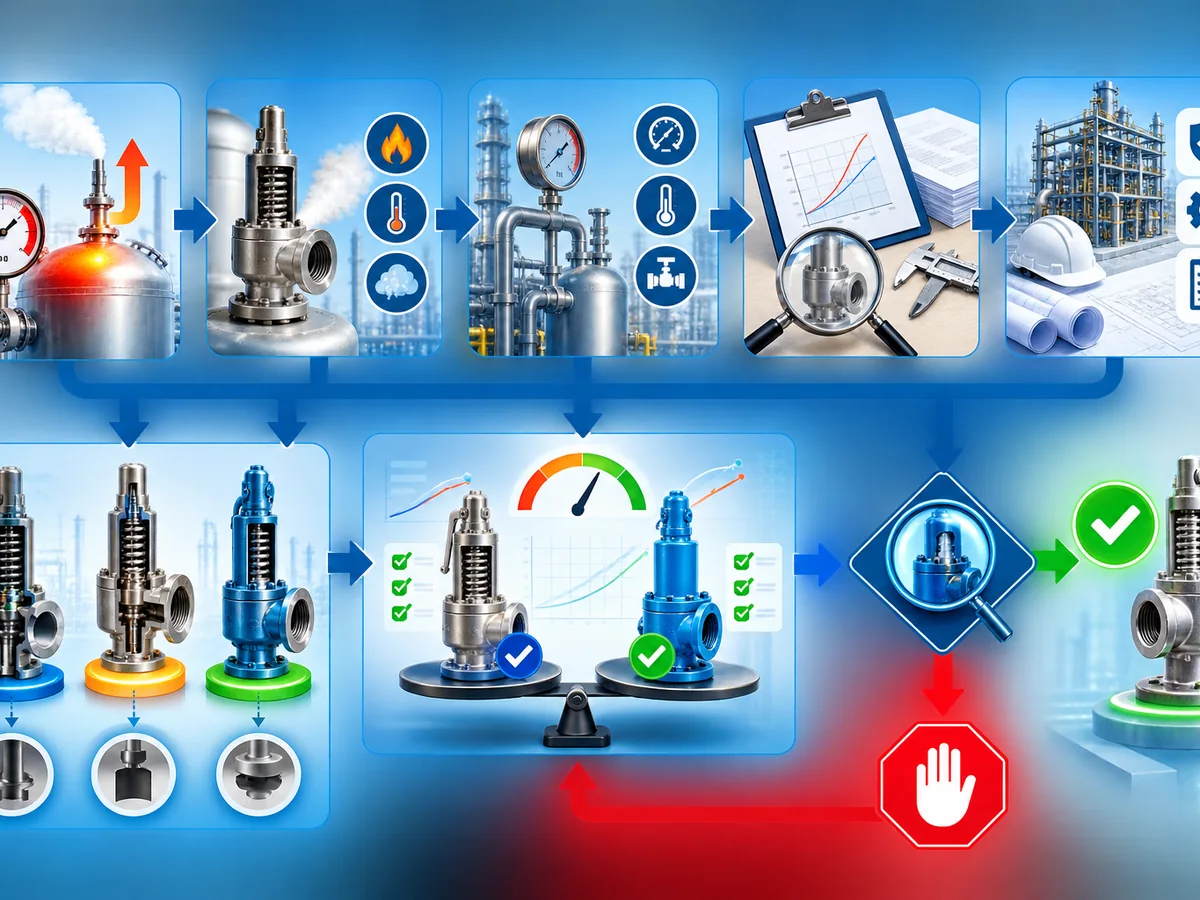
Decision flow for reviewing relief duty and verified capacity evidence before comparing full-lift and low-lift safety valves.
Lift classification is considered after the relief duty and capacity basis are known; missing evidence stops the selection.

Start with the required relieving duty

First establish what the pressure-protection system has to relieve
for the case being evaluated. This is the reference point against which a valve’s capability must eventually be checked.

Check fluid, phase and relieving conditions

Identify the service conditions required by the applicable sizing and selection basis. Fluid and phase matter because they are part of the engineering basis for pressure-relief performance, not because each fluid category maps automatically to one lift classification.

Check back-pressure and relevant system conditions

Determine whether relevant system conditions can materially affect the candidate valve design. Back pressure should be reviewed where it is relevant to the valve type and installation.

Do not infer that choosing a full-lift valve automatically eliminates a back-pressure issue, or that a low-lift classification necessarily creates one.

Compare required duty with the valve’s verified capacity basis

Once the relief requirement is understood, compare it with capacity information suitable for the valve and the applicable project basis. The controlling-area relationship explains an important part of the valve design; the capacity evidence determines whether the candidate can satisfy the required duty under the stated conditions.

Confirm the applicable code or standard context

Confirm which code, standard, project specification or regulatory framework governs the application. Product standards, sizing standards and application requirements can have different scopes, so one document should not be assumed to answer every part of the decision.

Verification package for specifying full-lift or low-lift safety valves using capacity, service and documentation evidence.
Final specification requires compatible capacity evidence and product-specific service limits in addition to lift classification.

What to Verify Before Specifying a Full-Lift or Low-Lift Valve

Once the preliminary full-versus-low-lift route is clear, the specification should move from general terminology to verifiable valve data. This is the point where general engineering principles are no longer enough and valve-specific manufacturer evidence becomes necessary.

Lift classification and actual flow-area basis

Confirm how the manufacturer classifies the valve and what flow-area basis is used to describe or establish its discharge performance. Do not assume that a product name, external appearance or nominal size identifies the controlling internal area.

If terms such as 全启式, 高启式 or 全通径 appear in the documentation, make sure their intended meanings are clear rather than treating them as interchangeable descriptions.

Rated or certified relieving capacity and stated conditions

Obtain the capacity information required by the applicable project basis and confirm the conditions under which that capacity is stated. Where certified relieving capacity is required, check the relevant certified-capacity documentation directly.

Applicable standard and edition

Confirm which current standard or code applies to the project, what part of the valve or selection process it governs, and which edition the project requires.

Standards are revised, and older product literature may continue to cite superseded editions. An older catalog reference should not silently be treated as the current project requirement.

Product-specific pressure, temperature, material and service limits

Pressure range, temperature range, materials and service compatibility are product-specific facts. They should come from current manufacturer documentation for the actual valve under consideration.

General statements about full-lift or low-lift designs cannot establish those limits, and data from one model or manufacturer should not be generalized to another.

Information that requires manufacturer confirmation

Before the valve moves into a final specification or RFQ, verify the product-specific facts that this general comparison cannot answer. Depending on the project, the required confirmation may include:

  • the manufacturer’s declared lift classification;
  • the applicable flow-area or capacity basis;
  • rated or certified relieving-capacity documentation where required;
  • the applicable product standard and edition;
  • model-specific pressure, temperature, material and service limits; and
  • project-specific certification or documentation requirements.

This checklist does not imply that every safety valve requires the same documentation or that any particular manufacturer holds a particular certification.

Full lift and low lift are best used as part of a selection framework, not as the final selection itself. Lift classification narrows the design route; required relieving duty, documented valve capability and governing project requirements complete this part of the valve-selection decision.

内置式安全阀集成于成套设备与独立安装的单独安全阀的概念对比。.上一篇 什么是内置式安全阀?
下一篇 封闭式与开放式安全阀:设计差异、应用及选型指南 封闭式与开放式安全阀弹簧腔布置的概念对比。.

发表回复

您的邮箱地址不会被公开。 必填项已用 * 标注