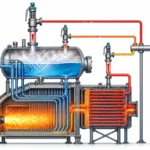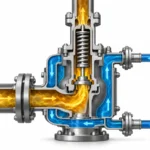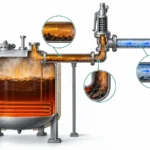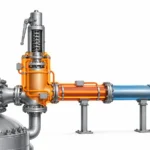
Диагностика закупоривания предохранительного клапана с рубашкой обогрева: определение места сужения, проверка подачи тепла, разделение механизмов отложений и сбор данных перед ремонтом.

Закупоривание пробки предохранительного клапана с рубашкой обогрева может происходить даже при наличии обогревающей рубашки корпуса.
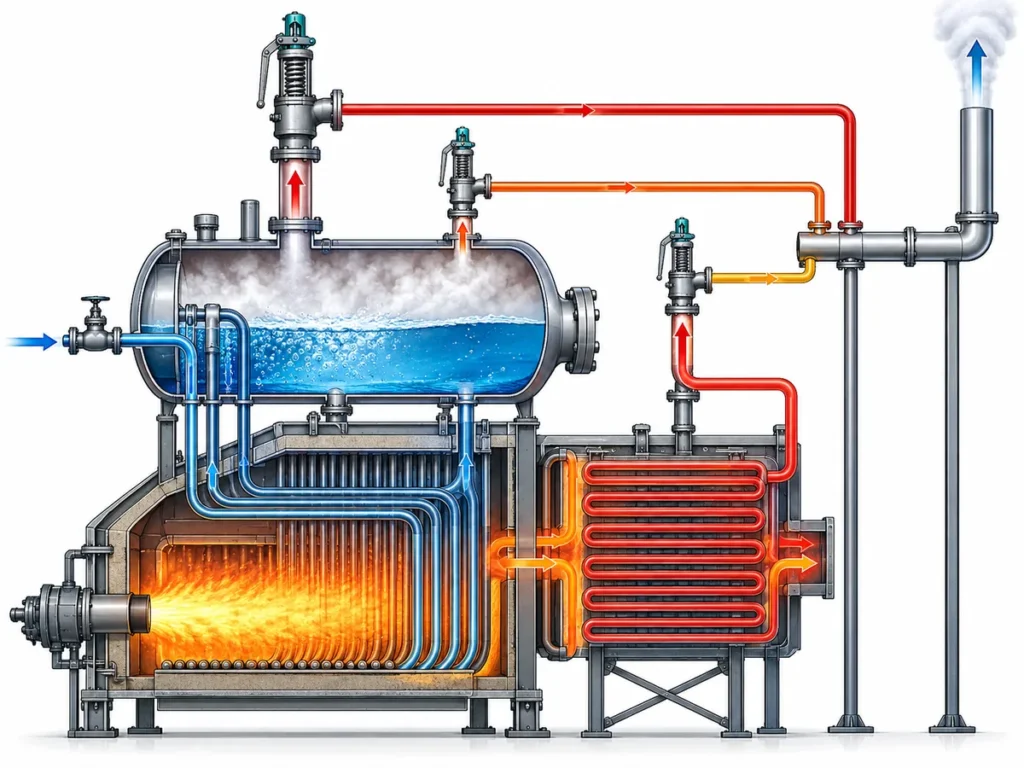
A предохранительный клапан с рубашкой обогрева может всё равно закупориваться, поскольку рубашка обогрева решает лишь часть проблемы закупоривания. Она может снизить риск затвердевания или повышения вязкости, связанный с температурой, в той зоне, которую она эффективно обогревает, но это не гарантирует, что каждая поверхность, контактирующая с рабочей средой, движущийся компонент, выходная зона или прилегающий трубопровод остаются свободными от препятствий. Технологические отложения, посторонние материалы, недостаточная локальная подача тепла или препятствие за пределами эффективно обогреваемой зоны могут давать аналогичные симптомы.
Это делает “клапан закупорен” симптомом, а не диагнозом. Прежде чем увеличивать нагрев, чистить клапан, менять схему установки или заменять устройство, сначала установите, где именно находится препятствие и какой механизм мог разумно его там создать. Полезная последовательность диагностики: локализация → вероятный механизм → различающие доказательства → контролируемое следующее действие.
Закупоривание предохранительного клапана с рубашкой обогрева: локализация препятствия
Первый вопрос при диагностике — не “Что вызывает закупоривание?”, а “Где находится препятствие?”
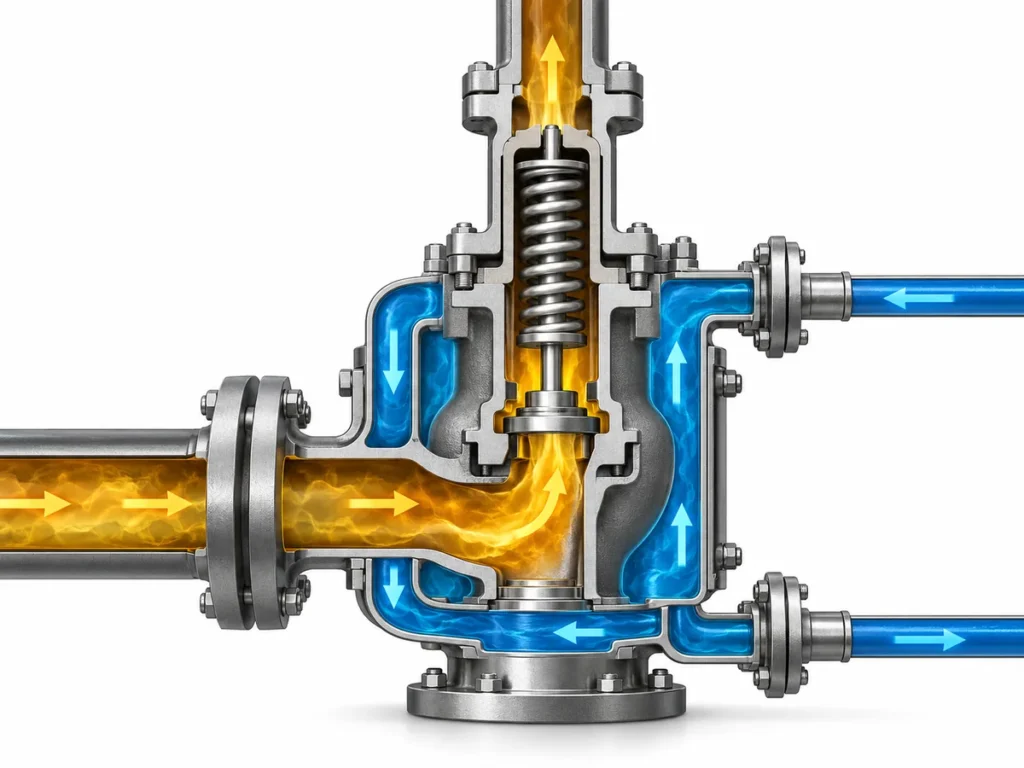
Предохранительный клапан с рубашкой обогрева содержит две принципиально разные функциональные зоны: сторону рабочей среды, которая должна оставаться доступной для сброса давления, и рубашку или контур обогрева, используемый для влияния на температуру. Проблема в контуре обогрева может позволить рабочей среде охладиться, но сам контур обогрева не является путь отвода сбрасываемого потока. Разделение этих двух зон позволяет избежать распространённой диагностической ошибки.
Со стороны рабочей среды препятствие может возникнуть в области сопла или седла. Документация производителей предохранительных клапанов с рубашкой обогрева и для тяжёлых условий эксплуатации признаёт возможность затвердевания, отверждения, кристаллизации или отложения материала в этих зонах. В зависимости от конструкции клапана загрязнения или отложения также могут препятствовать работе направляющих и других движущихся компонентов и влиять на ожидаемое перемещение или повторное закрытие.
Точная внутренняя геометрия зависит от модели, поэтому в статье по диагностике не следует предполагать, что все клапаны с рубашкой обогрева обогревают или открывают одни и те же компоненты. Для установленного клапана чертёж, паспорт или документация производителя являются правильным источником для определения того, какие зоны фактически имеют рубашку обогрева и какие движущиеся части могут контактировать с рабочей средой.
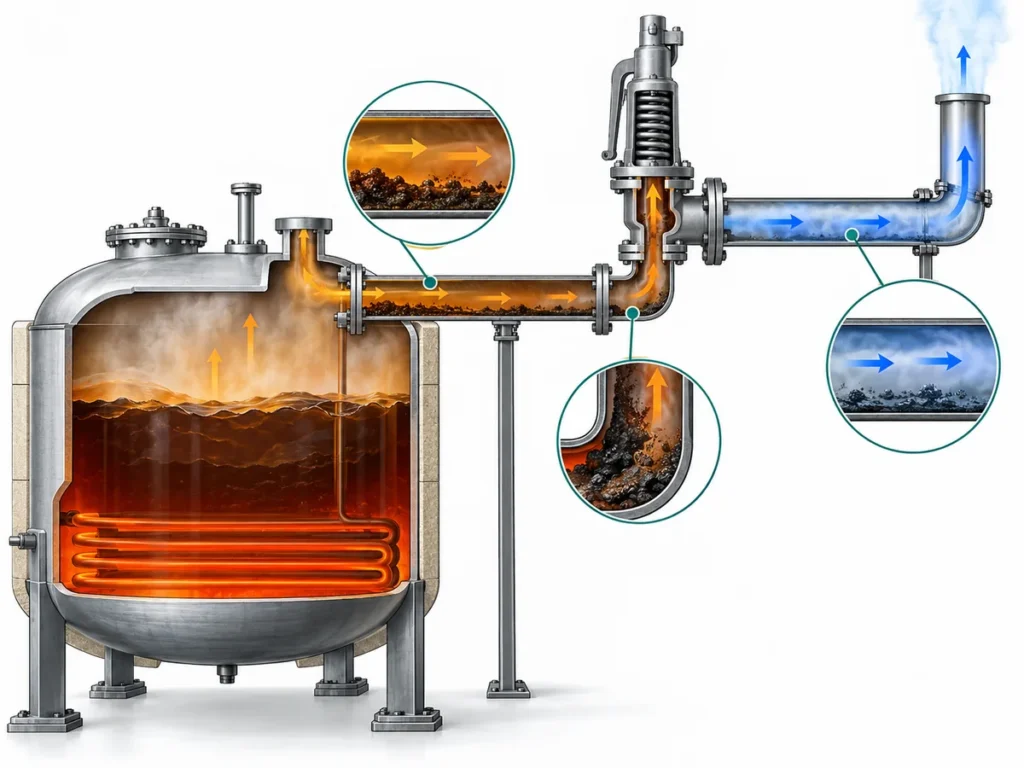
Препятствие также может находиться вне корпуса клапана. выходной патрубок или прилегающий трубопровод может работать при иных температурных условиях, чем зона рубашки. Если материал остаётся текучим в обогреваемой части клапана, но охлаждается дальше по потоку, наблюдаемая проблема может быть термической проблемой уровня установки, а не свидетельством дефекта самой рубашки корпуса.
Такой подход, при котором сначала определяется место, меняет следующий вопрос. Отложения в сопле, материал, мешающий направляющему элементу, и затвердевший материал дальше в сбросном тракте могут все называться “закупориванием”, но они не указывают на один и тот же механизм и не оправдывают одни и те же корректирующие действия.
Термическое закупоривание начинается там, где нарушается эффективный обогрев
Рубашка — это элемент термического регулирования. Само её наличие не доказывает, что достаточное тепло поступает в каждую важную зону.
Это различие особенно важно для сред, текучесть которых сильно зависит от температуры. Если технологический материал может затвердевать, кристаллизоваться, застывать или становиться значительно более вязким при охлаждении, вопрос диагностики не сводится к тому, есть ли у клапана рубашка. Вопрос в том, оставалась ли соответствующая технологическая зона в требуемых для данной среды температурных условиях.
Несколько переменных могут изменить этот ответ.
Первая — это зона охвата. Конструкции разных производителей различаются. В одних исполнениях рубашки обогрев сосредоточен вокруг корпуса клапана или выходной зоны; в других предусмотрены дополнительные обогреваемые зоны для тяжёлых условий. Поэтому обогрев или рубашка на технологическом трубопроводе не могут автоматически считаться доказательством того, что зона седла клапана, внутренние детали или сбросной тракт получают эквивалентную термическую защиту.
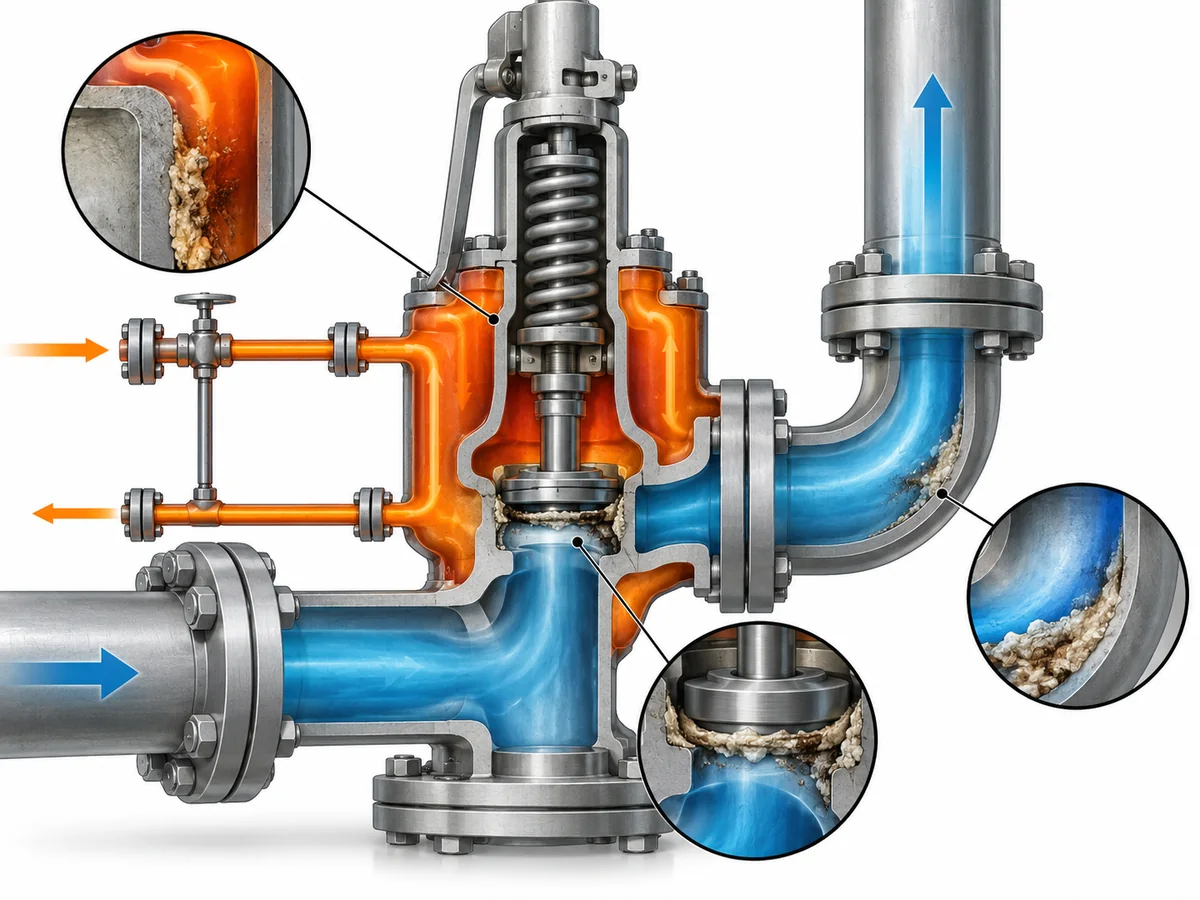
Вторая переменная — это actual heat delivery. For a steam-heated installation, heat transfer depends on the condition and operation of the heating system, not merely on the presence of steam connections. General steam-heating practice shows that steam and condensate behavior, drainage, operating condition, and the arrangement of the heating circuit affect heat transfer. The exact significance of these factors must be evaluated against the installed valve and heating system rather than converted into a universal pressure, temperature, or flow rule.
The third variable is time. A process that remains fluid during steady production may behave differently during a prolonged standby or shutdown. A valve may be adequately heated in normal operation yet experience a different temperature history when process flow stops, the heating medium is interrupted, or surrounding equipment cools. A repeated plugging event after a particular shutdown pattern is therefore useful evidence, but it is still a clue rather than proof of one mechanism.
The fourth variable is the thermal boundary around the valve. The jacketed body, inlet pipe, outlet pipe, insulation, and any heat-tracing system should not be mentally collapsed into one heated object. They may have different thermal behavior. If troubleshooting confirms that the valve body remains adequately heated while a nearby process or discharge region cools, the next engineering task belongs to the broader piping and thermal-management arrangement.
A representative example illustrates the distinction. Imagine a valve body that remains heated while an adjacent region of the discharge path cools during standby. Material may remain mobile inside the heated region yet become more viscous or solidify farther downstream. The visible symptom is still “plugging near a jacketed safety valve,” but adding more heat to the valve body would not automatically address the actual restriction location. This is an illustrative engineering scenario, not a recorded project case.
The practical lesson is simple: jacket present и effective thermal protection at the restriction location are not equivalent statements.
Plugging Mechanisms Can Overlap
Temperature is important in jacketed service, but not every deposit is evidence of insufficient heating.
For temperature-sensitive media, several supported mechanisms deserve consideration. Material may harden or solidify as it cools. Crystallizing media may form solids in local regions where temperature or concentration conditions permit crystallization. Highly viscous material may become increasingly difficult to move as temperature falls. These mechanisms are directly relevant to why heating jackets are offered for certain relief-valve applications.
Particulate contamination and foreign material form a different branch of the diagnosis. Manufacturer troubleshooting literature documents cases where foreign material or deposits interfere with seating or guided components. A hotter jacket will not necessarily remove a contamination problem whose controlling mechanism is solids carried by the process.
These mechanisms can also interact. Temperature may change viscosity and deposit behavior at the same time that suspended material is present. A deposit found after disassembly may therefore be the result of more than one operating condition. Its appearance alone should not be used to declare that heating failure was the root cause.
More chemistry-dependent mechanisms require tighter boundaries. Polymerization, coking, decomposition, or other reaction-driven deposits can be relevant in some processes, but they should not be presented as generic causes of jacketed safety-valve plugging. Whether one of these mechanisms is credible depends on the actual medium, composition, contaminants, temperature history, residence time, and process conditions.
The same caution applies to exact solidification or crystallization temperatures. A generic article should not assign a transition temperature to an unspecified medium or assume that a familiar commercial material always behaves the same way. The real service composition and operating data control that judgment.
This is why “increase the jacket temperature” is not a universal troubleshooting answer. If the cause is foreign material, a process-derived deposit, a restriction outside the heated region, or a chemistry-dependent mechanism, more heat may fail to address the root problem and could introduce a different process concern.
The useful distinction is not simply thermal versus nonthermal. It is: What material is present, where did it accumulate, what operating history preceded the restriction, and which mechanism is actually consistent with that evidence?
Diagnose the Cause From Evidence, Not From the Word “Plugging”
A useful troubleshooting process should reduce uncertainty rather than convert a symptom into a confident diagnosis.
Start with the physical evidence. If the restriction location is unknown, do not skip directly to the cause. If the valve has been removed and inspected under the applicable maintenance procedure, record where deposits or foreign material were found. If the issue appears to be in adjacent piping rather than the valve itself, preserve that distinction.
Then compare that evidence with the process and temperature history. What medium was in service? What was its phase and known composition? Does its flowability depend strongly on temperature? Were there shutdowns, prolonged standby periods, abnormal temperature excursions, or changes in the heating system before the problem appeared?
For a jacketed installation, also verify what the heating system was actually doing. Useful information includes the heating medium, available pressure and temperature data, the jacket connections and coverage, and how surrounding piping or equipment was being kept hot. The purpose is not to prove a failure from one reading. It is to determine whether the proposed thermal mechanism is consistent with the real installation.
Operating and maintenance history adds another layer. A restriction discovered after a relief event may raise different questions from one that develops repeatedly during long standby periods. A valve that has experienced repeated contamination may require a different investigation from one in a clean service that solidifies predictably when cold.
The following matrix can help organize the evidence without turning observations into automatic diagnoses:
| Наблюдение | Plausible interpretation | What to check next | Что это не доказывает |
|---|---|---|---|
| Hardened or crystalline material around the nozzle or seating region | Cooling, solidification, crystallization, or another deposit mechanism may be involved | Medium/composition, temperature history, actual jacket coverage and heat condition | That the jacket itself failed |
| Valve body is heated but restriction appears farther downstream | Adjacent piping may have a different thermal condition | Outlet arrangement, insulation/tracing scope, operating and standby temperatures | That more body-jacket heating will solve the problem |
| Foreign or particulate material is found around guided or moving parts | Contamination or process solids may be interfering with movement | Source of solids, deposit observations, inspection and service history | That temperature is the controlling cause |
| Problems recur after shutdown or long standby | Thermal history may be contributing | Heating continuity, cooling duration, medium behavior during shutdown | That shutdown temperature alone is the root cause |
| Jacket is installed but its operating condition is not documented | Adequacy of heat delivery is unknown | Heating-medium data, jacket condition and installation records | That the jacket is ineffective |
| Deposits are present but composition is unknown | Several thermal or process mechanisms remain possible | Deposit characterization and actual process composition where appropriate | Polymerization, coking, crystallization, or any other specific mechanism |
The goal is not to rank these causes by probability. There is no defensible universal ranking for an unspecified process, valve design, and heating arrangement. Instead, each observation should eliminate some explanations, strengthen others, and identify the information still missing.
That distinction matters because plugging can affect more than cleanliness. Manufacturer literature documents cases where solidified or foreign material can interfere with expected opening, full movement, closing, or reseating. That is enough to make a suspected restriction an engineering concern.
а предписывает enough to calculate a generic loss of relieving capacity. Connection size is not capacity, and the visible amount of deposit is not a certified flow calculation. Quantifying the effect of a restriction requires the actual geometry, fluid and relieving conditions, valve data, and the applicable capacity basis. A statement such as “20% blockage means 20% less capacity” would not be justified.
For the same reason, an external appearance or nominal connection match is not a sufficient basis for replacement. If the troubleshooting process eventually leads to valve replacement, the replacement review must still address the applicable set pressure, required and documented relieving capacity, service conditions, configuration, materials, installation interfaces, back-pressure conditions where relevant, governing requirements, and documentation.
Confirm the Cause Before Cleaning, Repair, or Replacement
The purpose of troubleshooting is to define the next engineering action, not to prescribe an intervention before the mechanism is known.
Before a maintenance or engineering review, assemble a compact evidence package. The most useful inputs for this problem are usually:
- process medium, phase, and known composition;
- normal operating temperature and relevant shutdown or standby temperature history;
- any known temperature-sensitive behavior of the medium;
- heating medium and available jacket operating data;
- valve manufacturer, model, datasheet, or drawing when available;
- the regions that are actually jacketed;
- inlet and outlet arrangement, insulation, and heat-tracing scope;
- exact location of the observed restriction or deposit;
- inspection photographs or observations where available;
- valve lifting/discharge history;
- shutdown/startup history;
- maintenance and prior cleaning history;
- required relieving capacity or existing sizing basis if repair or replacement is being considered;
- applicable project specification or maintenance requirements.
This information helps separate an identification problem from an engineering-acceptance problem. A photograph may help identify where material accumulated, but it does not establish remaining relieving capacity. A matching connection size may identify a replacement candidate, but it does not establish interchangeability. A jacketed body may confirm that thermal management was intended, but it does not prove that the installed heating arrangement was effective under the event being investigated.
Corrective action should follow the confirmed cause as closely as the available evidence allows. If inadequate local heating is supported, the heating arrangement needs engineering review. If the restriction is outside the jacketed region, the broader piping and thermal-management system becomes the relevant boundary. If process solids or foreign material are involved, the source of those deposits must be investigated rather than automatically increasing heat. If the deposit mechanism cannot yet be identified, the correct next step is additional inspection or process review—not a more confident assumption.
Запросить инженерный обзор
If the plugging mechanism is still uncertain, send the process medium and operating-temperature history, heating-medium conditions, valve identification or datasheet, inlet/outlet arrangement, jacket and tracing coverage, inspection findings, and maintenance history for review. If replacement is being considered, include the existing sizing/capacity basis and project requirements as well.
The objective is not to select a remedy from the word “plugging.” It is to identify the restriction, establish the most defensible mechanism, and then make the maintenance, thermal-management, or replacement decision from evidence.